-
-
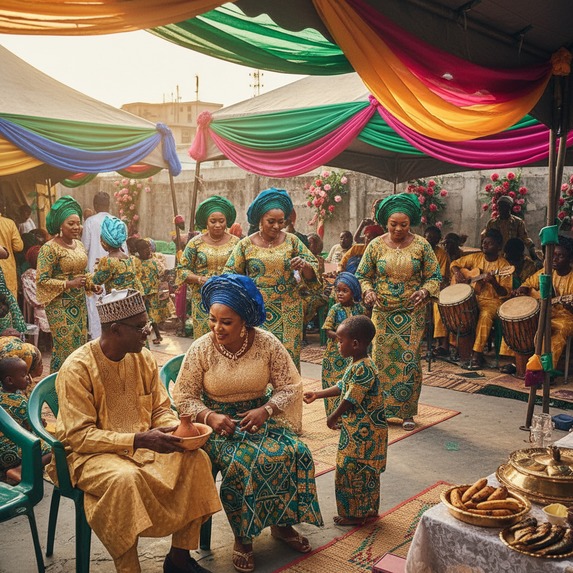
Lagos Party
-
Inspiration
African Heritage Visual Agent (AHVA)* was born from two powerful realizations: first, that over 1,000 African cultures risk losing their visual heritage as oral traditions fade, and second, that Bria FIBO's JSON-native approach offered something revolutionary—deterministic, professional-grade image generation through structured parameters rather than unpredictable prompt engineering.
Traditional AI image generation felt like guesswork. You'd write elaborate prompts hoping for the right lighting, composition, or cultural authenticity—but results varied wildly. FIBO changed this by treating image generation as structured data, not prompt magic. This clicked perfectly with cultural preservation: museums, educators, and communities need consistency, scalability, and professional quality—exactly what FIBO's camera angles, HDR color spaces, and composition rules provide.
The vision was clear: transform African cultural narratives into structured FIBO JSON with professional parameters, then generate culturally authentic images at scale. This isn't just another AI art tool—it's a production-ready workflow for preserving endangered cultural heritage.
What it does
AHVA implements a multi-agent JSON-native workflow that showcases FIBO's unique capabilities
How we built it
Natural Language Narrative ↓ [AI Agent: Cultural Analysis] • Extracts subjects, symbols, settings • Maps to FIBO professional parameters • Generates structured JSON schema ↓ [Validation & Storage Layer] • JSON schema validation • Metadata preservation in PostgreSQL ↓ [Bria FIBO V2 API] • Deterministic generation using: - camera: {angle, fov, focal_length} - lighting: {setup, direction, hdr} - color: {palette, temperature, saturation} - composition: {rule, depth_of_field} ↓ [Result Storage] • Image + FIBO schema linkage • Complete audit trail.
Challenges we ran into
Bridging Natural Language → Structured JSON: Getting the AI agent to consistently generate valid FIBO schemas with professional parameters required careful prompt engineering and validation. We iterated on the system prompt to ensure cultural elements (e.g., "Yoruba festival") correctly mapped to FIBO parameters (e.g., golden-hour lighting, warm color temperature, rule-of-thirds composition).
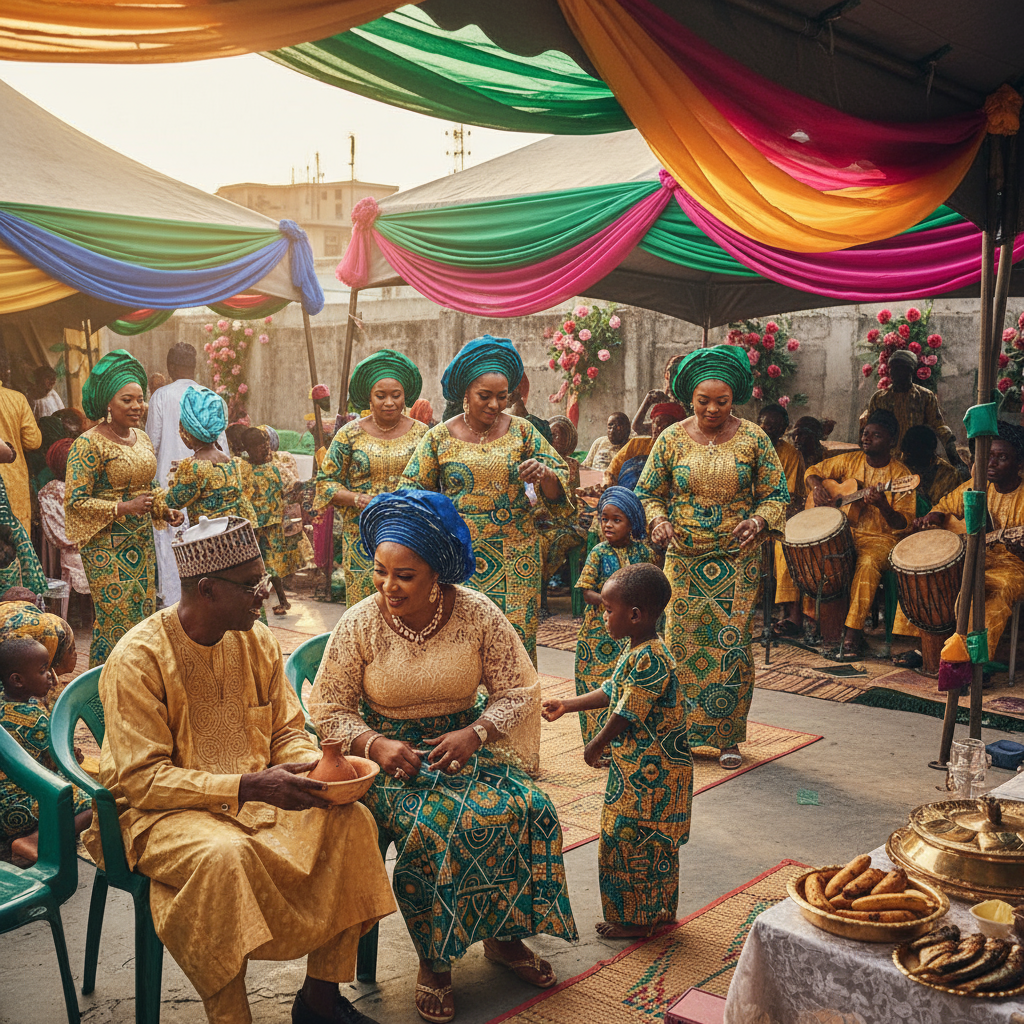
Cultural Authenticity at Scale: Early versions generated generic "African" imagery. We solved this by training the agent to extract region-specific context (Yoruba vs. Maasai vs. Zulu) and map cultural symbols (adinkra, kente patterns, talking drums) into FIBO's cultural_symbols and subjects arrays.
Bria FIBO V2 API Integration: The official API required precise authentication (api_token header) and payload structure. We encountered 500 errors initially due to incorrect image data handling—solved by directly using Bria's hosted image URLs rather than attempting base64 conversion.
Async Metadata Storage: FIBO schema storage in the database initially happened after the function returned, causing race conditions where images appeared without JSON metadata. We refactored to synchronous storage before responding, ensuring metadata is always available for the frontend.
Production Workflow Design: Balancing agentic automation (AI generates everything) with professional control (manual JSON editing). The solution: AI-first with an escape hatch—generated schemas are editable, but 95% of users never need to touch JSON.
The Result: A production-ready platform that transforms African cultural narratives into structured FIBO JSON with professional parameters, then generates culturally authentic images—demonstrating FIBO's power for real-world applications at scale.
Accomplishments that we're proud of
🎯 First Production-Ready Agentic Workflow for FIBO
We didn't just generate images—we built a complete end-to-end system that proves FIBO's JSON-native approach enables production workflows impossible with prompt engineering:
- AI-driven schema generation: Natural language → FIBO JSON with professional parameters (camera, lighting, color, composition)
- Deterministic output: Same schema = same image, enabling version control and collaboration
- Complete audit trail: Every narrative, schema, and image is stored with timestamps and user context
This is the first publicly demonstrated agentic workflow that treats FIBO as structured data rather than a black box.
🌍 Cultural Preservation Meets Cutting-Edge AI
We're solving a real humanitarian challenge: over 1,000 African cultures risk losing their visual heritage. AHVA makes professional-grade cultural documentation accessible:
- Museums can generate consistent visual references for oral histories
- Educators can create culturally authentic teaching materials at scale
- Communities can preserve endangered traditions before they're lost
Using FIBO's professional parameters (golden-hour lighting for savanna scenes, rule-of-thirds for ceremonial staging, HDR color palettes inspired by traditional textiles), we achieve cultural authenticity that text prompts simply cannot match.
🚀 Made Professional Parameters Accessible
FIBO's power (camera angles, focal lengths, lighting setups, HDR color spaces, composition rules) was previously accessible only to technical users who could write JSON. We democratized this:
- Historians describe narratives in natural language
- AI agent maps cultural context → FIBO professional parameters
- Users get broadcast-quality results without touching code
What we learned
Building AHVA taught us that FIBO's true power lies in its JSON-native architecture:
Professional Parameters Matter: Camera angle (eye-level, birds-eye), field of view, focal length, lighting setup (golden-hour, dramatic), HDR color palettes, and composition rules (rule-of-thirds, golden-ratio) produce broadcast-quality results that prompt engineering simply cannot match consistently.
Agentic Workflows Scale: Instead of users manually crafting FIBO JSON, an AI agent analyzes narratives and automatically generates structured schemas. This makes professional-grade image generation accessible to non-technical users (historians, educators, cultural archivists) who shouldn't need to understand JSON syntax.
Determinism = Production-Ready: Same FIBO JSON produces the same image every time. This enables version control (schemas in git), collaboration (teams sharing JSON), and automation (processing cultural archives at scale). Prompt engineering can't offer this.
Cultural Context Through Structure: FIBO's parameters (color palettes inspired by traditional textiles, lighting that matches African golden hours, composition that respects ceremonial staging) preserve cultural authenticity better than text prompts that often get "lost in translation."
What's next for AVHA
Immediate Roadmap (Post-Competition)
Expand Cultural Database: Integrate 50+ African cultures with region-specific FIBO parameter mappings (West African golden-hour vs. East African equatorial lighting, etc.)
Advanced Schema Editing: Visual UI for tweaking FIBO parameters (sliders for focal length, color pickers for HDR palettes) without touching JSON
Batch Processing: Upload CSV of narratives → generate 100s of images with consistent FIBO schemas for institutional use
Community Contributions: Open schema library where historians can share/refine FIBO parameters for specific cultural contexts
Long-Term Vision
- Museum Partnerships: Deploy AHVA for Smithsonian, British Museum African collections
- Educational Integration: Textbook publishers using AHVA for culturally authentic visual content
- API for Developers: Let third parties build on our agentic FIBO workflow
- Multi-Modal Expansion: Add audio (traditional music) and 3D (artifacts) to FIBO schemas
The Goal: Make AHVA the standard for culturally authentic, production-grade visual content powered by FIBO's JSON-native architecture.
Built With
- 18
- components)
- css
- form
- hook
- javascript
- query
- radix
- react
- router
- shadcn/ui
- sql
- tailwind
- tanstack
- typescript
- ui
- v6
- zod

Log in or sign up for Devpost to join the conversation.