Inspiration
Across Africa, insurance penetration remains incredibly low, often due to a profound trust gap, complex legal jargon, and language barriers. For the average individual, reading through pages of dense policy documents is overwhelming, making it difficult to understand exactly what is covered or how to file a legitimate claim. When accidents or damages occur, navigating the bureaucratic claim process manually feels like an uphill battle.
We built Insuria AI to break down these barriers. Our inspiration was to democratize insurance literacy and claims processing by combining a sleek, neo-minimalist interface with localized AI agents that speak the user’s language—making insurance accessible, transparent, and understandable for everyone across the continent.
What it does
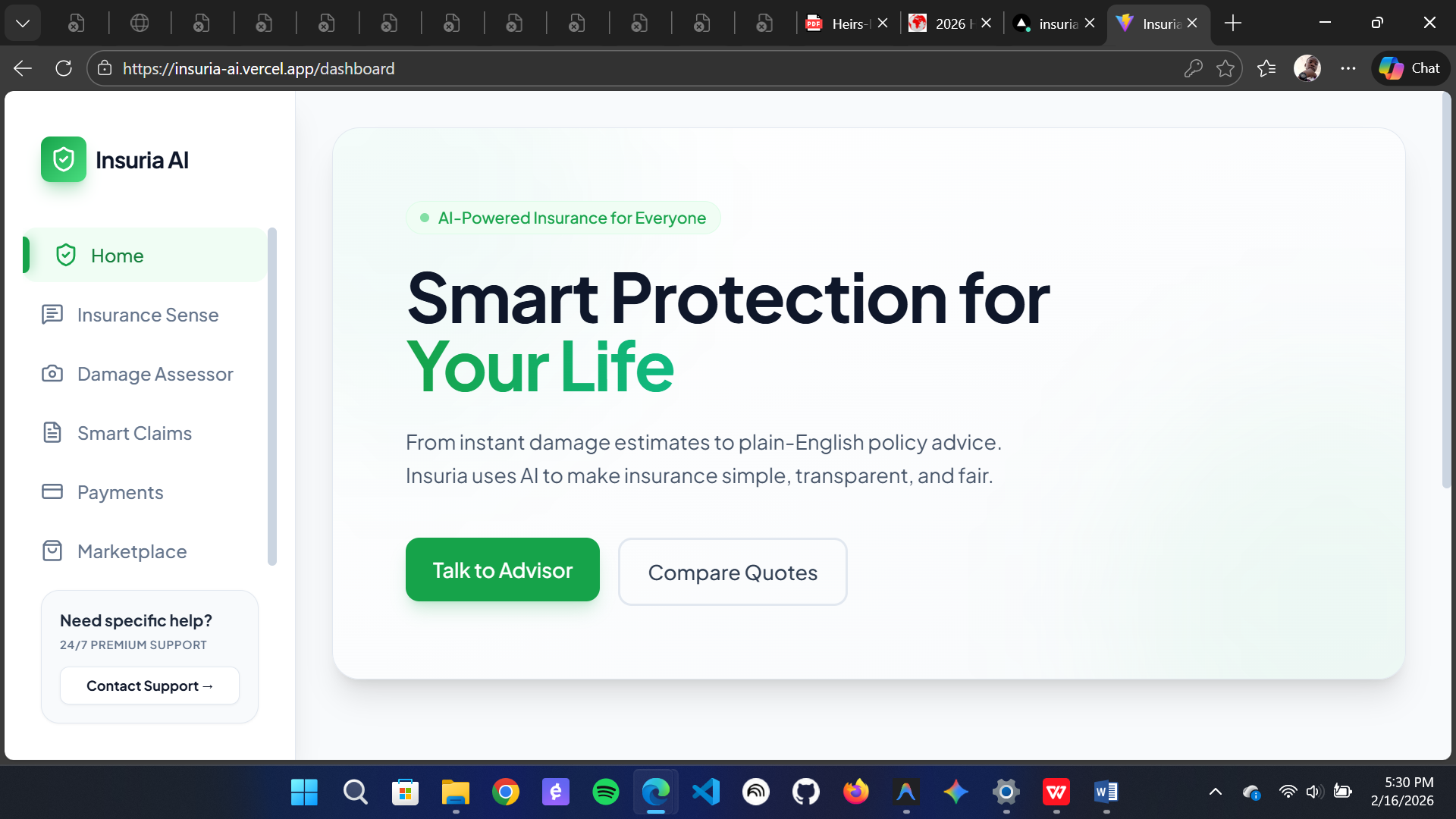
Insuria AI is an all-in-one, localized AI-powered insurance companion and claims automation platform. It breaks down into five core modules designed to handle the entire insurance lifecycle:
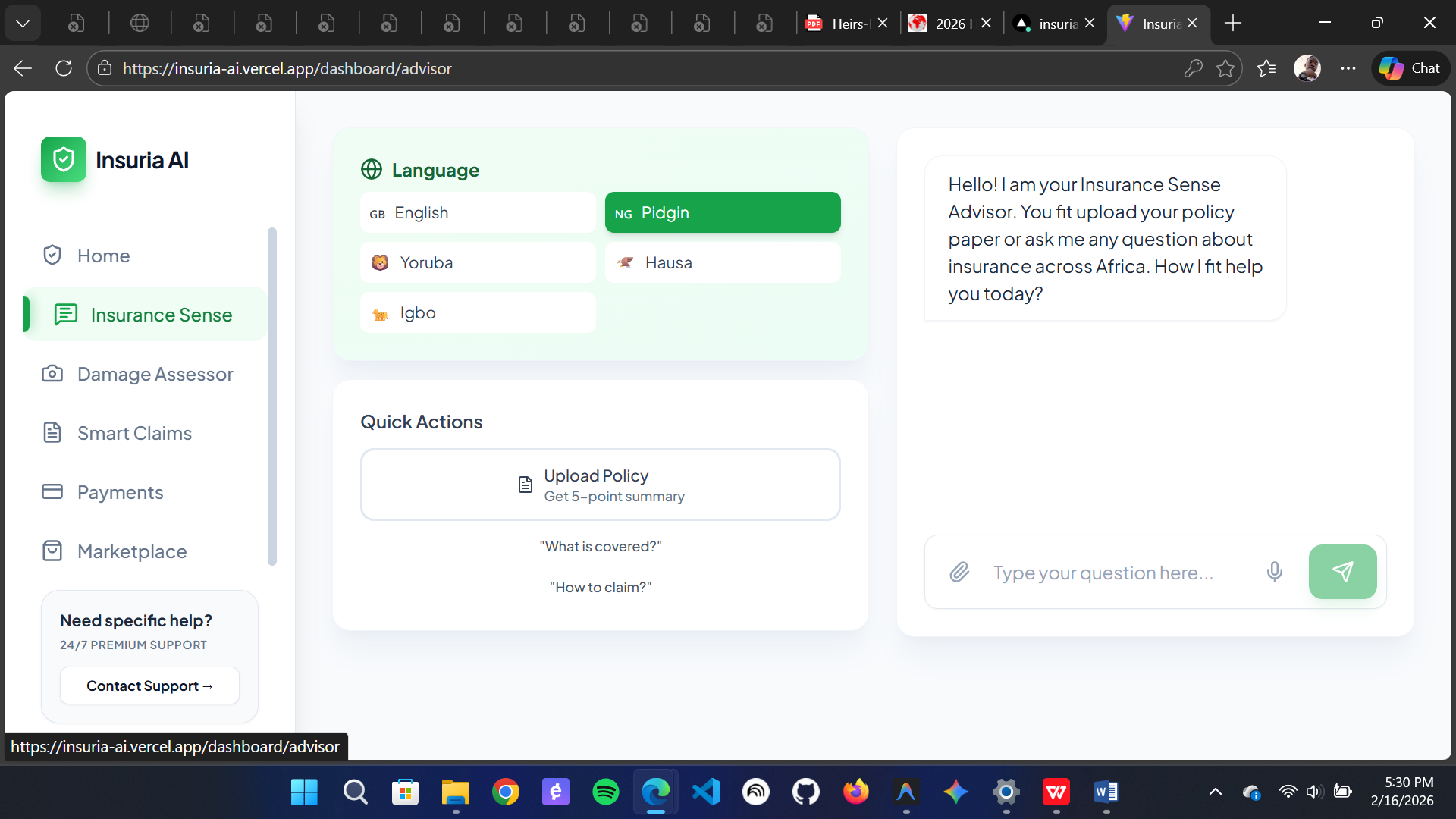
- Insurance Sense: A multilingual conversational AI advisor that lets users upload dense policy papers and get an instant, 5-point summary. Users can ask questions about their coverage in their preferred local language—including English, Pidgin, Yoruba, Hausa, and Igbo.
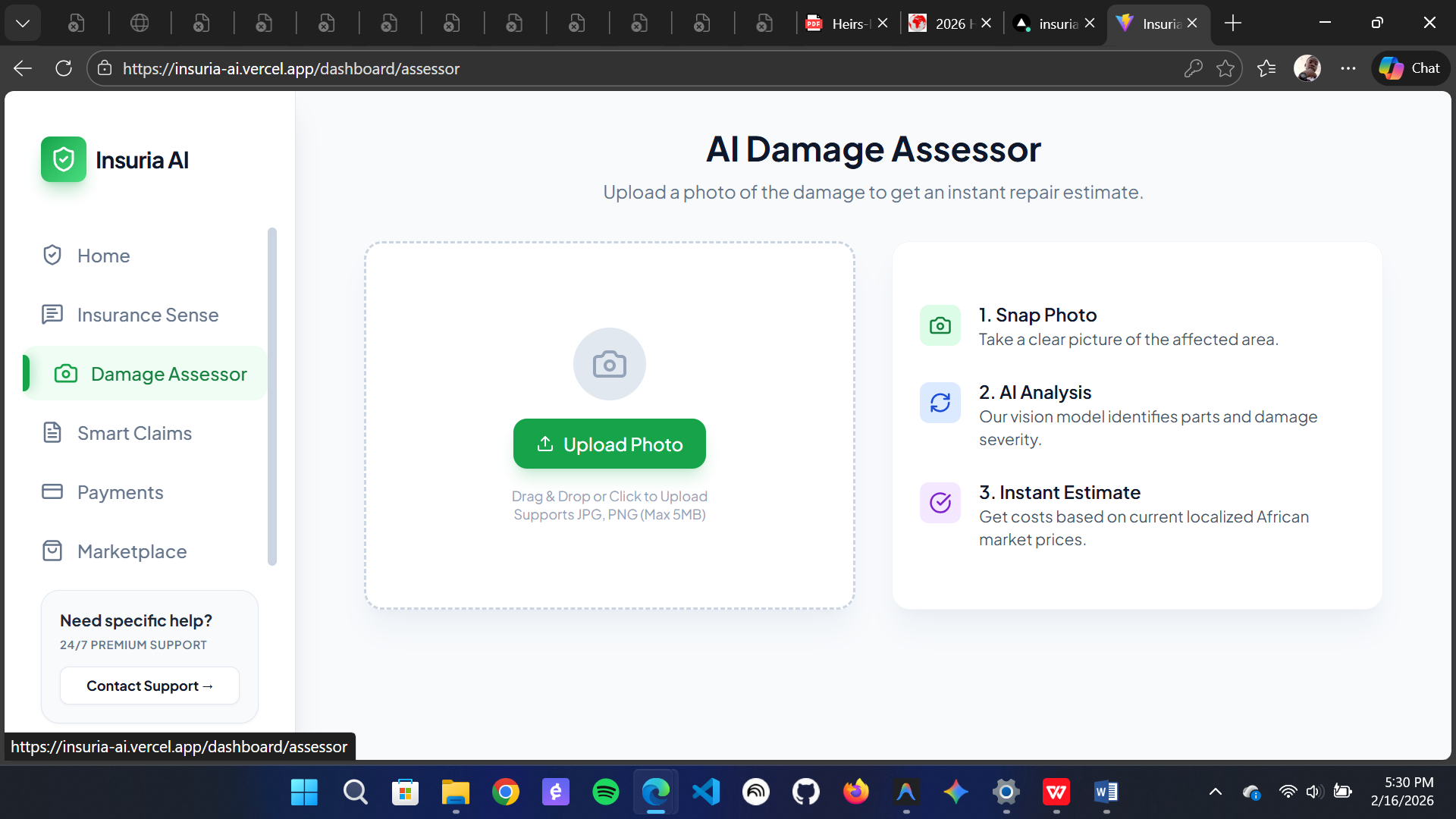
- Damage Assessor: An AI-driven vision module that analyzes uploaded images of property or vehicular damage to estimate repair costs objectively.
- Smart Claims: An automated system that guides users step-by-step through filing an ironclad, error-free insurance claim.
- Payments & Marketplace: A unified hub to handle premium payments seamlessly and discover personalized, transparent insurance products tailored to the user's specific needs.
How we built it
The platform is built with a focus on speed, localization, and high accessibility:
- Frontend & Dashboard: Built using Next.js and deployed on Vercel, featuring a clean, responsive glassmorphism aesthetic that prioritizes visual clarity.
- Localization & NLP Layer: Engineered an AI orchestration layer capable of translating and contextualizing complex insurance terms into localized West African languages and localized slangs (such as Pidgin English) to ensure natural, trust-building conversations.
- Document Parsing & Vision AI: Implemented robust multi-modal AI pipelines to ingest unstructured PDF policy documents for key-value extraction (5-point summaries) and process image attachments for real-time damage evaluation.
Challenges we faced
One of our biggest hurdles was training and prompting our AI agents to interpret insurance legalese accurately without losing context when translating answers into local languages like Pidgin, Yoruba, Hausa, or Igbo. Insurance terms are notoriously rigid, so translating them into a conversational dialect required careful fine-tuning to prevent misinformation. Another challenge was structuring a clean, unified dashboard layout that allows a user to fluidly transition from chatting with an advisor to initiating an automated claim without feeling overwhelmed by multi-step forms.
What we learned
We learned that technology becomes exponentially more powerful when it meets people exactly where they are. True accessibility isn't just about putting a mobile app in someone's hands; it's about speaking their language and removing the intimidating vocabulary that keeps them from using vital financial services. We also gained deep insights into structuring multi-modal AI pipelines that combine text parsing, localized chat, and computer vision under a singular dashboard state.
What's next for Insuria AI
We want to scale Insuria AI beyond a dashboard assistant into a fully integrated middleware layer for insurance providers. Next steps include:
- Building direct API integrations with African insurance firms to allow instant, on-chain or off-chain settlement verification when a claim is processed by the Smart Claims engine.
- Expanding language support to cover East and North African regions (such as Swahili and Arabic).
- Launching a WhatsApp and USSD utility bot version to bring Insurance Sense and claims logging to users who don't have consistent access to high-speed internet.
Built With
- javascript
- next

Log in or sign up for Devpost to join the conversation.