Inspiration
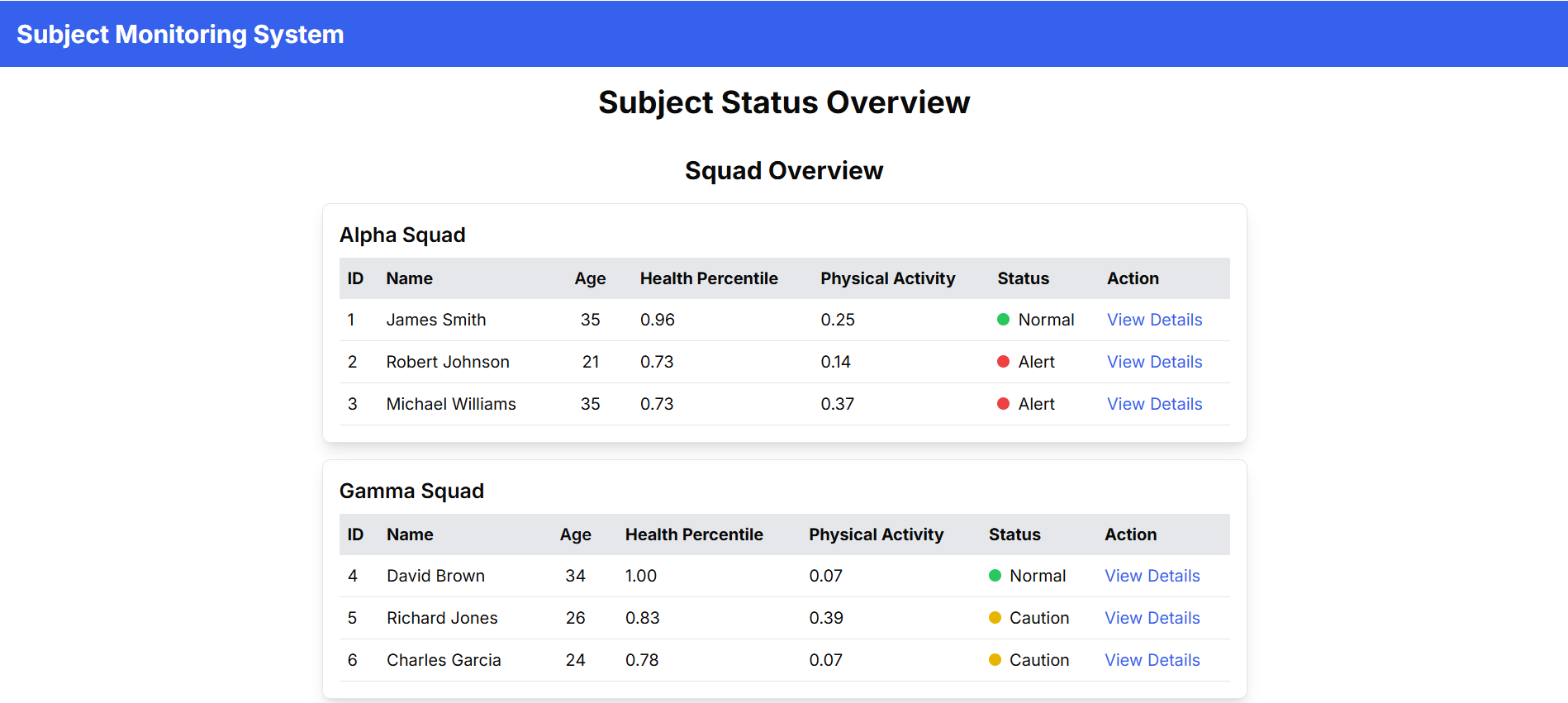
Commanders need squad-level insights to make strategic decisions during important missions. We're building a unified platform to assess soldier health and enable real-time logistical planning. Minimize disruptions, cut emergency substitution costs, and keep your Avengers at full strength!
How the Technology Works
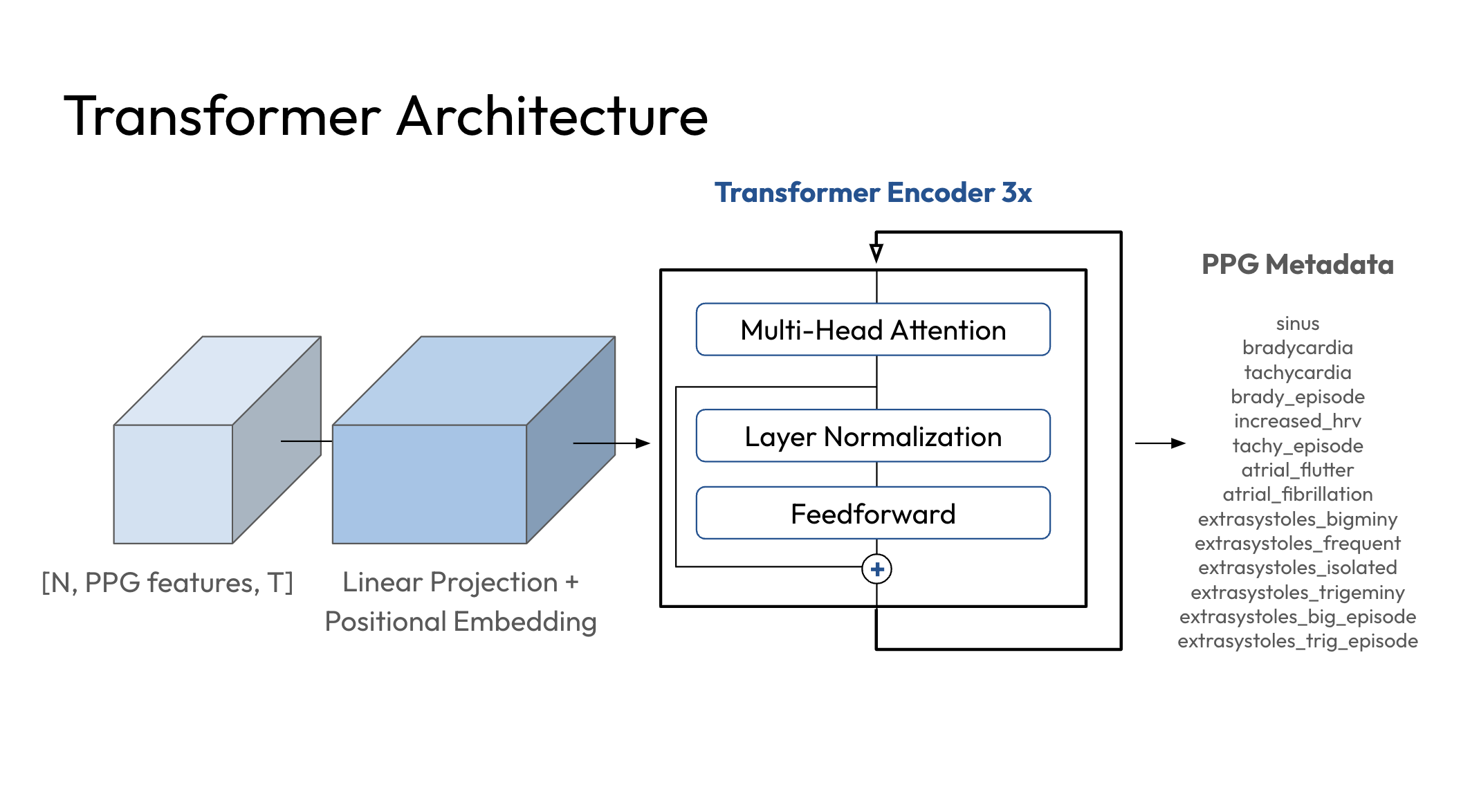
Using real time sensor-derived PPG (plethysmography) data from the battlefield, we predict outcome variables such as sinus rhythm, tachycardia, atrial fibrillation, and more. These features are essential indicators of an Avenger's battle readiness, as they are are directly linearly predictive (0.99 AUC) of the heart condition (atrial fibrillation, regular, or irregular states) of a soldier, allowing us to separate elite combatants (think Captain America) from those who might need a check-up (looking at you, Iron Man after an all-nighter).
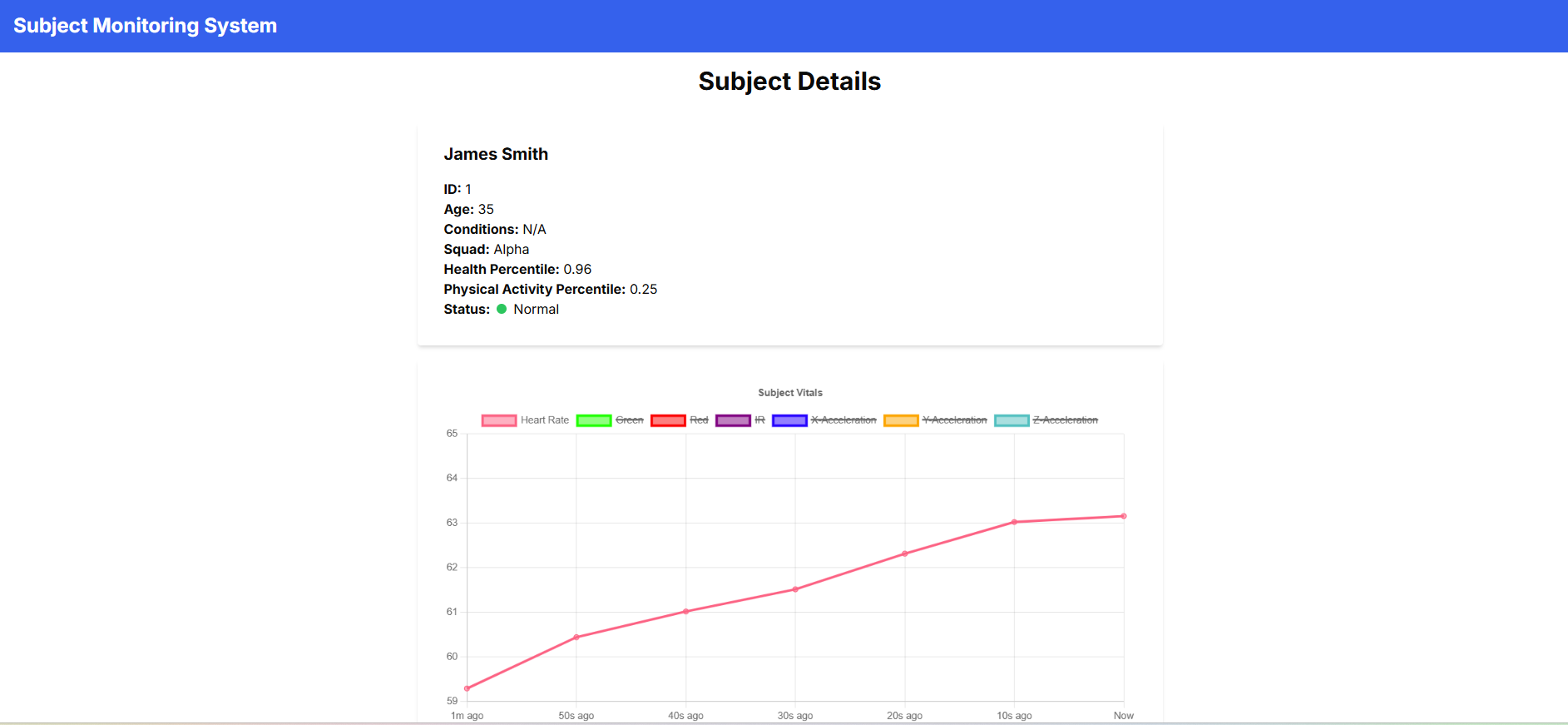
Alongside these outcome variables, we incorporate raw PPG features to infer other biologically relevant features that are useful for a commander to know about their squadron, such as heart rate, distance between RR peaks, position and velocity in 3D, RMS of successive differences, etc. to gain deeper granularity into each patient’s real time health.
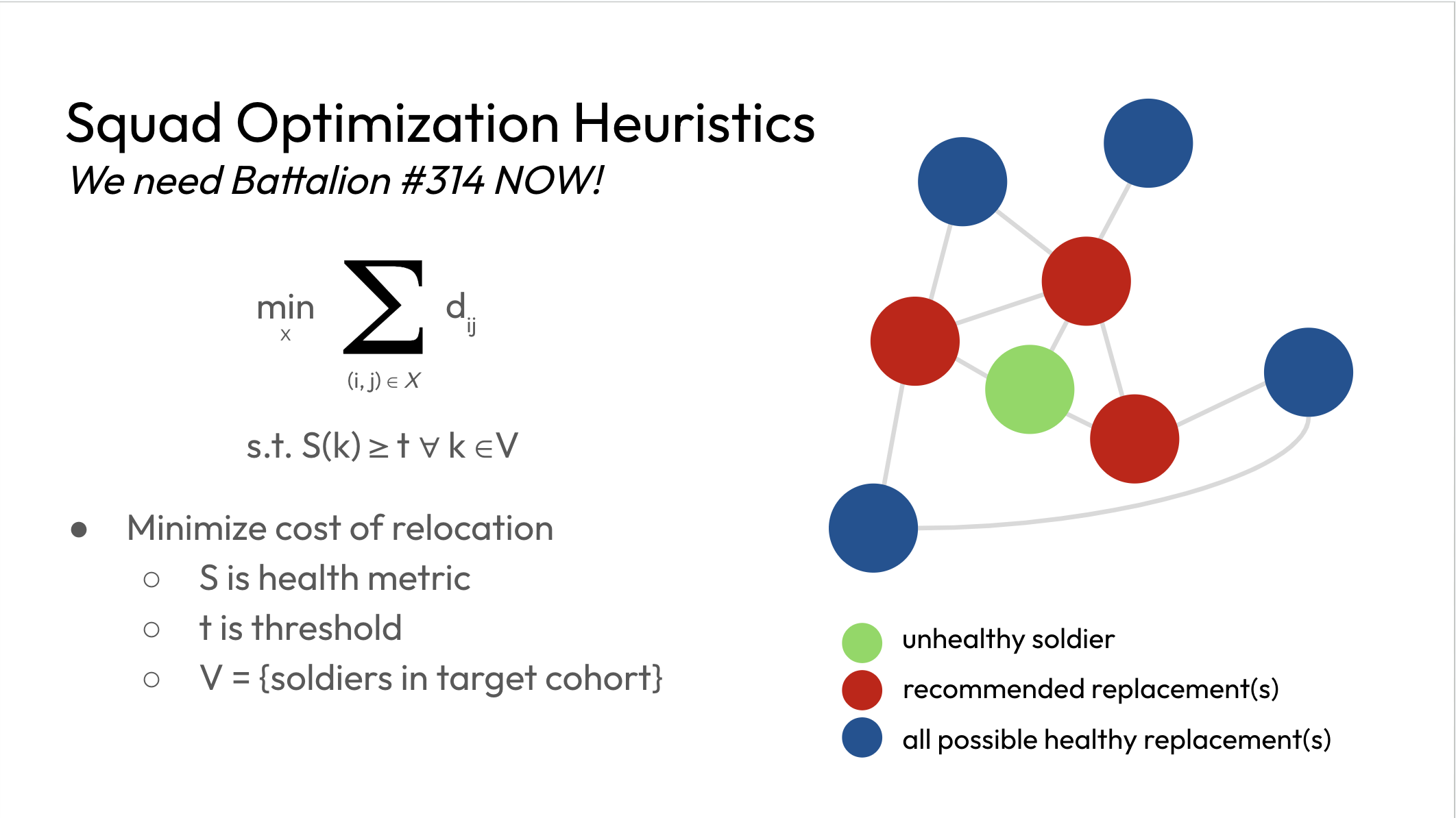
What's even cooler is that we make this insight actionable by zooming out to a macro scope -- we're able to assess the health index of entire cohorts of Avengers as well. We ensure the strength of a cohort by suggesting substitutions for any Avengers who are below a reasonably healthy threshold for battle. If substitutions are required, we call in reinforcements from other battalions that are located close by. We suggest substitutions to make the cohort ready for battle while minimizing the cost of relocation.
All in all, our platform provides both an explainability layer as well as a sensitivity analysis methodology to respond to emergencies as quickly as possible. Avengers, assemble!
How We Built It
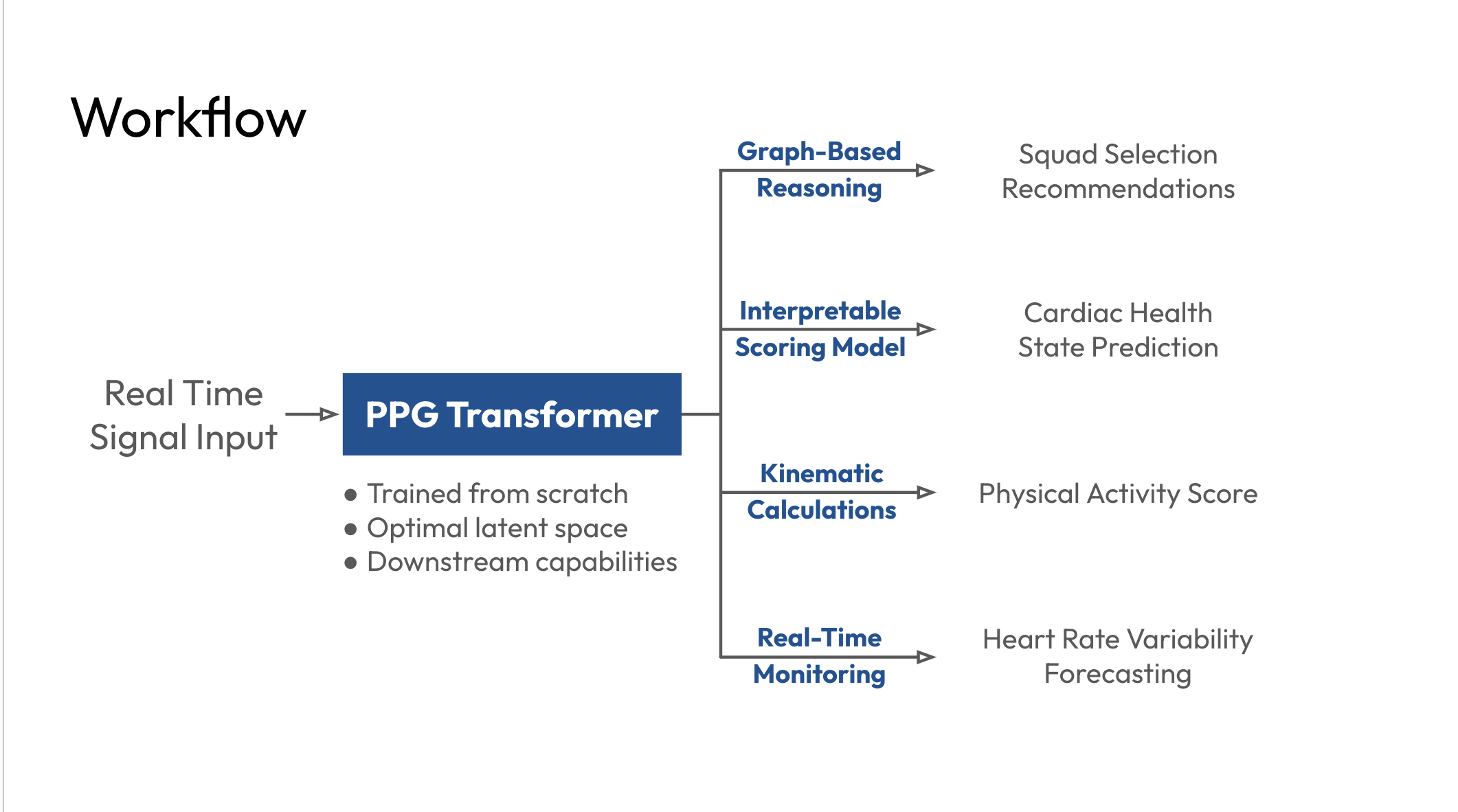
We use a transformer-based approach with multi-headed attention, residual connections, positional embeddings, and layer normalization to train a foundation model and predict the PPG metadata from the time series sensor data. Our PPG transformer is capable of downstream tasks such as cardiac health prediction, physical activity level scoring, heart rate variability forecasting, and squad optimization. For squad optimization, we frame the task as a minimization problem on a graph where we use a greedy algorithm to select the most optimal replacements for unhealthy soldiers based on 1) health score, 2) physical activity percentile, and 3) distance between a stationed base and the battlefield. For physical activity indexing, we use acceleration measurements from PPG and the laws of kinematics to detect sudden changes in movement.
What's next for Avengers, Assemble
We will run bootstrapping experiments to simulate entire squads of Avengers, testing different team compositions under various scenarios. By generating synthetic cohorts and assessing their collective health, we can predict which squads perform best in battle. We’ll develop cohort-level embeddings by making our transformer task-aware, distilling squad readiness into a vector representation in latent space. These embeddings will allow us to generate radar charts for visualization of team strengths and vulnerabilities.
Built With
- flask
- ngrok
- node.js
- python
- pytorch
- react
- scikit-learn
- scipy
- terra
- typescript
- v0
- vercel


Log in or sign up for Devpost to join the conversation.