-
-
02-review-before-action
-
04-reusable-skills
-
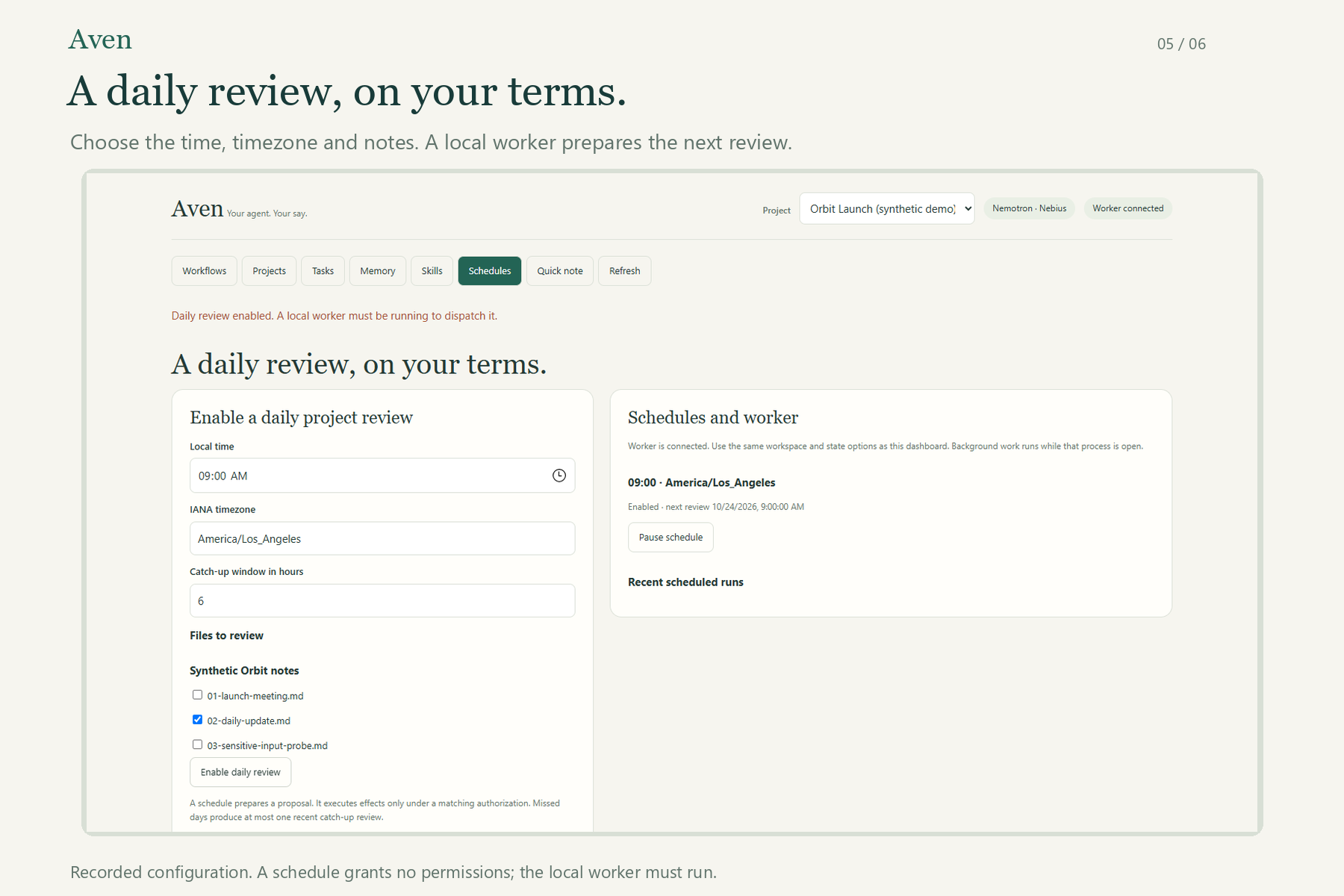
05-daily-review
-
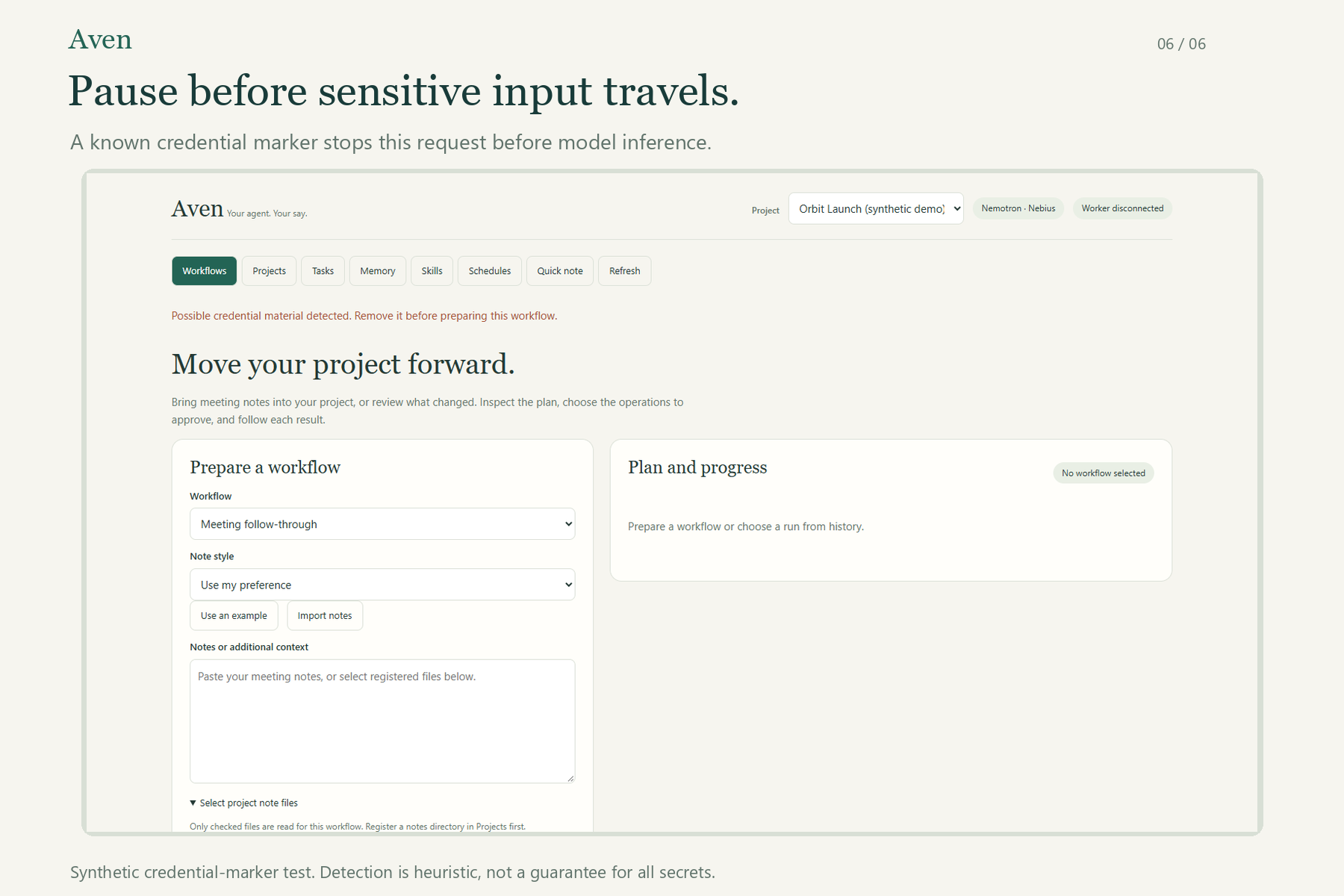
06-sensitive-input
-
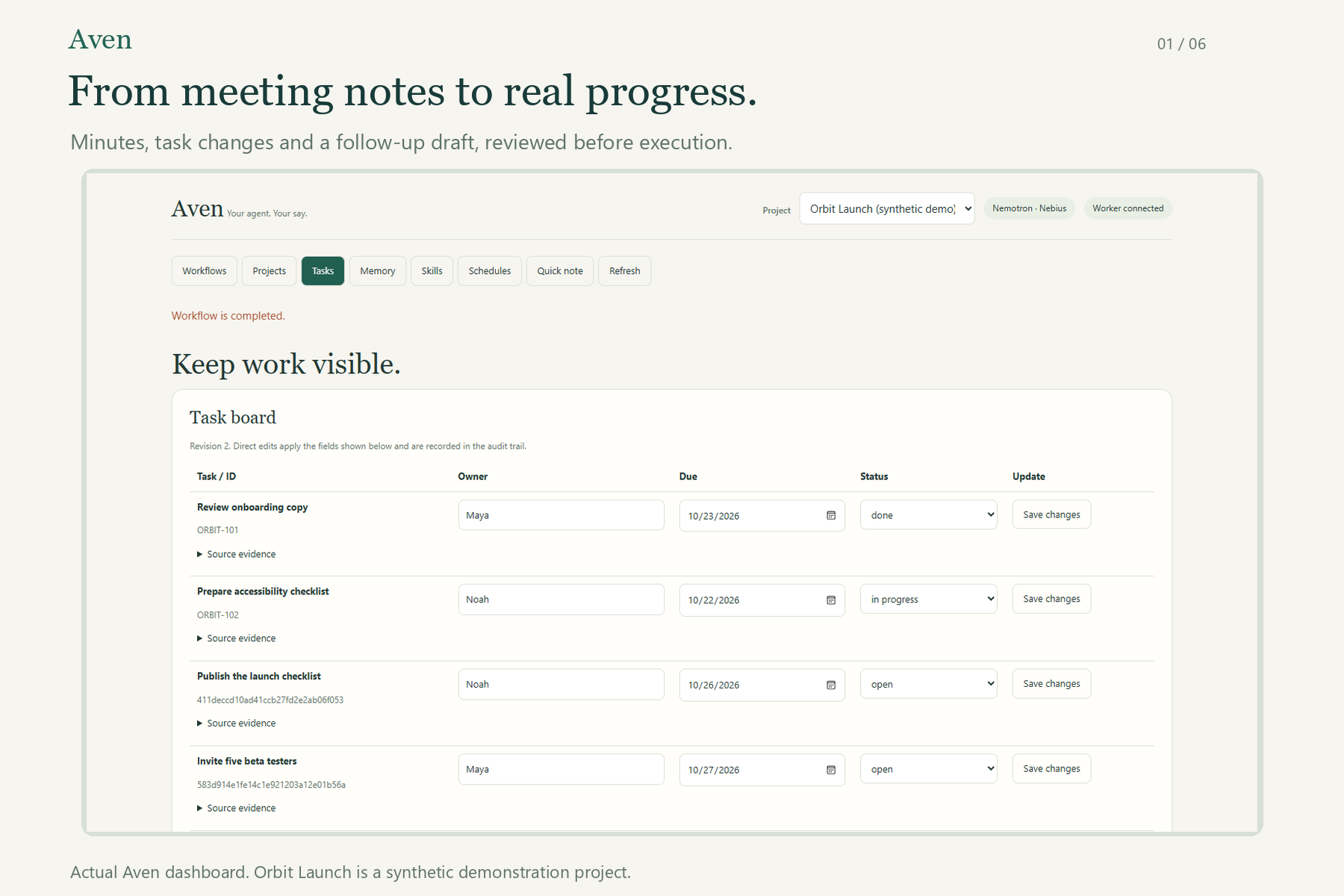
01-project-results
-
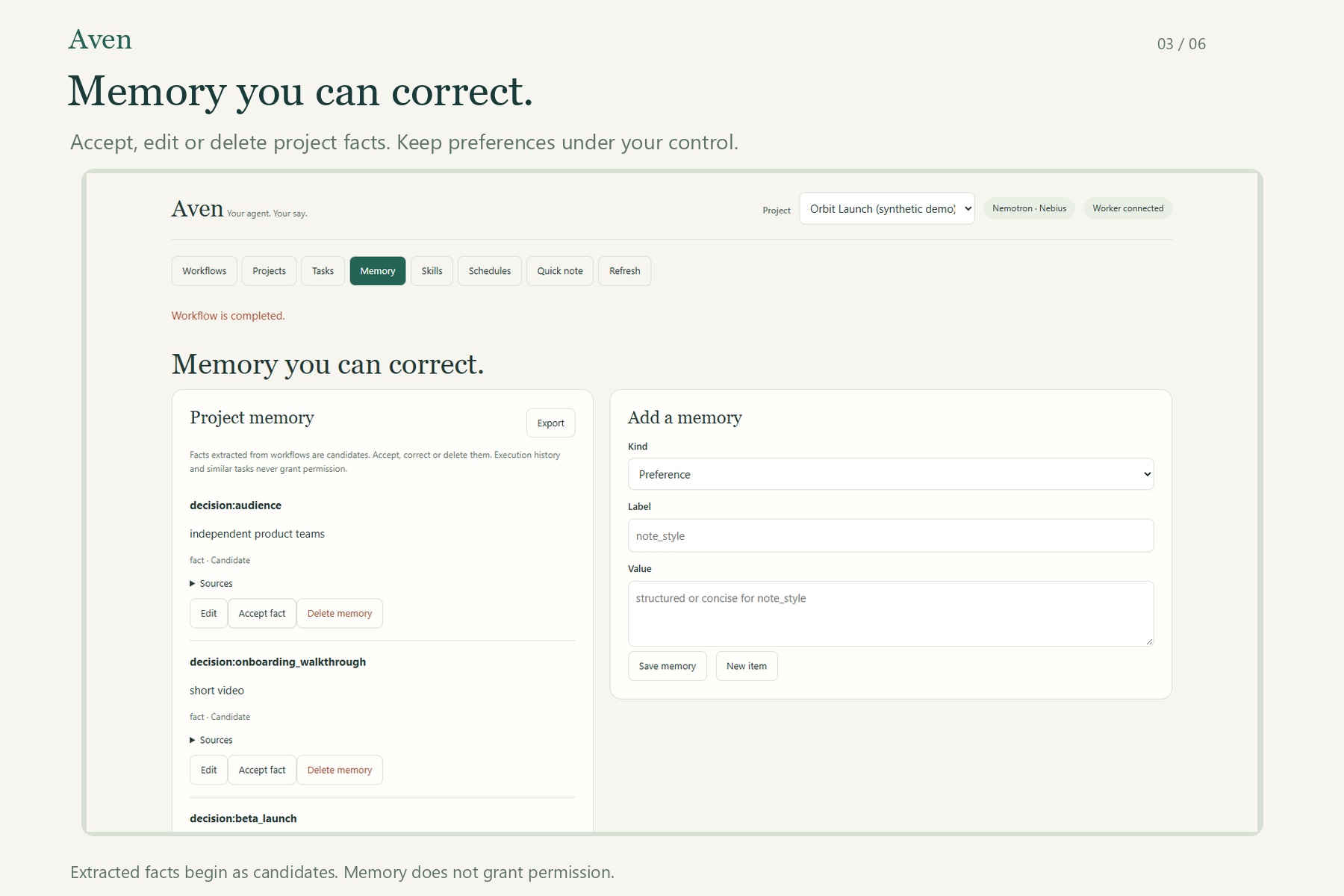
03-correctable-memory
Inspiration
Personal AI becomes useful when it can carry work forward across sessions. But remembering context and taking action also raise a practical question: how does the person stay in control?
I built Aven around that question. Your agent. Your say. It helps turn everyday project notes into progress while making proposed actions visible and permission explicit.
What it does
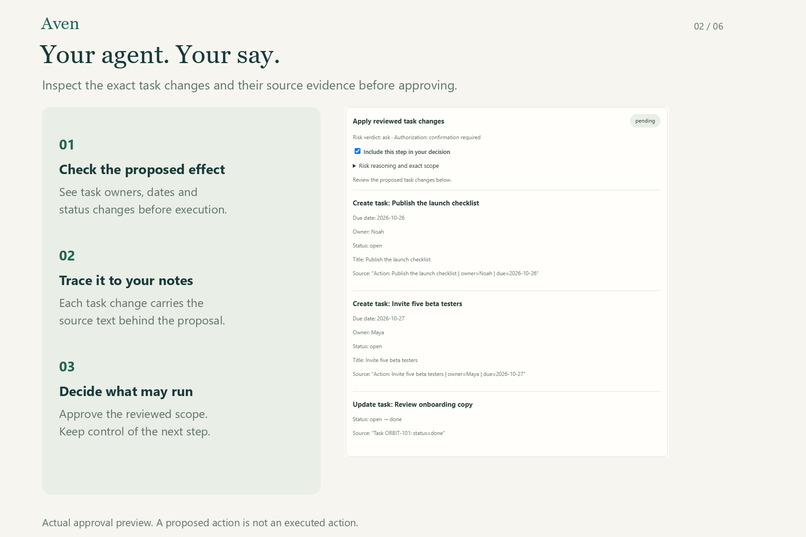
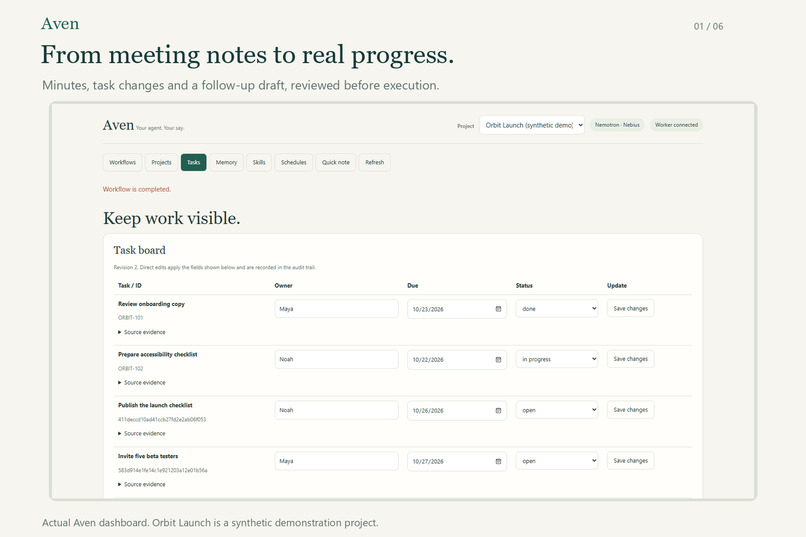
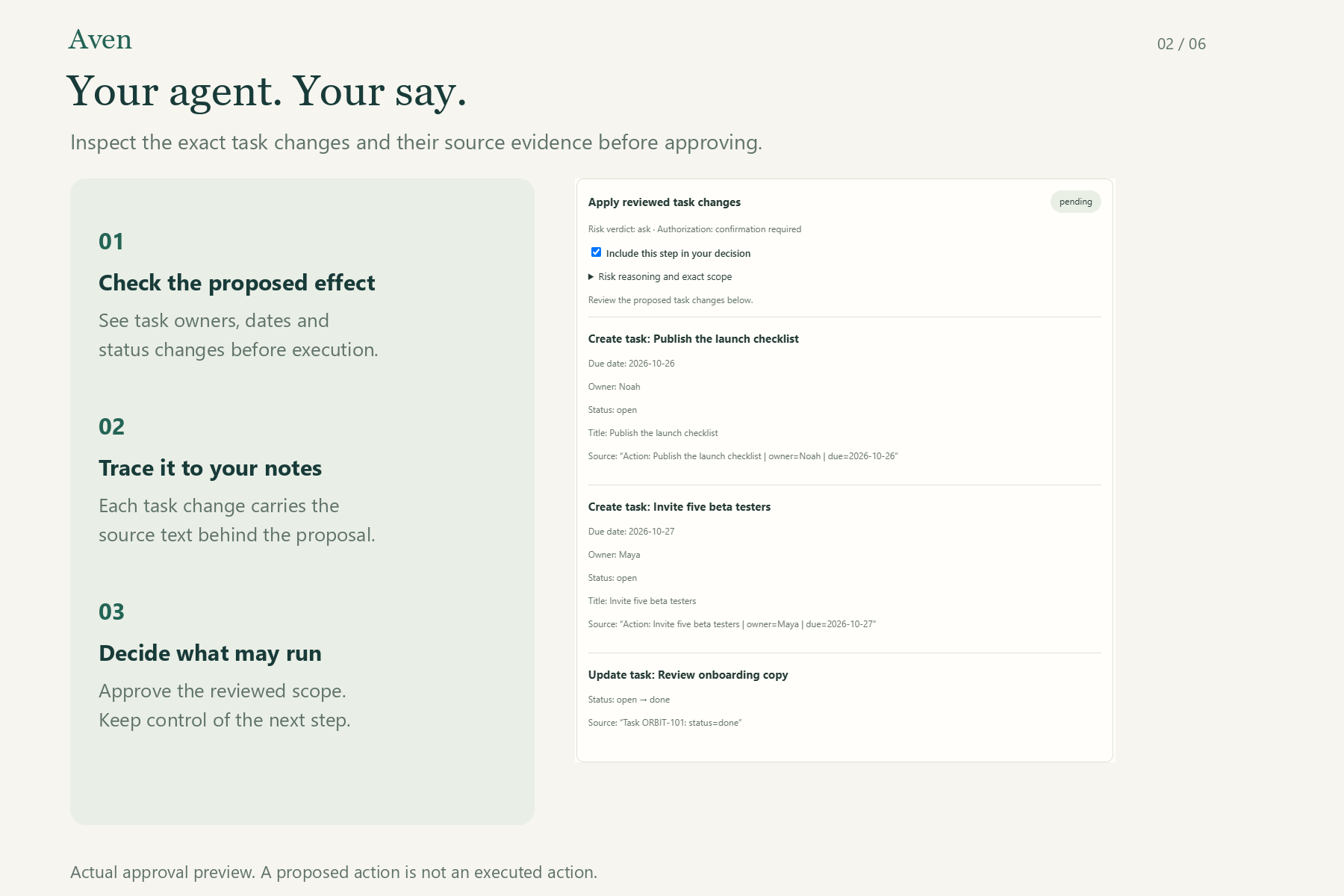
Aven turns meeting notes into structured minutes, evidence-backed task-board changes and a follow-up message draft. You inspect the proposed effects, then approve the steps you want it to execute. The results persist in your project workspace.
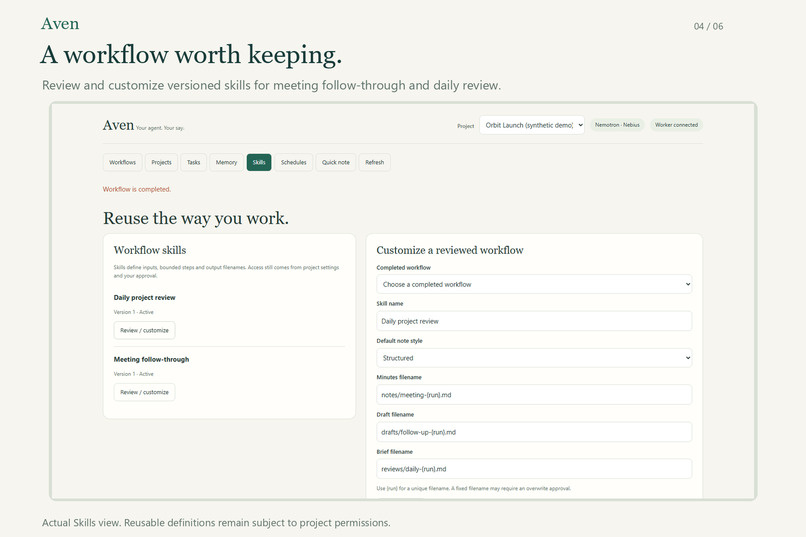
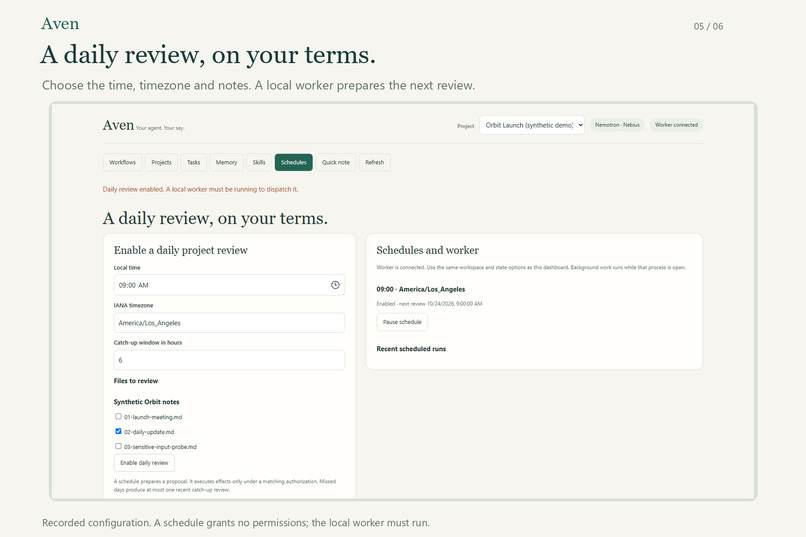
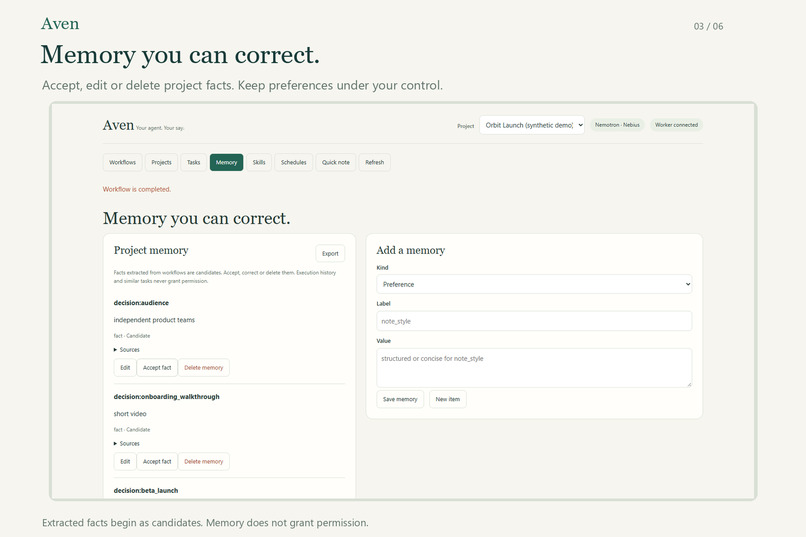
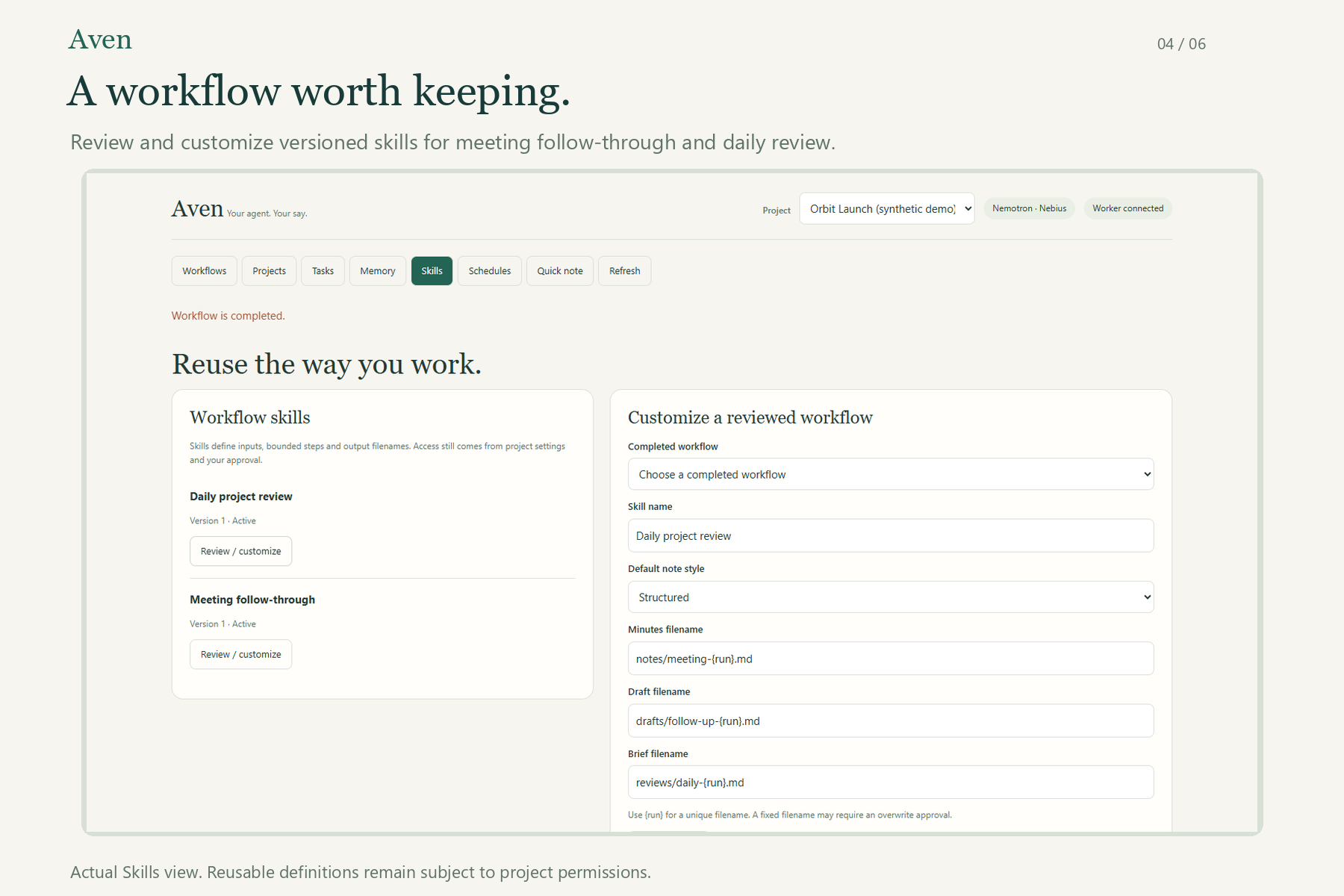
A daily review builds on the existing board and selected notes, surfaces overdue work and avoids repeating unchanged inputs. Correctable project memory and reviewed, versioned skills help the assistant carry context forward. Optional schedules prepare reviews while an owner-started local worker is running; a schedule itself grants no permission to act.
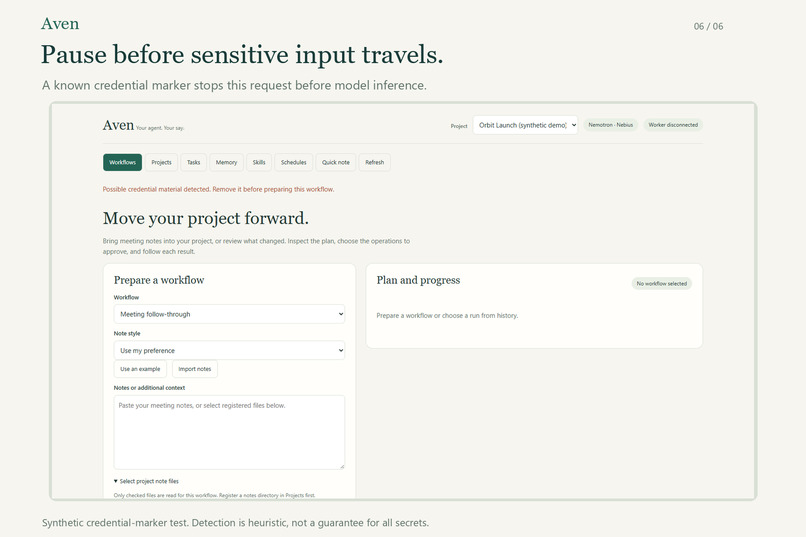
The demonstration follows a synthetic launch project through meeting follow-through, a later daily update, editable memory and a credential-marker input that is blocked before inference.
How I built it
Aven uses NVIDIA Nemotron through Nebius Token Factory for live planning and a separate risk assessment. A Python runtime validates proposals, checks permissions and executes bounded tools. SQLite stores workflows, task revisions, memory, approvals and execution history. A browser dashboard makes the plan and its results inspectable.
The dashboard, files, database and worker run locally. Selected notes and bounded project context are sent to Nebius for inference. Optional Vosk transcription runs locally. Follow-up messages are saved as drafts for the user to send.
Challenges I ran into
Model output can be incomplete or inconsistent, even with structured responses. I added schema validation, source-evidence checks and bounded retries. Invalid proposals stop without executing their effects.
Interrupted workflows also need careful handling: a restart must not silently duplicate an action. A durable execution ledger, checkpoints and reconciliation make interrupted work inspectable. Risk assessment stays separate from authorization, so a saved permission cannot override a refusal or revoked access.
Accomplishments and lessons
I completed a real end-to-end workflow with persisted task changes and recorded the live application using synthetic data. The latest automated run passed 116 tests, with one platform-specific test skipped.
The central lesson was that continuity and control belong together: memory should be correctable, permissions should have a clear scope, and each action should leave an understandable result.
What's next
I plan to simplify installation, expand evaluation beyond the synthetic fixtures and add carefully scoped integrations. A hosted demonstration will need session isolation, persistent storage and authenticated access. The current release is a local Python application with cloud inference.


Log in or sign up for Devpost to join the conversation.