-
-
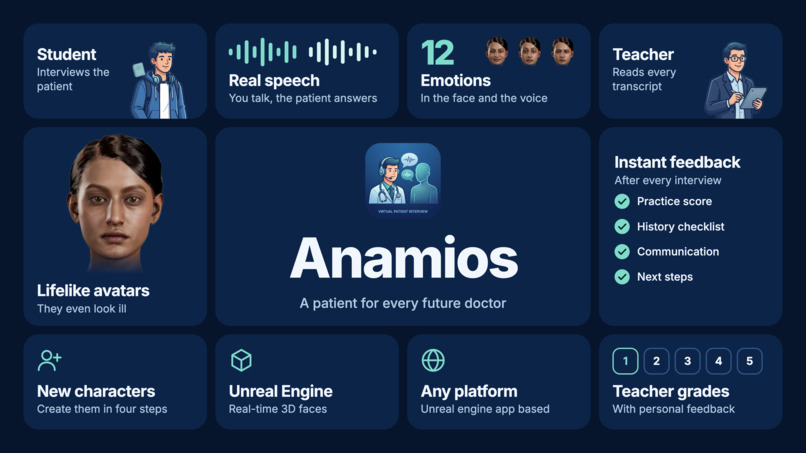
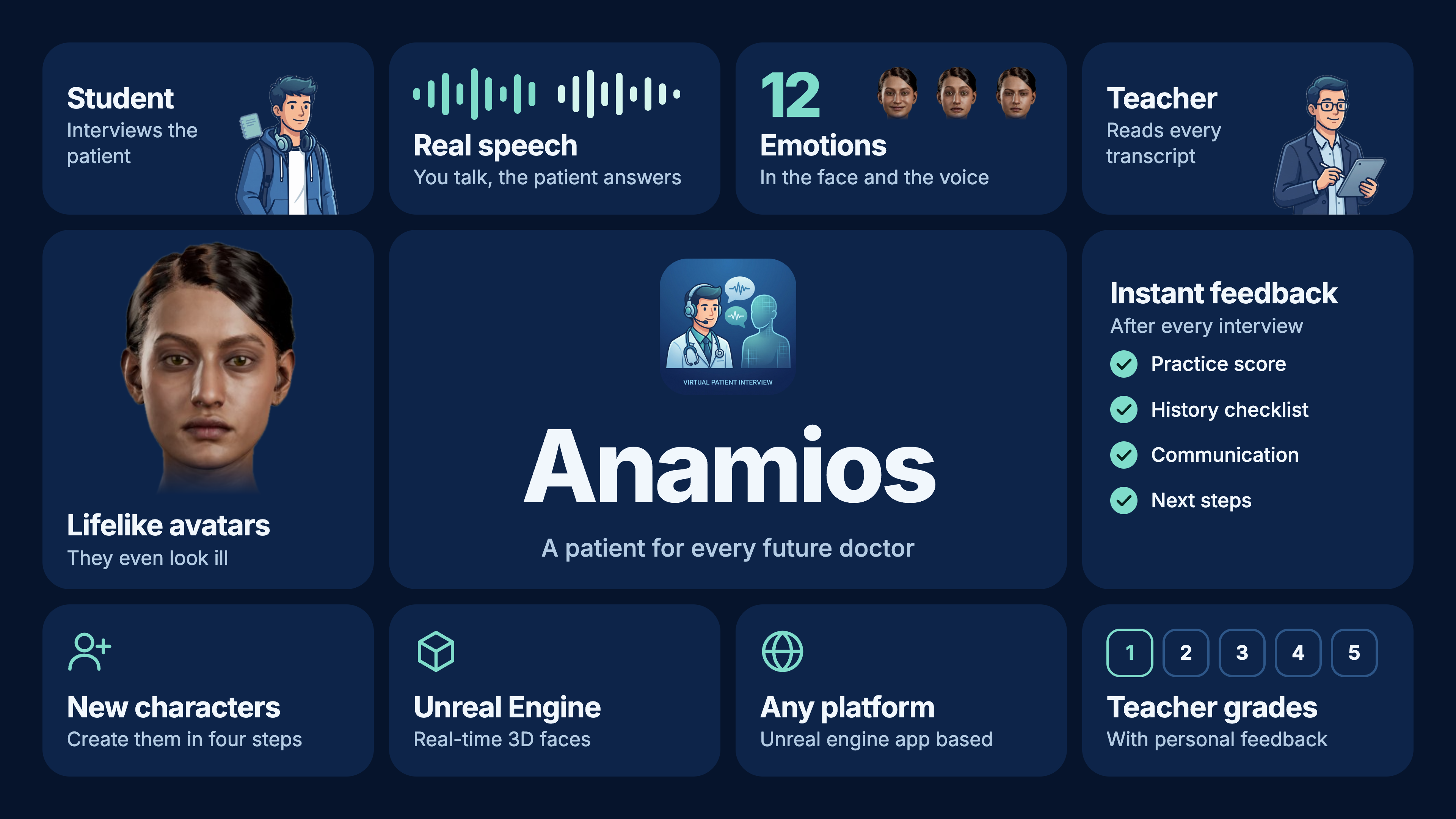
Anamios feature map
-
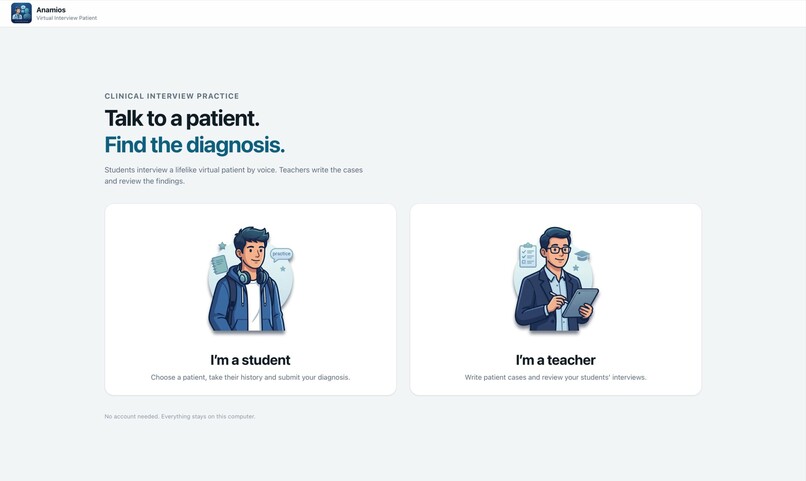
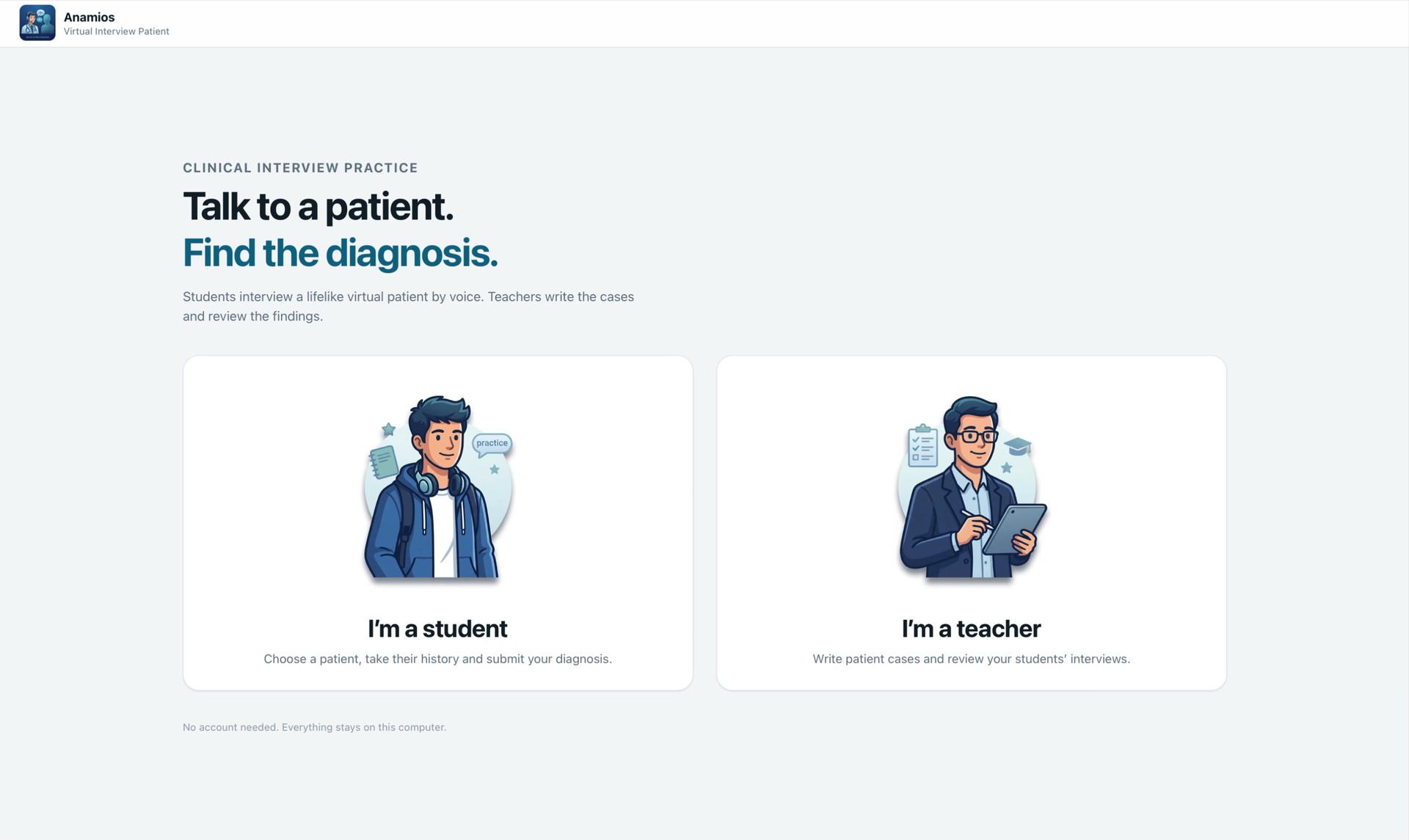
The start page: practise interviews as a student, or write cases and review interviews as a teacher.
-
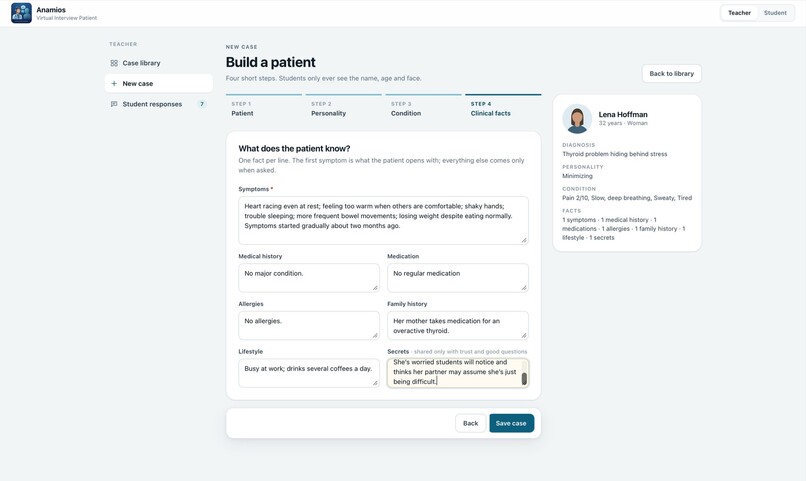
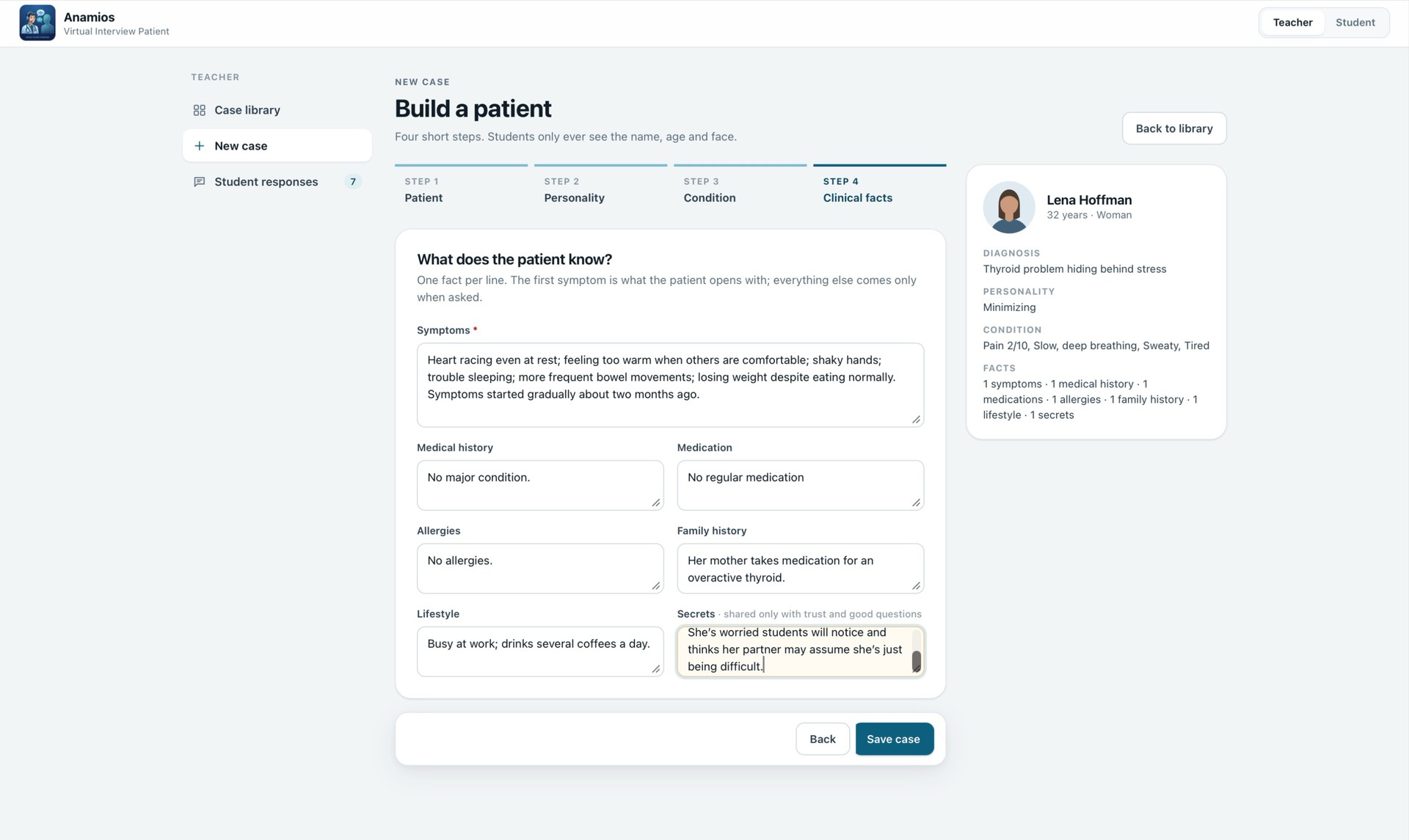
Teachers build every case: symptoms, history and the secrets the patient hides
-
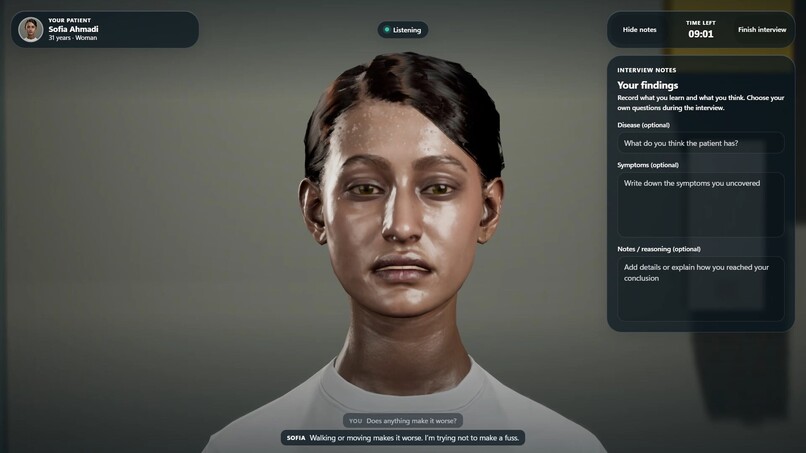
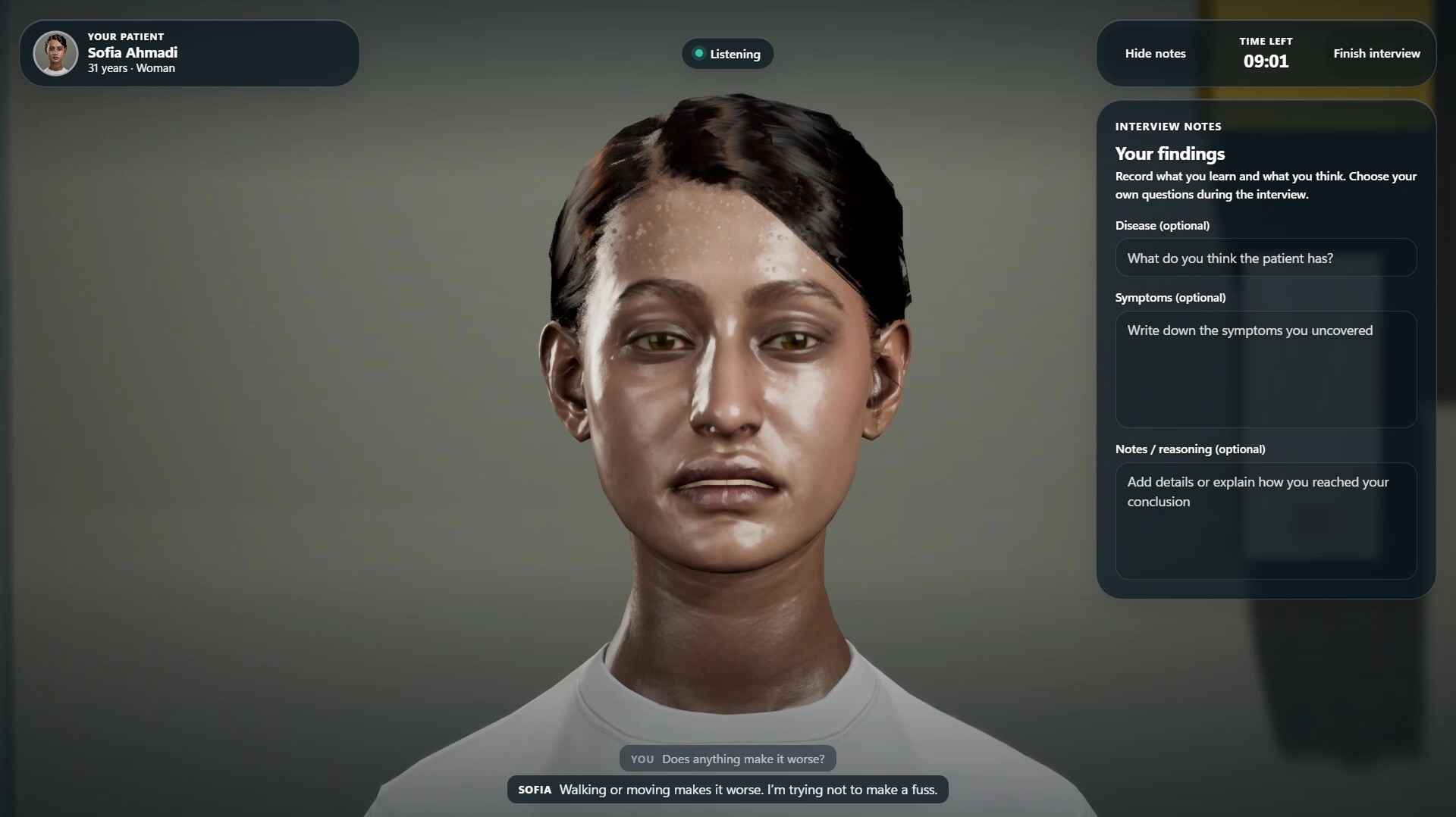
Sofia, pale and sweating, answers the student out loud. Captions show the question and her reply.
-
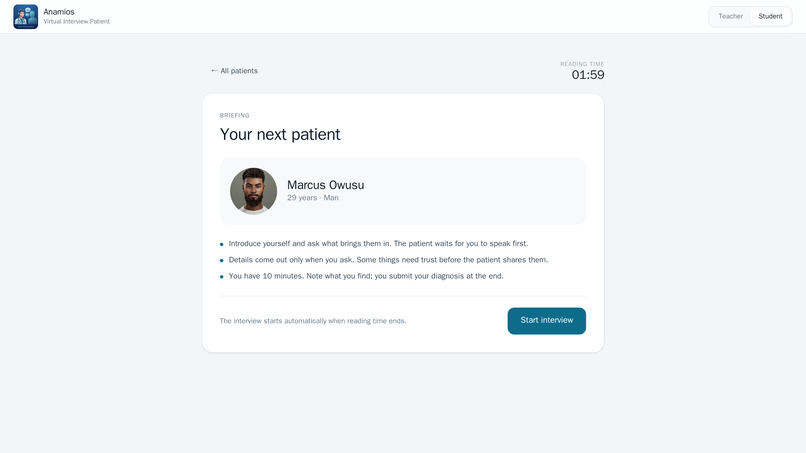
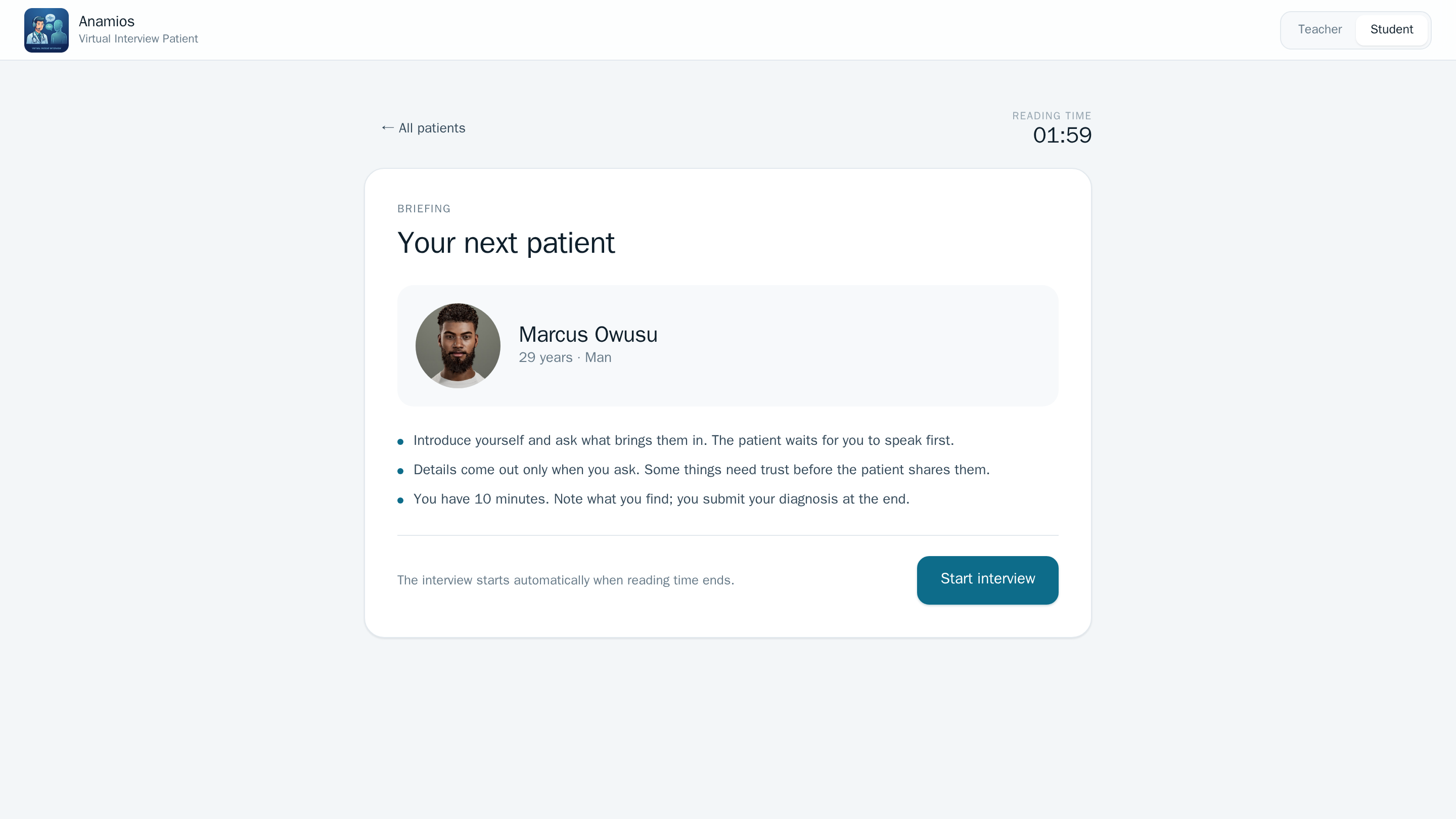
Students pick a patient and start practising, any time, as often as they like
-
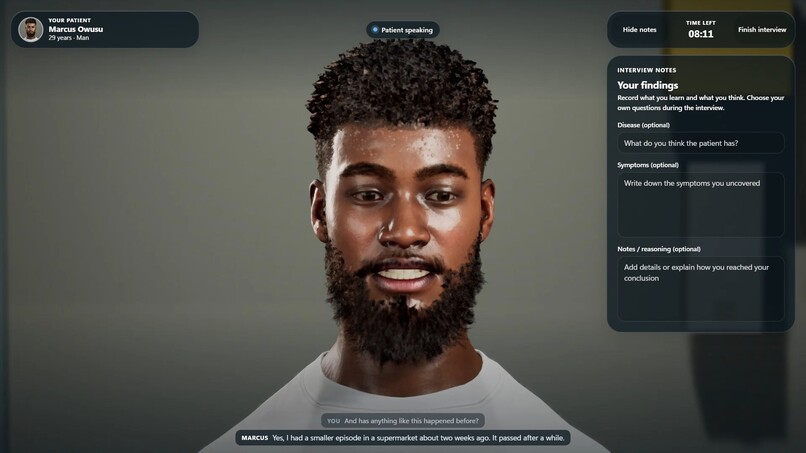
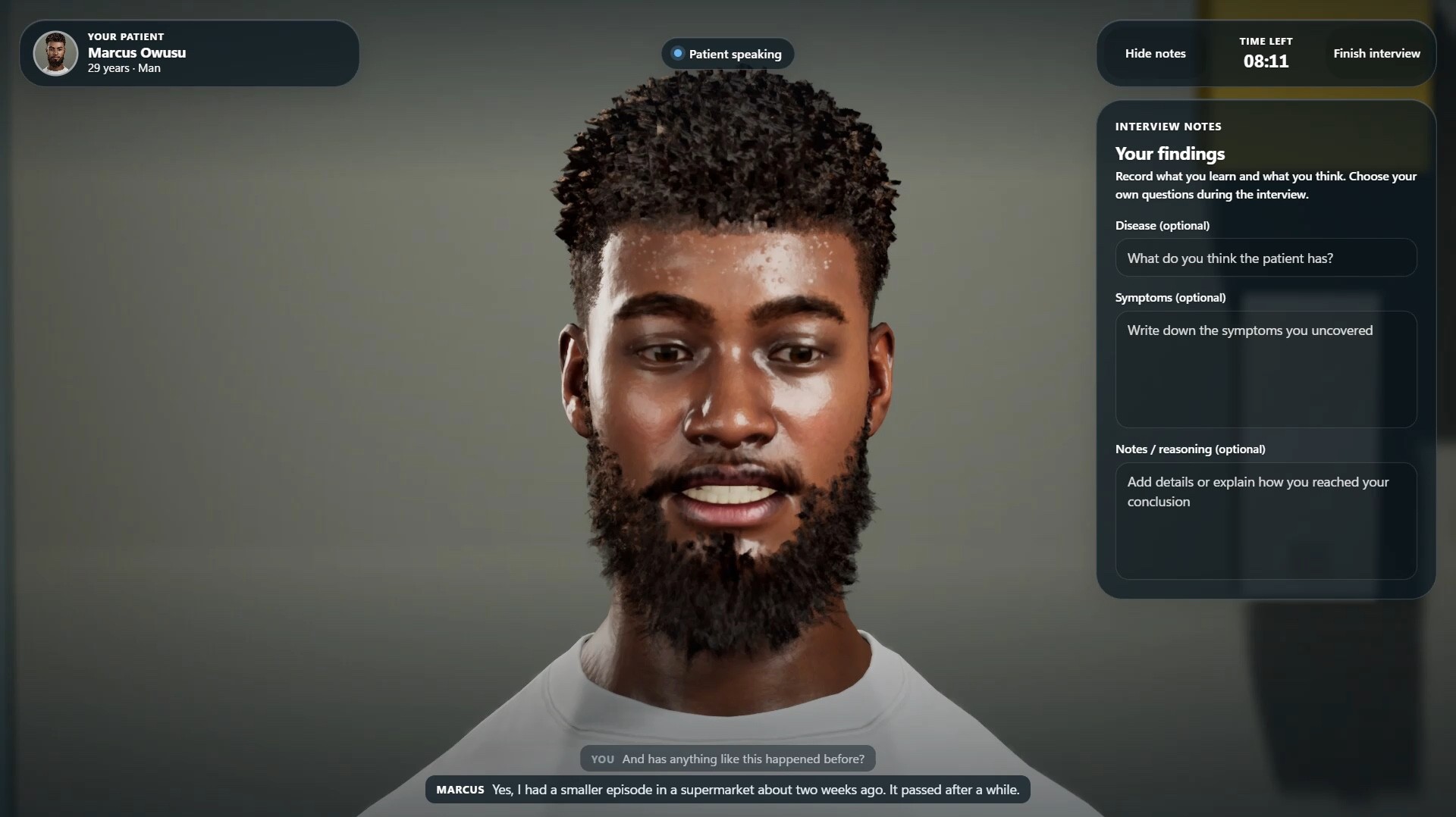
Marcus, flushed and sweaty, describes his symptoms while the student notes findings on the right.
-
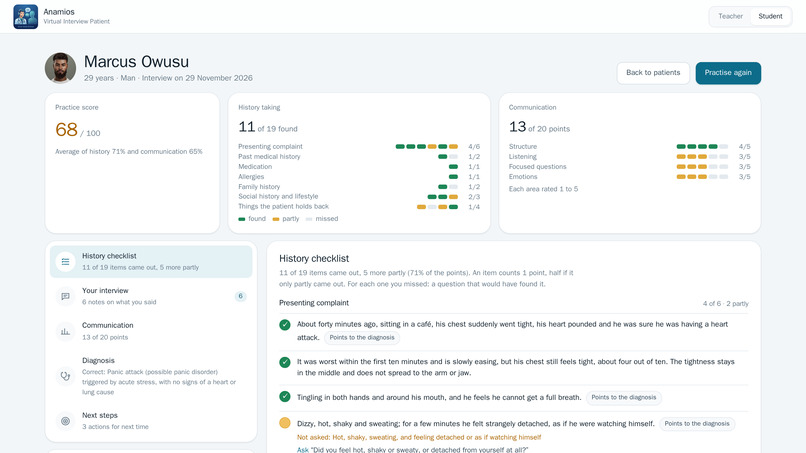
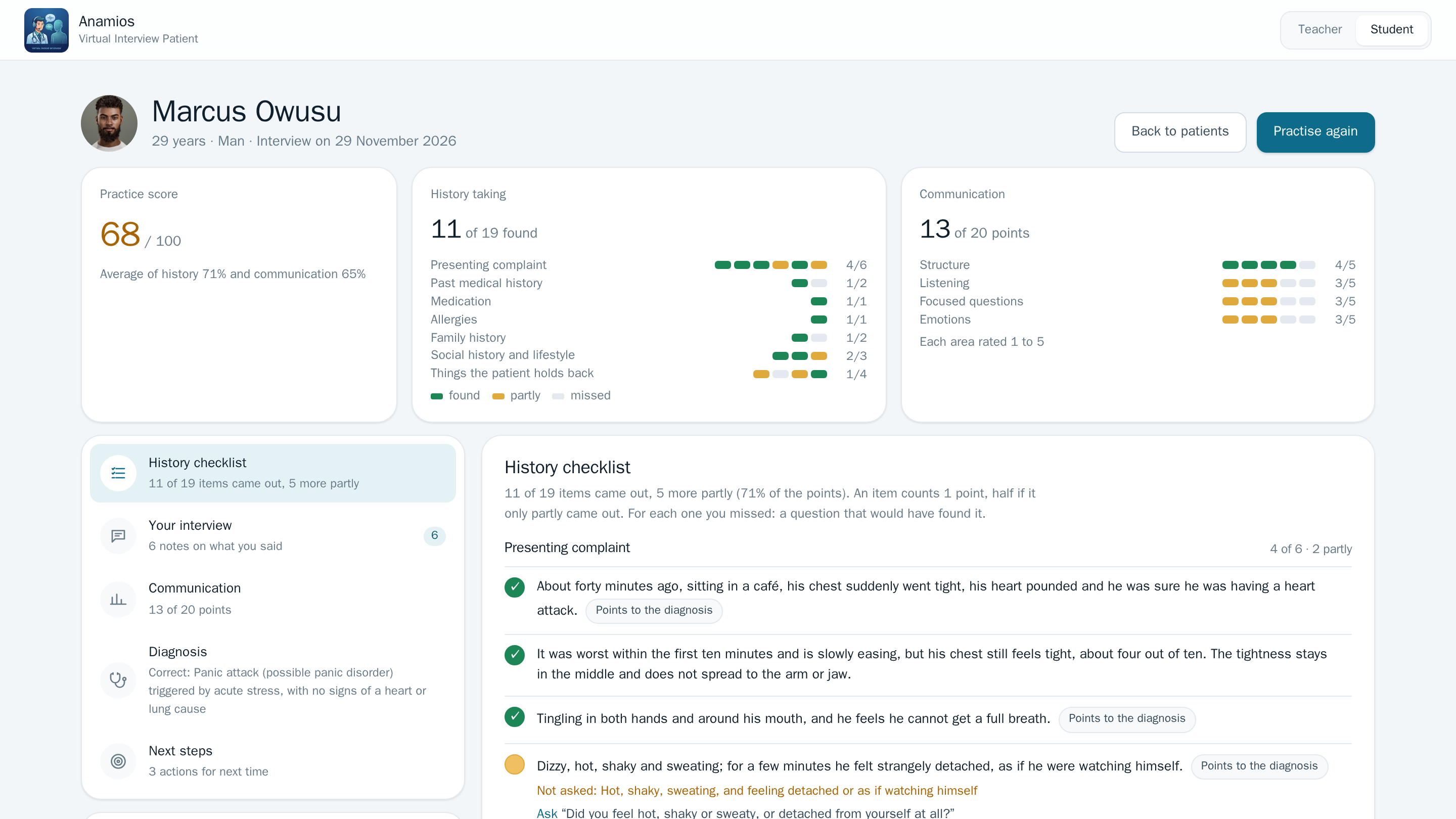
Every interview scored: history found or missed, and communication rated 1 to 5.
Inspiration
Every doctor learns to take a medical history by talking to patients. Universities train this with actors who play patients, but actors are expensive and hard to book, so most students only practise a handful of times before their exam. Text cases don't help much: they give every fact away, and a real patient never does. We wanted every student to have a patient of their own, any time.
What it does
Anamios is a virtual patient you simply talk to.
- 🗣️ Talk, don't type. The student speaks into the microphone. The patient answers out loud, with a voice that sighs, hesitates and gets upset.
- 🎭 A real personality. Shy, anxious, distrustful, assertive, or playing everything down. Two patients with the same illness feel completely different.
- 🔒 Secrets need trust. Facts come out only when asked. The embarrassing part of the story only comes out when the student is respectful, explains why they ask, and asks about it. Rushing, jargon and judging lose trust.
- 😟 A face that reacts. A lifelike 3D patient (Unreal Engine MetaHuman) sits in a doctor's office. It listens, thinks, winces in pain, looks pale, sweaty or yellow, breathes fast, and can break down in tears.
- 📊 Feedback straight away. After the interview the student gets a score, a checklist of every fact found or missed (with a question that would have found it), communication ratings, notes on their own sentences ("You said / Better") and three next steps.
- 👩🏫 Teachers stay in charge. A four-step form turns a teacher's idea into a playable patient: who they are, how they come across, how the illness shows, what they know. Teachers read every interview with its transcript and give the grade that counts.
Six ready-made cases come with it, from a panic attack to an ectopic pregnancy, each with a scripted model interview.
How we built it
Four parts work together:
- Patient engine (Python, OpenAI models): holds the teacher's case and decides, turn by turn, what the patient may say. Secrets stay out of the model's prompt until trust is earned. A second "director" call runs next to every answer: it rates the student's question (open, empathic, rushed, jargon?), updates trust, writes the patient's inner thoughts and sets pain, breathing and visible signs. Every answer carries a hidden emotion marker that drives voice and face together.
- Voice (ElevenLabs Agents): speech recognition, turn-taking and an emotional voice per patient. It handles interruptions, ignores "mhm" while the patient talks, fills slow moments with "Hm…" and waits quietly through silences.
- 3D patient (Unreal Engine 5.8, MetaHuman, C++): the generated voice drives MetaHuman's audio-to-face solver directly, with no microphone or virtual cable. On top we built our own layers: twelve emotions from facial action units (FACS), pain from the Prkachin–Solomon pain units, breathing, blinking, eye movement, listening and thinking poses, and skin and eye signs (pale, jaundice, cyanosis, sweat, tears). The scene is scripted, so the whole patient is rebuilt from Epic's presets and no Epic assets are in our public repo.
- Website (Python, plain HTML/JS): role picker, case builder, the interview screen with the live 3D picture, captions and notes, the feedback screen, and the teacher's review. There is also a one-window desktop app for Windows.
Challenges we ran into
- Keeping secrets without making the patient lie. Our first version simply refused, and students never came back to the topic. Now the patient hints first ("Things have been a bit different lately…") and tells on the follow-up, like a real person working up the courage.
- Making a face look human, not like a mask. MetaHuman's built-in moods were too subtle and its idle face sat with the mouth open. We wrote our own expression, pain and "never frozen" layers, and toned strong emotions down so they never become grimaces.
- Speed. A conversation feels broken after about two seconds of silence. We stream everything: the face changes and the voice starts while the rest of the answer is still being written.
- The patient cutting itself off. On laptop speakers the microphone heard the patient's own voice. Playing the voice in the browser lets its echo cancellation solve it.
Accomplishments that we're proud of
- In our tests with AI "students", the naive approach gave secrets away to every student, even rude ones (7 leaks). Ours gave them only to the kind, careful students, with no leaks, no invented facts and no contradictions.
- Answers are short and human: about 16 words, close to trained actors (about 13).
- A full chain from voice to emotional 3D face, running live.
- The feedback scores the model interviews between 66 and 92 and names exactly which facts were missed.
What we learned
What makes a virtual patient believable is less about clever words and more about behaviour: when to hold back, when to hint, how feelings fade over a few turns, and how the face reacts before the words. And that the best AI for learning is one that does not hand over the answer.
What's next for Anamios
- A class overview for teachers: which facts and skills most students miss, so seminars can target them.
- Student logins to follow progress over a semester.
- More cases, written and checked together with medical teachers (ours are not yet checked by a doctor).
- More languages, starting with German.
Two challenges
- Avelios: virtual interview patient. Believable background, spoken English, personality with emotion in the voice, facts only when asked, plus the nice-to-haves: teacher tool, structured history checklist, student feedback and a 3D avatar.
- Reply: AI on Campus. Teaching: teachers see every interview and what each student missed, before the exam. Learning: the AI is the patient, not a helper. It never gives the diagnosis away, so the student does the thinking. Assessment: the feedback grades the process (which facts were found and how the student asked and listened), not only the final answer.
Links
- 🎬 Demo video: https://youtu.be/oTiYO5FRs70
- 📄 All docs as one PDF: https://github.com/superc0mputer/anamios-hackaTUM-2026/blob/main/docs/Anamios.pdf
- Code and docs: https://github.com/superc0mputer/anamios-hackaTUM-2026
- The whole project, explained in short pages: https://github.com/superc0mputer/anamios-hackaTUM-2026#explore-the-project
- How it works, in plain words: https://github.com/superc0mputer/anamios-hackaTUM-2026/blob/main/docs/how-it-works.md
- AI on Campus (Reply): https://github.com/superc0mputer/anamios-hackaTUM-2026/blob/main/docs/ai-on-campus.md
- Gallery of every face, emotion and visible sign: https://github.com/superc0mputer/anamios-hackaTUM-2026/blob/main/docs/patient-states.md
Built With
- c++
- css3
- elevenlabs
- fastapi
- html5
- javascript
- jinja
- metahuman
- openai
- pydantic
- python
- unreal-engine
- websockets
