-
-
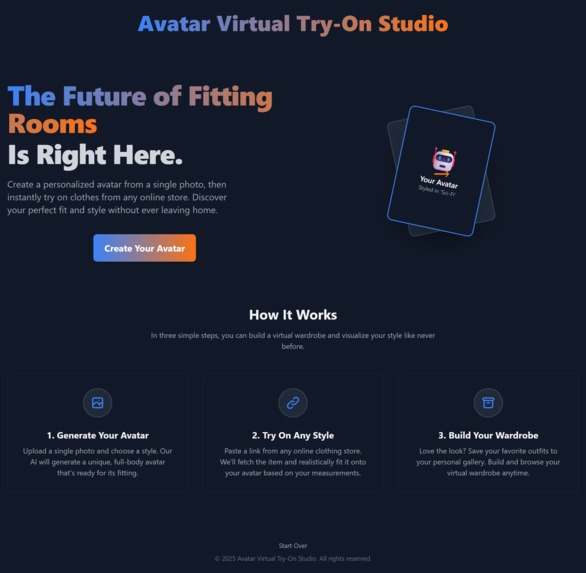
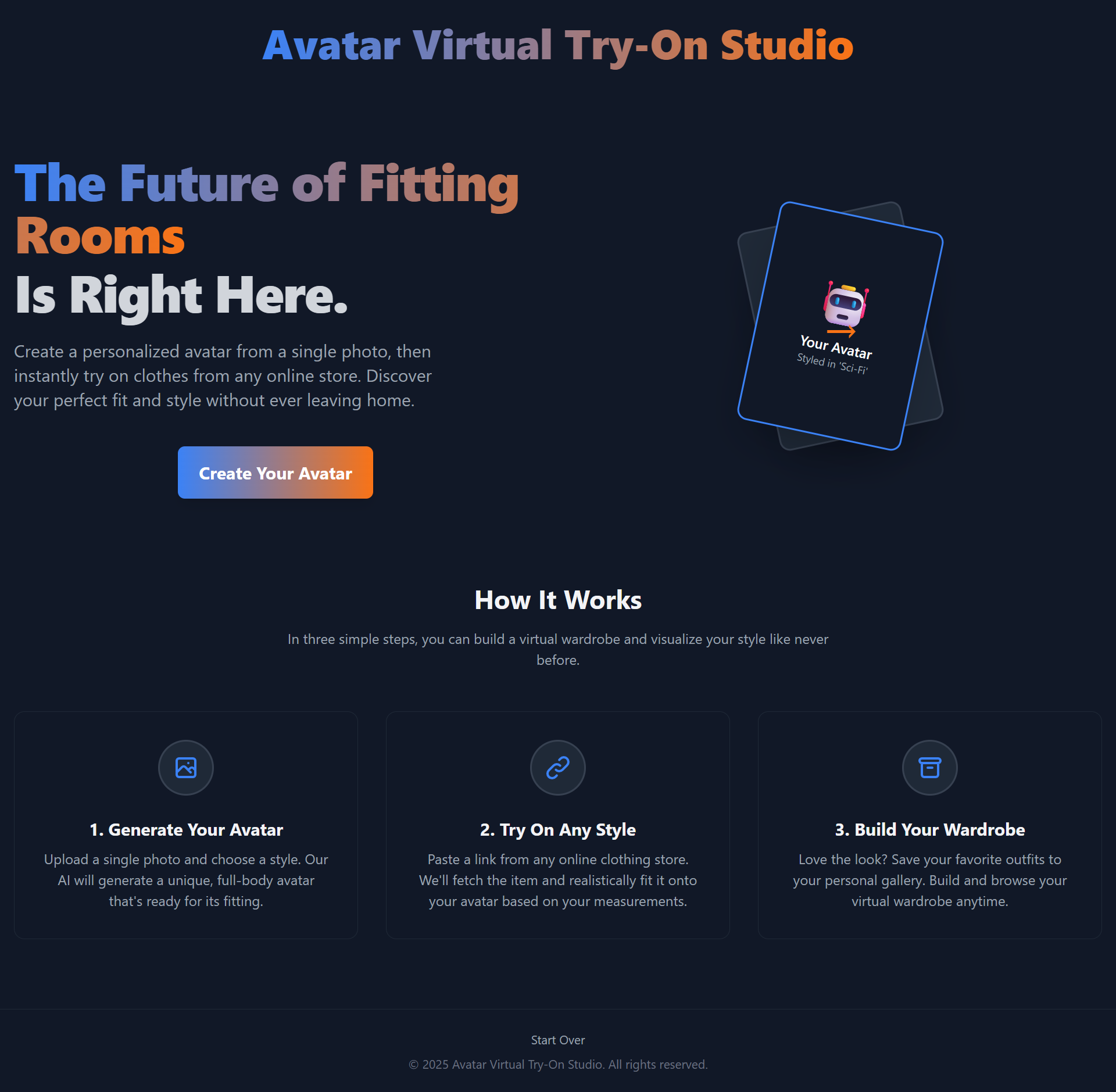
Landing Page
-
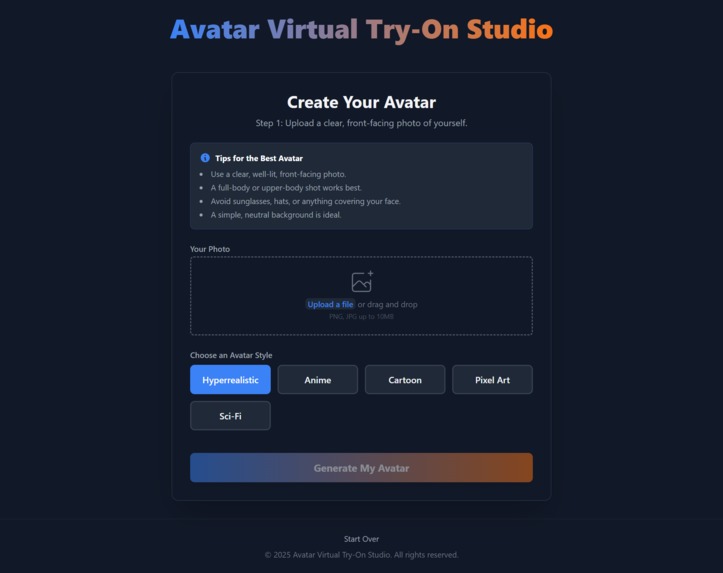
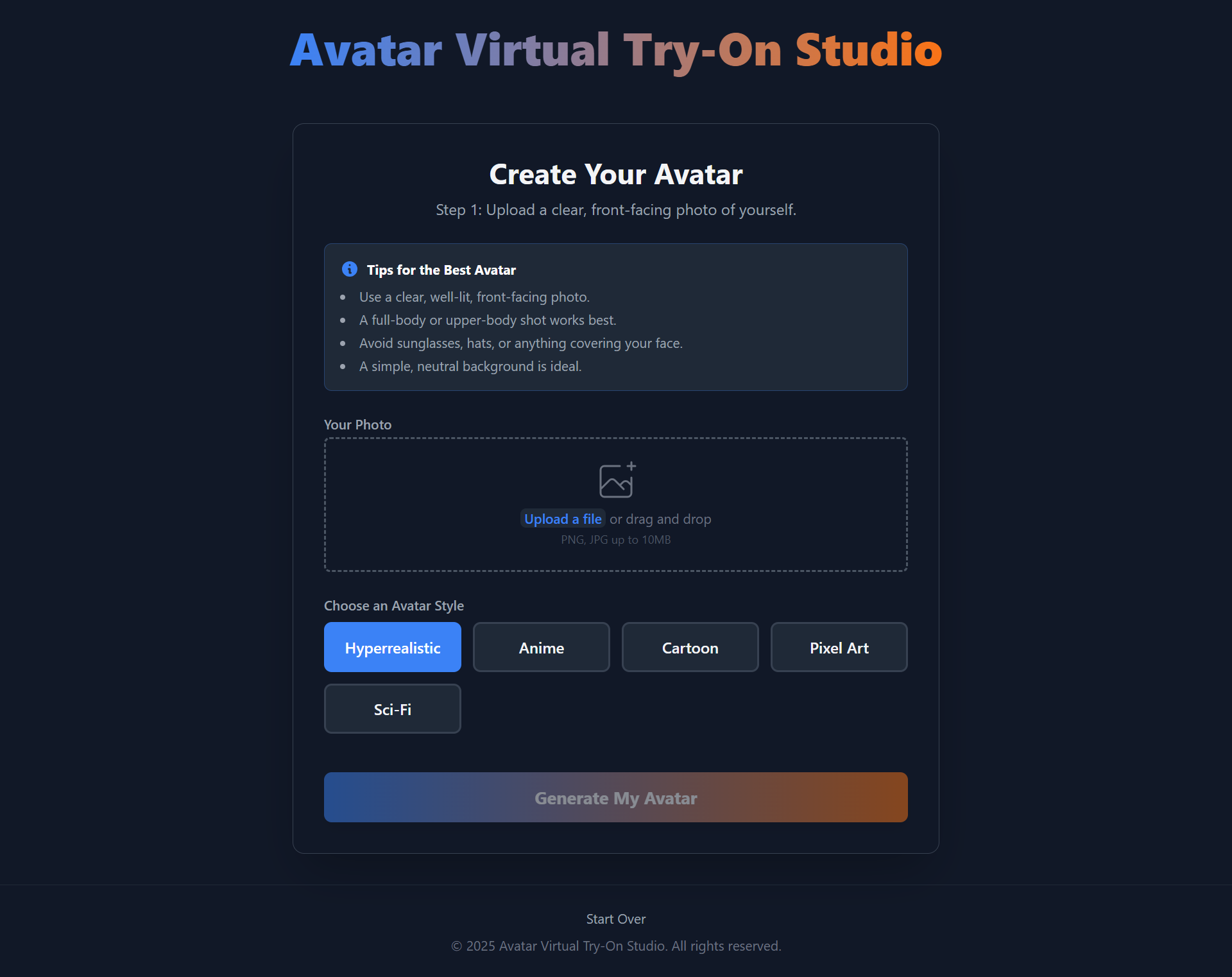
Creating user avatar profile
-
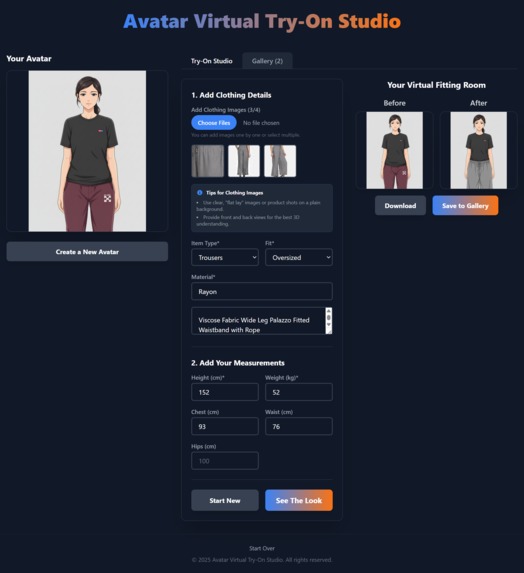
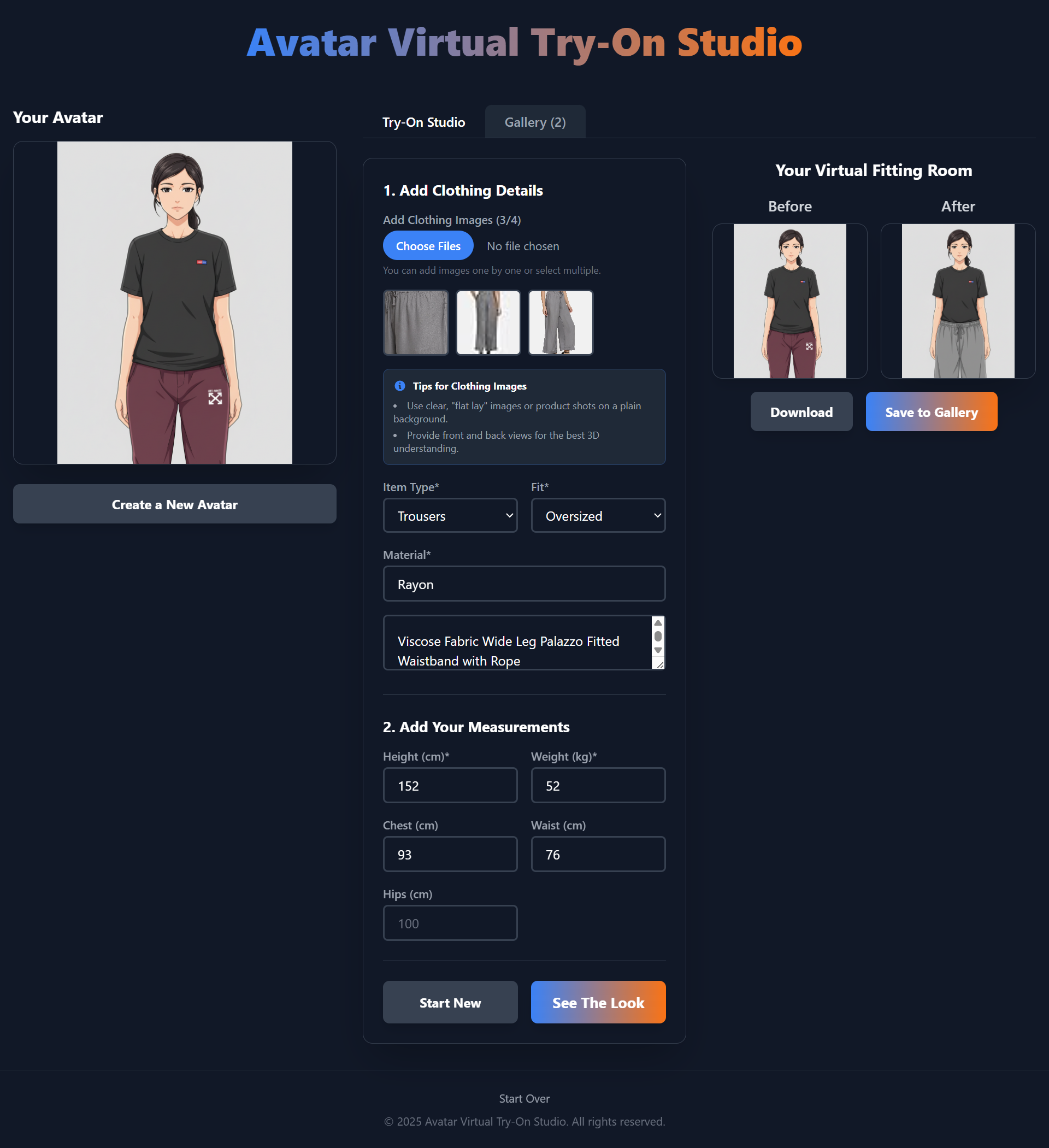
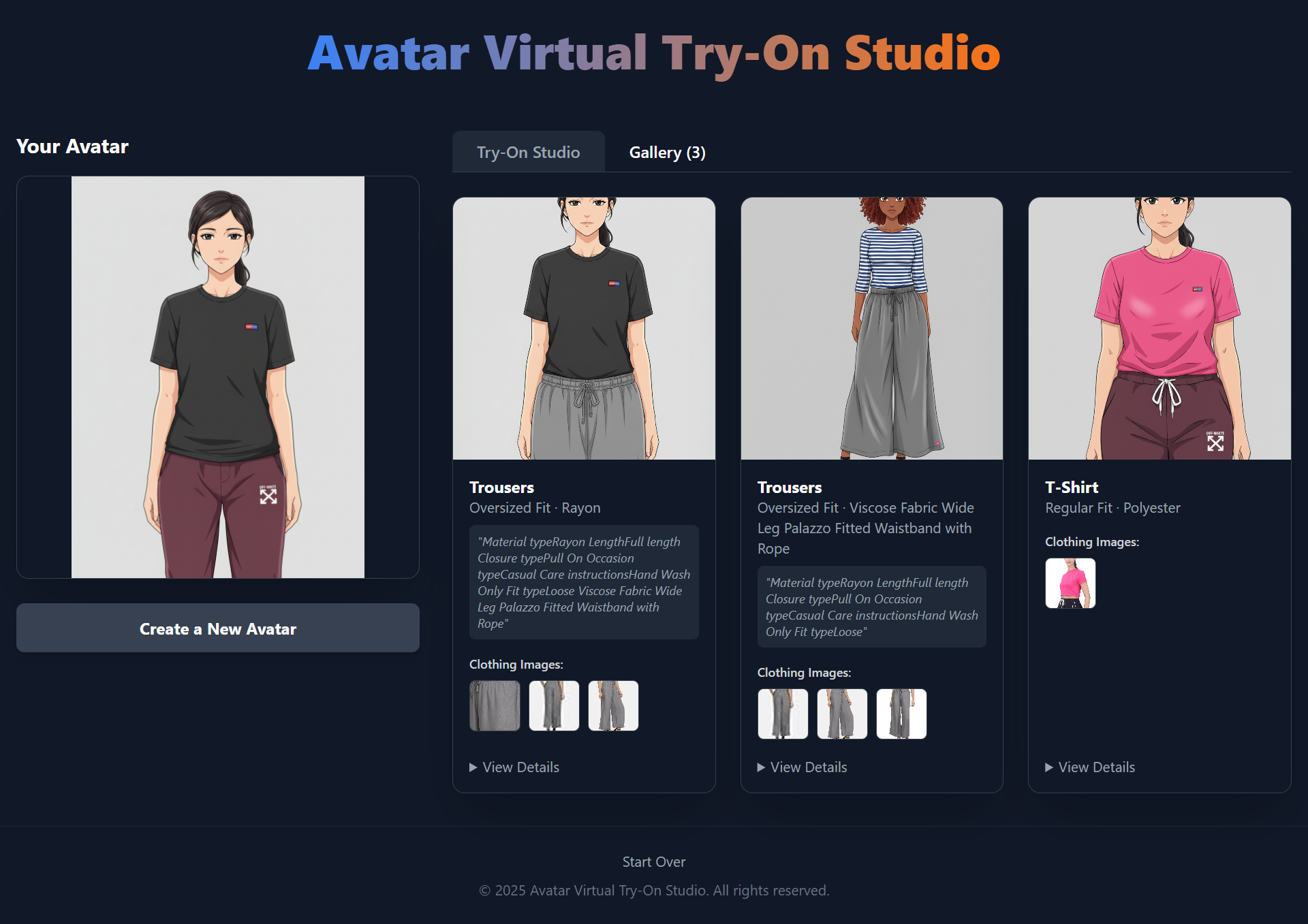
The virtual try-on studio
-
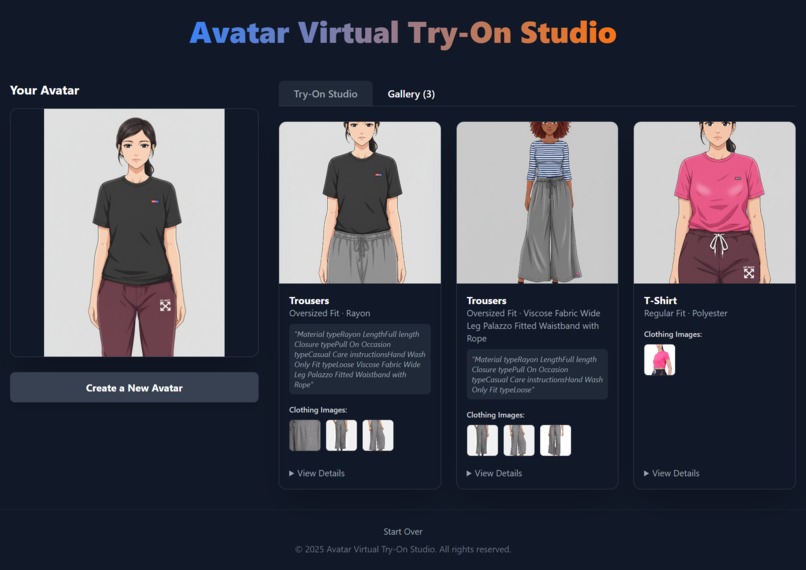
Gallery
-
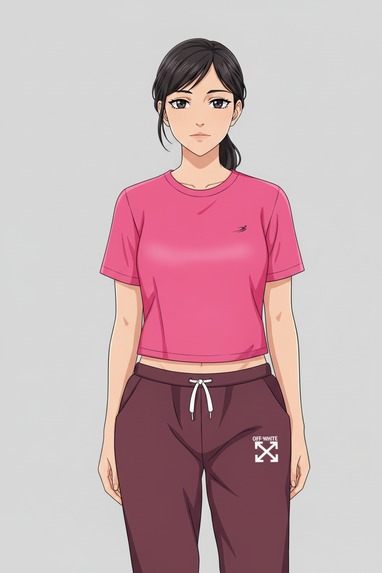
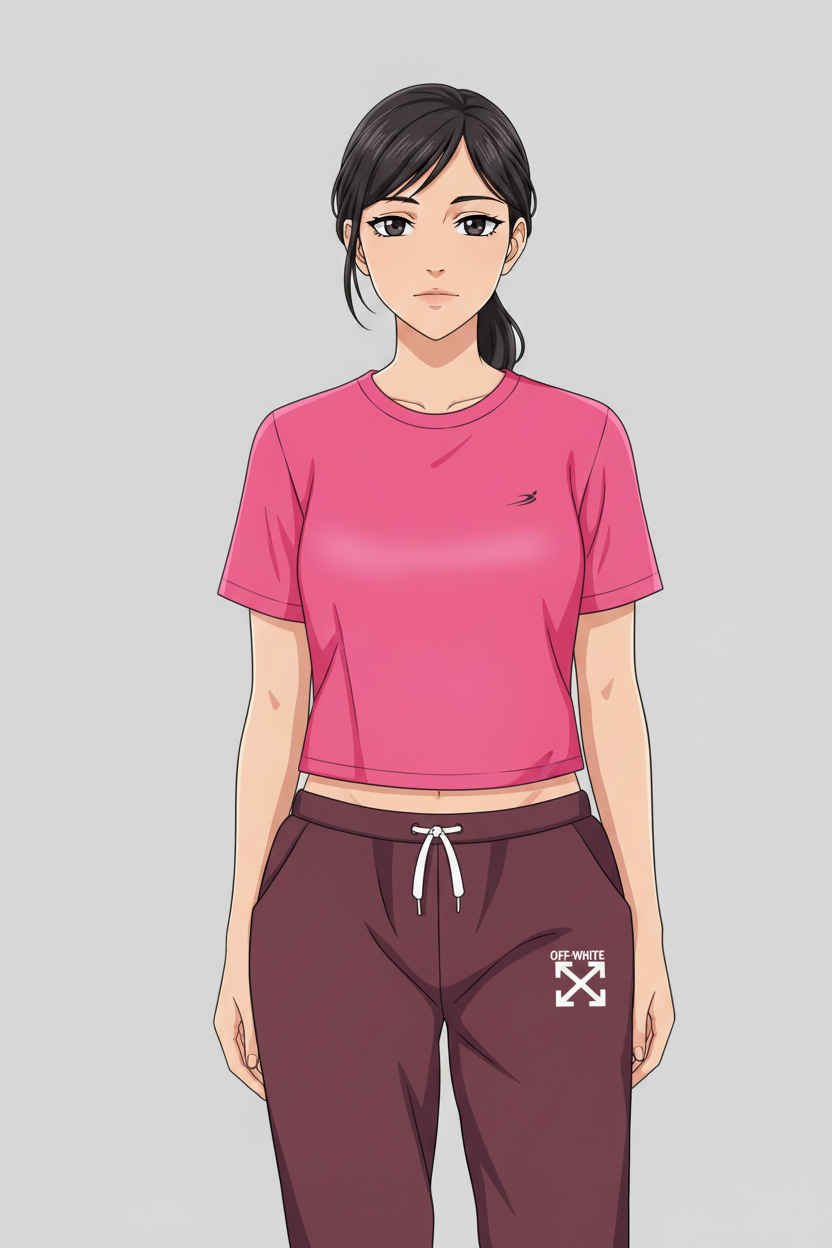
A downloaded try-on result
Inspiration
The spark came from two places that couldn't be more different, and yet perfectly aligned. Firstly, I wanted to build something truly impactful for the Octopus Hackathon. Then life gave me the perfect use case: my mum's birthday was approaching, and I found myself staring at online clothing stores, kinda clueless. How could I buy her something that would fit her perfectly when I couldn't see how it would look on her?
That frustration hit me hard. Here I was, a developer, and yet I was defeated by something as simple as buying clothes online. That's when it clicked, this isn't just my problem. It's a serious problem affecting millions of people worldwide who return clothes because they don't fit or look as expected.
I realized I could combine my technical skills with Google's cutting-edge Gemini AI( Gemini 2.5 Flash- for avatar try-ons) to solve this real-world problem. Not just for my mum, but for everyone who's ever hesitated before clicking "Add to Cart."
What it does
Avatar Virtual Try-On Studio transforms the way people shop for clothes online. Here's the magic:
🎭 Personal Avatar Creation: Upload any photo and watch as AI creates your personalized avatar in multiple styles - from hyperrealistic to anime, cartoon, pixel art, or sci-fi. Each avatar maintains your unique proportions and features.
👗 Intelligent Virtual Fitting: Upload clothing images (up to 4 per item) and input your measurements. This AI doesn't just overlay images - it understands fabric physics, material properties, and how different fits (slim, regular, loose, oversized) should actually look on your specific body type.
📏 Precision Measurement Integration: The system considers height, weight, chest, waist, and hip measurements to simulate how clothes will actually fit, not just how they look on a generic model.
🖼️ Smart Gallery System: Save your favorite combinations, compare different outfits, and build a virtual wardrobe that persists across sessions.
How I built it
Frontend Architecture (React + TypeScript):
• Built with React 18 and TypeScript for type-safe, maintainable code
• Implemented a multi-step user journey: Landing → Avatar Generation → Try-On Studio → Gallery
• Used Tailwind CSS for responsive, modern UI with custom brand gradients
AI Integration (Gemini 2.5 Flash):
• Engineered sophisticated prompts that teach the AI about fabric physics and material properties.
• Implemented multi-image analysis where the AI constructs 3D understanding from multiple clothing angles.
• Built measurement-aware fitting simulation that considers body proportions and intended fit styles.
• Created hyperrealistic rendering that simulates how different materials (cotton, silk, denim) behave.
Backend & Deployment:
• Node.js/Express server optimized for Google Cloud Run
• Docker containerization for scalable deployment
• Environment-based API key management for security
• Implemented proper error handling and loading states
Smart Features:
• LocalStorage integration for persistent user measurements and gallery.
• Real-time image processing with intuitive loading indicators.
• Intelligent file handling (up to 4 clothing images with preview and removal).
• Download functionality for generated results.
Challenges I ran into
The Fabric Physics Problem: Getting the AI to understand that silk drapes differently than denim was incredibly challenging. I had to spend hours crafting prompts that could communicate material properties, weight, and how fabrics should fold and crease naturally.
Multi-Image 3D Reconstruction: Teaching Gemini to analyze multiple clothing images (front, back, detail shots) and constructing a complete 3D understanding required innovative prompt engineering. The AI needed to mentally "rotate" and understand the garment's full structure.
Measurement Translation: Converting user measurements into accurate visual representation was complex. A "slim fit" on a 175cm person should look completely different than on a 160cm person, the AI needed to understand these proportional relationships.
Performance vs Quality Balance: Gemini 2.5 Flash produces incredible results, but processing time was a concern. I optimized by implementing smart loading states and error handling to maintain user engagement during processing.
Real-World Testing: Without my mum physically trying on clothes, validating accuracy was challenging. I had to rely on detailed fabric knowledge and iterative prompt refinement.
Accomplishments that I'm proud of
Hyperrealistic Results: Achieved photorealistic quality that's genuinely indistinguishable from real photos. The fabric physics simulation shows natural wrinkles, proper draping, and accurate material representation.
Measurement-Aware Intelligence: I was able to built a system that truly understands how different fits should look on different body types, not just generic overlays.
Production-Ready Architecture: Created a scalable, cloud-native application that can handle real-world traffic with proper error handling and user experience design.
Innovation in AI Prompting: Pushed the boundaries of what's possible with Gemini AI through advanced prompt engineering that communicates complex fashion and physics concepts.
Solving Real Problems: Built something that addresses a genuine $62 billion industry problem while helping individuals make better purchase decisions.
Technical Excellence: Implemented clean, maintainable code with TypeScript, proper component architecture, and modern development practices.
What I learned
1) AI is Only as Good as Our Communication: The most important skill wasn't coding - it was learning to communicate complex concepts to AI. Teaching Gemini about fabric physics required understanding fashion, materials science, and human anatomy.
2) User Experience is Everything: Technical capability means nothing if users can't easily achieve their goals. Every interaction needed to be intuitive and confidence-building.
3) Real-World Problems Drive Innovation: Starting with my mum's birthday gift led to insights I never would have discovered building a generic demo app.
4) Prompt Engineering is an Art: Crafting prompts that consistently produce high-quality results required understanding both the AI's capabilities and limitations.
5) Cloud-Native from Day One: Building for scale from the beginning, rather than retrofitting, creates better architecture and user experience.
What's next for Avatar Virtual Try-On Studio
• AR Camera Integration: Real-time try-on using device cameras for instant results
• Social Shopping Features: Share looks with friends and get feedback before purchasing
• Size Recommendation Engine: AI-powered size suggestions based on fit history and preferences
• Custom Design Studio: Design your own clothes and see them rendered on your avatar
• Global Marketplace: Connect users worldwide with perfectly-fitting clothing options
Built With
- canvas-api
- cors
- css3
- docker
- express.js
- file-api
- google-cloud-run
- google-gemini-ai
- html5
- http-client
- image-processing
- javascript
- node.js
- npm
- progressive-web-app
- react
- responsive-design
- rest-apis
- tailwind-css
- typescript
- vite


Log in or sign up for Devpost to join the conversation.