-
-
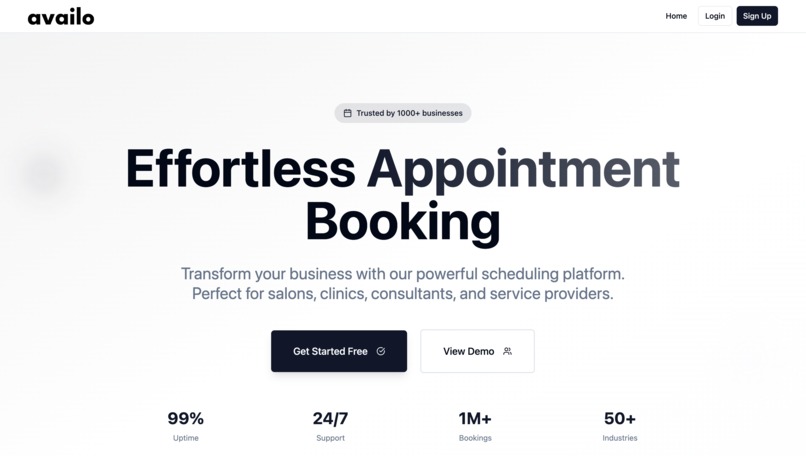
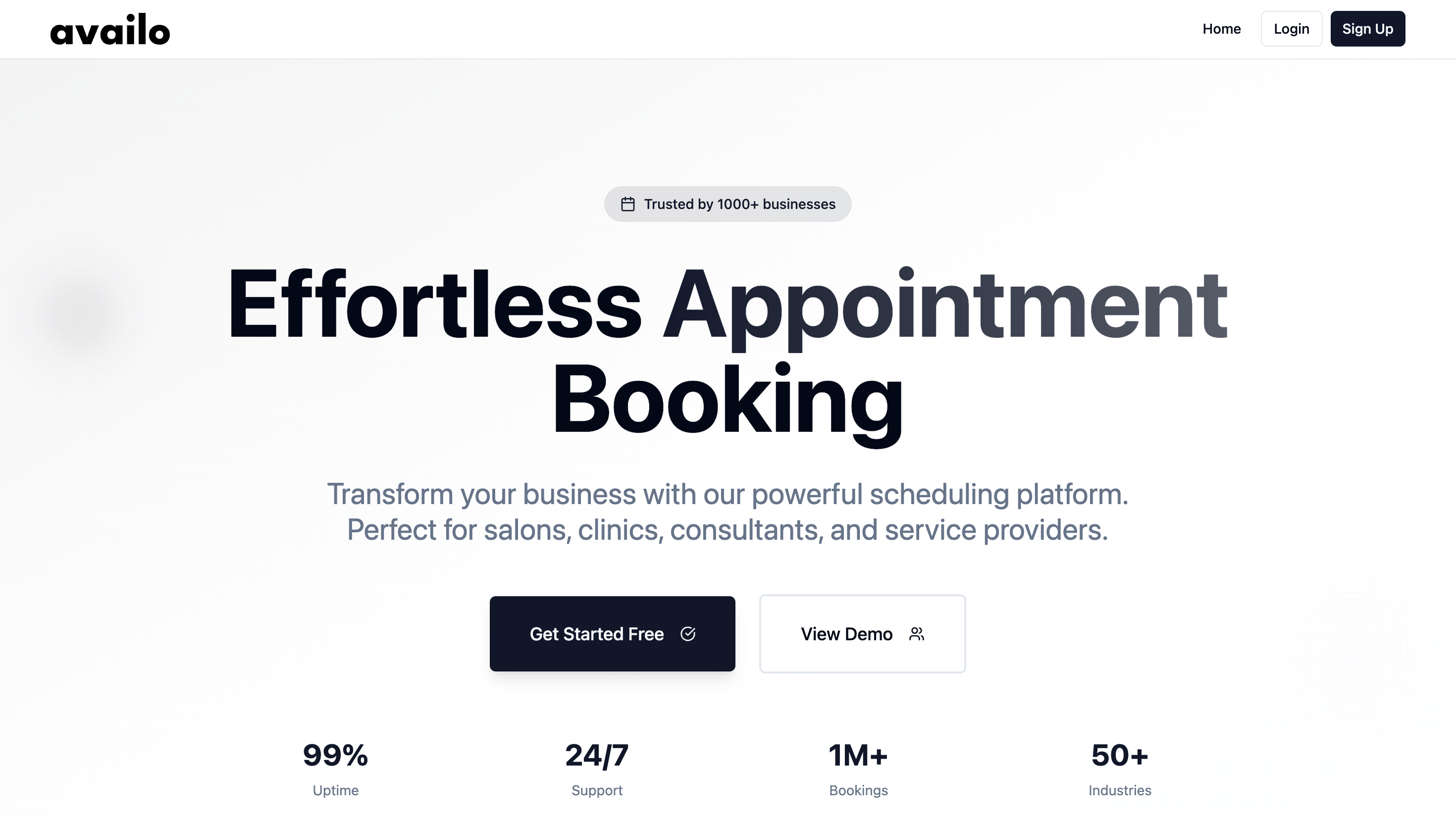
The landing page
-
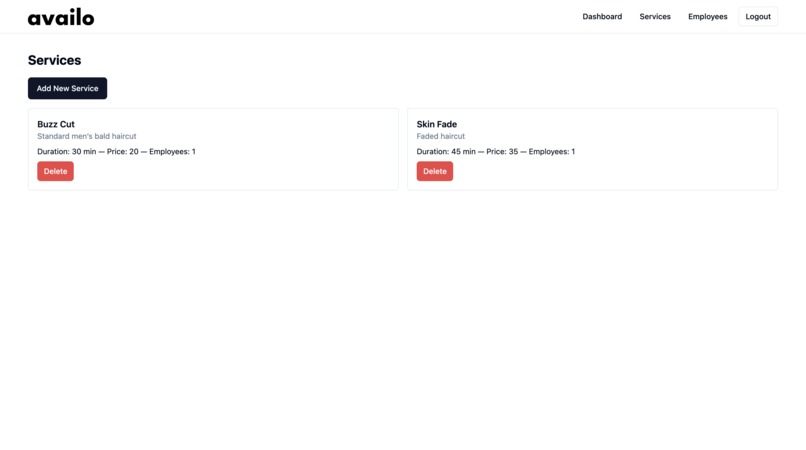
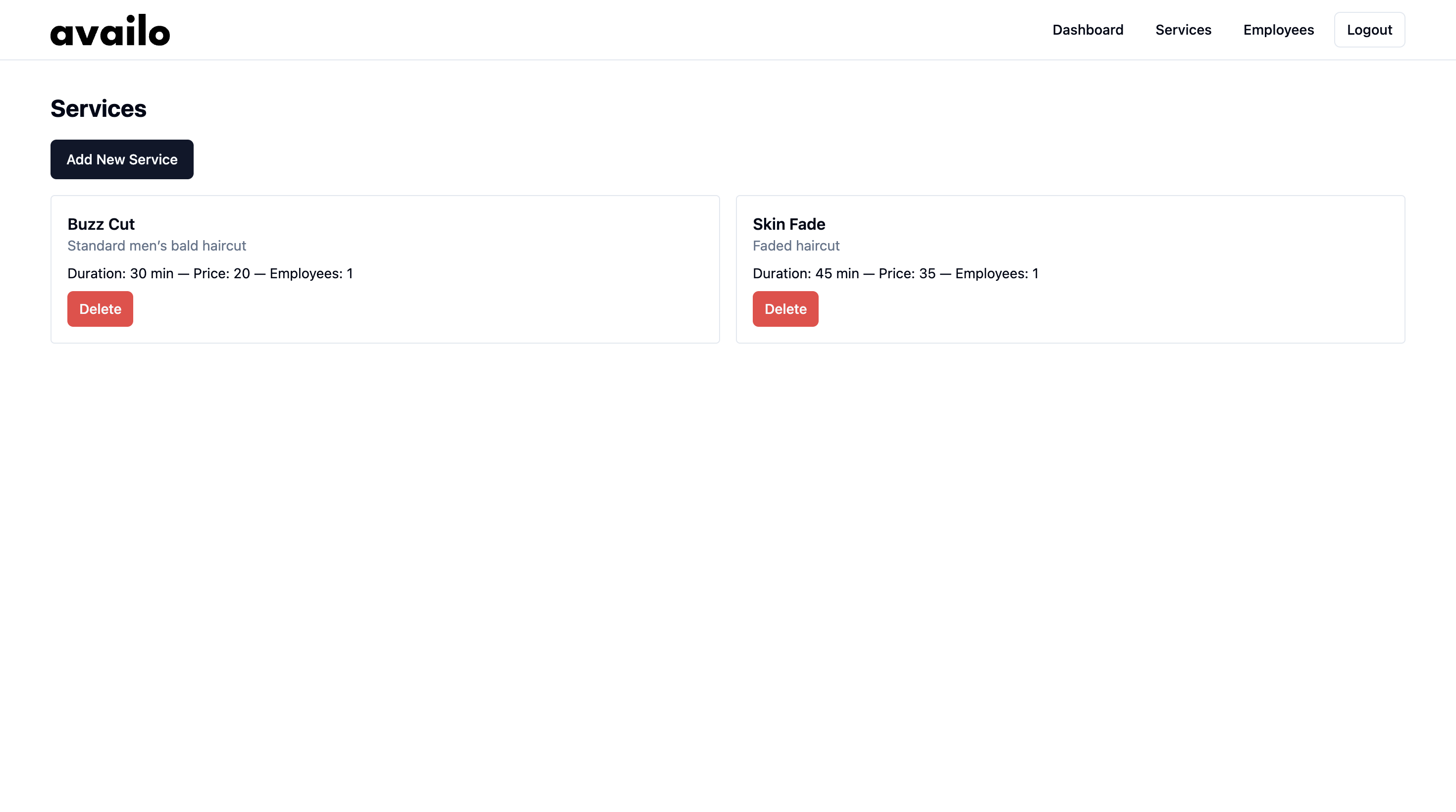
The services page
-
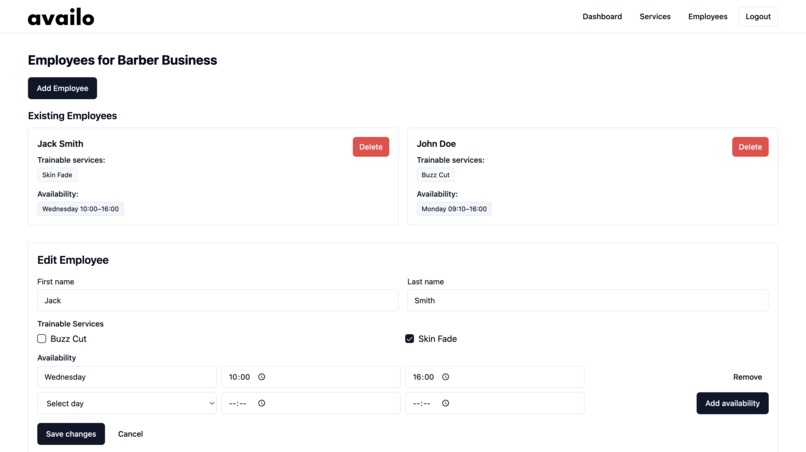
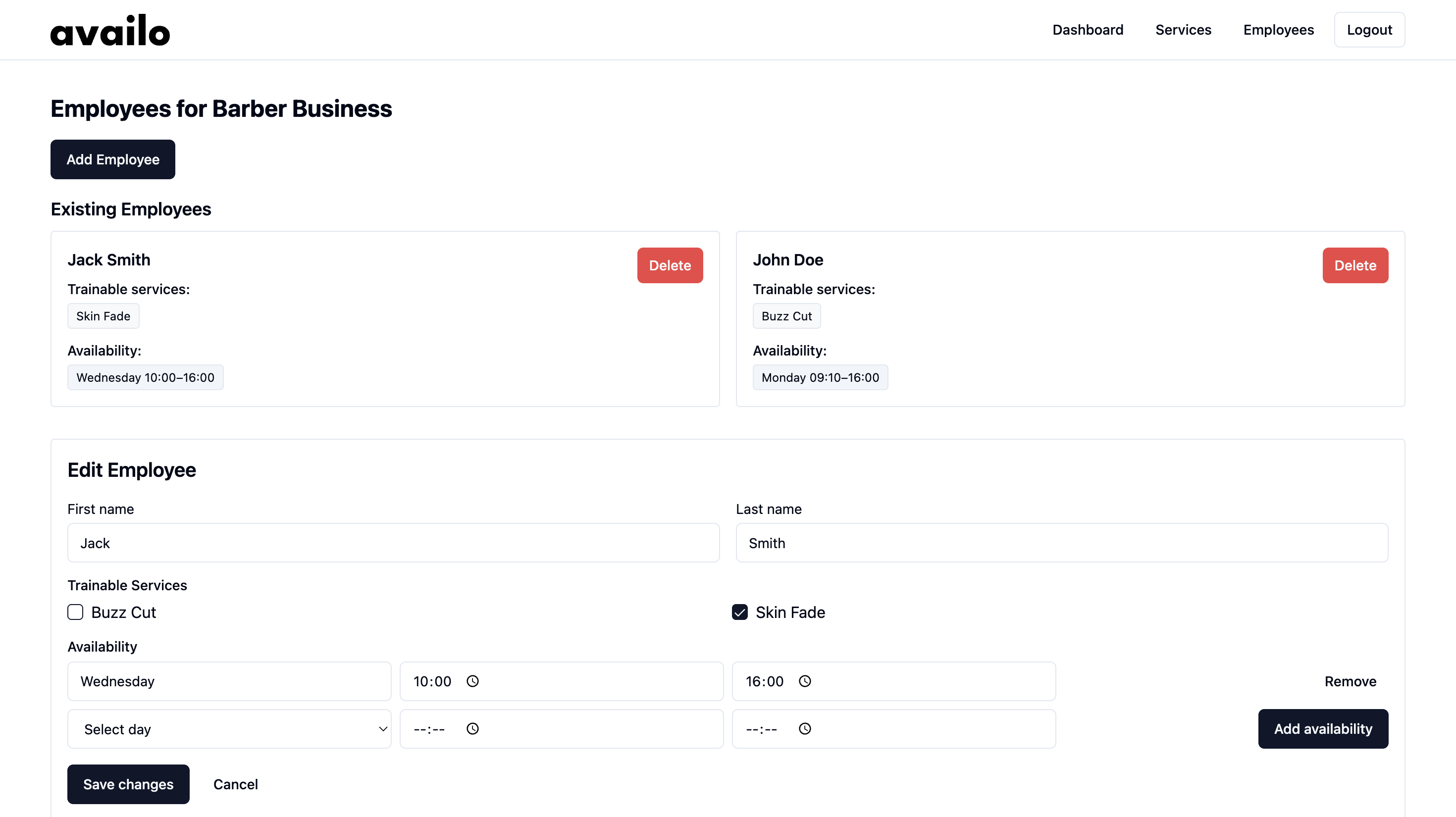
The Employees page
-
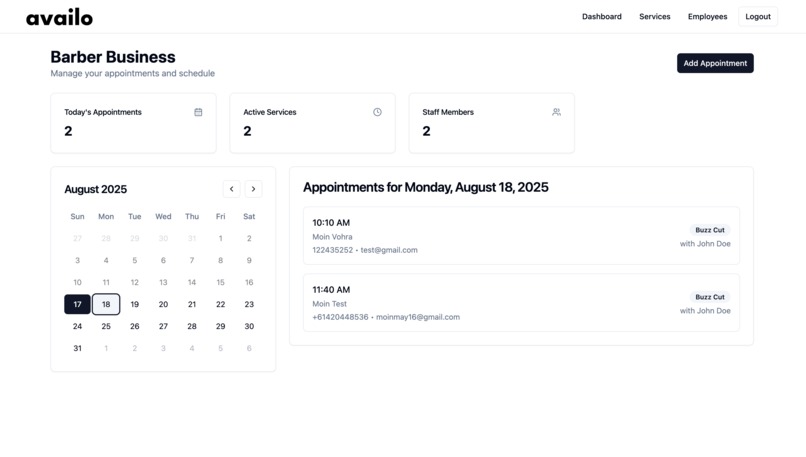
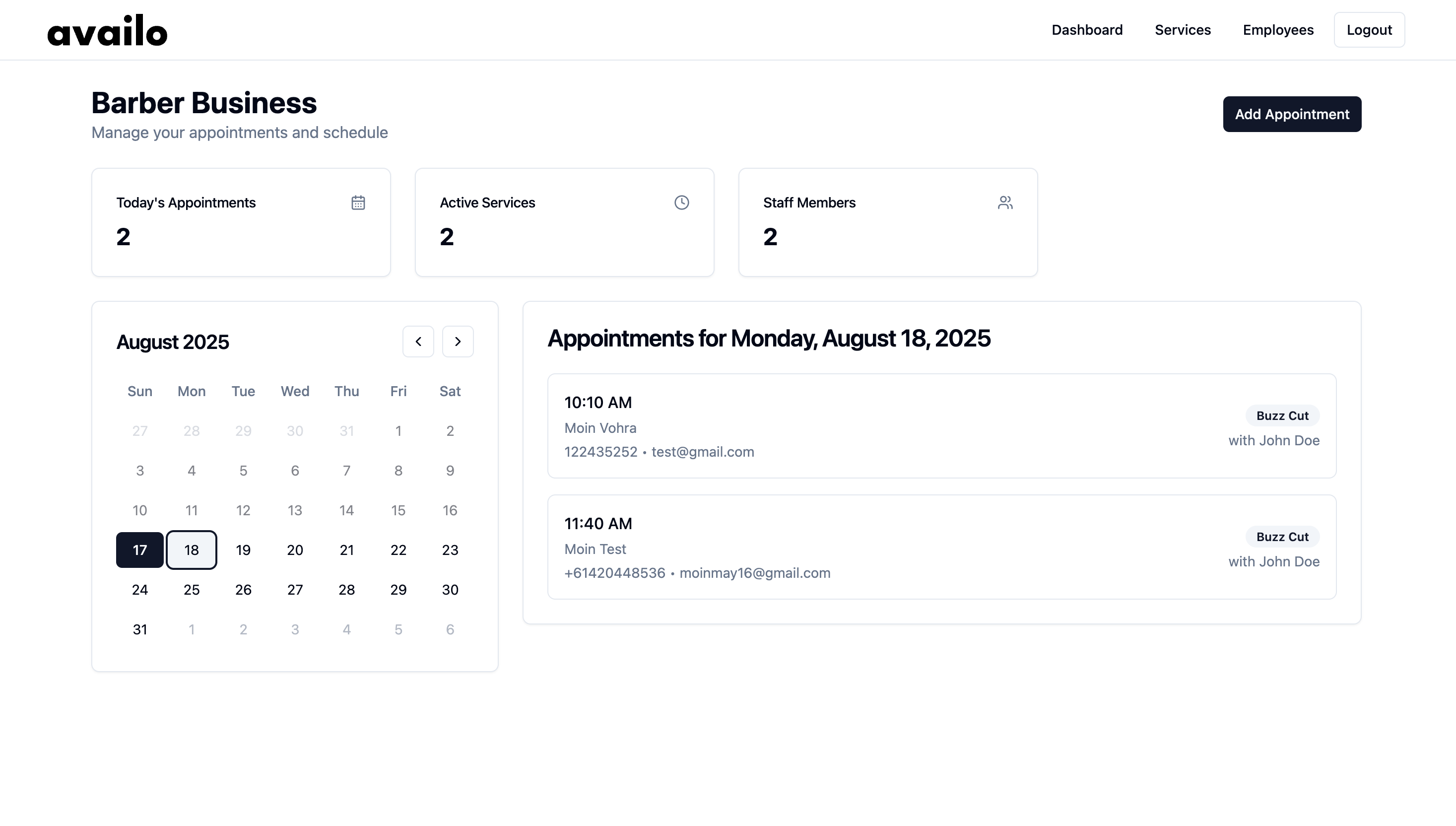
The Dashboard
Inspiration
The problem is inspired by our own attempts to book a service with mechanics, barbers and what not by calling them up only to find them easy when we were available. Finding reliable access to services is often overwhelming and fragmented. Many people waste time searching multiple platforms, making phone calls, or dealing with outdated information. We wanted to create a single, streamlined platform that empowers people to quickly book, and manage services around them with confidence. Our inspiration came from the need for accessibility, efficiency, and trust in everyday decision-making.
What it does
Availo is a comprehensive web-based appointment management platform that bridges the gap between service providers and customers. For businesses, it provides:
- Free account setup where they can add their services, staff members, and availability schedules
- Automated booking link generation that can be shared with customers via social media, websites, or direct messaging
- Real-time calendar management that prevents double bookings and shows live availability
- Staff scheduling tools that sync individual employee calendars with business operations
- Customer management dashboard to track appointments and client information
For customers, Availo offers:
- 24/7 booking capability without needing to call during business hours
- Instant confirmation of appointments with automatic calendar integration
- Real-time availability viewing to find the perfect time slot immediately
How we built it
We built Availo using a modern, scalable tech stack designed for reliability and growth:
Frontend React.js with TailwindCSS for a responsive, mobile-first user interface that works seamlessly across all devices. We focused on creating an intuitive user experience that requires minimal learning curve for both business owners and their customers. Backend Supabase as our primary database and backend service, providing us with:
- PostgreSQL database for reliable data storage
- Built-in authentication and user management
- Real-time subscriptions for live calendar updates
- Row Level Security for data protection
- RESTful APIs for seamless frontend integration
- Railway for deployment
Challenges we ran into
One of our biggest technical challenges was ensuring that when multiple customers try to book the same time slot simultaneously, only one booking goes through. We solved this using Supabase's real-time features and database constraints to prevent conflicts.
Accomplishments that we're proud of
Zero-Friction Onboarding We achieved our goal of allowing businesses to set up their entire appointment system in under 5 minutes, completely free, without requiring credit card information upfront.
Elegant Technical Solution Our integration with Supabase's free tier means we can serve hundreds of businesses before incurring infrastructure costs, making our unit economics extremely favorable.
User-Centric Design Through multiple user testing sessions, we created an interface that both 70-year-old customers and tech-savvy millennials can navigate effortlessly.
Scalable Architecture Built a system that can handle growth from 10 businesses to 10,000 businesses without requiring major architectural changes.
What we learned
Customer Development is Critical We initially built features we thought businesses needed, but user interviews revealed different priorities. This taught us to validate assumptions before building.
Technical Debt Matters Early Even in a hackathon environment, taking time to structure code properly saved us hours of debugging later. Clean code from the start is always worth it.
Simplicity Wins Our most successful features were the ones that solved complex problems with simple interfaces. Over-engineering can kill user adoption.
Real-time Features are Complex Building truly real-time applications requires careful consideration of edge cases, network failures, and concurrent user actions.
Business Model Affects Product Design Our free-to-start pricing strategy influenced every design decision, from onboarding flow to feature prioritization.
Team Communication Clear role definition and regular check-ins were essential for maintaining momentum and avoiding duplicate work during the intense development period.
What's next for Availo
Immediate Next Steps (Next 3 months)
- Launch beta program with 50 local businesses to gather real-world usage data
- Implement payment processing integration for businesses that collect deposits
- Add SMS notifications alongside email notifications
- Develop mobile-responsive improvements based on user feedback
Short-term Goals (6 months)
- Integration with popular calendar applications (Google Calendar, Outlook)
- Advanced analytics dashboard showing booking trends and customer insights
- White-label options for larger businesses wanting to brand the booking experience
- Multi-location support for businesses with multiple branches
Long-term Vision (1-2 years)
- AI-powered scheduling optimization that suggests optimal time slots based on historical data
- Integration marketplace with popular business tools (CRM systems, payment processors, marketing platforms)
- Mobile app development for on-the-go appointment management
- Expansion into related services like customer reviews, automated follow-ups, and loyalty programs
Scale Ambitions Our ultimate goal is to become the go-to appointment booking solution for small to medium businesses globally. We envision Availo handling millions of appointments monthly while maintaining our core values of simplicity, reliability, and affordability. We plan to build a community around Availo users, sharing best practices for appointment management, customer service tips, and business growth strategies. This will create additional value beyond just the software platform.
Built With
- javascript
- lovable
- react
- supabase
- tailwindcss
- typescript

Log in or sign up for Devpost to join the conversation.