-
-
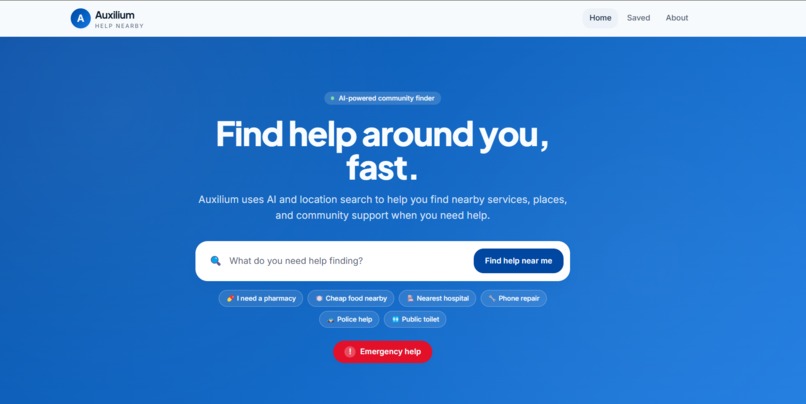
the interface
-
-
-
Inspiration
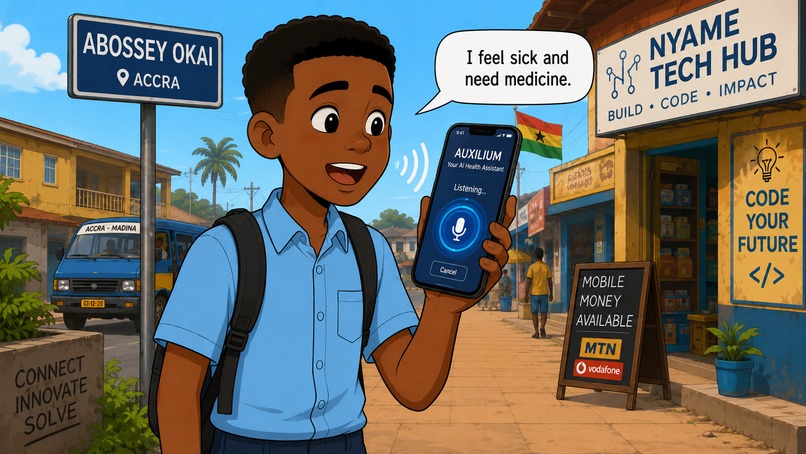
Auxilium was inspired by a real community problem: when people need help, they often do not know where to go first. Someone may need a nearby hospital, pharmacy, police station, food place, repair shop, public toilet, or safe place, but in stressful moments, searching manually can be slow and confusing.
The name Auxilium means “help” in Latin. We wanted to build something that turns a simple request for help into clear directions and useful nearby options.
What it does
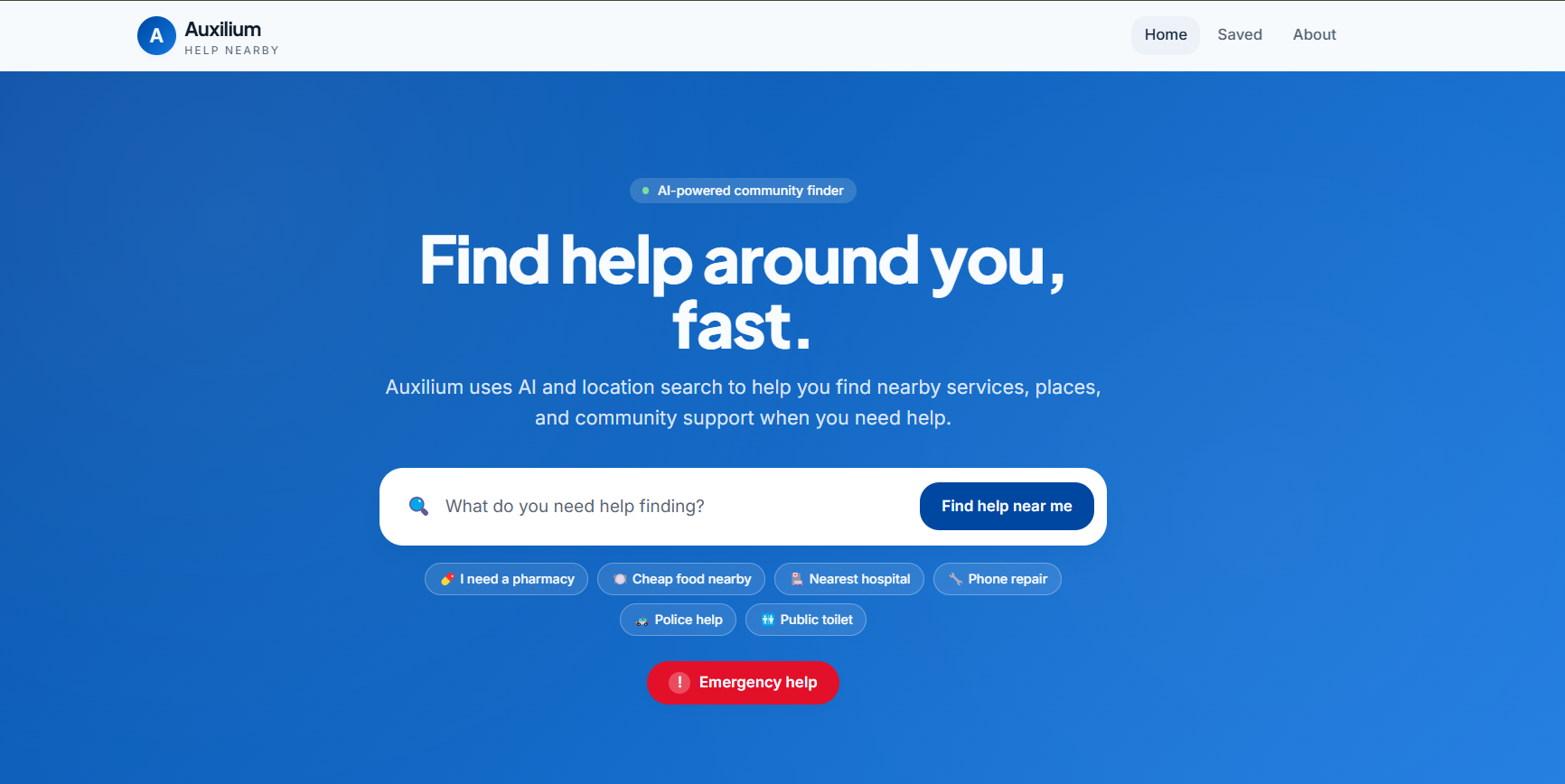
Auxilium is an AI-powered community help finder that helps users locate useful places and services around them. A user can type what they need in normal language, such as “I need medicine,” “I need food,” “I need a hospital,” or “I need a police station.”
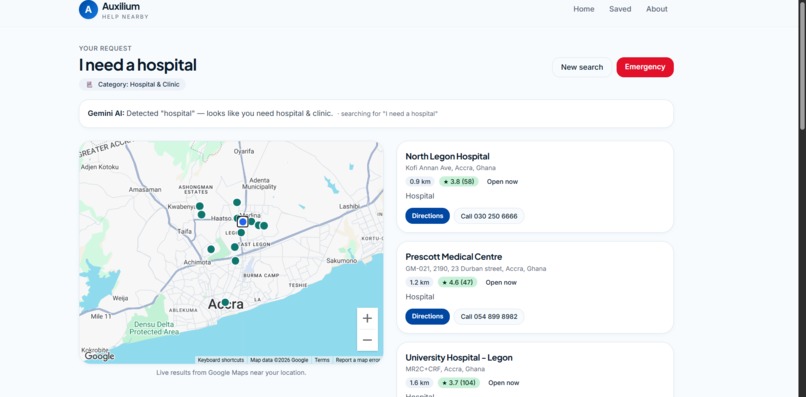
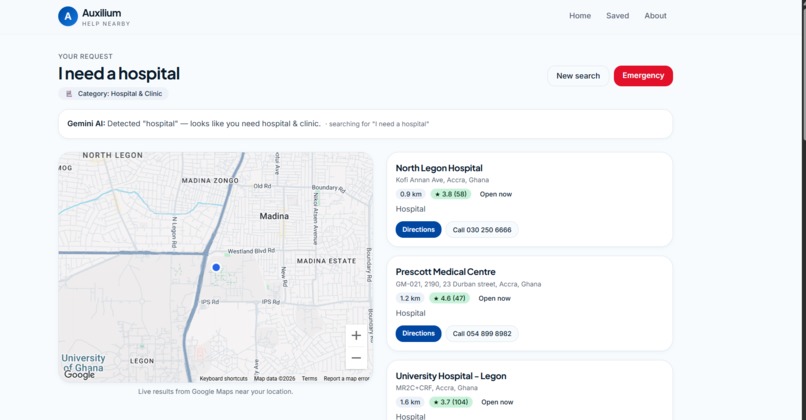
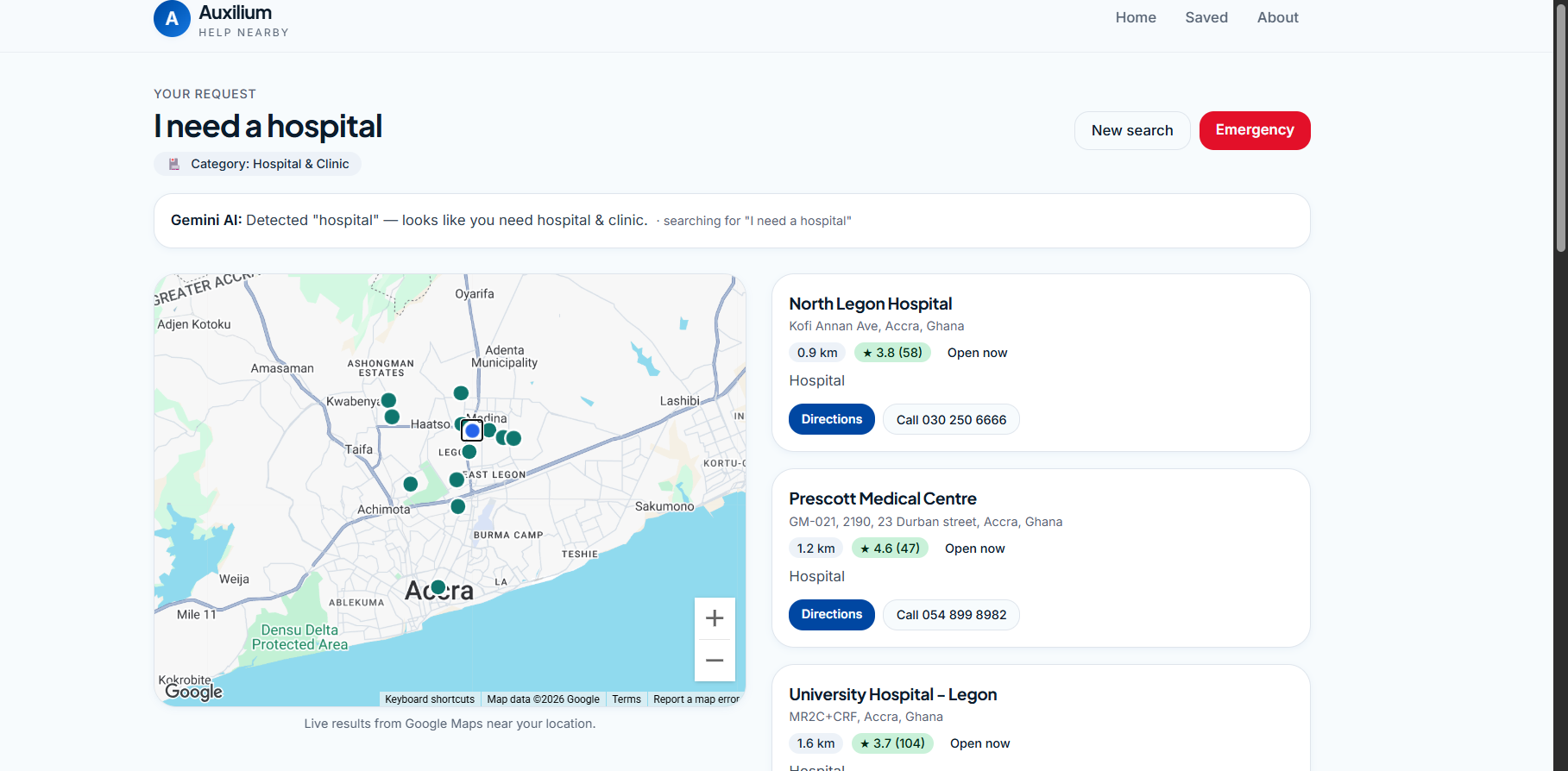
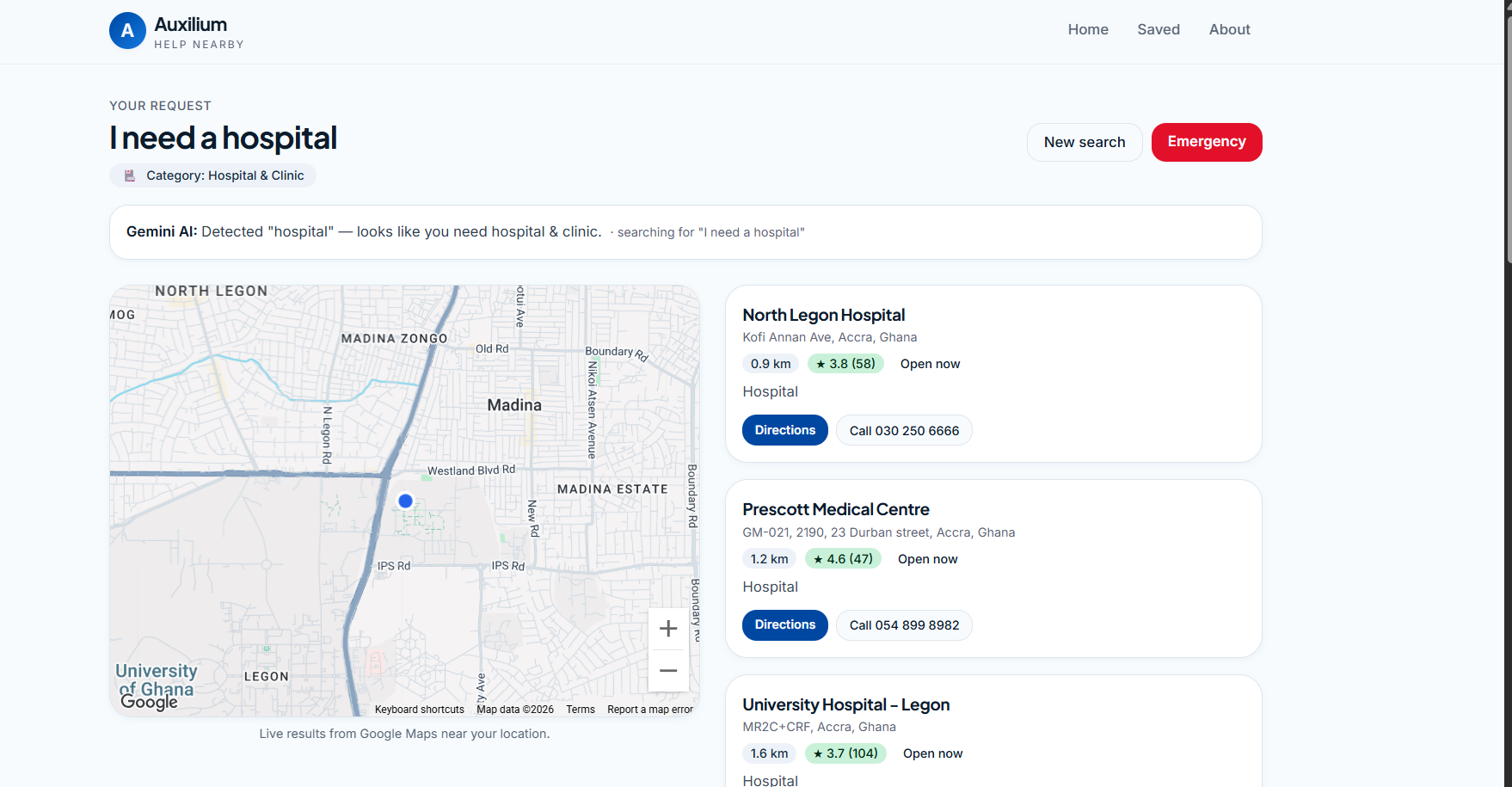
The AI understands the request, classifies it into the right category, and shows nearby places that can help. It can display details like the place name, category, distance, address, rating, opening status, and directions.
How we built it
We built Auxilium using Lovable, an AI-powered app-building platform that helped us quickly turn our idea into a working web app. Lovable helped us create the user interface, structure the pages, and build the main user flow faster.
The app works by taking the user’s request, using AI to classify the need, and then using location-based search logic to find nearby helpful places. If live map data is not available, the app can still work with demo places for testing.
The basic flow is:
- The user types what they need.
- The app asks for location permission.
- The AI understands the request.
- The request is converted into a category like pharmacy, hospital, restaurant, police station, or repair shop.
- The app shows nearby helpful places and directions.
We also designed a simple ranking idea:
[ Score = (Rating \times 0.4) + (DistanceScore \times 0.4) + (NeedMatch \times 0.2) ]
This helps the app prioritize places that are close, useful, and relevant to the user’s need.
Challenges we ran into
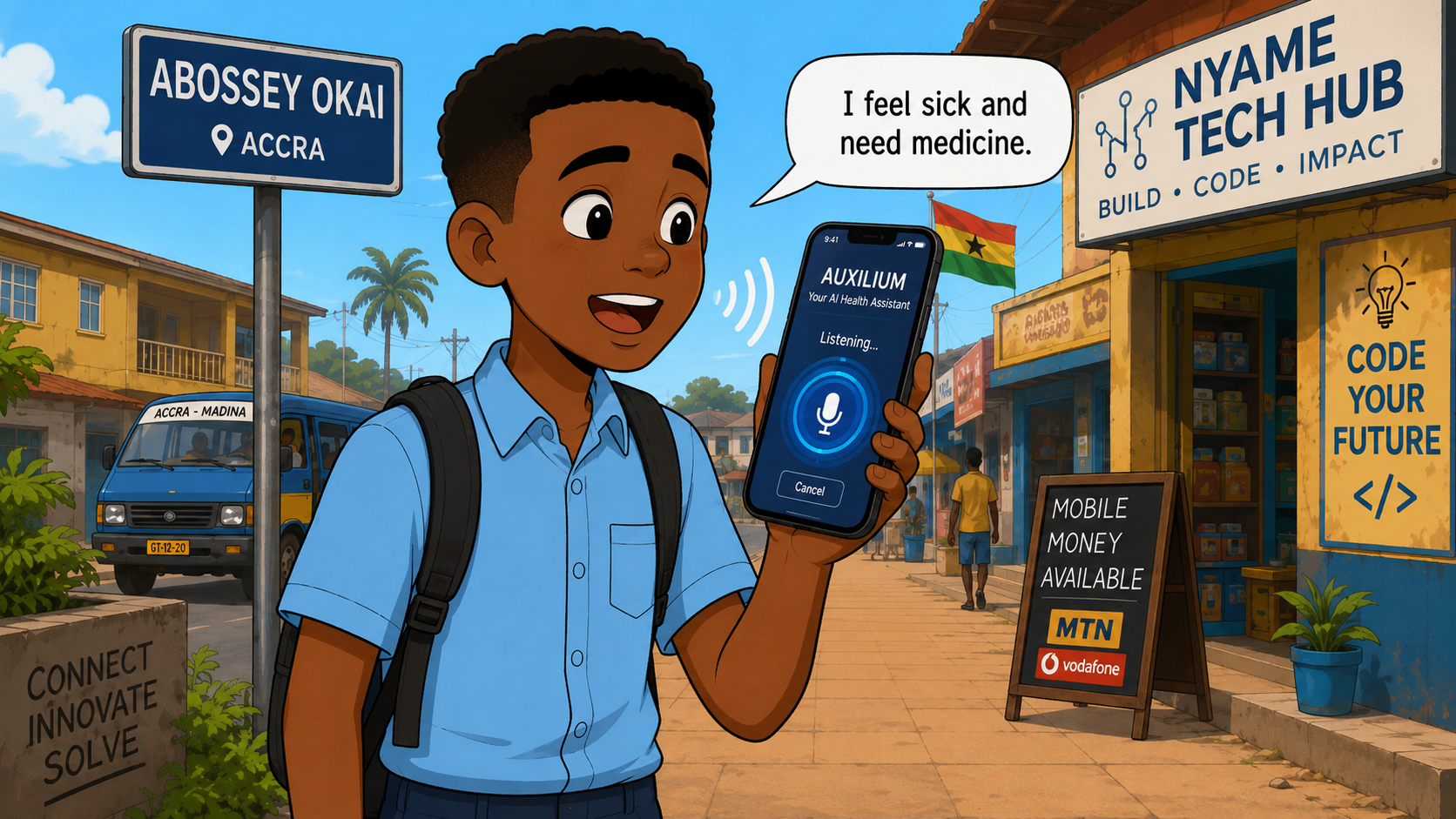
One challenge was making the AI understand different ways people ask for the same thing. For example, “I feel sick,” “I need medicine,” and “Where is a clinic?” are different sentences, but they may point to similar help.
Another challenge was location access. Some users may deny location permission, so we had to think about adding a manual location option.
We also had to keep the app simple. Since Auxilium is meant to help people in real situations, the design needed to be fast, clear, and easy to use.
Accomplishments that we're proud of
We are proud that Auxilium solves a real community problem in a simple way. It is not just a chatbot; it connects AI understanding with real-world places and directions.
We are also proud that we used Lovable to build a working prototype quickly. This allowed us to focus more on the problem, the user experience, and the impact of the project.
What we learned
We learned that AI becomes more powerful when it is connected to real-life needs. Auxilium taught us how AI can help people make faster decisions when they need support.
We also learned about location-based services, user privacy, natural language understanding, and building a clean user interface. Most importantly, we learned that a good project does not always need to be complicated; it needs to solve a real problem clearly.
What's next for Auxilium
Next, we want to improve Auxilium by adding live Google Maps or Places API integration, voice input, local language support, and emergency service suggestions.
We also want to add verified community service providers and a dashboard that can show common needs in an area. In the future, Auxilium can become a stronger community support tool that helps people find the right help faster.
Built With
- geminiapi
- html
- javascript
- lovable
- maps
- react


Log in or sign up for Devpost to join the conversation.