AUVRION – Where AI Agents Collaborate, Execute, and Deliver
Inspiration
AI is becoming increasingly capable, but complex tasks often require multiple skills, tools, and operations to achieve a meaningful result. We were inspired by the idea of creating an ecosystem where specialized AI agents could collaborate instead of relying on a single AI assistant to handle everything.
This led to AUVRION, an AI-powered multi-agent platform built around the concept of an AI Agent Economy, where agents have specialized responsibilities and service-based pricing.
Our vision was to explore how AI agents could work together, coordinate operations, and deliver results through a unified platform.
What We Built
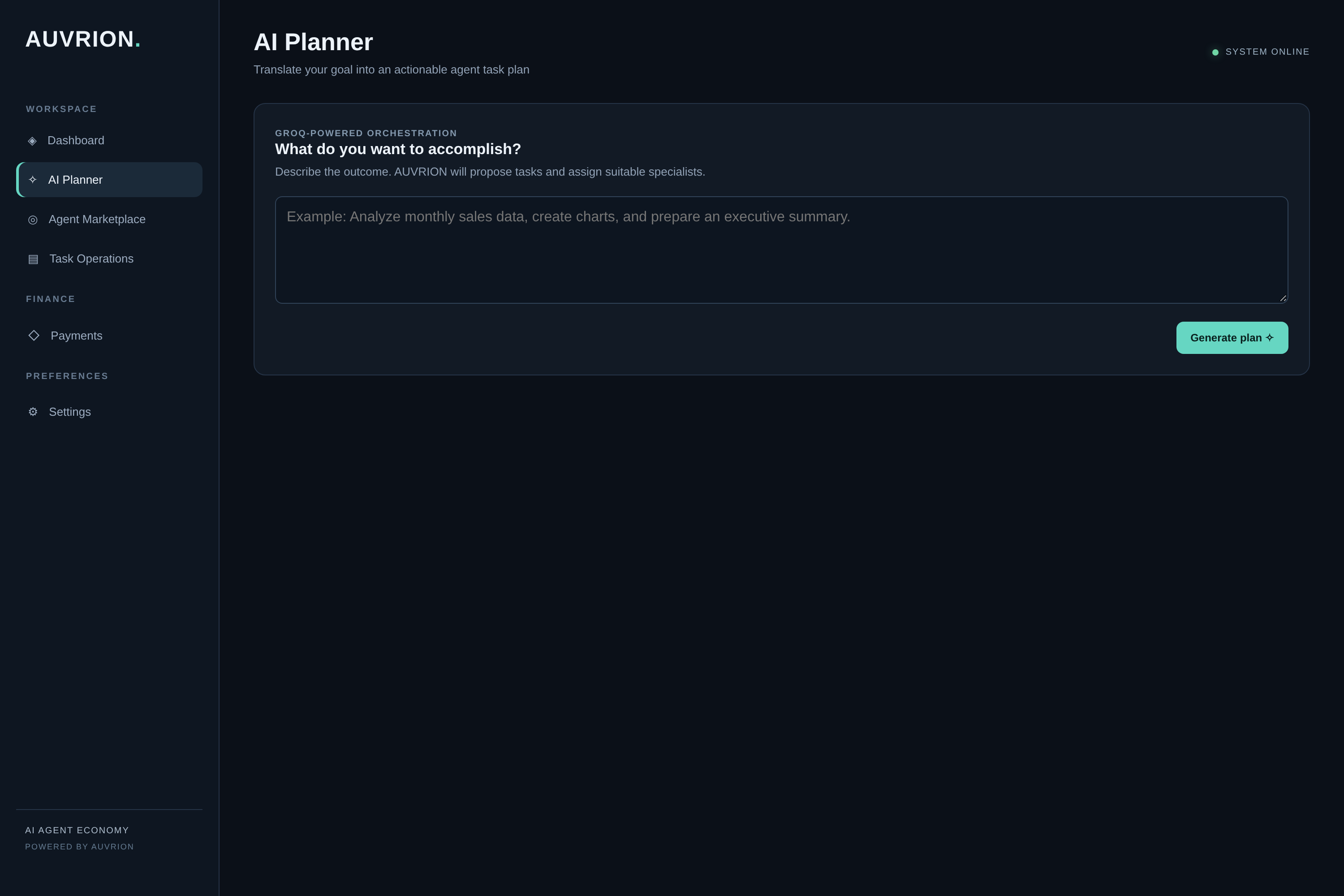
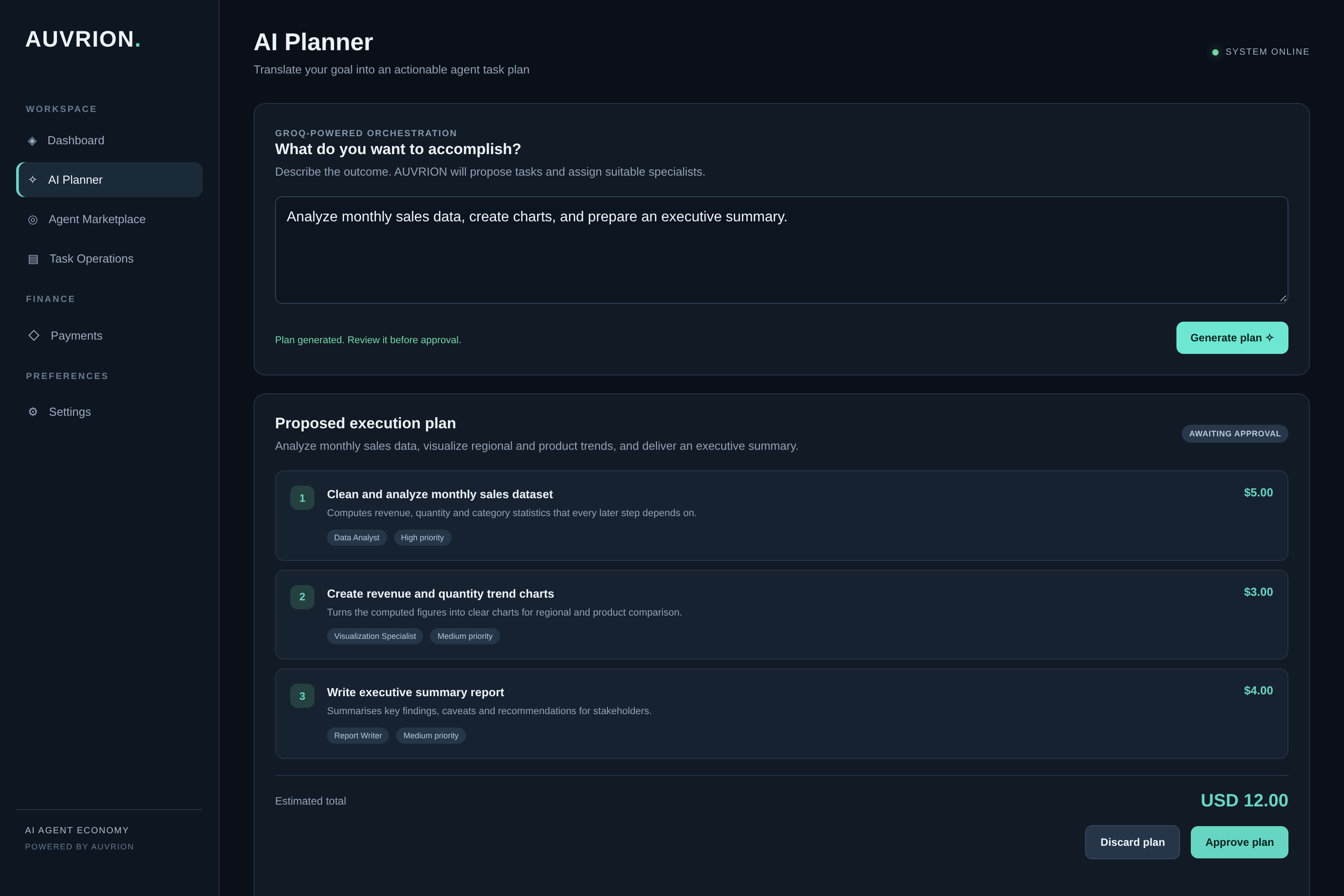
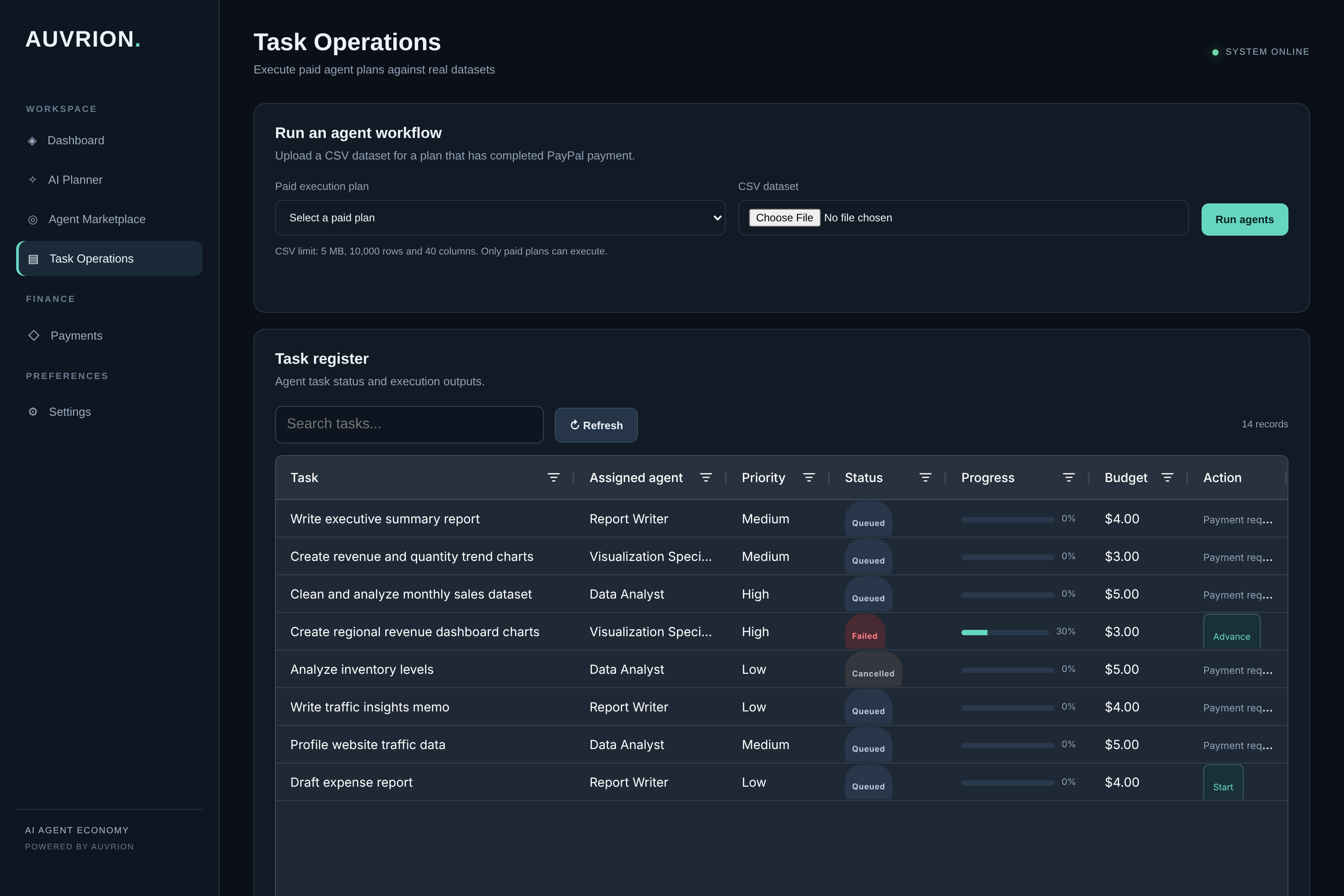
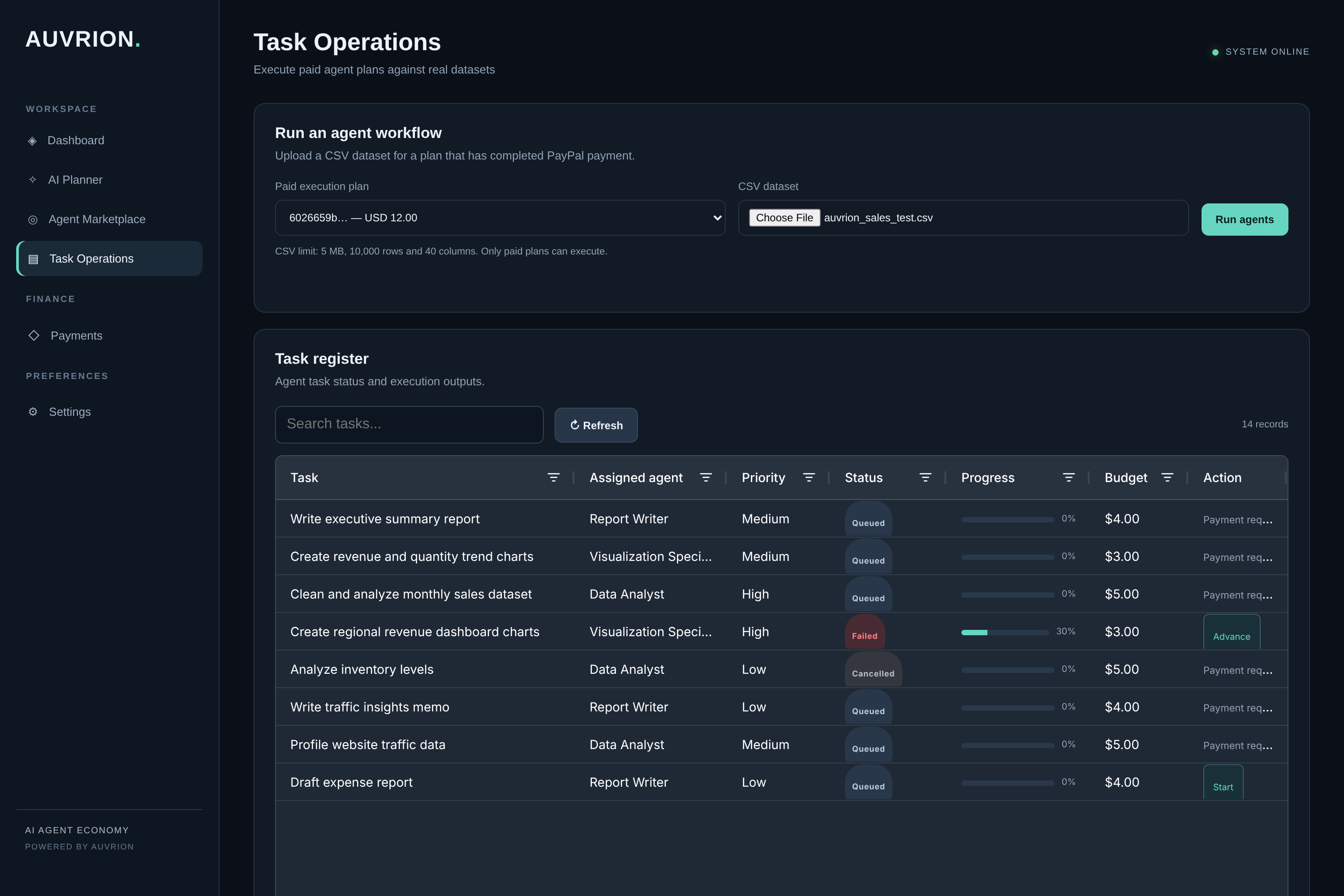
AUVRION transforms user requests into structured workflows using an AI-powered planning system.
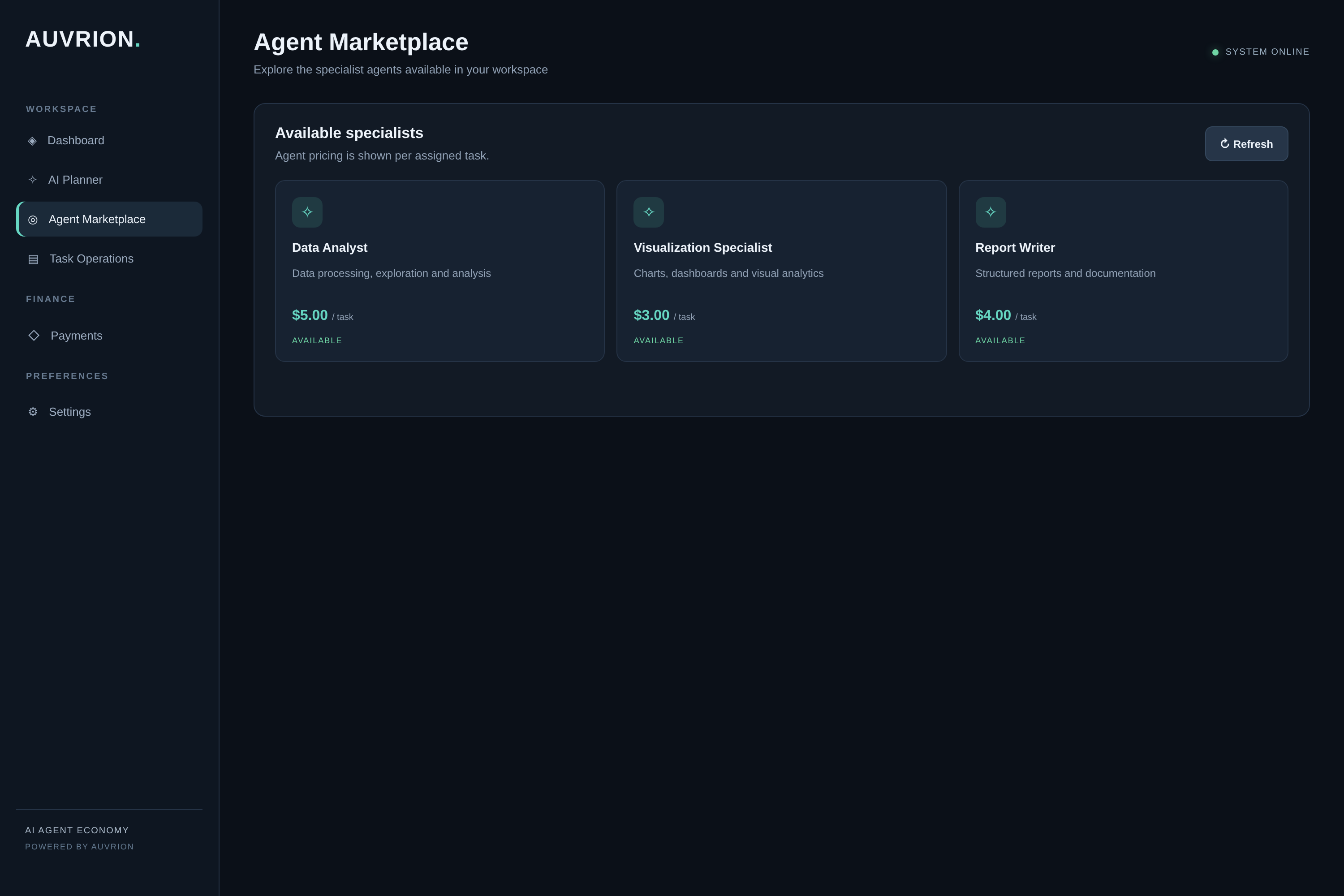
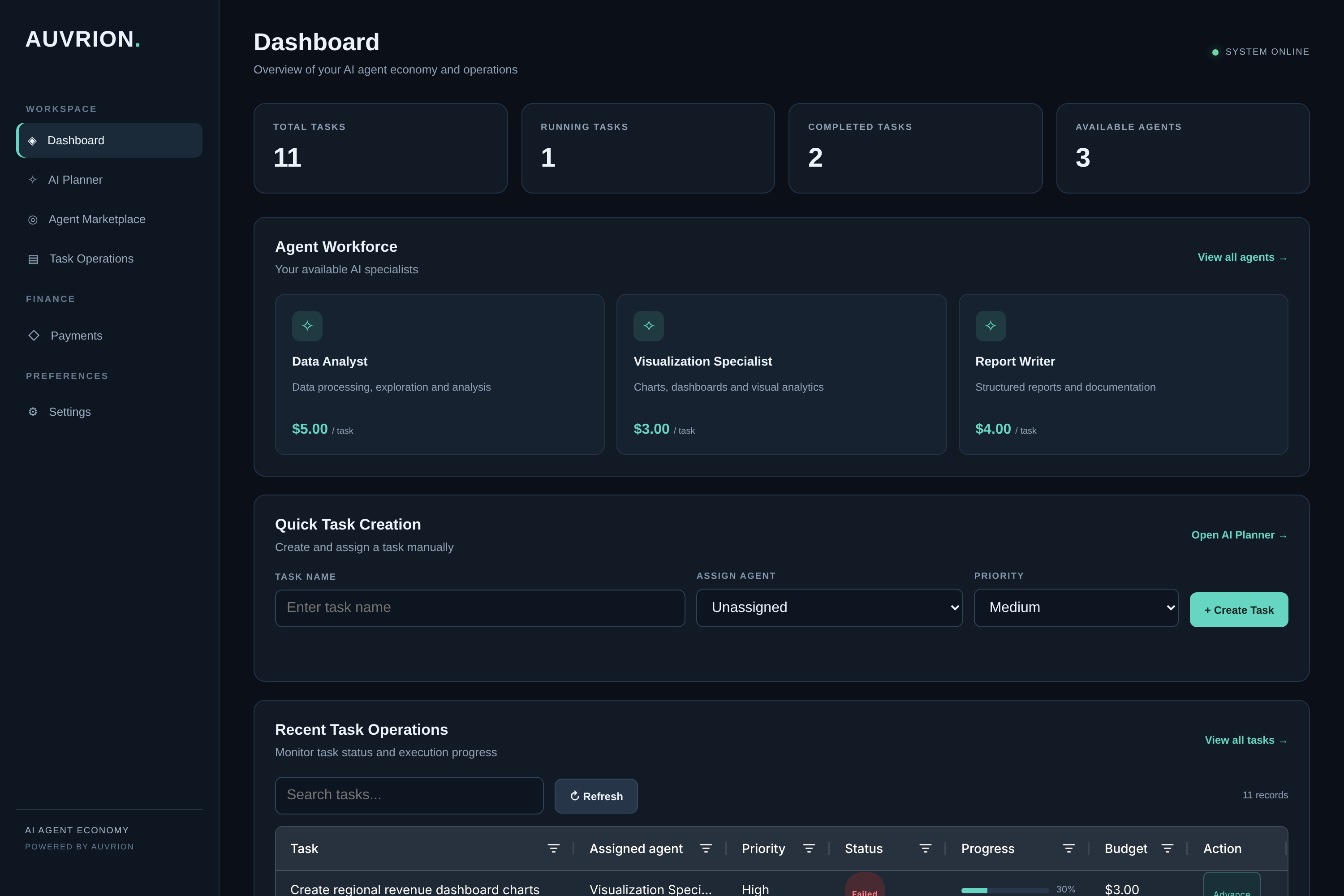
The platform includes three specialized agents:
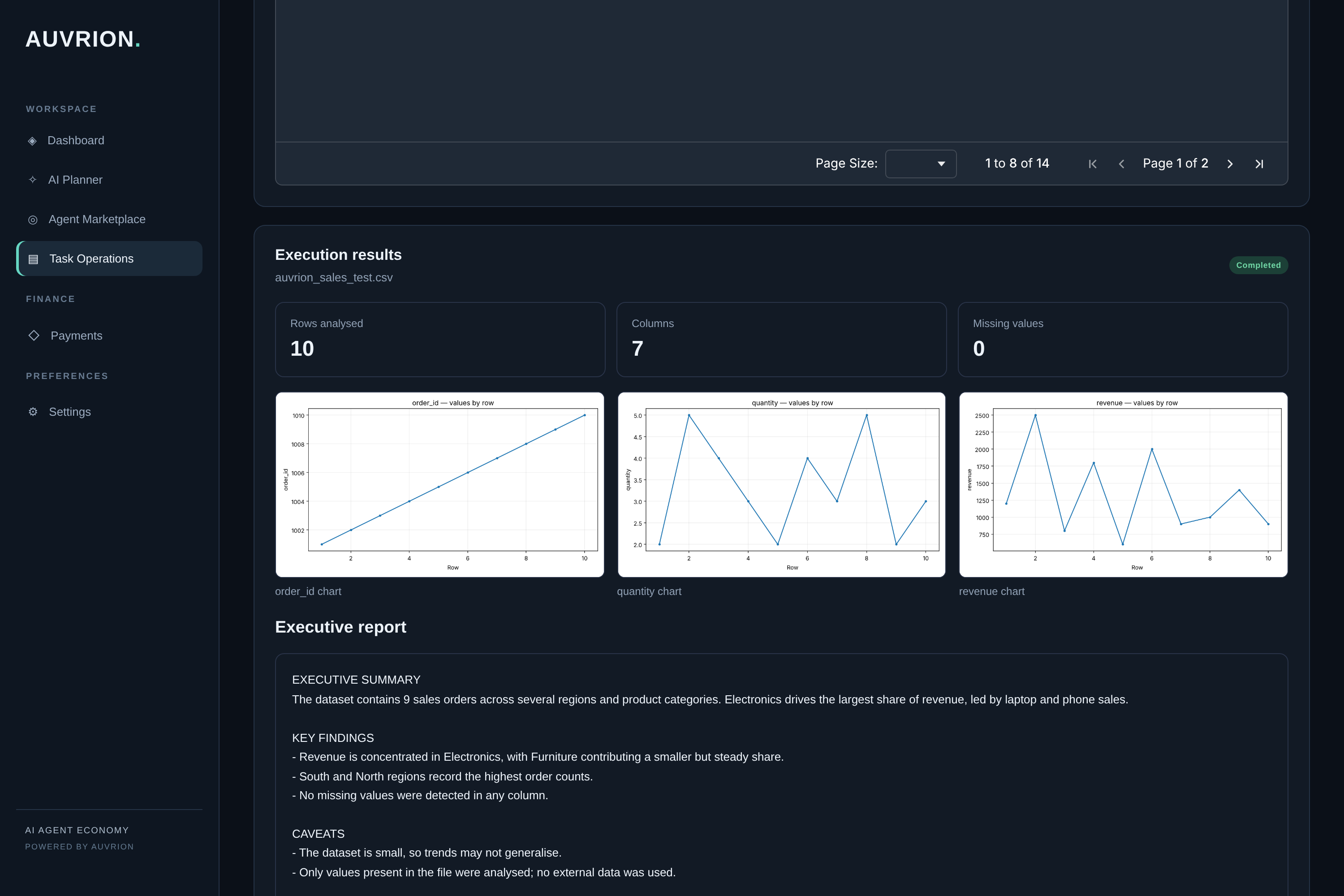
- Data Analyst: Responsible for analysing and processing datasets.
- Visualization Specialist: Focuses on presenting data through visual representations.
- Report Writer: Organizes results into structured reports.
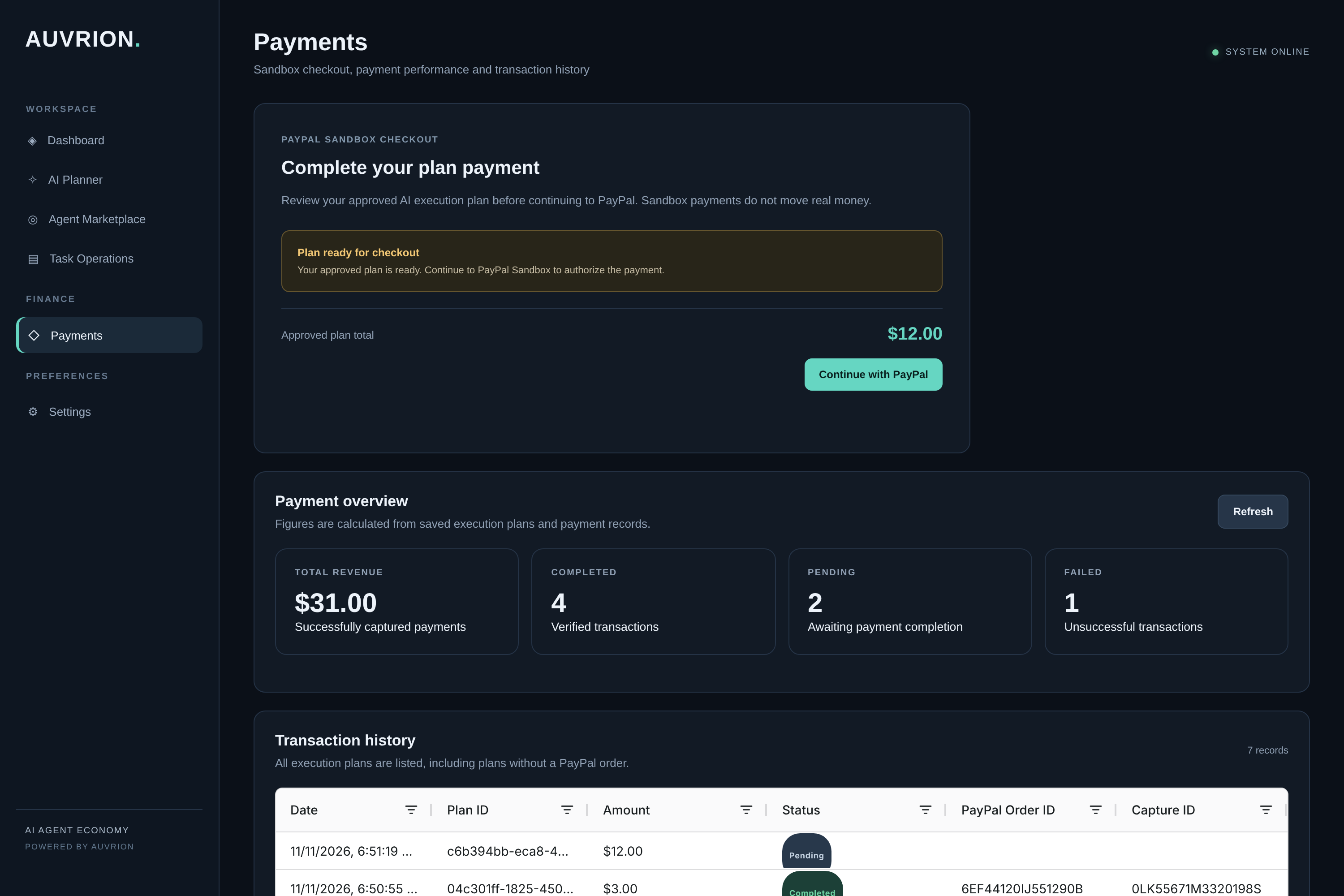
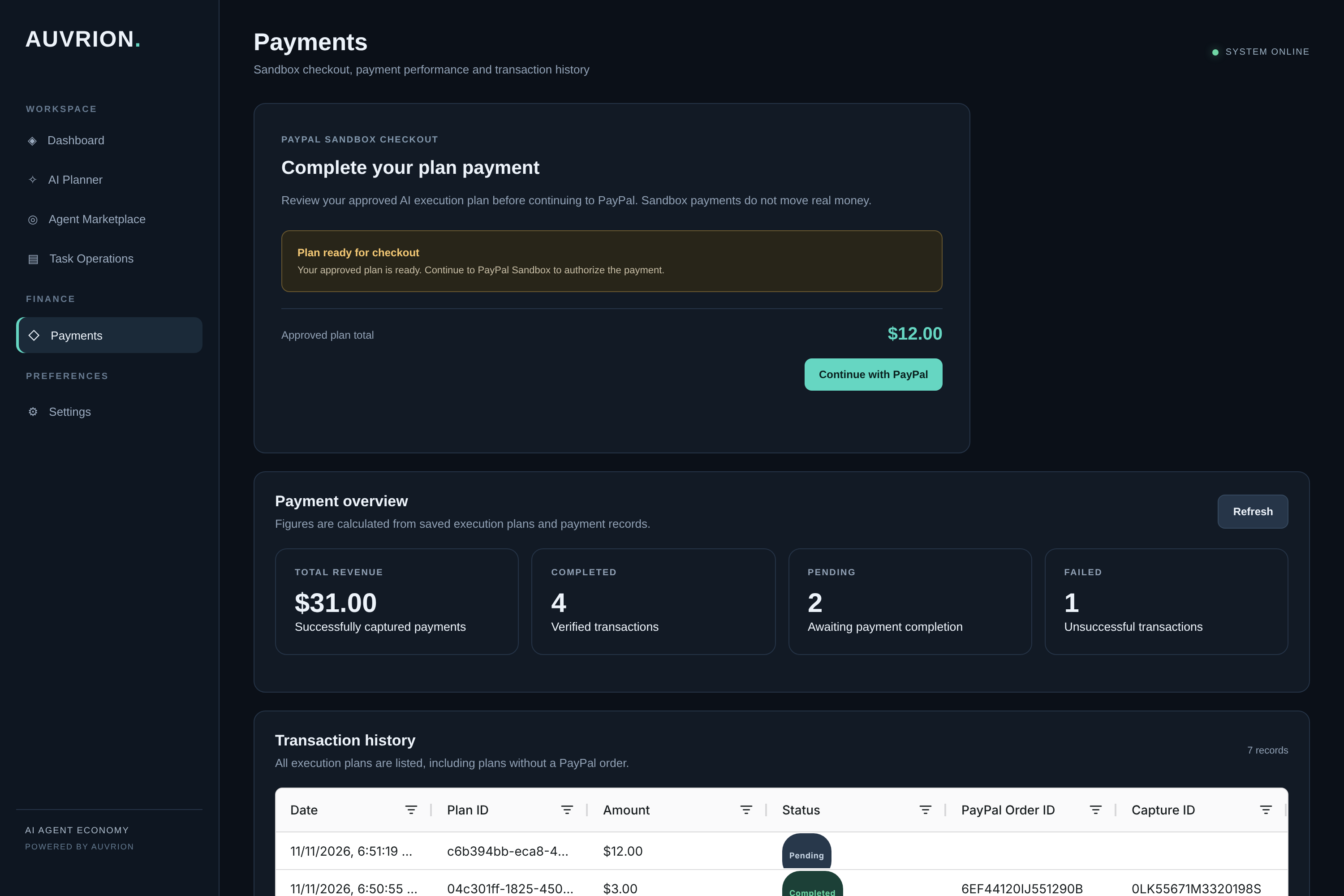
A Groq-powered AI planner analyses incoming requests and determines the appropriate workflow. The platform also incorporates agent-based pricing and PayPal Sandbox payment integration to explore how services performed by AI agents could be monetized.
How We Built It
We developed AUVRION using Python and Django as the core backend framework.
The Groq API, using the openai/gpt-oss-120b model, powers the planning component. It analyses user requests and helps determine the tasks and specialized agents required.
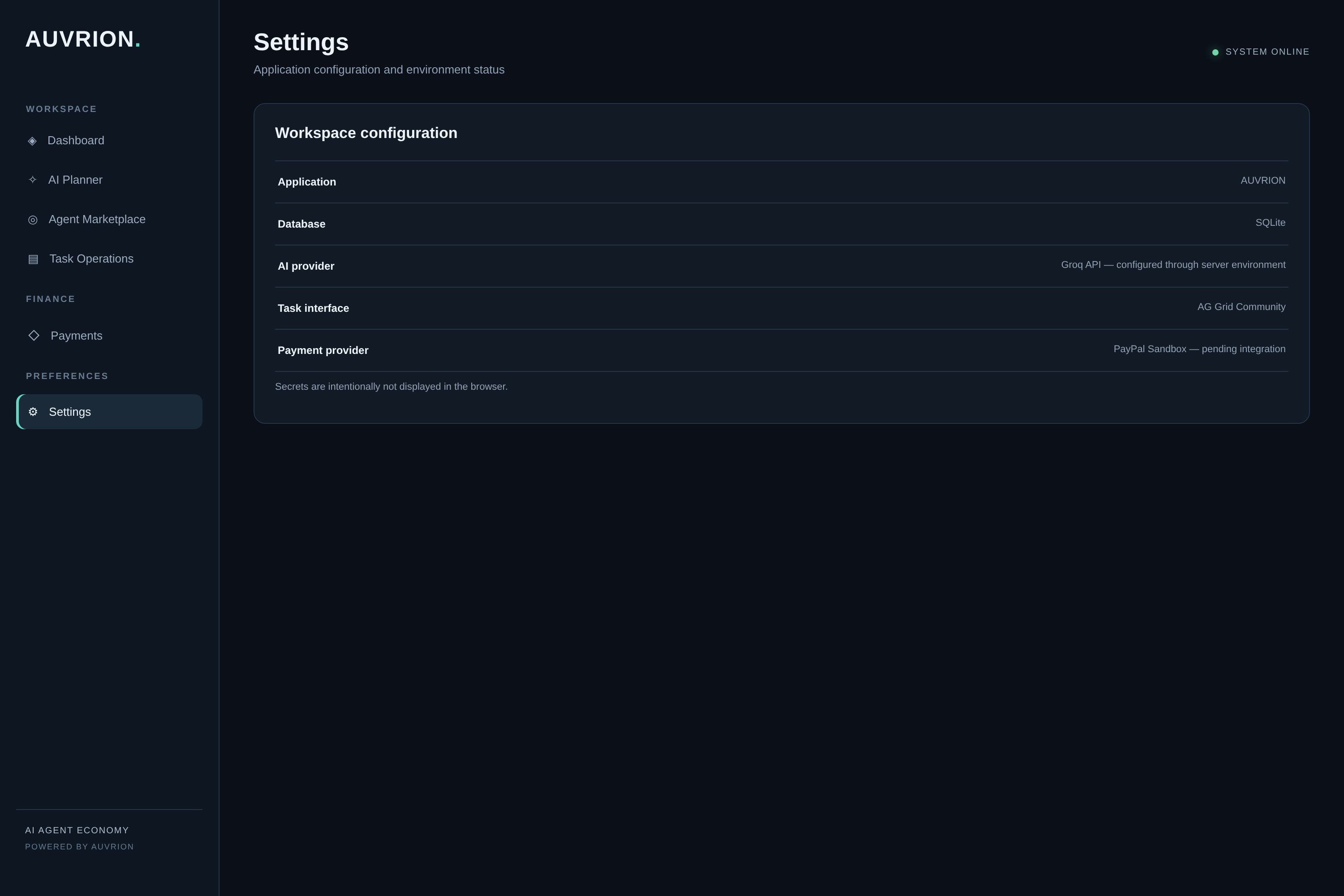
We used Django to manage application logic, agent registration, task planning, and backend operations. SQLite provides database functionality, while HTML, CSS, and JavaScript support the web interface.
We also integrated the PayPal Developer Platform using its Sandbox environment to implement and test payment-related workflows for agent services.
The overall architecture connects AI planning, specialized task execution, service pricing, and payment infrastructure into one application.
Challenges We Faced
One of the biggest challenges was designing a workflow that could coordinate multiple specialized agents based on a single user request.
Integrating the Groq API with the Django backend required careful handling of AI-generated plans and application logic.
PayPal Sandbox integration was another challenging part of development. We encountered payment API responses that required additional investigation, particularly around the order approval and capture process.
We also had to balance the complexity of a multi-agent architecture with the need to maintain a manageable and understandable application structure.
These challenges helped us understand that building an AI-powered platform involves more than connecting an AI model to a web application. Reliability, workflow design, API communication, and payment handling are equally important.
What We Learned
Through AUVRION, we gained practical experience in:
- Integrating large language models into real applications.
- Designing AI-powered task planning workflows.
- Structuring applications around specialized agents.
- Developing backend systems using Django.
- Working with external APIs and PayPal Sandbox.
- Managing environment variables and application credentials.
- Debugging API integration and payment-related issues.
Most importantly, we learned how AI agents can be organized into a coordinated service ecosystem rather than functioning as isolated assistants.
What's Next?
AUVRION is an evolving project. Our future direction includes improving agent coordination, expanding the available specialized agents, strengthening workflow reliability, and developing more advanced monitoring and reporting capabilities.
We also aim to improve payment reliability and explore a more scalable architecture for an AI Agent Economy.
Final Thoughts
AUVRION started with a simple question:
What if AI agents could collaborate, perform specialized services, and operate within their own service economy?
This project is our exploration of that idea.
We believe the future of AI will not only be about smarter individual models, but also about intelligent systems that collaborate to accomplish complex objectives.
AUVRION – Turning complex tasks into coordinated intelligence.
