-
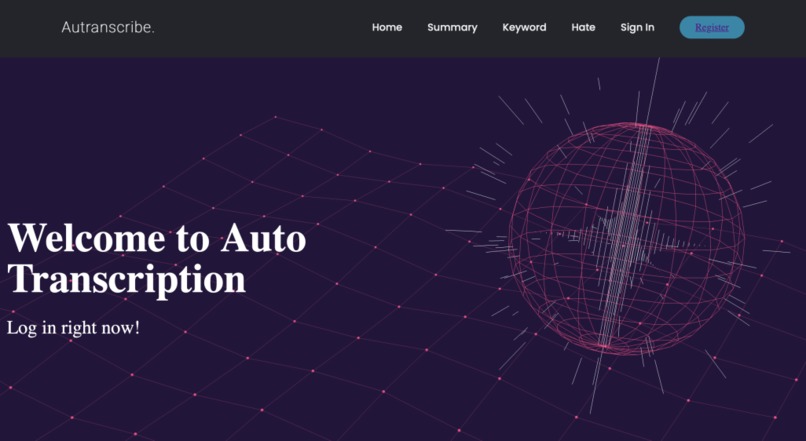
Autranscribe Home Page
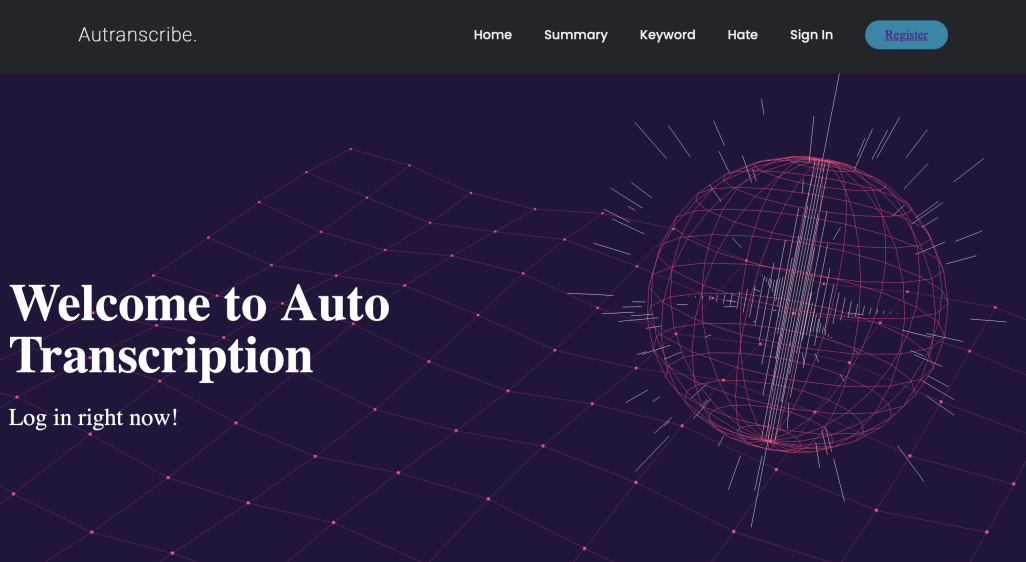
Transcription Made Automatic
Inspiration
As students ourselves, we understand what it's like to sit through lengthy audio recordings, trying to remain focused to learn, yet completely unengaged. It's also difficult to have to rewatch recording assignments to check for required vocabulary, especially if you're a busy student with other assignments to get to. Therefore, during this Hackathon, we decided to make a website that has tools equipped to quickly summarize files, censor, and timestamp specific vocabulary the user is looking for.
What it does
Autranscribe users can quickly summarize file recordings, censor inappropriate or hateful speech, and provide timestamps for specific keyword searches. Outputs are sent to users using both Discord and email, so it’s very accessible and convenient for everybody.
How we built it
To build Autranscribe, we distributed tasks and jobs that had to get done between our group members to increase efficiency. In all, we used programs and languages like Visual Studios Code, Flask, Python, CSS, and HTML. We looked into similar models, such as Assembly AI to get a basic foundation for our website and ideas.
Challenges we ran into
During our coding journey, we struggled to decide which coding languages to use. This was a problem that arose at the very beginning phase of our project, but we wanted to try and use the best computer language platform and format to use for our project. We ultimately decided to focus on Flask as we attended a workshop that introduced us to the structure of Flask. We also recognized that our team's strengths mainly lay in Python and HTML, so we decided to use Flask as it is mainly composed of the two.
Accomplishments that we're proud of
We're very proud of our keyword tool that allows users to search for a specific word said in the recording and returns the timestamp(s) at which the word was mentioned. We believe that this feature is unique and it will be very helpful in day-to-day life, especially in the educational sense.
What we learned
We learned to use different sites like GitHub to collaborate with others, and how to effectively split roles and tasks amongst the group members to increase productivity. We also learned a lot more about Flask, and the vast range of different languages and tools there are available for us to integrate into our future coding projects.
What's next for Autranscribe
Next, we'd like to have a direct audio-to-word transcribing function that can allow people to read, rather than listen to, their material. Furthermore, we want to be able to accept video files in the future, so that our website can be used for a more diverse range of file types. Finally, we also strive towards having a better-operational website with more features that allow for easier navigation through Autranscribe.

Log in or sign up for Devpost to join the conversation.