-
-
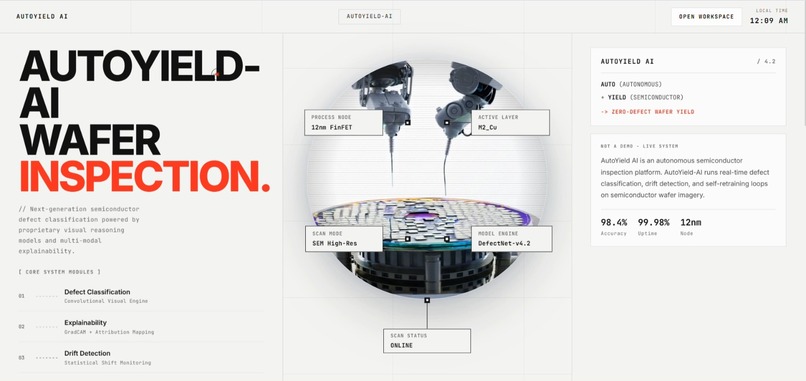
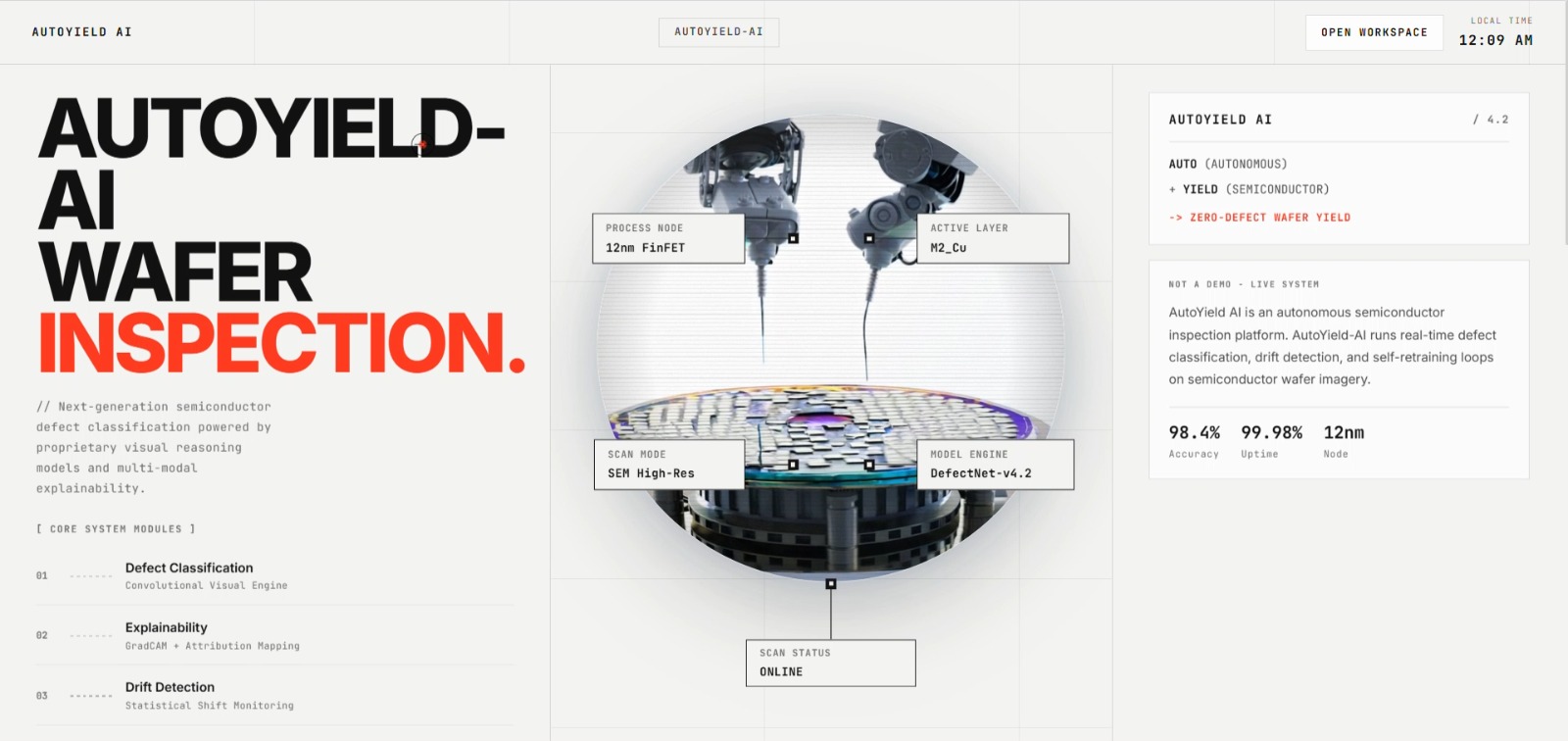
landing page
-
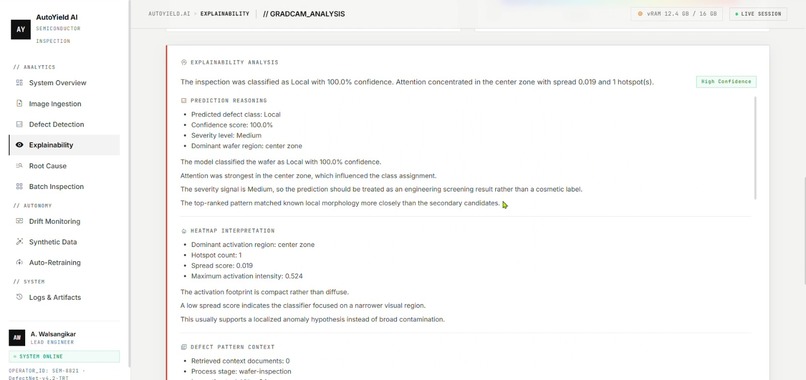
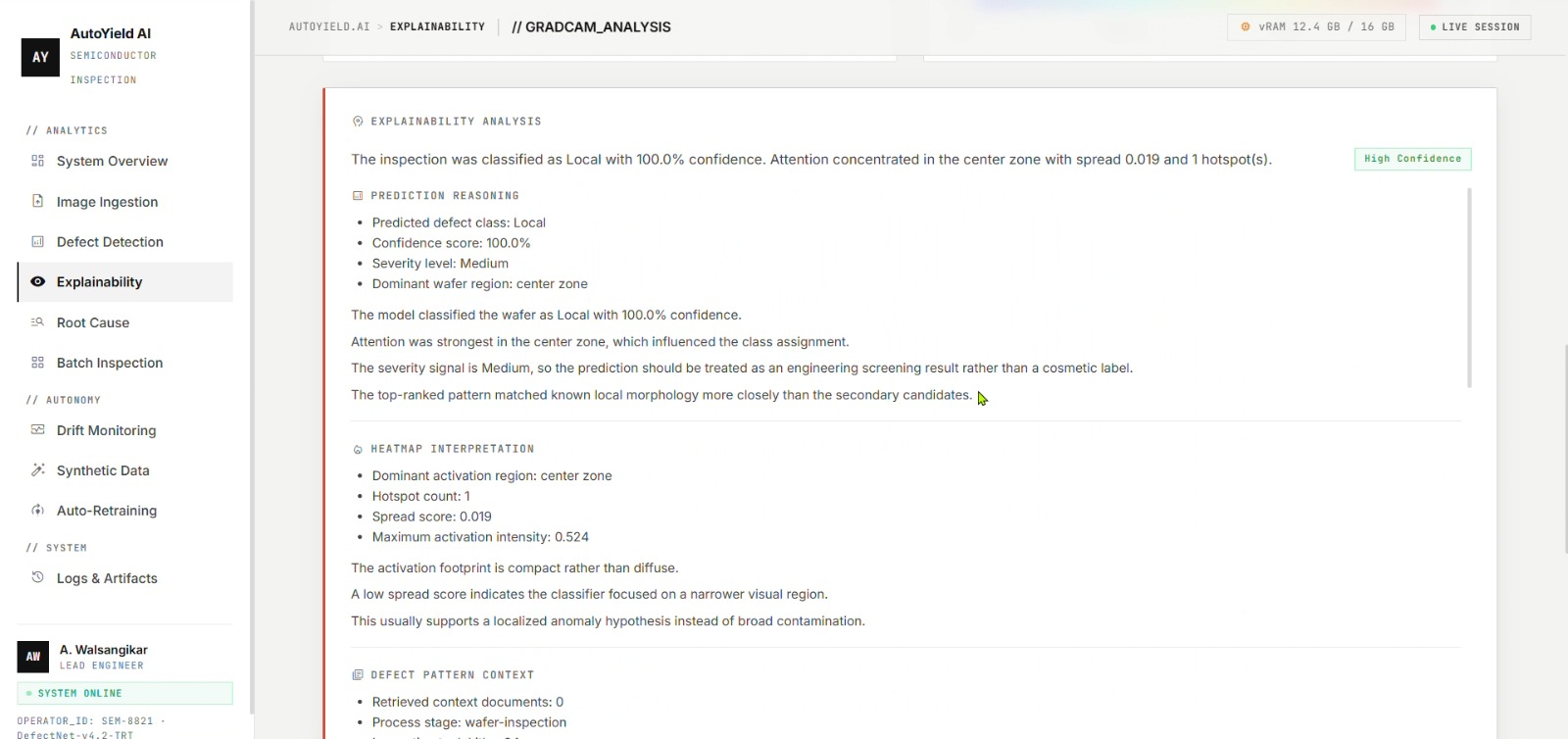
root cause analysis
-
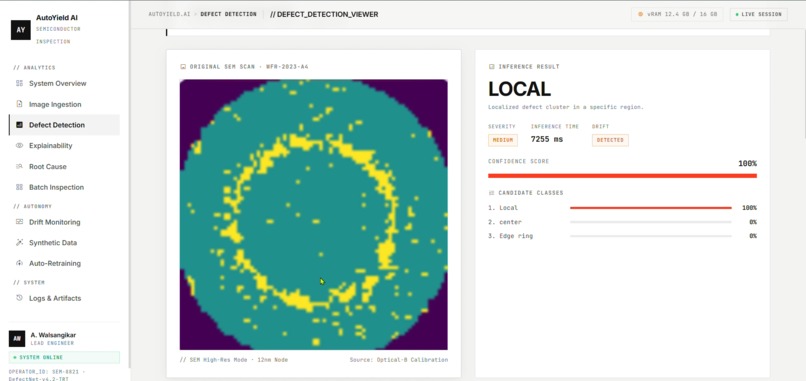
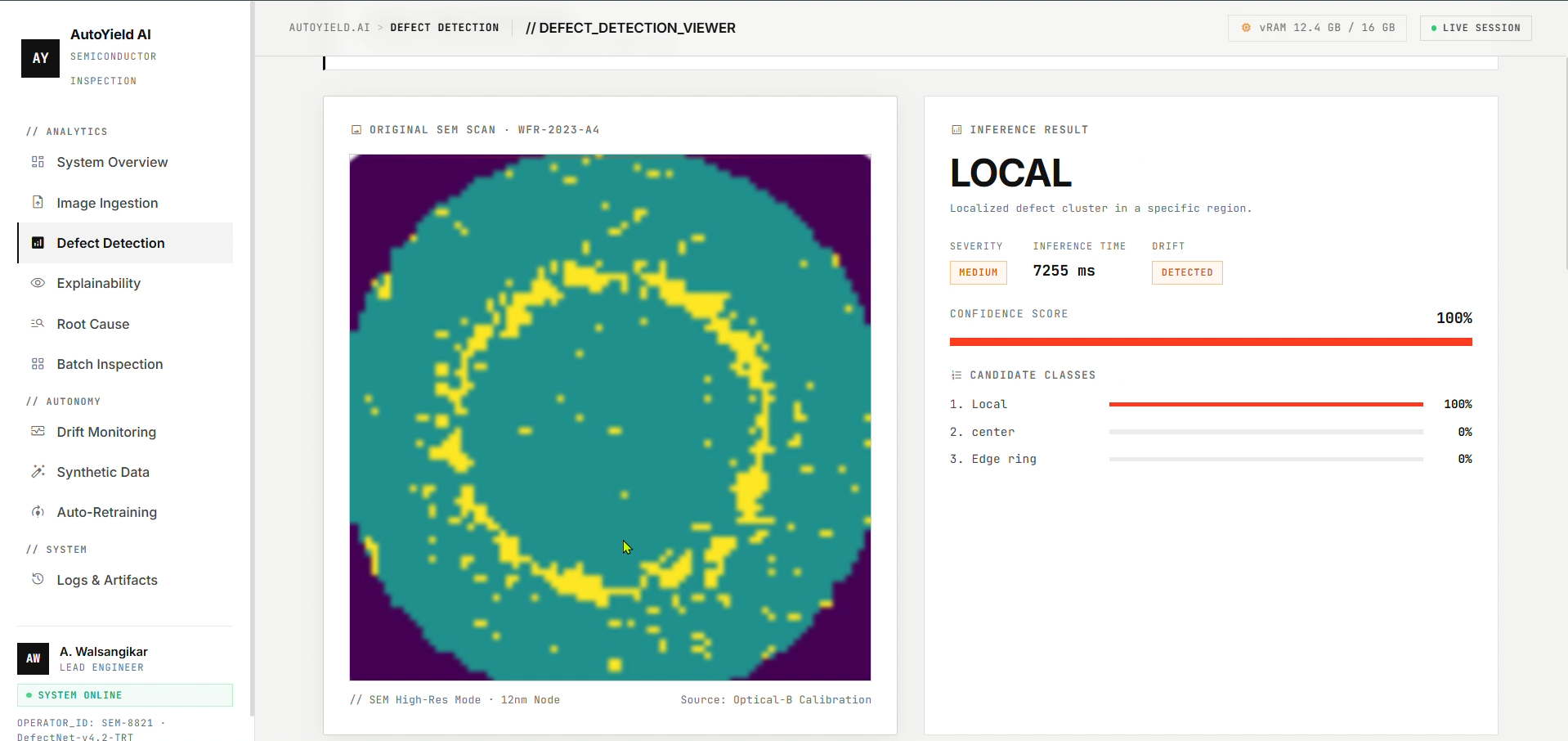
detection viewer page
-
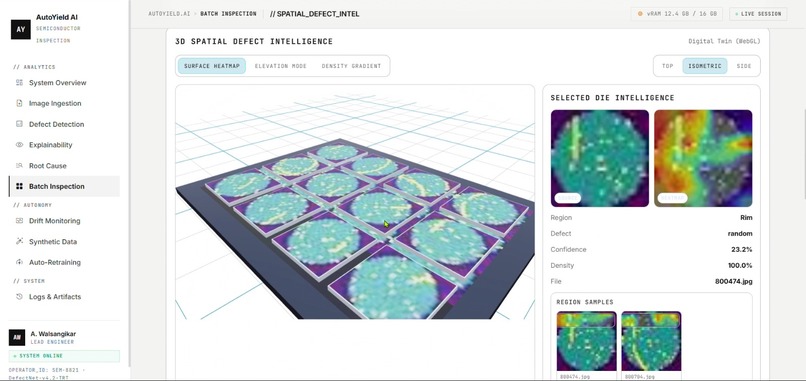
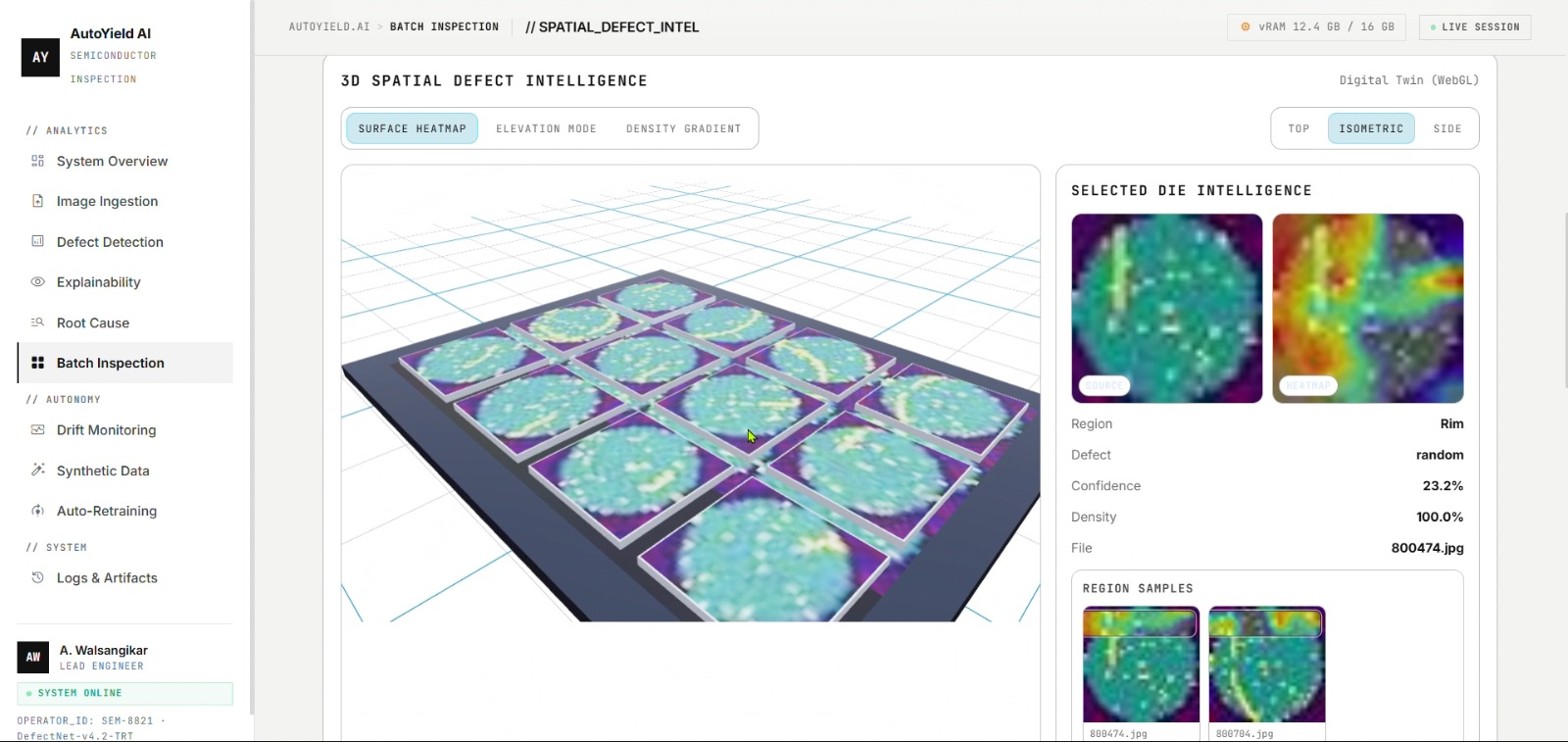
digital twin
Inspiration
The more we read about semiconductor fabrication, the more one fact stayed with us: by the time a defect is discovered, the damage is already done.
A wafer has already passed through dozens of processing steps. It has consumed energy, chemicals, and thousands of liters of ultra-pure water. Engineers now have to pause, investigate logs, scan inspection images, and trace the root cause across a complex process flow.
We kept asking ourselves:
What if this investigation could start before the wafer fails? What if inspection data could actively help engineers prevent waste instead of just explaining it?
AutoYield was born from the desire to reduce engineering effort, financial loss, and environmental waste at the same time.
What it does
AutoYield analyzes wafer inspection images to detect defect patterns early and assist engineers in understanding what might go wrong next.
The key idea is simple: the system does not remain fixed after deployment. Whenever it encounters a defect it is unsure about, it learns from it. Over time, AutoYield becomes better at recognizing rare, evolving, and previously unseen defect patterns.
It turns inspection data into a continuously improving support system for yield engineers.
How we built it
We designed AutoYield with a practical, adaptable architecture using two ML models:
A high-accuracy base model built on ConvNeXt-Small, trained once on curated defect images (~92% accuracy). A lightweight model based on EfficientNet that can be retrained quickly and frequently.
To make the system robust to new and rare defects, we use a Generative Adversarial Network to create additional defect variations.
Whenever the system has low confidence:
The image is correctly labeled, GAN-generated variations are added, The lightweight model is retrained, Future predictions improve.
This creates a self-learning loop without the need to retrain the entire base model.
Challenges we ran into
Lack of access to real fab datasets forced us to simulate realistic wafer defect scenarios. Designing a retraining loop that improves performance without increasing system complexity. Keeping the solution understandable and usable for engineers, not just technically impressive. Translating a complex industrial problem into a workable ML architecture.
Accomplishments that we're proud of
A working prototype that demonstrates early defect detection. A self-improving architecture instead of a static classifier. Framing yield improvement as both an operational and environmental problem. Designing the project from an engineering support perspective.
What we learned
Defects evolve over time, so models must evolve too. AI in industrial settings must prioritize clarity and trust. Yield loss has a hidden environmental cost that is rarely discussed. Real innovation happens when systems thinking meets machine learning.
What's next for Autoyeild AI
Testing with larger and more realistic inspection datasets. Building a visual dashboard for engineers to explore defect insights. Refining the retraining pipeline for faster adaptation. Exploring integration into real inspection workflows inside fabs.
AutoYield is our attempt to show that AI can do more than classify images. It can become a quiet partner to engineers, helping them save time, reduce waste, and prevent problems before they happen.
Built With
- digitaltwin
- gan
- machine-learning
- opencv
- react

Log in or sign up for Devpost to join the conversation.