Inspiration
Our team loves plants. However, maintaining a consistent watering schedule is always a hassle. We often forget to or are unable to water our plants due to travel, time conflicts or other factors, often resulting in the death of many beloved plants. We decided to come up with a device that would help plant owners with busy schedules take better care of their plants.
What it does
AutoWater seeks to automate watering plants, utilizing user inputs such as the types of plants and their last watering. The software allows the users to add and remove plants, water plants automatically, and display the plant’s information. The app notifies users when it's time to water their plants, and users can water them automatically, from anywhere, just through the click of a button. Users can also check on their plants by displaying information such as the last watering and time till the next watering. Additionally, depending on the type of the plant, more information such as the ideal range of light, temperature (in C), humidity and soil moisture for the plant is also displayed.
How we built it
Software The frontend was built using Visual Studio and Stack + js, whereas the backend was built in Java using Github and the Open Plantbook API.
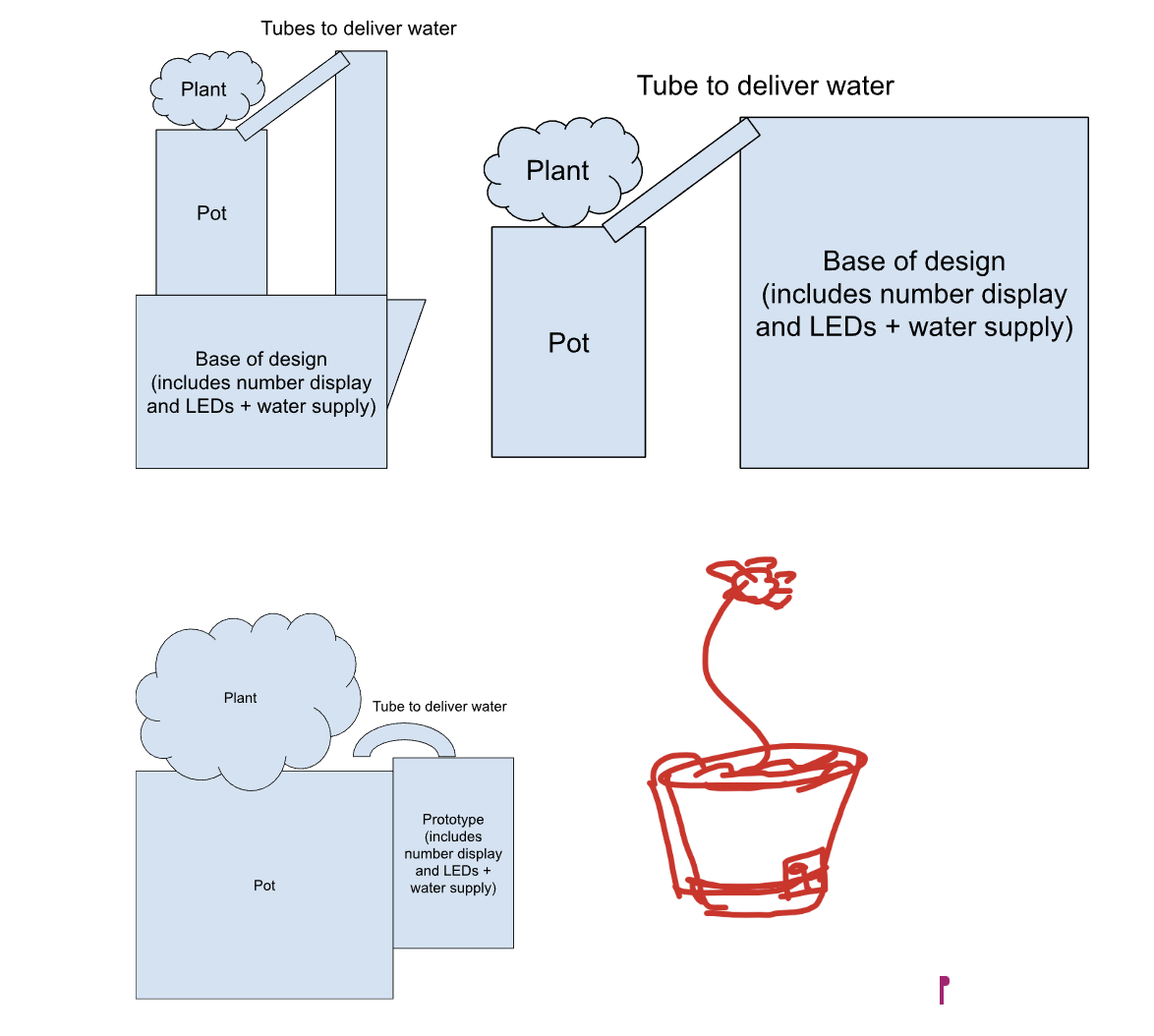
Hardware Chaitra - The pump would ideally be a 3D printed vane mechanism to quickly and efficiently transport water from the storage unit to the soil. In order to prototype the mechanism, we used thin cardboard and arranged vanes between two circular pieces using super glue. This section was attached to the motor with a rubber band for grip as the mobile portion. For the external casing, additional cardboard was utilised with tape to create a space for the water to pass through. To this casing, plastic straws were used to transport the water to and from the pump.
Challenges we ran into
Initiating + brainstorming late, combining the frontend code, backend code and hardware + working without the use of the thinkbox. We also weren’t able to fully finish due to our lack of technical knowledge in building frameworks, full-stack development, and working with Arduinos + motors.
Executing the pump with the resources we had readily available was difficult and did not perform as intended.
Accomplishments that we're proud of
Learning front-end design and development, learning how to use an API and Java Threads, identifying a somewhat creative and unique idea, and making something tangible.
What we learned
For most of our team, it was our first time participating in a Hackathon. We learned that time-management and coordinating with other team members was essential. We had to work together to come up with an idea and divide up the work to implement the project. Antonio worked on the front end using Visual Studio Code, Abnar worked on the back end using GitHub, and Chaitra worked on the hardware using Arduino IDE. We then came together to combine the different parts and their code to try to create one cohesive project (albeit rough and unfinished).
What's next for AutoWater
In the future, we would like to incorporate other aspects of a plant’s health, such as sun exposure and soil type. We can do this by using light and soil moisture sensors. The collected data can be used to notify users of their plants’ health and when to water them next. We could also integrate a camera that uses AI to study the condition of the plants by identifying its leaves, color, and texture, analyzing the health of the plants and generating advice and explanations on how to better maintain the plants.
Built With
- api
- cardboard
- dcmotor
- inland
- java
- jsx
- microcontroller
- stack
- superglue


Log in or sign up for Devpost to join the conversation.