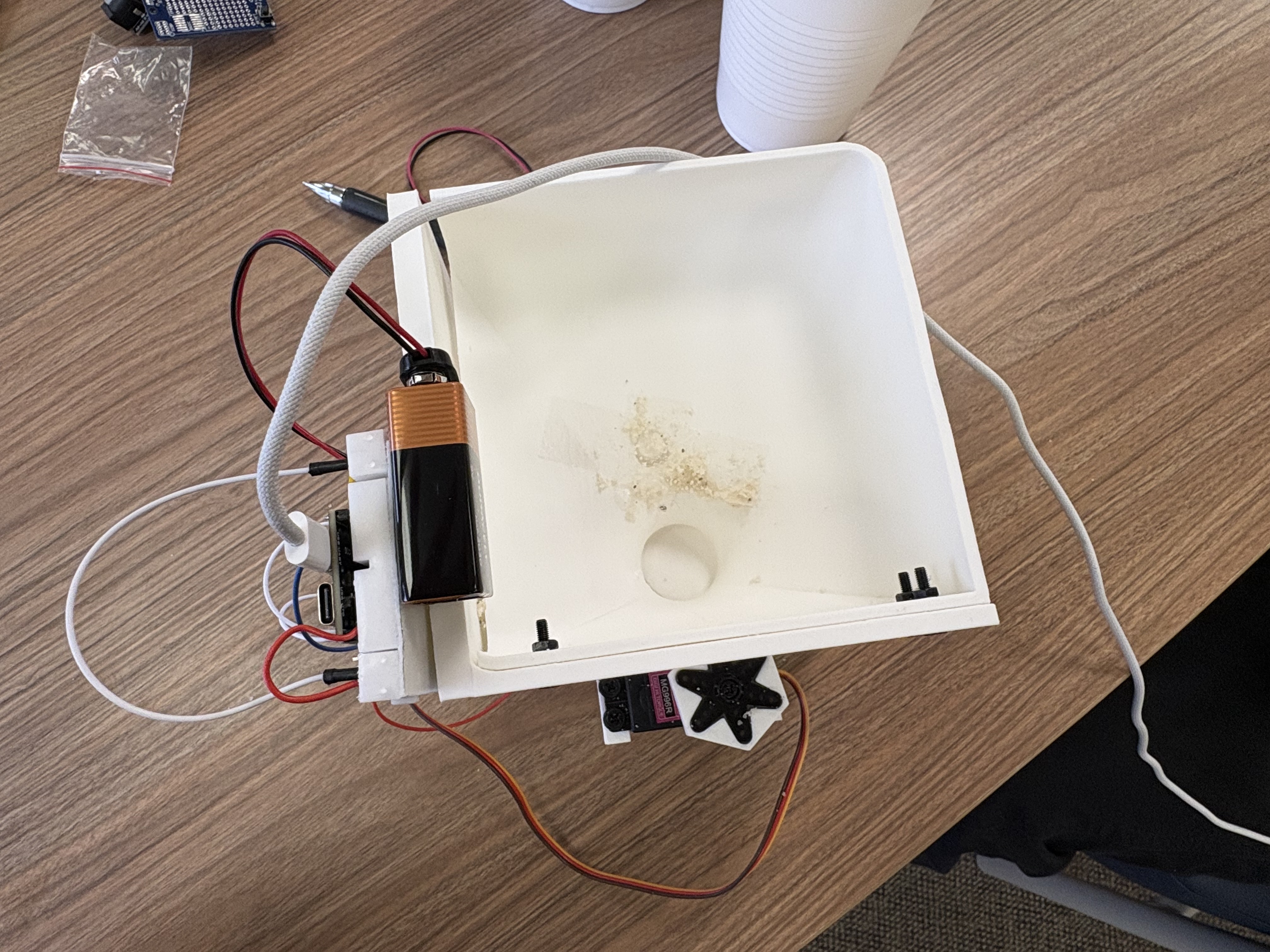
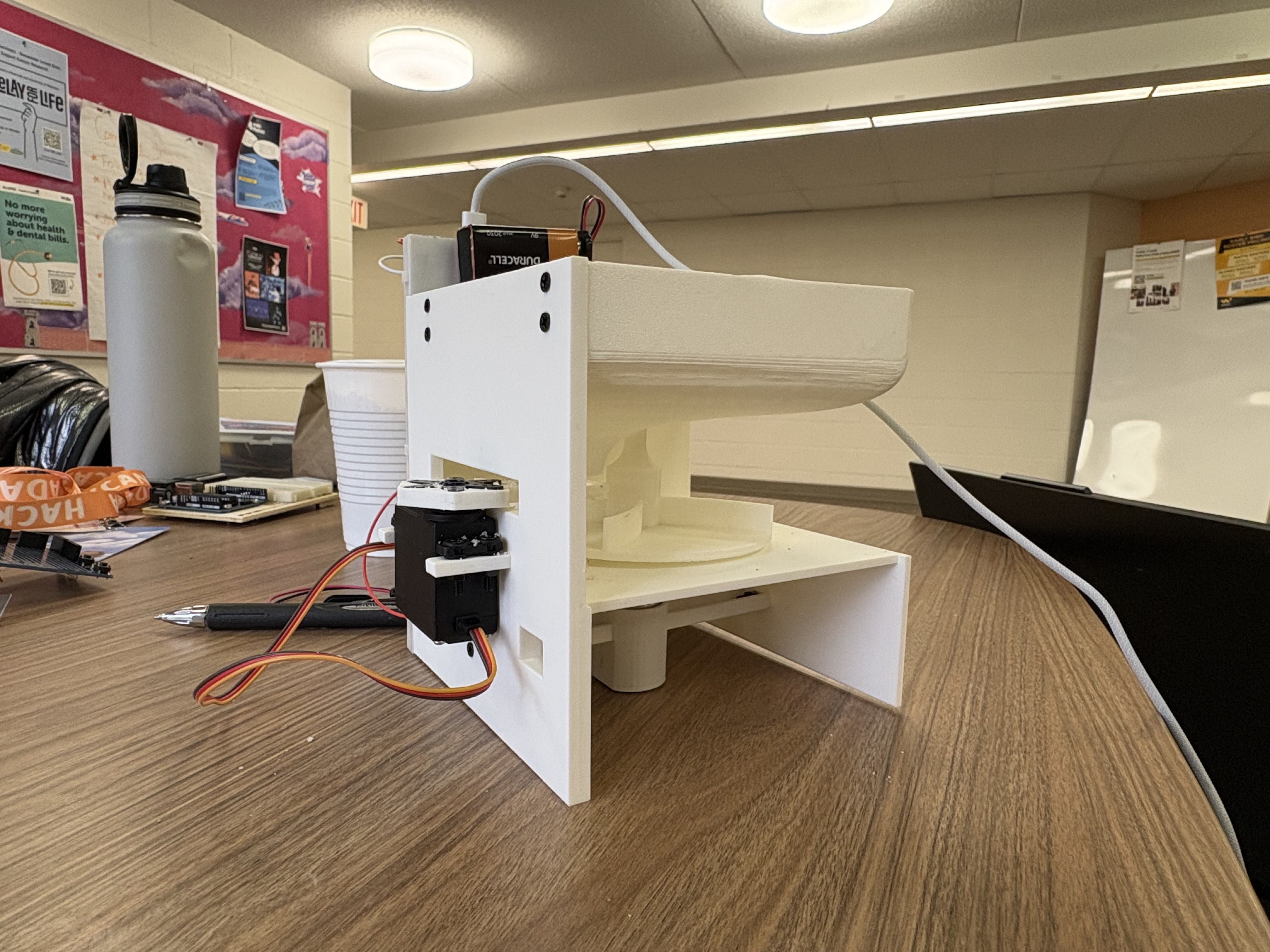
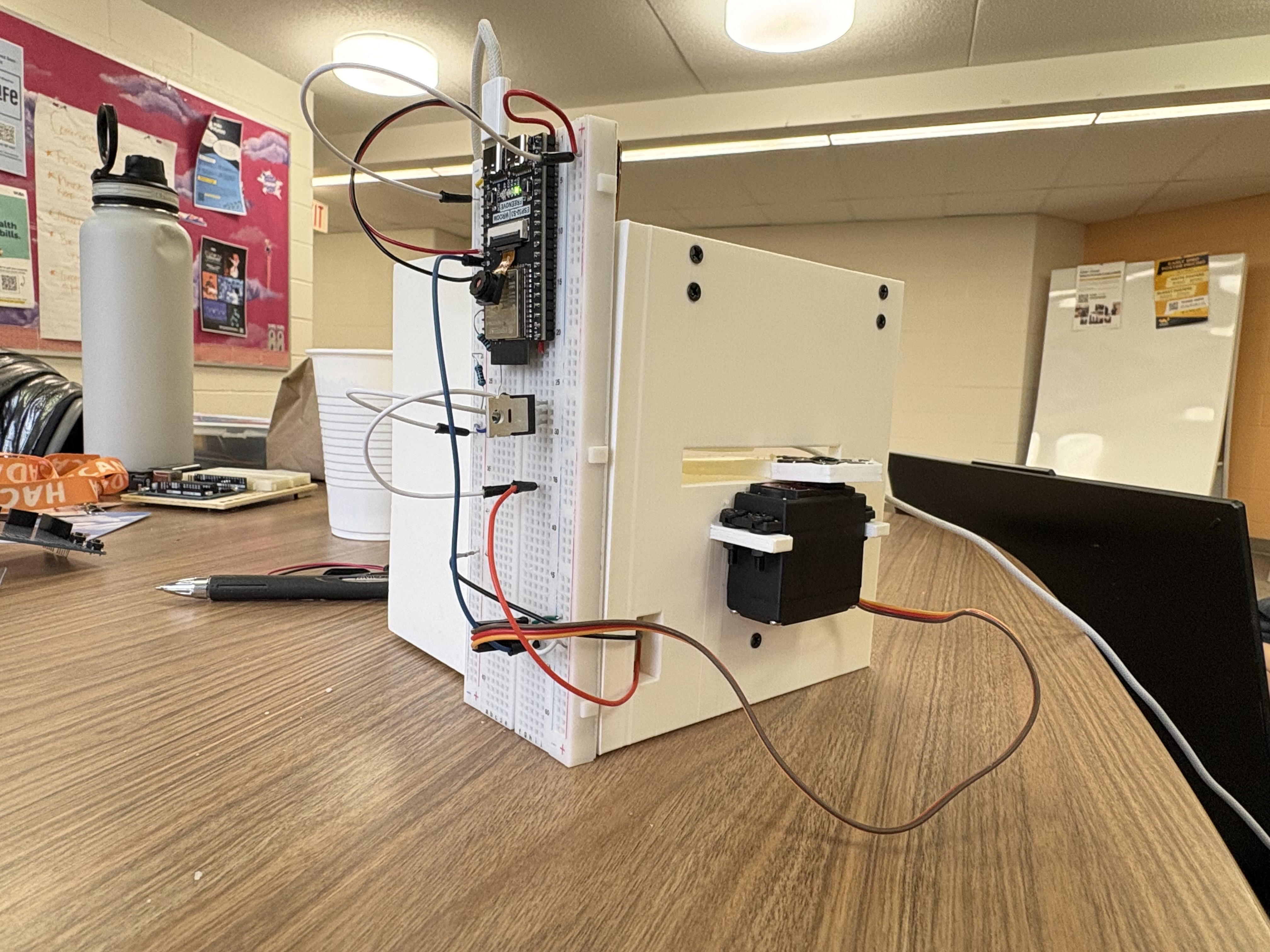
Watching elderly neighbours or those with physical limitations struggle with winter maintenance is just a normal part of living in Canada and the harsh, unforgiving weather that comes with it. For us, it's one of those problems everyone knows about but nobody really solves, leaving so many of our friends and family at systemic disadvantages. For millions of elderly Canadians, winter isn't just uncomfortable. It's genuinely dangerous. Manual salting requires balance, strength, and the awareness to do it before the ice takes over. For seniors living alone, that's a lot to ask. As Mechatronics Engineering students at the University of Waterloo, we wanted to build a practical solution that is simple to use and significantly supports those around us who need it. Thus, we built AutoThaw, because nobody should have to choose between getting the mail and staying safe.
Through HackCanada, we learned that the simplest problems are often the most overlooked, and the best solutions aren't always flashy. Sometimes they're just a motor, some salt, and the right trigger at the right time. We also learned a lot about weather APIs, hardware integration, mechanical design, and how to keep a mechanism from jamming.
AutoThaw combines a weather API with an automated dispensing mechanism that activates when temperatures drop near water's freezing point and precipitation is detected. No app, button, or help needed. The entire system is automatic and easy to use.
Nothing went smoothly. The funnel kept jamming with salt, which meant the dispenser would just sit there doing nothing. Beyond that, our 9V batteries were all dead, which we realized at the worst possible time. We also fought the usual hackathon moments: components that worked fine on their own refusing to cooperate once connected, last-minute wiring issues, and the typical last-minute reconsiderations, which at times became ingenious ideas.
We learned that hardware can be very humbling. While software gives you error messages, hardware silently fails, and doesn't point you to a root. Getting the physical components to behave together taught us more about iterating quickly and staying calm under pressure than any work we have done in theory. Sometimes the most valuable thing you can build is your tolerance for things going wrong, and the approach you take when that happens.
In the end we learned that the unglamorous, physical problems are often the hardest to solve, and especially for AutoThaw, probably the most worth solving.

Log in or sign up for Devpost to join the conversation.