-
-
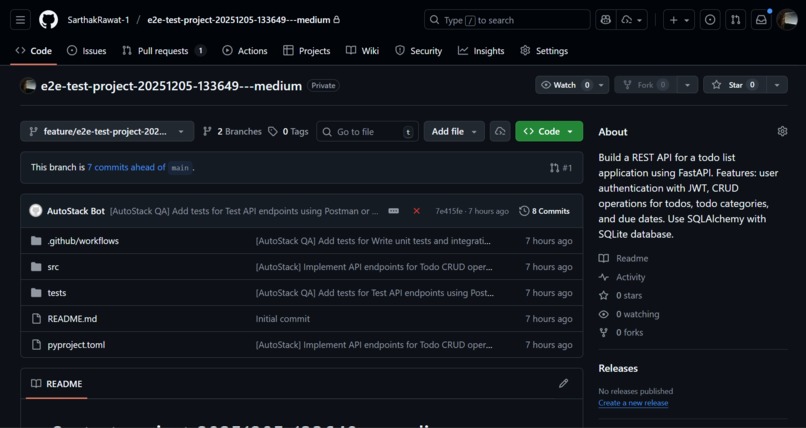
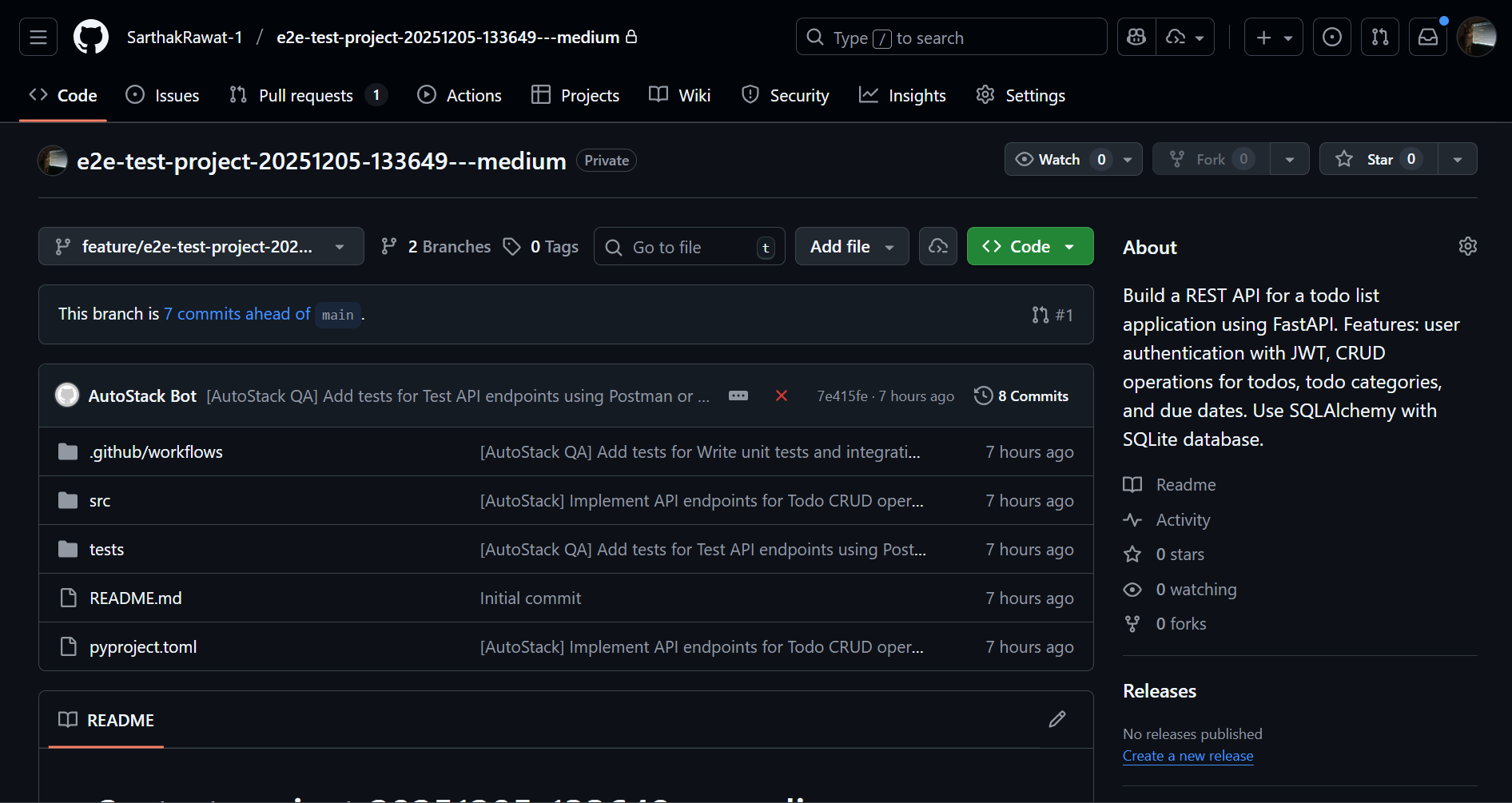
New branch and commit
-
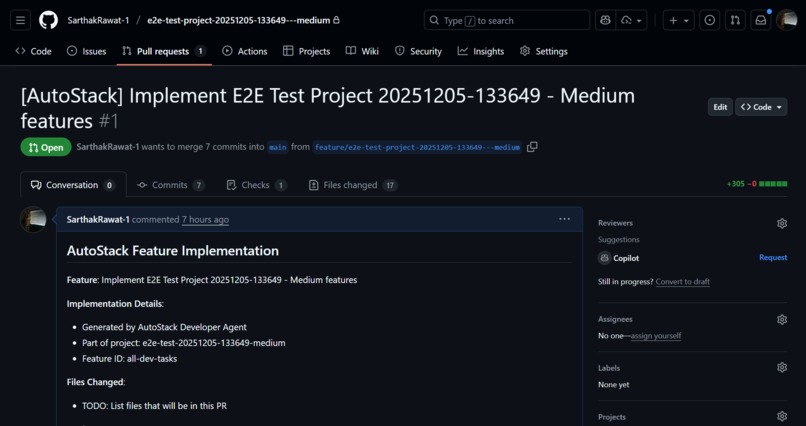
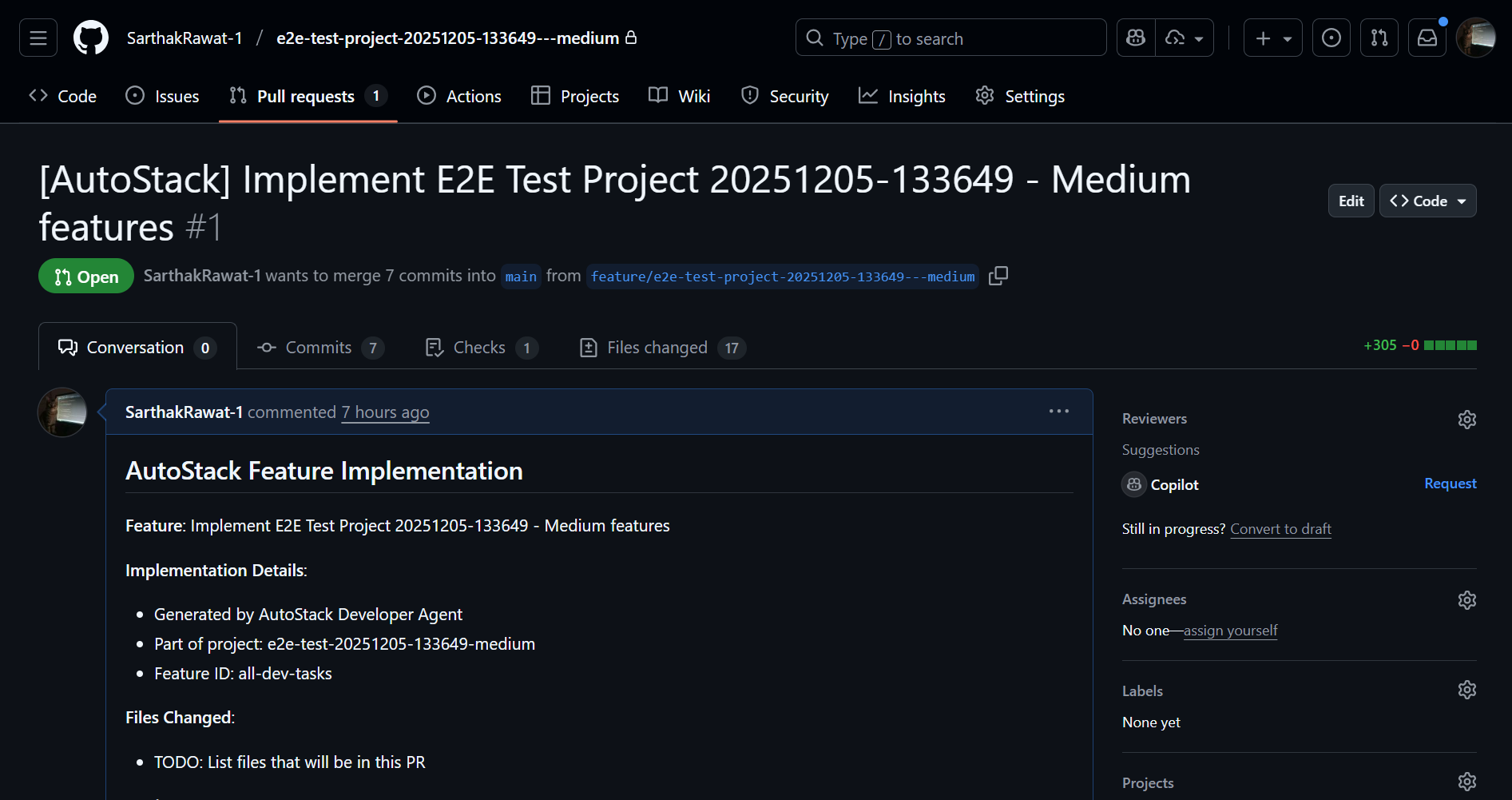
PR created
-
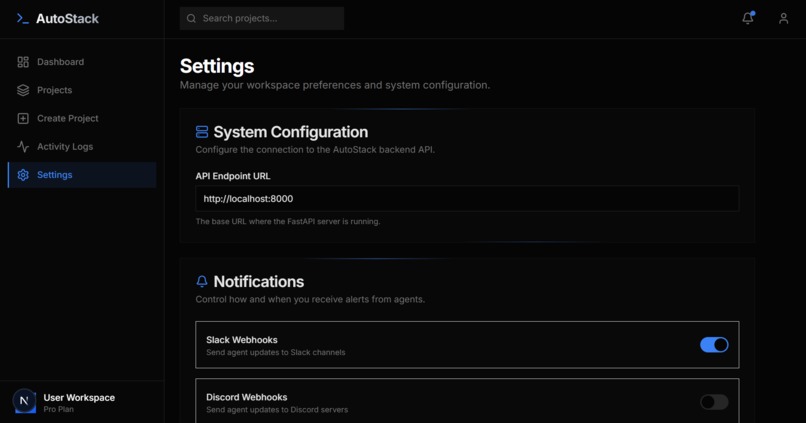
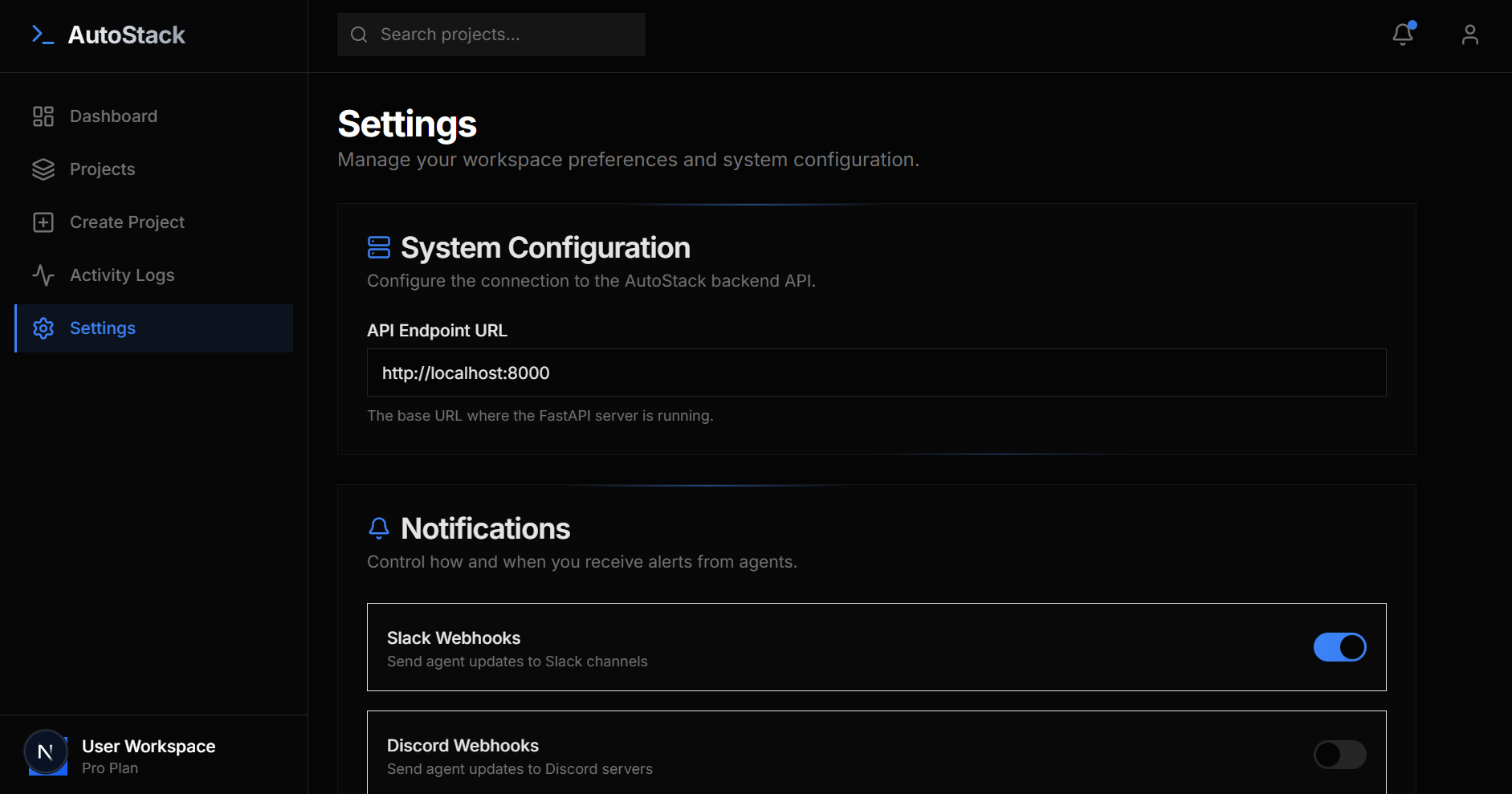
Settings
-
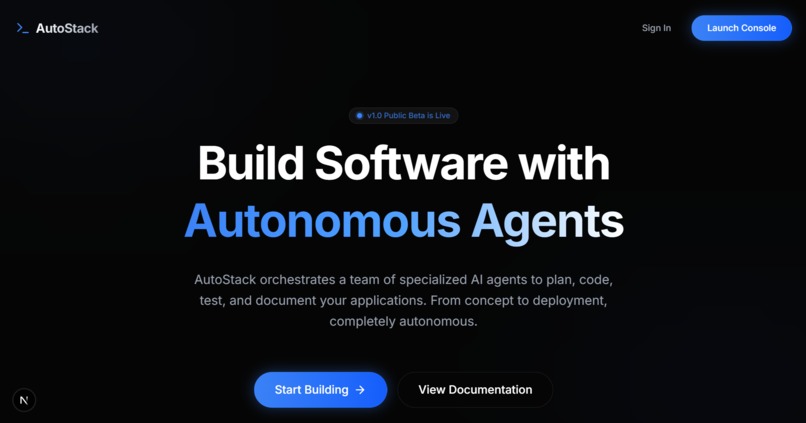
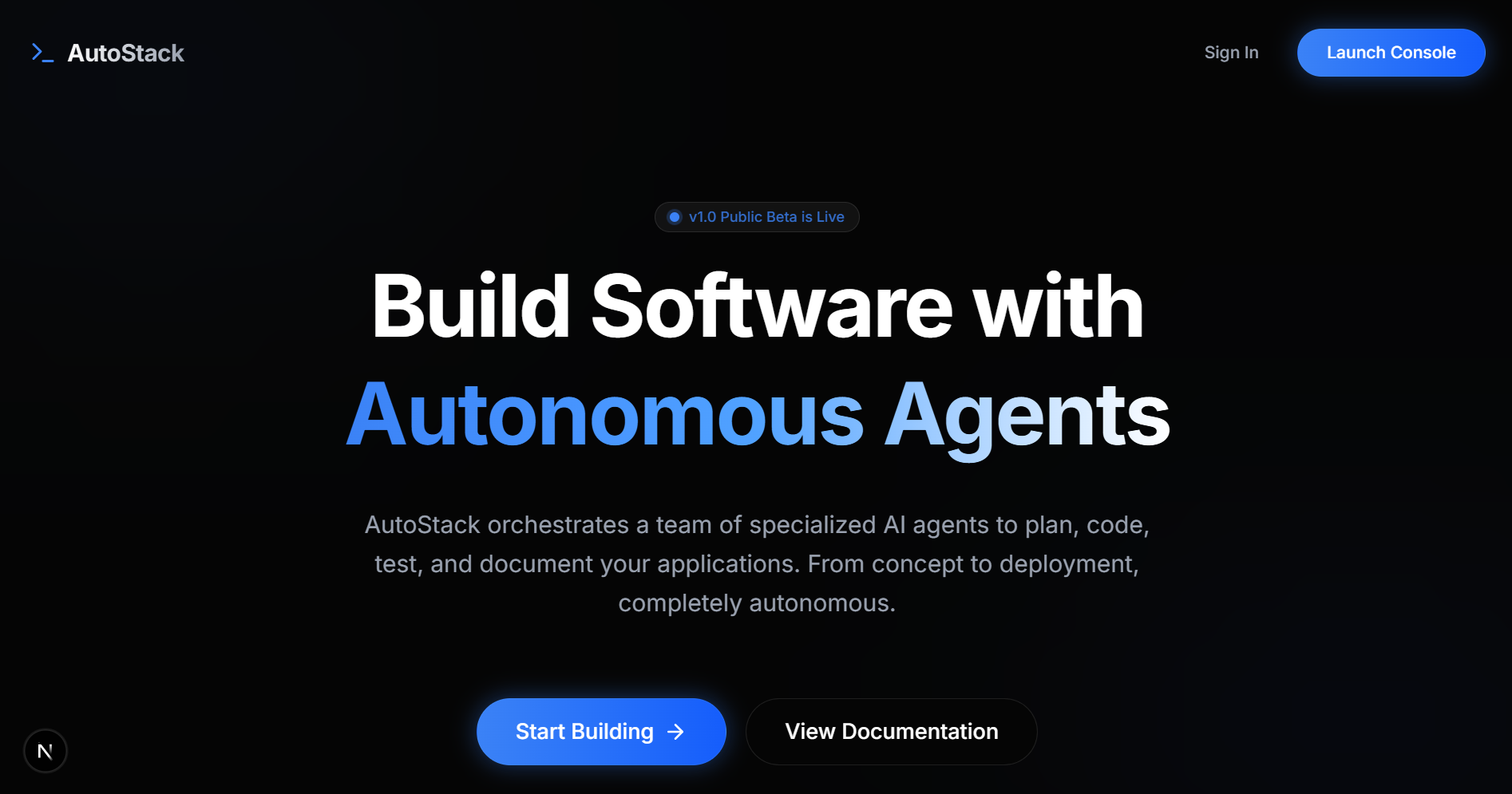
Landing
-
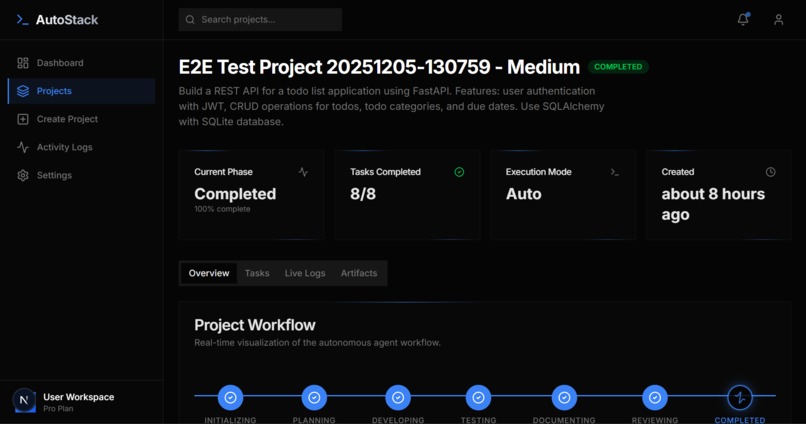
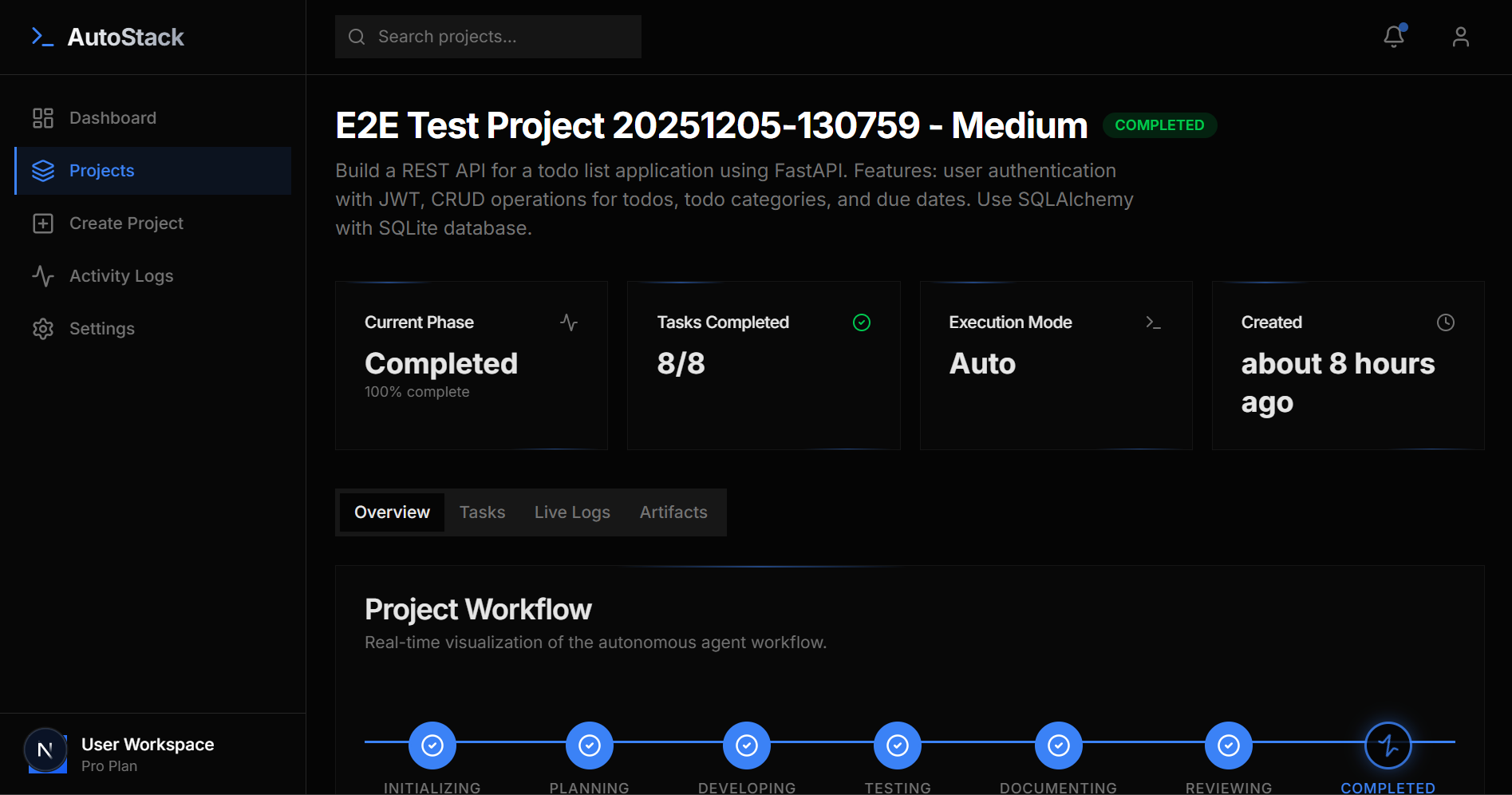
Project Status
-
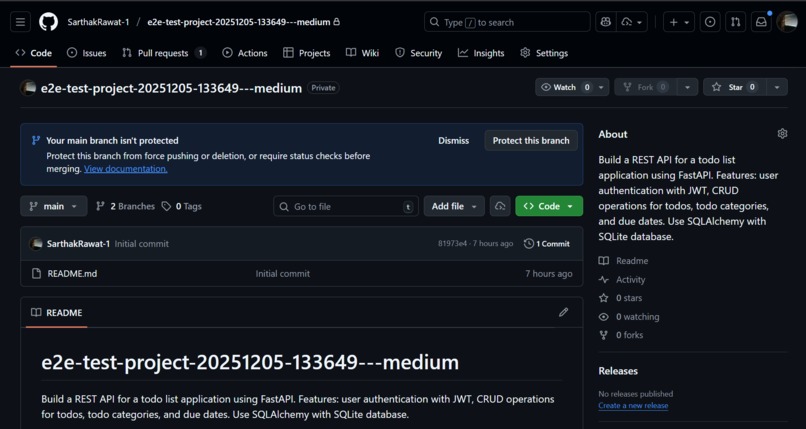
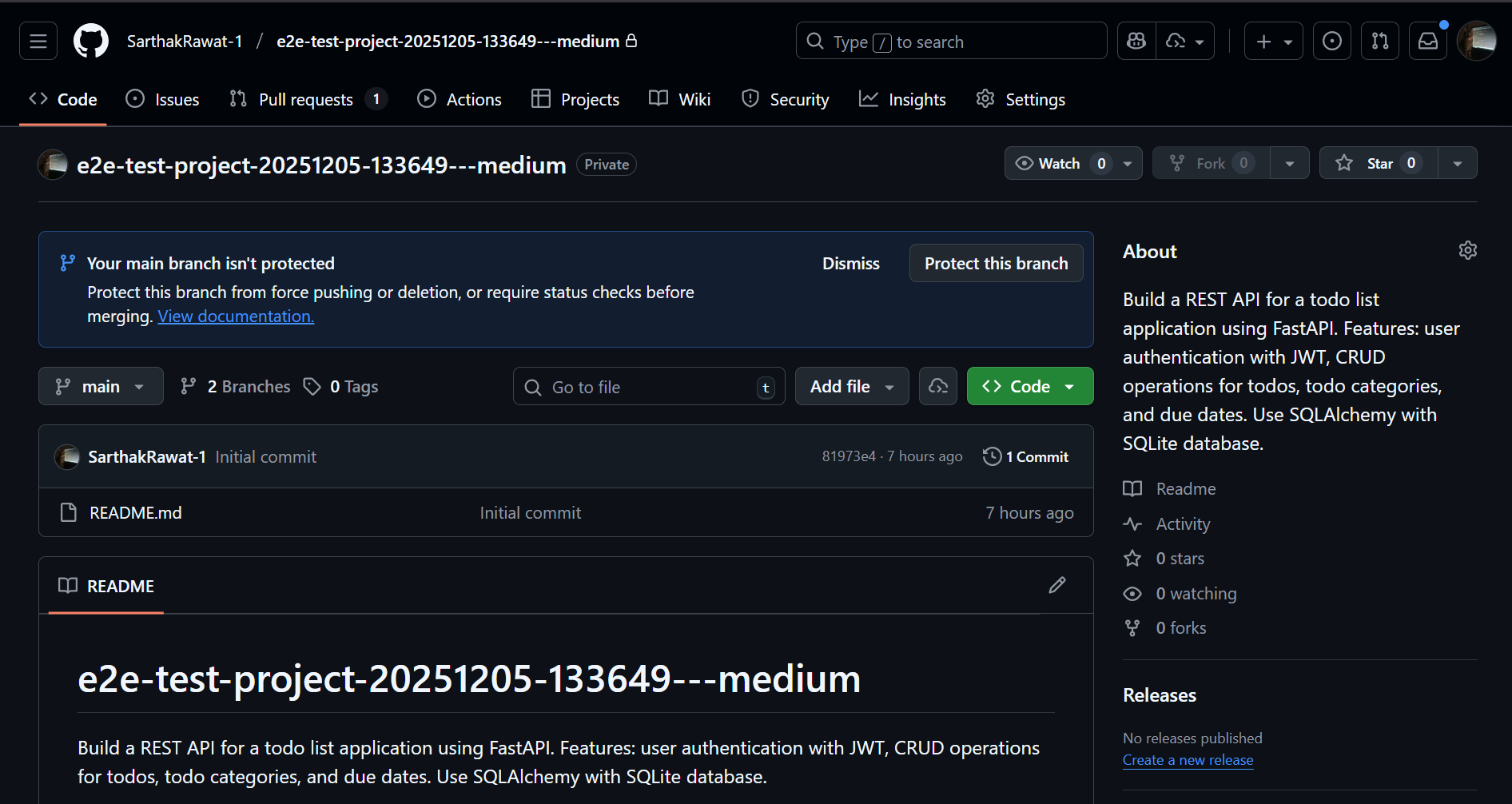
Github Repo created
-
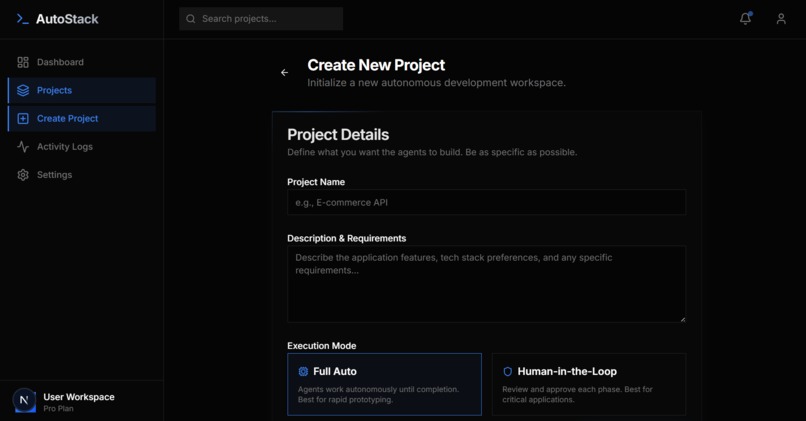
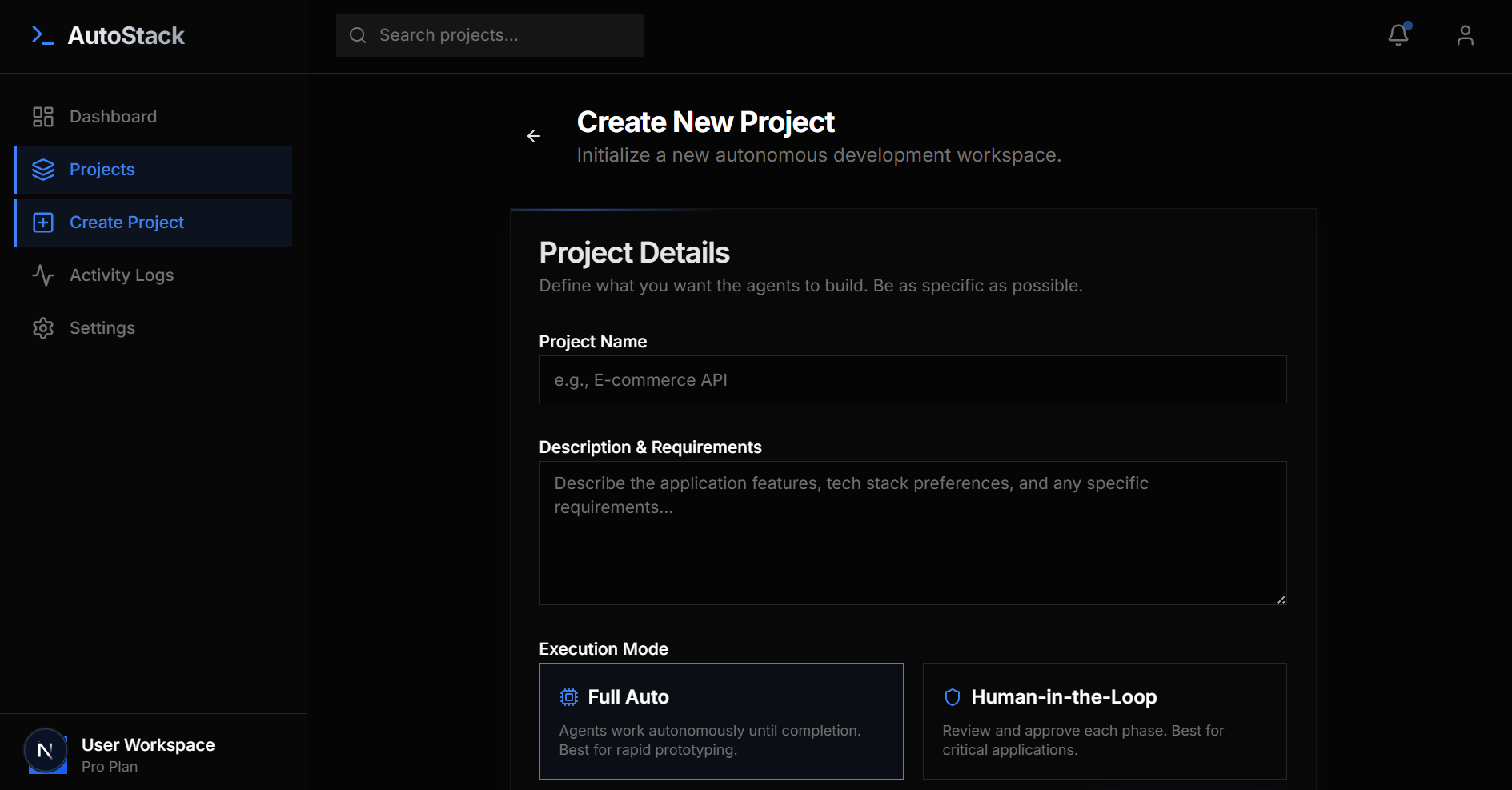
Create Project
-
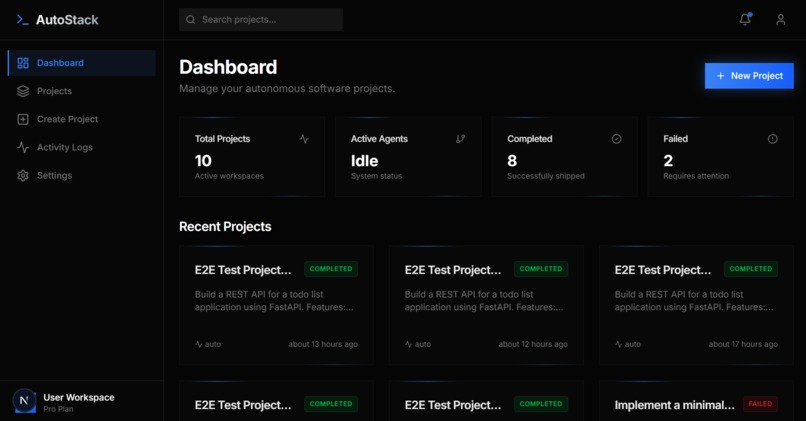
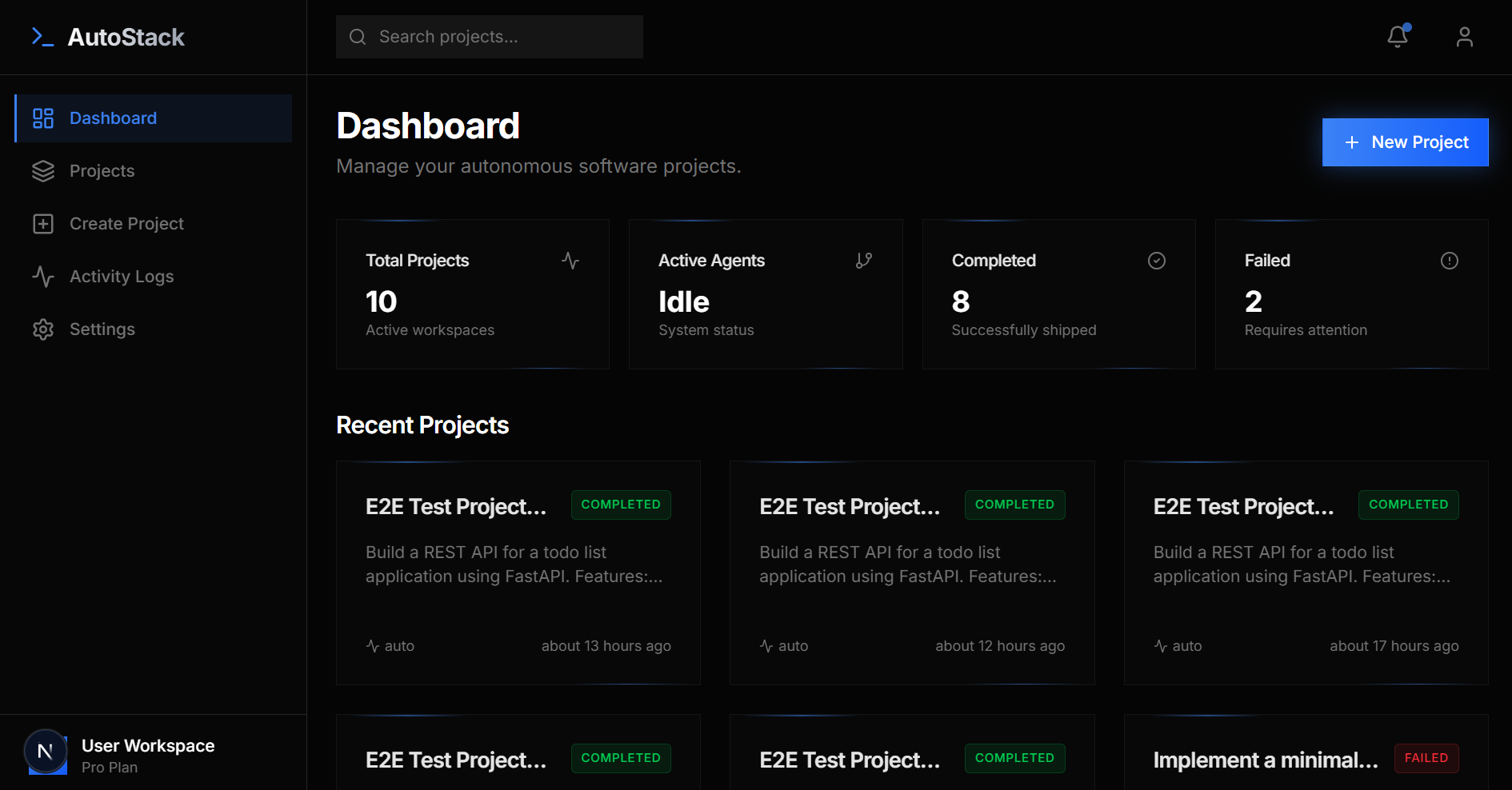
Dashboard
-
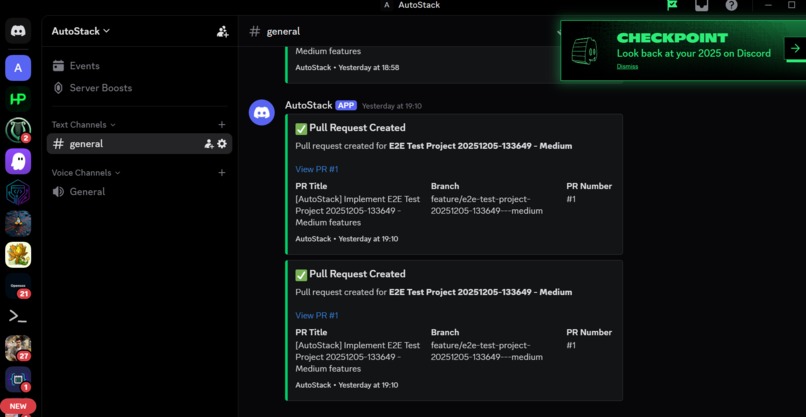
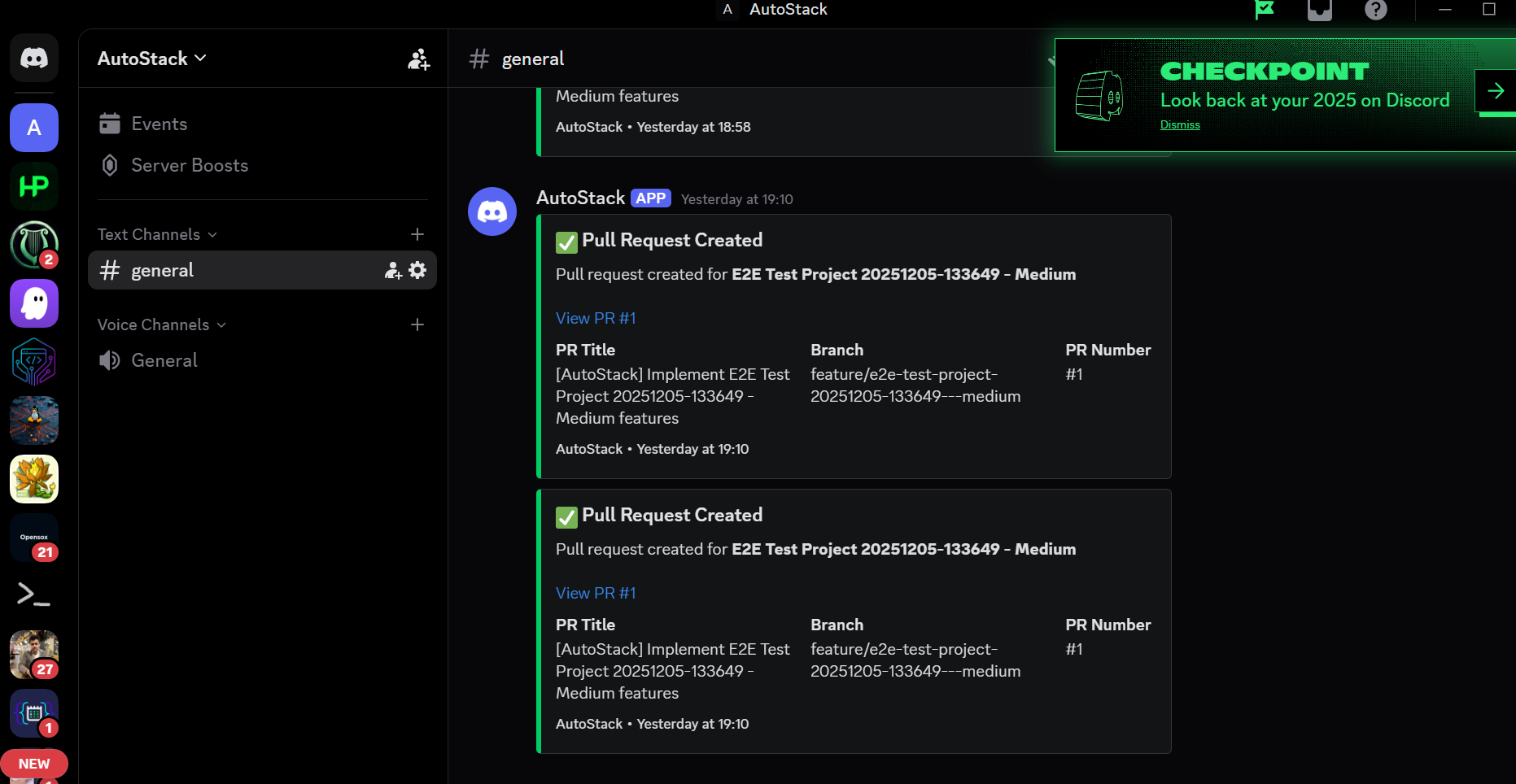
Discord notification
-
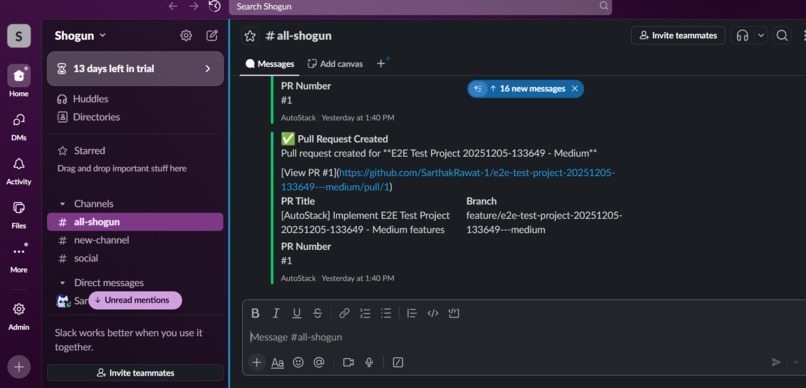
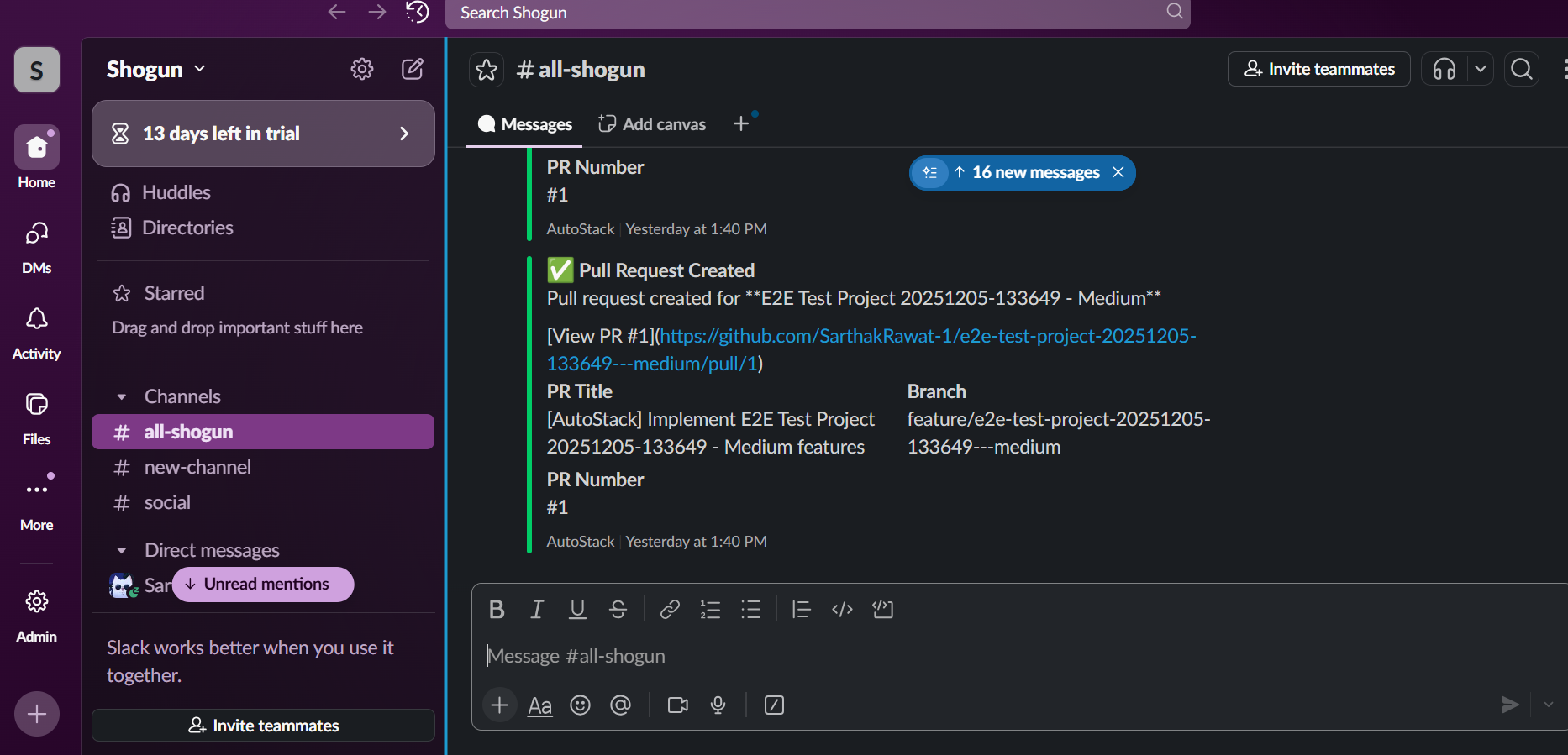
Slack notification
🌟 Inspiration
The idea for AutoStack was born from a simple observation: software development teams are bottlenecked by human processes. Whether it's waiting for code reviews, coordinating between different roles, or manually handling routine tasks, the development pipeline is full of friction points that slow down progress.
What if we could have a software team that never sleeps?
What if we could create an autonomous system where agents specialize in different roles—planning, development, testing, and documentation—and work together seamlessly without human intervention?
Inspired by the potential of AI agents and LangGraph's orchestration capabilities, we envisioned a system that could take a project description and deliver a complete, production-ready application with minimal human involvement.
🚀 What It Does
AutoStack is an autonomous multi-agent system that simulates a complete software development team. When you provide a project description, it:
- Analyzes Requirements – The Project Manager agent breaks down complex requirements into manageable tasks.
- Plans Architecture – Generates structured project plans with goals, features, and technical approaches.
- Implements Code – The Developer agent writes production-ready code, creates repositories, and manages GitHub workflows.
- Tests Quality – The QA agent performs comprehensive testing to ensure code quality.
- Documents Results – The Documentation agent produces detailed guides and API documentation.
- Delivers Production Code – Automatically creates pull requests and sends notifications to Slack/Discord.
The system orchestrates four specialized AI agents using LangGraph, manages state persistence, handles task dependencies, and provides real-time progress tracking through a REST API.
🛠️ How We Built It
We followed a spec-driven approach, beginning with requirements and architecture before implementation.
Backend Architecture
- Built with FastAPI (REST API)
- SQLAlchemy + PostgreSQL for persistent storage
- Core workflow engine powered by LangGraph for state management and agent orchestration
Agent System
- BaseAgent abstract class
- Specialized agents: PM, Developer, QA, Documentation
- LLM integration using OpenRouter and Groq
- ChromaDB memory for persistent context
- Each agent has independent task-processing and memory protocols
Workflow Orchestration
A 7-phase state machine using LangGraph’s StateGraph:
Initialize → Plan → Develop → Test → Document → Review → Finalize
- Conditional transitions
- Error handling and checkpointing
- Support for long-running workflows
Integration Layer
- GitHub repository automation
- Slack/Discord real-time notifications
- Vector DB integration for advanced context tracking
Frontend Dashboard
- Built with Next.js
- For monitoring projects, status tracking, and configuration management
⚠️ Challenges We Ran Into
Agent Coordination
Ensuring four agents worked together required robust shared state + memory. We built a custom memory system for context consistency.
Workflow State Management
Checkpointing and failure recovery for long workflows was nontrivial—we needed precise resume functionality.
API Limitations
GitHub rate limits forced the implementation of retry logic and defensive error handling.
LLM Output Consistency
Generating reliable, structured code required strict prompt engineering and validation.
Security Concerns
Managing API keys, GitHub tokens, and secrets safely required careful credential design.
Testing Complex Workflows
Testing multi-agent interactions required property-based testing and long-run simulations.
🏆 Accomplishments We’re Proud Of
- Fully Autonomous Workflow: One API call can trigger an entire software development cycle.
- Sophisticated Agent Coordination with context sharing and memory persistence.
- Real-time Monitoring via Slack/Discord and live progress tracking.
- Production-Ready Architecture with retries, error handling, and modularity.
- Scalable Design allowing easy extension with new agents or integrations.
- Comprehensive Documentation including API specs and architectural diagrams.
📚 What We Learned
- AI Agent Orchestration requires careful planning of state, context, and sequencing.
- LangGraph is incredibly powerful for long-running workflows with checkpoints.
- Specifications First drastically reduces complexity in multi-agent systems.
- Error Handling in AI Systems must be more robust than traditional software.
- Security becomes critical when agents manage API keys and automation pipelines.
- Memory Systems (vector DBs) are essential for multi-step AI workflows—not just RAG.
🔮 What’s Next for AutoStack
Advanced Agent Types
- Security auditors
- Performance testers
- DevOps configuration agents
Custom Agent Training
Fine-tuning on specific frameworks to improve code consistency and style adherence.
Enhanced Planning
Leveraging architectural pattern recognition and enforcing best practices.
Integration Expansion
Support for:
- GitLab
- Bitbucket
- More CI/CD platforms
- Additional notification channels
Self-Improvement Loops
Agents learning from past work, code reviews, and deployment feedback.
Agent Marketplace
Developers can create and publish their own specialized agents.
Human-in-the-Loop
Optional approval gates for sensitive phases while keeping routine automation fully autonomous.
Built With
- alembic
- chromadb
- discordwebhook
- fastapi
- githubapi
- groq
- langgraph
- langsmith
- nextjs
- openrouter
- postgresql
- python
- slackwebhook
- tailwindcss
- typescript

Log in or sign up for Devpost to join the conversation.