Inspiration
Small businesses can lose valuable time and revenue managing PayPal disputes. Gathering transaction records, checking delivery information, reviewing customer conversations, and preparing evidence can be stressful, especially for merchants without dedicated support teams.
We asked ourselves: What if AI could help merchants defend their transactions by organizing evidence and preparing stronger, fact-based dispute responses?
That question inspired AutoSettle AI, an AI-powered dispute defense agent designed to make dispute management faster, more transparent, and more accessible.
What it does
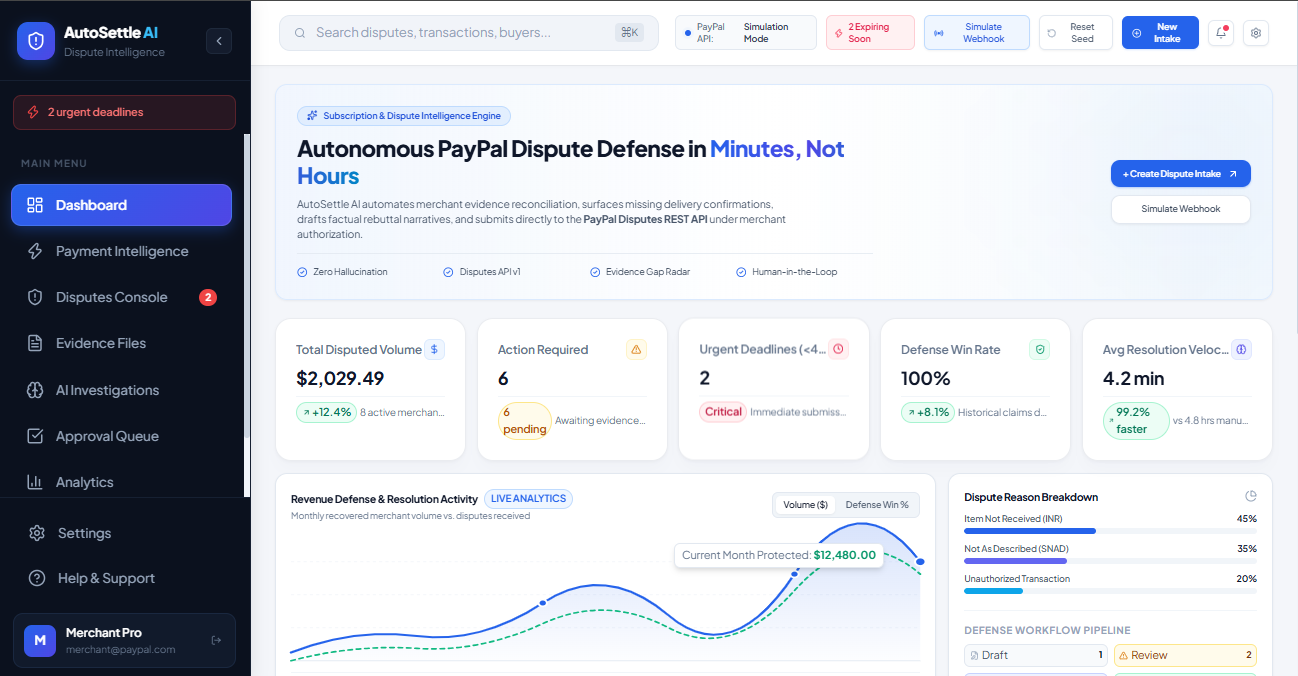
AutoSettle AI streamlines the dispute response process by combining AI-powered analysis with PayPal's dispute-management capabilities.
The platform is designed to:
- Organize available transaction, order, shipping, and customer communication records.
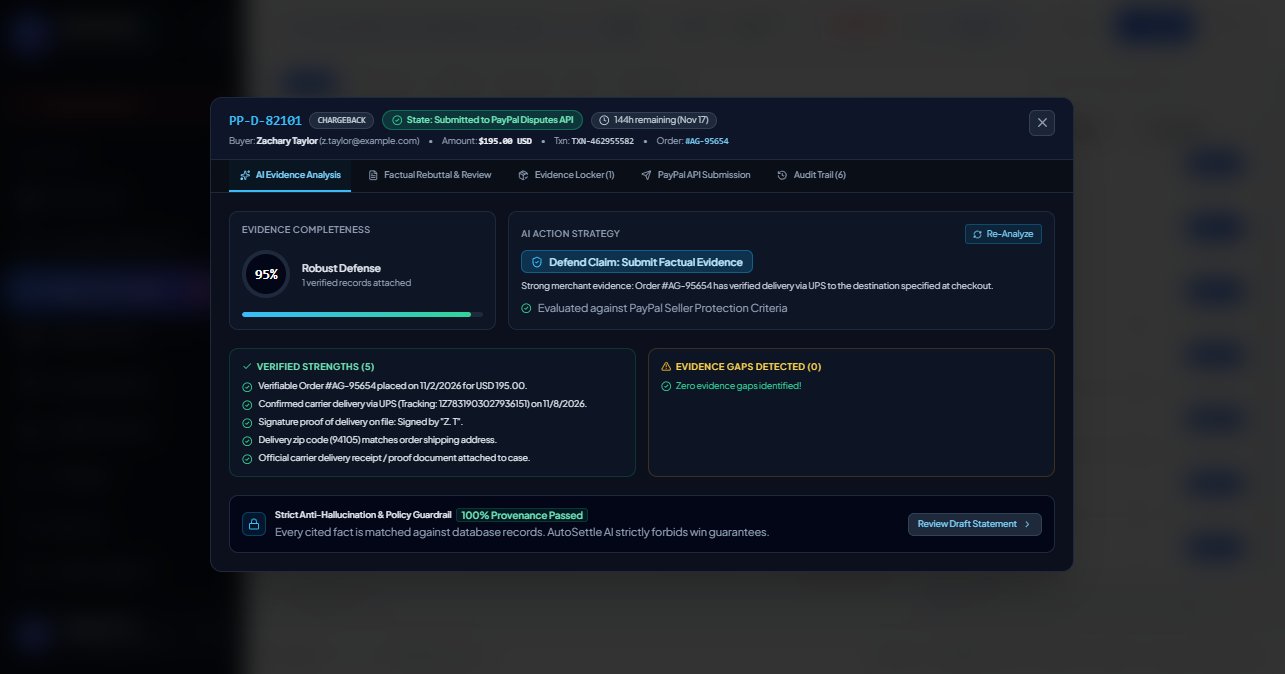
- Analyze disputes and identify missing, conflicting, or insufficient evidence.
- Generate tailored, evidence-backed response drafts.
- Connect claims to their supporting evidence through an interactive Evidence Graph.
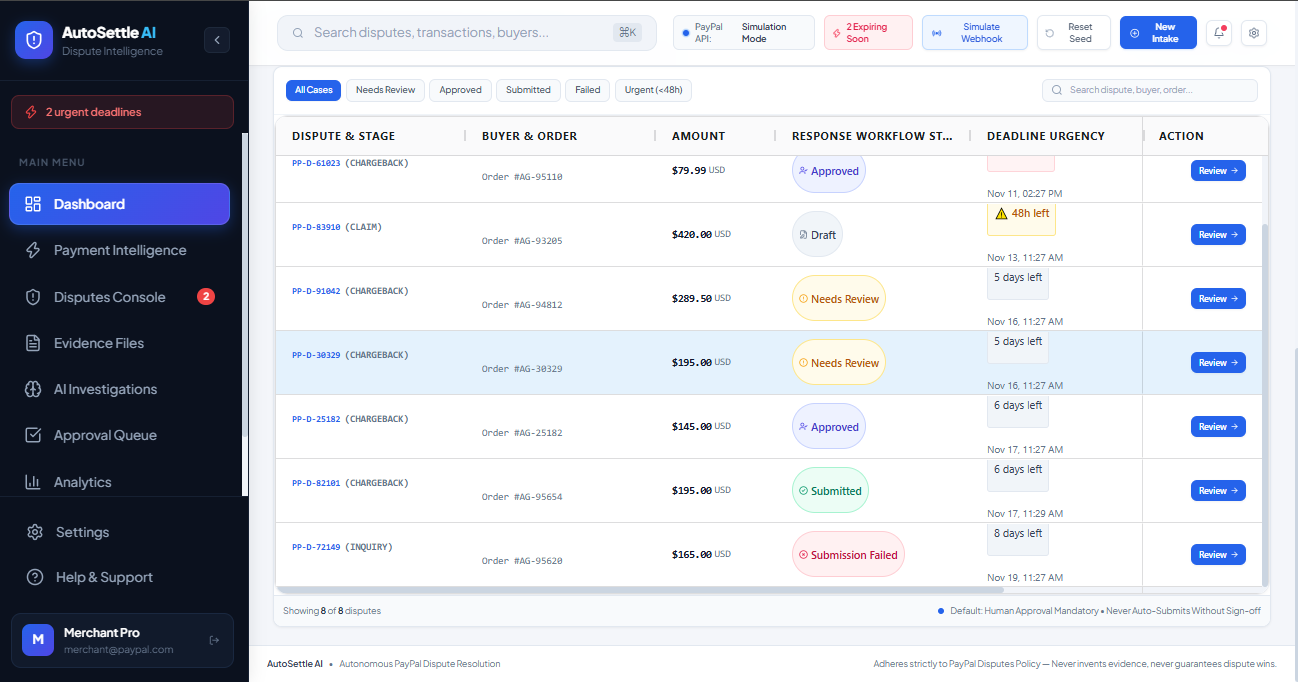
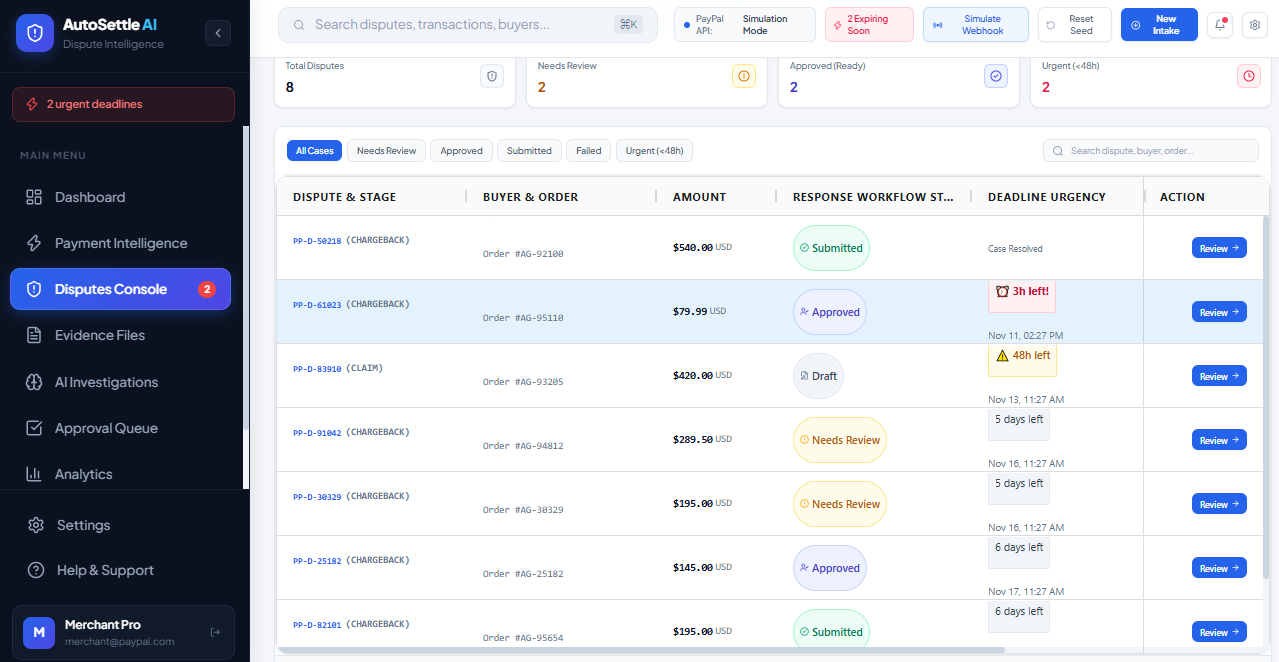
- Provide an AG Grid-powered dashboard to prioritize cases, track deadlines, and monitor progress.
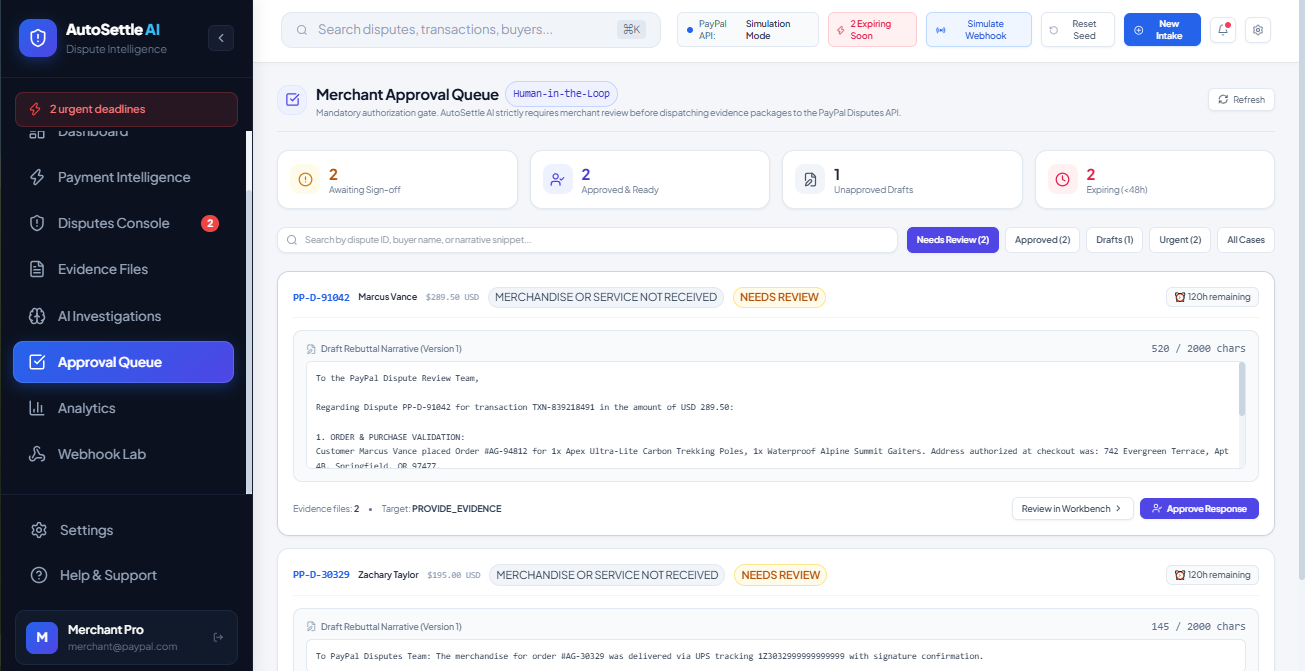
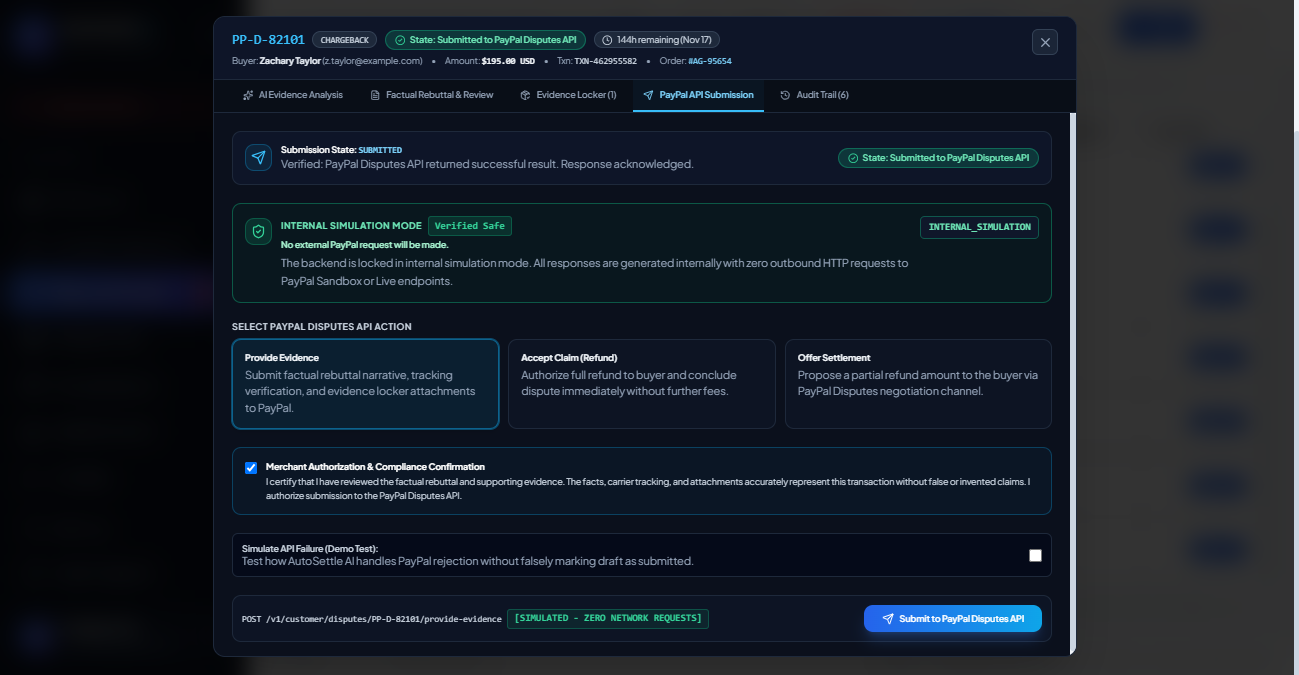
- Support merchant review and authorized evidence submission through supported PayPal APIs.
Rather than blindly trusting AI-generated responses, merchants can inspect the supporting evidence and approve submissions. AutoSettle AI helps merchants prepare their cases, but does not guarantee dispute outcomes.
How we built it
We designed AutoSettle AI around a modular architecture combining a modern web application, an AI analysis workflow, and payment dispute infrastructure.
Our technology stack includes Next.js, React, TypeScript, Tailwind CSS, PostgreSQL, Prisma, an LLM provider, AG Grid, and the PayPal REST APIs.
The workflow begins when a dispute event is received or a case is selected. The application retrieves available dispute information, organizes relevant evidence, and passes structured records to the AI analysis component. The agent identifies evidence gaps, maps supported claims to their sources, and drafts a response for merchant review.
The backend validates AI outputs and controls whether an action is authorized. PayPal integration handles supported dispute operations, while an audit trail records important events.
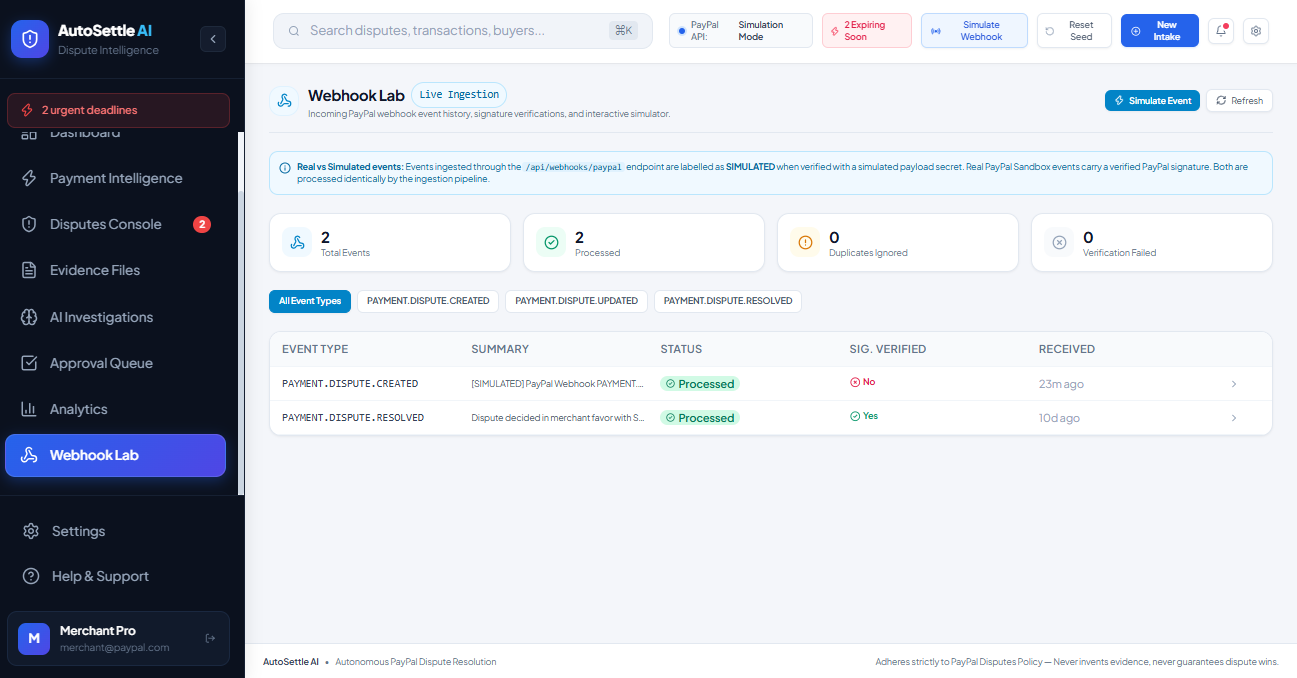
For demonstrations, simulated data is clearly distinguished from real sandbox data. This allows the workflow to be explored without misrepresenting simulated transactions or submissions as real PayPal activity.
Challenges we ran into
One major challenge was ensuring that AI-generated responses remain grounded in evidence. A convincing paragraph is not necessarily a defensible response, so we designed the workflow to connect claims to source records and expose uncertainty.
Another challenge was working within the capabilities and permissions of PayPal's dispute APIs. Some useful evidence, such as shipping events and customer support conversations, may reside in external merchant systems rather than PayPal itself.
We also had to consider webhook reliability, duplicate event processing, sensitive information, API failures, and the risks of automating consequential actions.
Our approach is to validate information, distinguish verified evidence from unverified records, handle failures explicitly, and require human approval before submission by default.
Accomplishments that we're proud of
We are proud of our approach to turning dispute management from a fragmented, manual task into a transparent, evidence-driven workflow.
Three elements define our vision:
- Evidence Graph: Connects response claims to supporting records and identifies unsupported statements.
- AI-powered case analysis: Focuses on evidence quality, missing information, and actionable next steps rather than simply generating text.
- Human-controlled automation: Combines the speed of AI with merchant oversight and clear records of consequential actions.
Our goal is not merely to add AI to a payment dashboard. It is to build a tool that helps merchants understand their cases and act on available evidence more efficiently.
What we learned
This project reinforced that useful AI requires more than a capable language model. It needs reliable data, structured outputs, validation, clear permissions, and a way for users to understand how recommendations were produced.
We also learned the importance of designing around real API constraints rather than assuming every integration will work exactly as expected.
Most importantly, we recognized that trust is central to financial automation. An AI agent should acknowledge missing information, distinguish facts from assumptions, and leave consequential decisions under appropriate human control.
What's next for AutoSettle-AI
Our next steps are to strengthen the PayPal sandbox integration, expand evidence-source integrations, test the AI workflow against different dispute scenarios, and improve the reliability of the Evidence Graph.
We also plan to develop better case prioritization, deadline alerts, merchant-specific workflows, and performance metrics that measure time saved and evidence completeness without overstating results.
Longer term, we envision AutoSettle AI becoming an intelligent dispute operations platform for small and medium-sized businesses, helping them connect payment records, customer interactions, and supporting evidence in one place.
AutoSettle AI: Less time fighting disputes. More time building businesses.
Built With
- ag-grid
- agentic-ai
- ai-agents
- artificial-intelligence
- automation
- dispute-management
- evidence-analysis
- financial-technology
- fintech
- fraud-prevention
- generative-ai
- javascript
- next.js
- openai
- paypal
- postgresql
- prisma
- react
- rest-api
- saas
- tailwind-css
- typescript
- webhooks

