Inspiration
Our inspiration for this particular project stemmed from our team's fascination for robotics, and desire to undertake a challenge. The Autoserver was the brainchild of one of our members, who envisioned a robot that could go down an aisle at a restaurant, having a sleek graphical user interface for taking orders, and then returning the orders.
What it does
Our project essentially takes input from the user on a screen, in the form of a colored button. The user presses the button of the table that needs the food delivered. The robot will then travel down the "aisle" in a straight line looking for the color of the button that is pressed and will stop. This essentially simulates the delivery of the plate.
How I built it
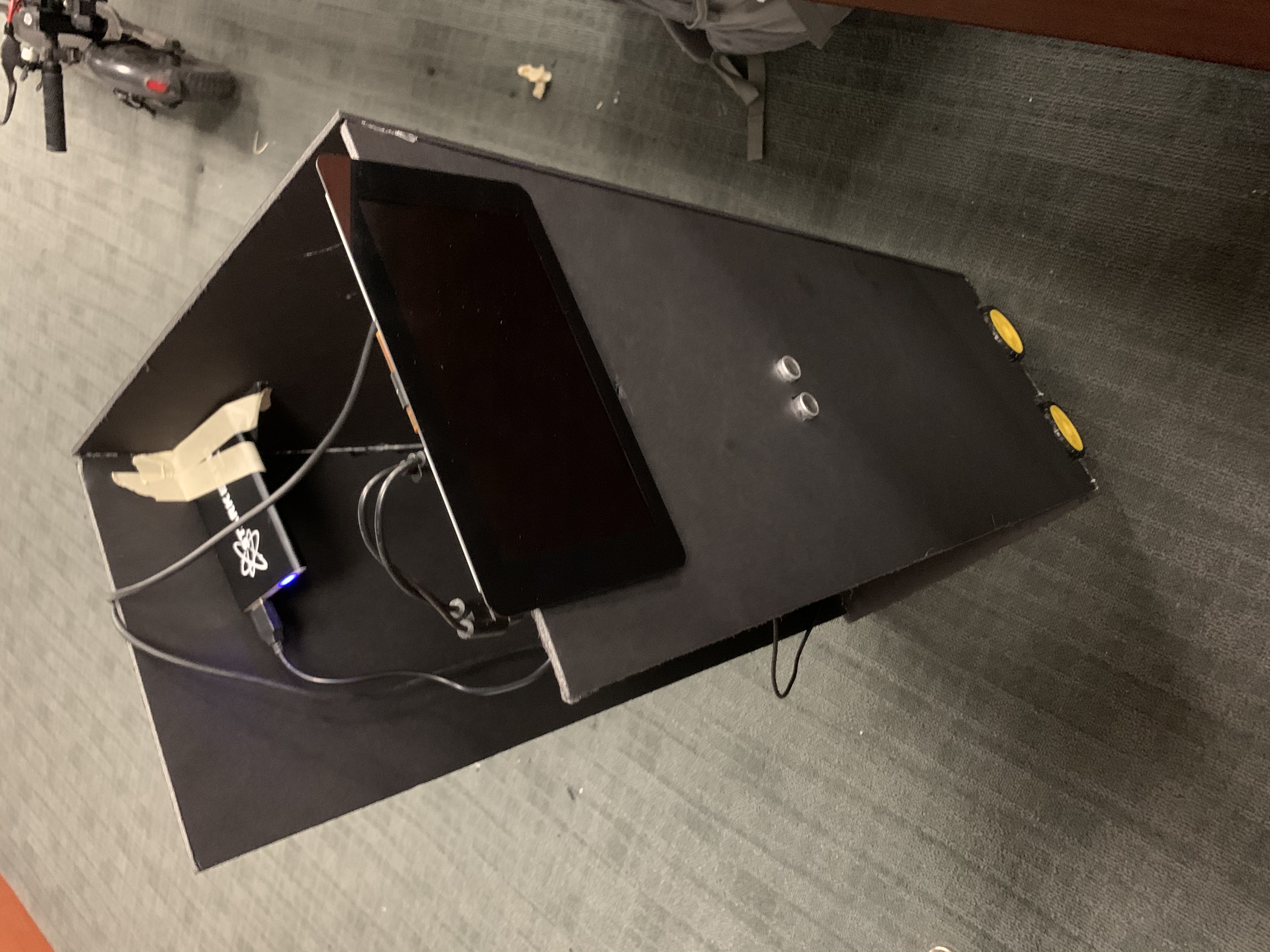
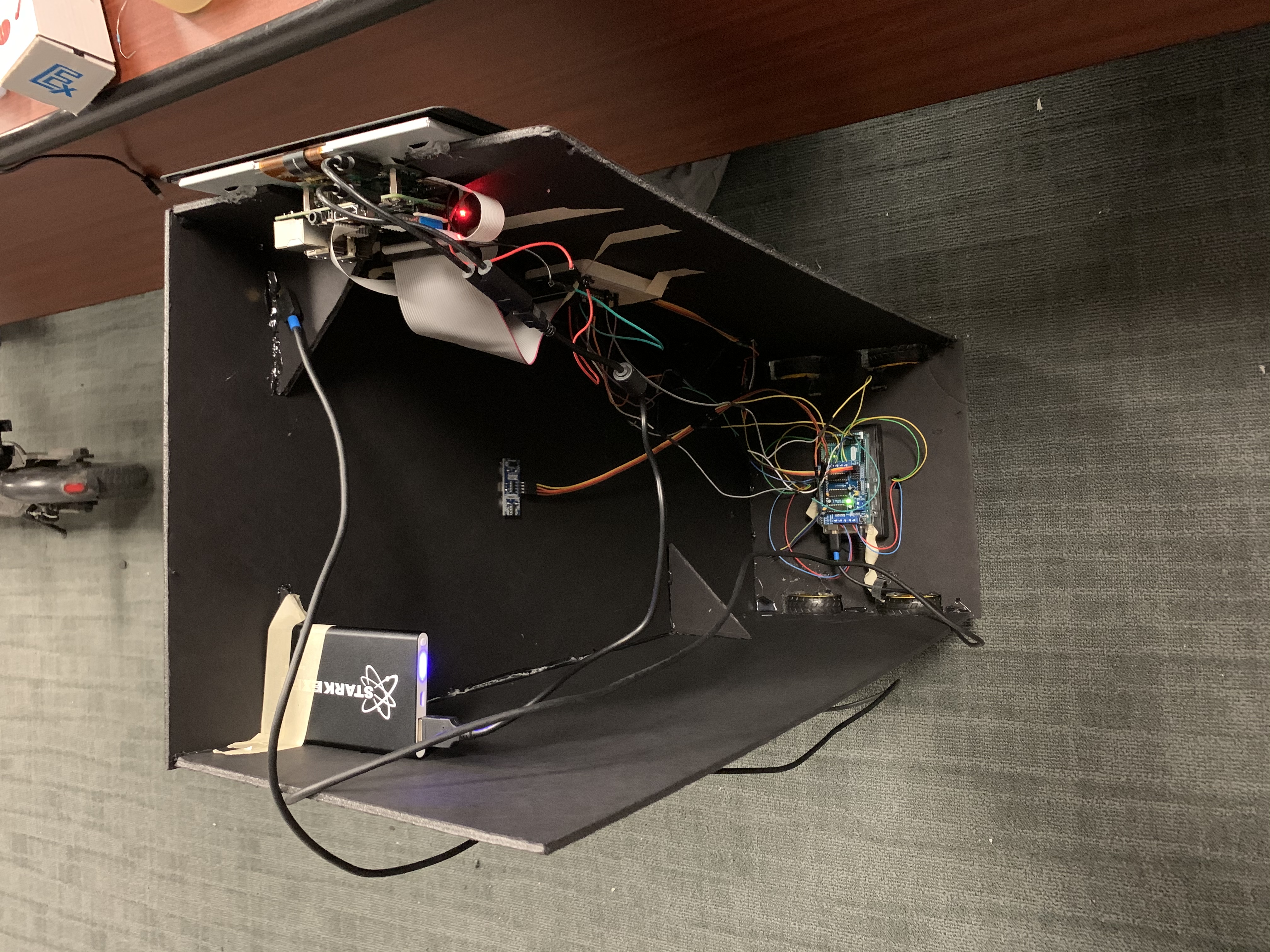
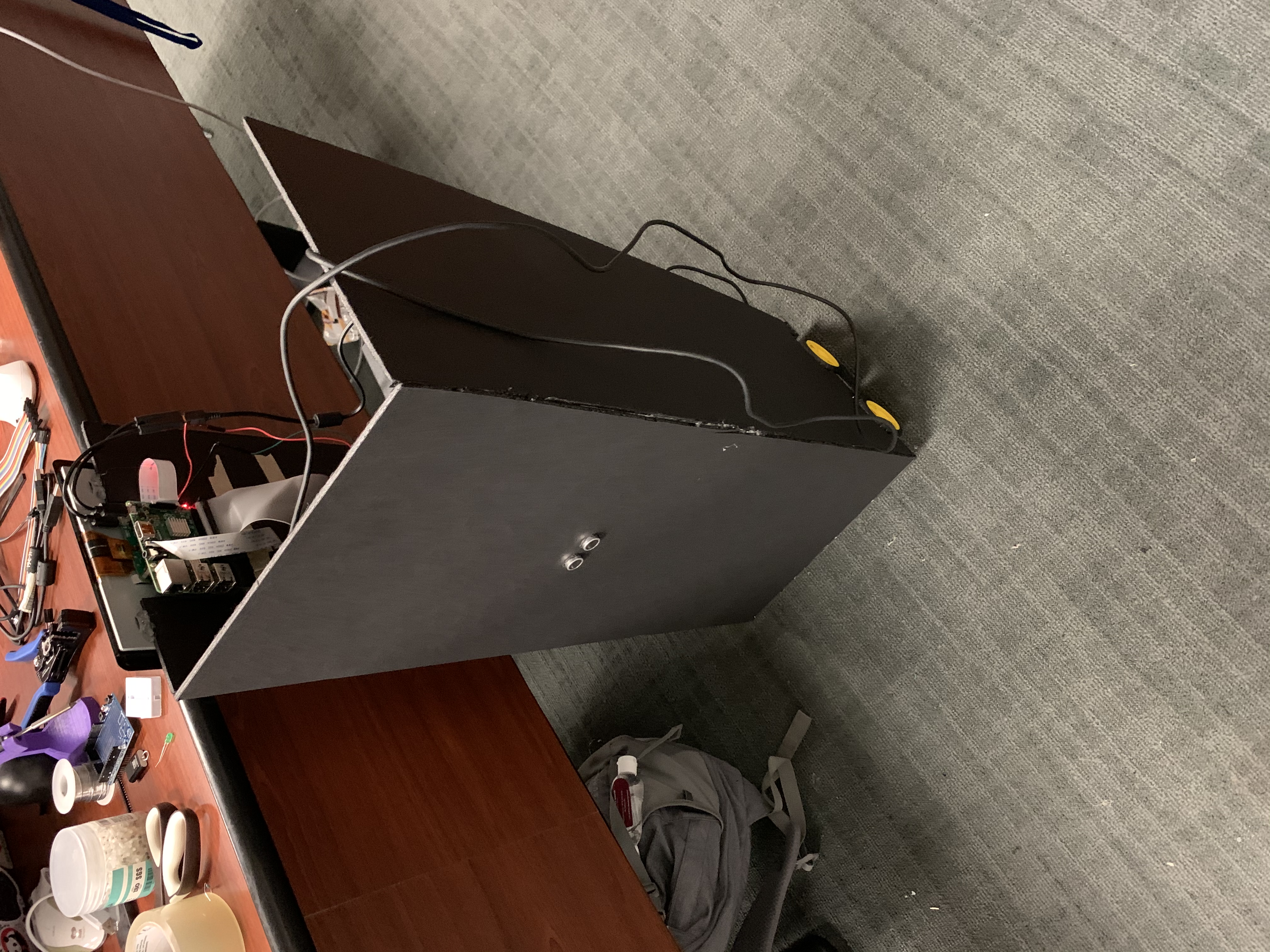
We built this project by first using creating the base of the robot, which had the wheels. We used arduino ide to get the machine to move forward in a straight path. There is a sensor on the right wall of the project which determines how far away the wall is to use as reference for the Autoserver. There is a camera which looks for particular colors so it can know where to stop on the right side of the project. We used javascript to get this part of the project to work. We have cardboard for the sides of the robot, and also have code to light up LEDs as decoration, which was not implemented.
Challenges I ran into
Some of the challenges we ran into was the Autoserver being top heavy, and getting the wheels to move in a way that moves the product in a straight line. Unfortunately, the power requirement for all of the motors was too great for us to power all of the motors how we wanted too, so we had to find a way to ensure that the project still moves fairly quickly, but also in a straight line. We also ran into some problems with having the information from the color sensor communicate with the motors.
Accomplishments that I'm proud of
We were very proud that we were successfully able to implement the color sensor. This part of the project required much testing and debugging. In addition to this, working with the mechanical and electrical components to have the robot move in a relatively straight line was extremely challenging. It was very rewarding to see it successfully move.
What I learned
We learned so much about the process of this project. It truly puts into perspective how much effort it takes to create a fully functioning robot. By seeing parts of our project work, it was extremely rewarding to see our code and craftsmanship implemented successfully. We found that the communication between the different parts turned out to be extremely difficult. However, we always found that isolating issues to debug them easier turned out to be an extremely successful method.
What's next for Autoserver
We believe that this product could be extremely successful in the food industry. If successfully implemented, it could take food to tables in a very efficient manner, and place the food on the table. This could also be extremely helpful for people with disabilities at home. This robot could help bring items to people at their own house based on item selection by the user.

Log in or sign up for Devpost to join the conversation.