Inspiration I wanted to simplify the process of automatically collecting structured data from multiple websites without writing a lot of scraping logic. AI-powered agents make this process dynamic and adaptable to changes in web page structure. The idea was to move beyond traditional scrapers and experiment with agentic LLM workflows.
What it does AutoScrape-AI takes a list of websites, uses intelligent agents to extract the relevant data, cleans the output, and exports it as a structured CSV file — ready for analysis or integration. No hardcoded scraping logic is needed for each site.
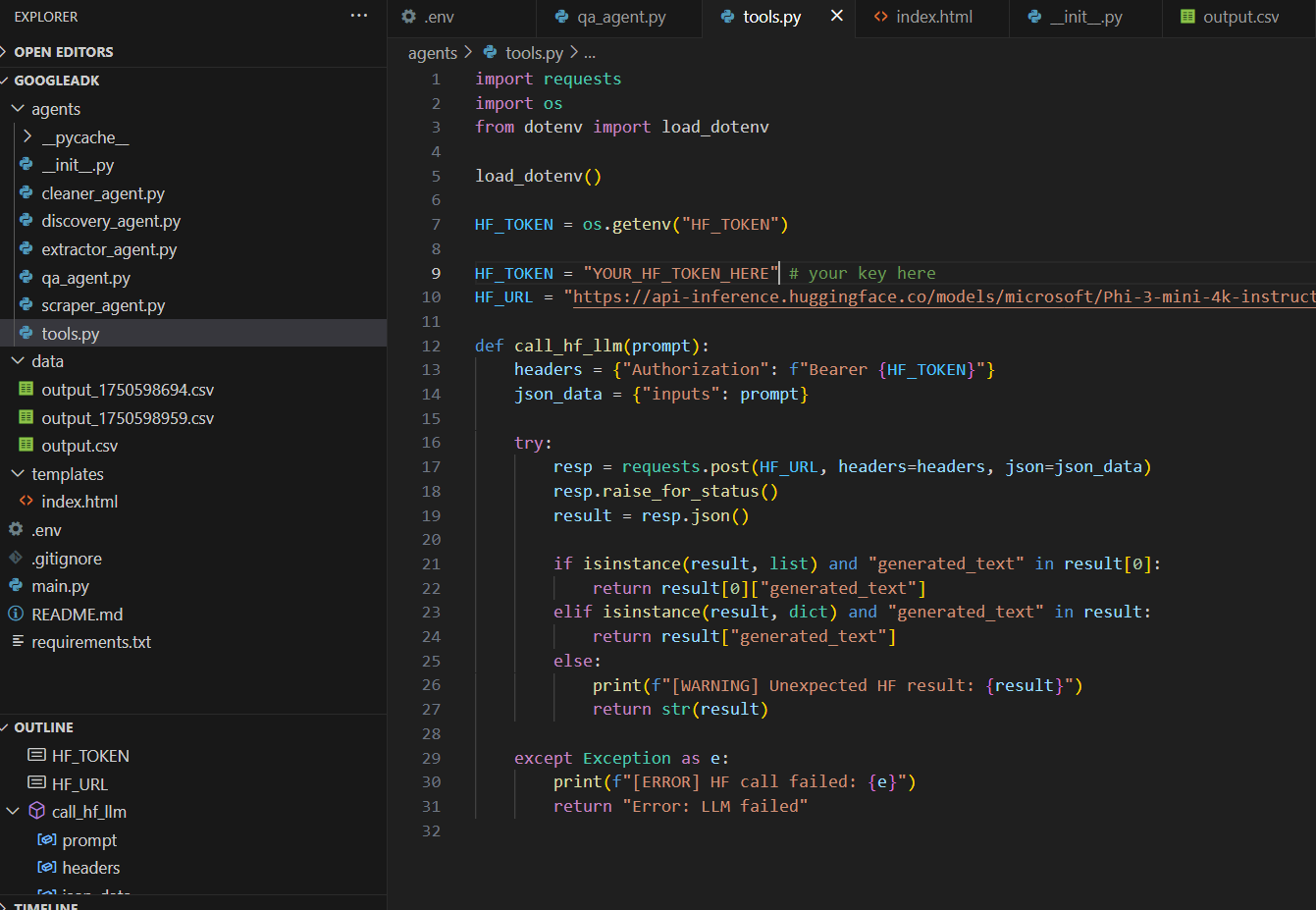
How we built it Designed agentic architecture with discovery, scraper, QA, cleaner agents.
Used LLMs to understand and process raw HTML dynamically.
Built in Python using Flask for the web UI.
CSV export module auto-generates the final dataset.
Focused on modular, reusable code with easy extendability for more domains.
Challenges we ran into Dealing with inconsistent site structures.
Handling broken HTML or JS-heavy sites.
Controlling token usage of the LLM while processing large content.
Cleaning and unifying extracted data from different sources.
Accomplishments that we're proud of AI-driven scraping works even on unseen websites.
Very low-code to extend — just provide new URLs.
Lightweight — runs well on Replit, local laptop or small server.
Clean and polished web UI.
What we learned Combining LLMs with agents creates flexible workflows.
Dynamic scraping is achievable with small amounts of code.
Even simple UI improves usability a lot.
What's next for AutoScrape-AI Support for more domains and content types.
Integration with databases (MongoDB, PostgreSQL).
Add support for scheduling scraping jobs (via Celery or APScheduler).
Live dashboard to preview extracted data.
CLI tool and Replit template for no-deploy use.
Built With
- beautiful-soup
- csv
- flask
- huggingface
- llm
- python
- ui

Log in or sign up for Devpost to join the conversation.