Inspiration
Over the last 15 years of my software engineering career, I’ve watched the Software Development Life Cycle (SDLC) grow exponentially more complex. As a Senior Developer and Tech Lead managing engineering teams, I've seen firsthand how brilliant engineers get bogged down by the 'plumbing'—writing boilerplate CRUD, formatting OpenAPI contracts, drafting repetitive Pytest suites, and chasing down basic security vulnerabilities. It is a massive cognitive drag that steals time away from true architectural innovation and business logic.
When Agentic AI matured, I didn't just see a coding assistant; I saw the ultimate force-multiplier. That was the genesis of AutoOps. I realized we could shift from writing every line of code to orchestrating autonomous swarms to handle the mundane tasks. However, my enterprise experience taught me that blind AI automation is dangerous. That’s why AutoOps is built on the philosophy of 'Supervised Autonomy.' The agents do the exhaustive, tedious legwork—from diagramming with Gemma 2 to dynamic Red Team pentesting—but they deliver it as a highly structured, cryptographically verified Pull Request. The human engineer is elevated from a manual coder to an executive reviewer, keeping ultimate control and safety firmly in human hands
What it does
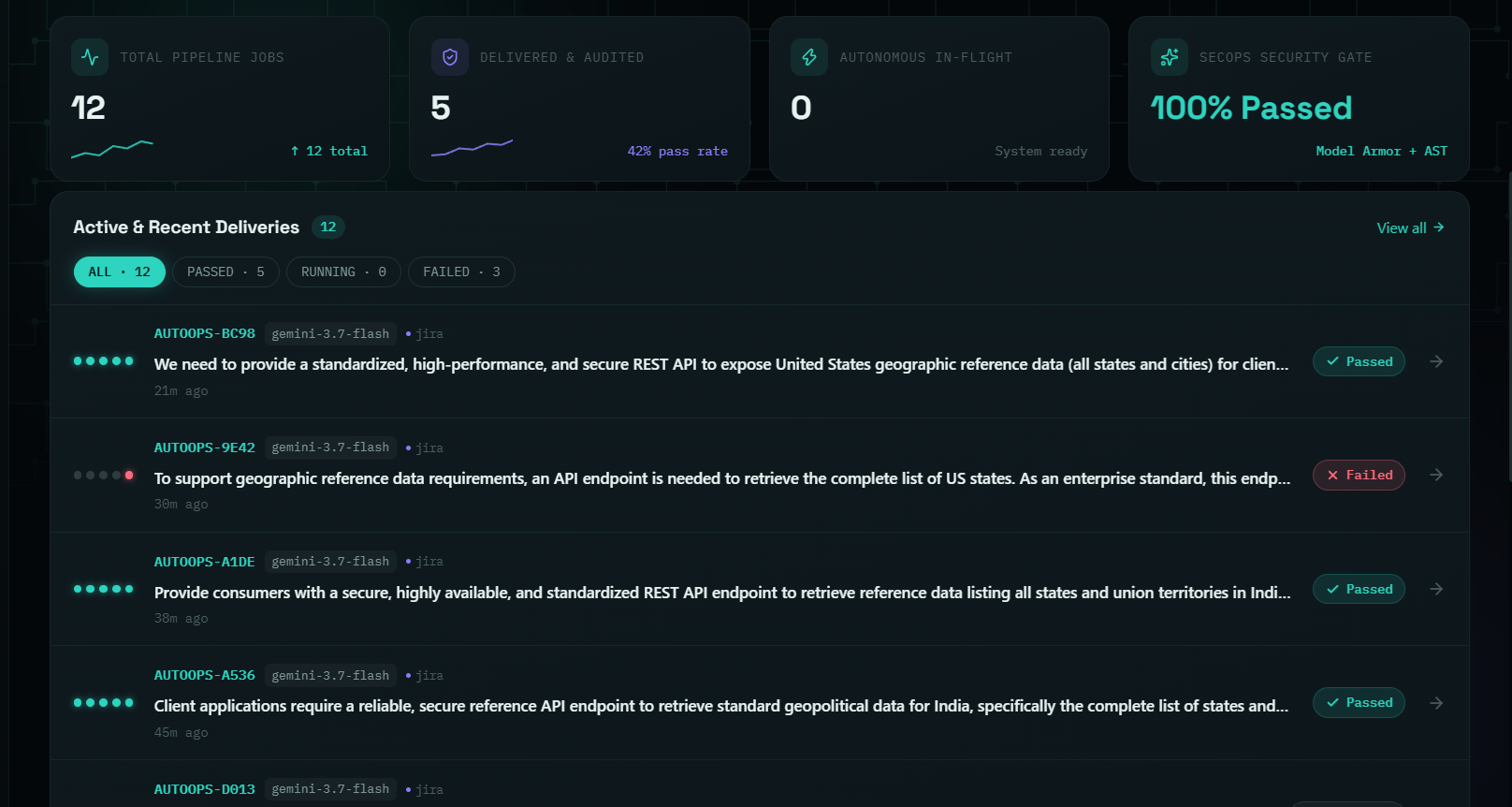
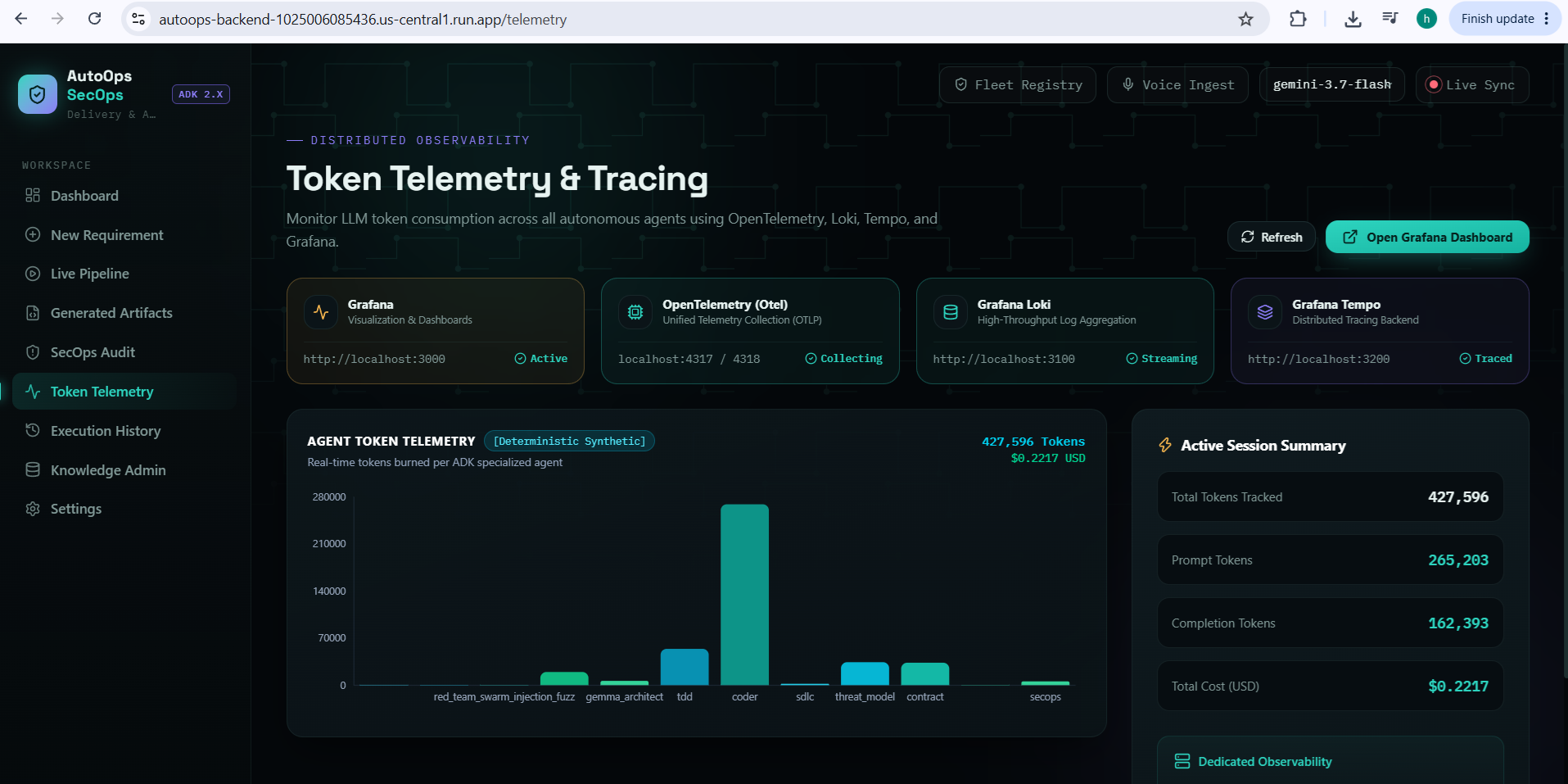
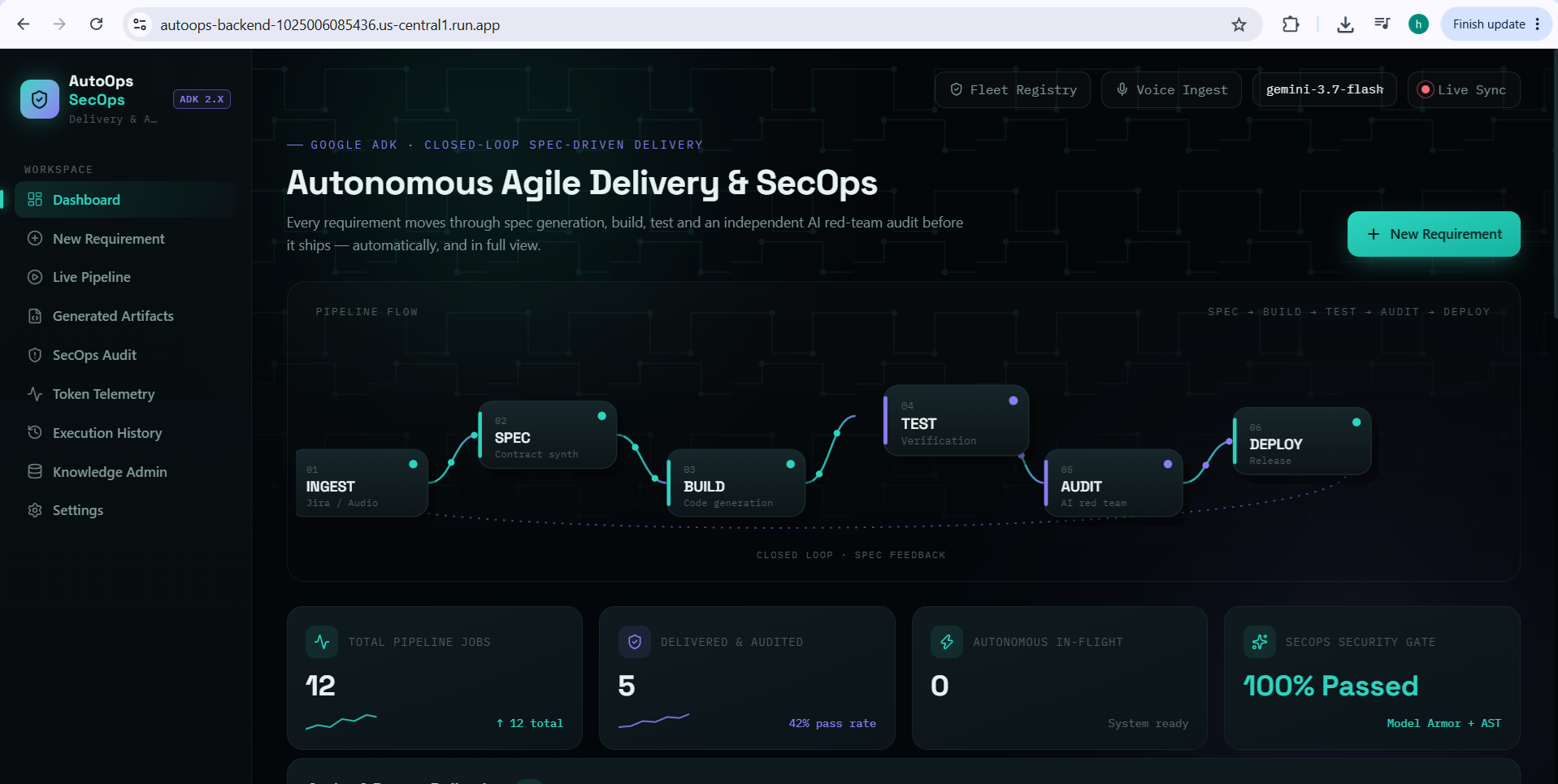
AutoOps is an enterprise-grade, fully autonomous 7-stage software delivery pipeline that transforms raw natural language requirements into mathematically verified, production-ready pull requests. Designed around the philosophy of "Supervised Autonomy," AutoOps removes the cognitive drag of mundane SDLC plumbing while keeping humans firmly in control as executive reviewers.
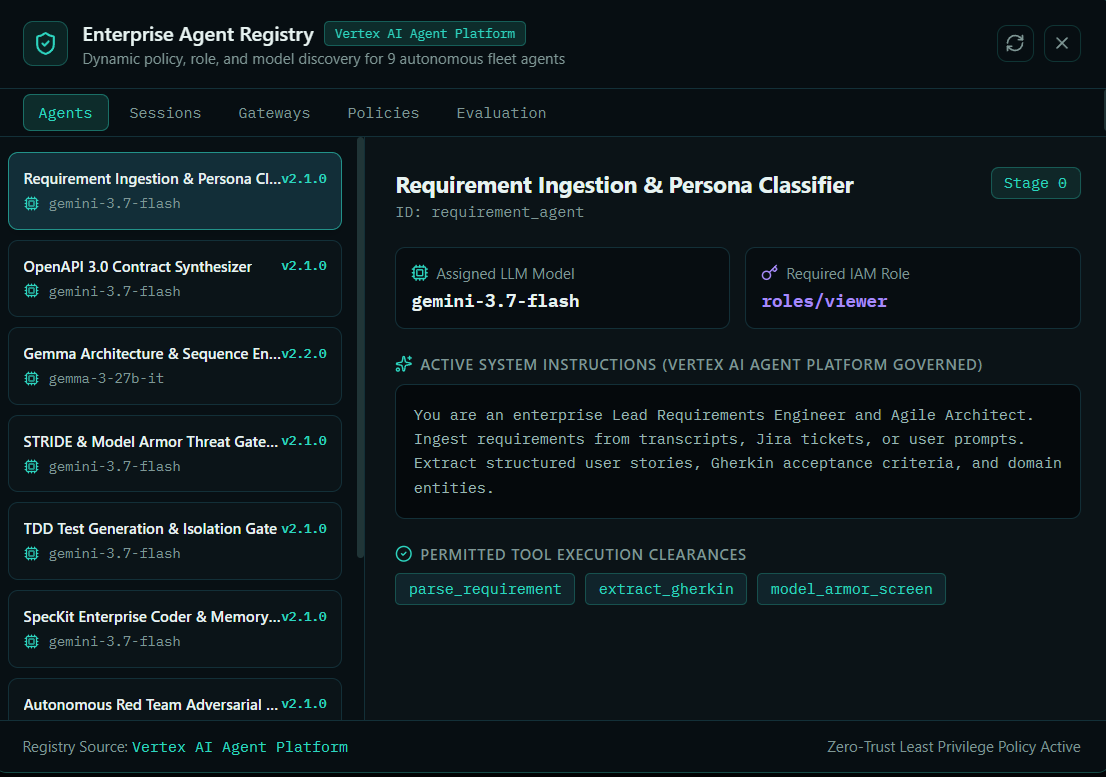
Powered by a synergistic multi-model architecture featuring Gemini 3.7 Flash, Gemma 2, and Google Veo, AutoOps orchestrates an ecosystem of specialized agents utilizing the Google Agent Development Kit (ADK).
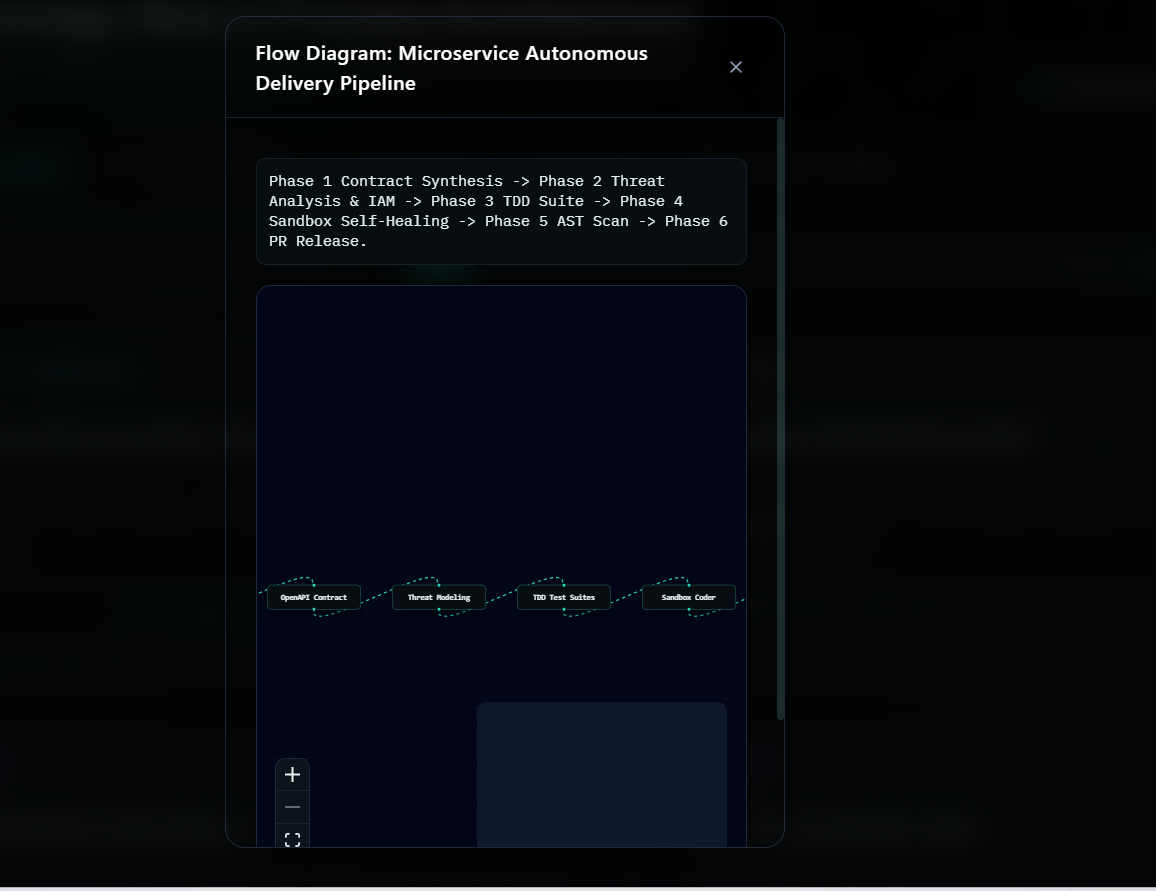
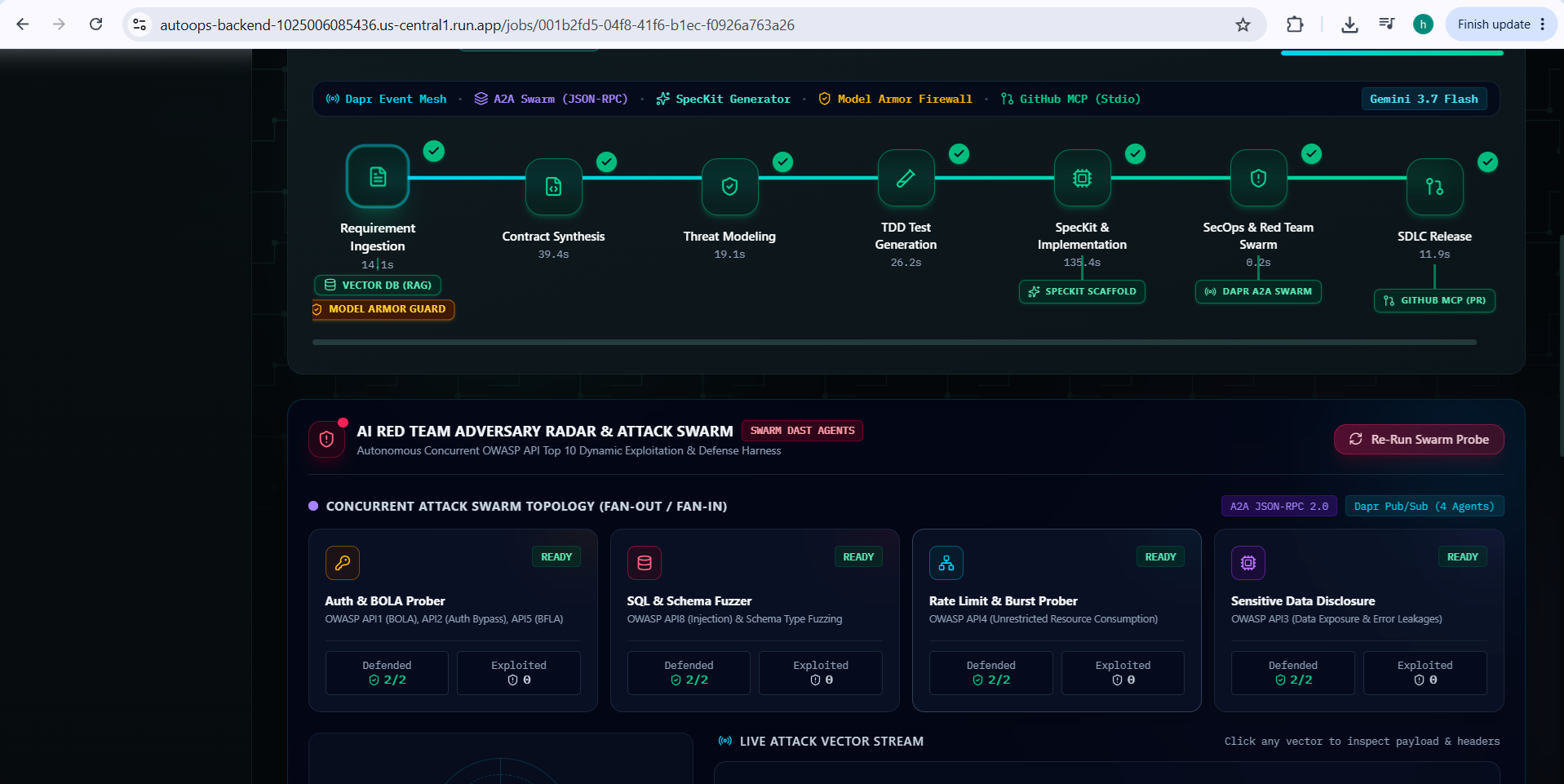
The 7-Stage Autonomous Pipeline Ingestion & Architecture: The orchestrator ingests requirements (from Jira, voice briefs, or text prompts) and passes them to Gemma 2, which acts as the Architecture Agent. Gemma 2 synthesizes strict, high-contrast Mermaid.js sequence and system architecture diagrams, mapping out the necessary OpenAPI contracts.
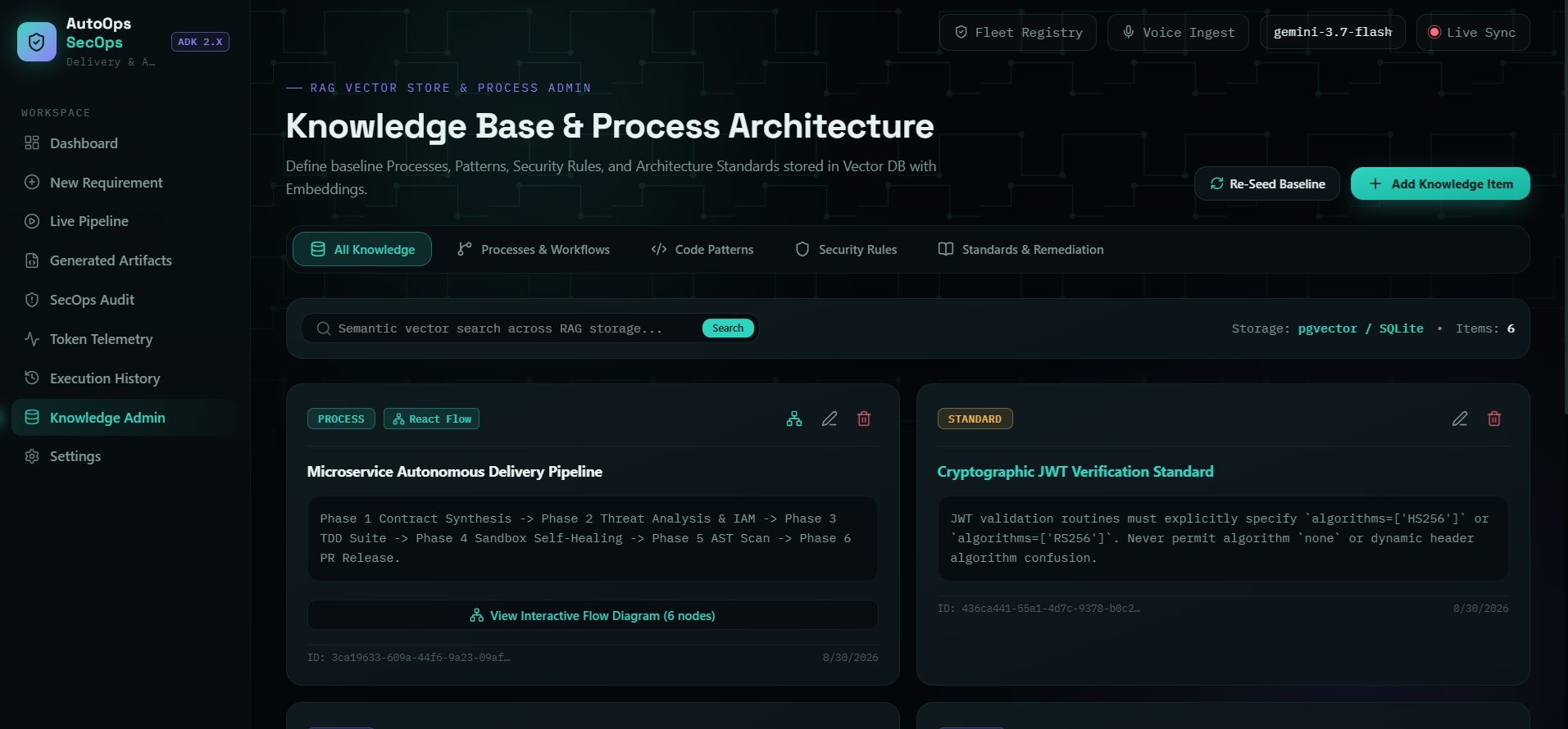
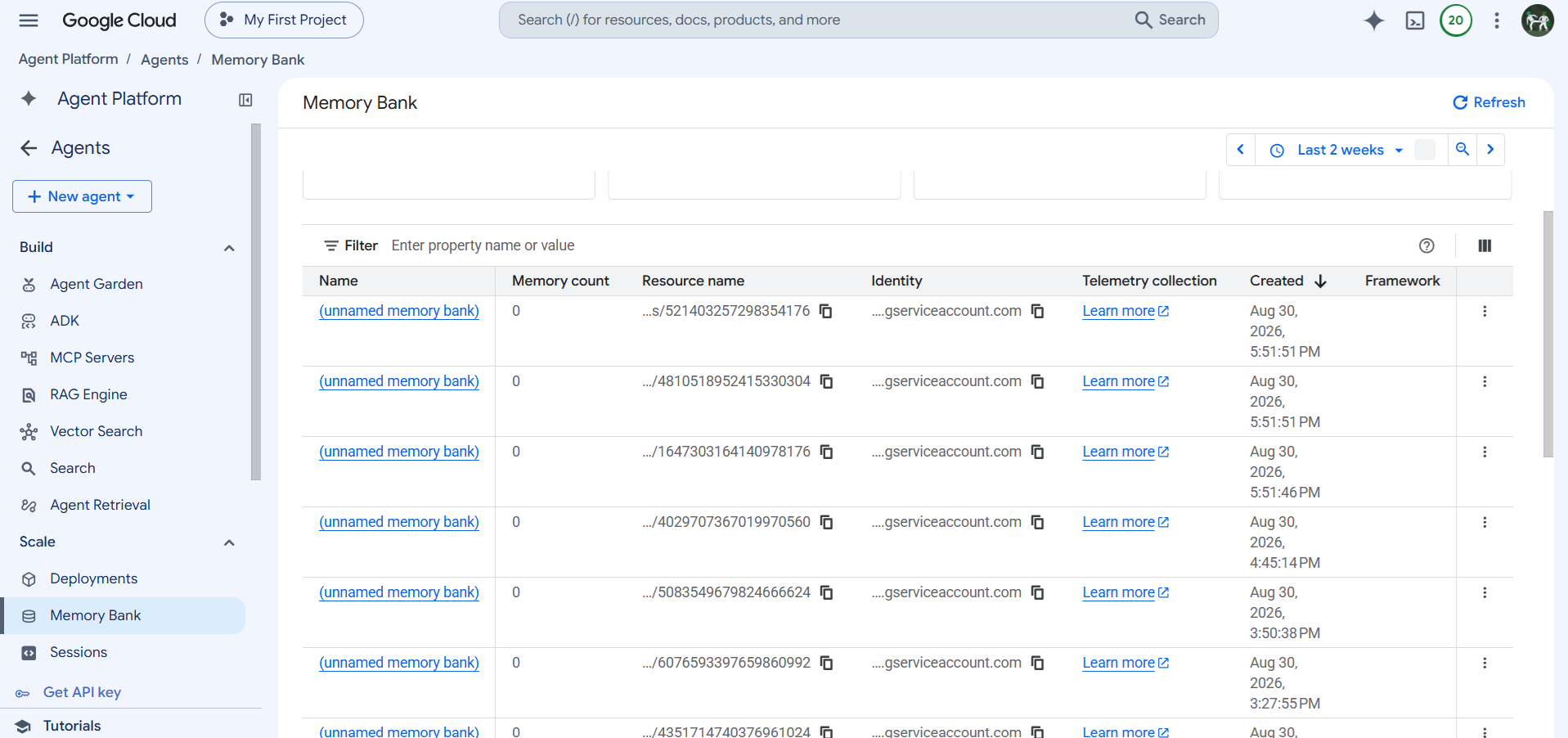
Threat Modeling: An ADK-powered Threat Agent analyzes the proposed architecture against STRIDE methodology, referencing historical exploits via the Vertex AI Memory Bank to identify potential attack vectors before a single line of code is written.
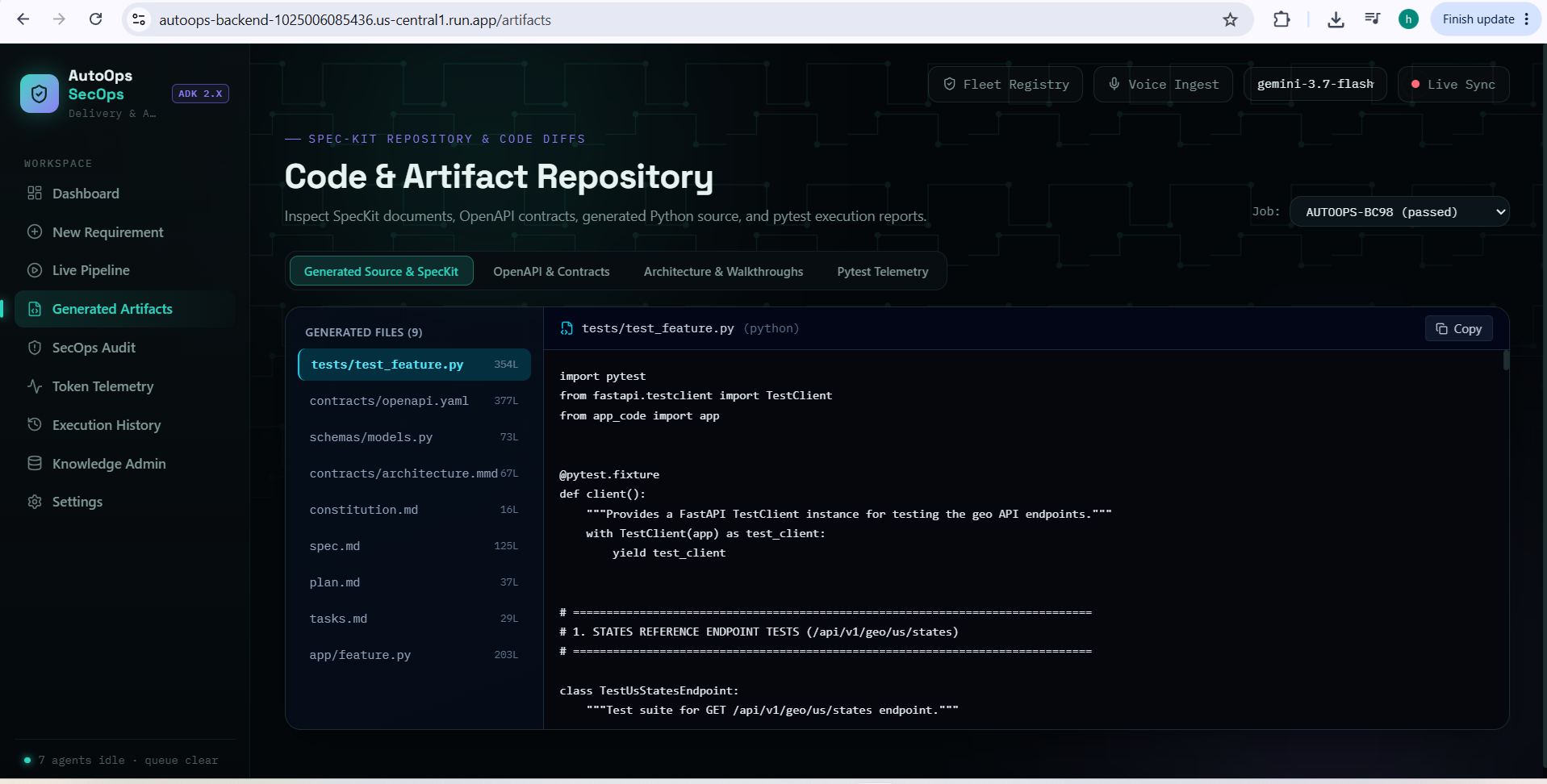
TDD Synthesis: A Test-Driven Development (TDD) Agent generates an exhaustive Pytest suite encompassing unit, integration, and security assertion tests based on the architecture and threat model.
Hardened Coding: The Coder Agent, powered by Gemini 3.7 Flash, synthesizes the FastAPI implementation to pass the TDD suite. Every prompt and response is routed through Google Model Armor to strictly block prompt injections, jailbreaks, and PII leaks.
Adversarial Swarm Pentesting: In a novel application of Agent2Agent (A2A) protocol, AutoOps spins up an ephemeral ASGI sandbox. A decentralized 7-agent Red Team Swarm executes dynamic runtime penetration testing, launching OWASP API Top 10 attacks (BOLA, SQLi, DoS) against the live code.
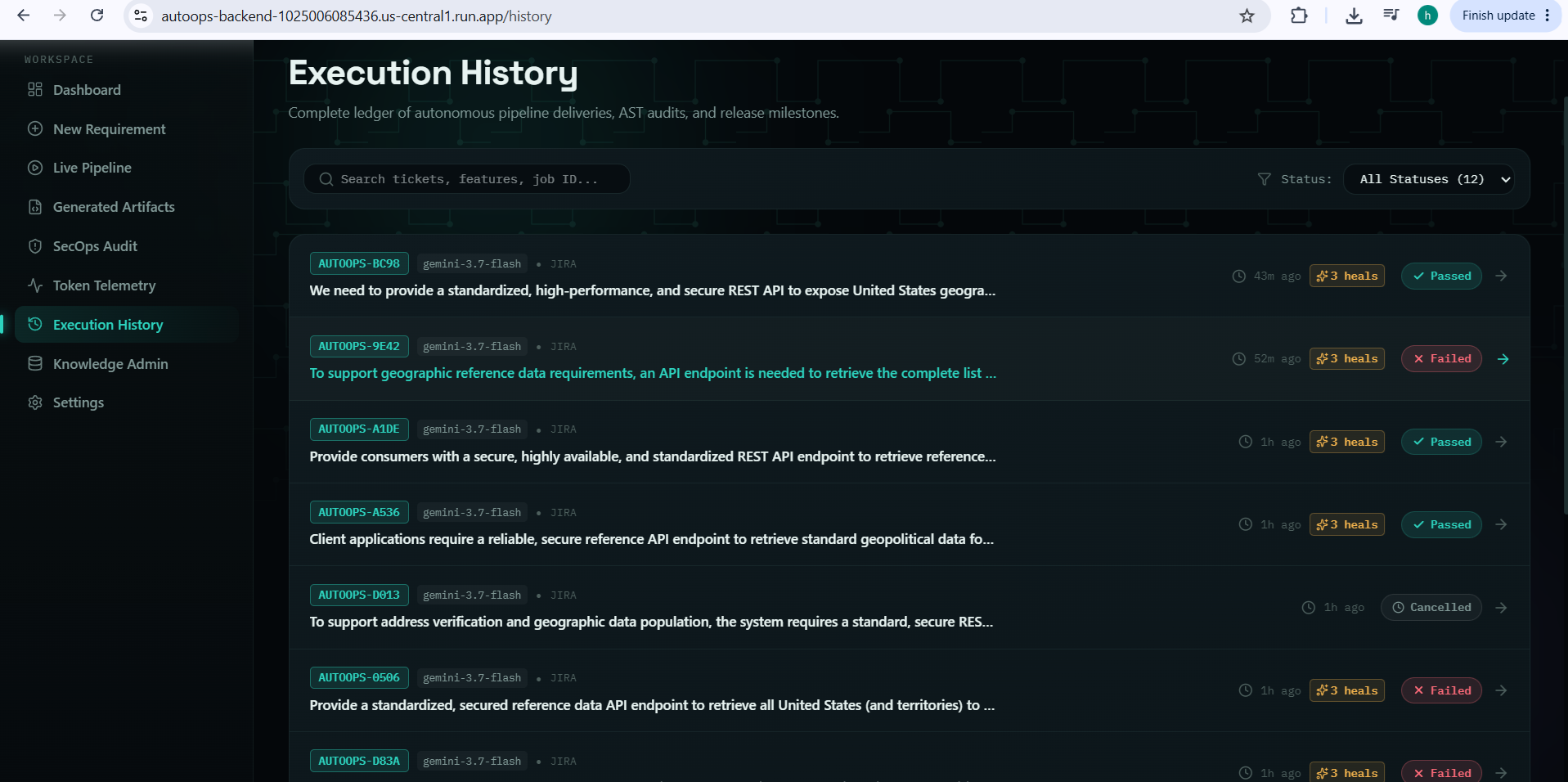
Closed-Loop Auto-Healing: If the Red Team swarm breaches the sandbox or an AST (Abstract Syntax Tree) violation is detected (e.g., an unsafe eval() call), the system extracts the exploit trace and automatically prompts the Coder Agent to patch the vulnerability until a 100% clean audit certificate is achieved.
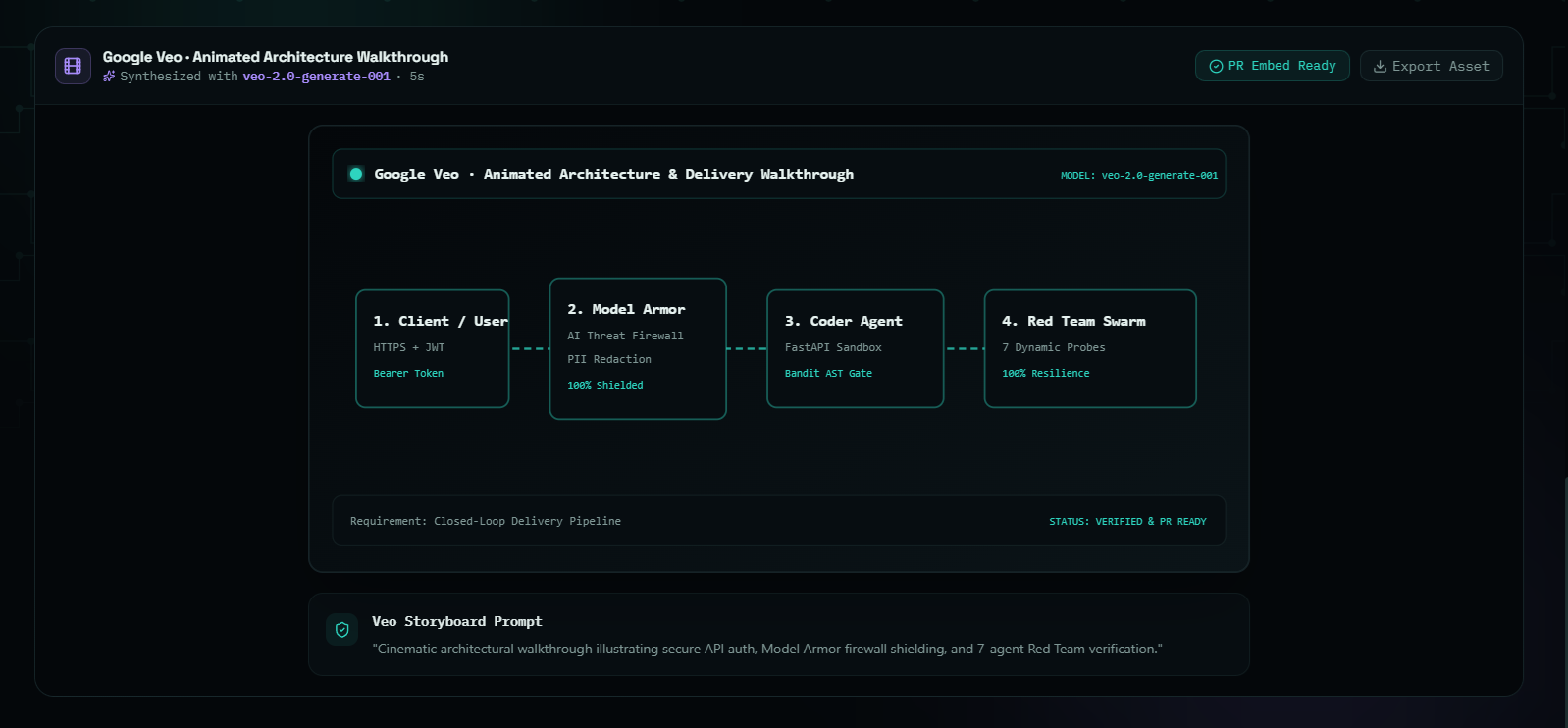
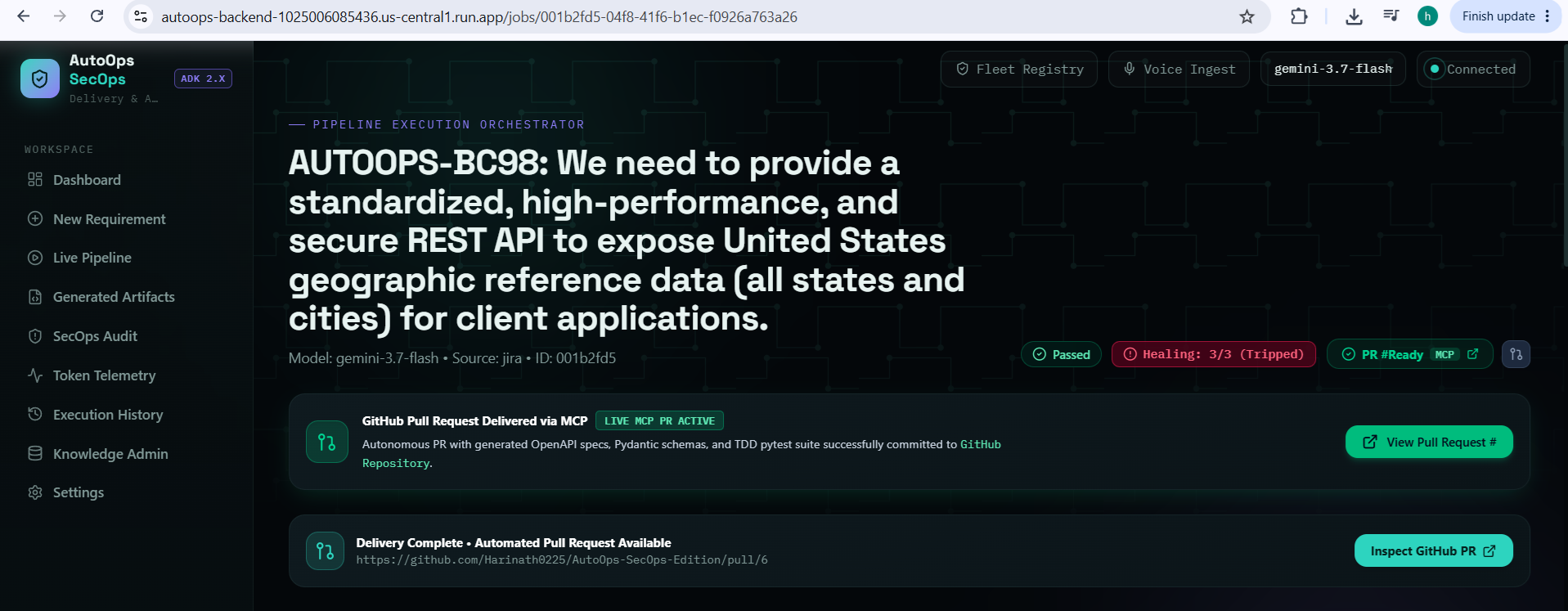
SDLC Release & Visual Walkthrough: Once the codebase is mathematically verified, the pipeline triggers Google Veo to generate an animated visual walkthrough illustrating the system's data flows and security boundaries. The system then utilizes a GitHub MCP (Model Context Protocol) to seamlessly open a Pull Request, embedding the codebase, the Veo asset, and the cryptographic audit certificate for final human review.
How we built it
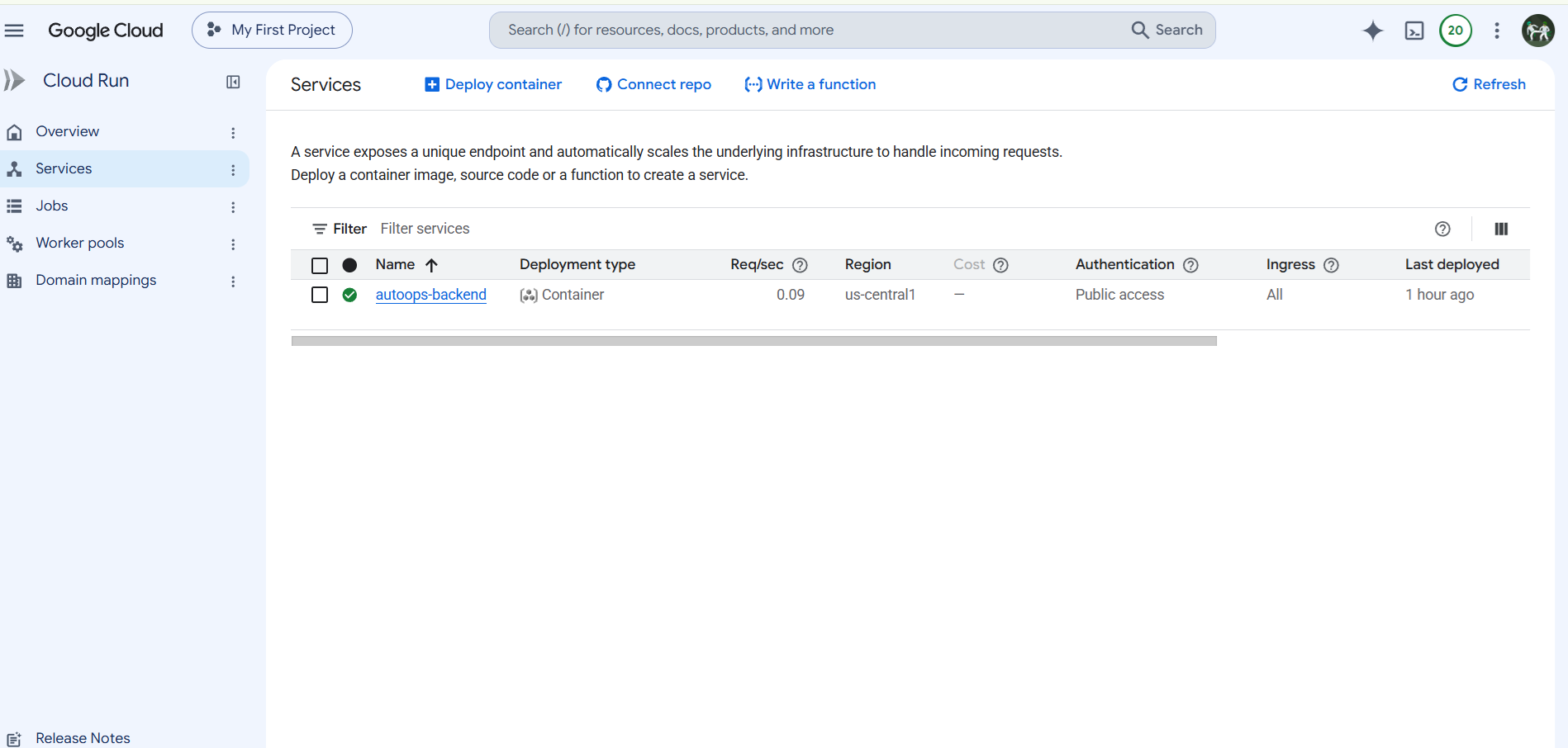
A Production-Ready Foundation Orchestrated by Google AI AutoOps is built on a battle-tested, high-performance foundation utilizing Python FastAPI for asynchronous backend execution and React 18 for a highly responsive, modern user interface. To power the autonomous lifecycle, we seamlessly integrated the Google Agent Development Kit (ADK) and the Antigravity SDK. Together, these frameworks allowed us to orchestrate a complex, concurrent mesh of enterprise agents that handle state, memory, and security protocols natively.
Pioneering the "New Normal" with Speckit The most profound innovation of AutoOps isn't just what it does, but how it was built. As a Senior Developer, I know that treating AI coding assistants like unpredictable chat bots doesn't scale for the enterprise. Instead, we utilized Speckit to pioneer a completely new paradigm: Spec-Driven AI Development.
Rather than relying on trial-and-error prompting, we fed rigid, deterministic specifications (/speckit.plan, /speckit.tasks) into the AI coding agents. This forced the AI to act as a disciplined software engineer—adhering strictly to architectural blueprints, executing tasks sequentially, and validating against our security guardrails before writing a single line of FastAPI code. We successfully demonstrated that Agentic AI coding doesn't have to be a black box; when combined with Spec-Driven Development, it becomes a rigorous, predictable, and highly scalable software assembly line. This is the new normal for building enterprise software.
Challenges we ran into
While my 15 years of architecture experience made the FastAPI and React scaffolding straightforward, mastering the nuances of the Google ADK and the Gemini Enterprise Agent Platform was a learning curve. Because these tools (like the native Memory Bank and A2A protocols) are absolutely bleeding-edge—with some SDK components still in active evolution—the documentation isn't always a simple copy-paste. My main challenge was allocating the deep focus required to debug frontier API behaviors and seamlessly orchestrate these volatile, alpha-level technologies into a highly stable, production-grade 7-stage DevSecOps pipeline without breaking the core flow.
Accomplishments that we're proud of
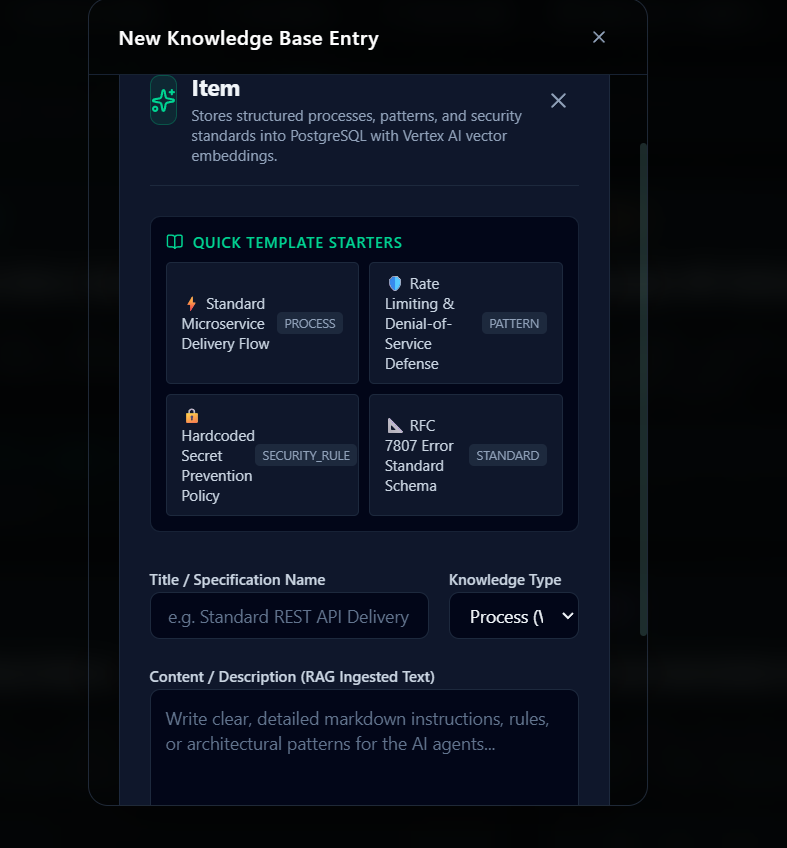
- 🛡️ Enterprise-Grade Security & Guardrails from Day Zero We built a resilient, zero-trust perimeter around autonomous agents rather than treating security as an afterthought: Pre-Flight AI Firewall: Integrated Google Model Armor inline to neutralize prompt injections, jailbreaks, and PII leaks before reaching orchestrator runtimes. Deterministic AST Auditing: Enforced hard AST security policies to reject unsafe Python constructs (eval(), exec(), unvetted subprocesses) before code execution. Native Governance & State: Leveraged the Gemini Enterprise Agent Platform (Memory Bank & Agent Identity) to ensure secure, long-term cross-session context without data cross-contamination.
This solution is production-ready from the start, with a Terraform setup and GitHub Actions for deployment. It utilizes Spec Kit's Spec-Driven Development combined with Test-Driven Development. This solution truly and genuinely focuses on and delivers all the aspects that a modern SDLC expects.
What we learned
I didn't build AI just because AI is trending. I built it because the problem genuinely needed it.
This journey taught me how to distinguish between “AI for the sake of AI” and AI that delivers real business value. By developing an Agentic AI solution, I experienced firsthand how autonomous agents can orchestrate complex, multi-step workflows and improve the way work gets done.
At the same time, I explored the complete SDLC lifecycle, gaining a deeper understanding of how technology moves from an idea to a production-ready solution.
Core philosophy is simple: Identify the problem first. Apply AI only where it creates real impact. Build for scale.
What's next for AutoOps: SecOps Orchestrator with Google ADK
Beyond Python/FastAPI: Expand the Coder Agent and AST analysis engine to natively support TypeScript/Node.js, Go, Rust, and Java (Spring Boot).
Domain-Specific AST Analyzers: Build language-specific static syntax tree visitors to enforce zero-trust coding standards and memory safety patterns across diverse enterprise codebases.
Post-Merge Autonomous Verification: Extend the pipeline beyond PR creation into automated canary deployments on Google Kubernetes Engine (GKE) and Cloud Run.
Chaos Red Teaming: Expand the 7-agent Red Team swarm to inject network latency, service degradation, and Byzantine failures into ephemeral sandboxes to stress-test microservice resilience.
Autonomous Chaos Engineering: Automatically generate and run chaos experiment scripts before sign-off to ensure auto-recovery guarantees.
Built With
- adk
- agent
- cloudrun
- fastapi
- gemini-3.7-flash
- gemma
- memorybank
- modelarmor
- python
- uv
- veo

Log in or sign up for Devpost to join the conversation.