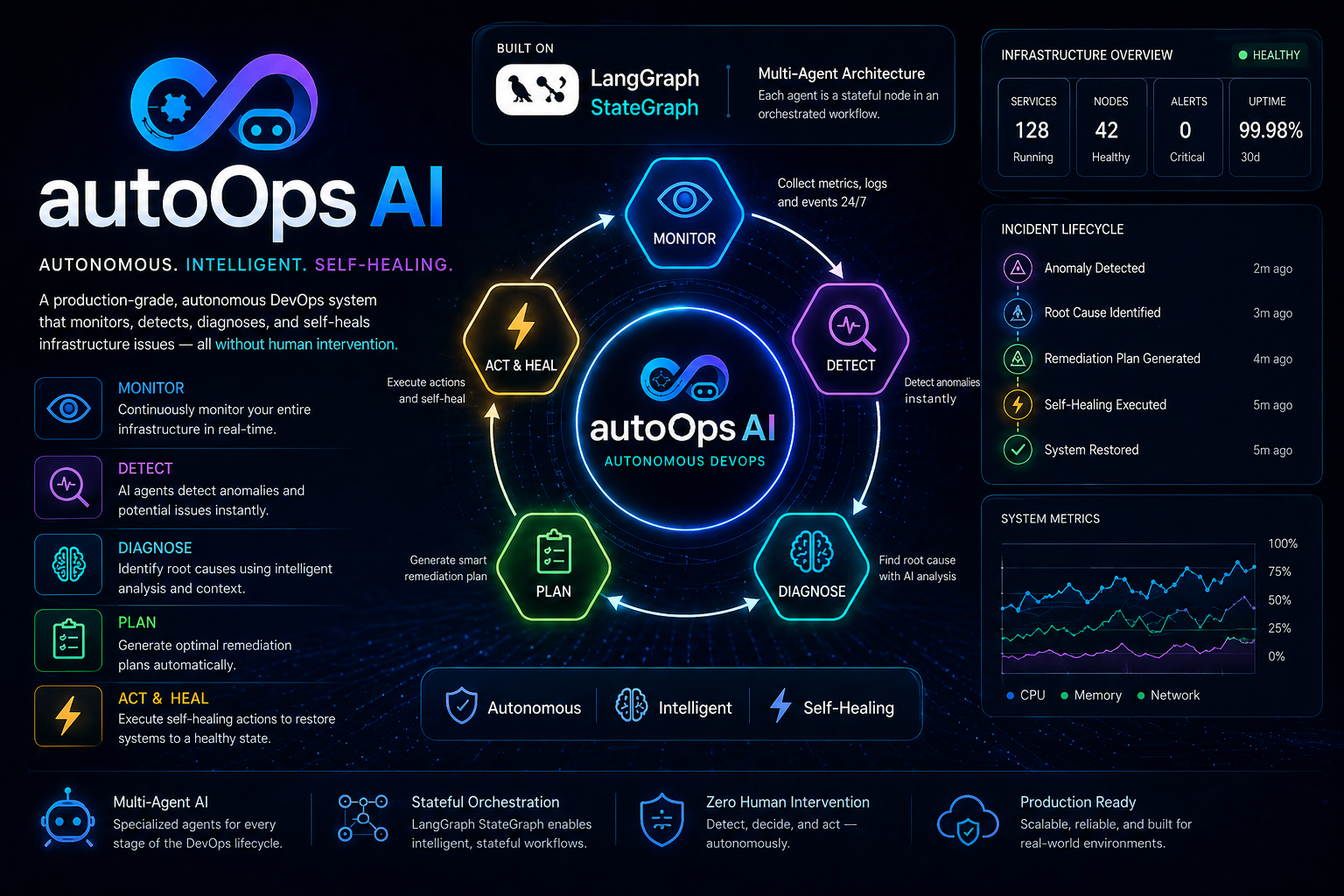
🚀 Inspiration
Modern DevOps still depends on humans for repetitive tasks. Even for known issues: → Same alert · same diagnosis · same fix · every time
This causes: ⏱️ Slow response times 😴 Alert fatigue 💸 Wasted engineering effort
👉 We asked: Why should humans repeat what machines can learn?
━━━━━━━━━━━━━━━━━━━━━━━━━━━━━━ 🎯 The Gap We're Filling
Current tools detect issues — but don't resolve them. Current AI has no memory of what worked before. Current scripts are unsafe at enterprise scale.
What was missing: ✅ Autonomous but safe ✅ Fast but reliable ✅ Learning-driven, not rule-only
━━━━━━━━━━━━━━━━━━━━━━━━━━━━━━ ⚙️ What We Built
AutoOps AI is a multi-agent system that:
✔️ Detects issues in real time ✔️ Diagnoses root cause automatically ✔️ Fixes instantly when safe ✔️ Learns from every incident ✔️ Involves humans only when risk is high
━━━━━━━━━━━━━━━━━━━━━━━━━━━━━━ 🔥 Core Innovation: Memory-First
Before calling the AI, the system checks:
① Seen this before? → Reuse the fix instantly ② Similar past fix? → Apply it, zero AI cost ③ New incident? → AI generates and stores the fix ④ AI unavailable? → Escalate to human, never crash
👉 Gets faster and cheaper with every incident it resolves.
━━━━━━━━━━━━━━━━━━━━━━━━━━━━━━ 🛡️ Safe by Design
Every fix is scored for risk before execution:
🟢 Low risk → auto-execute 🟡 Medium → execute + notify team 🟠 High risk → wait for human approval 🔴 Dangerous → hard blocked, no exceptions
Destructive commands like database drops or namespace deletions are blocked automatically — regardless of what the AI generated.
━━━━━━━━━━━━━━━━━━━━━━━━━━━━━━ 📊 Results
⚡ 3.2 second resolution for known incidents 📉 55% faster recovery vs manual response 🧠 AI usage drops as system learns over time 🔒 Zero unsafe commands reached infrastructure ✅ 46/46 tests passing · production ready
━━━━━━━━━━━━━━━━━━━━━━━━━━━━━━ ⚡ Hard Problems We Solved
❌ Full automation is dangerous ✅ 4-layer safety gate catches what AI gets wrong
❌ Similar-looking incidents need different fixes ✅ Strict validation before any fix is reused
❌ 20 alerts at once causes teams to ignore them ✅ Grouped approvals — one request per incident storm
❌ Complex AI learning is overkill here ✅ Simple confidence scoring that improves with use
━━━━━━━━━━━━━━━━━━━━━━━━━━━━━━ 🏆 What Makes This Different
✔️ Not just monitoring — full auto-resolution ✔️ Not just AI — memory-first, AI as last resort ✔️ Not just automation — safe enough for enterprise ✔️ Production ready: 46 tests · strict types · shadow mode
━━━━━━━━━━━━━━━━━━━━━━━━━━━━━━ 📚 What We Learned
→ Safety must come before intelligence → Simple solutions often beat complex ones → Human involvement should be minimal but meaningful → How a system fails matters more than how it succeeds
━━━━━━━━━━━━━━━━━━━━━━━━━━━━━━ 🔮 What's Next
🔭 Predict incidents before they happen 🌐 Multi-cloud: AWS · GCP · on-premise 💬 Approve fixes directly from Slack 🌍 Shared community fix database
━━━━━━━━━━━━━━━━━━━━━━━━━━━━━━ 💡 One Line for the Judges
AutoOps AI turns infrastructure from reactive to self-healing — fast enough for engineers, safe enough for enterprises, and smart enough to improve with every incident it resolves.
Built With
- bash
- docker
- express.js
- fastapi
- firebase
- git
- github
- hugging-face-transformers
- kubernetes
- langchain
- linux
- mongodb
- node.js
- openai-api
- postgresql
- python
- pytorch
- react.js
- redis
- rest-apis
- tensorflow
- websockets

Log in or sign up for Devpost to join the conversation.