Inspiration
Incident response is one of the most stressful parts of engineering not because it is always complex but because it is repetitive noisy and time critical. We noticed that the first twenty minutes of most incidents are spent doing the same things repeatedly checking metrics opening tickets posting updates and trying the same mitigations that worked before.
Even with modern monitoring tools the system itself never learns. Knowledge lives in people and Slack threads instead of software. We built AutoOps to change that by turning incident response into an autonomous learning system.
What it does
AutoOps is an autonomous incident response agent. It continuously monitors system signals automatically opens incidents when something goes wrong takes safe corrective actions without human intervention and improves its decisions over time.
AutoOps watches live metrics and external service status detects sustained anomalies and opens incident records automatically diagnoses the likely cause of incidents executes guarded and reversible mitigation actions measures whether those actions improve system health and learns from the outcomes. Over time it generates better runbooks and prioritizes actions that historically worked best. AutoOps handles the first critical minutes of every incident consistently and autonomously.
How we built it
We built AutoOps as a closed agentic loop that follows Sense Decide Act Learn. The system continuously polls telemetry such as error rates latency and saturation along with external service status. A decision engine powered by an LLM analyzes these signals forms a diagnosis and selects an action based on past outcomes.
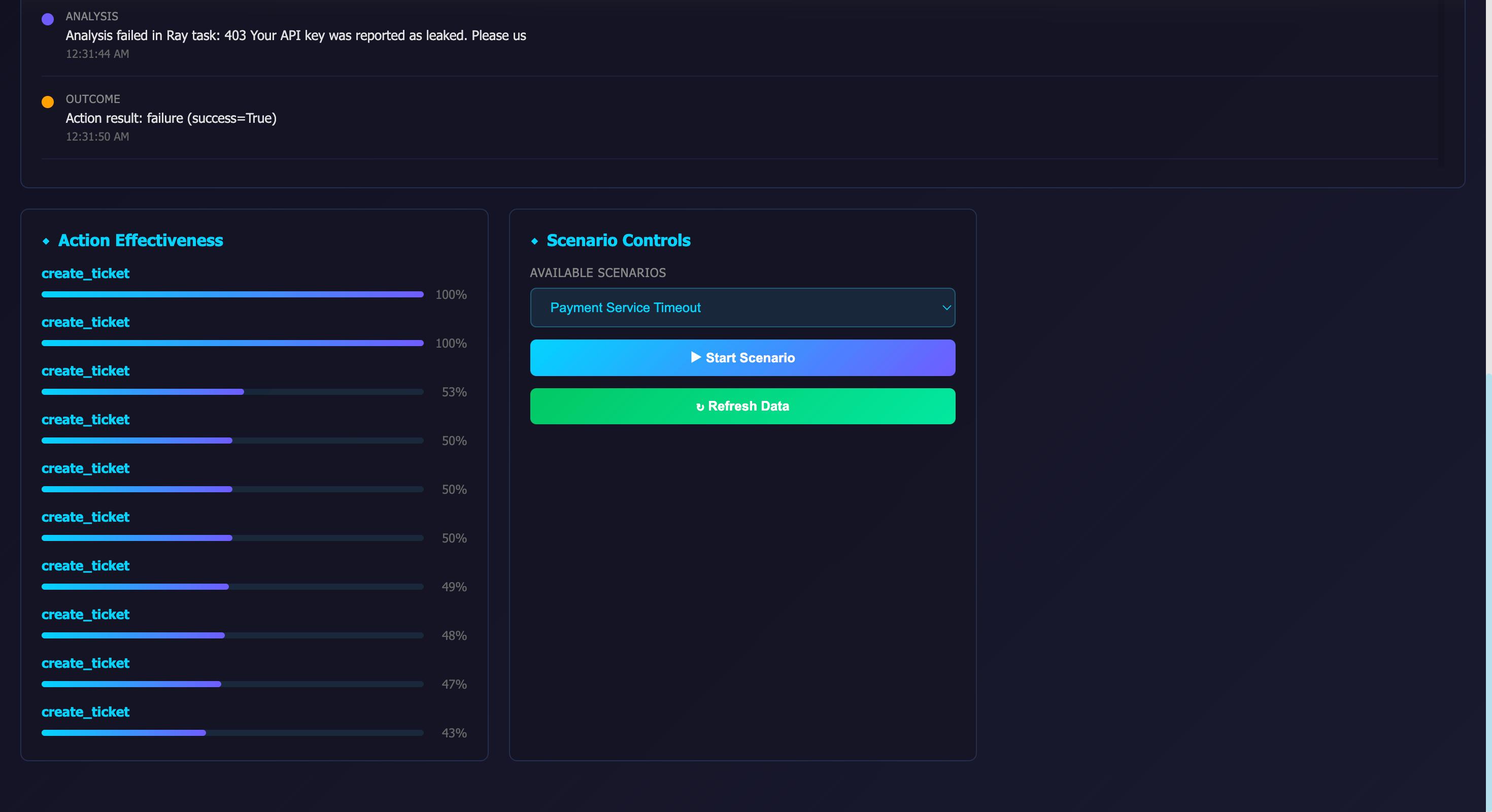
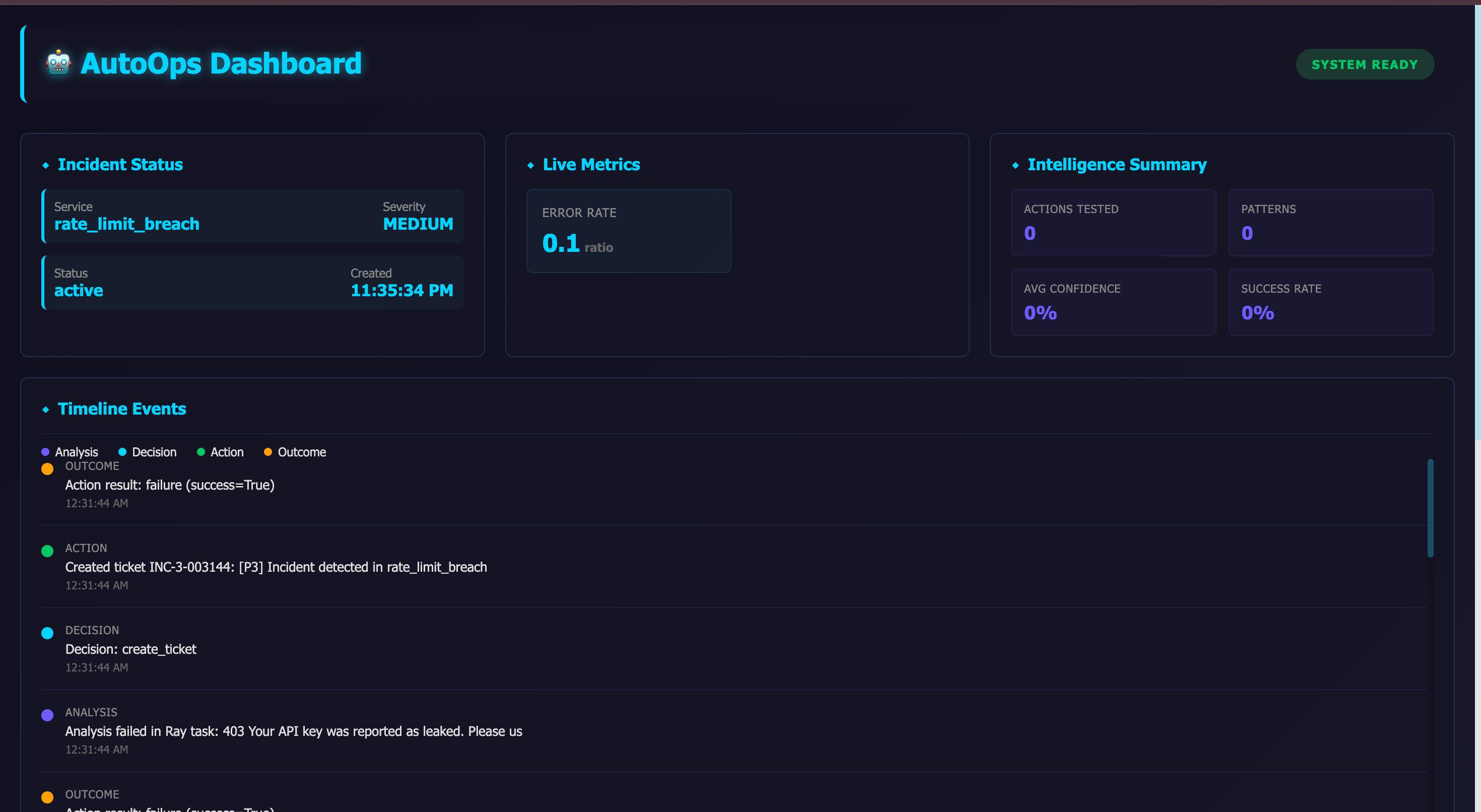
Actions are chosen from a predefined catalog with safety checks blast radius limits and rollback logic to ensure autonomy does not cause harm. After each action AutoOps measures whether system health improved and updates action effectiveness scores. An orchestrator schedules the agent loop and a Retool dashboard visualizes live signals incident timelines and learned intelligence. Each component has a single clear responsibility which keeps the system reliable and explainable.
Challenges we ran into
One major challenge was designing safe autonomy. AutoOps needed to act independently without making incidents worse which required explicit safety gates and reversible actions. Another challenge was avoiding over reliance on LLMs. We learned that core system behavior must be deterministic with LLMs focused on reasoning and summarization.
We also had to make learning credible. Instead of claiming automatic retraining we implemented outcome based scoring tied to real system improvements. Finally ensuring demo reliability was critical since the system needed to behave consistently while still looking realistic in a live environment.
Accomplishments that we're proud of
We are proud of building a fully autonomous incident response loop end to end within a short hackathon timeframe. AutoOps demonstrates visible learning from one incident to the next and feels like a real production system rather than a chatbot. We delivered a clean understandable demo and ensured every tool we used had a clear meaningful role in the architecture.
What we learned
We learned that autonomy without guardrails is dangerous and that safety and explainability are essential for trust. The real value in AI operations comes from decision making rather than just insights. Systems do not need continuous retraining to improve because feedback loops and outcome scoring can drive meaningful learning. We also learned that simplicity beats complexity especially under time pressure and that users trust systems more when behavior is visible and predictable.
What’s next for AutoOps
With more time we would expand AutoOps into a production ready platform. This includes integrating real cloud actions such as feature flags autoscaling and traffic shaping adding human in the loop approvals for higher risk actions supporting multi service incident correlation improving root cause analysis and persisting long term learning across teams and environments.
AutoOps represents what incident response looks like when autonomous agents become first class operators.

Log in or sign up for Devpost to join the conversation.