-
-
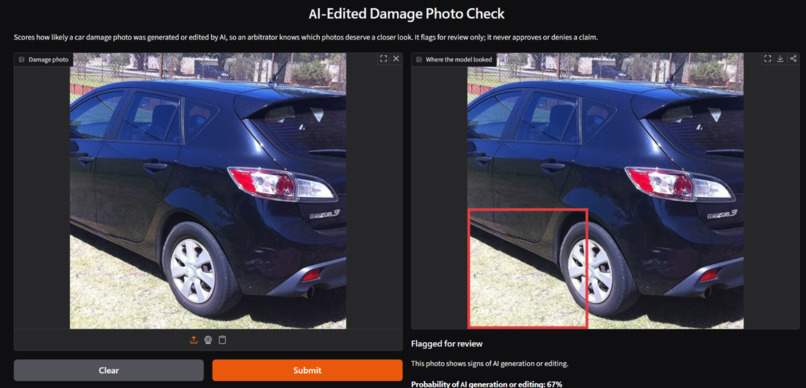
Fake
-
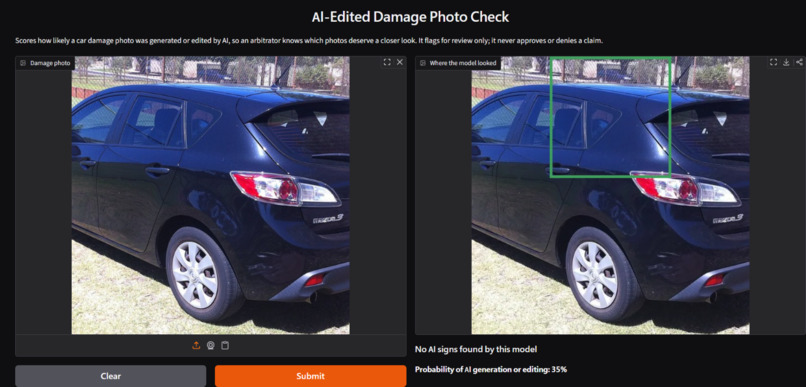
Real
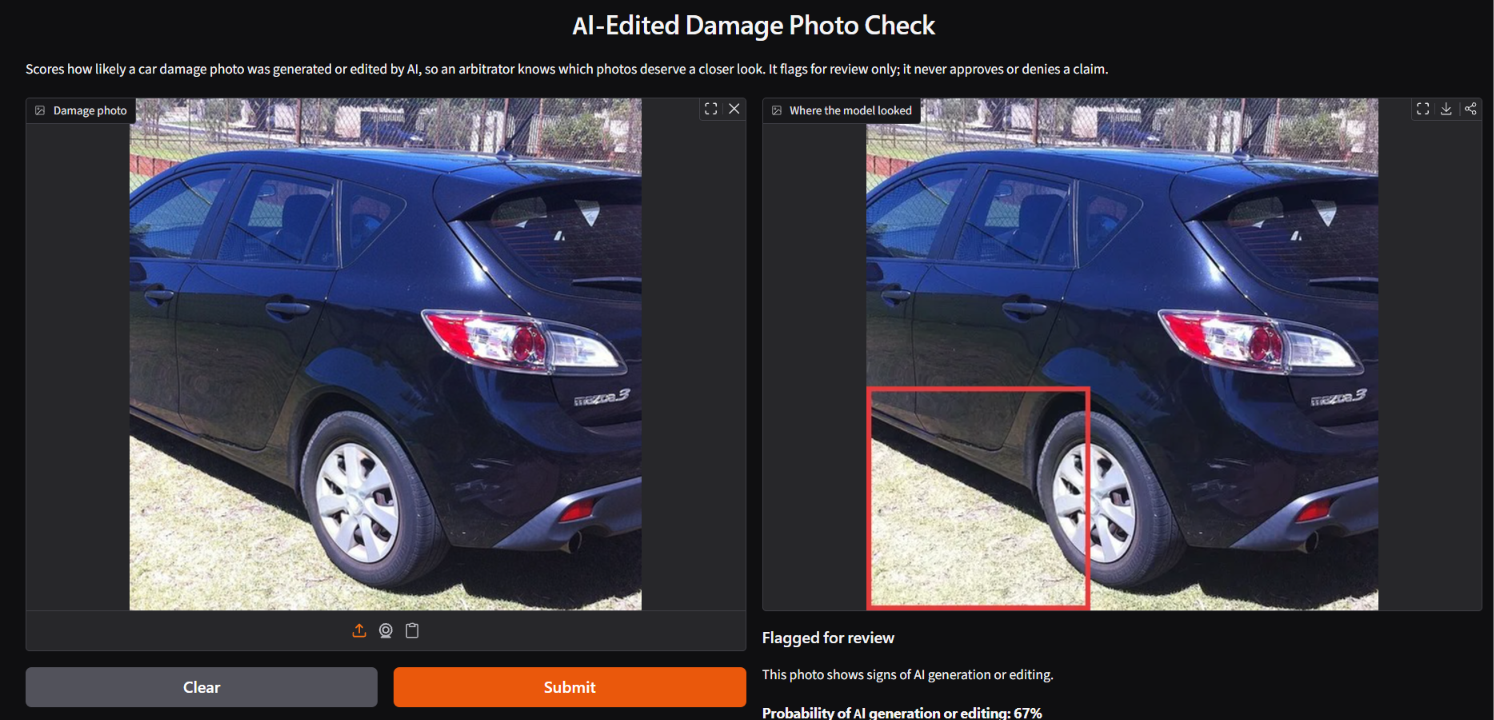
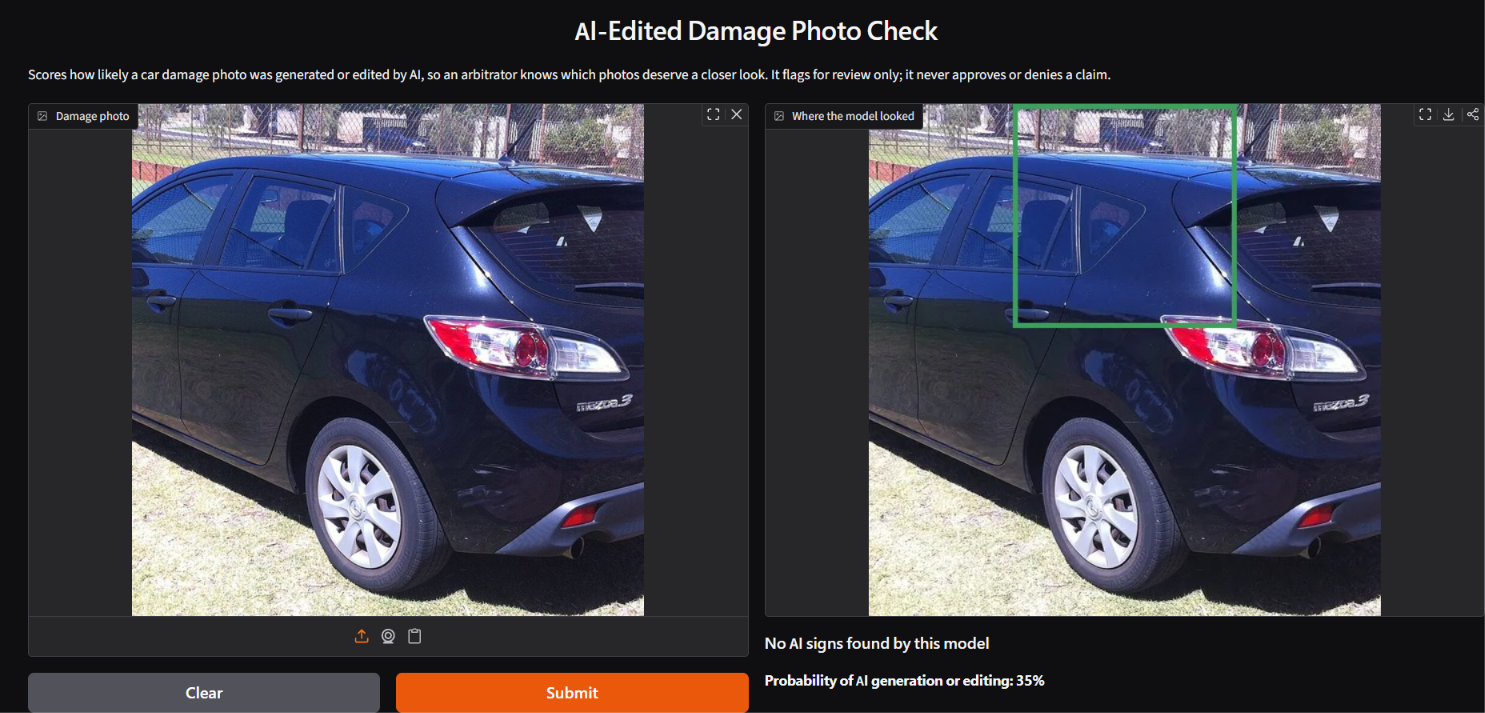
AutoOculus catches AI-faked damage in car photos.
With free AI editing tools, anyone can add a convincing dent or scrape to a real photo of a real car in seconds, and car damage disputes are settled with photos. AutoOculus gives reviewers a second opinion: upload a photo and it returns a score from 0 to 100% and highlights the part of the image that looks AI-edited.
There was no data of real fraud to train on, so we built our own attacker. We used FLUX.1 Kontext to add realistic damage to undamaged car photos, pasted only the edited region back onto the original, and trained a detector on frozen CLIP ViT-L/14 features of overlapping image crops. On held-out cars, AutoOculus catches 81% of these edits while flagging only 6% of the untouched originals and 0.5% of real damage photos. In 95% of cases, an edited photo scores higher than its own original.
AutoOculus never rejects a claim on its own. It flags photos for a person to look at. We also measured its limits: it is weaker against an editing tool it never trained on, and against heavily re-compressed photos. Next, we plan to train on several editing tools and compare claim photos with earlier inspection photos of the same car.
AI broke “seeing is believing.” We’re fixing it for cars.


