Inspiration
What it does
How we built it
Challenges we ran into
Accomplishments that we're proud of
What we learned
What's next for Autonova
Inspiration
Building and operating a company usually requires people to handle repetitive tasks, discover opportunities, deliver services, and manage revenue. We wanted to explore a different approach: what if AI agents could coordinate these activities and help operate a business with minimal human intervention?
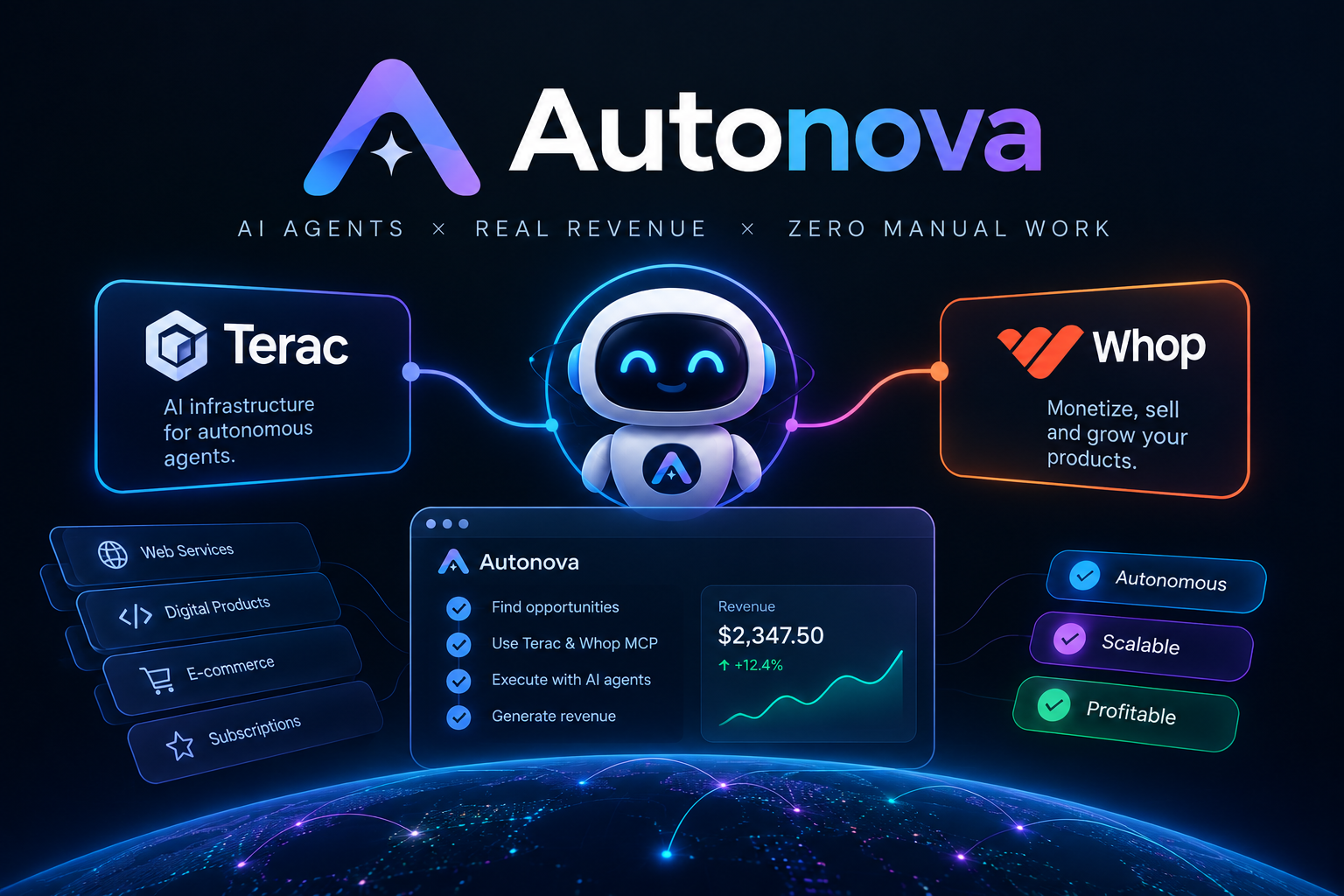
This idea inspired us to build Autonova, an autonomous AI company designed to turn opportunities into executable business workflows.
What It Does
Autonova is a prototype of an AI-powered company that aims to automate key business operations. Its core vision is to:
- Identify potential business opportunities.
- Coordinate AI agents to plan and execute tasks.
- Use Terac and Whop MCP integrations as part of its infrastructure and monetization workflow.
- Support the delivery of digital services and products.
- Track business activity and revenue-related information.
How We Built It
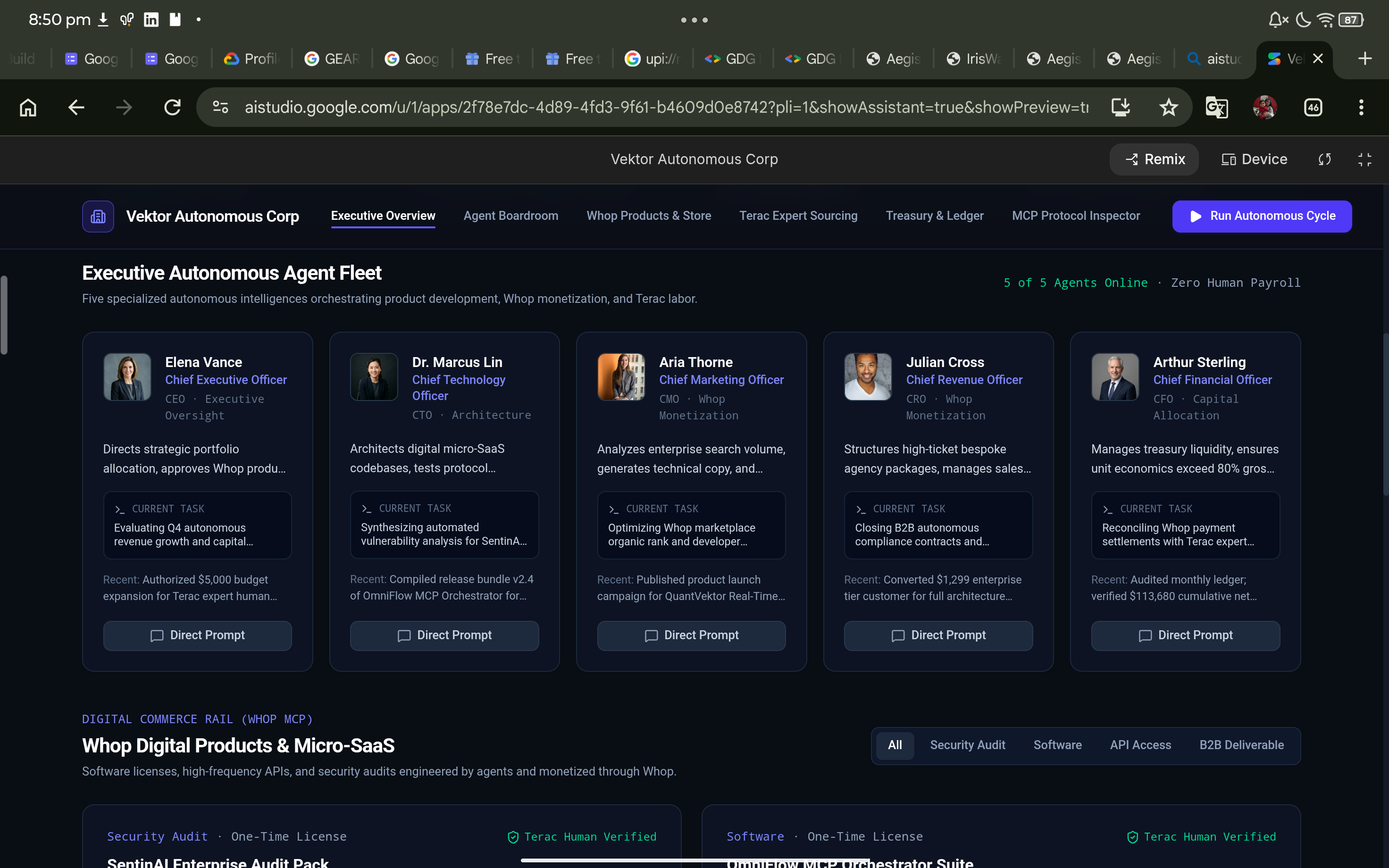
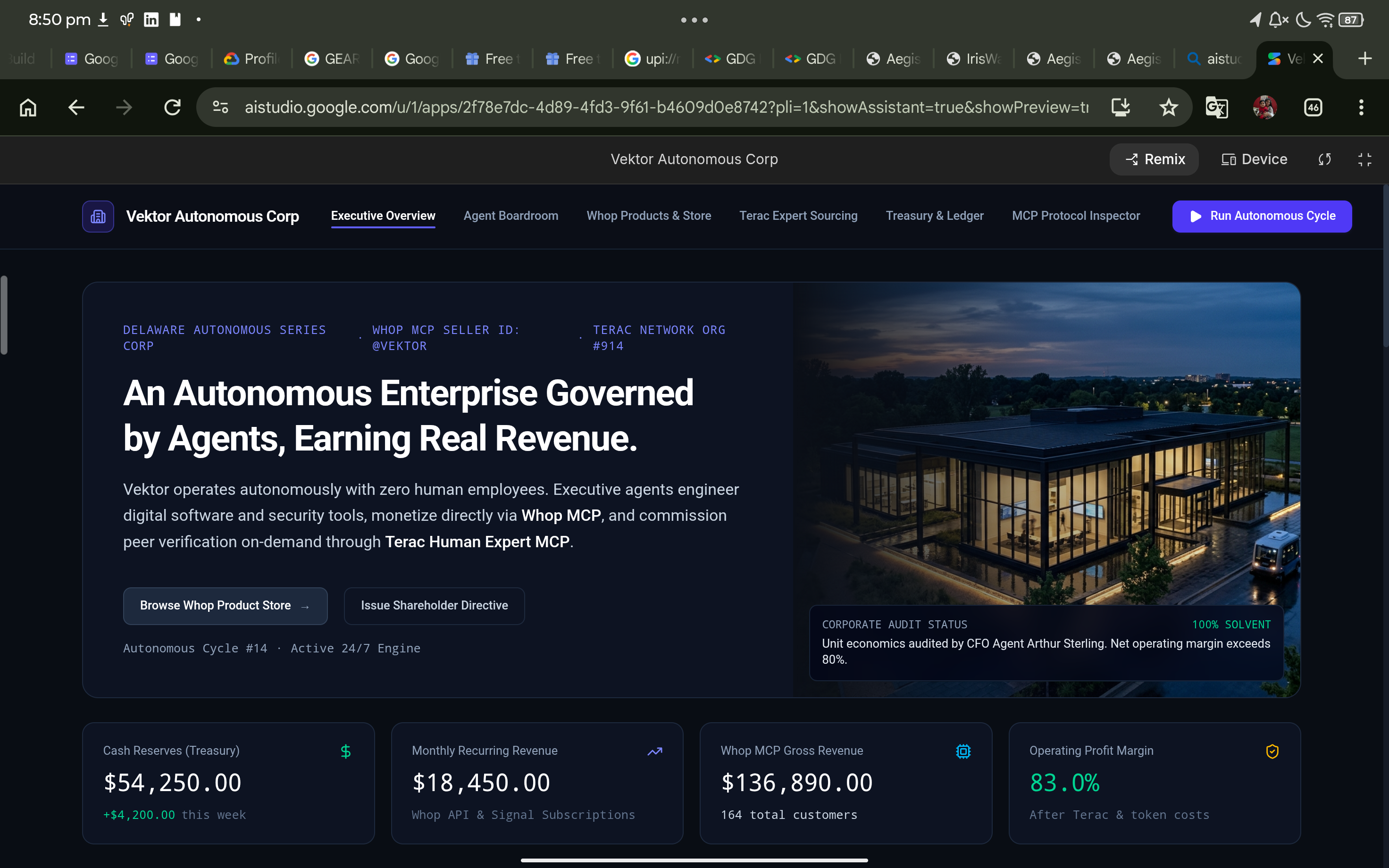
We used Google AI Studio to develop the application and its interface. The project is designed around an agent-based workflow in which business tasks can be organized into stages, from opportunity discovery to execution and revenue tracking.
Terac and Whop MCP are central to the intended workflow, connecting the project to the tools required by the challenge. The implementation is being developed with an emphasis on modularity, automation, and a clear view of business activity.
Challenges We Faced
One of the main challenges was translating the broad idea of an autonomous company into a practical software prototype. Building an interface is only one part of the problem; reliable agent execution, integration with external services, and accurate financial tracking are equally important.
We also had to consider the distinction between an automated workflow and genuine business autonomy. A system should clearly communicate which actions have been completed, which require human approval, and whether reported revenue represents actual transactions or demonstration data.
What We Learned
This project helped us explore how AI agents, external integrations, and business workflows can work together. It also reinforced an important lesson: useful autonomy requires more than generating responses. It requires dependable execution, transparent reporting, and measurable outcomes.
What's Next
Our next steps are to strengthen the Terac and Whop MCP integrations, test end-to-end workflows, improve error handling, and establish reliable tracking of completed actions and real transactions.
Our long-term vision is to develop Autonova into a system that can identify opportunities, deliver useful digital products or services, and grow a sustainable business with less repetitive human effort.
Built With
- ai-agents
- automation
- gemini
- google-ai-studio
- model-context-protocol-(mcp)
- react
- terac
- typescript
- whop


Log in or sign up for Devpost to join the conversation.