-
-
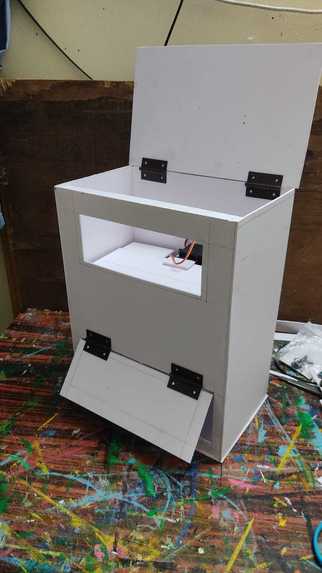
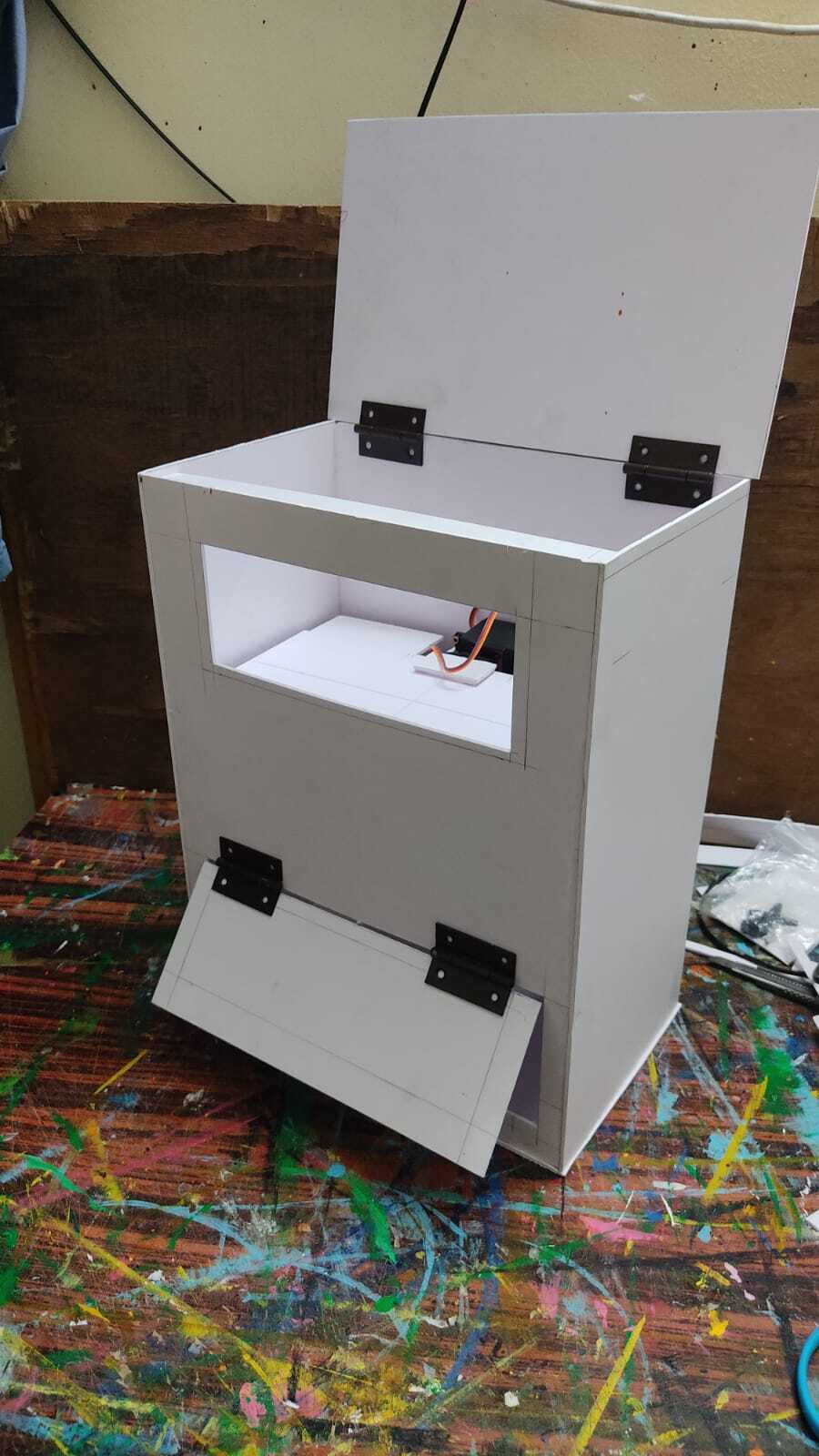
Front view of the bin
-
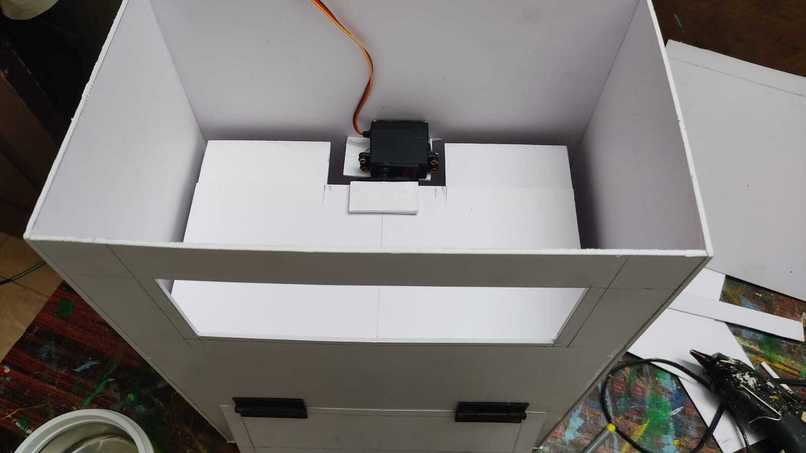
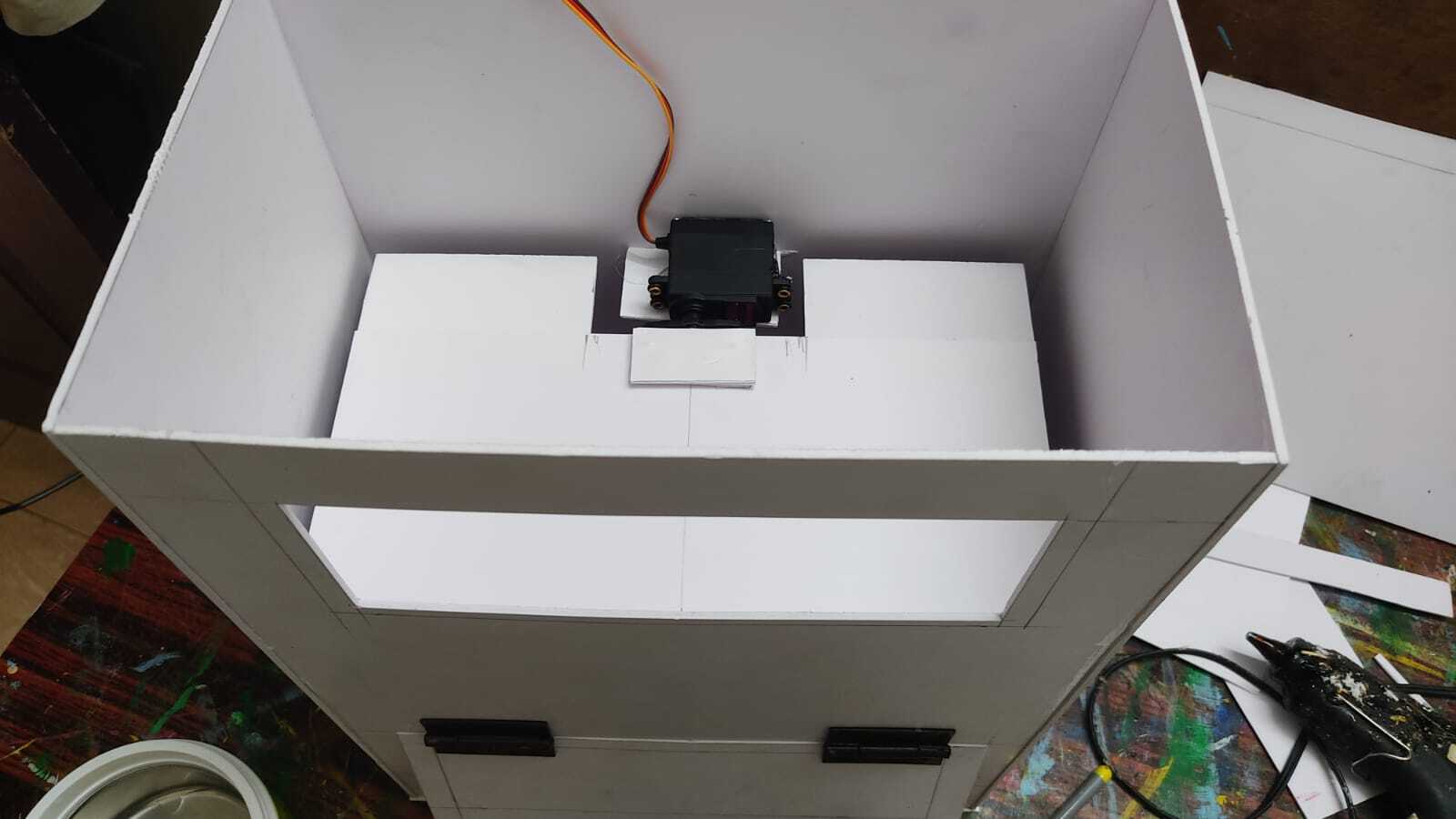
Inside view of the bin where it flap throws waste to category based on the requirement
-
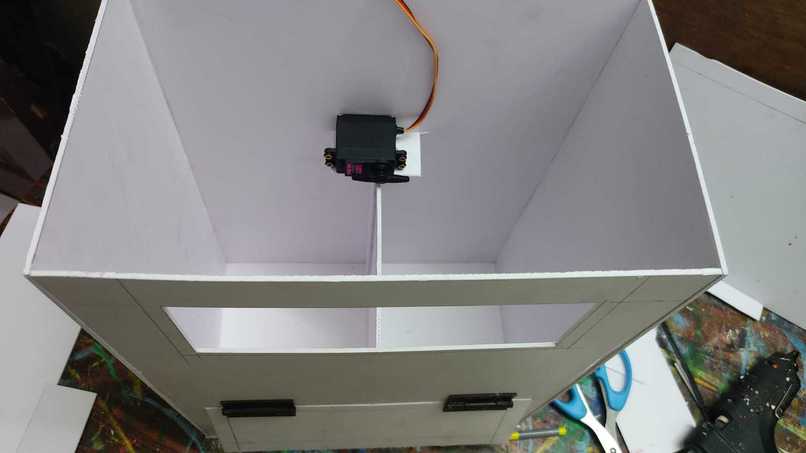
View of the compartment

Inspiration
Once, I was walking to the mess hall for dinner and noticed the bins labeled as "Biodegradable" and "Non-Biodegradable." However, to my surprise, most of the waste thrown inside the bins was incorrectly sorted—things like chips packets, plastic bottles, and food wrappers were mixed up. After dinner, I watched the mess staff manually weighing the food waste that had been thrown away. It struck me that both the sorting and weighing of waste were tasks that could be automated, making the entire process more efficient and accurate. This thought sparked the idea to create an Autonomous Waste Sorting Bin that could help solve this problem, not just in my college but potentially beyond.
What it does
The Autonomous Waste Sorting Bin is designed to simplify and improve waste management by automatically detecting, classifying, sorting, and weighing waste. When waste is thrown into the bin, an ultrasonic sensor detects its presence, triggering a Pi Camera to capture an image. This image is processed using a machine learning model trained to classify the waste into one of four categories: Biodegradable, Non-Biodegradable, E-Waste, or Medical Waste. Based on the classification, a servo motor activates, directing the waste into the appropriate compartment. Finally, a load cell measures the weight of the waste, providing real-time data for tracking and analysis. This system not only automates waste sorting but also ensures accurate waste management and data collection.
How we built it
The development of the Autonomous Waste Sorting Bin started with the goal of automating waste segregation. We chose Raspberry Pi as the central controller for its processing capability and compatibility with multiple sensors and motors. An ultrasonic sensor was used to detect when waste is thrown into the bin, triggering the Pi Camera to capture an image of the object.
We trained a machine learning model using a dataset from Kaggle to classify waste into four categories: Biodegradable, Non-Biodegradable, E-Waste, and Medical Waste. This model runs on the Raspberry Pi, which processes the image and classifies the waste. Based on the classification, a servo motor actuates to move the waste into the appropriate compartment.
For tracking waste weight, we integrated a load cell, which measures the weight of the sorted waste in each compartment. The entire system, from detection and classification to sorting and weighing, was iteratively refined for accuracy and efficiency. We documented the process and uploaded the code to GitHub for open collaboration and future improvements.
Challenges we ran into
Building the Autonomous Waste Sorting Bin came with its share of challenges. One of the major issues we faced was image misclassification during live feeds from the Pi Camera. While the model performed well with manually captured images, it struggled with live images due to varying lighting conditions and angles, leading to incorrect classifications. We had to fine-tune the image preprocessing and retrain the model with more diverse data to improve accuracy.
Another challenge was servo motor control. Ensuring precise actuation to sort waste into the correct compartment required careful calibration. Additionally, integrating the load cell to consistently measure waste weight posed difficulties, as we had to ensure accurate data transmission to the Raspberry Pi without interference.
Lastly, the long training times on the Raspberry Pi, due to its limited computational power, slowed down our development process. To overcome this, we optimized our workflow and offloaded some training tasks to a more powerful machine, while using the Pi for real-time classification and sorting
Accomplishments that we're proud of
We’re proud of several key achievements in the Autonomous Waste Sorting Bin project. First, the successful integration of machine learning for real-time waste classification is a major highlight. Despite challenges like image misclassification, we were able to optimize the model to accurately sort waste into four distinct categories. This accomplishment not only makes the bin functional but also scalable for future improvements.
Another accomplishment is the precise servo motor actuation. Sorting waste into specific compartments required fine-tuning and careful calibration, but we were able to achieve reliable performance through continuous testing. This allowed the system to perform sorting with minimal errors, which was a critical milestone.
Lastly, implementing the load cell to measure waste weight was a significant achievement. Although initially challenging, we managed to overcome the technical hurdles and ensure the weight data is consistently logged, enabling future data analysis and waste tracking. This combination of waste sorting and measurement gives the project a practical edge.
What we learned
Through the development of the Autonomous Waste Sorting Bin, we gained valuable insights into both hardware and software integration. We learned how crucial data diversity is when training machine learning models. Initially, our model struggled with live image classification due to limited training data. This taught us the importance of incorporating diverse datasets to account for real-world variations like lighting and object angles.
We also deepened our understanding of sensor integration and motor control. Working with the ultrasonic sensor for waste detection and servo motors for waste sorting required meticulous calibration, which improved our skills in hardware interfacing and troubleshooting.
Moreover, we learned about system optimization. With Raspberry Pi’s limited processing power, we had to strike a balance between real-time image classification and system performance. This taught us how to optimize resource usage and when to offload processes to more powerful machines for efficiency.
Finally, this project reinforced the value of iterative development—refining and adjusting both hardware and software based on real-world testing, helping us improve the system’s accuracy and reliability
What's next for Autonomous Waste Sorting Bot
Looking ahead, we have several exciting improvements and expansions planned for the Autonomous Waste Sorting Bin. One of our top priorities is to enhance the accuracy of the waste classification model by retraining it with a larger, more diverse dataset, ensuring better performance across different environments and waste types.
We also plan to integrate the bin with IoT platforms, such as Ubidots, to enable real-time monitoring and data analytics. This will allow facilities to track waste disposal patterns, automate notifications for when compartments are full, and provide insights into waste generation trends.
Another goal is to make the bin more energy efficient, potentially incorporating solar panels for power and optimizing the system’s energy consumption for longer autonomous operation. Additionally, we aim to explore additional waste categories to handle more specific types of waste, further improving sorting precision.
Finally, we envision scaling the project by collaborating with organizations and municipalities to deploy these bins in larger facilities, schools, and public spaces, contributing to sustainable waste management on a broader scale.


Log in or sign up for Devpost to join the conversation.