-
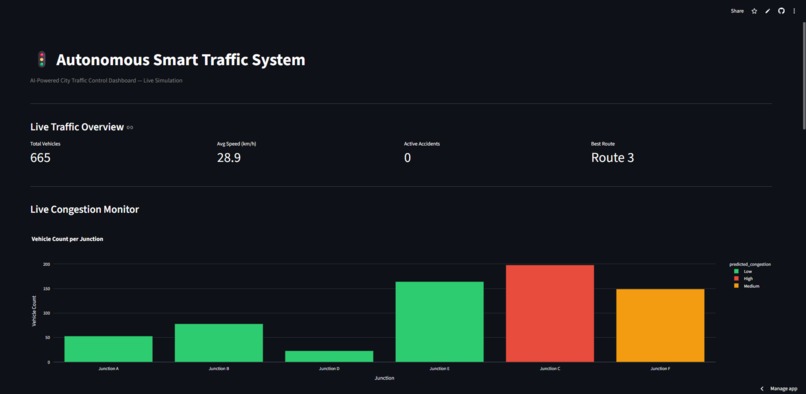
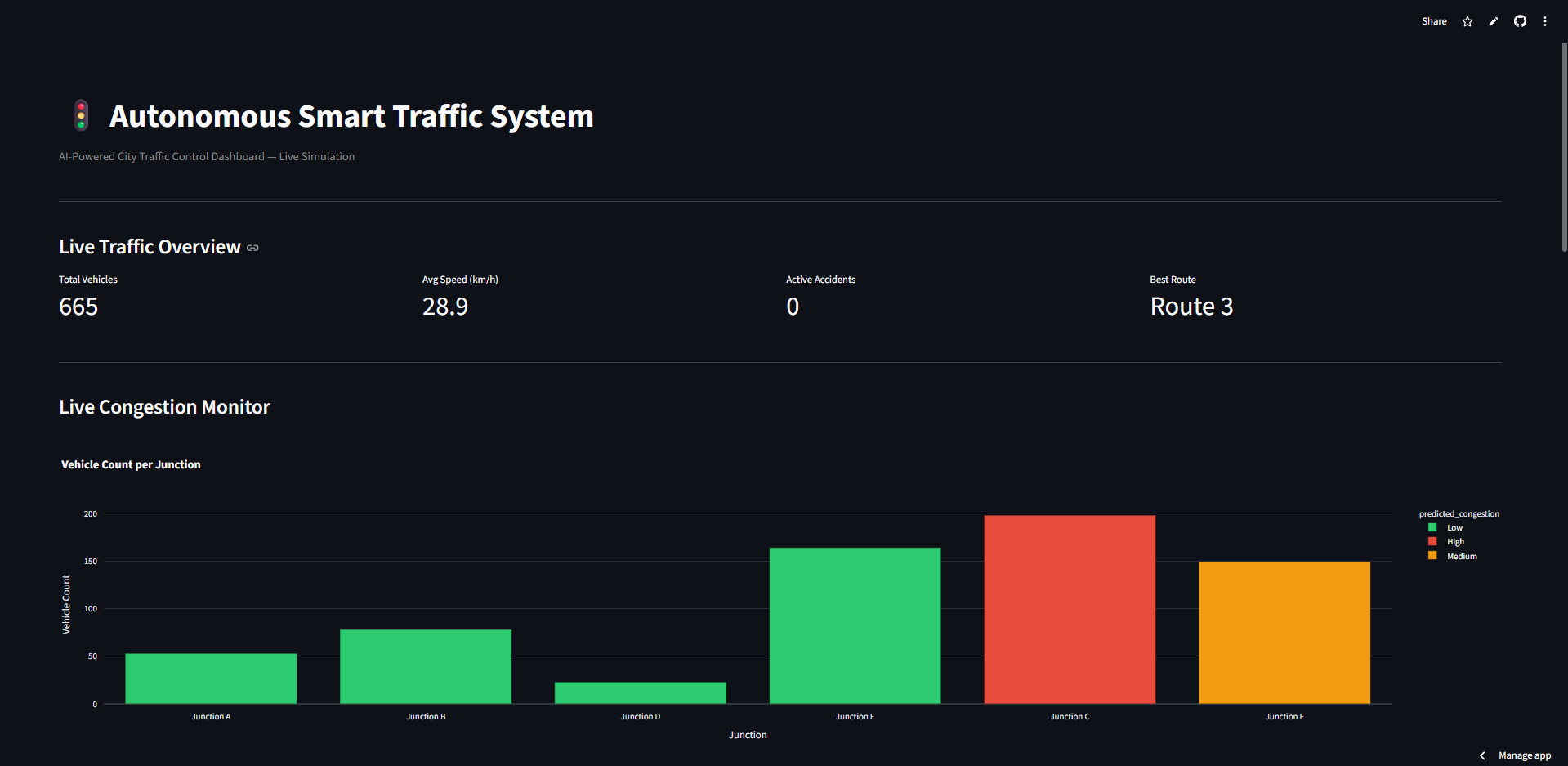
Live AI Traffic Monitoring Dashboard
-
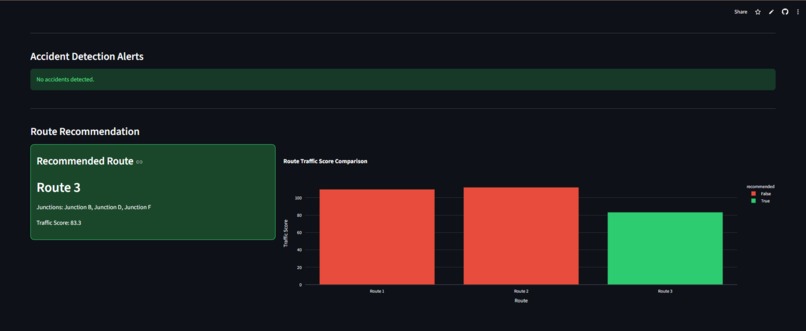
AI Route Optimization & Accident Detection
-
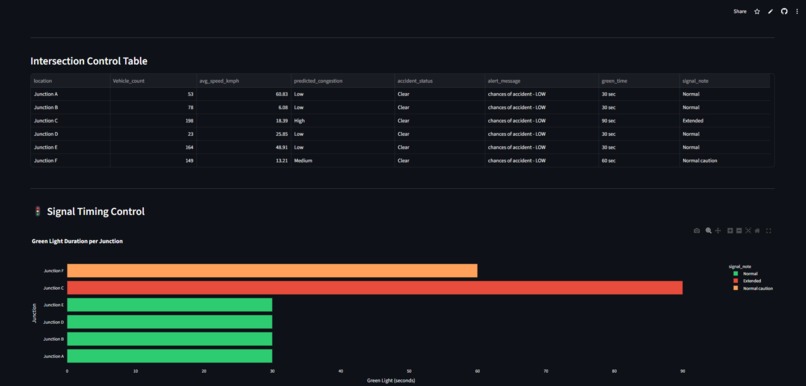
Smart Traffic Signal Control System
Inspiration
Traffic congestion, delayed emergency response, and inefficient signal systems are major problems in modern cities. We wanted to build a smart traffic management system that could simulate how AI can help cities monitor traffic conditions, predict congestion, detect possible accidents, and improve traffic flow in real time.
What it does
Autonomous Smart Traffic System is an AI-powered traffic monitoring and control platform that simulates real-time traffic conditions across multiple city junctions.
The system:
- Simulates live traffic data
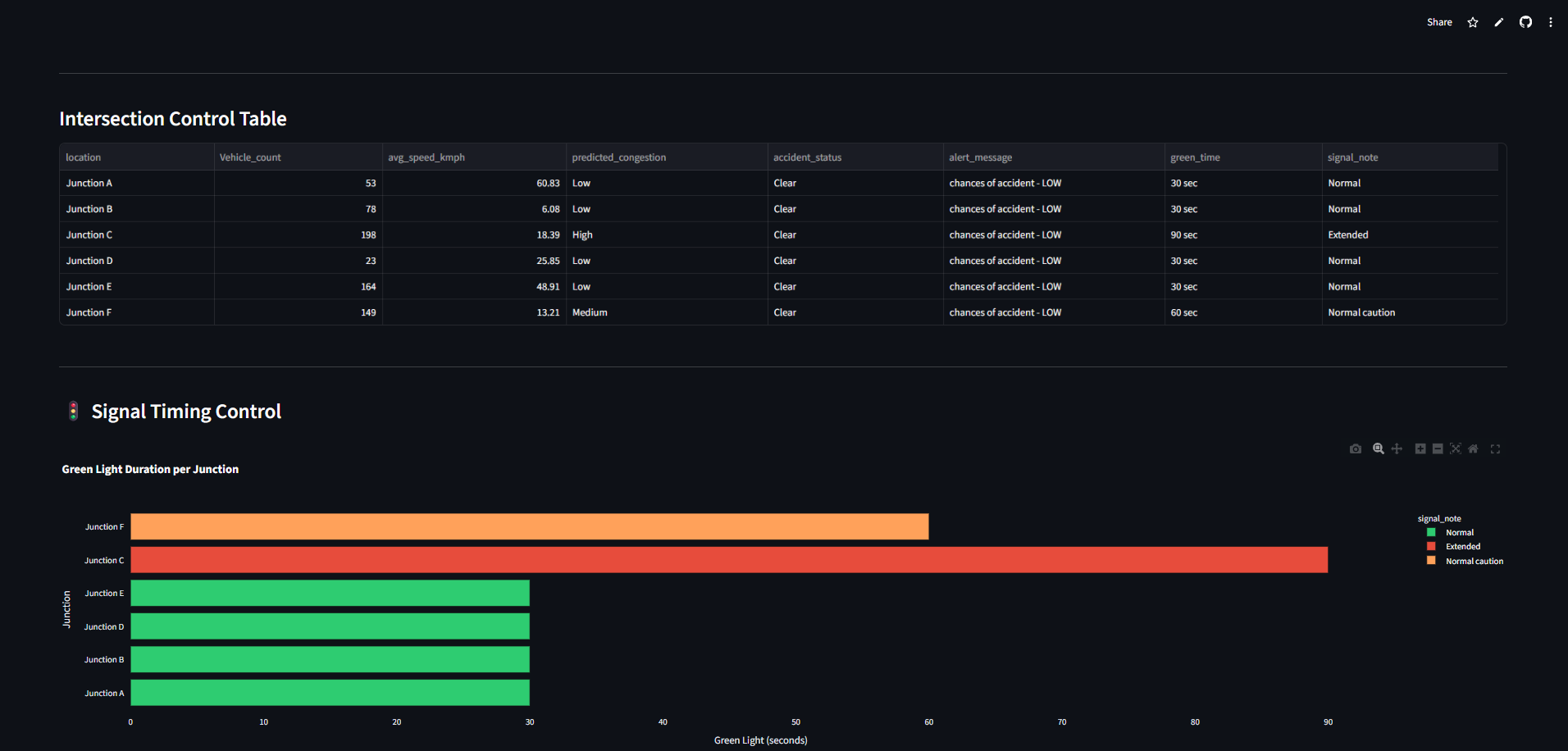
- Predicts congestion levels using machine learning
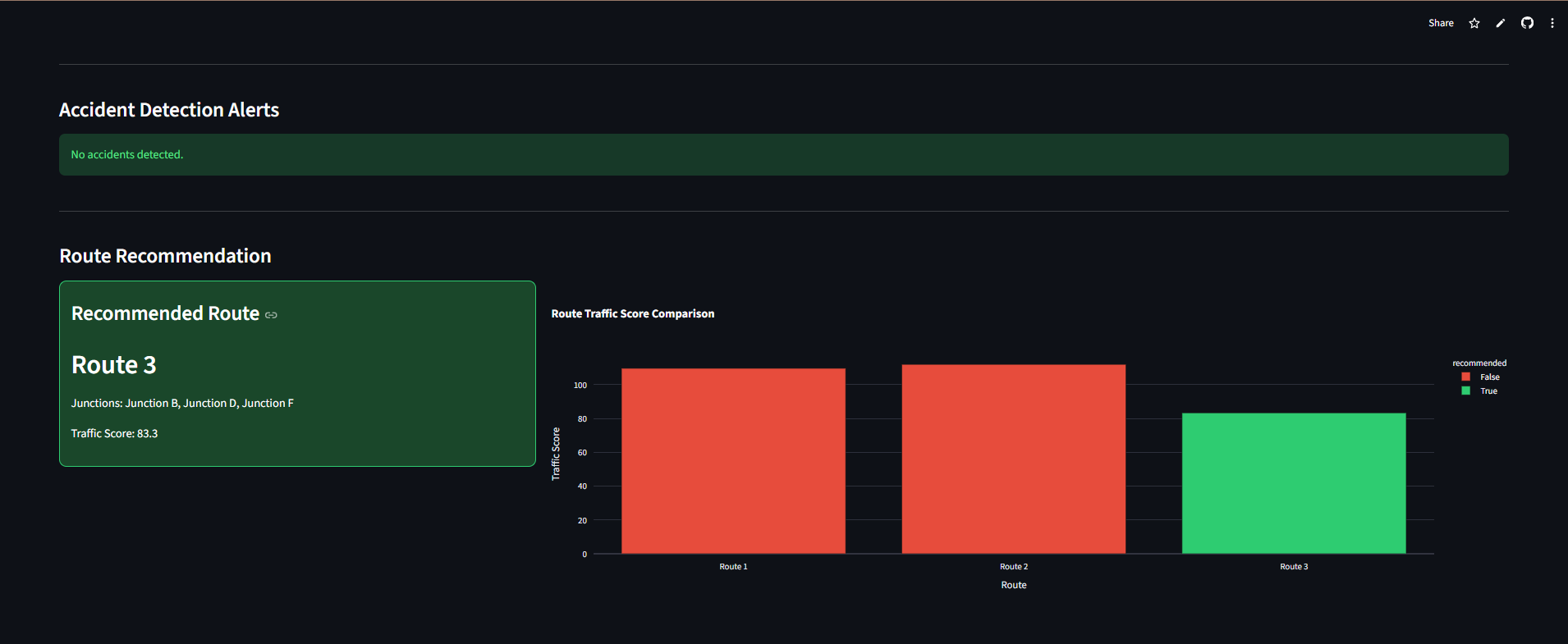
- Detects possible accident scenarios
- Dynamically adjusts signal timings
- Recommends the least congested route
- Displays everything on an interactive Streamlit dashboard
How we built it
We built the project using Python and Streamlit with a modular architecture.
Main technologies used:
- Python
- Streamlit
- Pandas
- NumPy
- Plotly
- Scikit-learn
Project modules include:
- Traffic data simulator
- Congestion prediction model
- Accident detection engine
- Smart signal controller
- Route optimization system
- Real-time dashboard
We used a Random Forest Classifier to predict congestion levels based on vehicle count, speed, and traffic timing patterns.
Challenges we ran into
Some major challenges included:
- Designing a modular project structure
- Managing DataFrame flow across multiple modules
- Handling import and deployment issues
- Integrating machine learning predictions into the dashboard
- Building realistic traffic simulation logic
- Optimizing route scoring and signal timing systems
We also faced deployment issues related to package management and project structure while hosting the app on Streamlit Cloud.
Accomplishments that we're proud of
We are proud of successfully building:
- A fully functional AI-powered traffic dashboard
- Real-time congestion prediction system
- Smart signal timing logic
- Accident detection mechanism
- Route optimization engine
- Live deployed web application
We are also proud of creating a clean modular architecture instead of a single-script project.
What we learned
Through this project, we learned:
- Machine learning integration in real-world systems
- Streamlit dashboard development
- Modular software architecture
- Data processing using Pandas
- Model training and prediction workflows
- Deployment using Streamlit Cloud
- Debugging and dependency management
We also gained experience in designing scalable AI-based smart city solutions.
What's next for Autonomous Smart Traffic System
Future improvements include:
- Integration with real-world traffic APIs and IoT sensors
- Computer vision-based accident detection using CCTV feeds
- Live GPS-based route optimization
- Emergency vehicle prioritization
- Historical traffic analytics
- Cloud database integration
- Mobile application support
- Advanced deep learning-based traffic forecasting


Log in or sign up for Devpost to join the conversation.