-
-
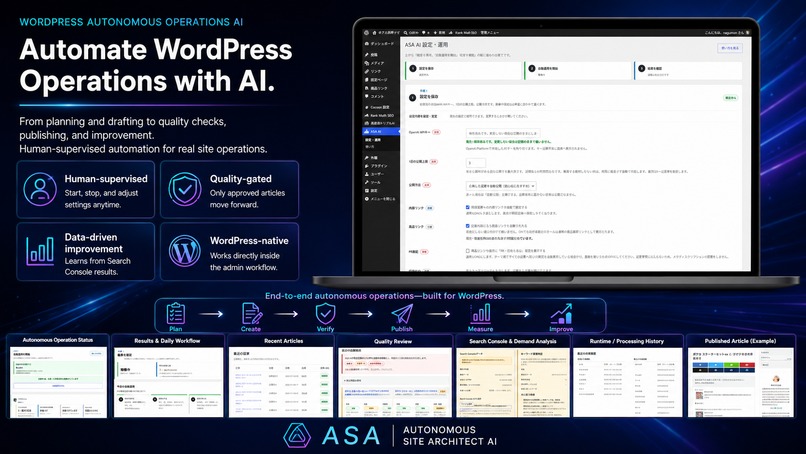
A supervised WordPress workflow that plans, creates, verifies, publishes, measures, and continuously improves content.
-
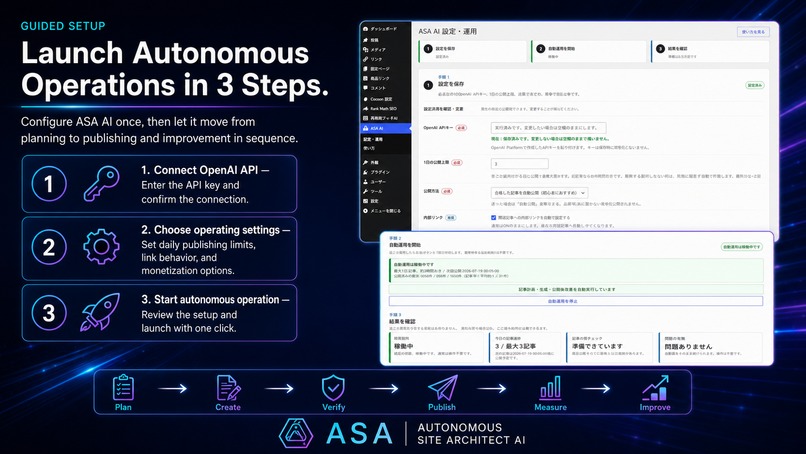
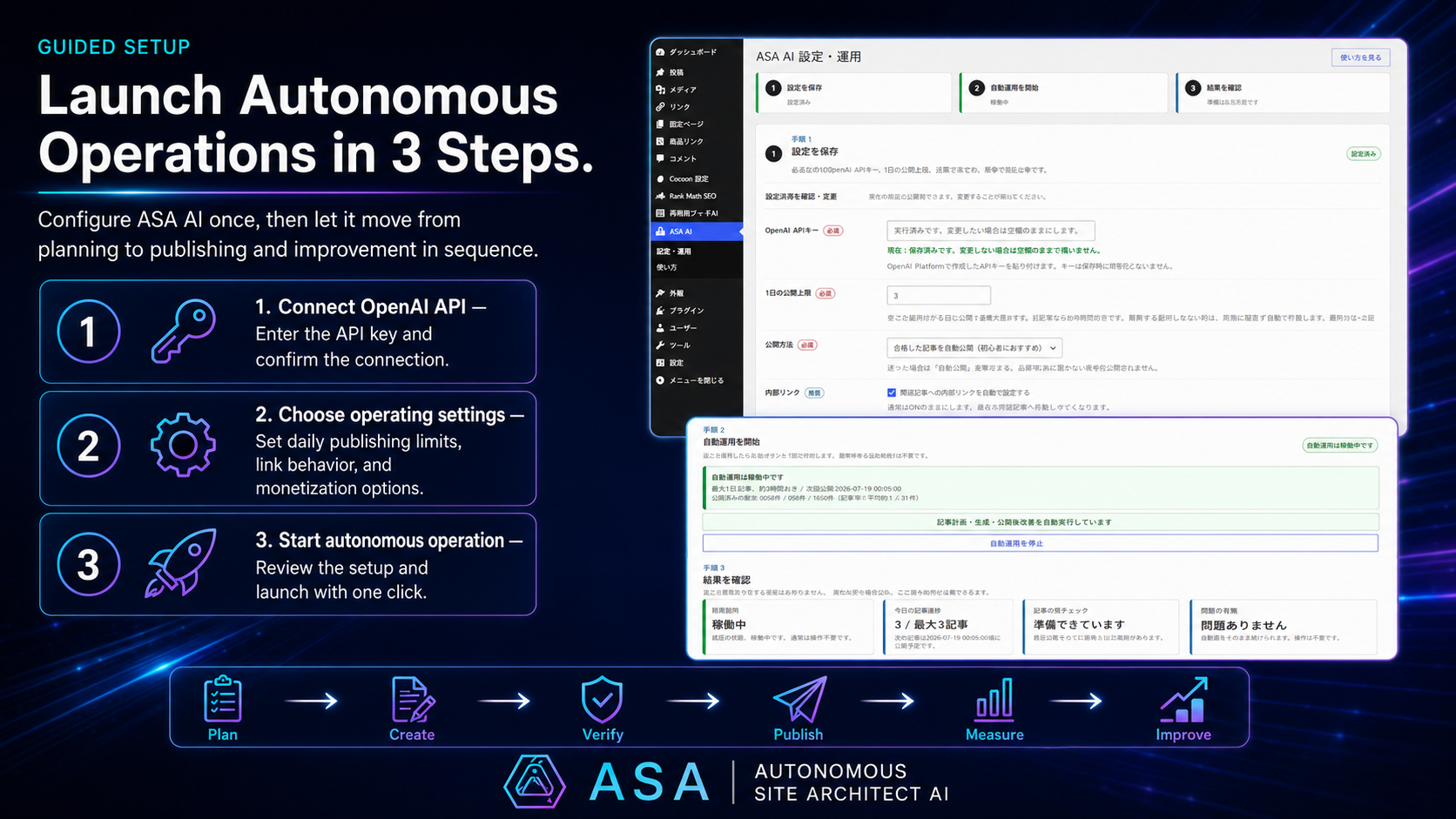
Launch ASA AI in three steps: connect OpenAI, choose operating settings, and explicitly start autonomous operation.
-
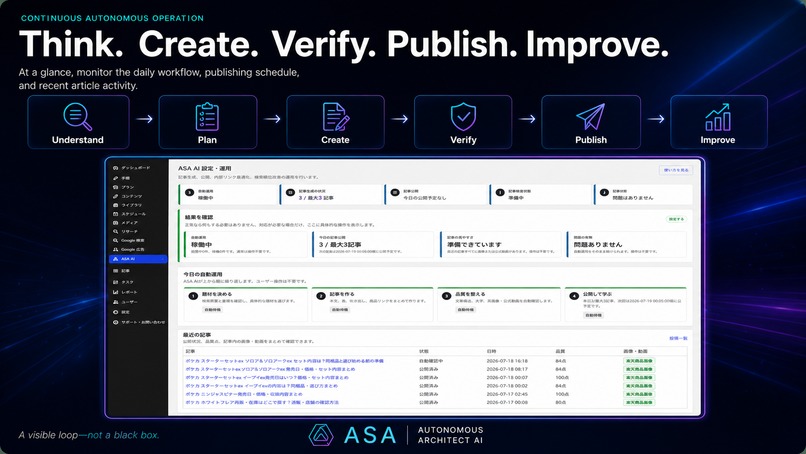
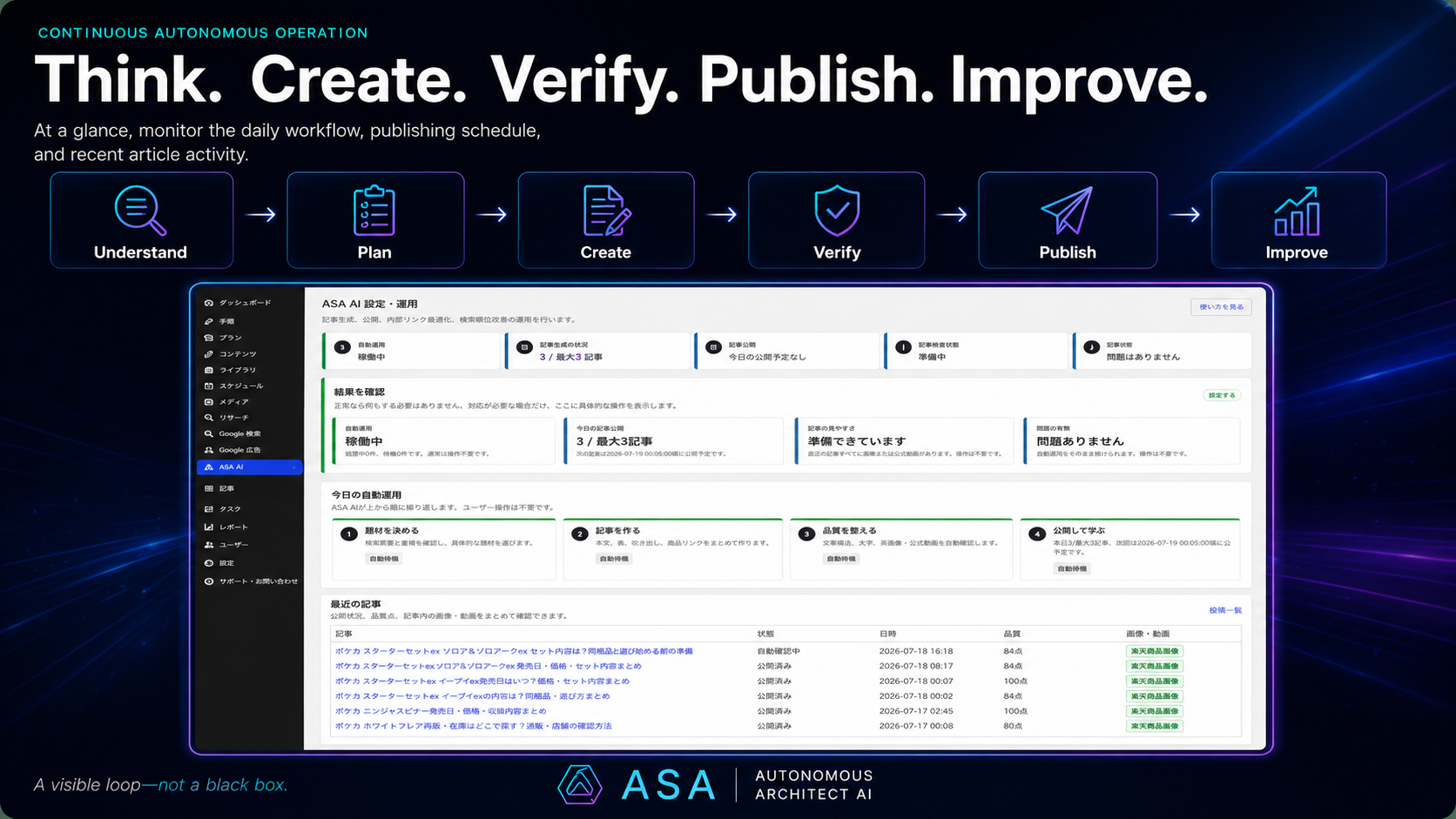
ASA AI makes the full loop visible: understand, plan, create, verify, publish, measure, and improve.
-
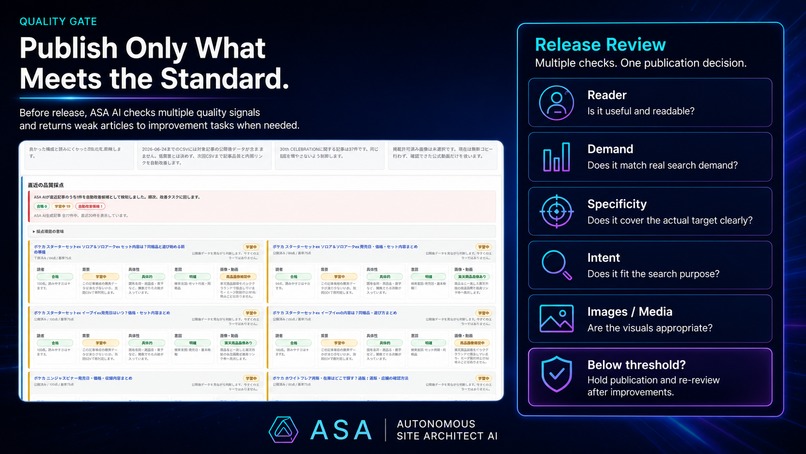
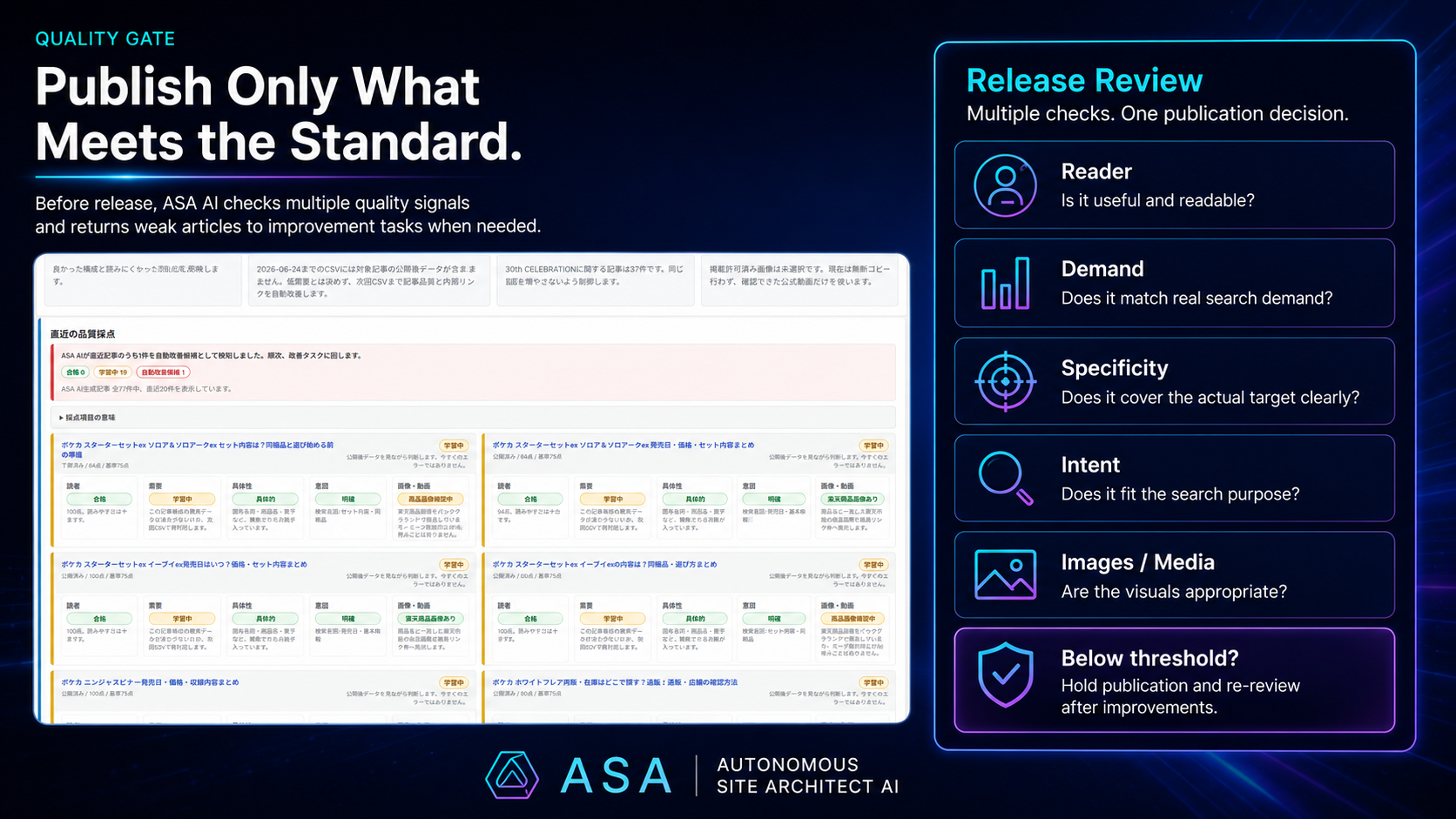
ASA AI checks usefulness, demand, specificity, intent, and media quality. Weak content is held for improvement.
-
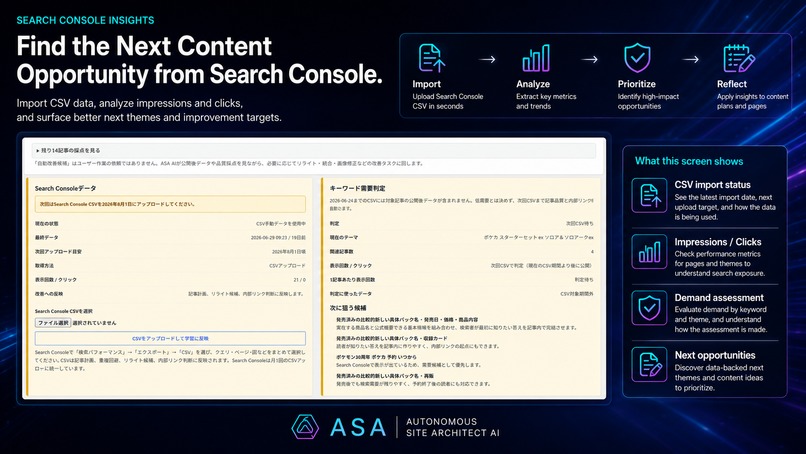
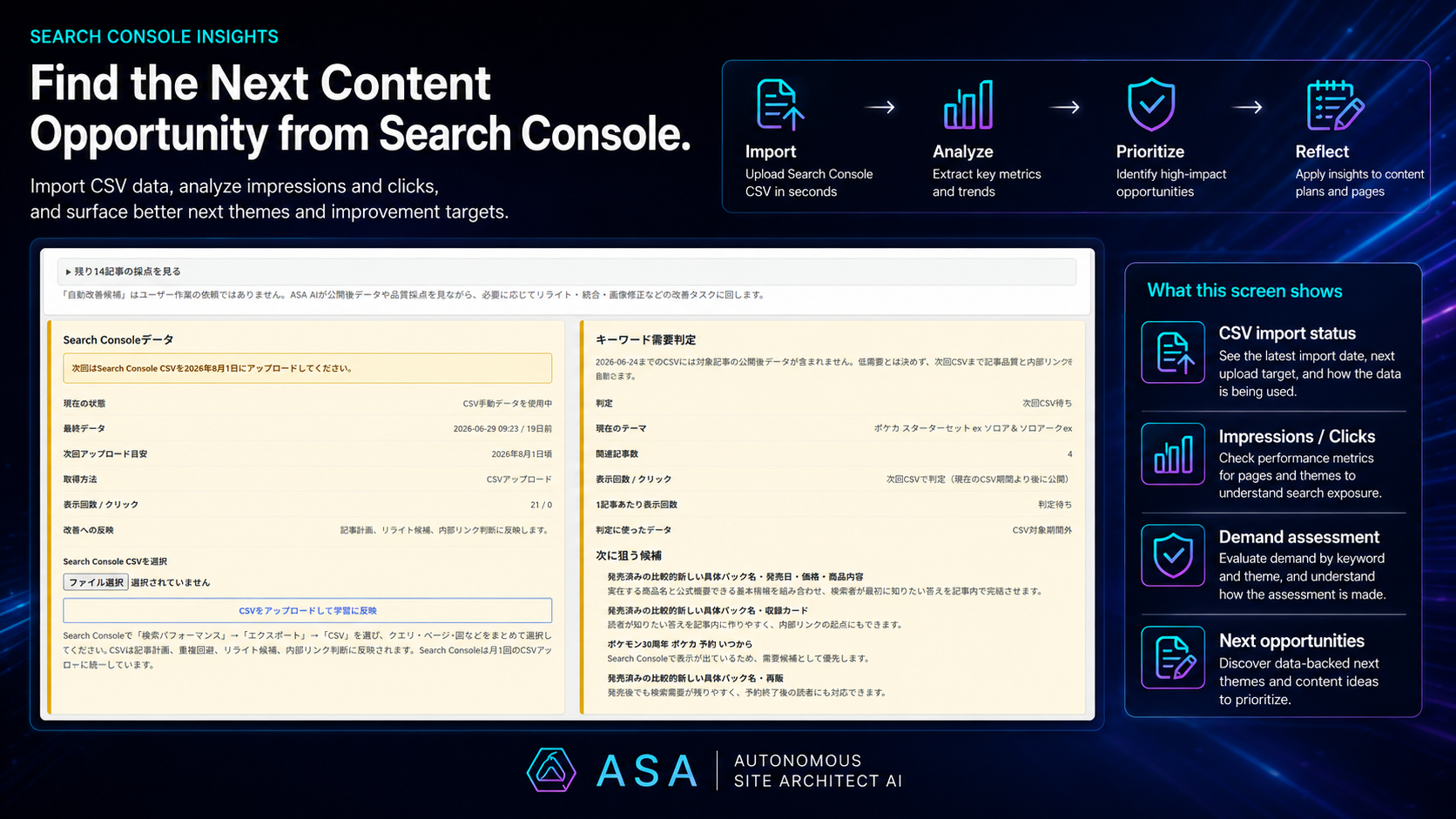
Search Console CSV data reveals impressions, clicks, demand signals, rewrite priorities, and new content opportunities.
-
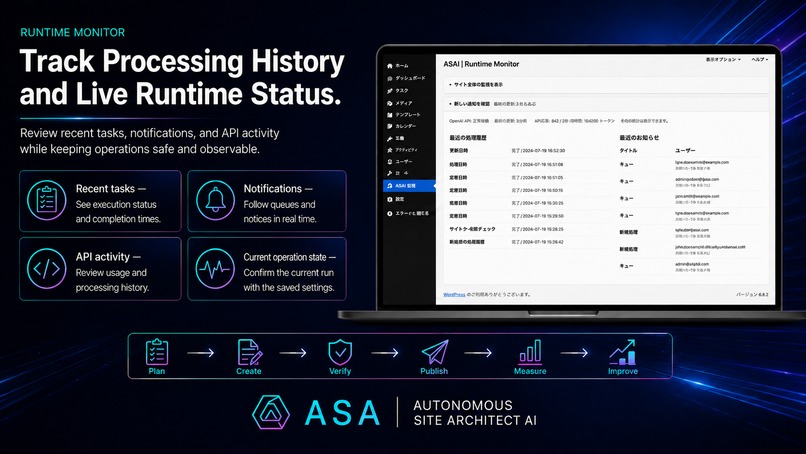
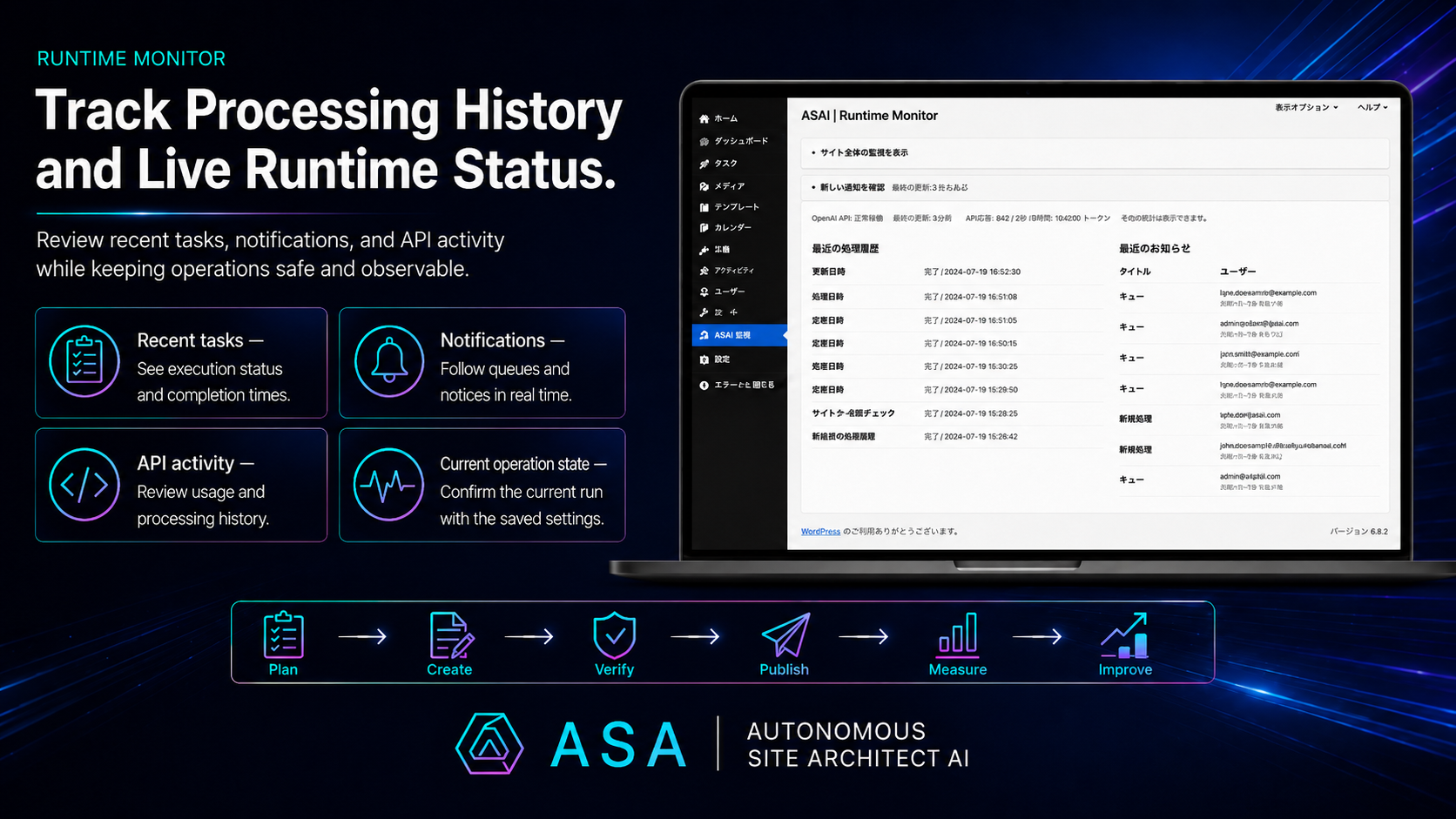
Monitor recent tasks, queue notices, API activity, completion times, and the current state of autonomous operation.
-
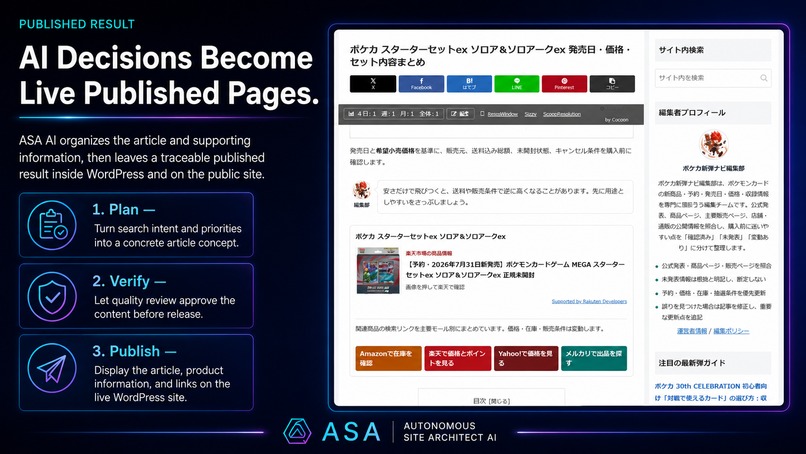
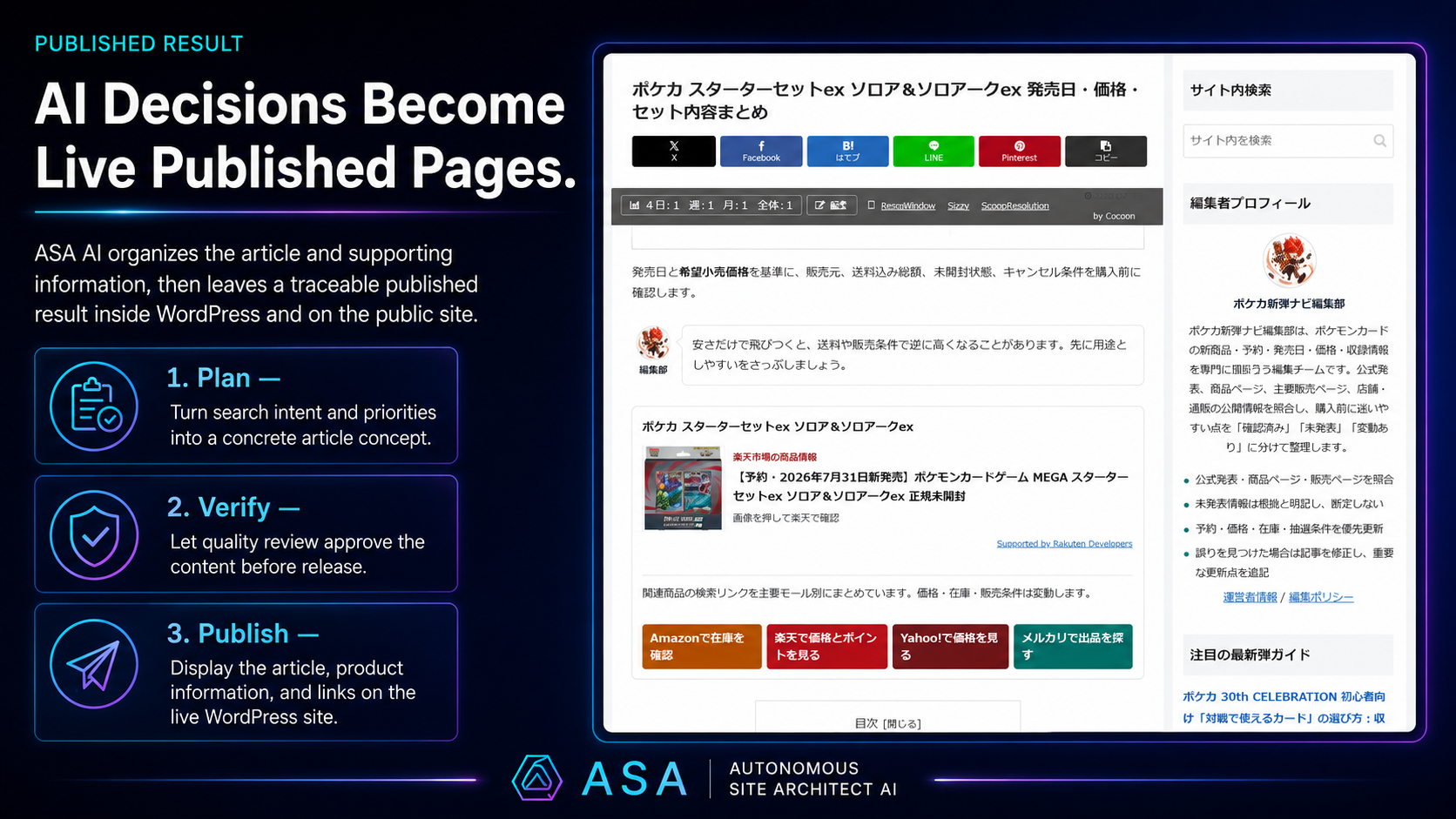
A real WordPress article produced through ASA AI, from content planning and quality review to final publication.
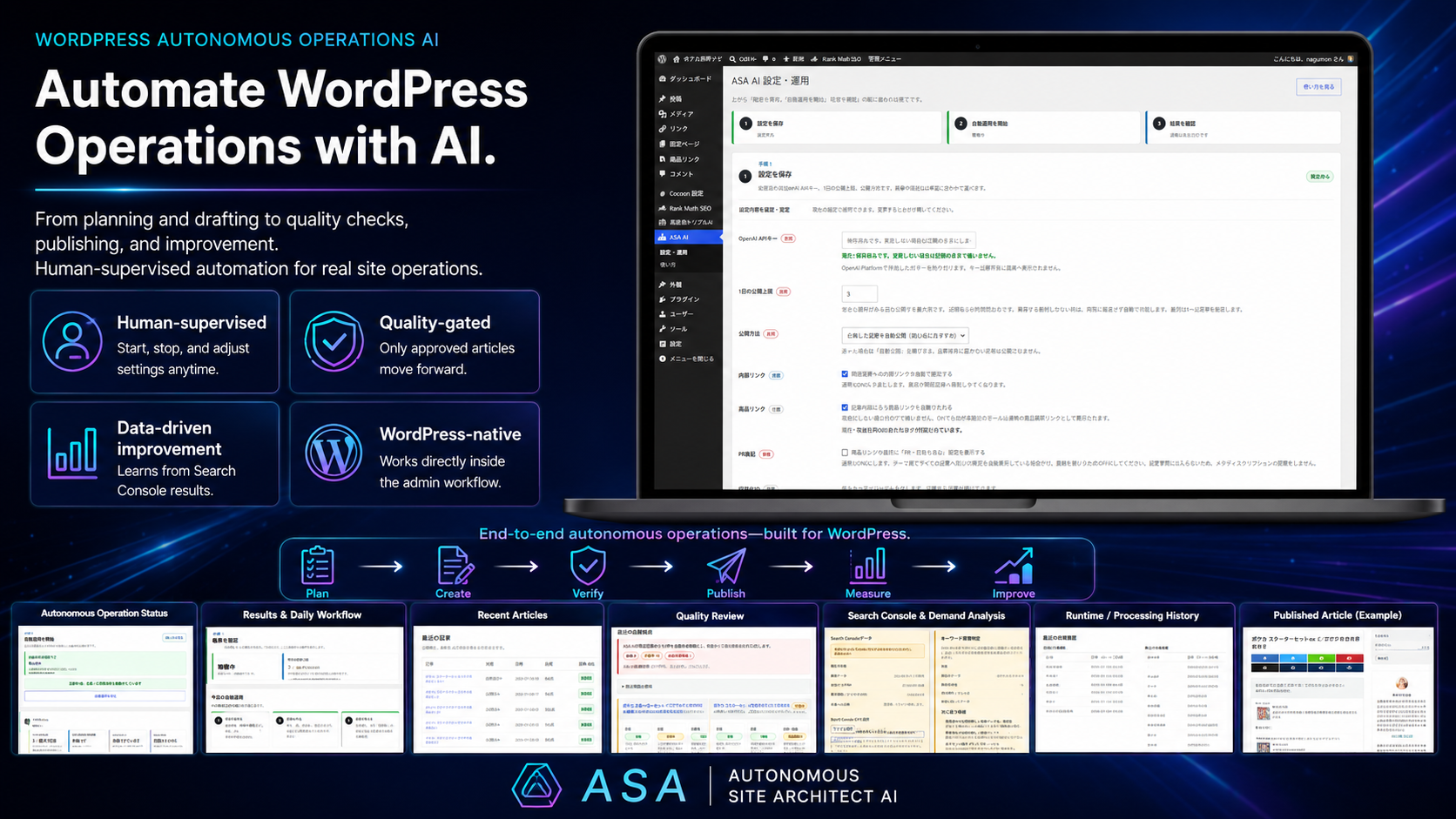
Autonomous Site Architect AI
Inspiration
A website should not stop growing because its owner runs out of time.
Running a WordPress site is a continuous cycle of research, strategy, writing, SEO, publishing, measurement, and improvement. For an independent creator or small business, that cycle can consume the time that should be spent creating ideas, serving customers, or building the business.
AI made writing faster, but it did not solve the larger problem. A website still waits for a human to decide what to create, where it belongs, whether it is ready to publish, and what should improve next.
I kept asking:
Why can’t WordPress operate as an intelligent system instead of a passive CMS?
That question became Autonomous Site Architect AI.
What it does
Autonomous Site Architect AI, or ASA AI, is a supervised autonomous WordPress agent.
After one guided setup and an explicit start by the owner, it can:
- analyze the site and existing content
- create pillar, cluster, and content-calendar strategies
- select topics while reducing duplication and keyword cannibalization
- generate plans, drafts, SEO metadata, FAQs, structured data, internal links, and media
- evaluate every draft against a configurable quality gate
- publish automatically or preserve content as a draft
- learn from Google Search Console CSV data
- identify rewrite opportunities, overlapping content, and possible noindex candidates
- continue working through a recoverable background task queue
The complete loop is:
understand → architect → plan → create → verify → publish → measure → improve
Why it is different
ASA AI is not another “generate article” button. It treats a website as a connected system.
Before creating a page, it considers why the page should exist, how it fits the site architecture, whether another page already serves the same intent, and what evidence should influence the next decision.
Autonomy also does not mean removing human control. The owner explicitly starts the system and chooses draft or publishing behavior. Quality thresholds, activity logs, protected settings, encrypted credentials, and recovery mechanisms keep the automation visible and manageable.
The agent can also wait. If it cannot find a sufficiently useful and distinct topic, publishing nothing is better than publishing a weak page merely to satisfy a schedule.
How I built it
ASA AI is a native WordPress plugin built with PHP, JavaScript, MySQL, the WordPress REST API, WordPress Cron, and the OpenAI API.
The AI workflow uses the OpenAI Responses API with JSON Schema structured outputs. Strategy, planning, generation, and analysis are separated so each result can be validated, stored, repaired, and safely passed forward.
AI handles interpretation and composition. Deterministic rules handle structure, duplicate patterns, quality thresholds, scheduling, and recovery. This reduces unnecessary API calls and makes continuous operation more predictable.
The production runtime primarily uses gpt-5-mini. This is intentional: a continuously operating agent must remain affordable. Optional AI image generation is separated from the default free local-image workflow so users control additional image costs.
How I used Codex and GPT-5.6
This project began before Build Week. During the submission period, I used Codex with GPT-5.6 to meaningfully extend and harden it.
Codex became my primary development environment for tracing interactions across the plugin, implementing coordinated changes, debugging background behavior, reviewing security-sensitive paths, and testing the full workflow.
GPT-5.6 helped me reason across site strategy, search intent, structured outputs, quality gates, duplicate prevention, low-traffic task recovery, and beginner-facing UX.
During Build Week, I focused on simplifying setup, strengthening topic verification, improving duplicate and cannibalization safeguards, hardening quality checks, improving background recovery, protecting saved credentials, and documenting installation and testing.
The architecture deliberately separates:
development intelligence: Codex + GPT-5.6
runtime efficiency: gpt-5-mini
Challenges and lessons
The hardest challenge was balancing autonomy with trust. Generating content is easier than deciding when the system should publish, repair, wait, or return control to the user.
AI output also had to become operationally reliable. I combined structured outputs, deterministic validation, quality scoring, duplicate detection, and publication gates instead of relying on a single prompt.
Continuous operation inside WordPress was another challenge. Shared hosting can delay scheduled tasks or interrupt long processes, so work is divided into recoverable tasks with bounded retries and multiple execution paths.
The most important lesson was:
Autonomy is not measured by how many actions an agent can perform. It is measured by the quality of the decisions between those actions.
What I am proud of
I am proud that ASA AI follows an article beyond generation.
It considers where the article belongs, whether it conflicts with existing content, whether it passes the publication standard, how it should connect to the rest of the site, and what the system should learn after publication.
I built it from an independent developer’s perspective to give one creator or small team capabilities that normally require several specialists.
What’s next
Next, I plan to improve decision explainability, add a simulation mode, strengthen factual and usefulness evaluations, support more site types and languages, and expand multi-site operation.
Human time is finite.
Autonomous Site Architect AI lets the website carry the routine, so the human can carry the vision.

Log in or sign up for Devpost to join the conversation.