Inspiration
Most children practice music alone between weekly lessons. Parents want to help, but they often do not know what to listen for, and teachers cannot watch every daily practice. Bowly AI was built for that gap: a gentle AI practice companion that helps children feel supported without turning practice into constant correction.
What it does
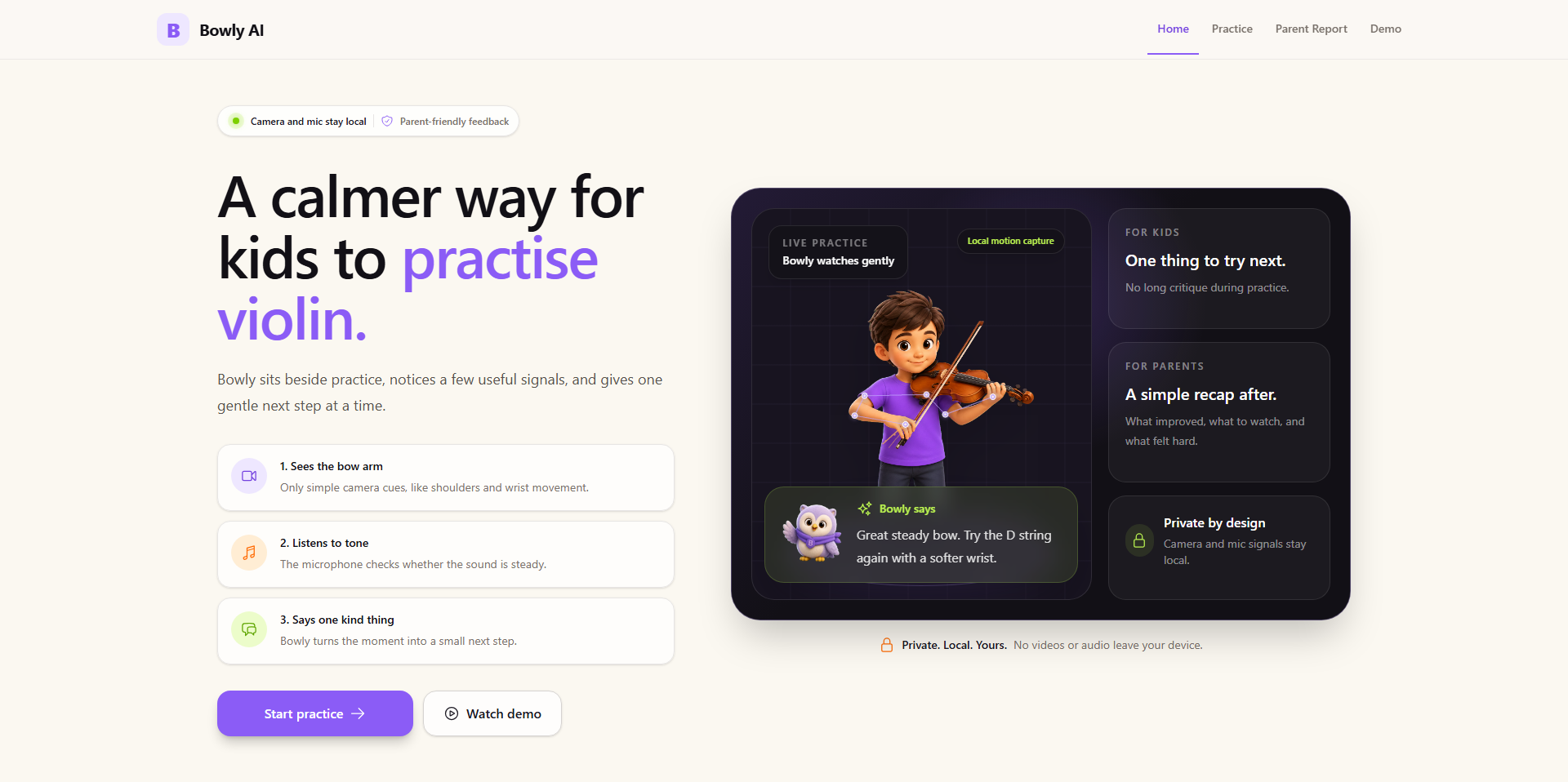
Bowly AI helps young violin learners practice with more confidence. During a practice session, it uses the camera for real-time motion capture of posture, bow arm, and hand movement, while the microphone listens for pitch stability. A pet companion stays beside the child, making practice feel less lonely.
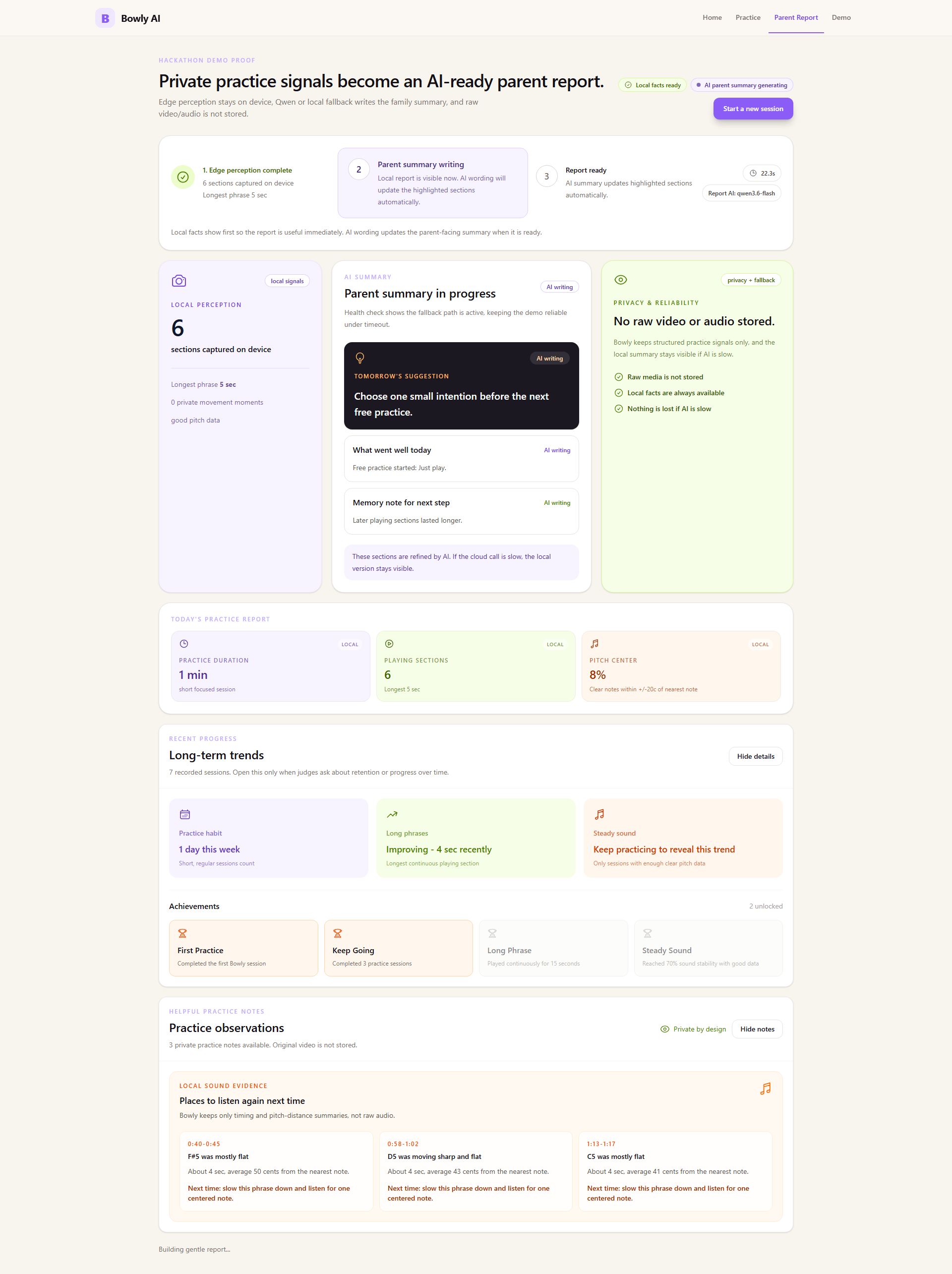
Instead of interrupting every mistake, Bowly waits for a natural pause before giving one gentle suggestion at a time. After practice, it creates a parent-friendly report with meaningful insights about progress, confidence, posture, and sound quality.
How we built it
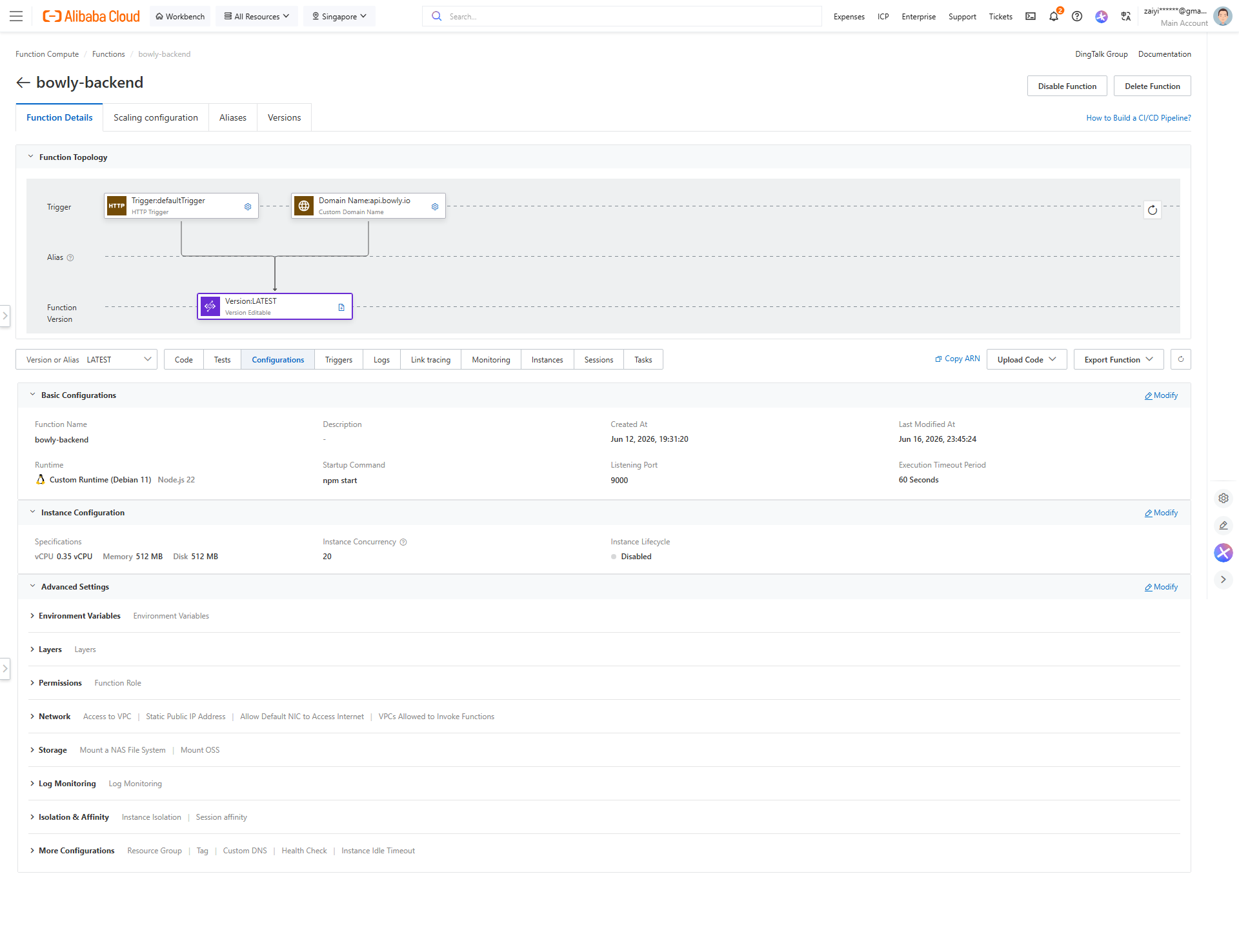
We built Bowly AI as a full-stack web app. The frontend uses Vue, TypeScript, Vite, Tailwind CSS, TensorFlow.js pose detection, hand pose detection, and browser audio analysis. The backend uses Node.js, Express, TypeScript, and Qwen/OpenAI-compatible APIs to turn structured practice signals into gentle coaching and parent reports.
Raw video and audio are not stored. Bowly keeps structured practice signals such as timing, pitch stability, posture observations, and session summaries.
Challenges we ran into
The hardest design challenge was deciding when AI should not speak. Many learning tools interrupt children too often, which can make practice stressful. We focused on timing, restraint, and encouragement: Bowly observes quietly, waits for a natural pause, and then gives one useful next step.
Technically, we also had to balance real-time camera tracking, audio pitch detection, browser performance, privacy, and a child-friendly interface.
Accomplishments that we're proud of
We are proud that Bowly feels less like a grading tool and more like a companion. It combines real-time motion capture, audio listening, a supportive pet presence, and parent reports into one practice flow.
The “wow moment” is that Bowly notices improvement without interrupting the child: it observes, waits, and then says something gentle like, “Nice improvement. Your bow became steadier.”
What we learned
We learned that emotionally intelligent AI is not only about detecting more signals. It is also about choosing the right moment, the right tone, and sometimes staying quiet.
What's next
Next, we want to improve instrument-specific feedback, add teacher-facing review tools, support more practice modes, and make Bowly work across more instruments beyond violin.
Built With
- express.js
- hand-pose-detection
- node.js
- openai-compatible
- pose-detection
- qwen-cloud
- tailwind-css
- tensorflow.js
- typescript
- vite
- vue.js
- web-audio-api


Log in or sign up for Devpost to join the conversation.