-
-
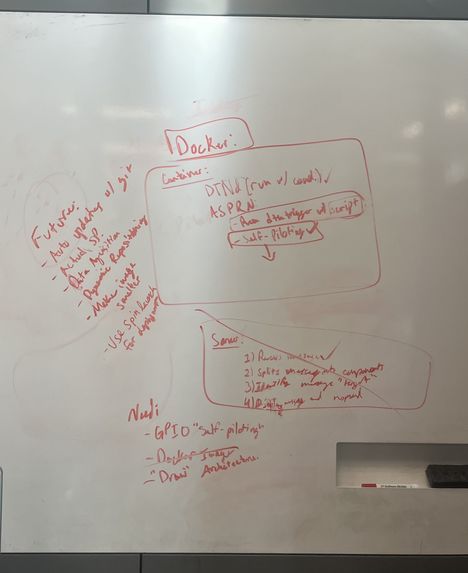
Some scratch work from our ideating process!
-
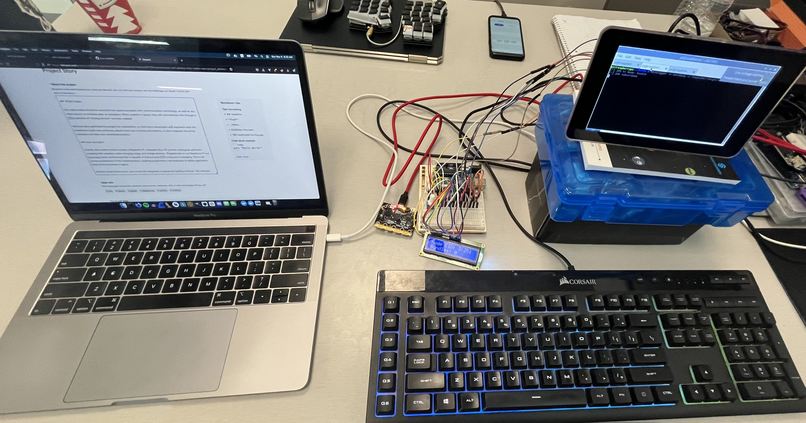
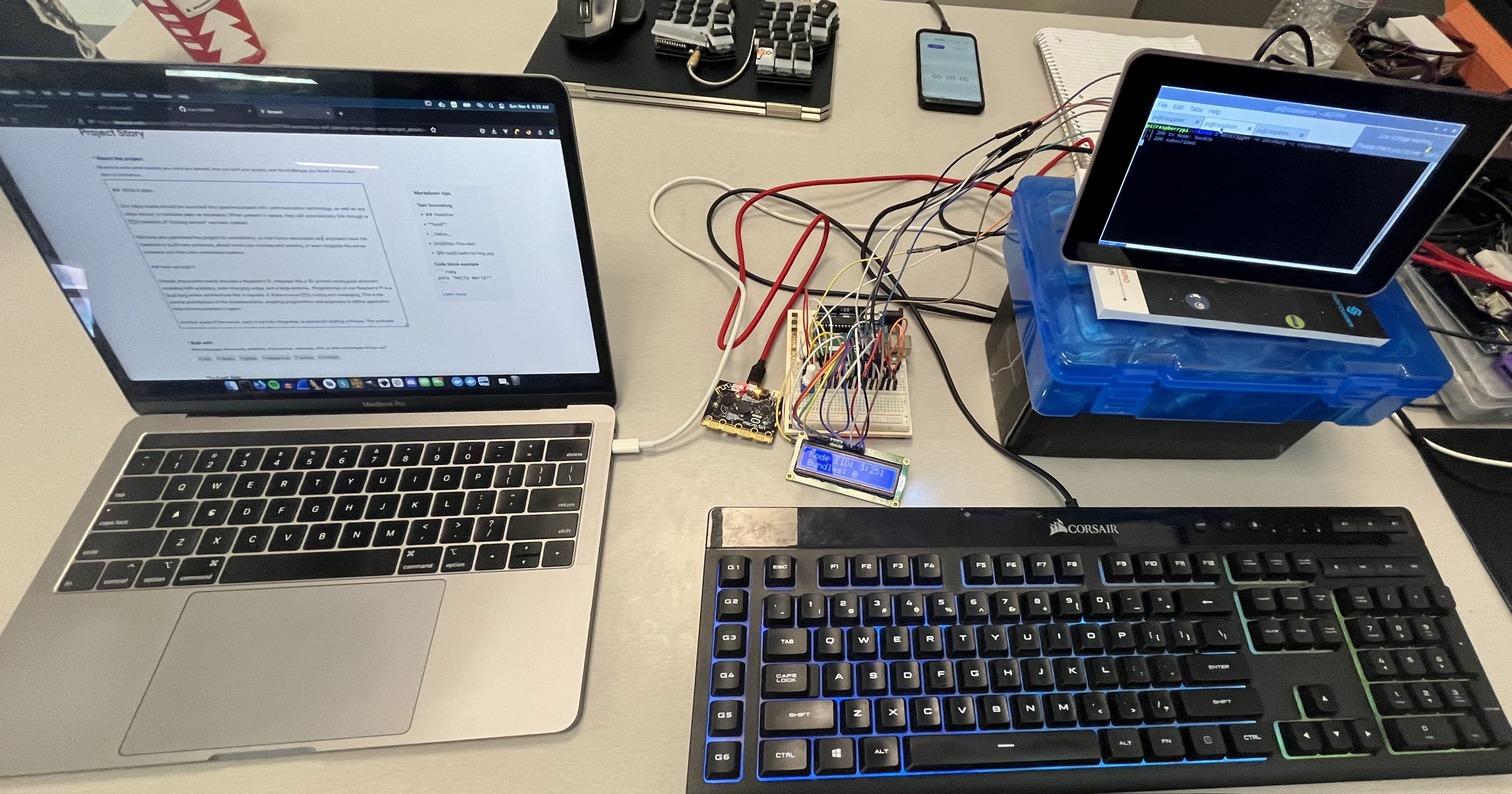
Two simulated nodes communicating over DTN
-
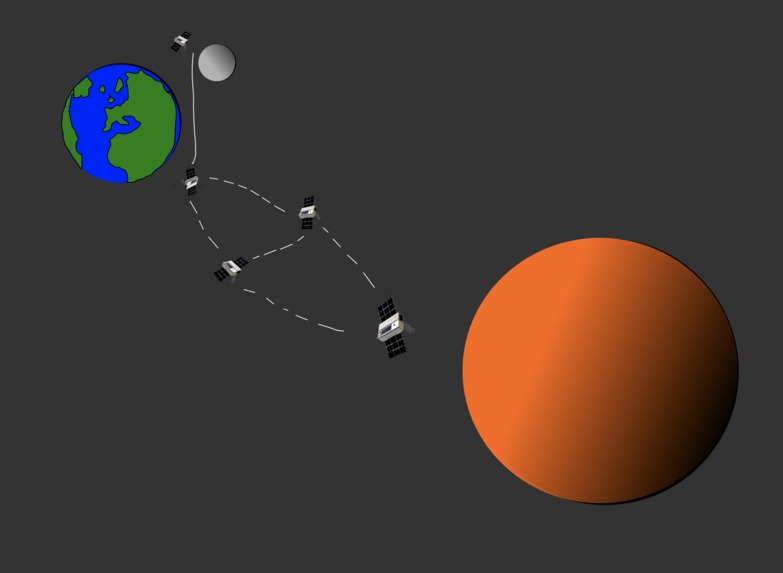
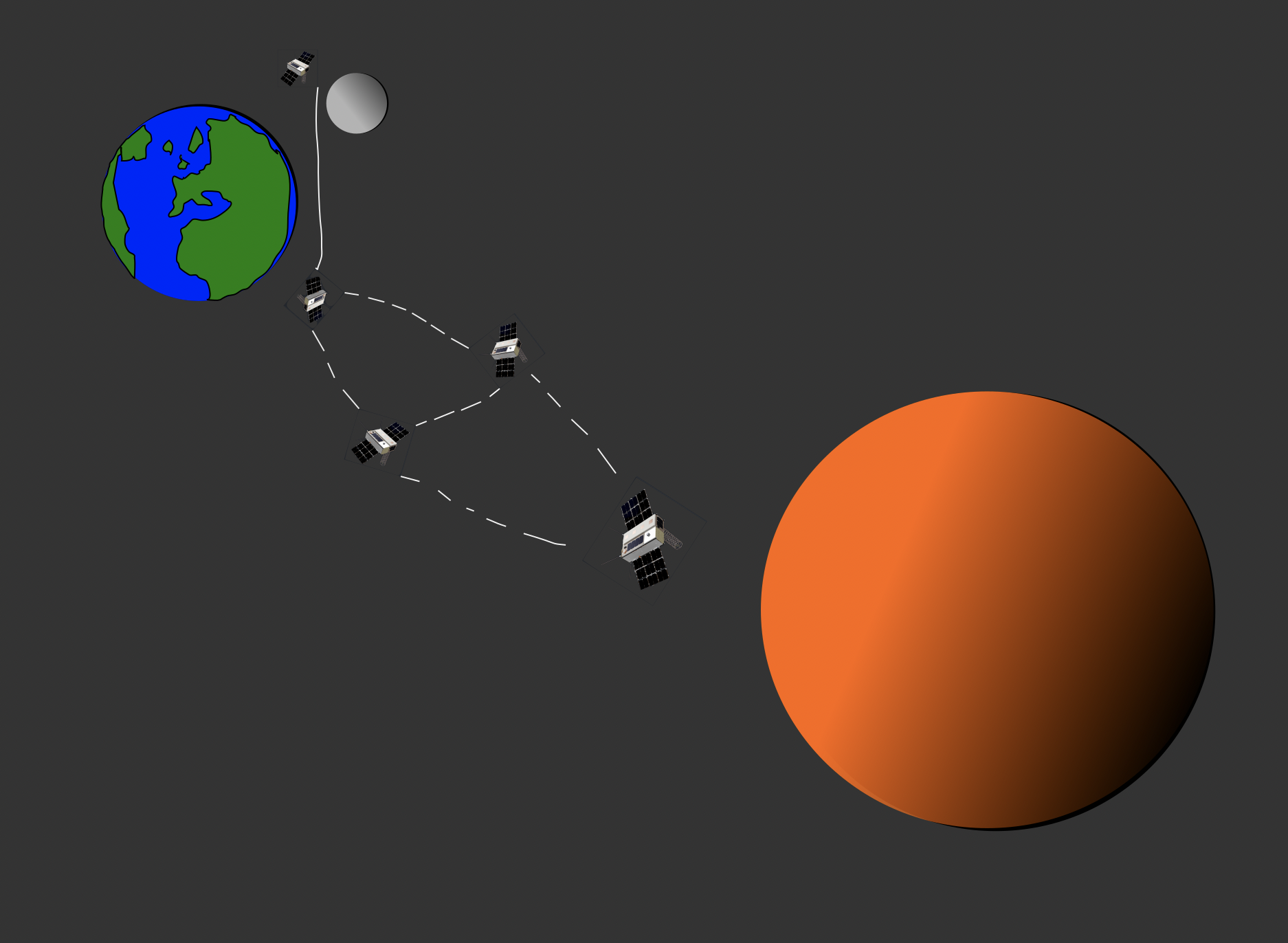
This is the concept of ASPRN. Enabling communication of the future
-
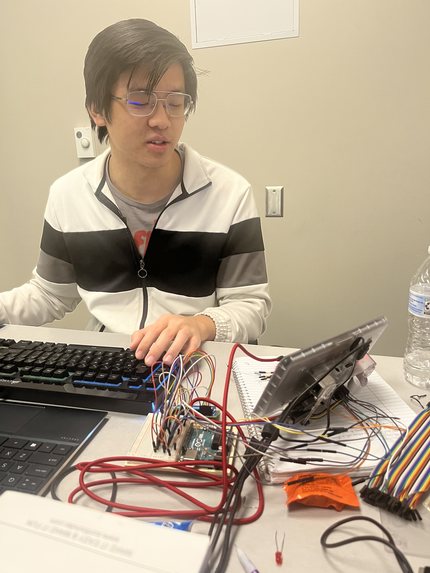
Victor working on guaging the accelerometer with a Raspberry Pi
-
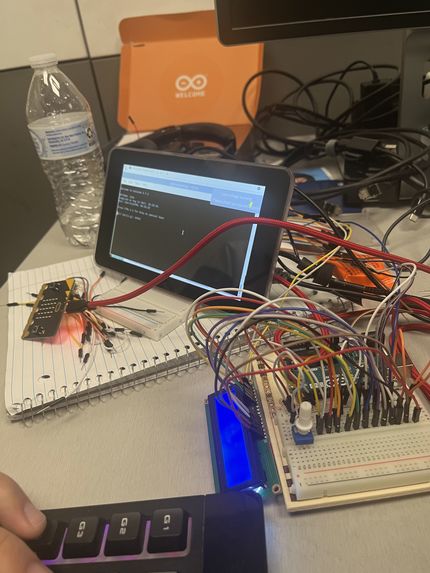
The accelerometer works!



Inspiration
There are problems ranging from CO2 emissions to traffic jams, however, one form of transportation often neglected is of the future: space travel. Space travel is the future, and also affects our lives today with the wealth of scientific data, discoveries, and technologies obtained through space exploration.
However, in order to send astronauts, rovers, and probes deeper into space, we need a reliable communications infrastructure, which is difficult because the space environment is hostile--high delays due to lengthy distances, high bit errors due to radiation, and high disruptions due to large moving objects.
Recently, NASA has been developing a form of communication transmissions called Delay-Tolerant Networking (DTN) to address the issue of space communications. This new protocol can theoretically provide more reliable forms of communication between spacecraft. However, there is no infrastructure to actually run the protocol.
NASA has said that a robust communications is essential to unlocking the full potential of interplanetary space travel. Our idea, Autonomous Self-Piloting Relay Nodes (ASPRN), is a solution to the lack of space communication infrastructure.
What it does
In a nutshell, ASPRN nodes are essentially satellites, that, when deployed in space, will form a communications network that helps to reduce the delay and disruption inherent in space. Each node will run client software that runs DTN protocols.
Our relay nodes will be launched into space equipped with communication technology, as well as any other sensor or modules seen as necessary. When present in space, they will automatically link through a DTN network of "routing servers" we have created.
We have also optimized the project for extensibility, so that future developers and engineers have the freedom to build new protocols, attach more sub-modules and sensors, or even integrate the server software into their own embedded systems.
From a business standpoint, we have already developed the software so that we can install the node client software in one command onto satellite hardware. When launched in space, these satellites will run the necessary protocols and form a backbone network. The next step is to actually acquire the satellite hardware through vendors. A possible solution is CubeSat. Then, we need to partner with rocket companies such as SpaceX to actually launch the nodes into space. As a first step, they can be launched to sit in orbit between Earth, the Moon, and Mars. As space communications become more in-demand, we can monetize by charging for use of our bandwidth.
How we built it
Overall, the current model includes a Raspberry Pi, strapped into a 3D printed rectangular-prismatic encasing with a battery, solar-charging wings, and a large antenna. Programmed on our Raspberry Pi is a Rust-lang server architecture that is capable of Autonomous DTN routing and messaging. This is the central architecture of the implementation, enabling programmers and engineers to define application level communications in space.
Another piece of the server, soon to be fully integrated, is spacecraft piloting software. This software enables the relay node to reposition itself in space for better communications, or to avoid hazards!
Challenges we ran into
At first, we couldn't find much of an existing implementation of DTN to learn from. However, after reading many RFCs and articles, we saw that DTN has an underlying protocol called the Bundle Protocol, which gave us many opportunities to learn from.
Following this, we came to the issue of what the module should look like, and what it should entirely be capable of and responsible for. Overall, we chose to build this platform to suit future engineers and developers, enabling them build off of our model and extend it to suit there purposes.
Accomplishments that we're proud of
We were able to successfully connect two machine through DTN, and build an overlay server with a custom example protocol to send messages back and forth. We also implemented a server which can be easily extensible to other developers. Should a developer want to implement their own communication protocol, all they have to do is follow our ExampleProtocol example.
Another part of the project we're proud of so far is the Docker containerization, which makes the process of reproduction much smoother than before. Should a scientist or engineer want to test our module, all they need to do is follow the guide on our Github.
What we learned
- Space tech is much more unintuitive than one would expect
- There is always a way to get a job done, but sometimes it requires technology that you're not familiar with
- The Delay-Tolerant Network is the future of interspatial communications, and what the cutting edge of space networking involves
- Embedded systems programming with microbit, LCDs, and accessing peripherals
What's next for Autonomous Self-Piloting Relay Nodes
- Adding sensors to ASPRN node to collect space data
- Build auto update scripts w/ git hooks
- Implement space data aquisition (Google maps, but the solar system (Google Solar))
- Dispatch reposition coordinates to nodes (ground piloting, advanced route planning)
- Use the SpinLaunch platform for individual node launches


Log in or sign up for Devpost to join the conversation.