


Inspiration
- Build a world where robots and humans work together to improve efficiency/productivity in the healthcare sector
- Contribute meaningfully to the rising concern of longer-term professional vacancy
What it does
- Robots help nurses efficiently organize and record each patient’s details, reducing administrative overhead.
- Equipped with interactive screens, families can easily book appointments to see and speak with their loved ones.
- They assist with daily tasks such as maneuvering wheelchairs, offering a friendly and reassuring presence, and even maintaining the cleanliness of the retirement home.
How we built it
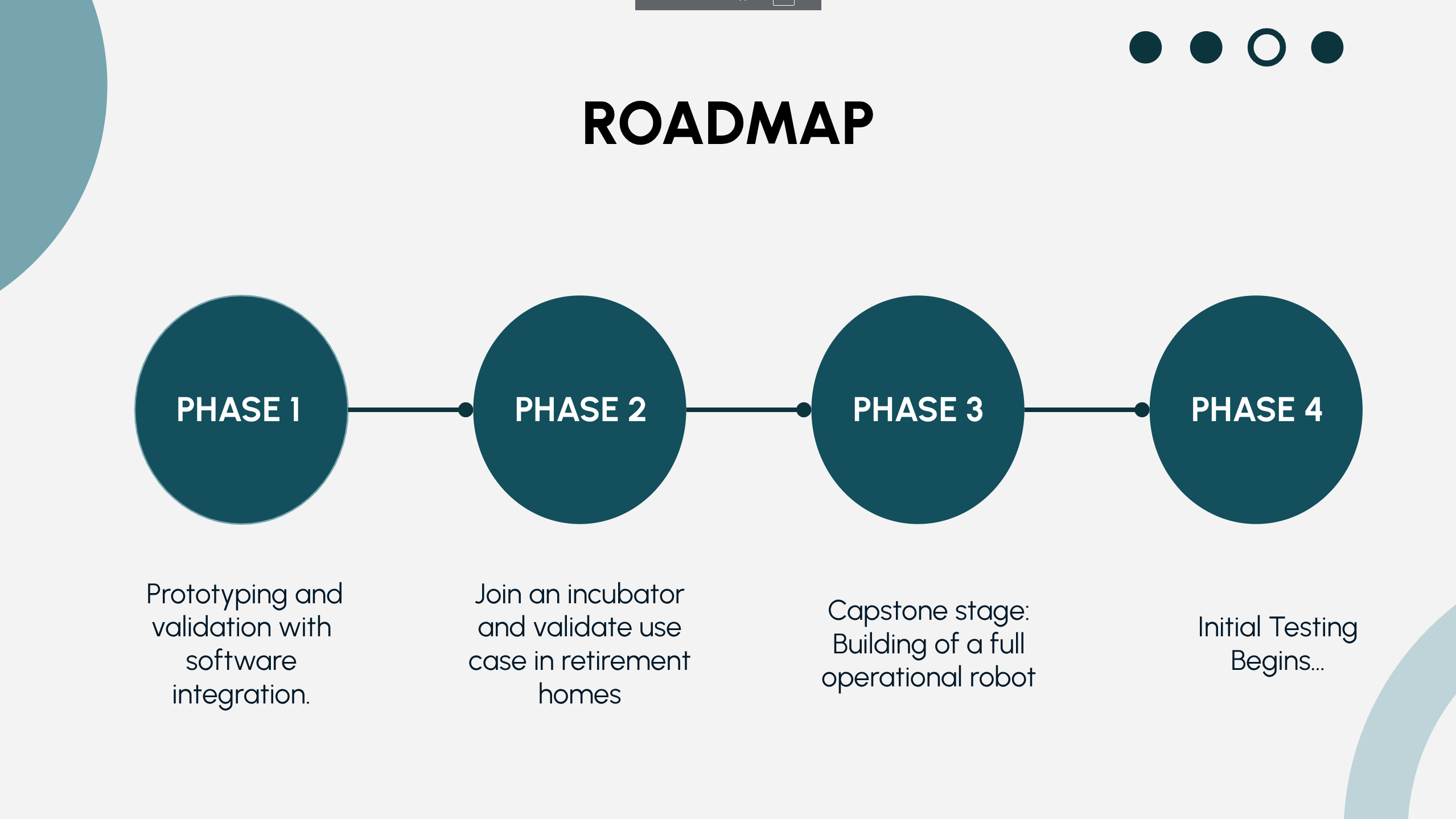
Using direct servo motors to create a 6 DOF robot arm, 3D printed in our first phase. After this, we validated the concept with software integration with manipulation path planning. Finally, we're now considering developing a semi-humanoid with a mobile base to assist nurses at the retirement home.
Challenges we ran into
- Software issues with the motors
- 3D printed material breaking too easily and often
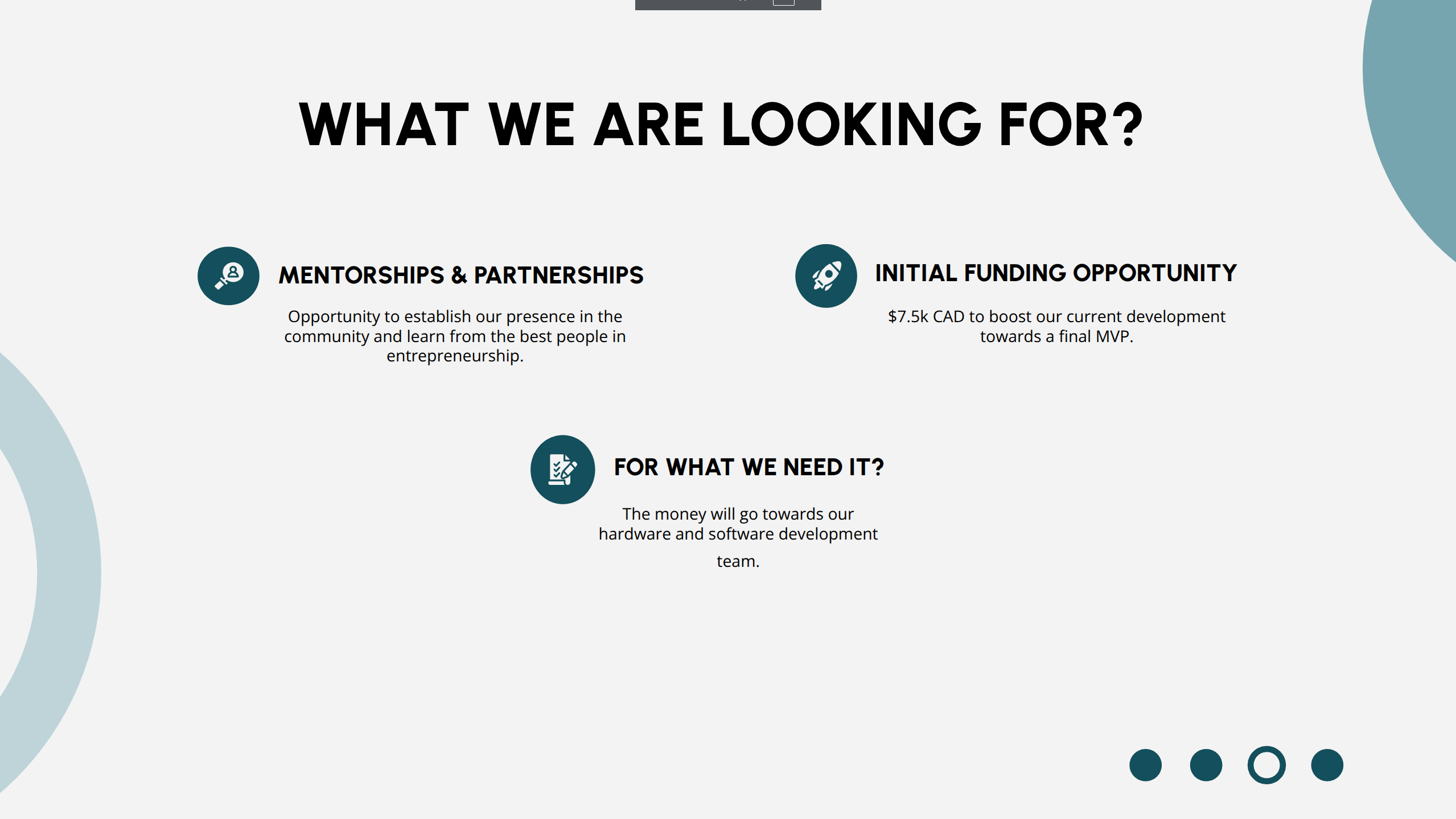
- Finding the necessary funding to finalize our MVP
Accomplishments that we're proud of?
We got to work on a dashboard concept that showcases how the robot could be supervised by the staff at the retirement homes, and previous development before the hackathon is something to be very proud of.
What have you learned
We've learned that there is a shortage of nurses in retirement homes, and robotics has the potential to overcome this obstacle.
What's next for Autonomous Retirement Home Assistant (ARHA)?
Our next goal is to develop the first working prototype of ARHA during our capstone project at Ontario Tech University. This phase will focus on integrating hardware and software components to create a functional robotic assistant capable of supporting nurses in retirement homes.
Summary
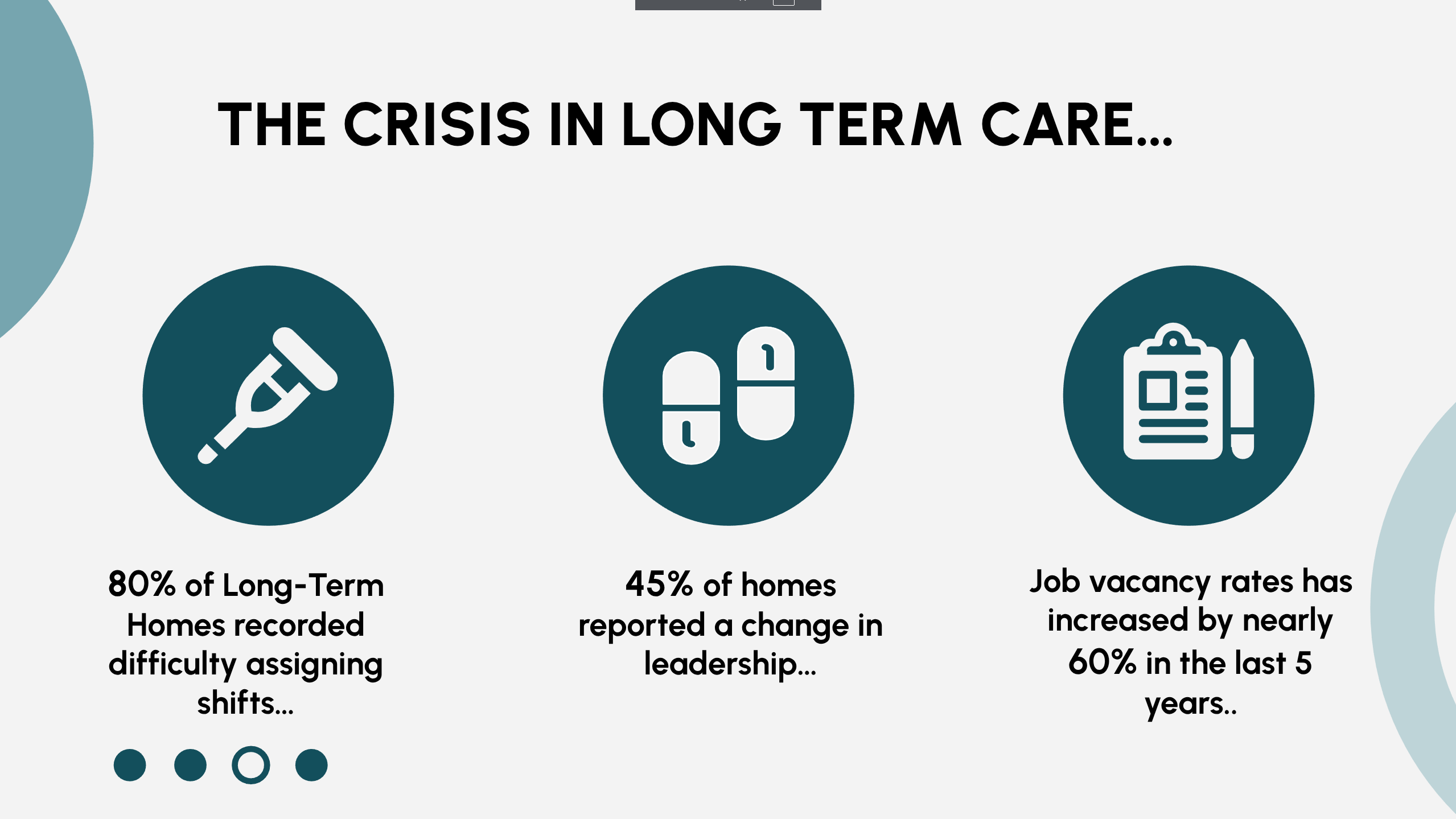
A recent census done by Statistics Canada, reveals a growing concern for all health professionals in Canada. The median age of the average Ontarian is around 40 years old, meaning that in the coming decades, there will be an overflow of venerable citizens being registered into long-term homes. Unfortunately for Ontario, the demand for long-term care assistants is diminishing rapidly, with 60% reporting job vacancy, due to the difficult working conditions and high levels of stress. This is further exacerbated by the internal structural inefficiencies that are currently taking place at these long term homes, with 45% reporting a change in leadership and management. These combined market forces continue to highlight this issue, however providing a market gap between the high demand of care needed for long-term homes, with the significantly short supply.
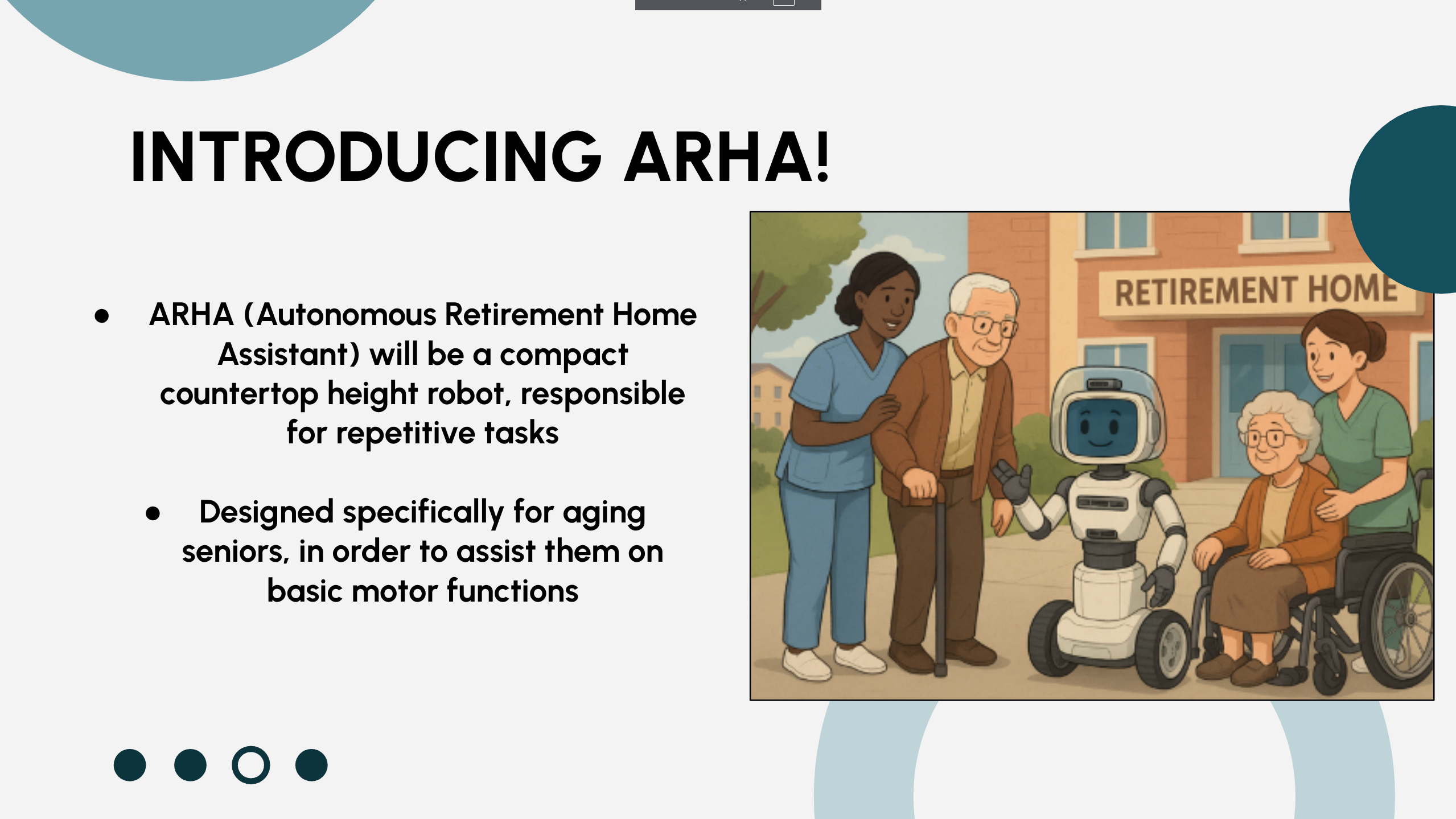
Our project, ARHA (Autonomous Retirement Home Assistant) addresses this by deploying autonomous machines at these care homes in order to assist nurses on day-to-day tasks. The intended function that ARHA performs is to distribute medicines to patients, set-up basic telepresence functionality, assist in motor function/stability, and maintain a clean environment at these homes. The goal of ARHA is to remove a lot of the burden from long-term care workers, such that menial tasks that require limited human oversight can now be completed by an autonomous robot. The design of ARHA is simple, with two dextrous arms simulating a human with a joint at the elbow and five fingers to hold small objects like capsules/pills etc. To give the robot user-friendly appeal, we aim to have a screen as the face where nurses can interact, and delegate tasks effectively from its UI/UX. ARHA will move through rotors, having four wheels on swivel to perform quick maneuvers, and reduce overall complexity. Each robot will have a tracker indicating their location with respect to the building layout, each identifying what tasks they are performing and what they have already completed. This can be accessed through our website, transporting the user to a database of all the robots, providing live feeds to promote greater transparency and supervision when it comes to monitoring their functionality. The telepresence portion of the product is something critical we want to highlight as it is vital for care and nursing for the elderly. The basic software functionality is that families will be able to set-up calls through ARHA at allotted times to their family members, allowing them to chat in real-time. One of the key challenges in many care homes is the lack of consistent oversight and the spontaneous nature of family members wanting to connect with their loved ones. When in-person visits are not possible, technological barriers often make virtual communication difficult. By enabling direct interaction between families and ARHA rather than relying on the care home as an intermediary this system removes friction, improves response times, and offers patients meaningful social interaction with their loved ones at any time of day.
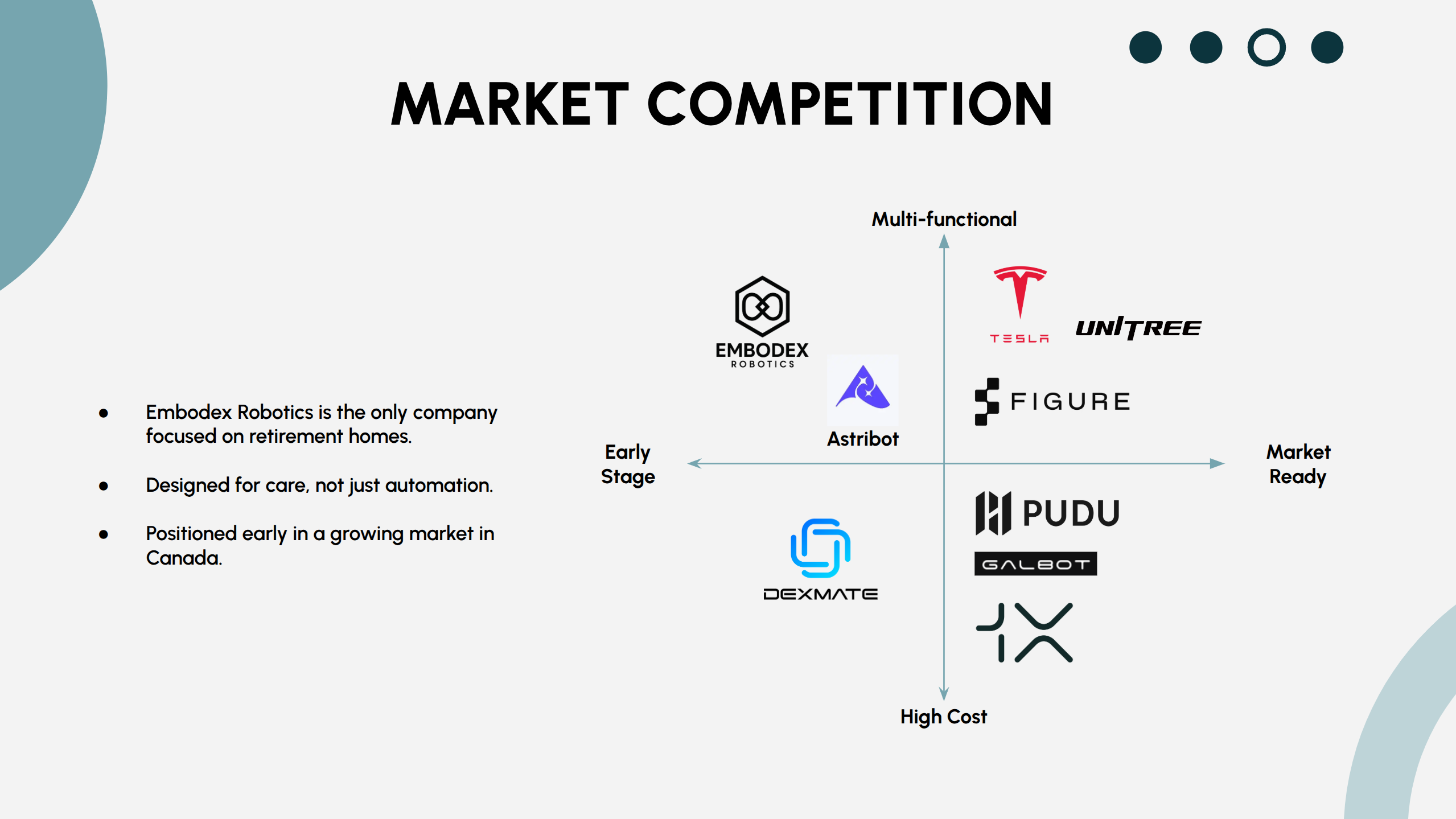
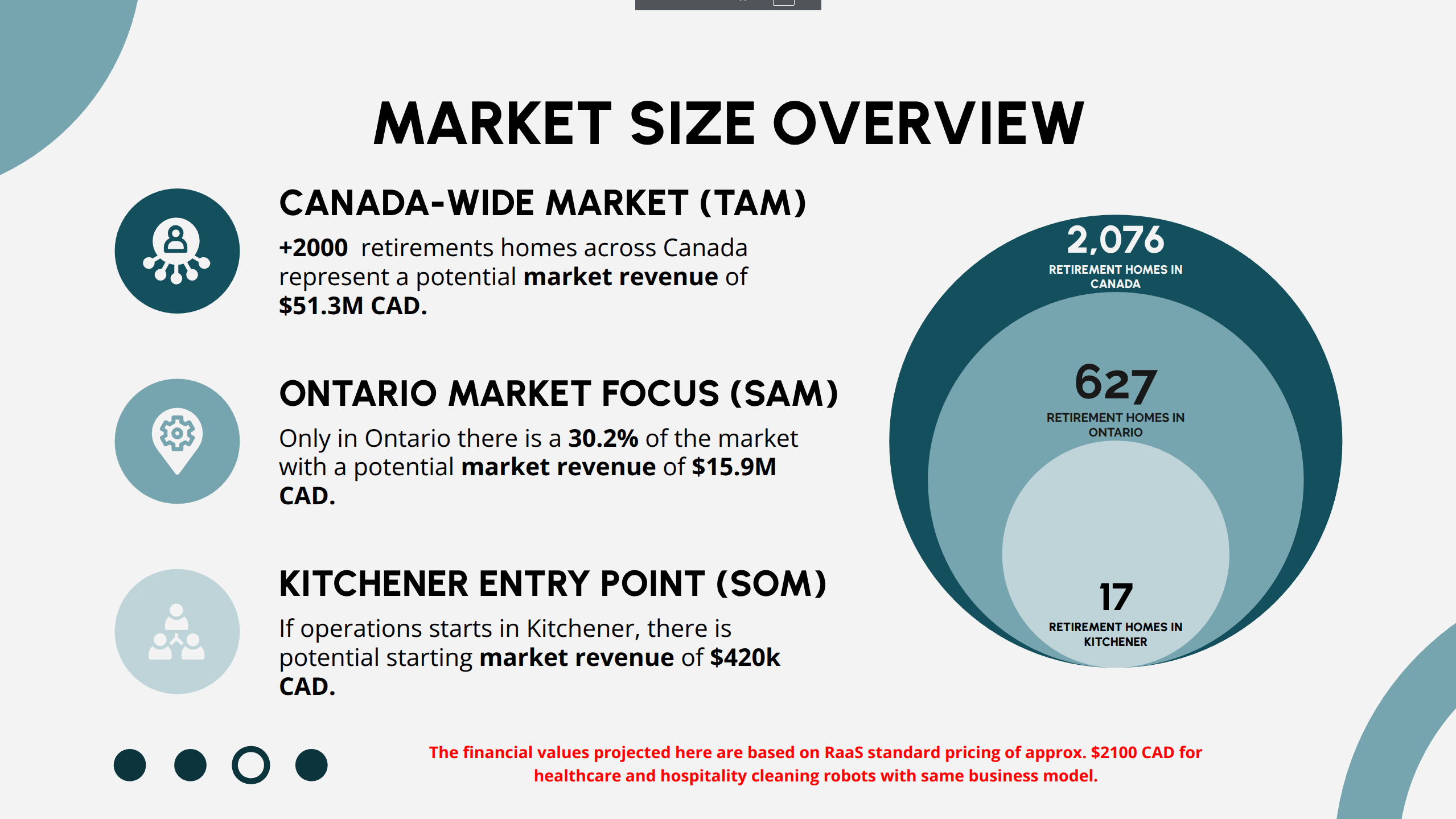
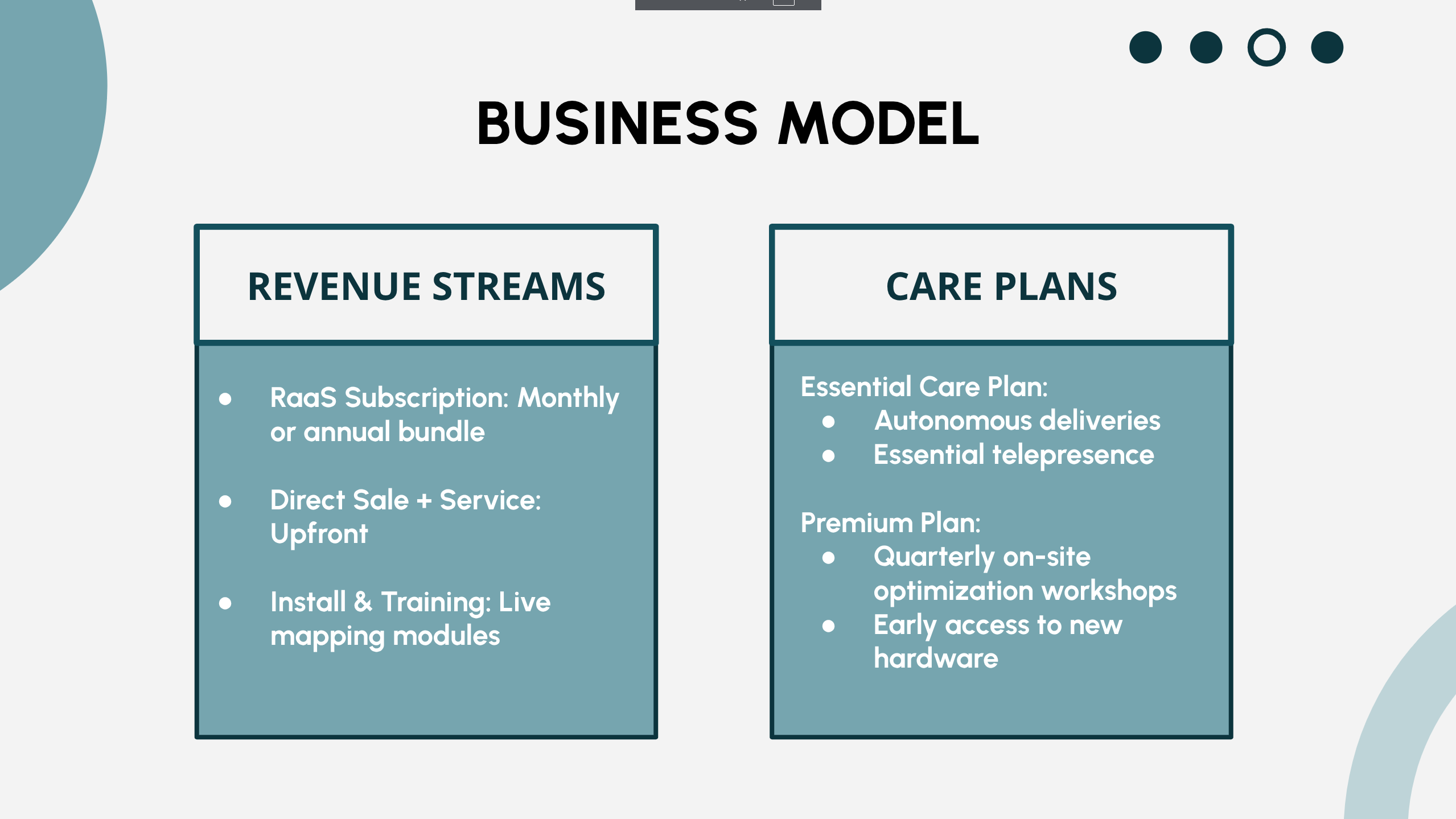
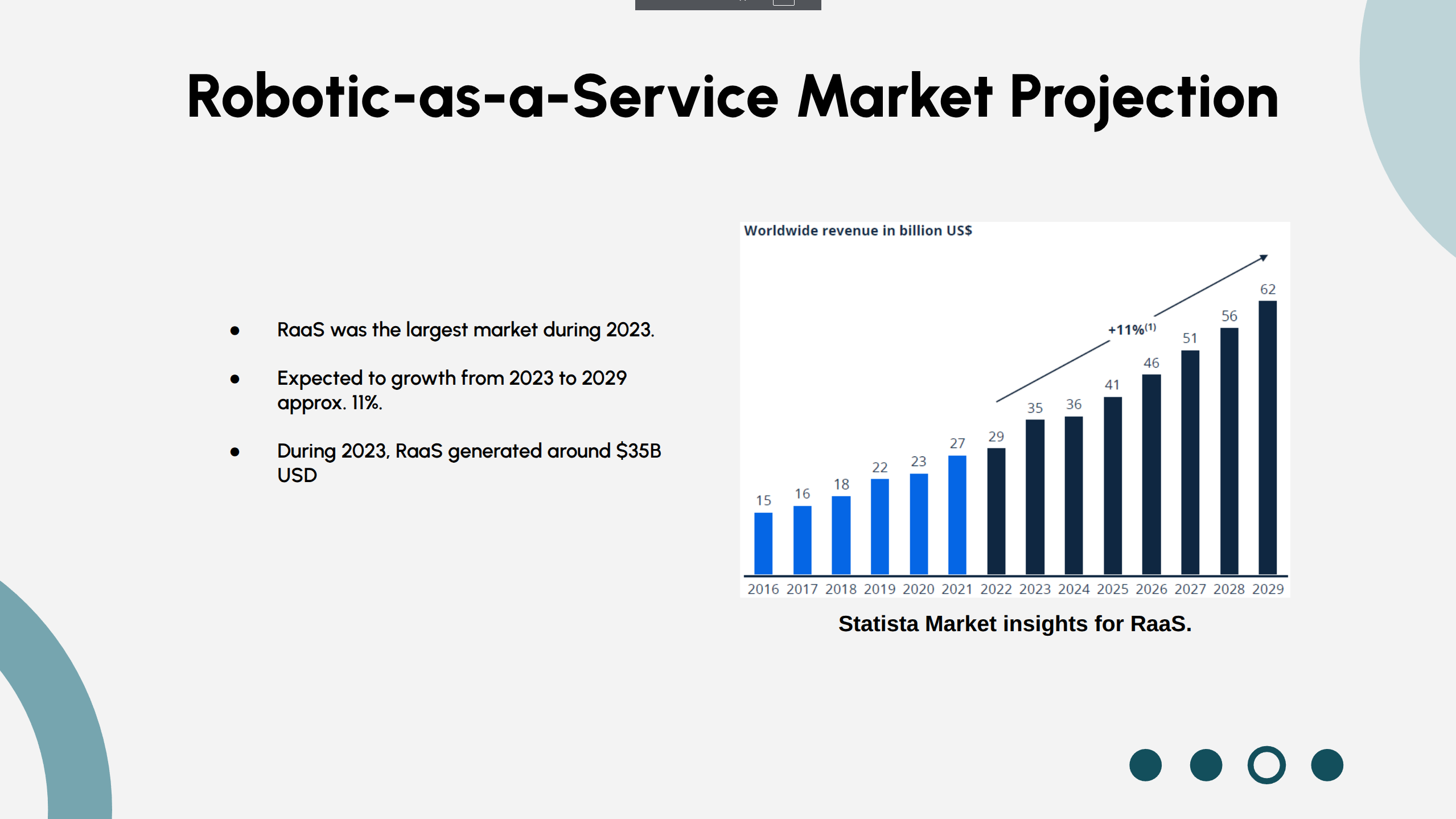
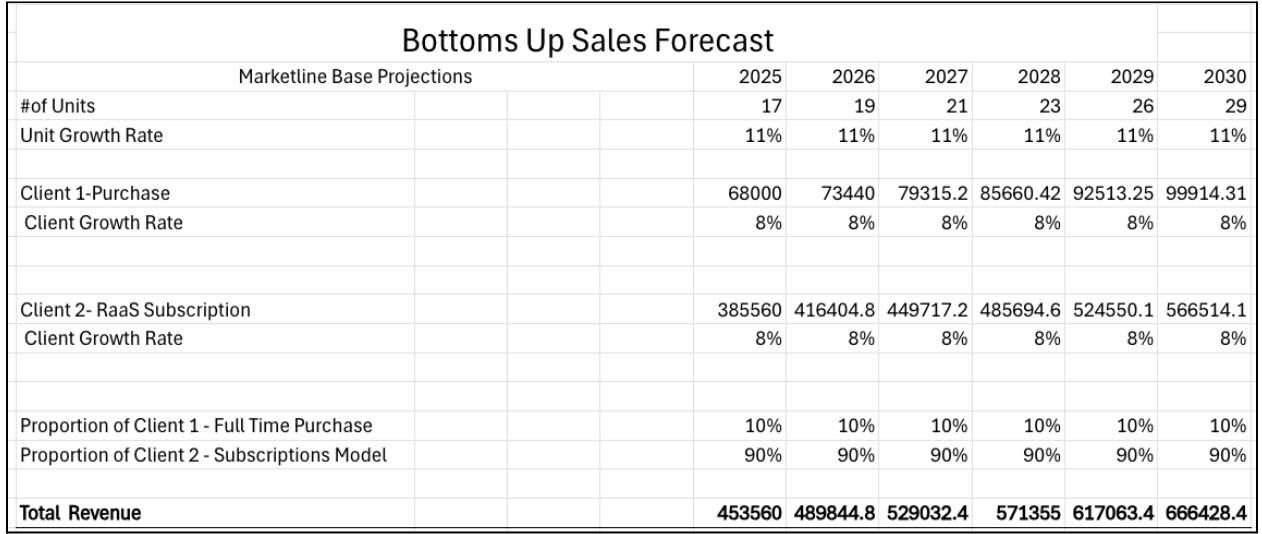
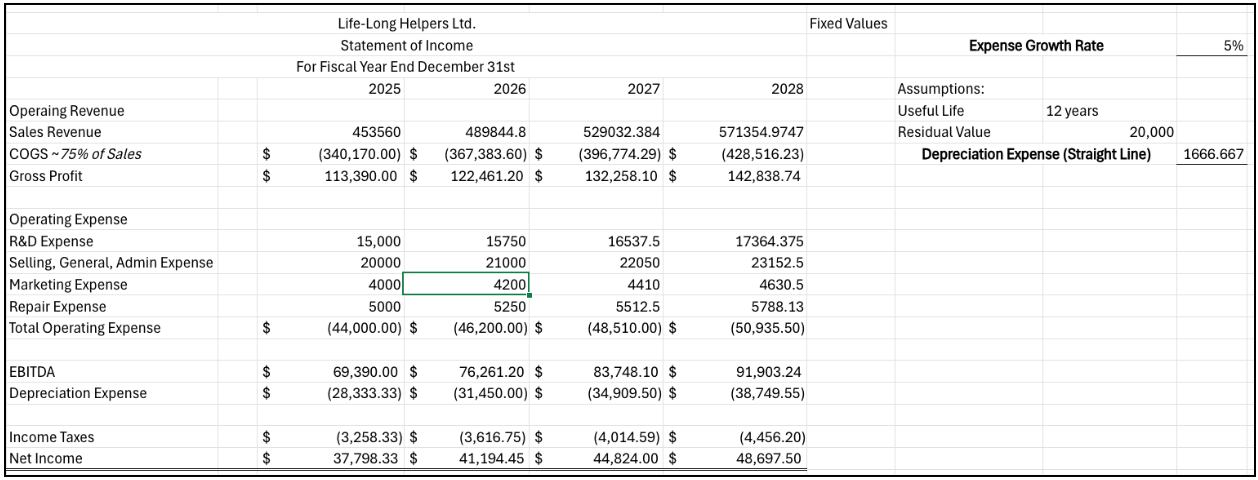
Market trends reveal that ARHA presents a unique value proposition as a RaaS (Robot as a Service). Many competitors making autonomous machines are applied to different sectors, as seen with Figure AI’s purpose of streamlining the supply chain, and the Tesla bot with warehouses. The total addressable market ARHA addresses amount to a market revenue of $51.3M CAD, as there are approximately +2000 retirement homes across Canada. Regarding our main revenue streams, we will have two main clientele, those who purchase ARHA for a flat fee and a subscription model targeted to be a cheaper alternative. When doing our bottoms-up sales forecast we gave a conservative estimate of an 8% growth rate which was derived from an overall 11% increase in revenue growth from robotic products. This resulted in sales revenue of $533,600 CAD and an over net income of $70,816 CAD for year 1 (See below for projected financial statements).

Log in or sign up for Devpost to join the conversation.