-
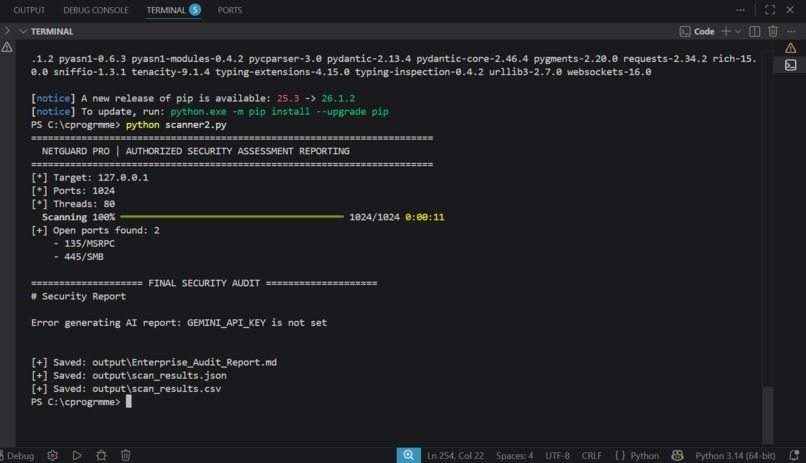
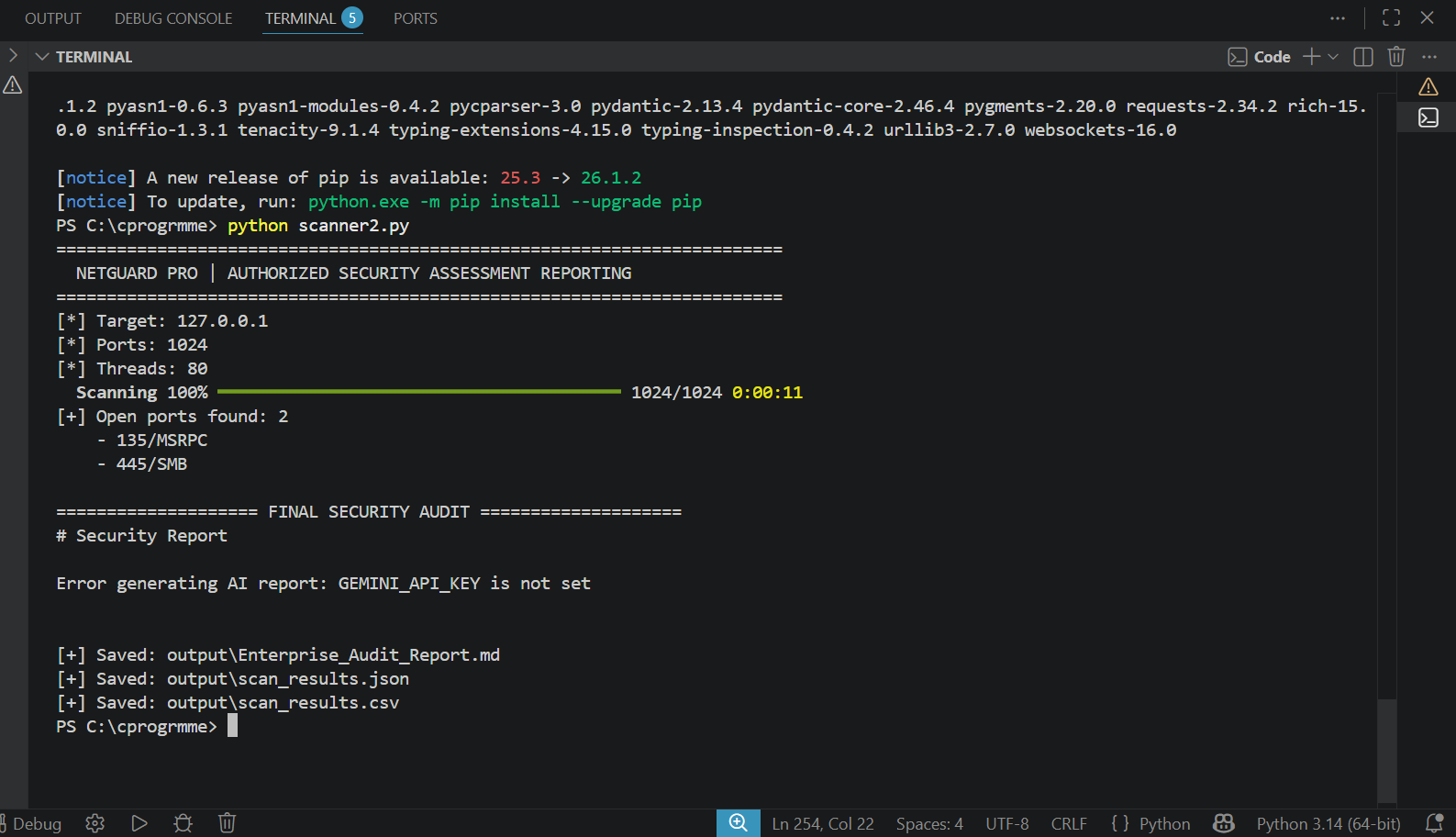
project result in vs code's terminal
Inspiration
Manual network auditing is time-consuming and often misses complex routing misconfigurations. We wanted to build a solution that automates structural vulnerability detection while utilizing AI to instantly provide human-readable security overviews and remediation paths.
What it does
NetGuard.AI is an automated pipeline that actively scans networks for open ports and infrastructure configuration flaws. The discovered asset log is automatically parsed through an LLM engine to deliver immediate threat definitions, severity ratings, and actionable mitigation playbooks.
How we built it
The core network probe and packet validation logic were written in Python, combining low-level socket handling with automated data structuring. The diagnostics are then formatted into targeted prompt matrices and processed via a secure API interface with an advanced LLM model to generate real-time compliance audits.
Challenges we faced
Handling real-time network timing timeouts and optimizing prompt structures to prevent AI hallucinations during precise technical mapping were key technical hurdles. We resolved this by fine-tuning data preparation blocks before passing the logs to the model.
Accomplishments that we're proud of
Successfully generating a fully dynamic, technically accurate network defense report in seconds without requiring manual analyst translation.
What we learned
We gained deeper insight into structural automation, integrating LLMs into raw technical telemetry, and formatting markdown outputs effectively under tight processing limits.
What's next for NetGuard.AI
We plan to introduce live visual topology maps, automated patch deployment hooks, and native deep-packet anomaly detection for enterprise routers.


Log in or sign up for Devpost to join the conversation.