-
-
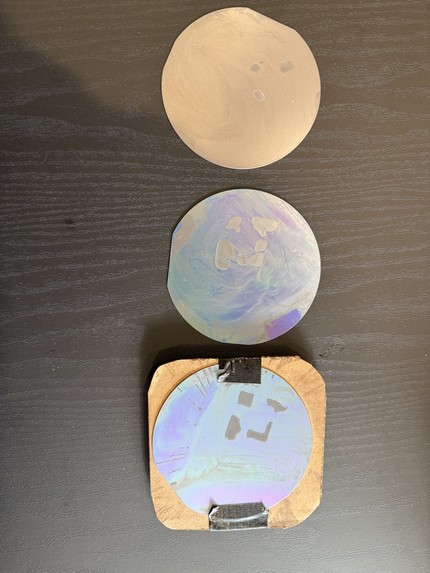
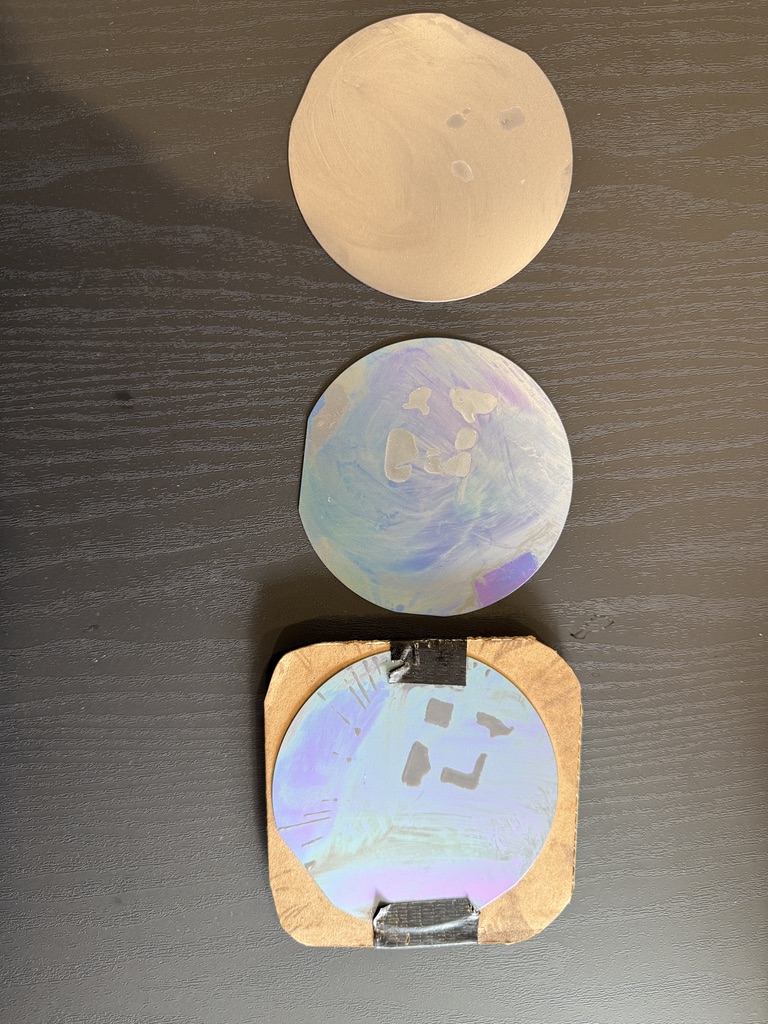
3 UV resin results, showing improvement in quality
-
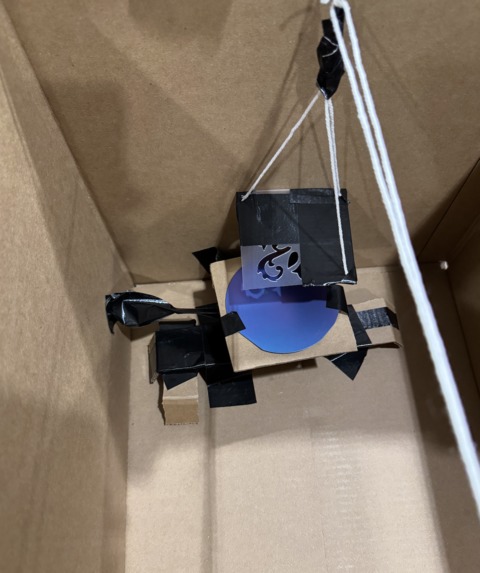
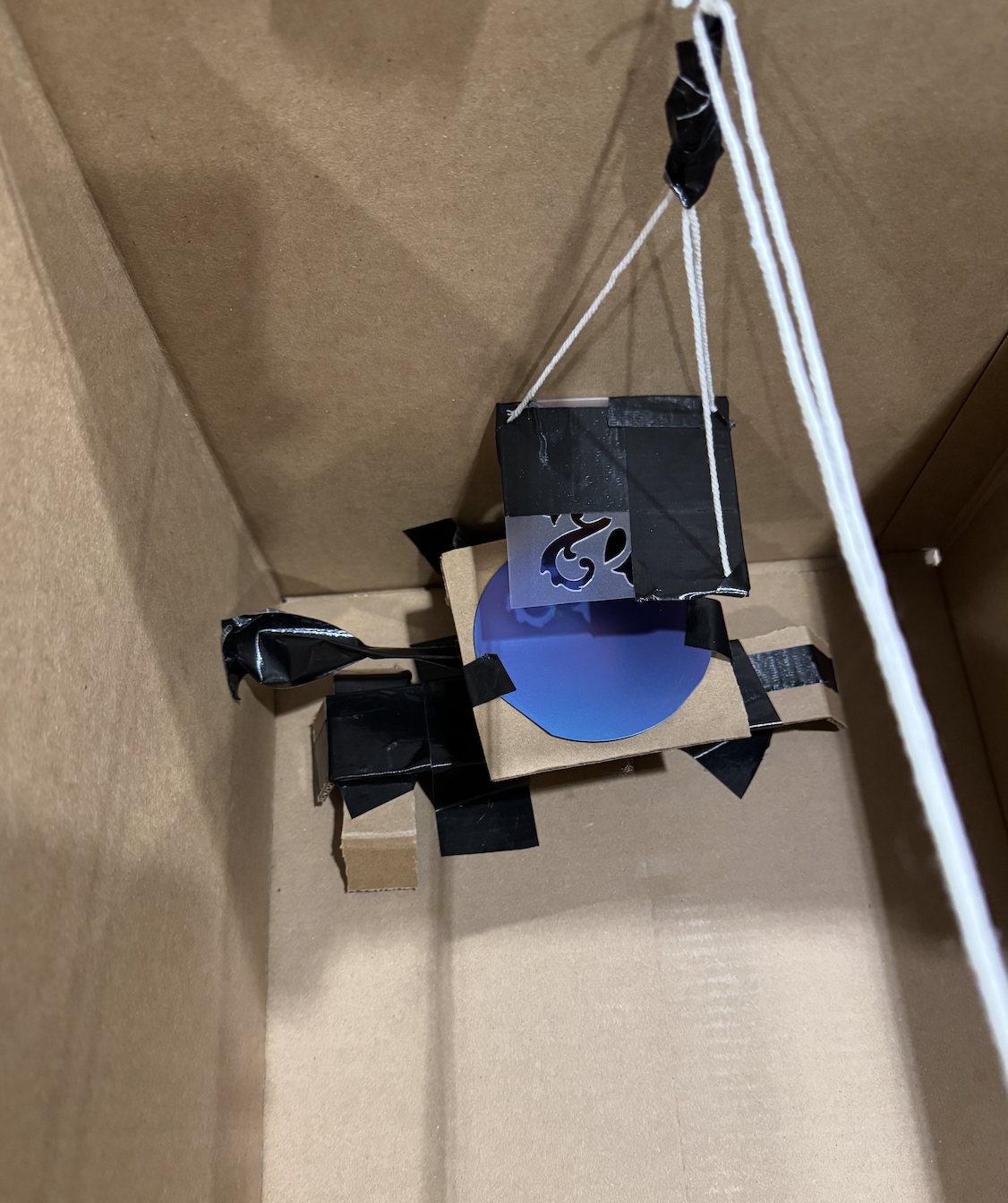
lithography mask in UV light applied to wafer
-
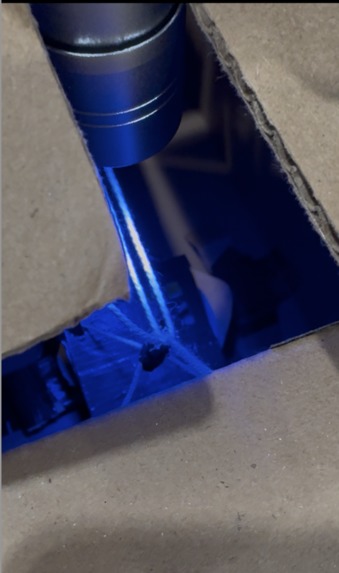
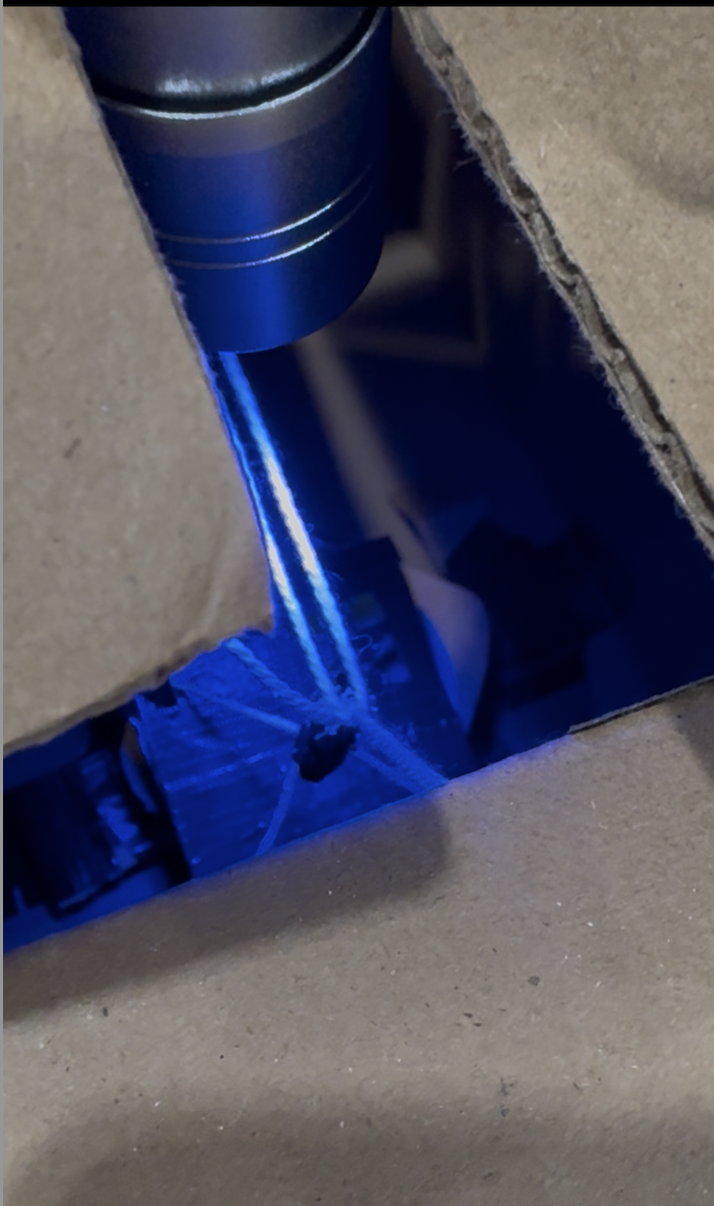
UV light shining in enclosed system
Inspiration
AI compute demand is growing exponentially, but hardware scaling is slowing. Global data center energy consumption is projected to approach 1,000 terawatt-hours annually by 2030. Moore’s Law is decelerating. Dennard scaling is dead. Power per transistor no longer drops automatically with scaling.
At the same time, semiconductor fabrication still relies heavily on manual experimentation and heuristic tuning. Each material change, exposure adjustment, or process tweak can require dozens to hundreds of experiments. Human expertise is scarce, and iteration cycles are slow.
Scientists want to run thousands of experiments to improve the chip development lifecycle, but are bottlenecked by time and resources.
We asked: what if fabrication itself became autonomous?
What it does
Autonomous fabrication is a fully closed-loop, agent-driven fabrication system that designs, executes, evaluates, and improves its own fabrication experiments.
Our system automates a lithography-inspired process:
• Spin coating • Material deposition • Mask alignment • UV exposure • Development • Computer vision inspection
An intelligent agent controls every step, evaluates pattern fidelity against a target objective, and iteratively improves process parameters using an evolutionary search.
In parallel, we built a simulation environment for inverse lithography. The agent can optimize photomask geometry digitally, then transfer those priors to the physical system.
Core capabilities:
• Real-time physical process control • Automated experiment orchestration • Evolutionary parameter search • Objective-driven pattern optimization • Material-agnostic modular design
This is not a single demo setup — it’s a paradigm. We have tested:
• Glass wafers • Silicon wafers • UV resin • PCB photoresist
The framework allows swapping materials, substrates, and objectives. As long as an optimization goal is defined — linewidth accuracy, uniformity, defect rate, yield — the agent can search for better fabrication strategies.
How we built it
Hardware stack:
• Custom spin coater driven by DC motor • Servo-controlled material deposition • Adjustable photomask alignment • UV exposure system • Continuous high-resolution camera feedback
Software stack:
• Evolutionary hill climbing for parameter search using agent workflows • Computer vision-based pattern scoring • Simulation-based inverse lithography for mask optimization • Vercel website showing our results and methodology
The agent runs autonomous experiments and converges toward improved fabrication outcomes.
Challenges we ran into
Physical fabrication is noisy and nonlinear.
We encountered:
• Viscosity variability across materials • Lighting instability affecting computer vision • Mechanical vibration during high-speed spin • Sensitivity of exposure timing
The hardest challenge was not automation — it was building a stable, repeatable physical loop that could serve as a reliable optimization environment.
Accomplishments that we're proud of
• Built a fully autonomous physical fabrication loop • Integrated simulation-based mask optimization with real-world control • Demonstrated closed-loop convergence toward amazing pattern fidelity
In 36 hours, we transformed fabrication from a manual process into a searchable optimization landscape.
What we learned
• Fabrication behaves like a high-dimensional optimization problem • Small parameter changes produce nonlinear physical effects • Simulation alone is insufficient — physical feedback is essential • Technique innovation can rival hardware innovation • Once fabrication becomes programmable, it becomes discoverable
We also saw how a virtuous cycle can emerge:
Better fabrication enables more efficient AI models. Better AI models enable smarter fabrication optimization. And the loop accelerates.
What's next for Autonomous Nanofabrication
Expanded Process Support Multi-layer fabrication Etch and deposition analogs 3D stacking workflows
Advanced Optimization Intermediate reward shaping from continuous video streams Multi-objective optimization (yield + power + resolution) Transfer learning from simulation to physical experiments
Novel Materials Exploration Gallium nitride analogs Oxide-based processes Carbon nanotube-inspired architectures 2D material-compatible patterning regimes
Autonomous Technique Discovery Multi-step spin recipes Multi-exposure patterning strategies Emergent multi-patterning behaviors Adaptive process window discovery
Our long-term vision is to create a scalable, autonomous fabrication infrastructure capable of accelerating the discovery of new materials and fabrication techniques — unlocking lower-power, higher-performance chips for the next era of AI.
Built With
- claude
- hands
- openai
- openevolve
- pytorch
- verifiers(primeintellect)


Log in or sign up for Devpost to join the conversation.