-
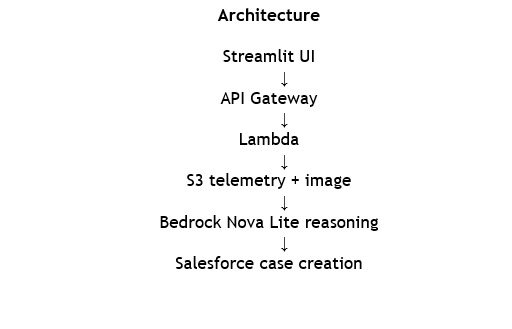
MachineGuard-Architecture
-
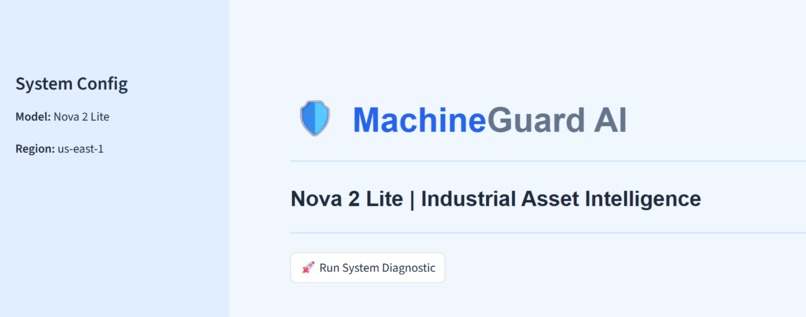
MachineGuard-UI Screen
-
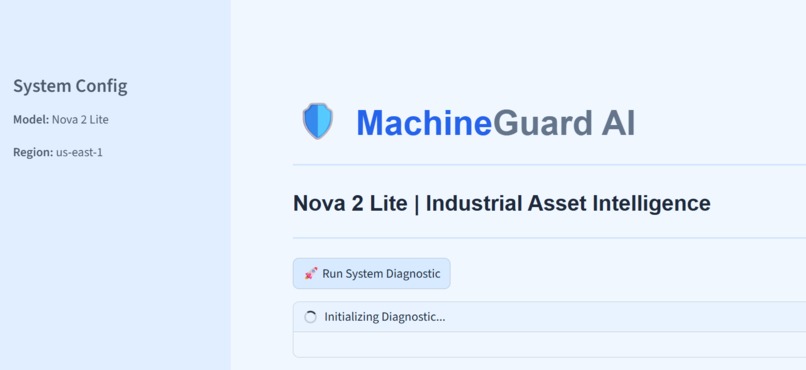
MachineGuard-System Diagnostic in Progress
-
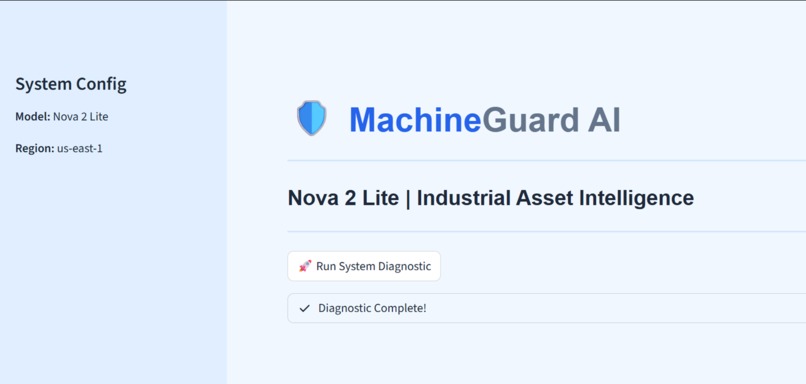
MachineGuard-System Diagnostic Complete
-
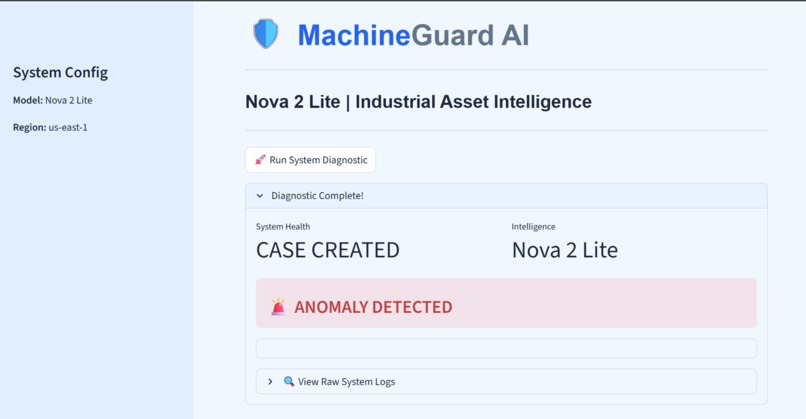
MachineGuard-Anomaly Detected
-
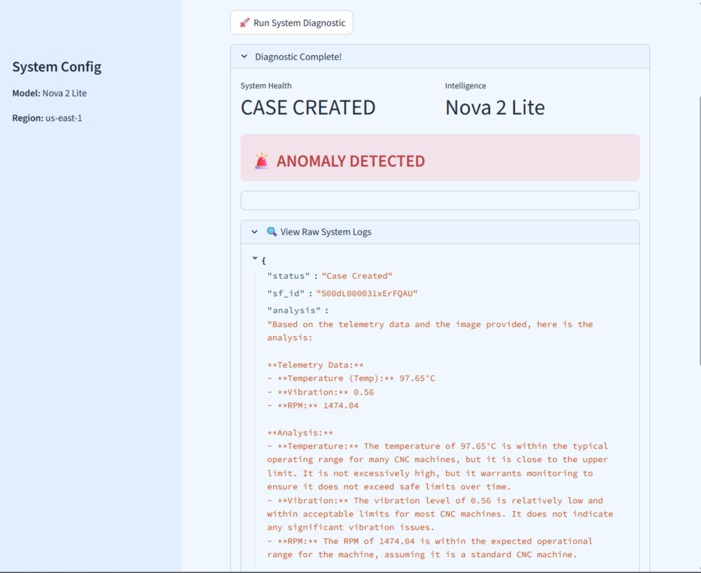
MachineGuard-Nova Reasoning
-
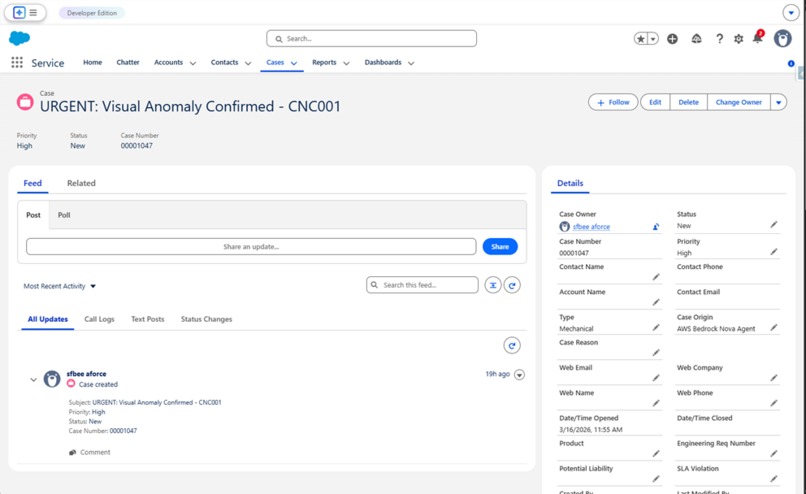
Salesforce-Anomaly Case created with urgent Subject title
-
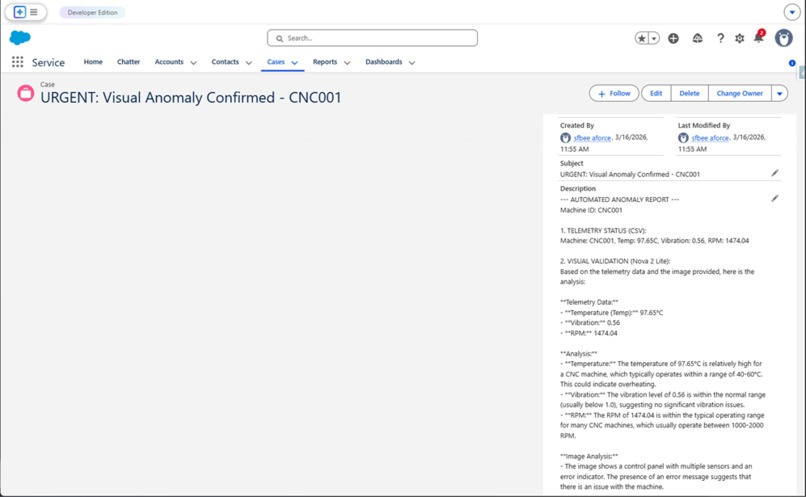
Salesforce-Case description from Nova 2 Lite Reasoning


Inspiration
Modern manufacturing environments generate vast amounts of machine telemetry data—temperature readings, vibration levels, spindle speeds, and other operational signals. While these data streams contain early indicators of equipment failure, they are often difficult for operations teams to interpret in real time. Unplanned downtime can cost manufacturers millions of dollars annually, and many failures could be prevented if anomalies were detected and acted upon earlier. This project was inspired by the idea of combining predictive analytics with generative AI to create an intelligent system that not only detects anomalies but also explains them and automatically triggers operational responses. By integrating machine learning with AI reasoning powered by Amazon Bedrock and the Amazon Nova Lite model, we wanted to demonstrate how AI can transform raw machine data into actionable operational intelligence.
What it does
The Autonomous Manufacturing AI Agent monitors machine telemetry data and detects abnormal operating patterns that may indicate potential equipment failure. When anomalies are detected, the system retrieves the relevant telemetry signals and diagnostic imagery, analyzes the information using AI reasoning, and generates insights about the potential issue. It then automatically creates a maintenance case in Salesforce so that operations teams can investigate and respond quickly. The result is an intelligent predictive maintenance system that helps prevent costly downtime by identifying problems before they escalate into critical failures.
How I built it
The solution is built using a serverless architecture powered by several AWS services. Machine telemetry data and machine learning models are stored in Amazon S3. A machine learning anomaly detection model analyzes the telemetry data to identify unusual patterns in machine behavior. The orchestration of the pipeline is handled by AWS Lambda, which retrieves telemetry data, detects anomalies, and prepares contextual information for AI analysis. The reasoning step uses Amazon Bedrock with the Amazon Nova 2 Lite model to interpret telemetry signals and diagnostic images, generating explanations for potential equipment issues. The system exposes its functionality through Amazon API Gateway, which allows a lightweight demonstration interface built with Streamlit to trigger the pipeline. Finally, when an anomaly is confirmed, the system automatically creates a service case in Salesforce, enabling maintenance teams to respond quickly.
Challenges I ran into
One of the main challenges involved integrating multiple cloud services into a seamless pipeline. Ensuring that telemetry data, machine learning models, diagnostic images, and AI reasoning outputs flowed correctly between services required careful orchestration. Another challenge involved configuring API access and permissions across services such as Lambda, API Gateway, and S3. Properly managing authentication and resource access was critical to ensuring the system could retrieve data and trigger actions reliably.
Accomplishments that I'm proud of
I’m proud of successfully building an end-to-end intelligent system that integrates machine learning anomaly detection with generative AI reasoning. The project demonstrates how AI can move beyond simple anomaly detection and actually provide meaningful explanations about machine behavior. By automatically generating maintenance cases in Salesforce, the system also closes the loop between detection and operational response. Another anticipated accomplishment is the serverless architecture, which allows the solution to scale efficiently while keeping the system simple and cost-effective. Most importantly, the project shows how generative AI can enhance predictive maintenance by transforming raw telemetry signals into clear operational insights.
What I learned
Through this project, I learned how generative AI can complement traditional machine learning models. While anomaly detection algorithms are effective at identifying unusual patterns, generative AI models provide valuable context by interpreting those signals and explaining their significance. I also gained hands-on experience integrating multiple AWS services into a cohesive architecture and designing a workflow that combines data processing, AI reasoning, and automated action. Additionally, the project reinforced the importance of designing systems that focus on actionable insights rather than simply producing data.
What's next for Autonomous Manufacturing AI Agent with AWS Nova
Future enhancements could significantly expand the capabilities of the system. One next step would be enabling real-time telemetry streaming so the system can monitor machines continuously rather than analyzing static datasets. Another improvement would involve expanding multimodal analysis capabilities by incorporating AWS Bedrock Knowledgebase with Nova Multimodal Embeddings, additional sensor data and visual diagnostics to enhance AI reasoning. The system could also evolve into a conversational AI assistant that allows operations teams to ask questions about machine performance and receive insights powered by Nova models. Ultimately, the goal is to develop a fully autonomous manufacturing intelligence platform capable of monitoring industrial environments, predicting failures, and coordinating maintenance workflows automatically.
Built With
- api
- bedrock
- docker
- ecr
- git
- github
- lambda
- llm
- ml
- nova
- python
- s3
- salesforce
- streamlit
- vscode

Log in or sign up for Devpost to join the conversation.