-
-
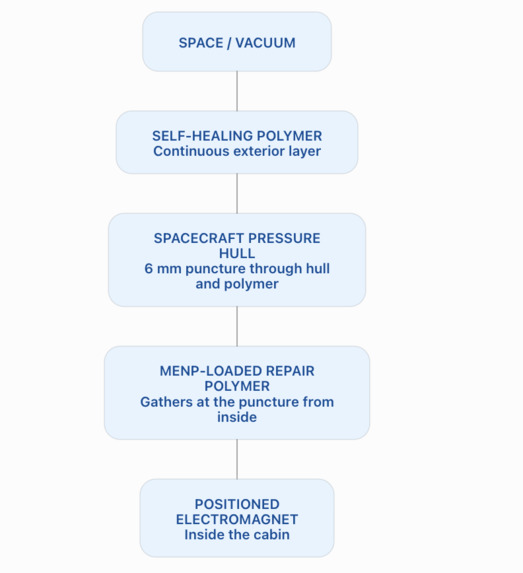
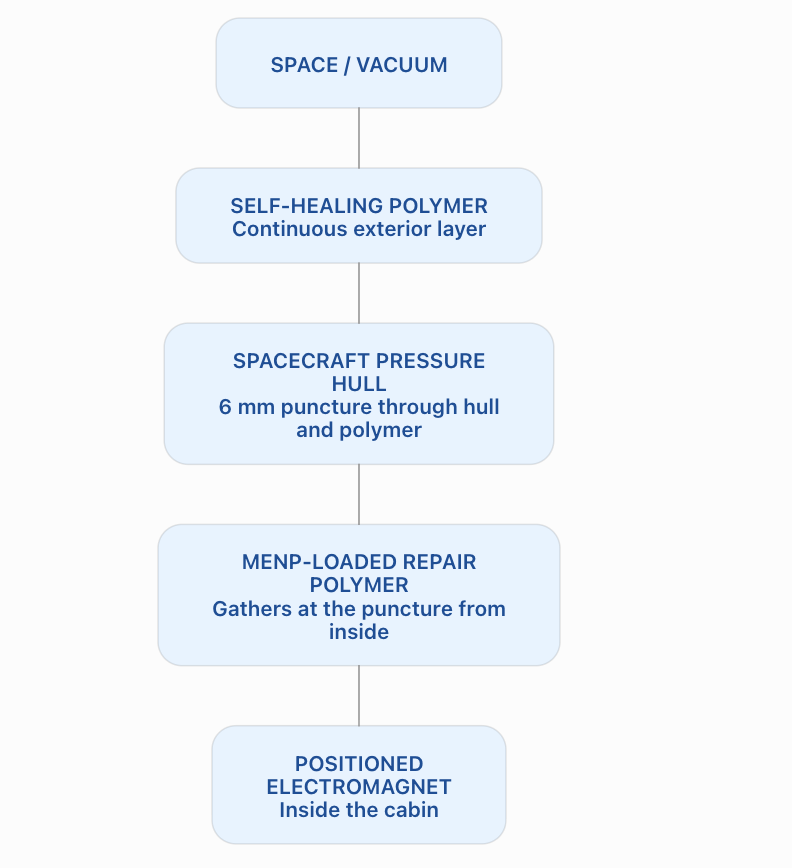
Three-layer Spacecraft Skin
-
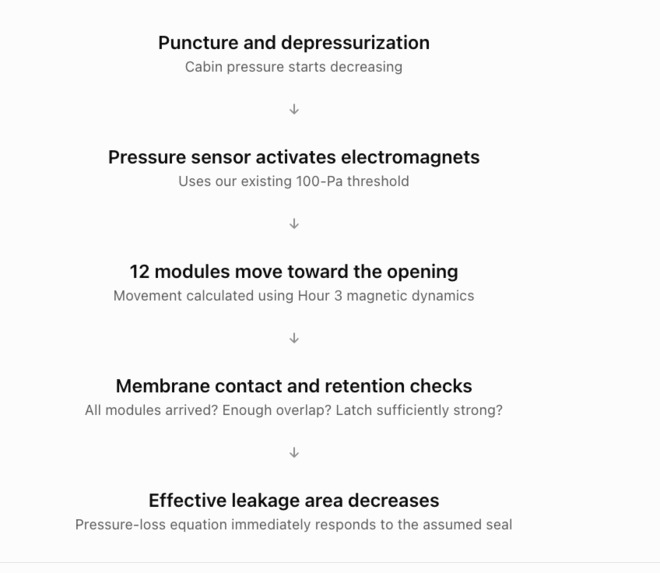
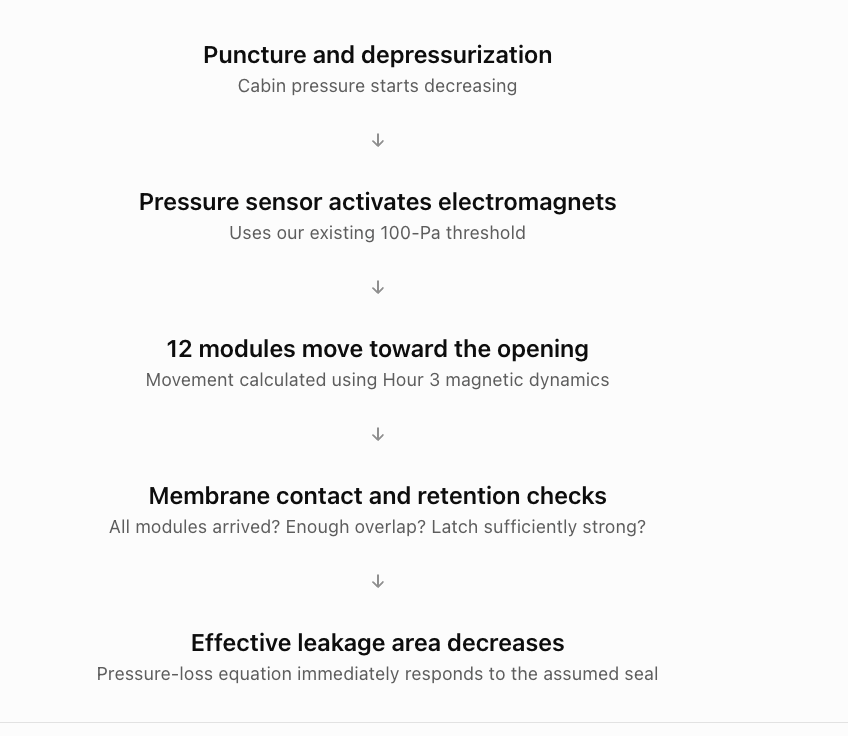
Sequence of events
-
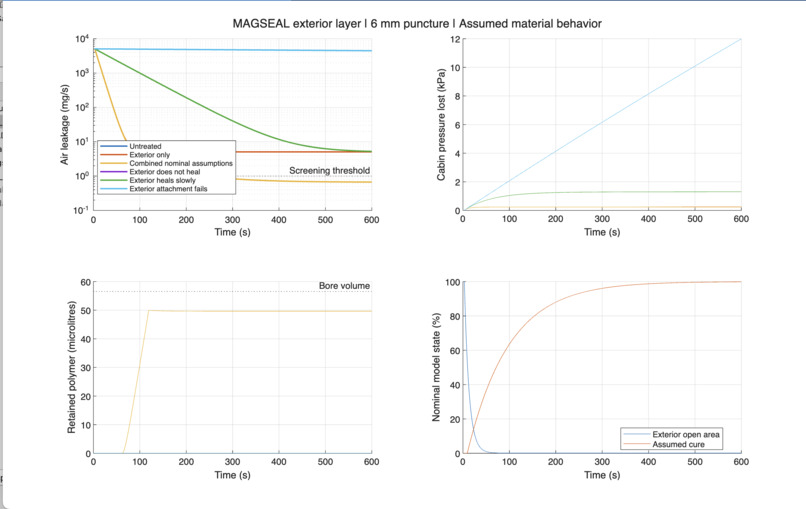
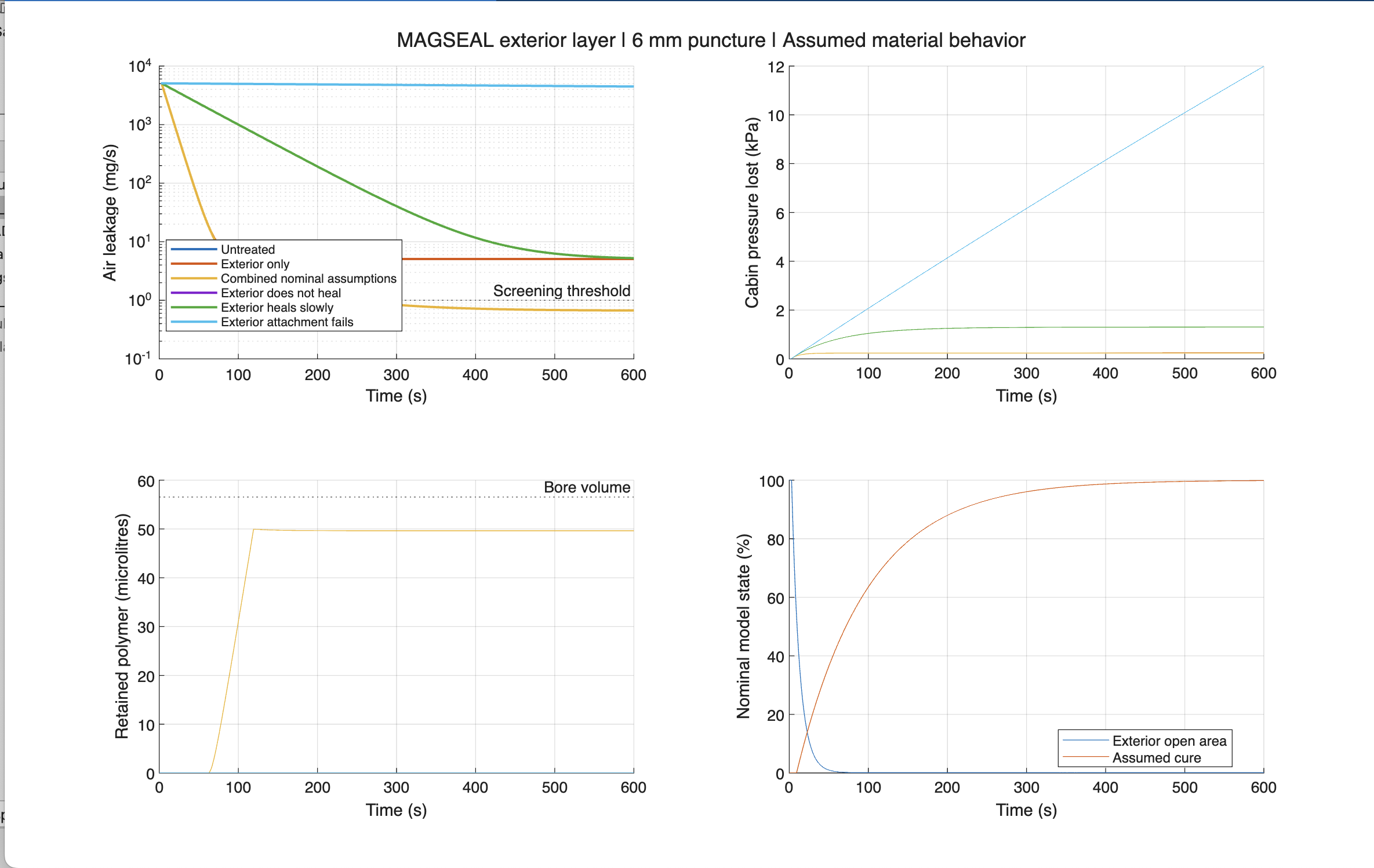
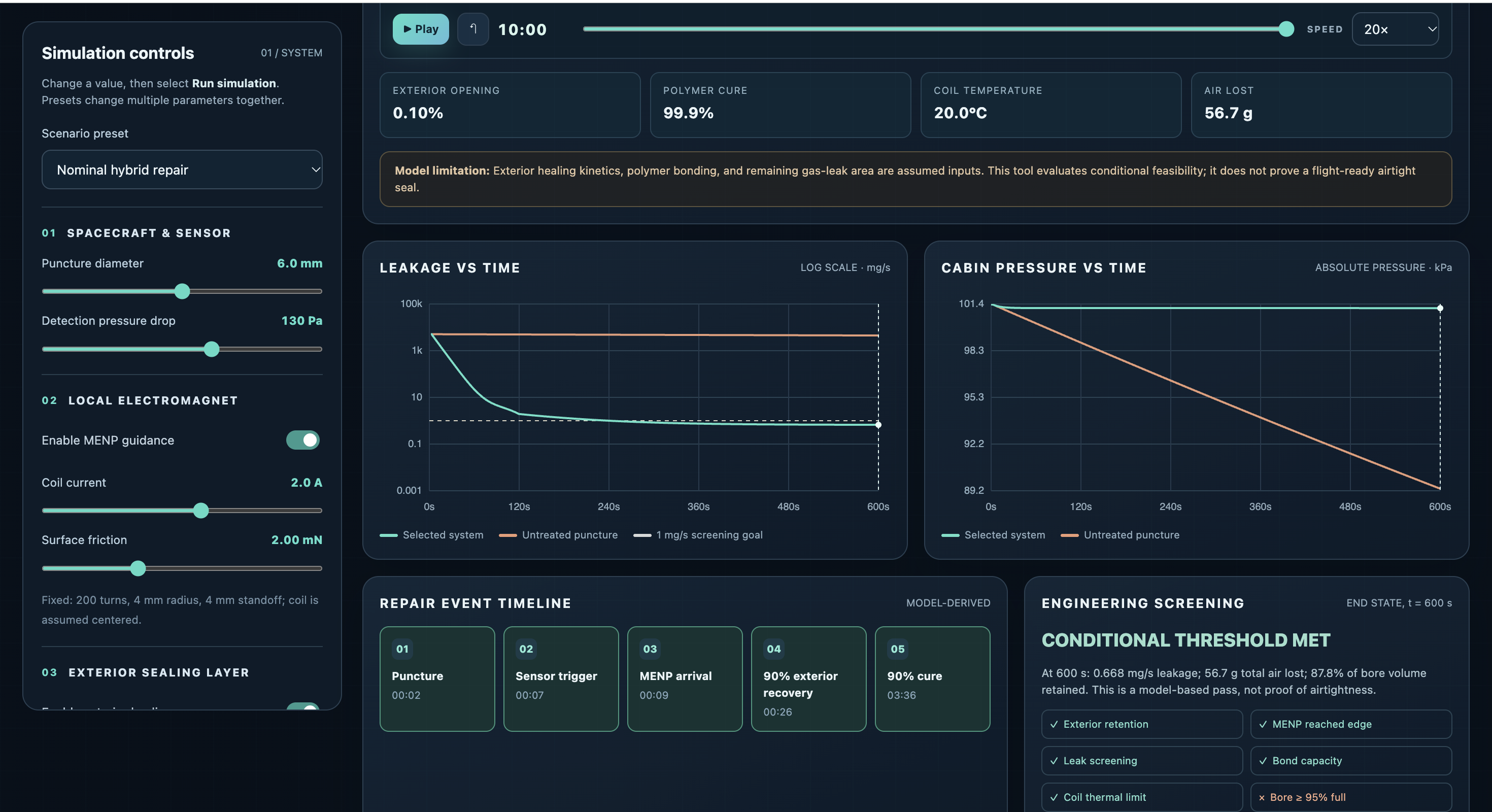
MAGSEAL Integrated Simulation Results:
-
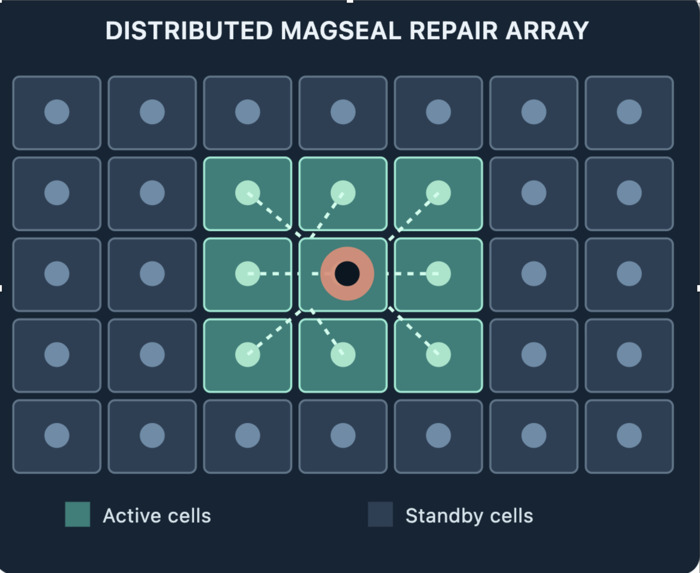
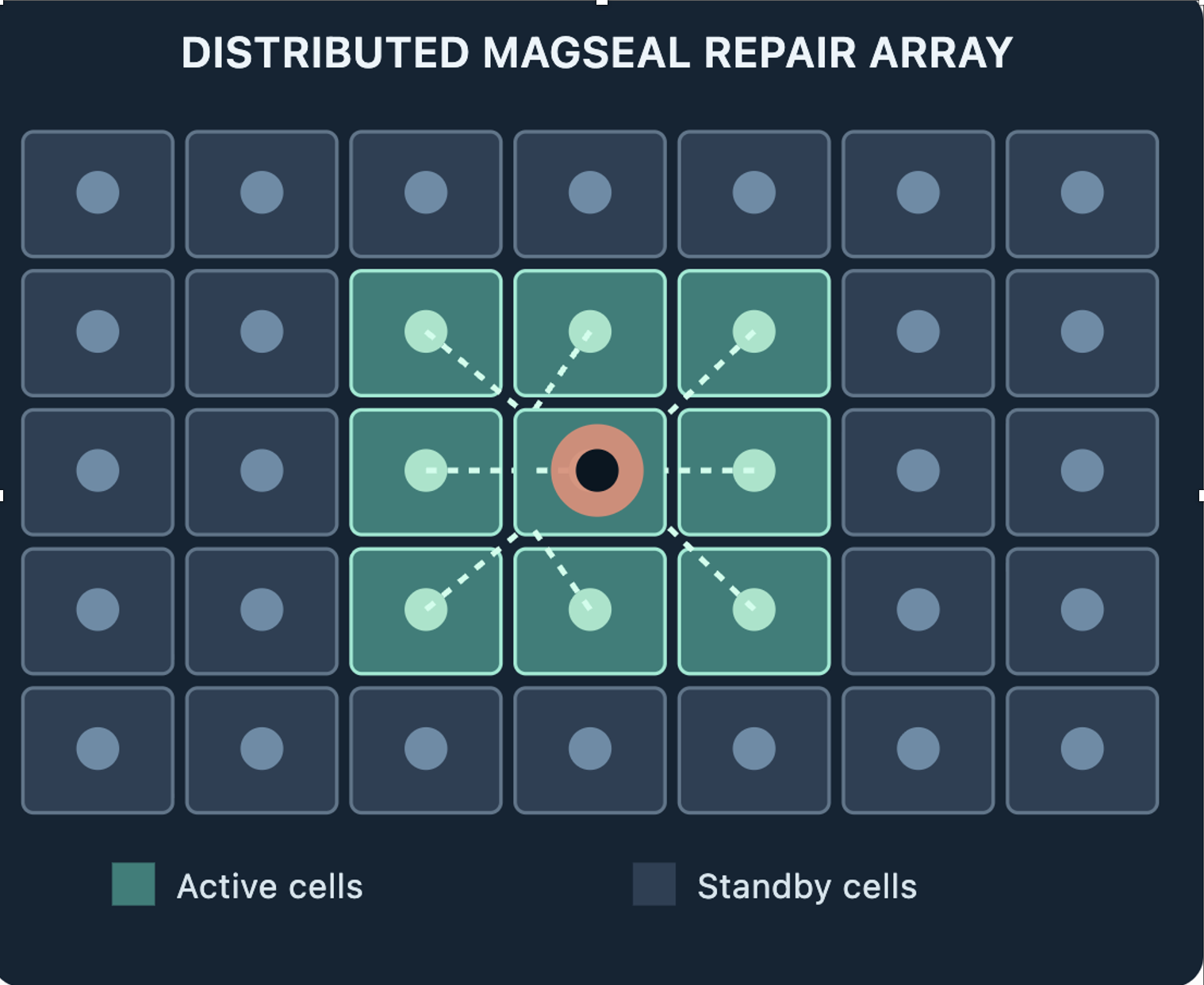
Distributed MAGSEAL Repair Array
-
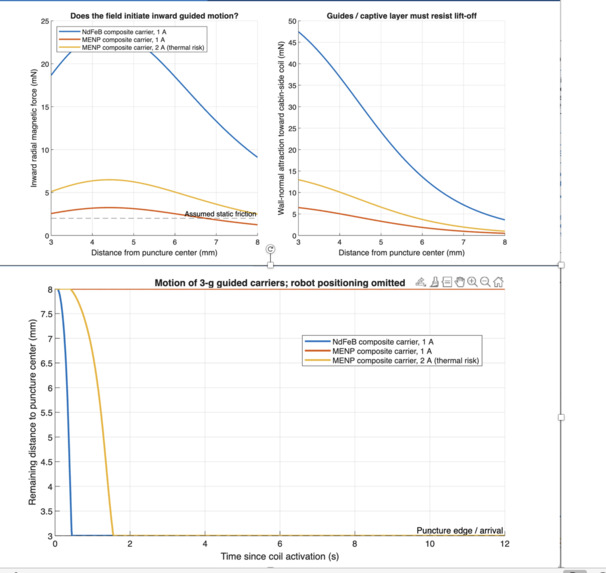
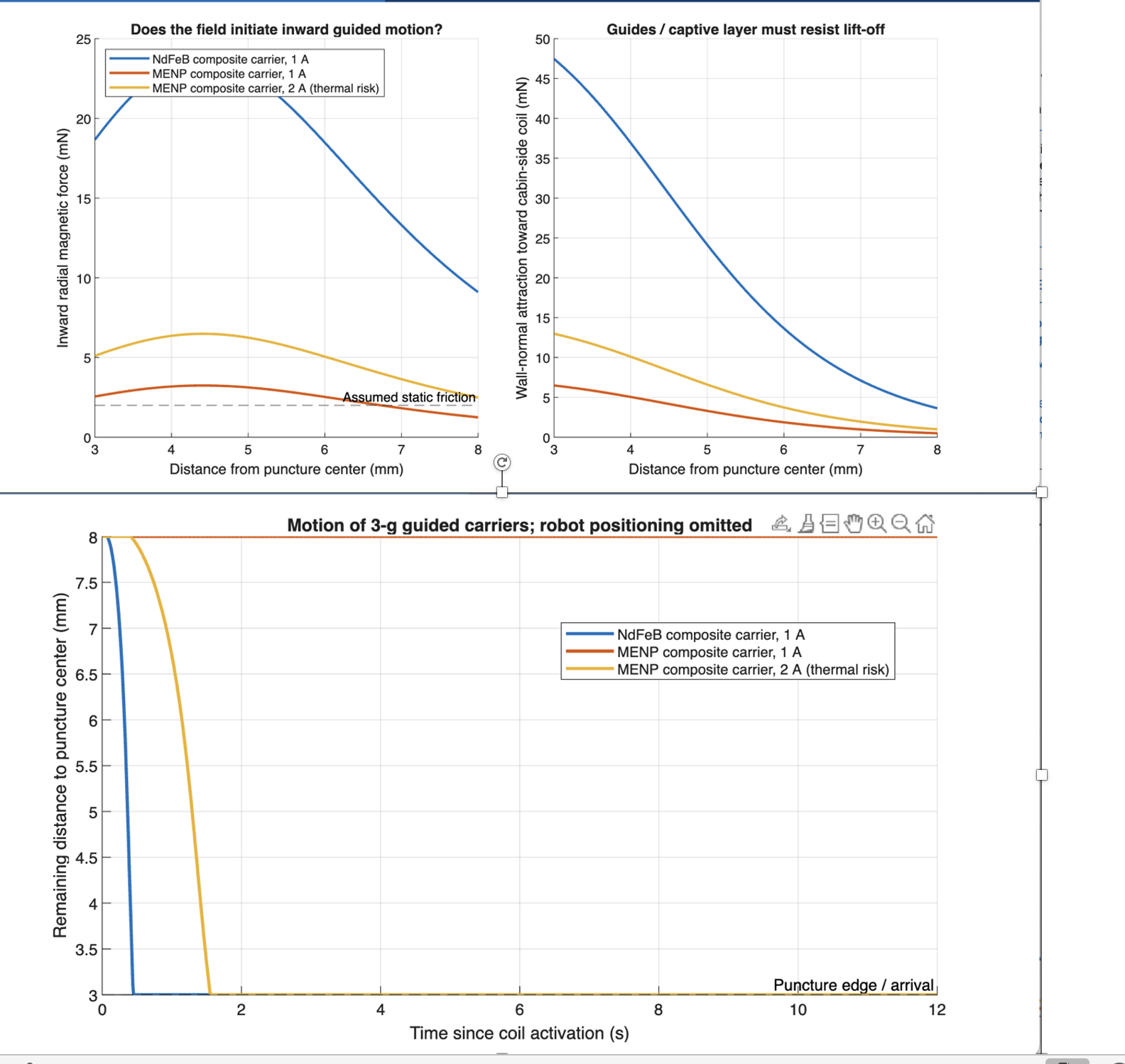
Comparison of magnetic forces, wall-normal attraction, and guided carrier motion for NdFeB and MENP composites under varying coil currents.
-
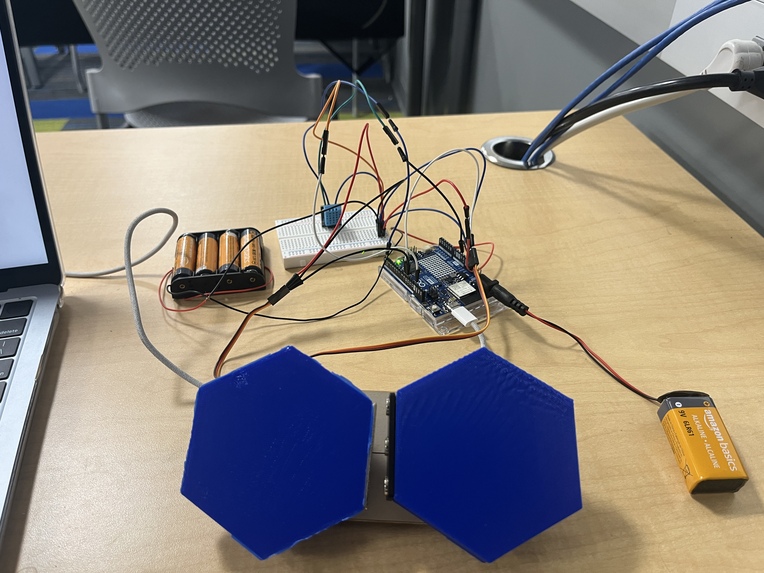
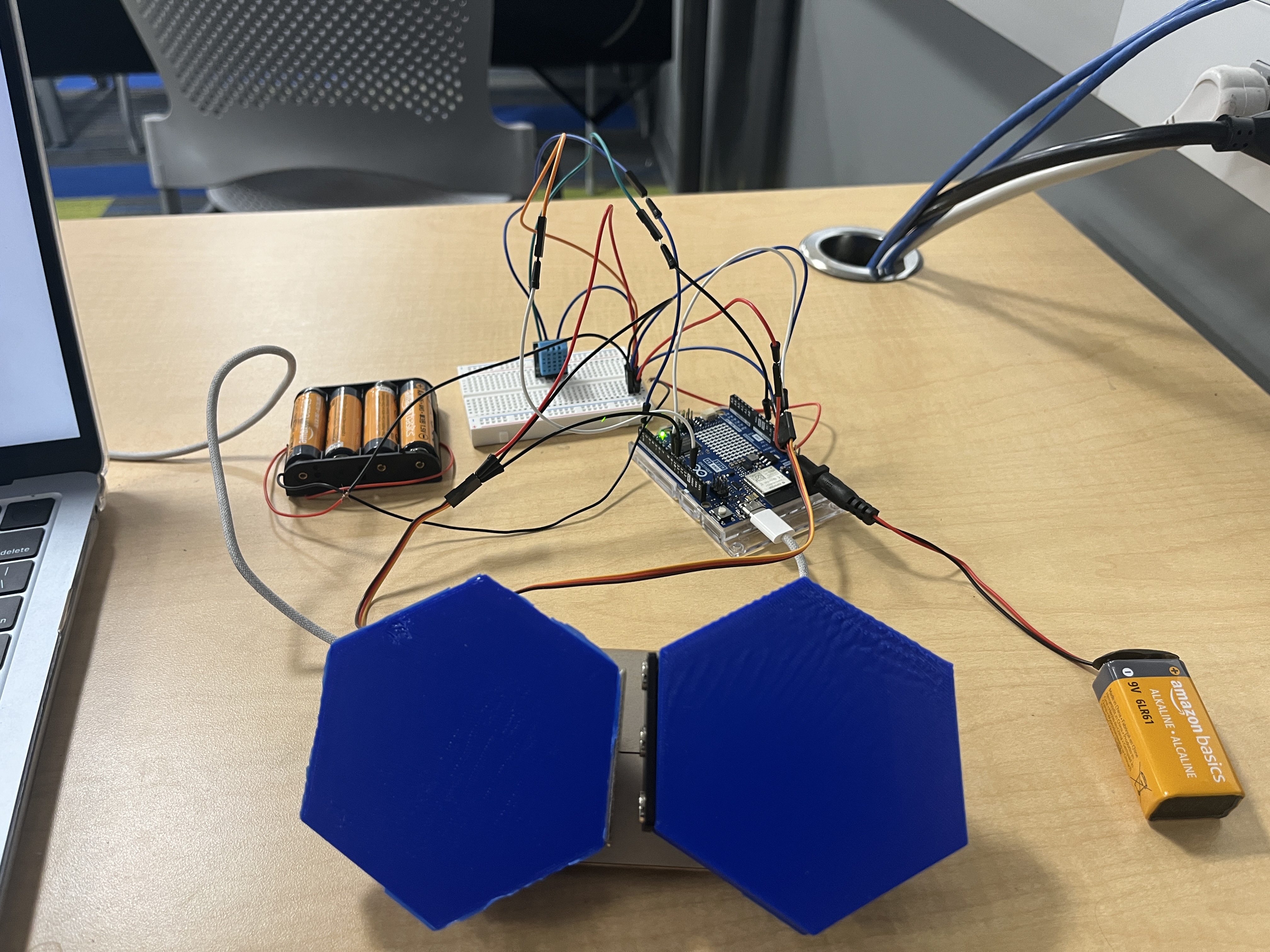
Arduino-based demonstration integrating temperature sensing, electronic control, and servo-actuated 3D printed modules.
-
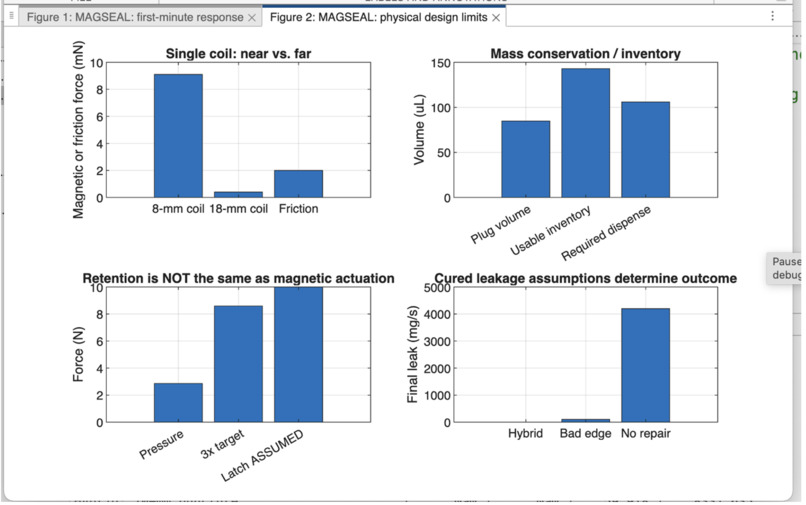
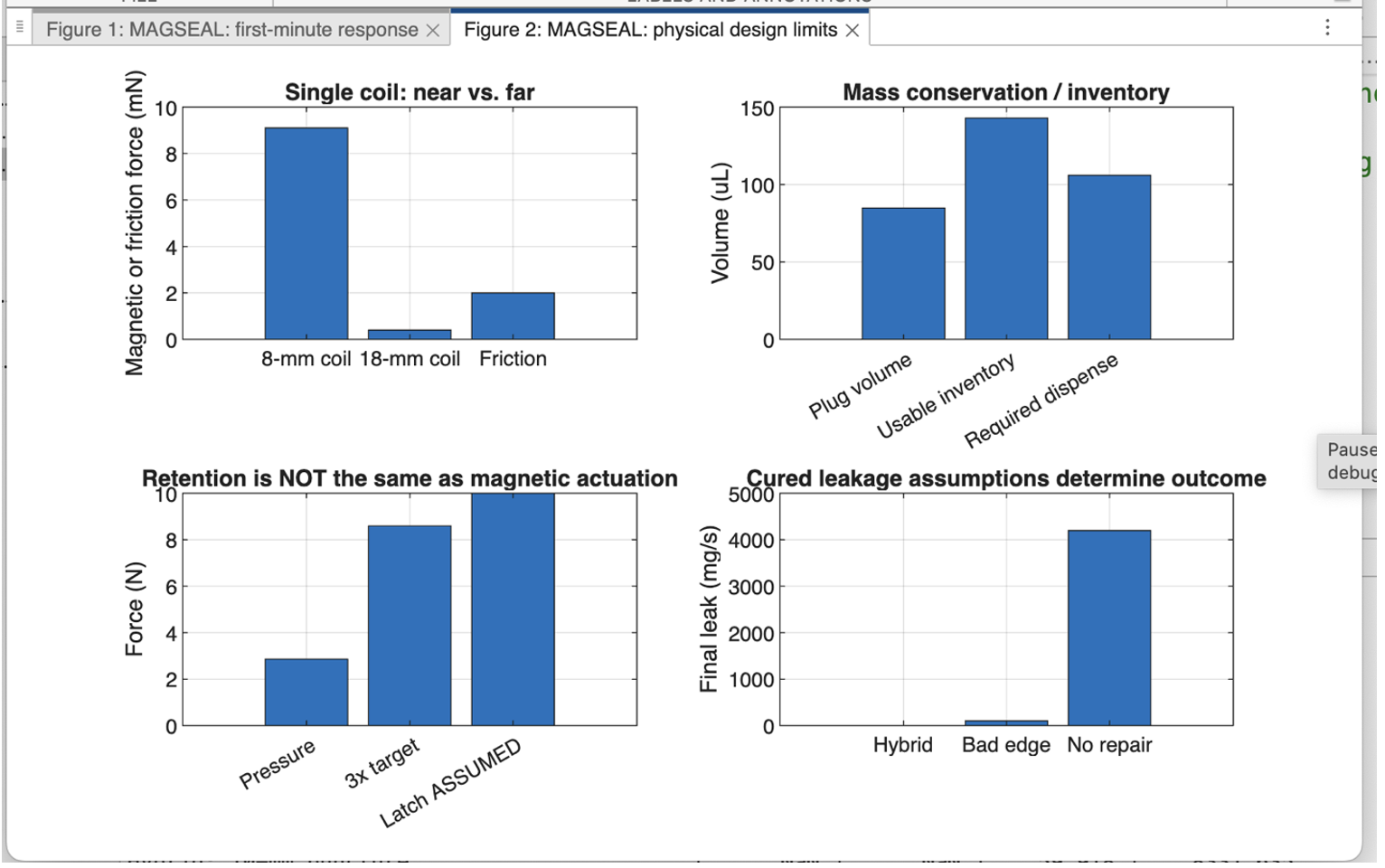
Physical Design Limits
-
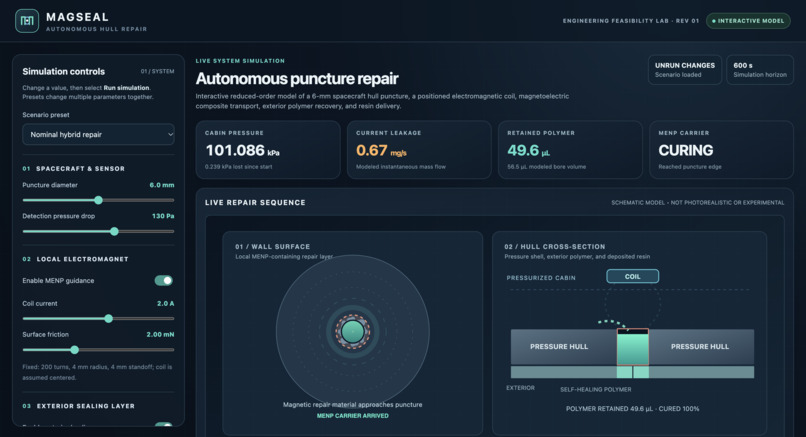
Interface 1
-
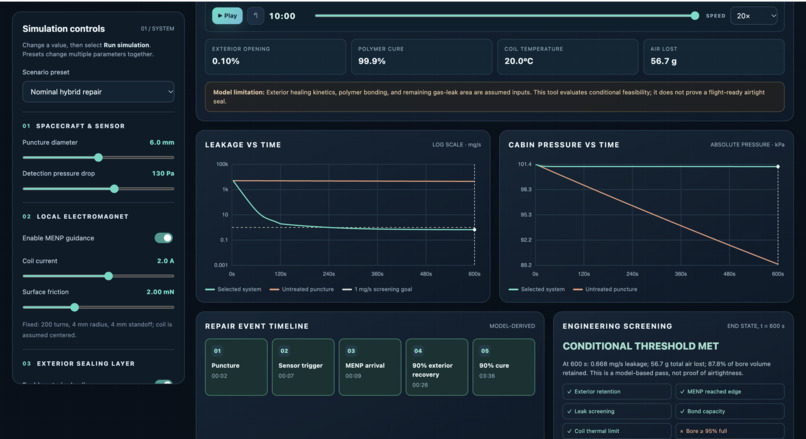
Interface 2
-
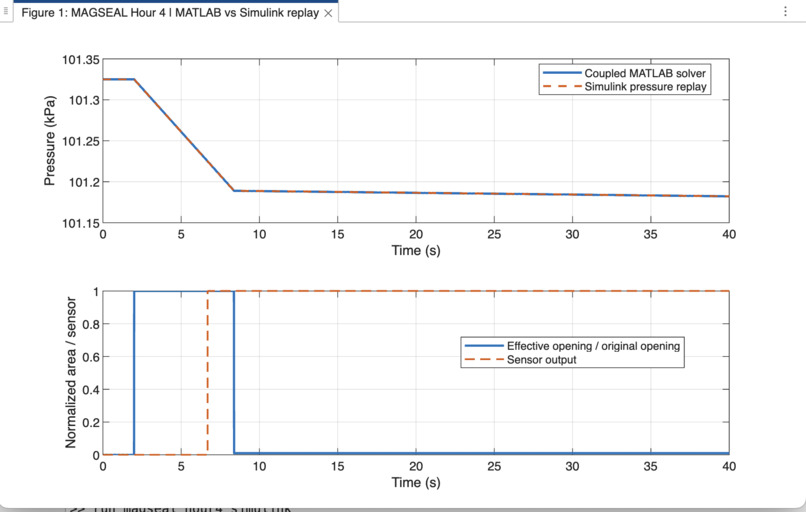
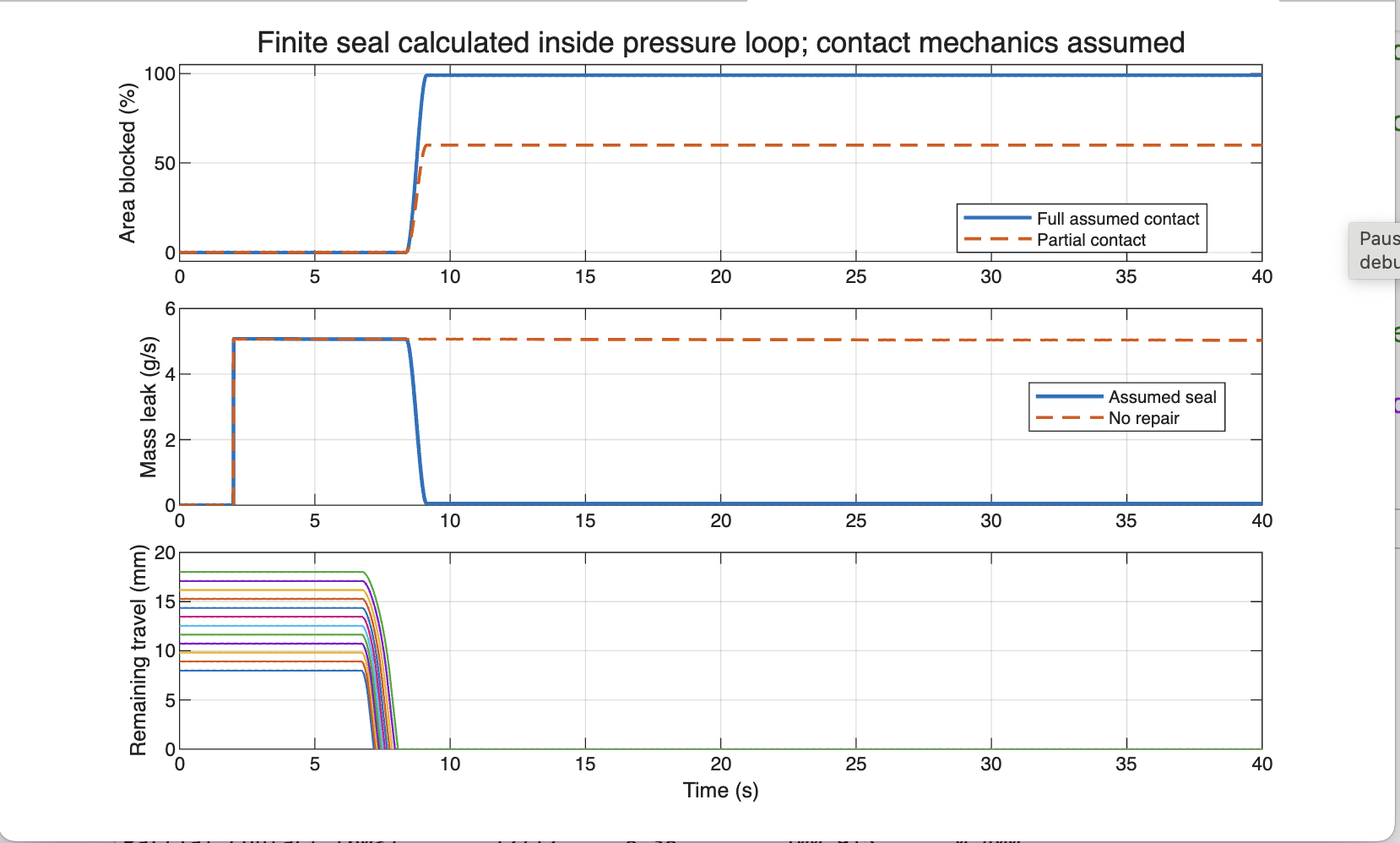
Integrated 0.75-second gradual sealing transition
-
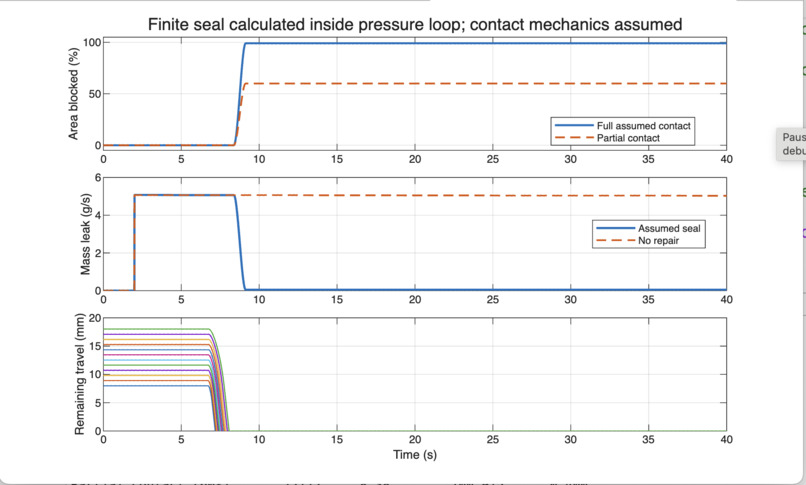
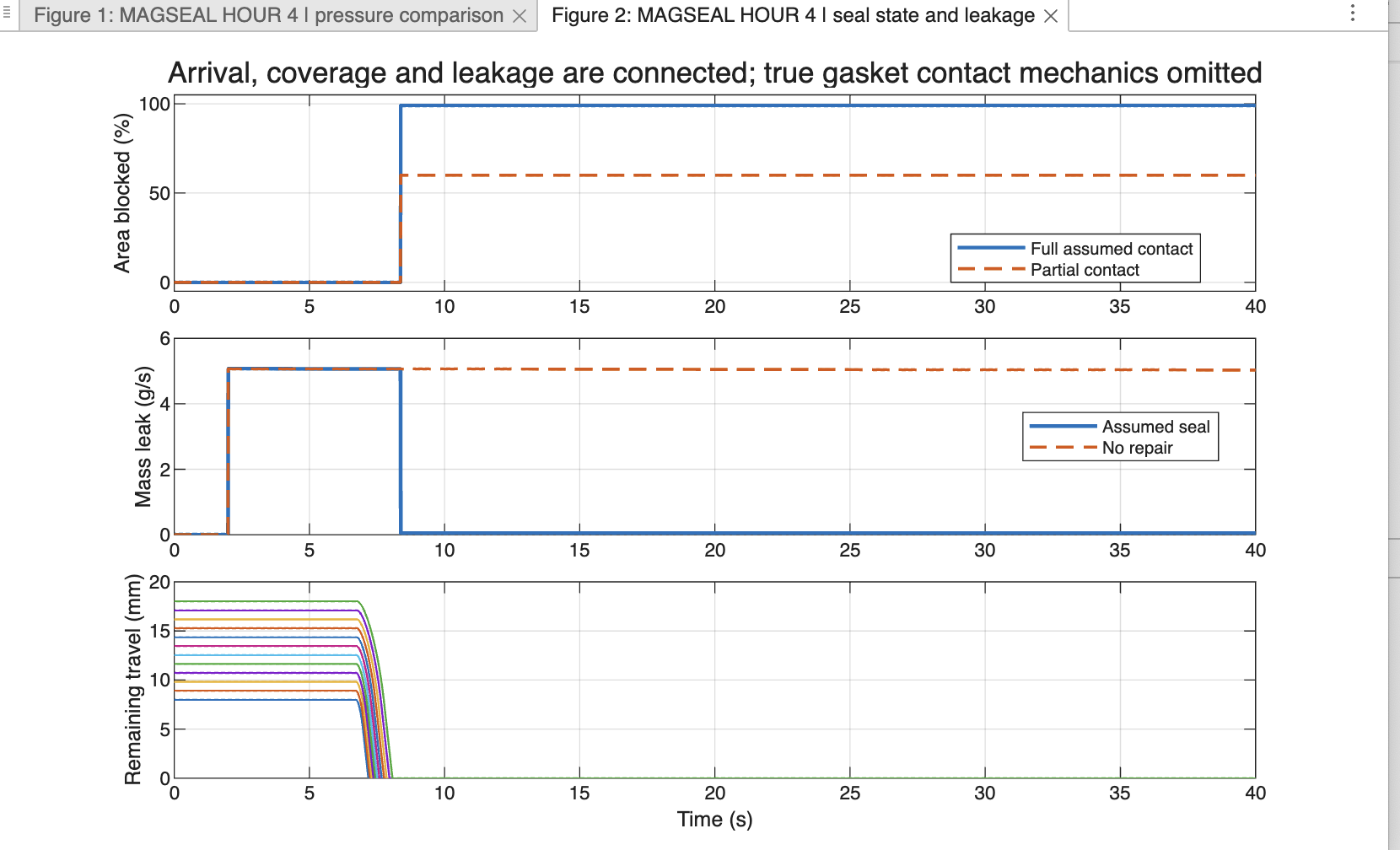
Finite seal calculated inside pressure loop
-
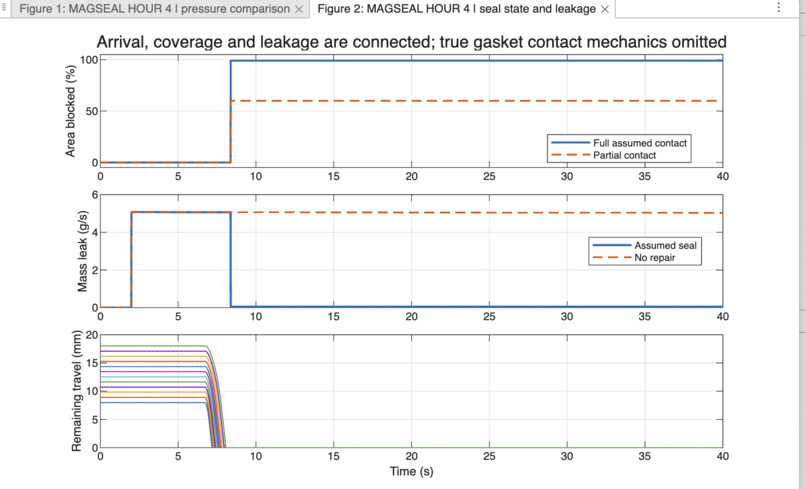
Arrival at 6mm puncture
MAGSEAL — Autonomous Magnetic Self-Sealing System for Spacecraft
Inspiration
Millions of miles from Earth, a puncture only a few millimeters wide can threaten an entire spacecraft. Micrometeoroid impacts, orbital debris, and structural damage pose serious risks to cabin pressure integrity, particularly during long-duration missions where emergency repairs may require dangerous human intervention.
We asked ourselves a question: What if a spacecraft could detect damage, respond to it, and begin repairing itself before an astronaut ever had to intervene?
Inspired by emerging research in self-healing polymers, magnetically responsive materials, and autonomous systems, we developed MAGSEAL: a proposed multilayer spacecraft repair architecture that integrates nanotechnology, electromagnetic actuation, pressure sensing, and computational control.
Our objective was not simply to conceptualize a futuristic repair technology, but to investigate whether the underlying physics could support it.
What It Does
MAGSEAL proposes a three-layer autonomous spacecraft repair system, designed to respond to punctures through complementary material and electromagnetic mechanisms.
Layer 1 — Exterior Self-Healing Polymer
An exterior polymer layer is intended to constrict the opening following an impact, reducing the rate of depressurization and creating an opportunity for subsequent repair. The simulation evaluates this behavior using assumed healing kinetics and material-retention limits.
Layer 2 — Spacecraft Structural Hull
The central pressure-bearing layer provides the spacecraft's structural integrity. Damage to this layer triggers the repair sequence, while its thickness and puncture geometry determine the amount of material required for filling.
Layer 3 — Interior Magnetoelectric Nanocomposite Repair System
The interior lining contains distributed repair material incorporating magnetoelectric nanoparticles (MENPs), with cobalt ferrite–barium titanate investigated as a candidate material.
When depressurization is detected, a microcontroller-based system would initiate electromagnetic actuation. A positioned electromagnetic coil generates a localized magnetic-field gradient intended to guide nearby MENP-containing repair material toward the damaged region.
A polymer-rich repair medium is then intended to occupy the puncture, bond to its surroundings, and cure into a pressure-resistant seal. A combined electromagnetic and UV-curing head is part of our proposed deployment architecture.
The system is designed to evaluate the repair outcome through pressure and leakage measurements rather than assuming success immediately upon material arrival.
MAGSEAL combines passive damage mitigation with active, sensor-triggered repair.
How We Built It
We approached MAGSEAL as a multidisciplinary engineering problem, combining aerospace mechanics, electromagnetism, materials science, numerical modeling, and embedded control systems.
Rather than beginning with an animation, we first established mathematical models for the physical processes involved.
1. Spacecraft Depressurization and Detection
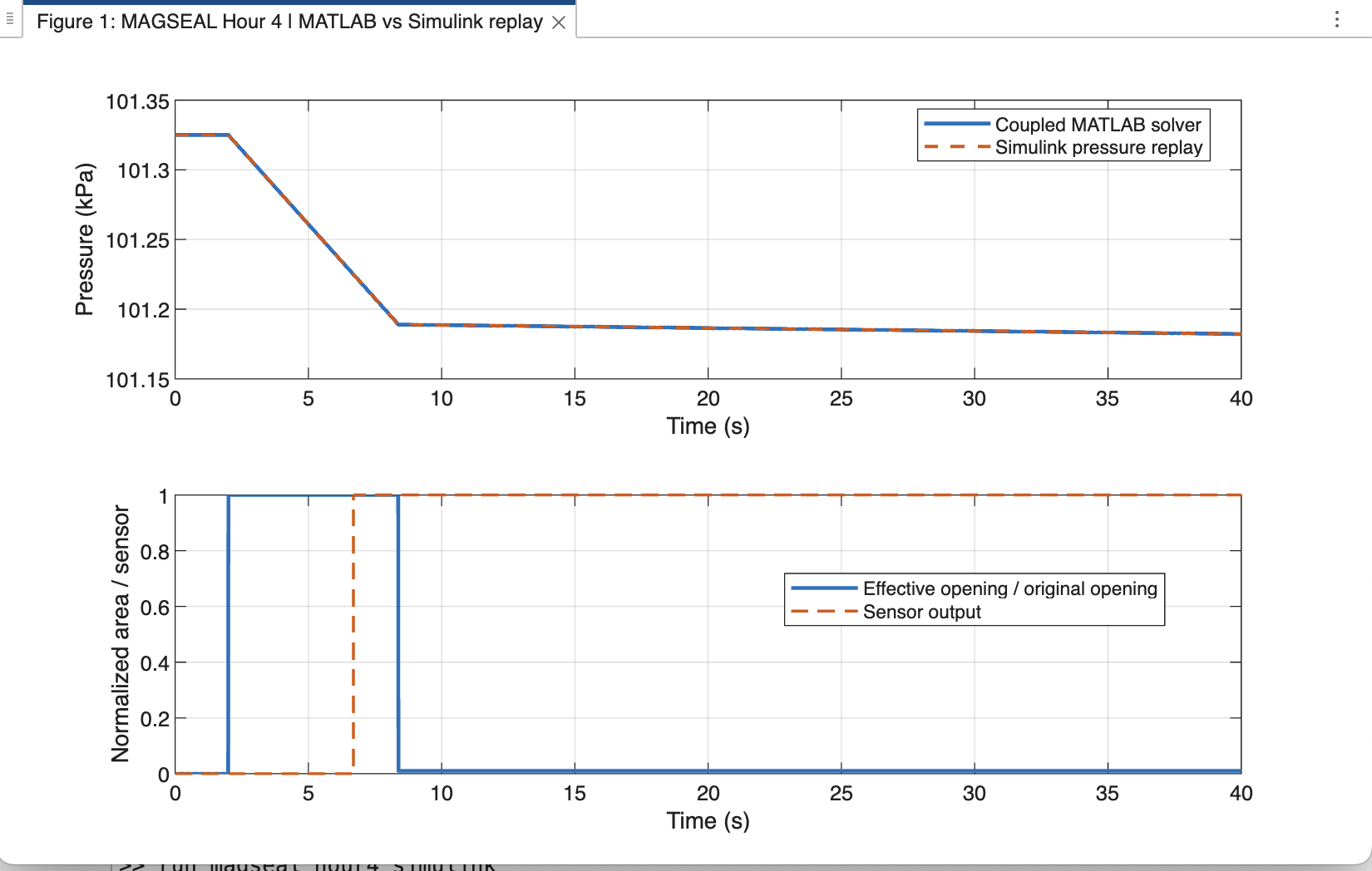
Using MATLAB and Simulink, we modeled compressible airflow through a spacecraft puncture, incorporating choked-flow equations, ideal-gas behavior, pressure decay, and automatic sensor activation.
Our reference configuration uses a 6-mm puncture, a 20-m³ cabin, and an initial pressure of approximately 101.3 kPa.
The initial model predicts an air-loss rate of approximately 5.1 g/s, establishing a quantitative baseline for evaluating repair performance.
2. Electromagnetic Feasibility and Material Selection
We investigated magnetic composite materials using published experimental research, including magnetoelectric nanoparticles and NdFeB-filled elastomers.
We developed MATLAB models to evaluate magnetic-field gradients, magnetic dipole forces, friction, damping, and movement toward a puncture.
Our early simulations compared 12 independently moving repair modules, individual nanoparticles, and larger magnetic aggregates.
These investigations revealed an important limitation: individual nanoparticles are not necessarily suitable for rapid transport over millimeter-scale distances. We therefore investigated larger composite carriers and confined polymer-based delivery mechanisms.
Using a modeled electromagnetic coil, we examined whether magnetic forces could overcome the resistance to movement. We also identified limitations involving actuator distance, normal magnetic attraction, and coil heating.
3. Polymer Transport, Sealing, and Structural Retention
We extended the model to evaluate material delivery into the puncture, including finite polymer inventory, viscosity-dependent extrusion, curing, and pressure-resistant retention.
We investigated whether enough repair material could reach and remain inside the opening instead of escaping into vacuum.
This helped us distinguish between three fundamentally different achievements: moving repair material, filling a puncture, and producing a pressure-resistant seal.
4. Integrated Simulation and Failure Analysis
We developed a coupled Python numerical model alongside our MATLAB-based investigations, connecting pressure loss, exterior polymer recovery, electromagnetic activation, repair-material transport, curing, and residual leakage.
We evaluated multiple scenarios, including untreated damage, exterior-layer recovery alone, combined magnetic-polymer repair, failed exterior healing, delayed recovery, and insufficient structural support.
We also performed numerical consistency checks involving material conservation, pressure behavior, and solution sensitivity.
5. Interactive Interface and Hardware Demonstration
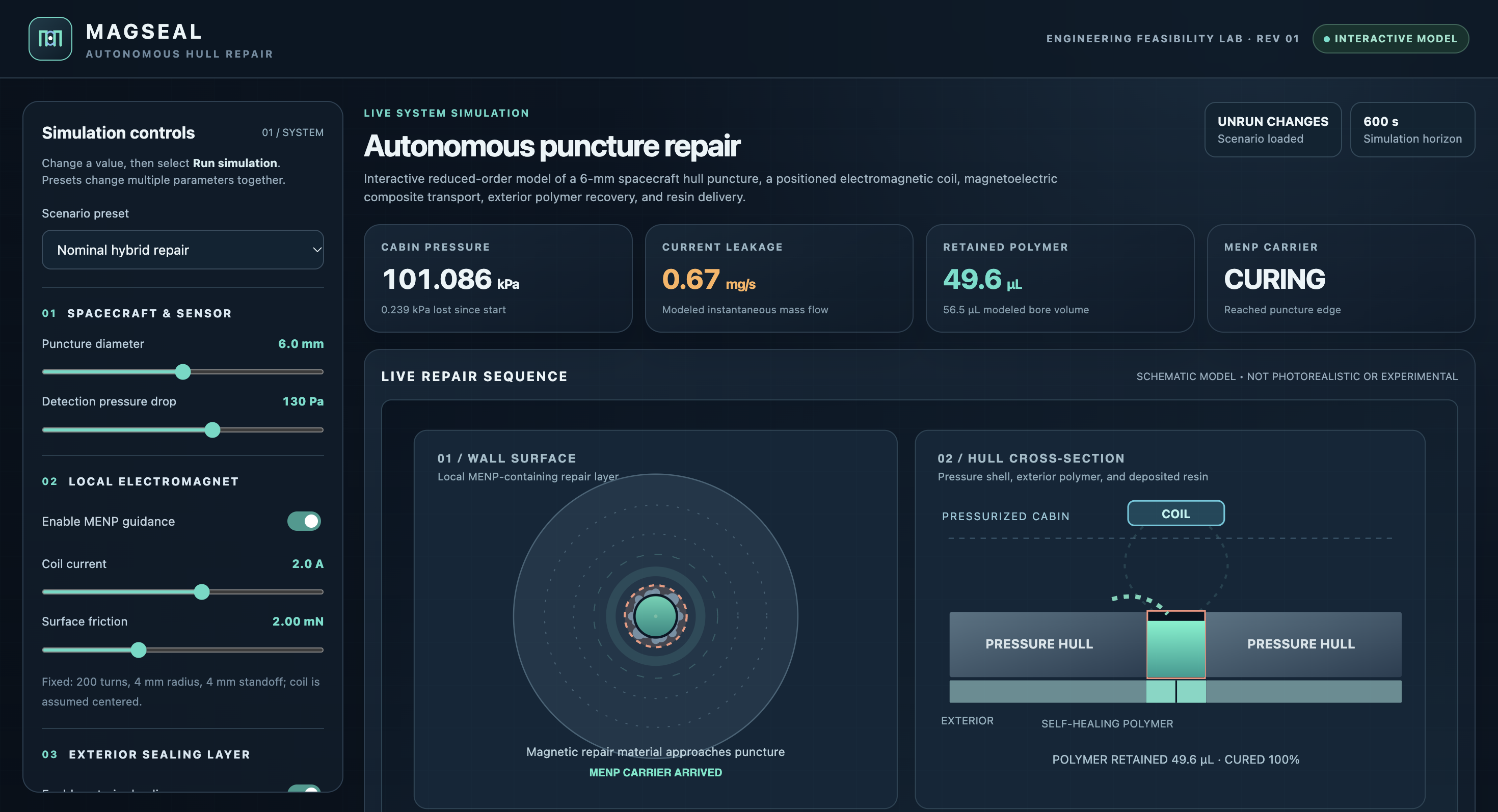
We developed an interactive simulation dashboard that allows users to modify puncture dimensions, coil current, magnetic response, material properties, healing time, and other operating parameters while observing the predicted repair sequence.
For the physical proof-of-concept, we worked with an Arduino microcontroller, a sensor, relay-controlled actuation, and 3D-printed repair elements to develop a simplified demonstration of autonomous detection and response.
The physical prototype demonstrates elements of the control architecture; it does not reproduce nanoscale magnetic transport or verify airtight sealing.
Our Numerical Findings
Under the reference model's assumed material and sealing properties, the combined architecture predicts:
| Performance metric | Simulated result |
|---|---|
| Reference puncture diameter | 6 mm |
| Initial air leakage | ~5.1 g/s |
| Final leakage with combined repair | ~0.67 mg/s |
| Final leakage with exterior recovery alone | ~5.06 mg/s |
| Air lost over 600 seconds without repair | ~2,850 g |
| Air lost over 600 seconds with combined repair | ~56.7 g |
These results demonstrate a potentially substantial reduction in depressurization under the specified assumptions. The exterior polymer supplies most of the modeled reduction in cumulative air loss, while the magnetic-polymer mechanism further reduces final leakage.
The nominal simulation does not achieve complete bore filling or demonstrate a perfectly airtight seal. Material healing rates, final bond strength, and residual leakage remain important parameters requiring experimental validation.
Challenges We Encountered
Our greatest challenge was ensuring that the proposed technology remained consistent with physical principles rather than simply designing a visually appealing repair sequence.
Magnetic attraction does not guarantee controlled movement. We discovered that field gradients, coil positioning, material magnetization, friction, and the normal force acting on the spacecraft wall all influence whether magnetic material reaches a puncture.
Collecting nanoparticles does not automatically create an airtight seal. Our investigations into layer-by-layer accumulation revealed limitations involving transport time, porosity, structural continuity, and mechanical strength. This motivated our transition toward a hybrid magnetoelectric nanocomposite and polymer-based sealing architecture.
The spacecraft's pressure differential can help and hinder repair. While pressure can assist material delivery, it can also expel uncured polymer through the puncture. Our simulation therefore considers exterior support, material loss, and curing behavior.
Another challenge was separating literature-supported physical phenomena from assumptions specific to MAGSEAL. We used published research to constrain parts of our analysis while acknowledging where actual material measurements and electromagnetic validation are still required.
Perhaps our most important realization was that the strongest design was not necessarily the most complicated one. By separating passive polymer recovery, magnetic material delivery, and final sealing, we developed a more understandable and testable architecture.
What We Learned
MAGSEAL pushed us to connect engineering disciplines that are often studied independently.
We explored compressible-fluid dynamics, electromagnetic field modeling, numerical integration, feedback control, magnetic composite behavior, polymer transport, and the mechanical requirements of pressure sealing.
From a computational perspective, we learned how to construct a coupled simulation in which the behavior of one subsystem influences another. We also learned the importance of modeling failure cases, checking numerical consistency, and comparing design alternatives rather than assuming every configuration works.
From an engineering perspective, we learned that a mechanism being physically possible is not the same as a complete system being feasible.
Our simulations helped us identify which concepts are supported by existing research, which operating conditions are promising, and which assumptions remain the greatest obstacles to practical implementation.
Most importantly, we learned that a useful simulation should not merely illustrate how a system is intended to work. It should reveal why it might work, when it fails, and what needs to change.
What's Next
Our next objective is to advance MAGSEAL from a computational feasibility study toward an experimentally validated repair mechanism.
We plan to investigate magnetoelectric nanocomposite formulations, polymer adhesion and permeability, magnetic-field-driven material transport, and curing behavior under spacecraft-relevant pressure and vacuum conditions.
We also envision a robotic positioning system with extendable arms mounted along the spacecraft interior. These arms would carry a combined electromagnetic coil and UV-curing head, allowing the system to position its repair actuator near a detected puncture. Robotic deployment, workspace coverage, and positioning accuracy remain future engineering challenges.
On the computational side, future development could incorporate higher-fidelity electromagnetic and fluid simulations, improved contact mechanics, additional damage scenarios, and machine-learning-assisted repair optimization.
Ultimately, MAGSEAL represents our exploration of an ambitious question: Can a spacecraft become an active participant in its own survival?
Our long-term vision is a system that does more than withstand damage—a spacecraft capable of recognizing a threat, initiating a repair, and reducing the need for astronaut intervention.
Current Status: Working computational proof-of-concept, interactive simulation interface, preliminary electromagnetic and material feasibility analysis, and an Arduino-based hardware demonstrator under development. Physical spacecraft sealing performance has not yet been experimentally validated.
Built With
- chatgpt
- matlab
- simulink
