-
-
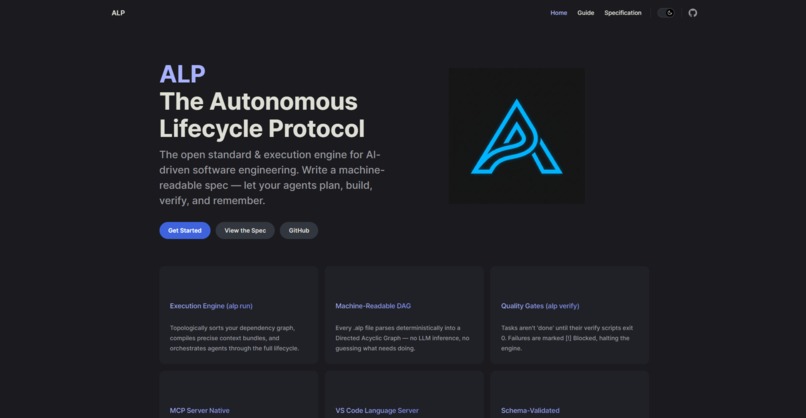
home page
-
-
-
-
-
Inspiration
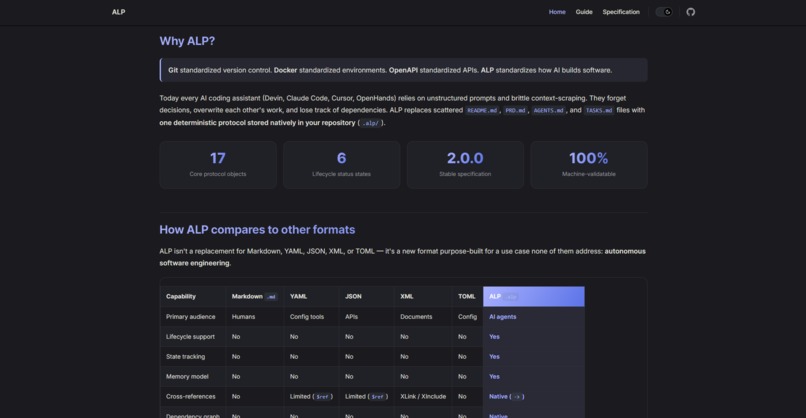
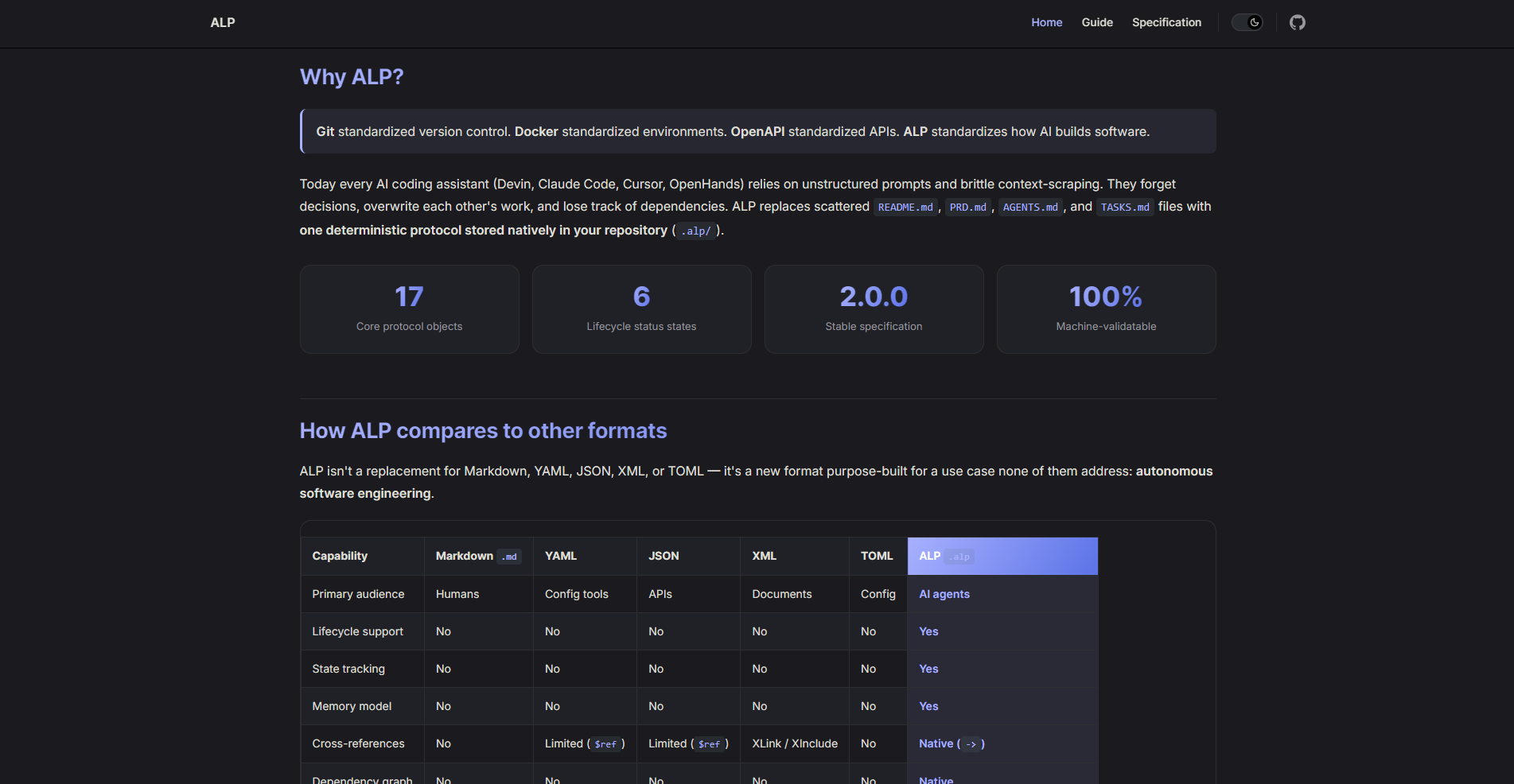
As AI coding agents become more capable, we noticed that they all face the same problem: they rely on documentation formats that were designed for humans, not autonomous systems. Files like README.md, PRD.md, AGENTS.md, and various instruction files contain valuable information, but it is scattered, inconsistent, and difficult for AI agents to interpret reliably.
Every coding agent repeatedly parses large amounts of unstructured text, reconstructs project context, and makes assumptions about architecture, dependencies, and workflows. This leads to duplicated effort, inconsistent behavior, higher token usage, and reduced reliability.
We asked a simple question:
What if software projects had a standard protocol built specifically for autonomous development?
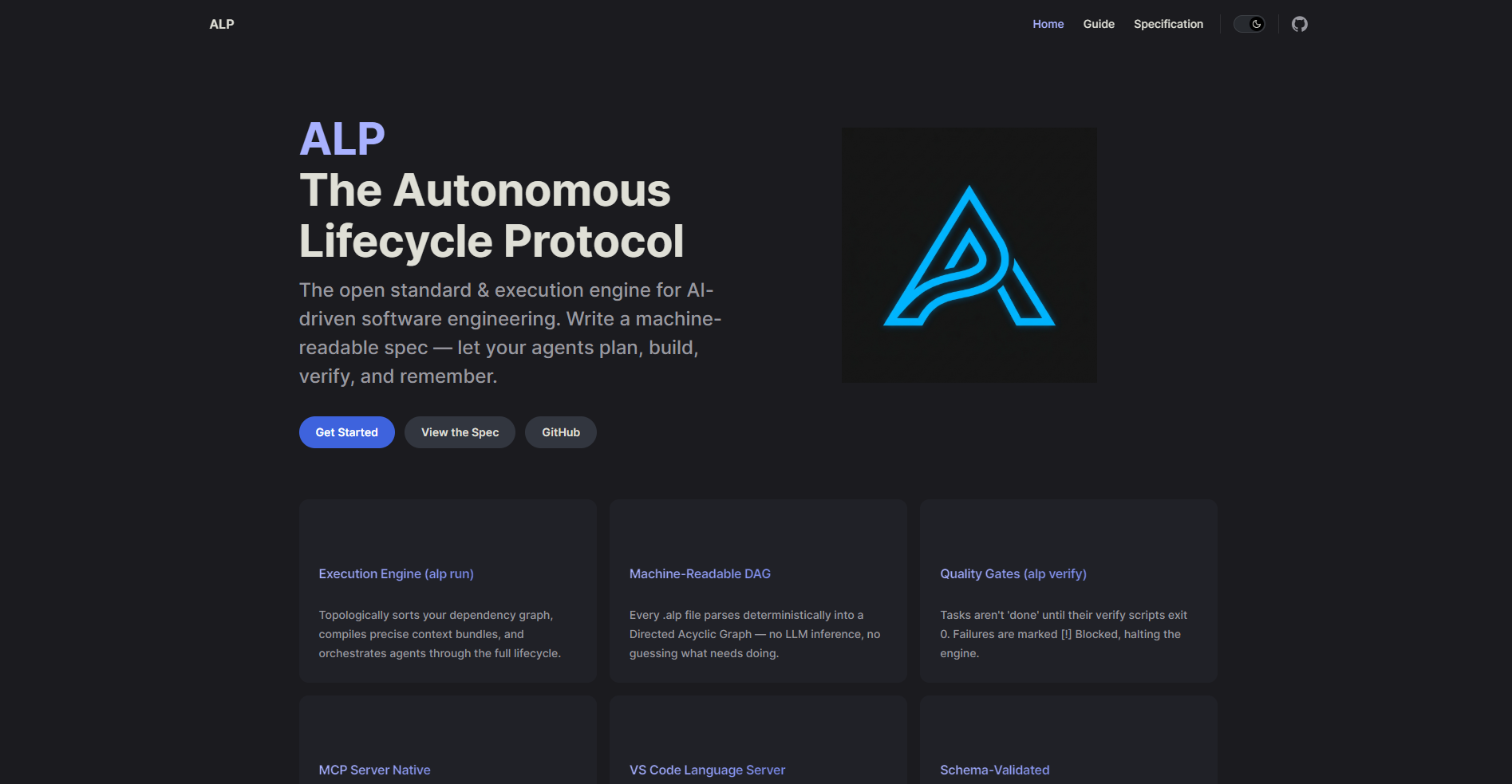
That idea became Autonomous Lifecycle Protocol (ALP).
What it does
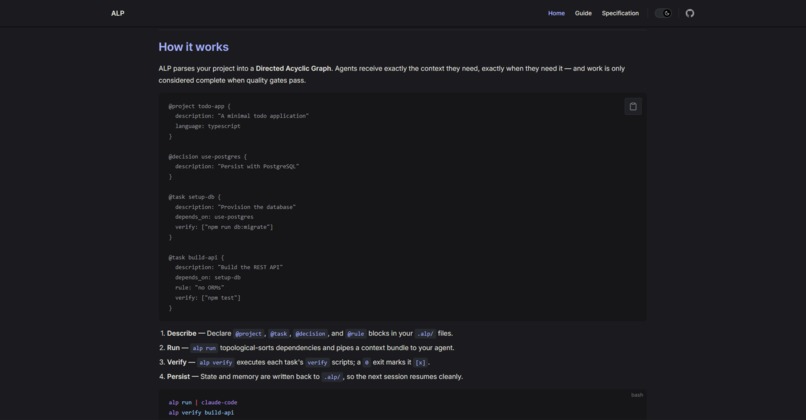
ALP is an open, machine-first protocol that enables autonomous coding agents to understand, build, verify, and maintain software projects using a standardized project specification.
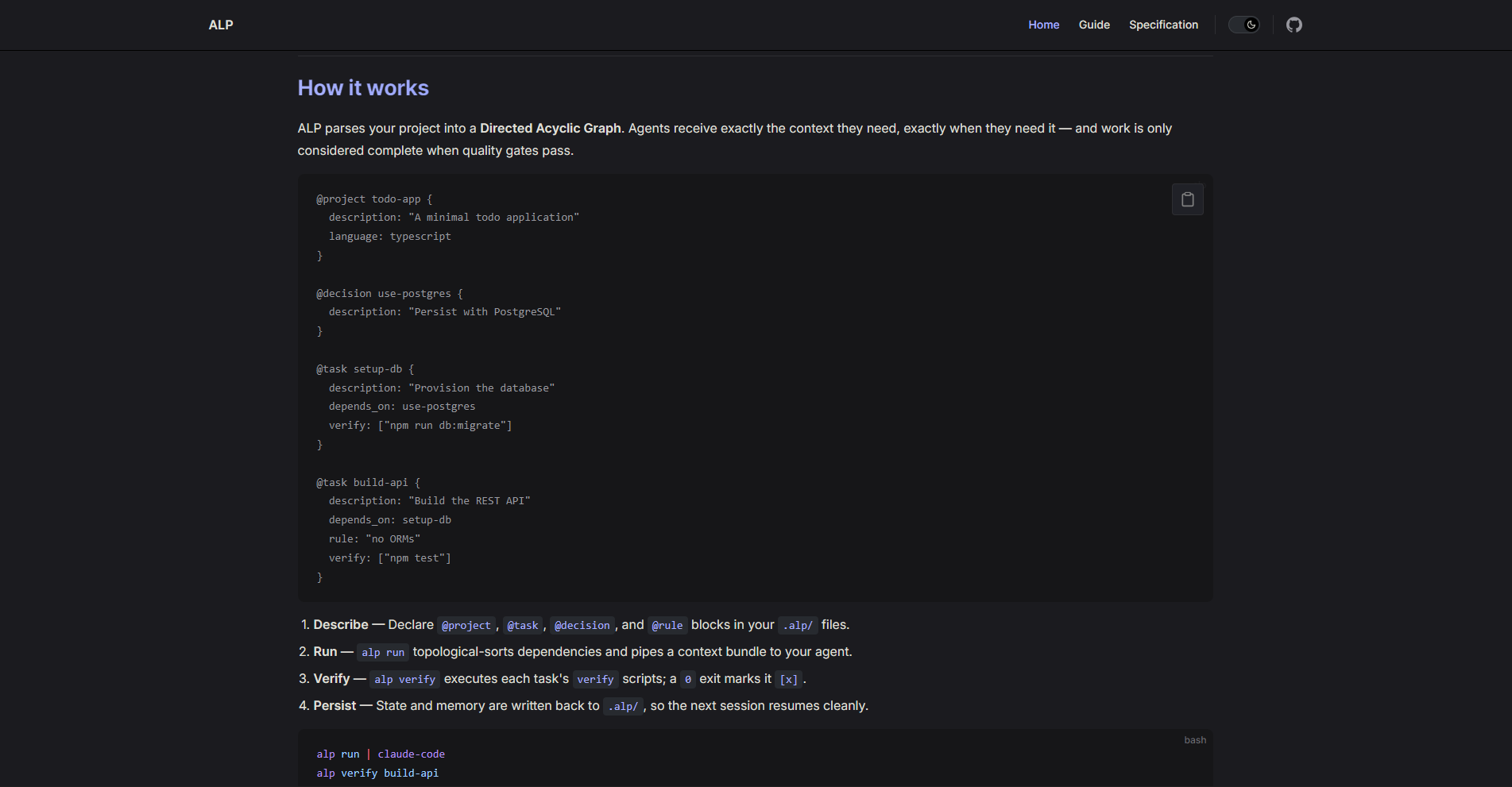
Instead of relying on multiple Markdown files, ALP organizes a project into structured, interconnected components that describe:
Project goals System architecture Features Tasks Dependencies Agent roles Development workflows Verification rules Project state Decision history Persistent memory
ALP allows AI coding agents to:
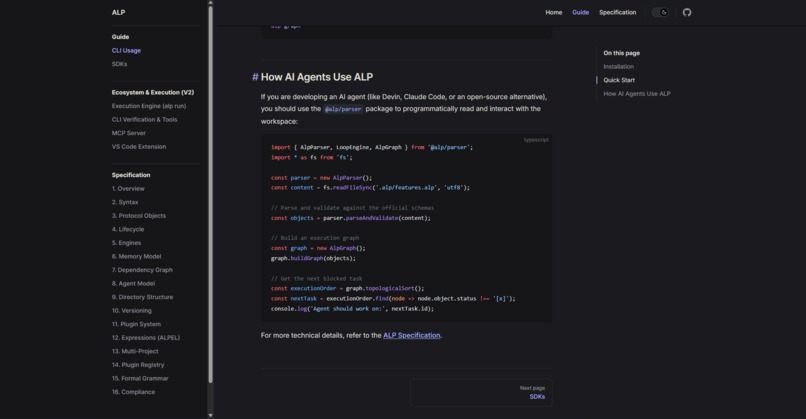
Load only the context they need. Execute structured development loops. Track progress across sessions. Coordinate multiple specialized agents. Resume interrupted work. Validate implementations against defined quality gates. Maintain a complete history of architectural decisions.
The project also introduces an interactive visualization system that compares ALP with existing AI instruction methods, helping developers understand differences in context organization, workflow execution, and project management.
How we built it
We started by researching how modern AI coding tools manage project context, including approaches used by coding assistants, agent frameworks, and instruction files.
From that research we designed ALP around several core concepts:
Structured project specification Lifecycle-based development Autonomous execution loops Context management Dependency graphs Verification pipelines Persistent project memory Multi-agent collaboration
We then designed:
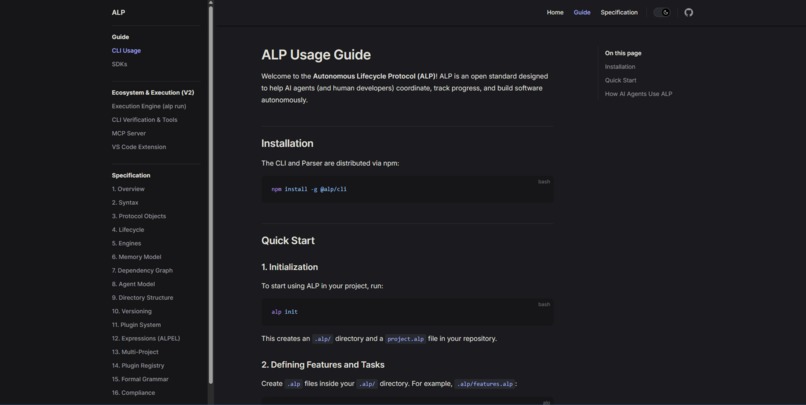
A modular protocol specification A standardized project structure Core protocol objects Validation rules Workflow definitions Agent models State management Dependency relationships
To demonstrate the protocol, we also designed a visualization dashboard capable of displaying project graphs, workflow execution, dependency trees, and protocol comparisons.
Challenges we ran into
One of the biggest challenges was avoiding "just another configuration format."
We wanted ALP to become a protocol rather than a collection of files.
Other major challenges included:
Designing a protocol flexible enough for different programming languages and frameworks. Keeping the specification simple while supporting advanced autonomous workflows. Defining standardized lifecycle stages that work across different types of software projects. Structuring project memory without introducing unnecessary complexity. Building a model that supports both single-agent and multi-agent development.
Another significant challenge was deciding what belongs inside the protocol versus what should remain implementation-specific.
Accomplishments that we're proud of
We successfully designed a new approach to autonomous software engineering centered around a protocol instead of traditional documentation.
Some highlights include:
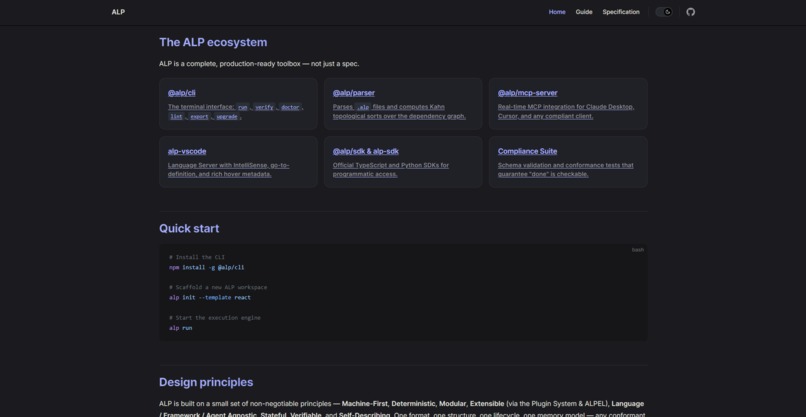
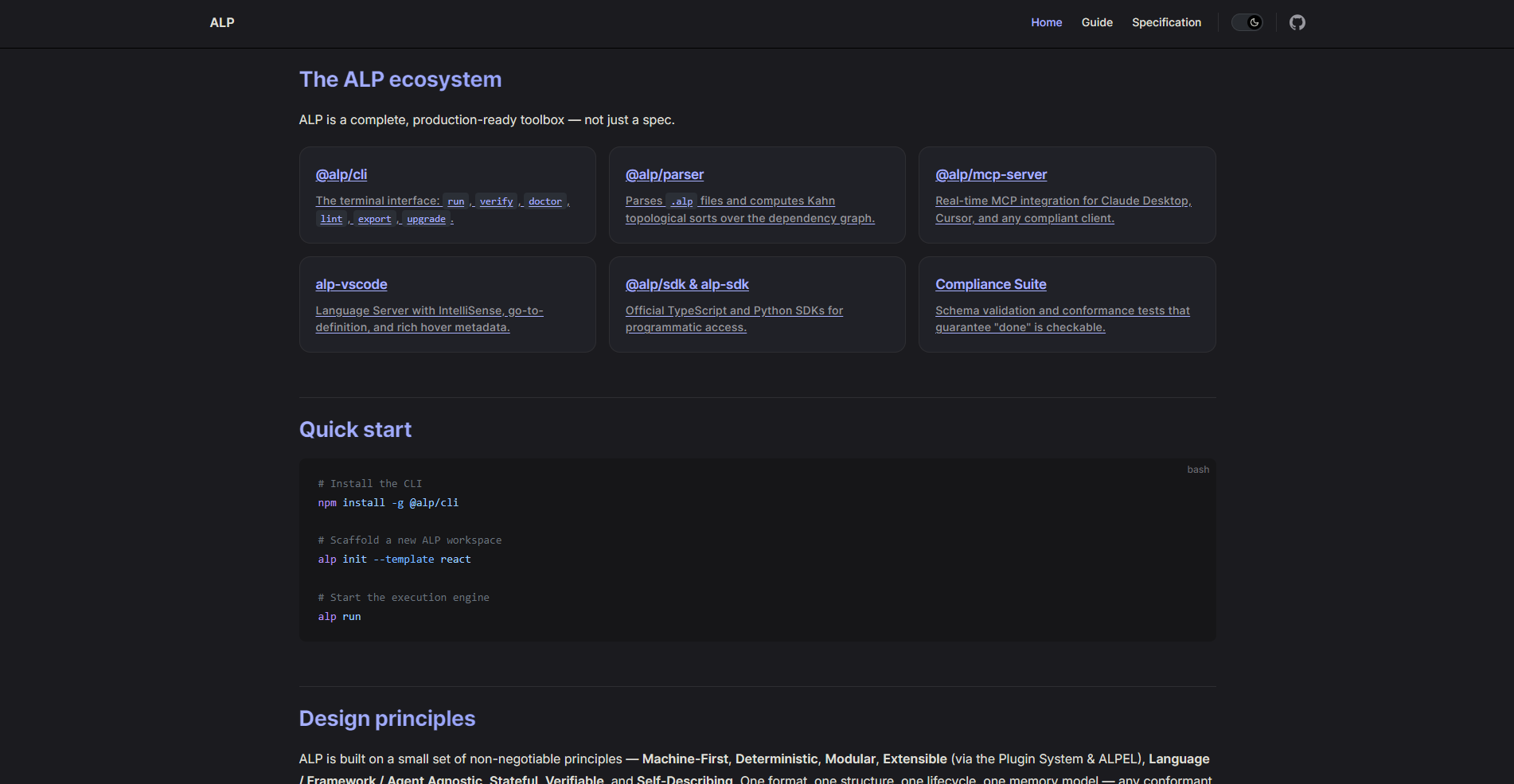
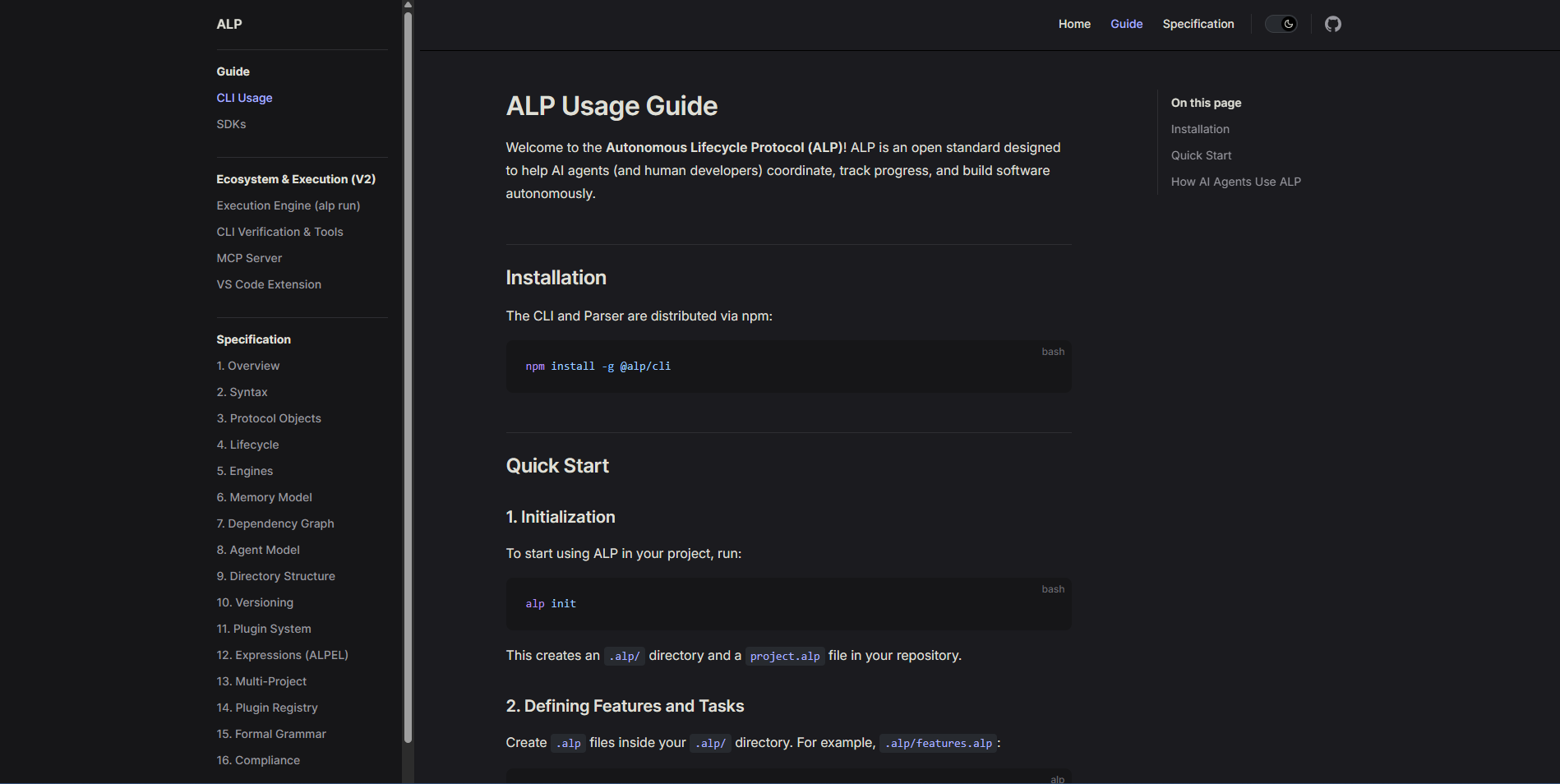
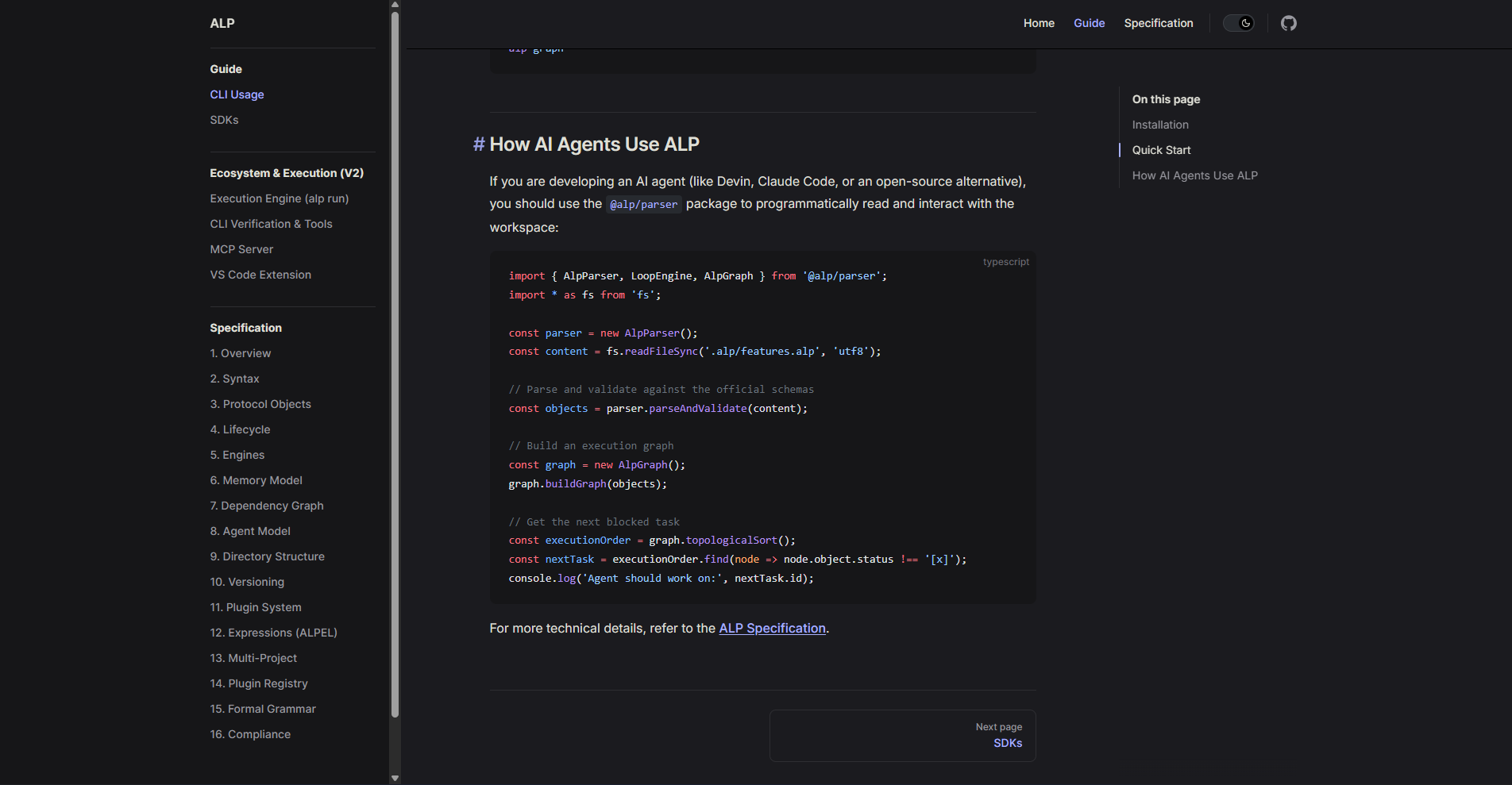
A machine-first project specification. A complete autonomous development lifecycle. Structured context management. Persistent project memory. Standardized verification and quality gates. Agent role definitions. Dependency-aware project organization. Visual workflow and dependency graphs. A roadmap for an open ecosystem including SDKs, CLI tools, IDE extensions, and integrations.
We're especially proud that ALP is designed to be vendor-neutral, allowing different AI coding agents to understand and execute the same project specification.
What we learned
Building ALP changed how we think about AI-assisted software development.
We learned that today's biggest challenge is often not generating code—it's managing context, coordinating workflows, preserving project knowledge, and ensuring consistent execution across long-running tasks.
We also realized that autonomous software engineering needs standardized protocols in the same way APIs needed OpenAPI and containers needed Docker.
Another important lesson was that visualizing project structure, dependencies, workflows, and execution state dramatically improves both human understanding and AI coordination.
What's next for Autonomous Lifecycle Protocol (ALP)
Our long-term vision is to establish ALP as an open standard for autonomous software engineering.
Our roadmap includes:
Publishing the complete ALP specification. Releasing an open-source CLI and validator. Building TypeScript and Python SDKs. Developing a VS Code extension. Creating a visual ALP project explorer. Implementing a dependency graph engine. Building an autonomous workflow engine. Adding persistent project memory and resumable execution. Creating a benchmarking suite for comparing ALP with existing AI instruction methods using transparent, repeatable evaluation criteria. Supporting integration with multiple AI coding agents and development platforms. Establishing a community-driven RFC process for evolving the protocol.
Ultimately, we want ALP to become a common language that allows autonomous coding agents to collaborate on software projects with the same consistency and interoperability that standards like OpenAPI brought to APIs.
Built With
- github
- next.js
- node.js
- python
- tailwind
- typescript
- vitest
- yaml
Log in or sign up for Devpost to join the conversation.