-
-
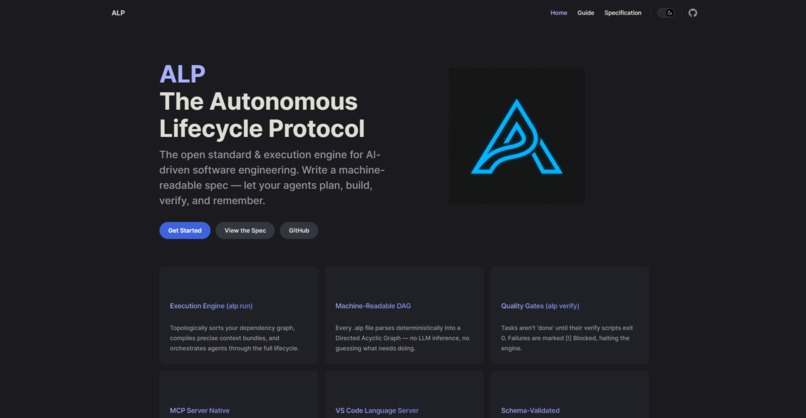
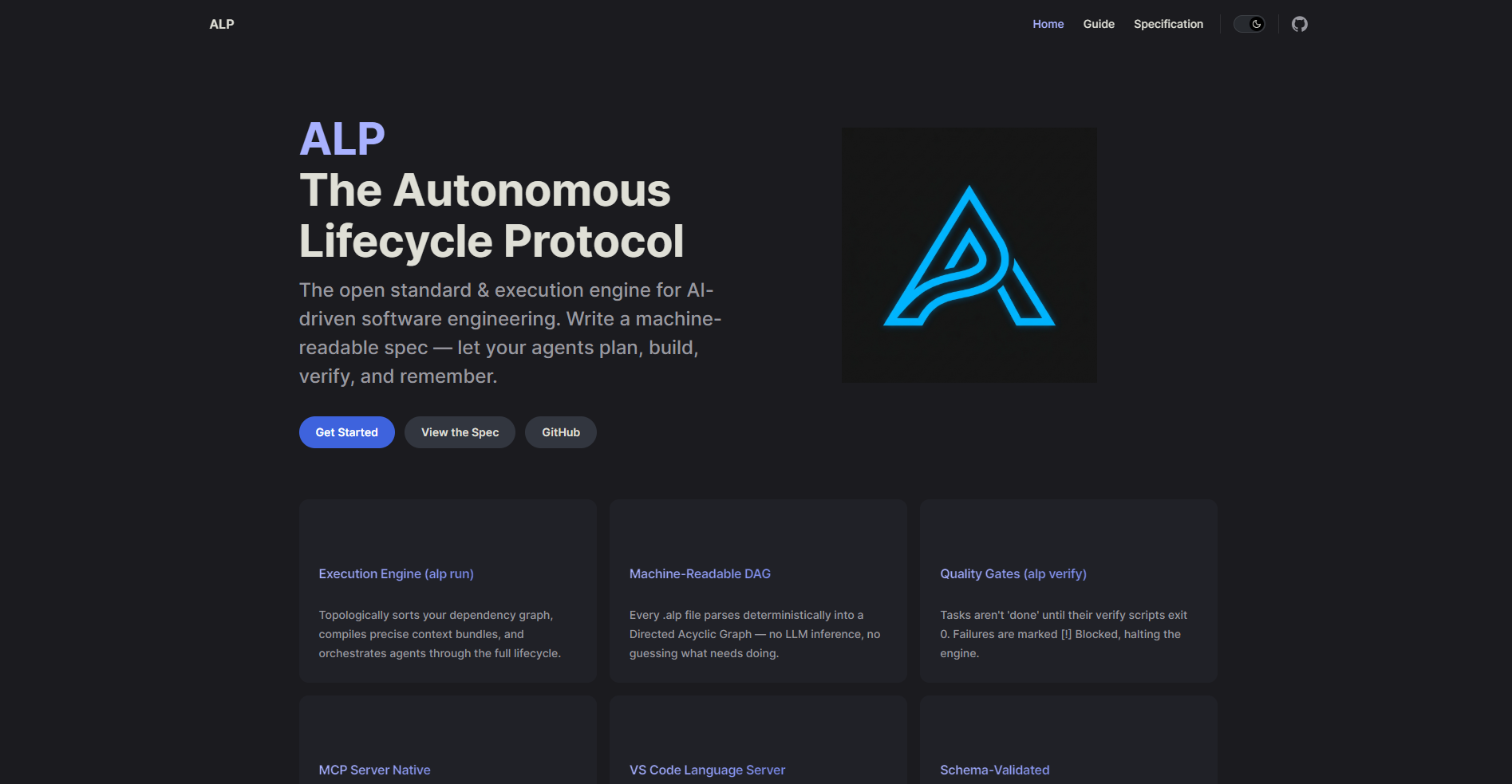
home page
-
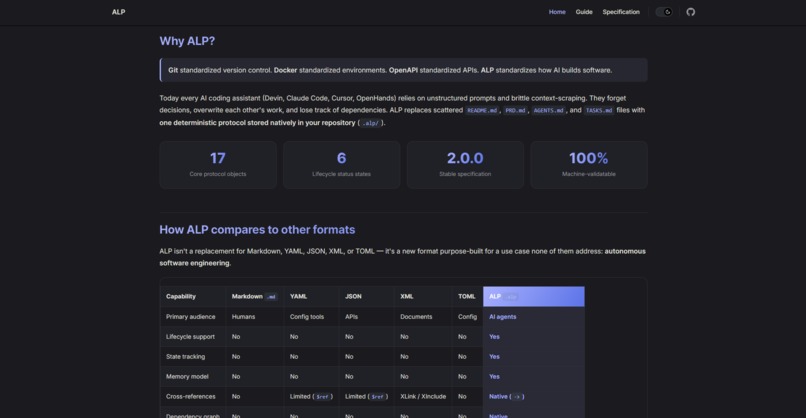
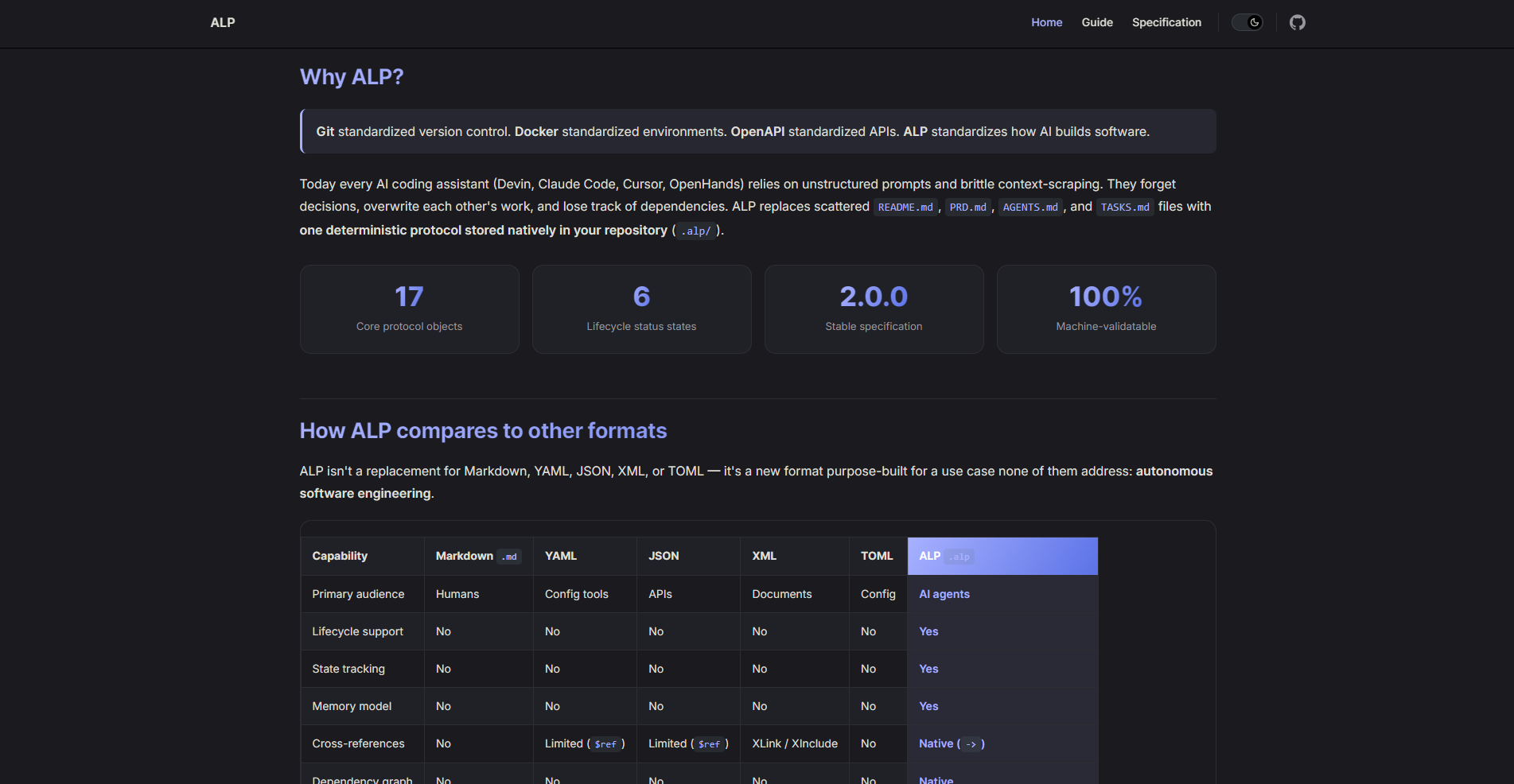
details and compair
-
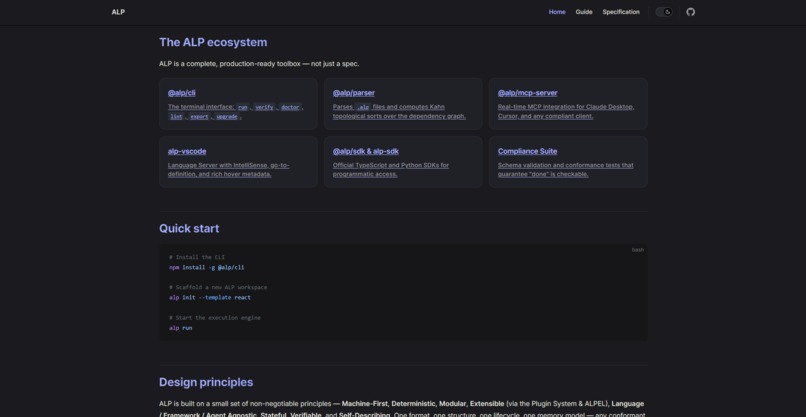
installation guide
-
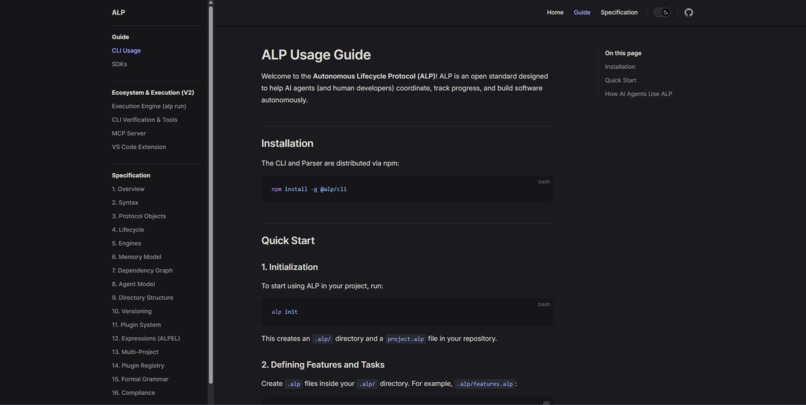
docs
-
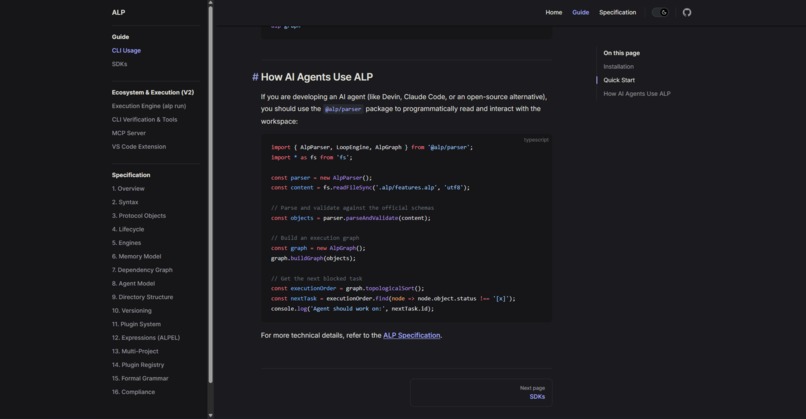
all docs
-
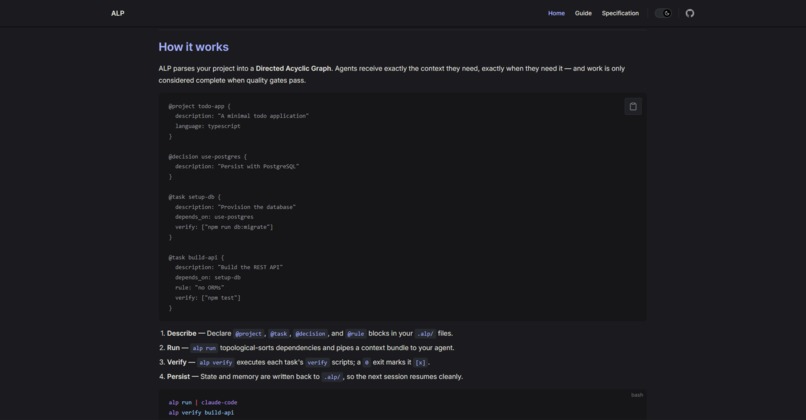
more details
Inspiration
As AI coding agents become more capable, we noticed that software projects are still described using documentation written primarily for humans—files like README.md, PRD.md, AGENTS.md, and TODO.md. Every AI agent has to repeatedly read, interpret, and infer project requirements from unstructured text.
This creates inconsistent implementations, duplicated effort, and unnecessary context loading.
We asked a simple question:
What if software projects had a standard protocol designed specifically for autonomous coding agents?
That idea became the Autonomous Lifecycle Protocol (ALP).
What it does
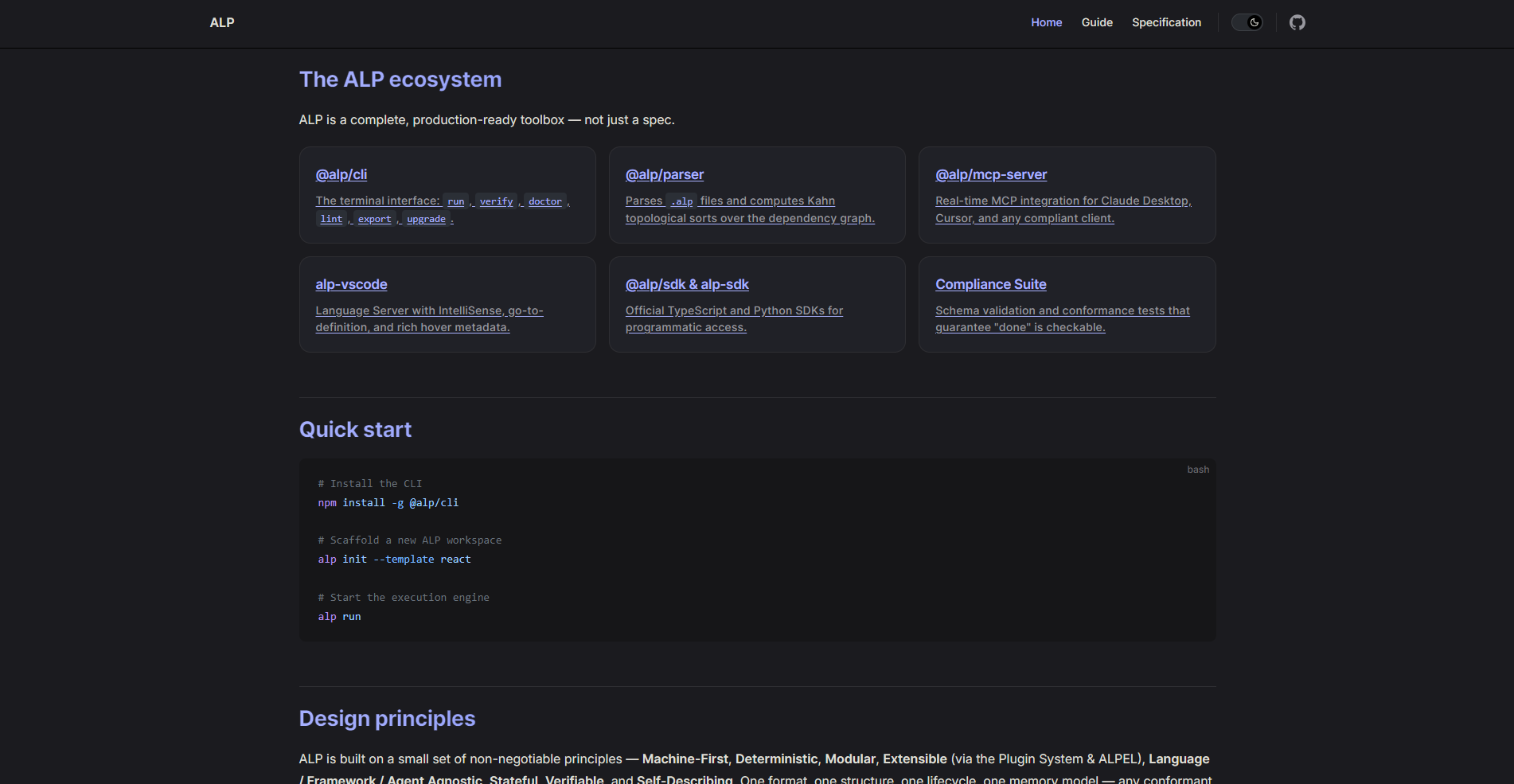
ALP is an open protocol that provides AI coding agents with a structured, machine-readable understanding of a software project.
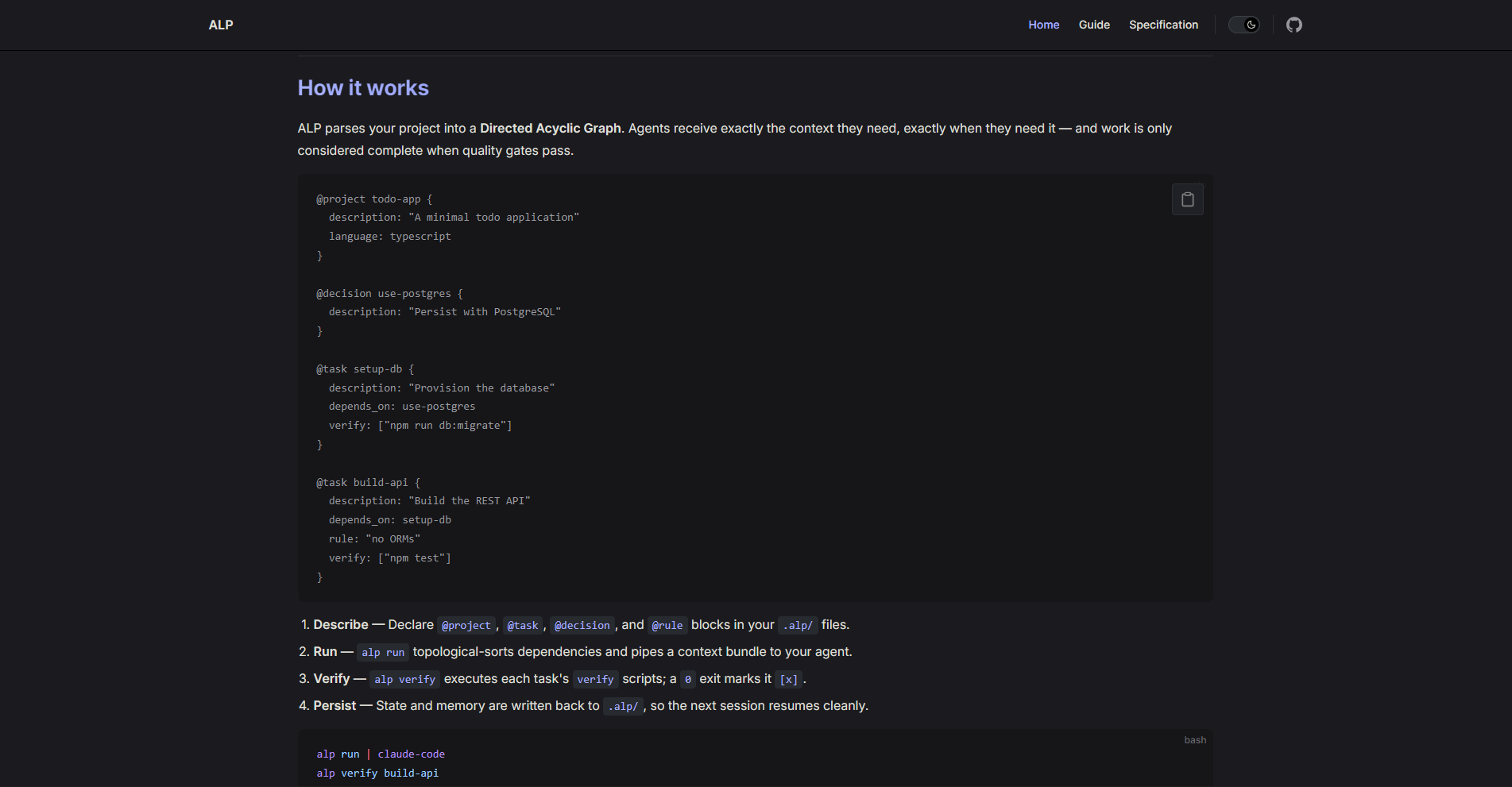
Instead of relying on scattered Markdown documents, ALP organizes everything an autonomous agent needs into a standardized project specification, including:
Project goals Features Architecture Workflows Task dependencies Development lifecycle Agent roles Verification rules Project state Decision history Context and memory
By following the ALP specification, compatible AI agents can consistently understand, plan, implement, test, verify, and maintain software projects.
How we built it
We started by identifying the shortcomings of current AI-assisted development workflows and studying existing standards such as OpenAPI, Docker Compose, Terraform, and Model Context Protocol (MCP).
We then designed ALP as a protocol rather than simply another configuration file.
The project consists of:
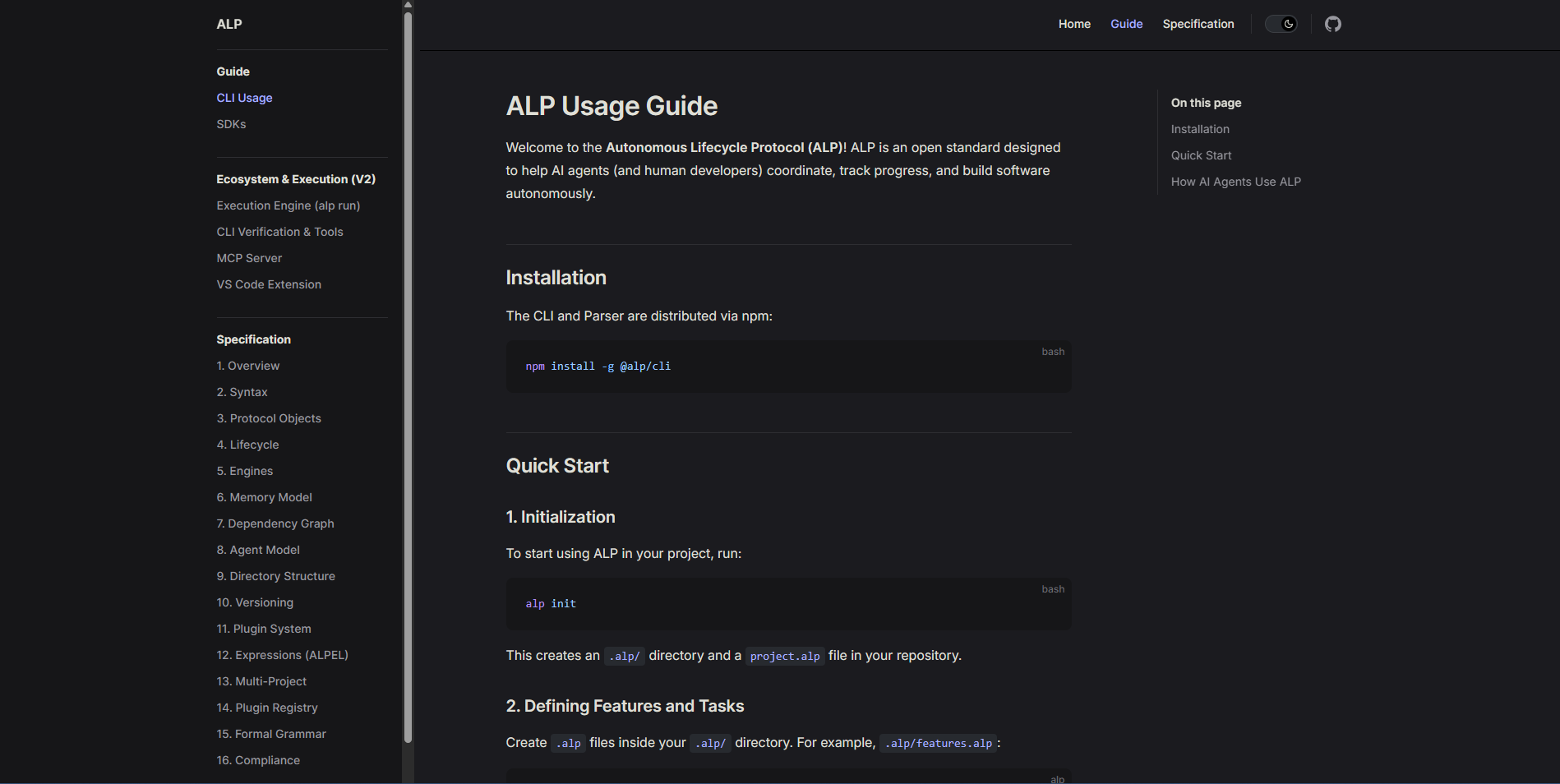
A formal protocol specification A modular project structure Standardized lifecycle definitions Workflow and loop execution models Memory and context organization Validation rules Dependency relationships Extensible schemas for future integrations
The protocol is designed to be language-agnostic, framework-agnostic, and compatible with different AI coding agents.
Challenges we ran into
One of the biggest challenges was balancing human readability with machine optimization.
Traditional documentation is easy for developers to write but difficult for autonomous agents to interpret consistently. We had to rethink how project knowledge should be represented without making the protocol overly complex.
Another challenge was designing a protocol that is generic enough to support many programming languages, frameworks, and development workflows while remaining structured and deterministic.
Finally, defining project lifecycle stages, memory, verification, and agent interactions required thinking beyond today's prompt-based AI workflows.
Accomplishments that we're proud of
We're proud that ALP is more than a file format—it introduces a new way for autonomous agents to collaborate on software projects.
Some highlights include:
A structured protocol for autonomous software development Standardized project lifecycle modeling Modular workflow definitions Built-in verification and quality gates Context-aware project organization Extensible architecture for future AI tools A foundation that multiple AI coding agents could potentially support
Our goal was not simply to improve prompts but to create a common language for autonomous software engineering.
What we learned
Building ALP taught us that autonomous development requires much more than powerful language models.
Reliable AI software engineering depends on structured context, explicit workflows, project memory, verification, and standardized execution models.
We also learned that protocols can unlock interoperability. Just as OpenAPI standardized API descriptions, a shared protocol could help different AI coding agents understand and collaborate on the same software projects.
What's next for Autonomous Lifecycle Protocol (ALP)
Our roadmap includes:
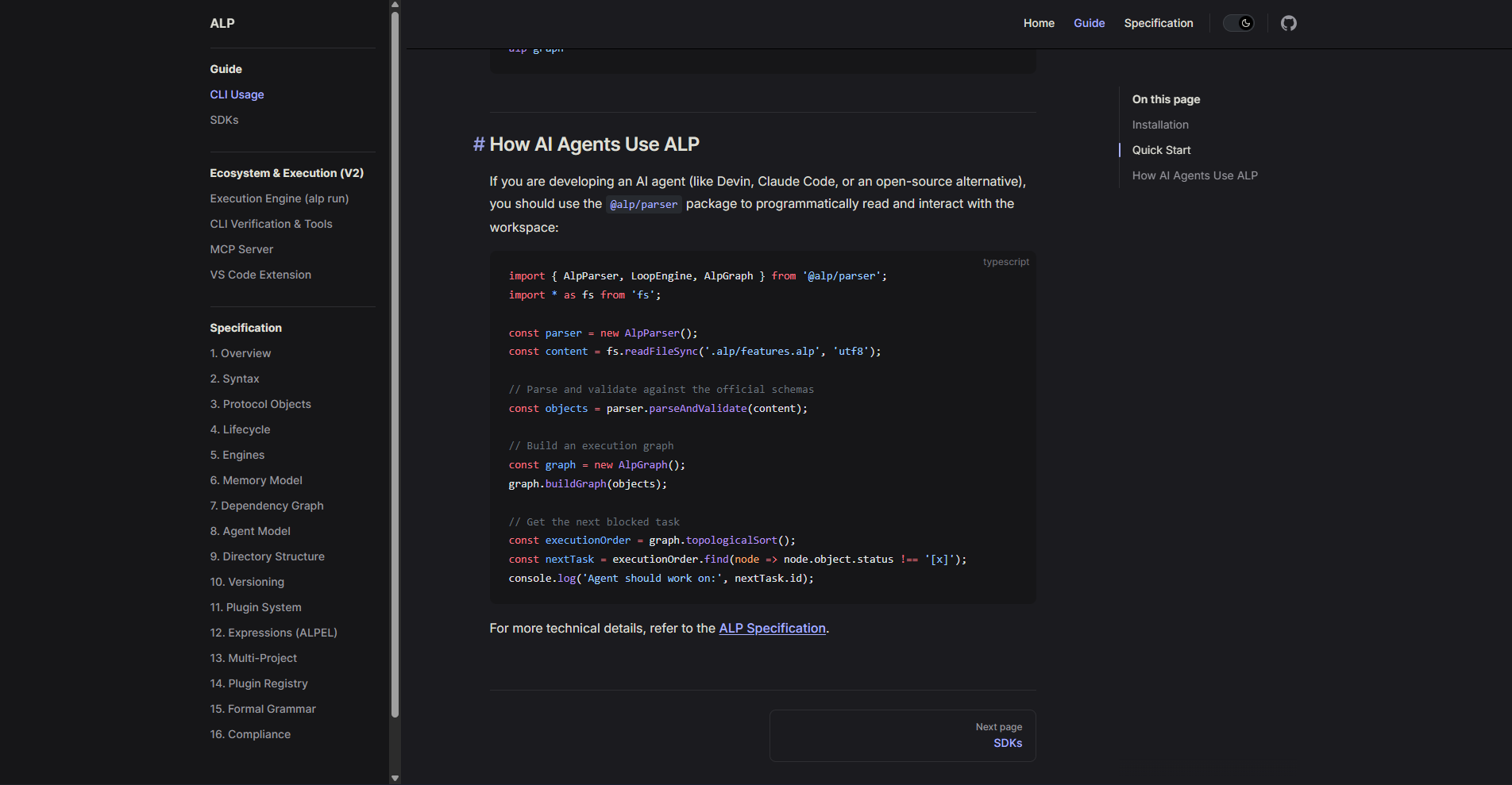
Publishing the complete open specification Building the official ALP CLI Developing schema validation tools Creating TypeScript and Python SDKs Releasing a Visual Studio Code extension Building a graphical project explorer Adding multi-agent workflow orchestration Integrating with popular AI coding agents and IDEs Establishing an open governance model and community contributions
Our long-term vision is for ALP to become an open standard for autonomous software engineering—enabling any AI coding agent to understand, build, verify, and maintain software projects using a shared protocol
Log in or sign up for Devpost to join the conversation.