-
-
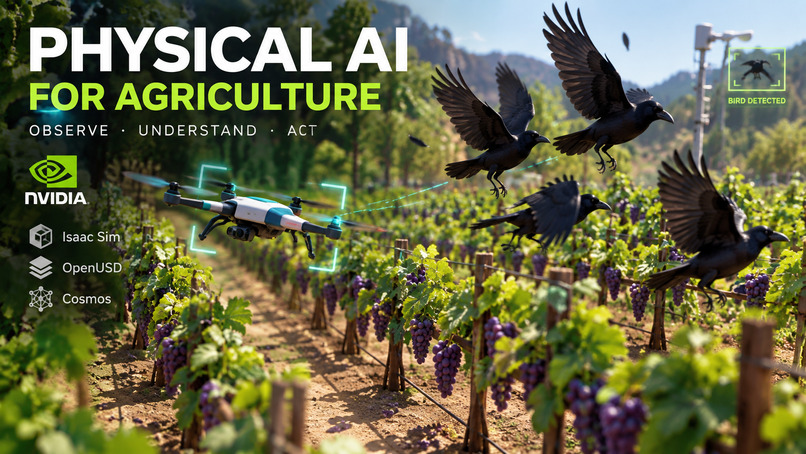
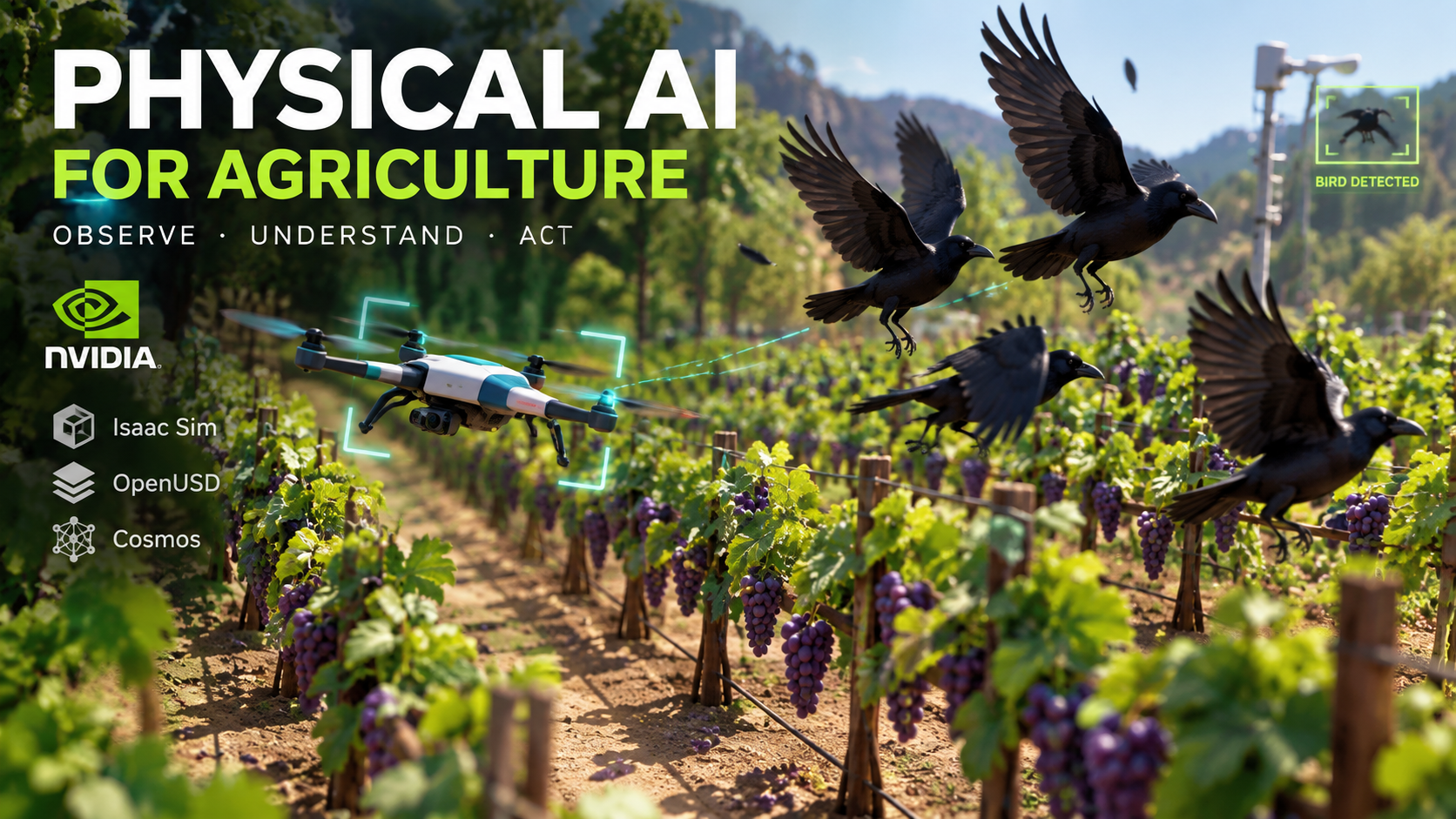
Drone autonomous systems, agriculture help
-
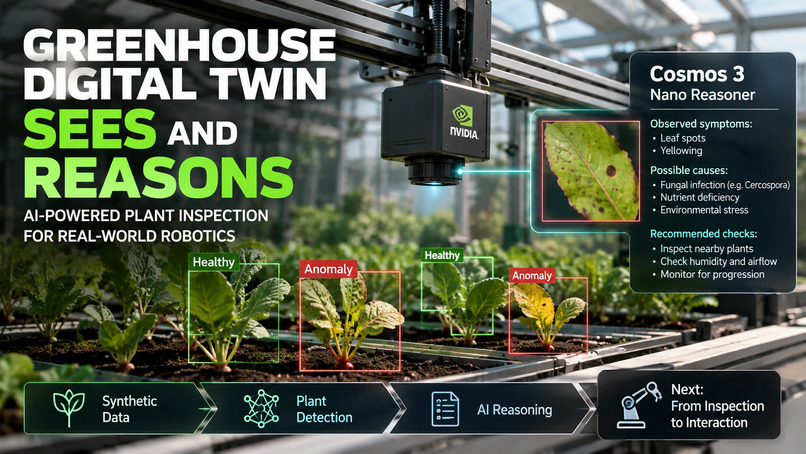
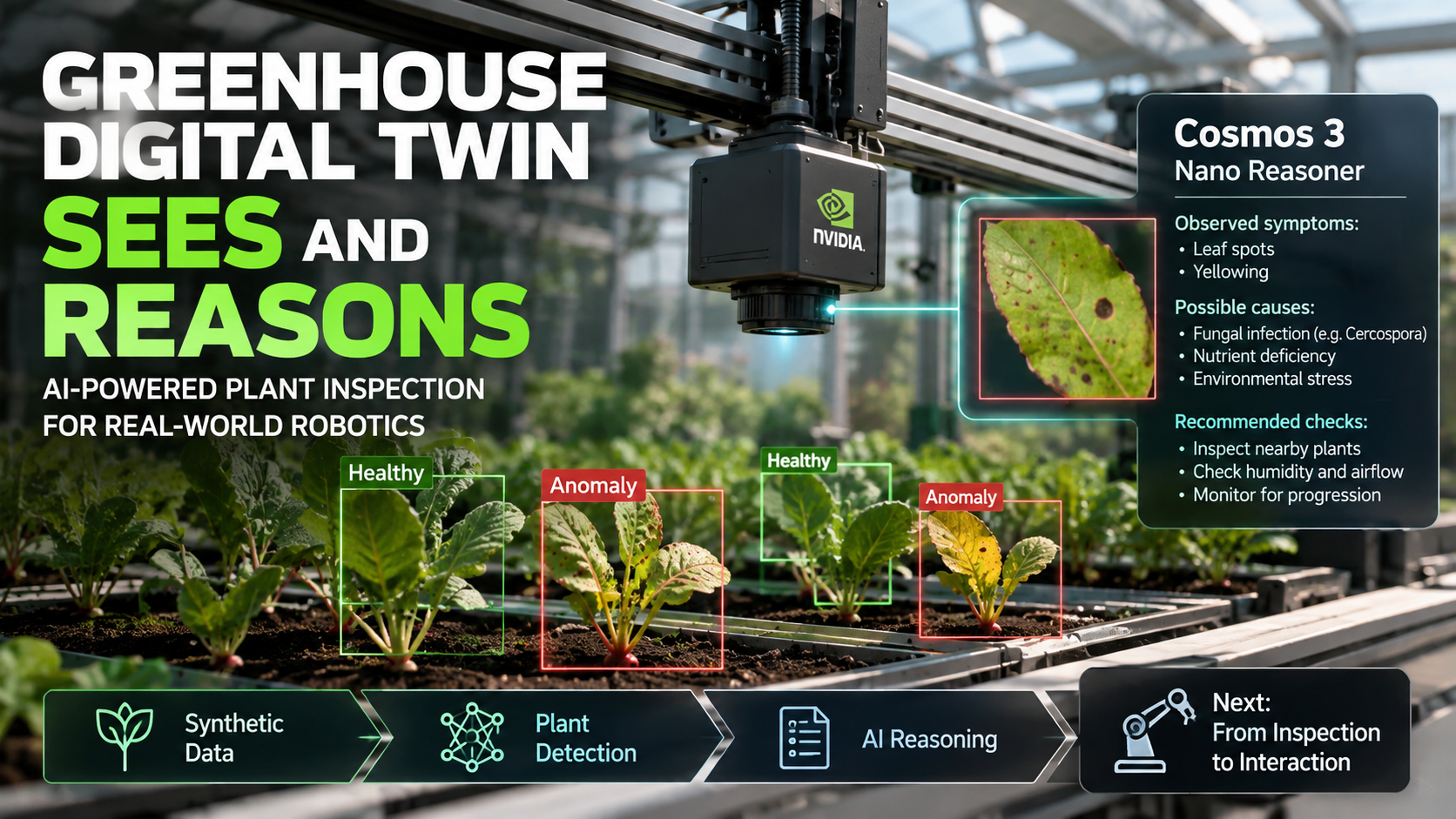
Computer vision models to recognize plants and symptoms
Inspiration
What if a greenhouse could understand its environment, identify problems, make decisions, and coordinate autonomous systems to keep crops healthy with minimal human intervention?
My Autonomous Greenhouse started with that question. Agriculture faces growing challenges, including labor shortages, resource inefficiency, crop diseases, and the need to produce more food sustainably. I wanted to explore how Physical AI, digital twins, computer vision, and robotics could work together to address these challenges.
The ultimate goal is not to replace farmers, but to give them intelligent tools that reduce repetitive work, improve resource management, and support more sustainable food production.
What it does
This is a simulation-based Physical AI ecosystem designed to monitor agricultural environments, identify potential problems, and coordinate intelligent responses.
The project combines several interconnected systems:
- Intelligent Greenhouse Management
A digital twin represents a greenhouse equipped with environmental sensors, ventilation systems, irrigation equipment, and automated windows.
The system monitors conditions such as temperature, humidity, and soil moisture.
An AI reasoning layer powered by NVIDIA Cosmos3 Reasoner, interprets environmental information, identify potential problems, and coordinate appropriate actions.
The objective is to evolve from rule-based automation toward intelligent, context-aware environmental management.
- Computer Vision and Plant Health Monitoring
Cameras monitor plants and agricultural environments to detect potential anomalies.
The project explores computer vision models trained and evaluated using synthetic agricultural datasets generated in NVIDIA Isaac Sim.
By combining visual observations with AI reasoning, the system aims to distinguish normal conditions from potential problems and recommend appropriate interventions.
- Autonomous Agricultural Robotics
The greenhouse environment is designed to accommodate robotic systems that can assist with agricultural operations.
Two complementary robotic concepts are being developed:
Robotic Arm
A robotic manipulator designed for future agricultural tasks. second, an Autonomous Mobile Platform, a modular mobile robotic platform intended to support agricultural operations.
The long-term objective is to enable these robots to navigate, transport materials, and perform agricultural tasks autonomously.
- Drone and Gantry-Based Monitoring
The ecosystem extends beyond the greenhouse into larger agricultural environments.
Drones and gantry-mounted cameras can provide visual observations across growing areas, helping identify potential crop anomalies or environmental problems.
A separate drone demonstration explores autonomous bird deterrence, where simulated drones respond to the presence of crows in agricultural fields.
This introduces the possibility of coordinating multiple autonomous systems through a shared intelligence layer.
- A Unified Agricultural Intelligence System
The central vision is to connect all these components through a continuous operational loop, from Perception and Reasoning to Decision and Action, whit a final Verification step.
How we built it
The Autonomous Greenhouse is developed using NVIDIA’s simulation and Physical AI ecosystem, with Python connecting environmental logic, perception, and robotic behaviors:
The greenhouse environment was constructed as a simulation-ready digital twin using NVIDIA Isaac Sim and OpenUSD. Python controls the environmental simulation and equipment behavior. NVIDIA Cosmos is used to explore visual reasoning and interpretation of agricultural observations.
For the hackathon, the goal is to integrate Nebius infrastructure into the AI reasoning and execution pipeline.
Challenges we ran into
One of the biggest challenges is moving beyond AI-generated descriptions toward actions that affect the simulated environment.
Recognizing a potential problem is only the first step. The system must also determine what action is appropriate, translate that decision into a valid command, execute it safely, and verify the result.
Creating synthetic images is relatively straightforward, but generating datasets that produce reliable perception models is much more challenging. Lighting conditions, camera perspectives, plant geometry, and environmental variation all influence model performance.
Environmental controllers, drones, robotic arms, and mobile robots operate at different levels of complexity. Coordinating these systems requires a modular architecture where each component has clearly defined responsibilities and interfaces.
Accomplishments that we're proud of
We created a modular greenhouse digital twin in Isaac Sim, providing a foundation for environmental monitoring, robotic experimentation, and autonomous agricultural operations. The simulation supports automated responses to environmental conditions, including ventilation and irrigation control.
What we learned
Physical AI requires more than intelligent models.
Generating labeled datasets in simulation makes it possible to explore perception tasks without manually collecting and annotating every image. Synthetic data is powerful
Agricultural environments combine environmental sensing, visual perception, planning, manipulation, navigation, and human collaboration.
What's next for Autonomous Greenhouse
Currently we are developing policies for the robotic arm to pick up a seedling and place it in the right place. and leave it safe and covered. At the same time, we are researching on Jetson, little scale experiment to integrate sensor inputs to Cosmos 3 and allow actions in a very backyard level. The long-term vision is a circular agricultural system where cameras and sensors continuously observe the environment, AI interprets changing conditions, and autonomous machines collaborate to plant, monitor, maintain, and eventually harvest crops.
Human operators remain responsible for supervision, strategic decisions, and safety, while intelligent systems handle increasingly complex and repetitive operations.
Built With
- cosmos3
- isaacsim
- jetson-nano
- nvidia
- omniverse
- openusd
- python

