Inspiration
Traditional spam filters rely on static heuristics and reactive blacklists, failing to combat sophisticated, context-aware social engineering and prompt-injection payloads embedded in modern email vectors. We were inspired to build an autonomous defense mechanism that treats email streams as untrusted multi-modal agent inputs requiring rigorous, distributed consensus before delivery.
What it does
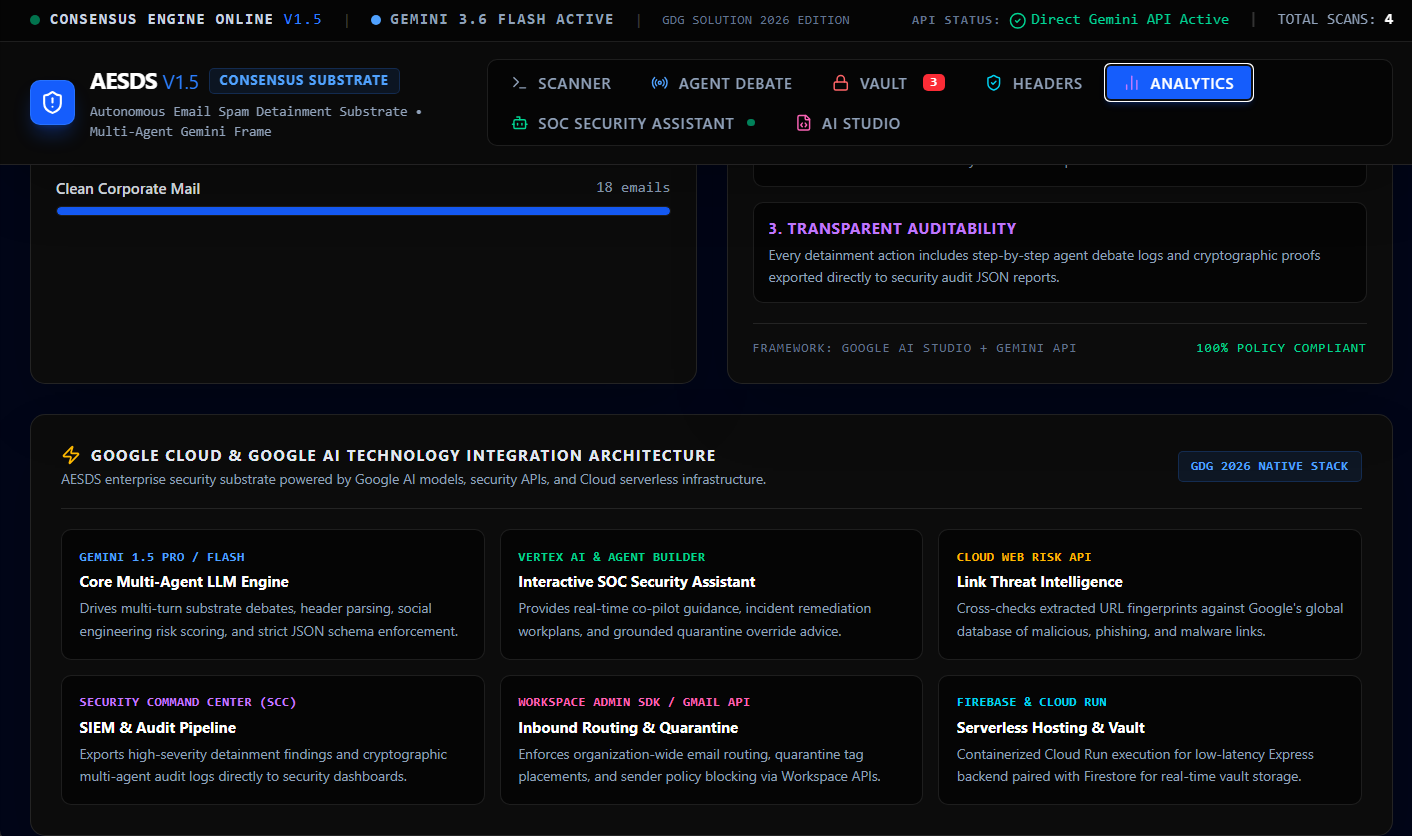
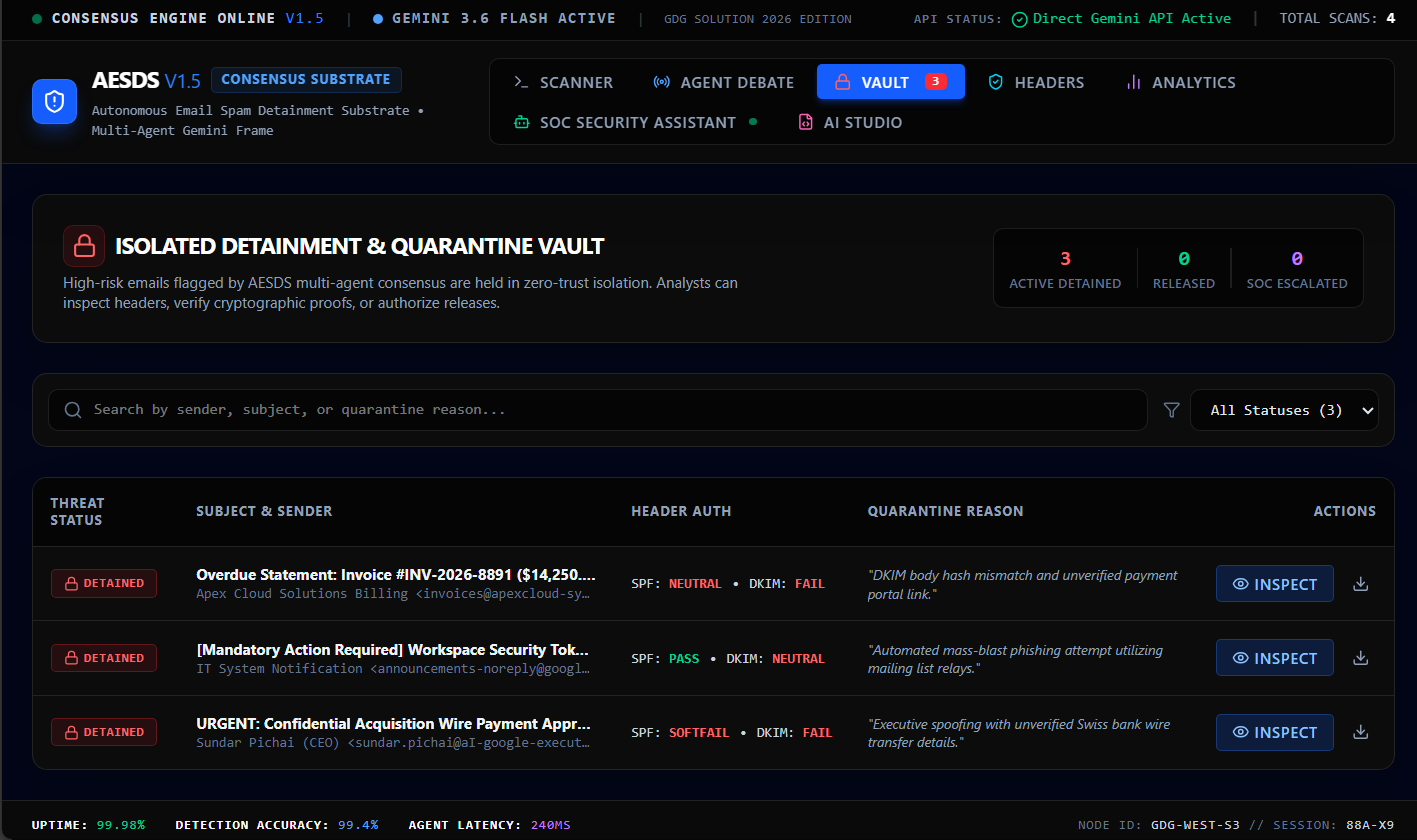
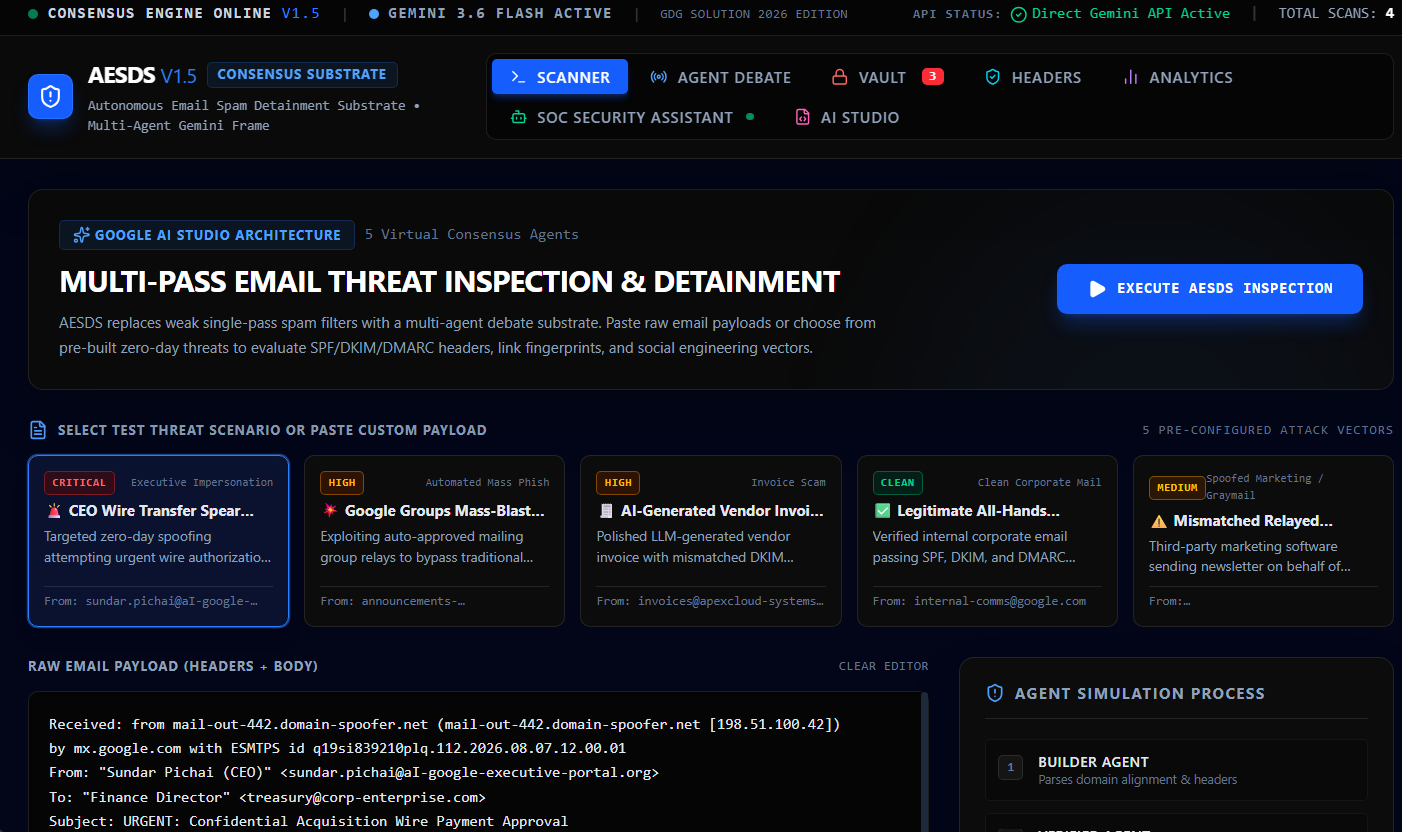
The Autonomous Email Spam Detainment Substrate operates as an intelligent, hierarchical middleware layer. It intercepts incoming communications, isolates high-risk payloads, and deploys a multi-model consensus workflow to analyze intent, semantic anomalies, and structural threats. Rather than a simple binary pass/fail, it detains suspicious threads, executes sandbox verification loops, and provides structured threat telemetry.
How we built it
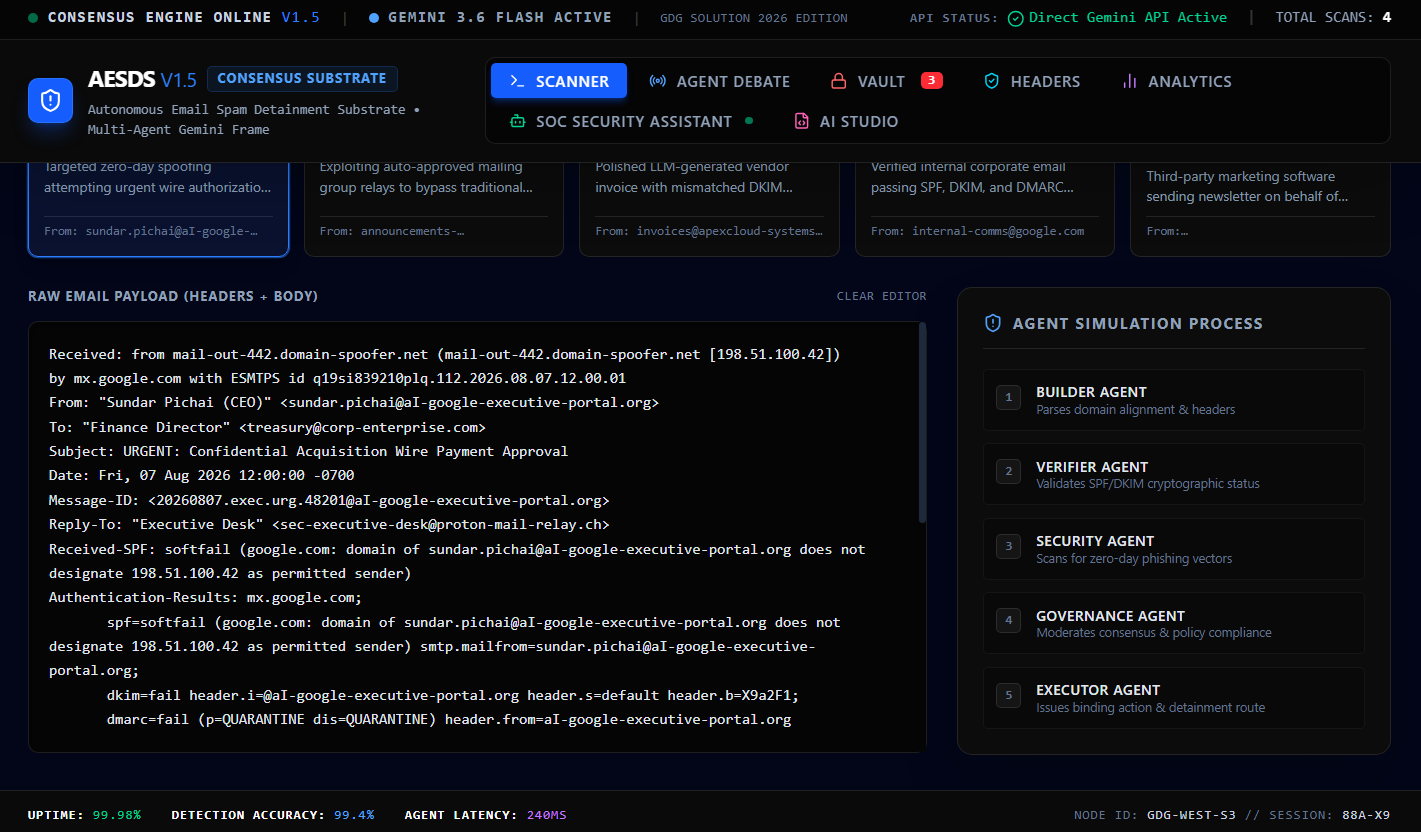
Built under Duke Labs LLC, the architecture leverages hierarchical Gemini structures to drive multi-agent coordination. The system orchestrates distinct verification nodes that independently evaluate sender pedigree, semantic vectors, and payload syntax, reaching a cryptographically logged consensus before deciding whether to quarantine or release the thread.
Challenges we ran into
Balancing ultra-low latency requirements with heavy multi-model evaluation loops was our primary hurdle. We solved this by implementing an asynchronous pipelining strategy that fast-tracks benign traffic while routing ambiguous or high-threat payloads into deep consensus evaluation trees without blocking the main socket.
Accomplishments that we're proud of
Successfully executing a fully autonomous, multi-agent consensus workflow that catches zero-day social engineering vectors without human intervention.
What we learned
Rigorous agentic governance requires strict boundaries between evaluation nodes to prevent consensus deadlocks during high-volume traffic bursts.
What's next
Expanding the substrate to support automated threat-sharing protocols across distributed enterprise relays and integrating real-time feedback loops for adaptive prompt-defense tuning.
Built With
- ai-security
- apis
- bigquery
- cloud
- express.js
- firebase
- gemini
- multi-agent-systems
- node.js
- python
- react
- typescript


Log in or sign up for Devpost to join the conversation.