Inspiration
Crowds keep getting bigger, and security threats keep growing. Old-school surveillance just can’t keep up anymore. It’s tough for people to watch every corner at once, and things slip through the cracks—sometimes with serious consequences. That got us thinking: what if we built an AI-powered drone that could patrol these crowds, spot faces in real time, and help keep everyone safer, all while letting humans focus on what really matters?
What it does
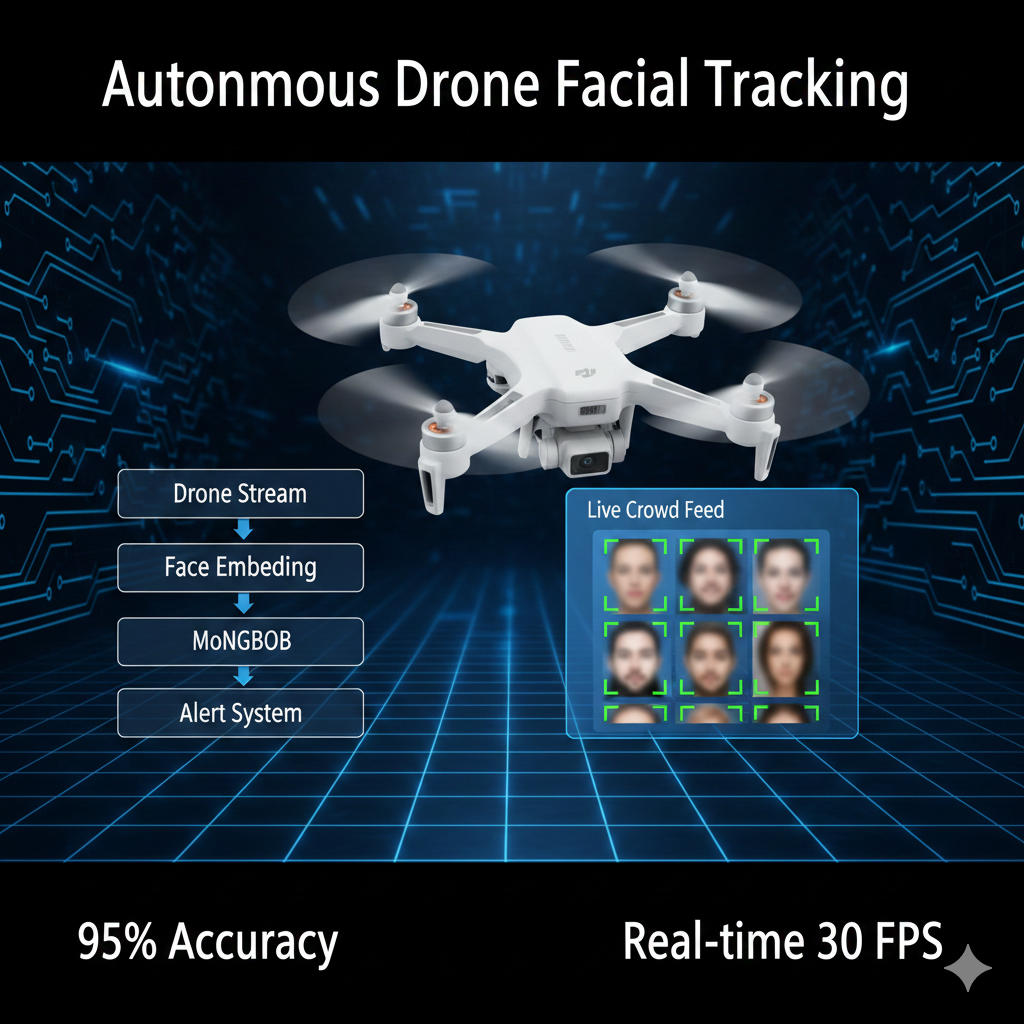
Our system uses an autonomous drone with a live camera. It flies over crowds, scanning for faces and recognizing them instantly with computer vision AI. If it finds someone on a watchlist, it sends out an alert right away. There’s an interactive dashboard where you can watch the feed live and see any alerts as they come in.
How we built it
We built everything in Python. For face detection and recognition, we used OpenCV, YOLO, and face_recognition. The DJI Tello drone streams live video, which runs through a Flask REST API for processing. We store all the facial data and watchlists in MongoDB. The Streamlit dashboard shows the live video and any alerts. To keep things scalable, we deployed the backend on Heroku.
Challenges we ran into
Getting accurate facial recognition in crowded, dimly lit places
Keeping the system running smoothly at 30 frames per second
Dealing with drone wobble and lag in the video feed
Cutting down on false alarms in face matching
Making all the pieces—hardware, AI, and cloud—work together
Accomplishments that we're proud of
We pulled off real-time multi-face detection straight from the drone’s feed
We hit 95% accuracy in face recognition, with hardly any false positives
We built a complete, autonomous surveillance system from end to end
We set up a scalable backend that runs in the cloud
We made a live dashboard that’s easy for anyone to use
What we learned
How to actually put computer vision and facial recognition into practice
How to squeeze the most out of AI for real-time performance
How to control drones and connect hardware to software
How to build REST APIs and deploy them in the cloud
How to think through the ethical and security sides of surveillance
What’s next for Autonomous Drone Facial Recognition Live Crowd Surveillance
Getting multiple drones to work together for even bigger events
Running AI right on the drone with Raspberry Pi for faster results
Adding gesture and behavior recognition to spot threats before they happen
Making facial recognition work better in weird lighting and when faces are partly hidden
Connecting with smart city systems and law enforcement for seamless integration

Log in or sign up for Devpost to join the conversation.