-
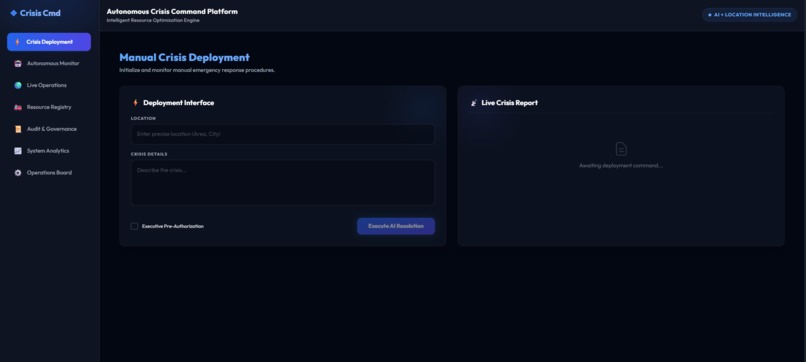
Home Dashboard
-
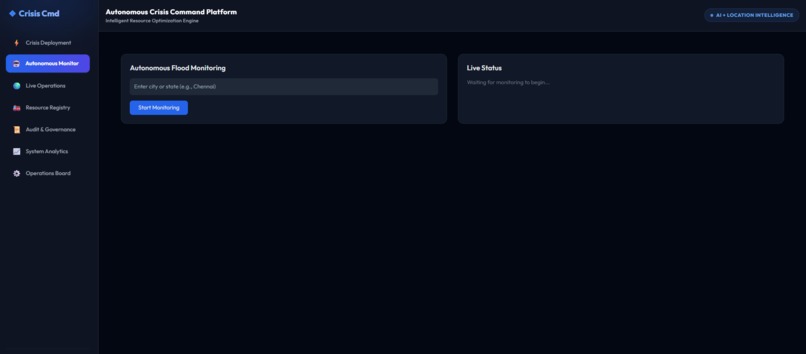
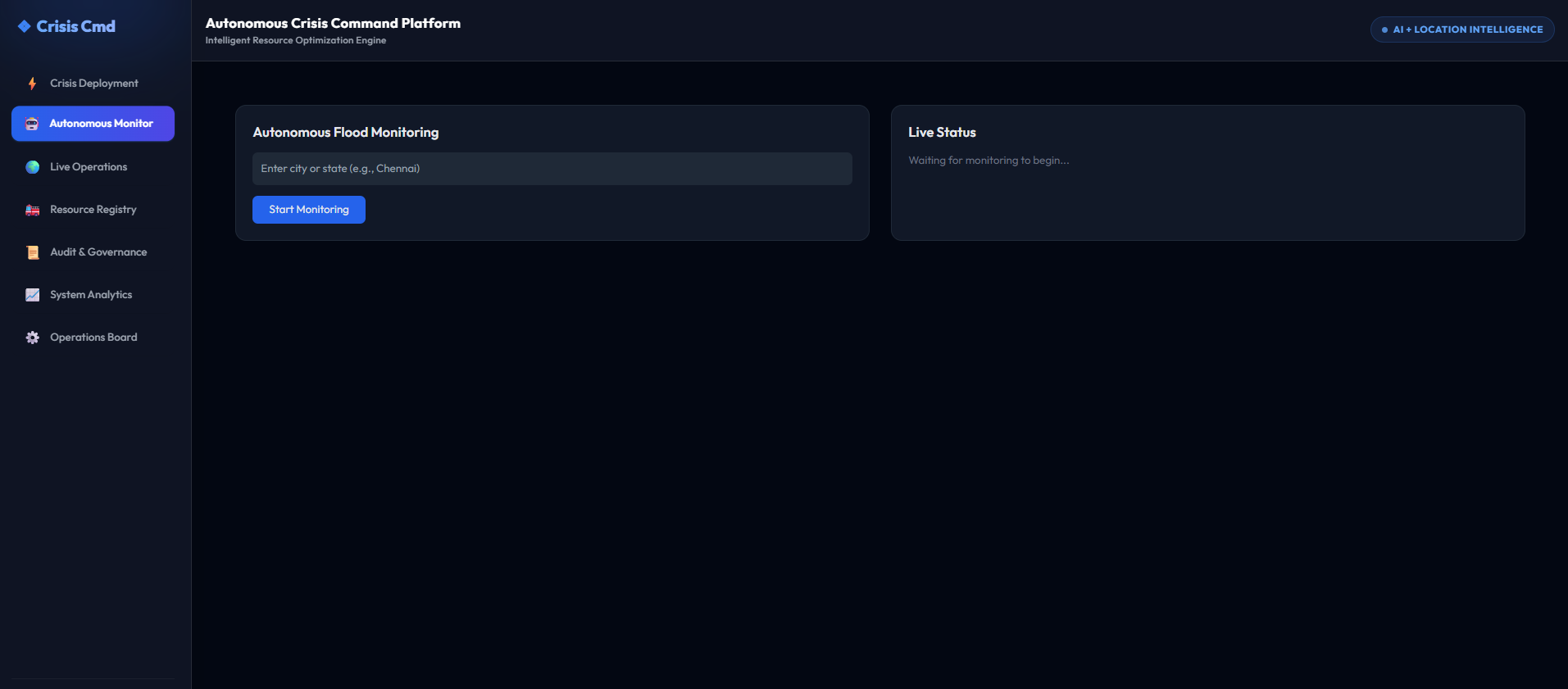
Autonomous Monitor
-
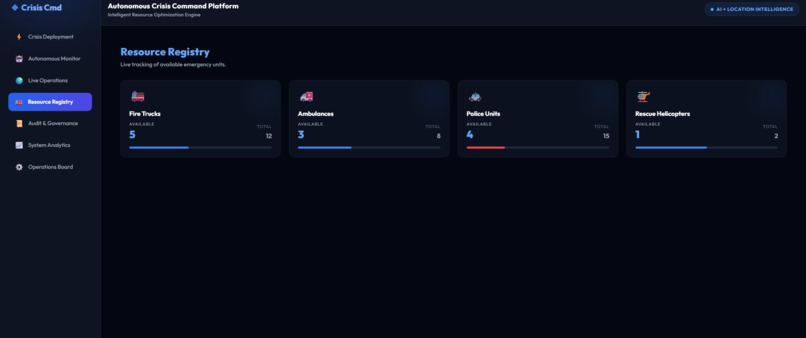
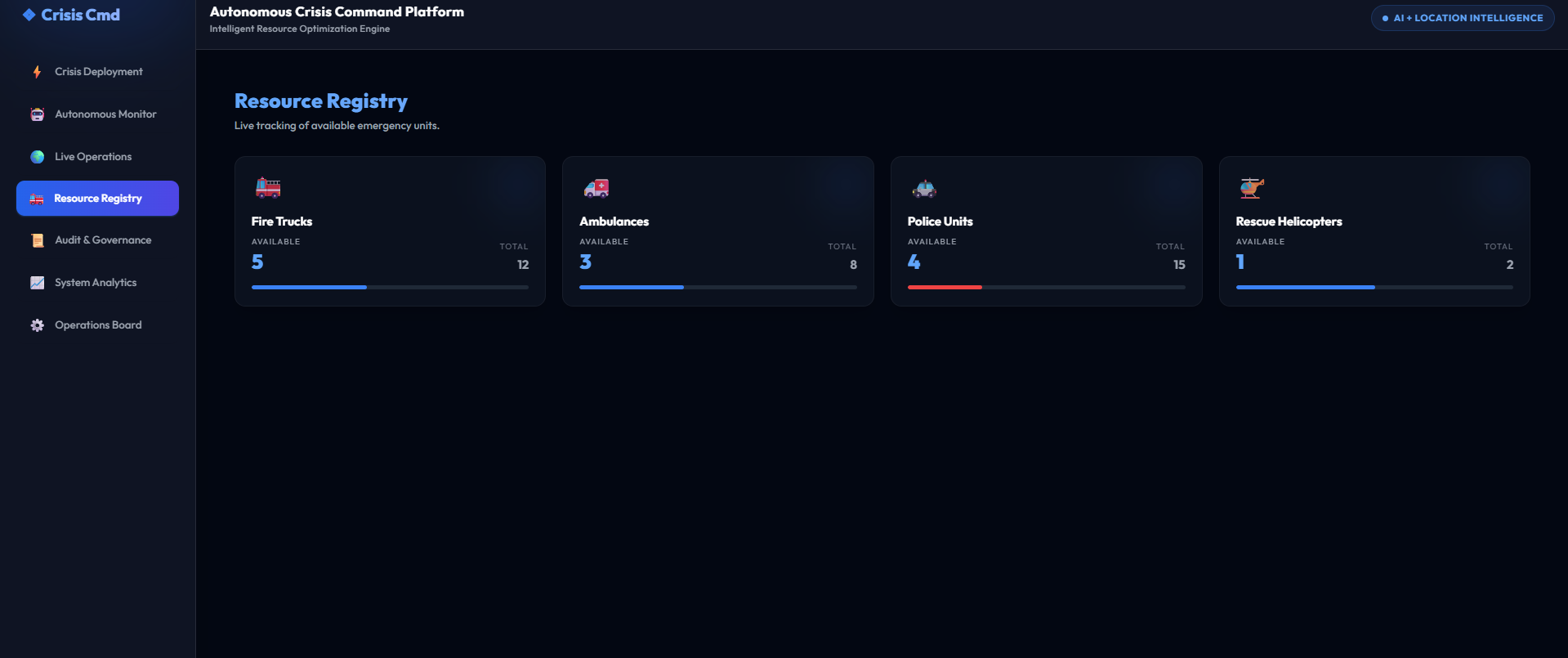
Resource Registry
-
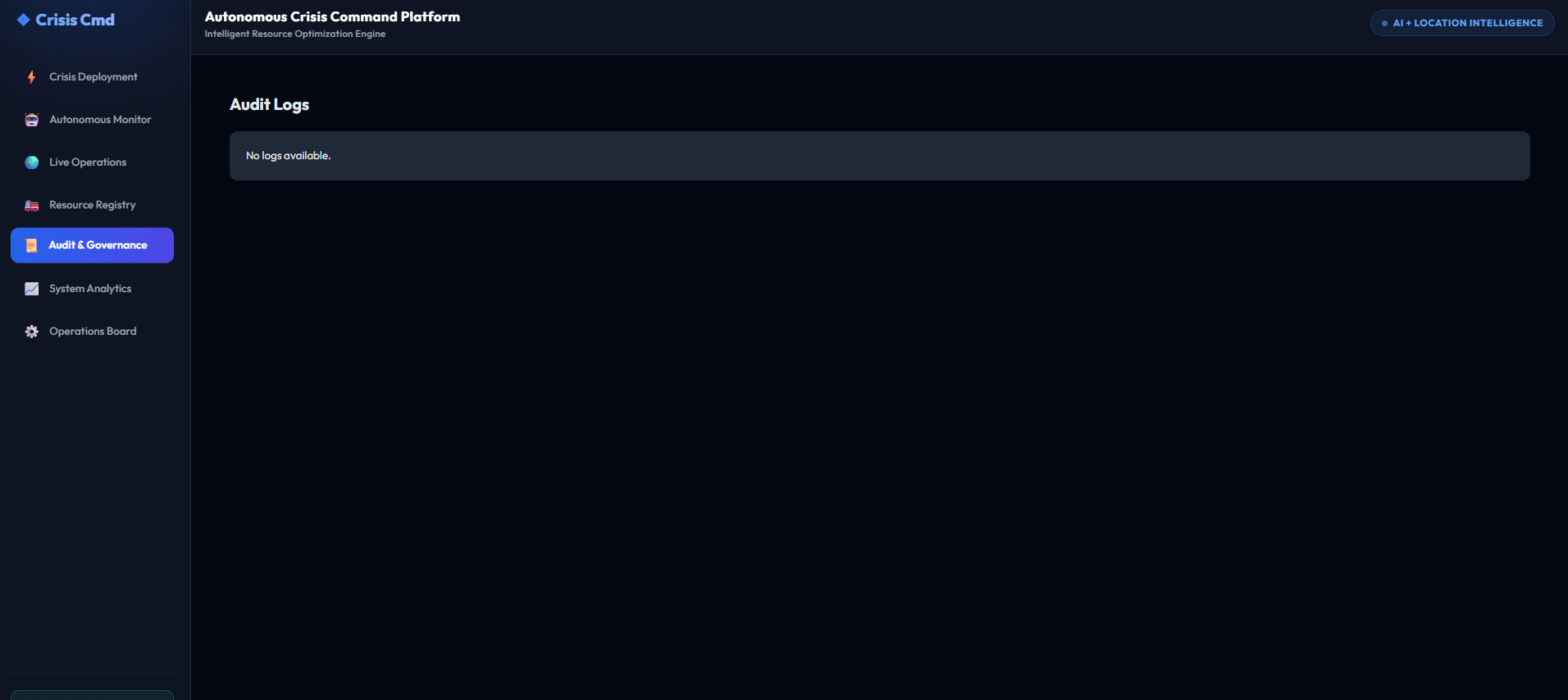
Audit Logs
-
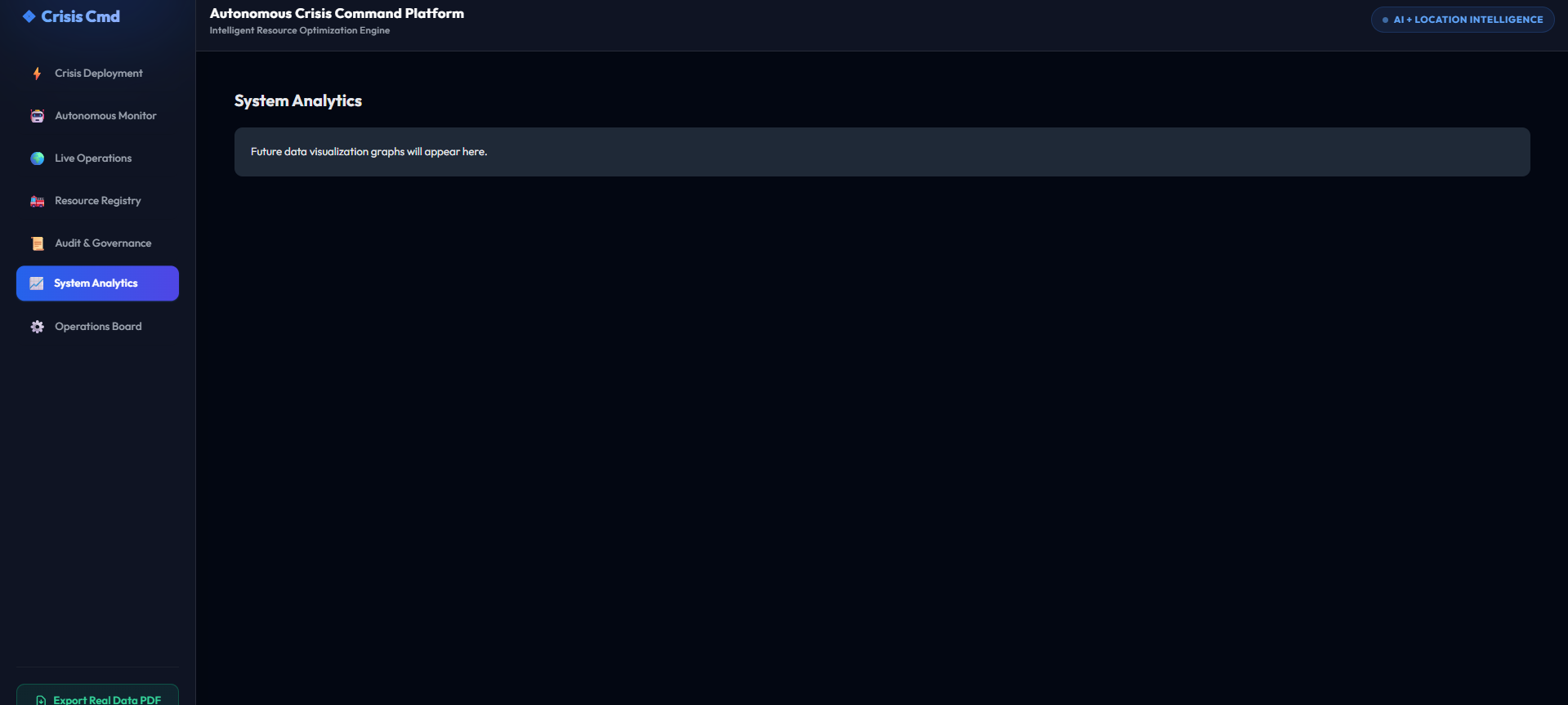
System Analytics
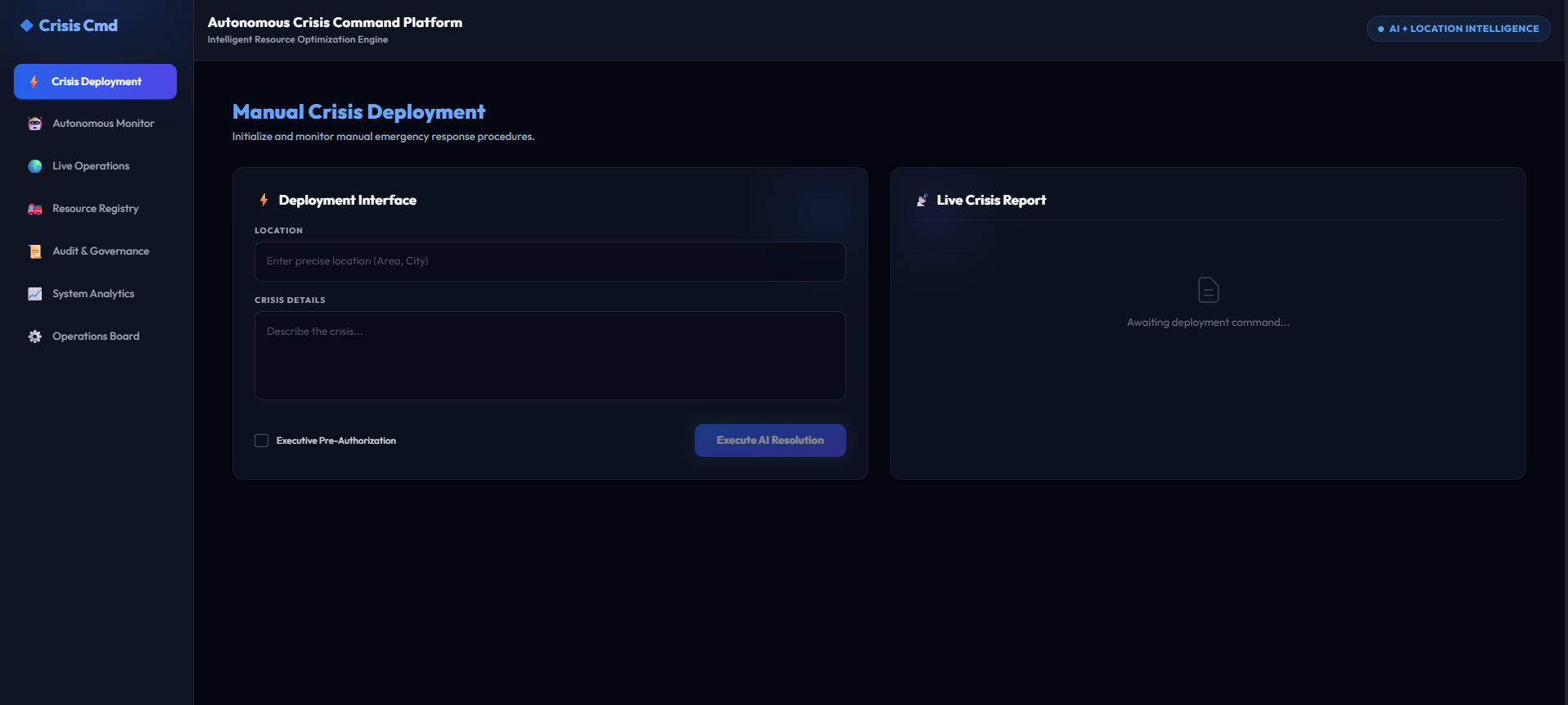
Inspiration
Emergency response systems today are often fragmented, slow, and heavily dependent on manual coordination. During real-world crises like floods, fires, or gas leaks, delays in verification and communication can cost lives. We wanted to build a system that doesn’t just respond to emergencies—but thinks, verifies, and acts autonomously, while still keeping humans in control.
What it does
Autonomous Crisis Command is an AI-powered system that detects emergencies, evaluates their severity, and orchestrates a complete response pipeline in real time.
From a simple input (user report, news signal, or weather data), the system:
Extracts crisis details using AI Calculates risk score and validates severity Calls officers via voice (Twilio) for approval Escalates automatically if no response Dispatches emergency teams instantly Logs every action for full transparency Generates automated PDF reports with timelines
It transforms emergency management from manual and reactive → intelligent and autonomous.
How we built it
We designed the system as a 6-stage intelligent pipeline:
Crisis Intake Engine – AI extracts structured data from raw inputs Risk Engine – Normalizes severity and calculates actionable risk Voice Approval System – Human-in-loop approval via automated calls Orchestration Layer – Dispatches emergency teams via calls & SMS Audit Logger – Tracks every event in real time Report Generator – Creates detailed PDF reports automatically
The backend is built using FastAPI with asynchronous processing, ensuring non-blocking operations. We integrated Twilio APIs for real-time communication and used modular architecture for scalability.
Challenges we ran into
Designing a reliable risk scoring system without real-world datasets Handling asynchronous workflows (calls, approvals, dispatch) smoothly Preventing duplicate or conflicting crisis triggers Building a real-time escalation logic that mimics real command chains Ensuring the system remains fast, scalable, and fault-tolerant
What we learned
How to design event-driven architectures for real-world systems Integrating AI with decision-making pipelines Building human-in-the-loop automation systems Handling real-time communication using APIs like Twilio Structuring production-ready backend systems under time constraints
Future scope
Integration with IoT sensors (flood, smoke, seismic) Real-time dashboard with live crisis mapping ML-based predictive disaster modeling Integration with government emergency systemstion
What it does
How we built it
Challenges we ran into
Accomplishments that we're proud of
What we learned
What's next for Untitled
Built With
- built-with-languages:-python-backend:-fastapi-database:-sqlite-/-postgresql-(via-sqlalchemy)-apis-&-services:-twilio-(voice-&-sms)
- event-driven
- modular-design
- ngrok-(webhooks)-ai-components:-crisis-extraction-model
- risk-scoring-engine-pdf-generation:-reportlab-architecture:-async-processing

Log in or sign up for Devpost to join the conversation.