Inspiration
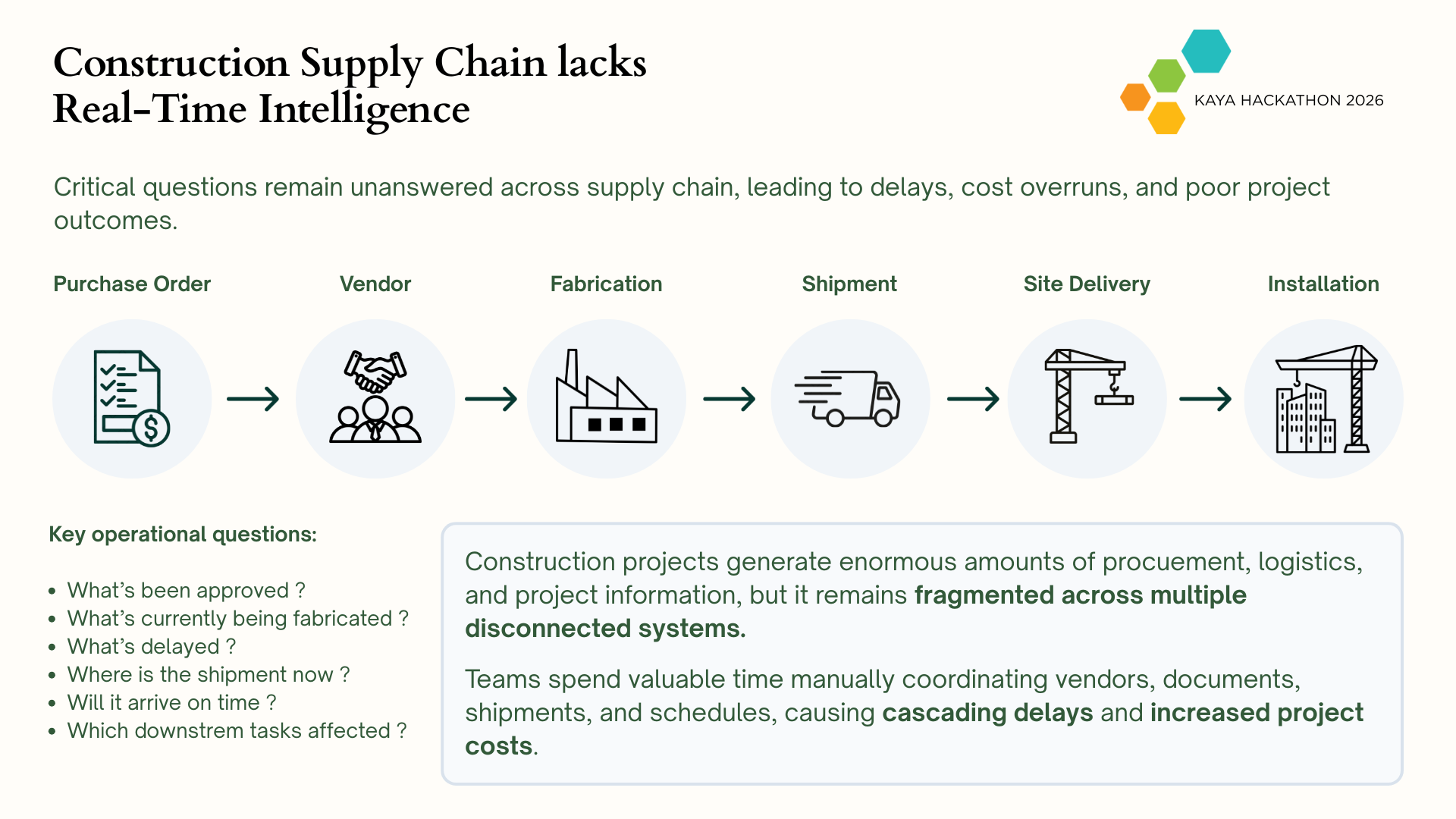
Construction projects generate massive amounts of procurement, logistics, and project information, but it remains fragmented across disconnected systems. Teams spend significant time coordinating vendors, shipments, approvals, and schedules manually. Inspired by Kaya AI’s vision, we aim to build an AI-powered system that behaves like an experienced construction supply chain manager by continuously understanding project state and supporting operational decisions.
What it does
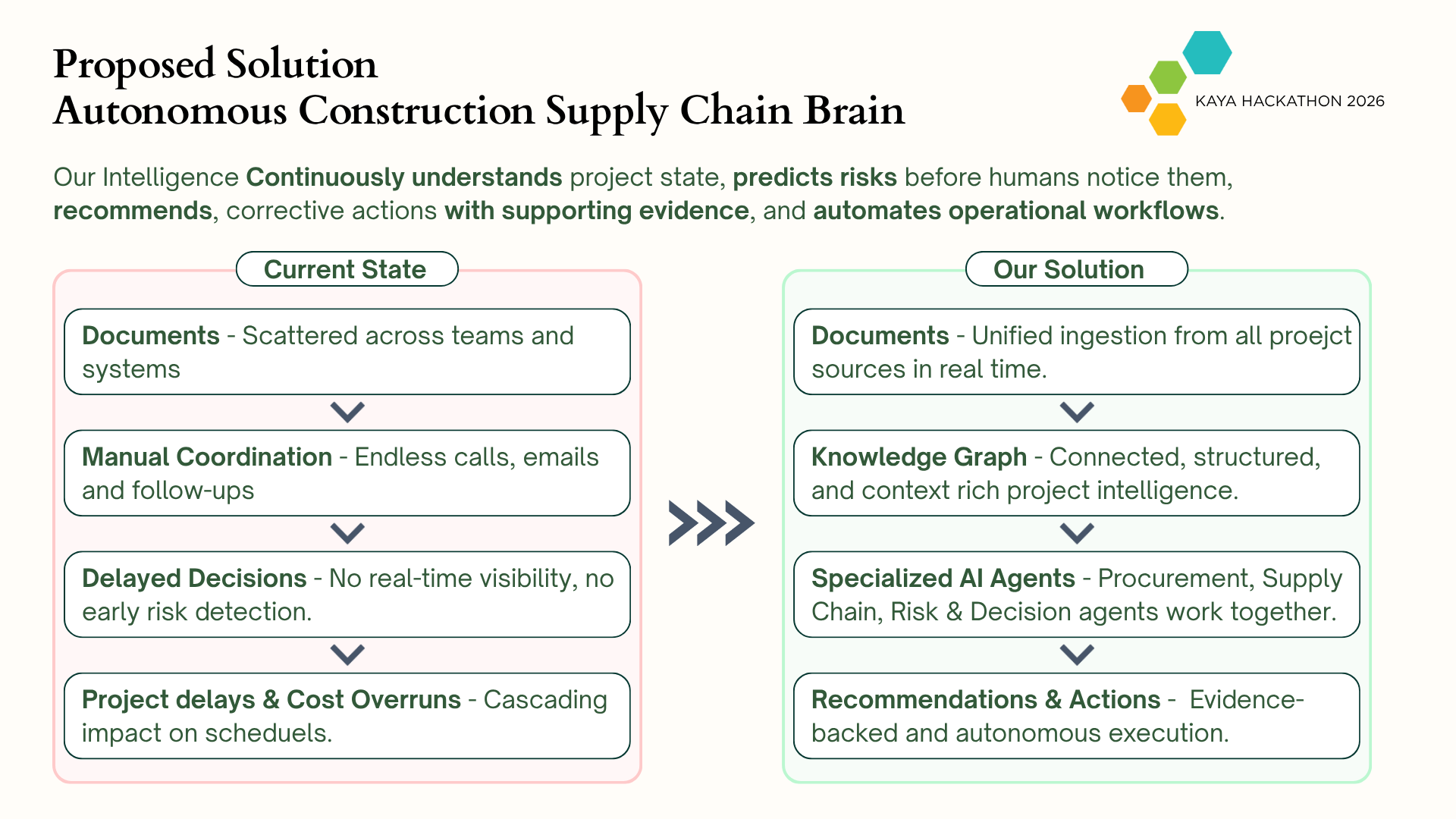
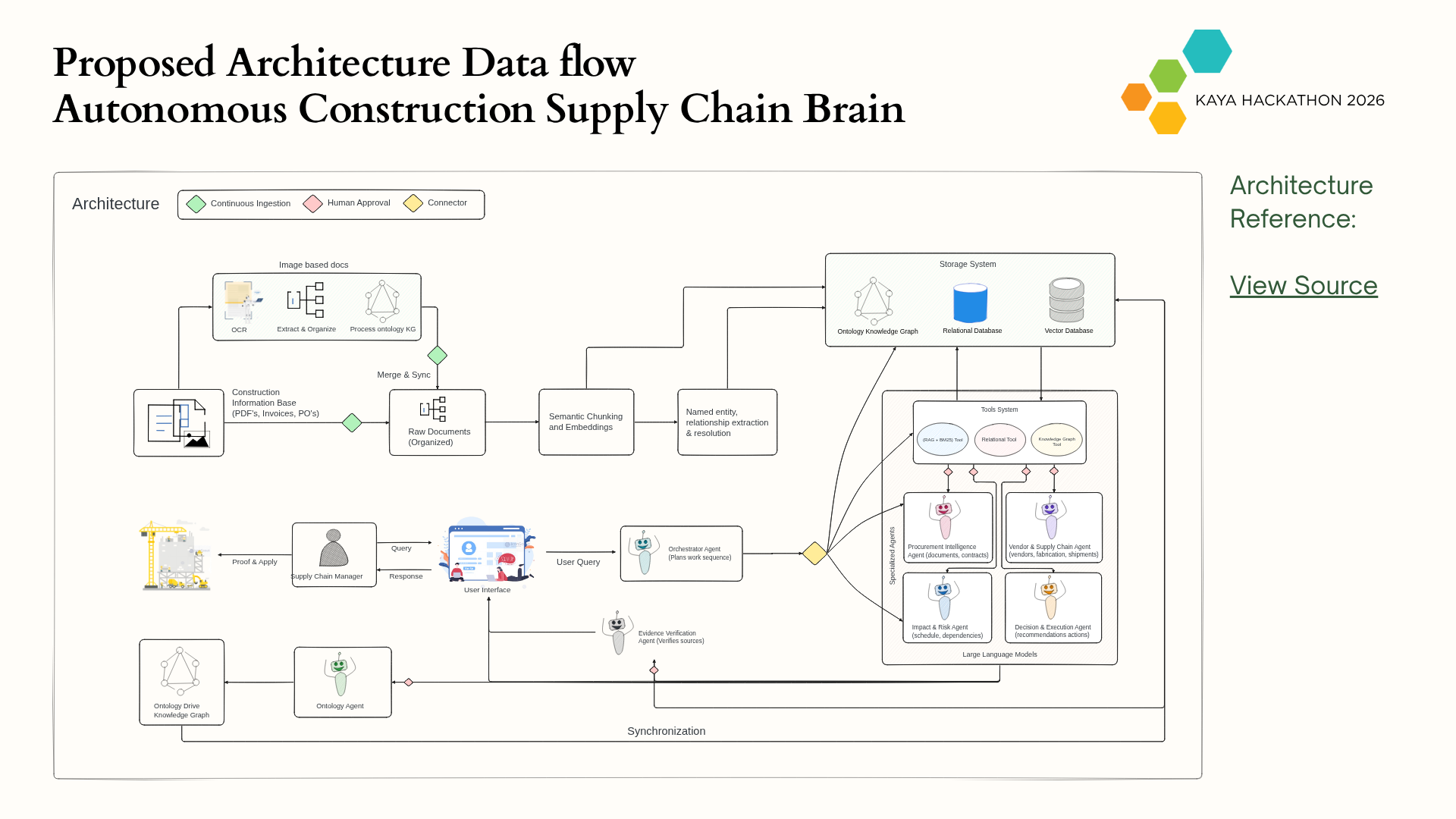
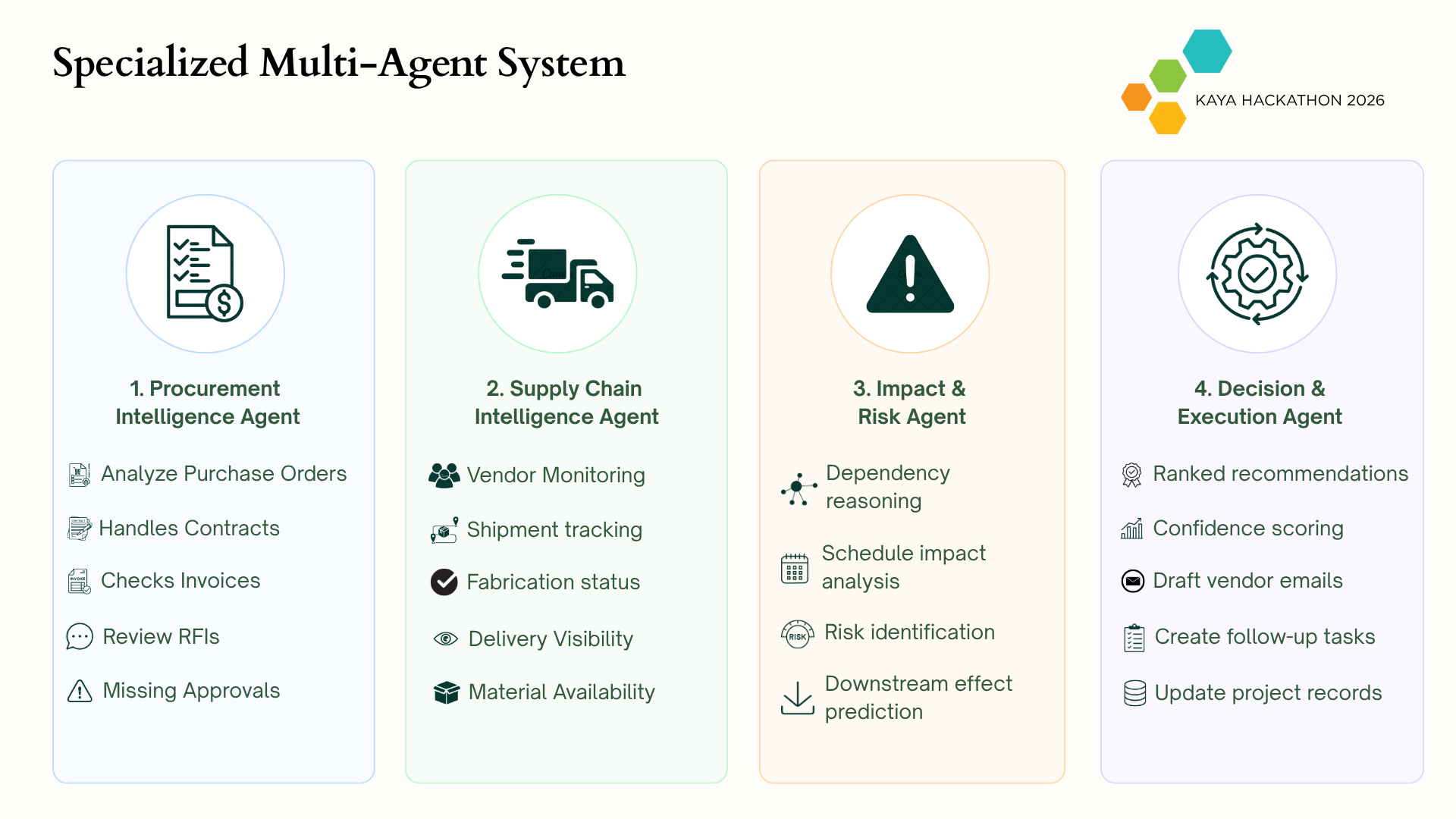
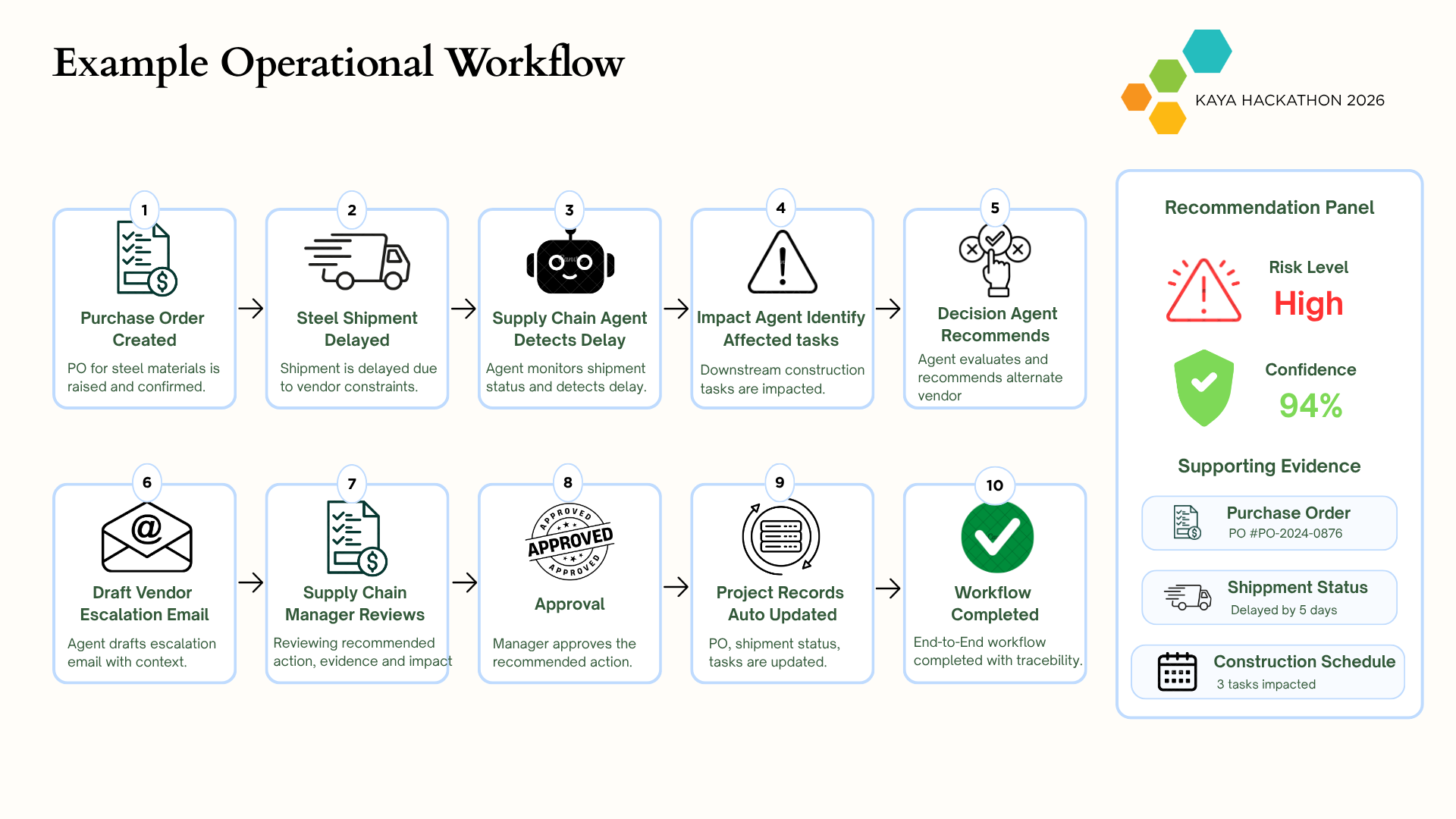
Autonomous Construction Supply Chain Brain integrates construction documents into a unified knowledge graph and enables specialized AI agents to monitor procurement, vendors, shipments, and schedules. It identifies risks, predicts downstream impacts, recommends corrective actions with supporting evidence, and automates operational workflows after human approval.
How we aim to build it
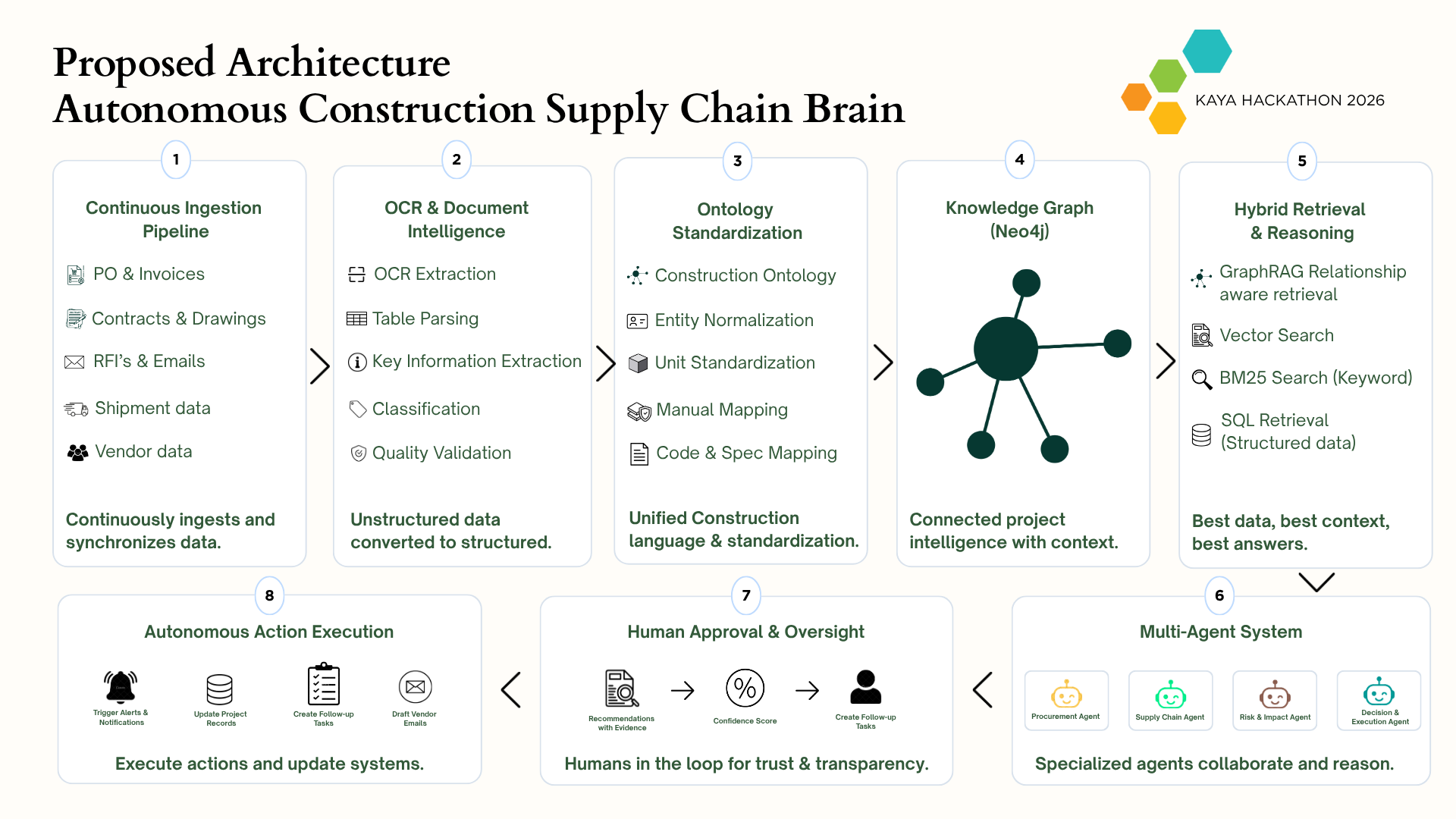
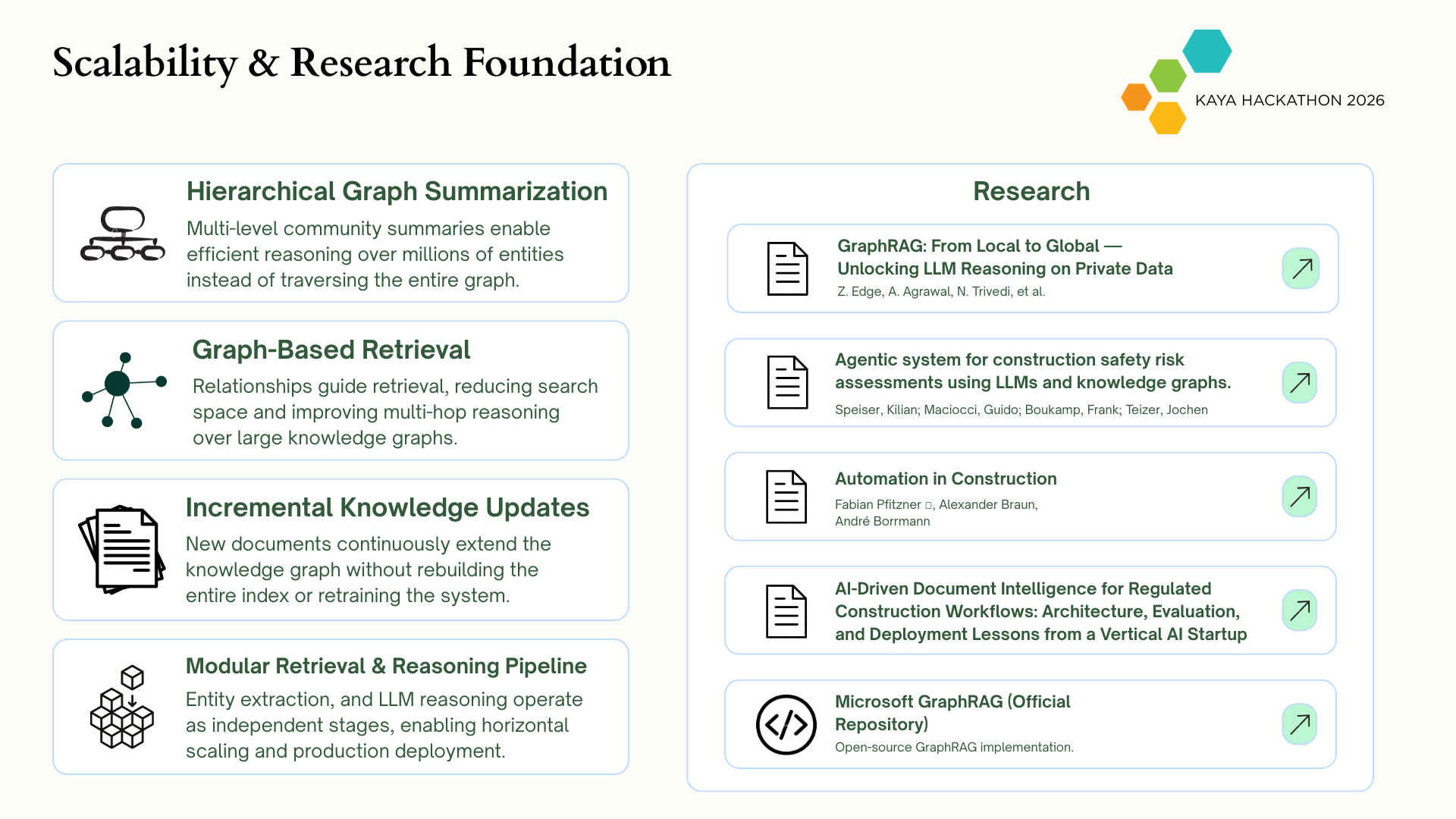
We built a modular architecture using document intelligence, GraphRAG, Neo4j, hybrid retrieval (BM25 + Vector + SQL), and LangGraph. Four specialized AI agents collaborate through an orchestrator to reason over procurement documents, vendor information, shipment updates, schedules, and project knowledge. Later strongly we will be following this architecture for implementation.
Challenges we ran into
The biggest challenge was integrating multiple construction datasets into a unified knowledge graph while maintaining meaningful relationships. We also focused on designing explainable AI by combining evidence-backed retrieval with a human approval workflow before executing operational actions.
Accomplishments that we're proud of
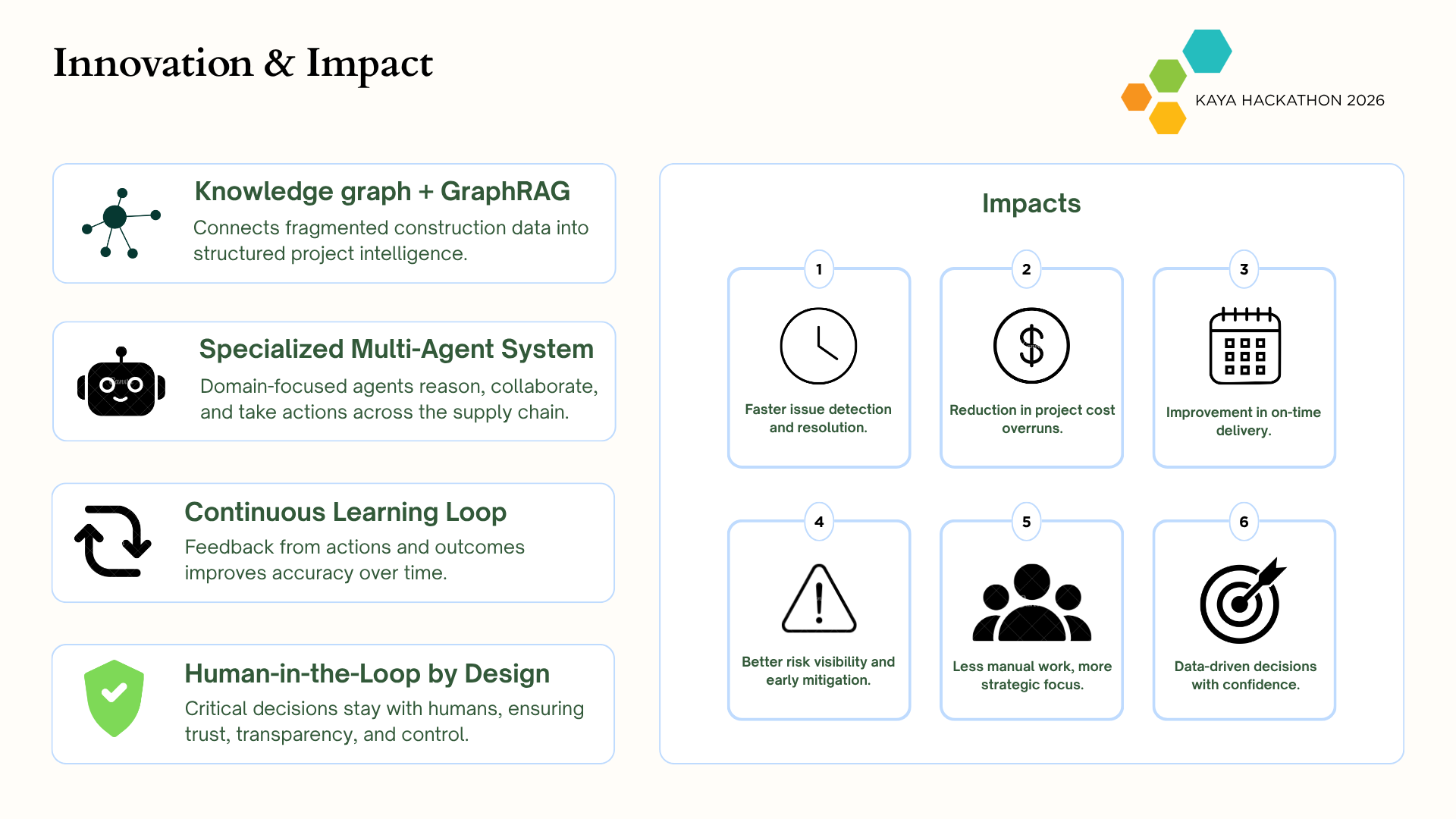
- Designed an enterprise-ready multi-agent AI architecture.
- Built a construction-specific knowledge graph using GraphRAG.
- Combined retrieval, reasoning, and autonomous workflows into one platform.
What we learned
We learned that enterprise AI is more than document retrieval - it requires structured knowledge, explainable reasoning, and modular AI agents working together. Knowledge graphs combined with specialized agents provide far better operational intelligence than traditional chatbot-based systems.
What's next for Autonomous Construction Supply Chain Brain
The next phase is implementing the proposed architecture by integrating with real construction datasets, building the knowledge graph, deploying the four specialized AI agents, and validating end-to-end workflows from document ingestion to evidence-backed recommendations and human-approved operational actions.
Built With
- amazon-web-services
- bm25
- chromadb
- docker
- faiss
- fastapi
- gemini
- github
- langchain
- langgraph
- neo4j
- next.js
- ocr
- openai
- postgresql
- python

Log in or sign up for Devpost to join the conversation.