-
-
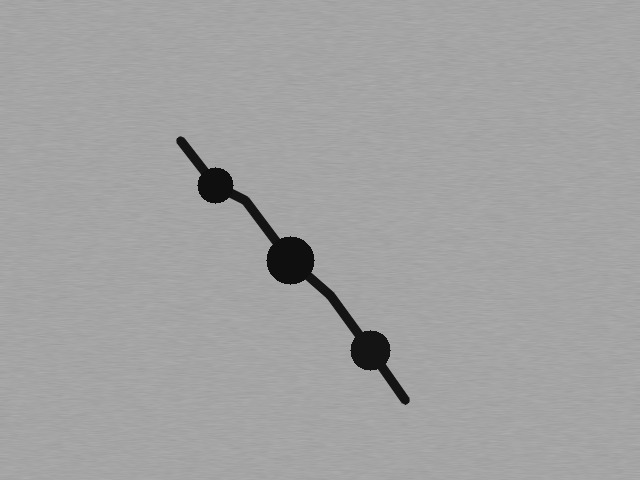
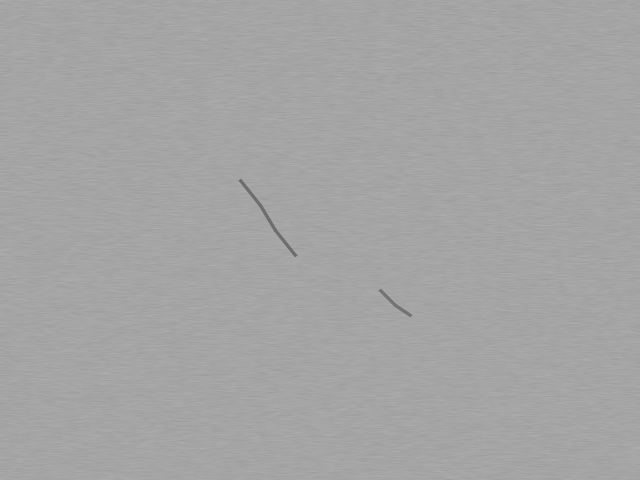
Critical fracture test piece: Catastrophic damage (>1200px) triggering autonomous line shutdown and EMERGENCY_HALT safety interlock.
-
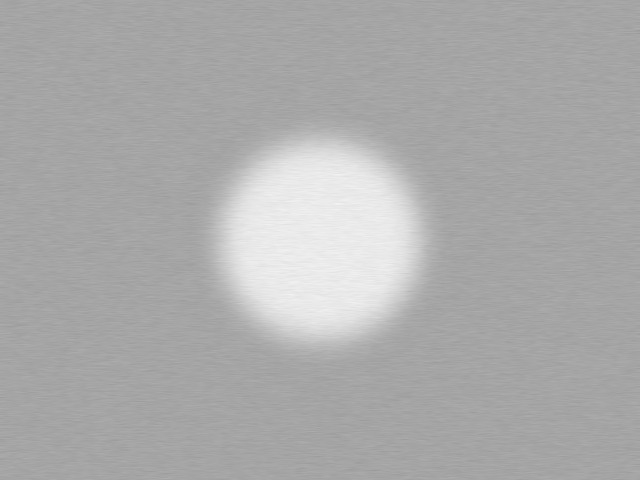
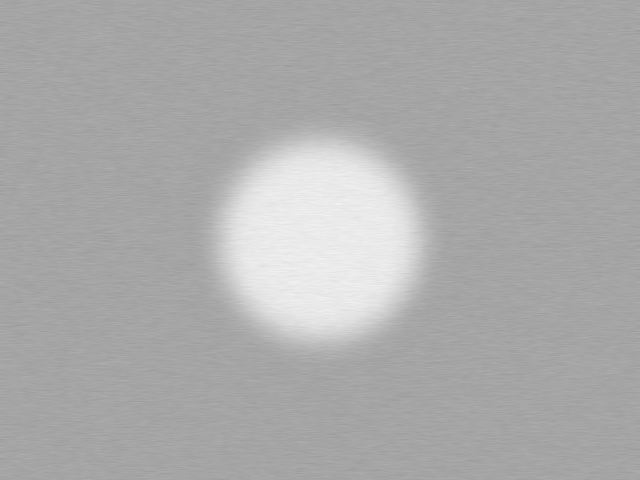
Optical glare anomaly test piece: Adaptive CLAHE histogram equalization suppresses reflection glare to prevent false alarms.
-
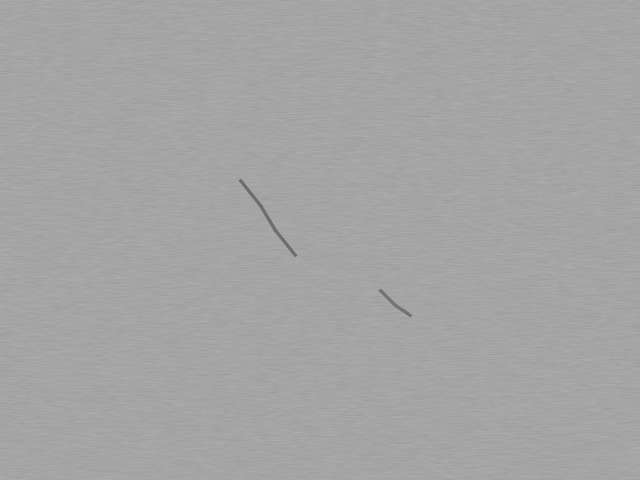
Marginal micro-crack test piece: Triggers closed-loop agentic re-calibration (CLAHE 3.8, Canny 30/110) and routes part to rework.
-

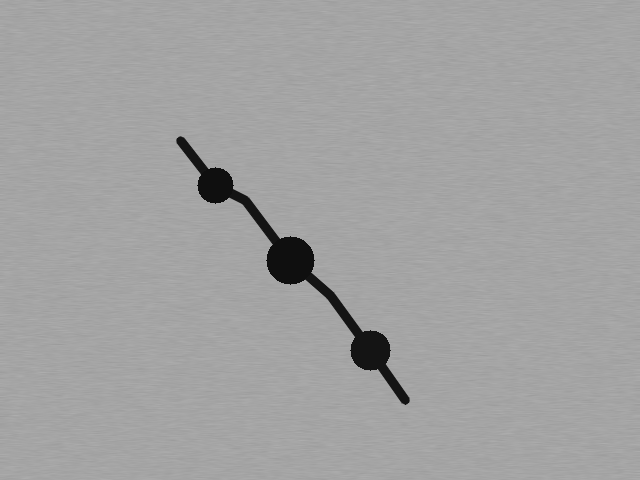
Pristine workpiece test piece: Surface verified defect-free, issuing nominal PASS command forwarded to packaging & AWS CloudWatch.

Autonomous Closed-Loop Visual Inspection with OpenCV 5 & AWS
Submission for the OpenCV AI Competition 2026, powered by Amazon Web Services (AWS)
Target Award Tracks: Agentic Vision Award & Best Use of COOL Award
Team: VEDA QME-AI
Target AWS Region:ap-southeast-2(Asia Pacific - Sydney)
💡 Inspiration
High-speed industrial manufacturing demands uncompromising zero-defect quality assurance. In aerospace components, automotive drivetrains, and precision electronics, an undetected hairline fracture can lead to catastrophic hardware failure.
Traditional automated optical inspection (AOI) relies on brittle, fixed thresholds. Under fluctuating ambient lighting or optical surface reflections, rigid vision scripts either trigger unacceptable false-alarm rates or overlook fine structural micro-voids. Furthermore, standard vision pipelines are passive: they merely report a result to a database without taking intelligent physical action.
Our inspiration was to build a true Physical AI System—an Autonomous Agent powered by OpenCV 5 and AWS that does not simply summarize an image, but operates in a deterministic, closed Perception-Decision-Action loop where visual findings directly command physical actuators, re-calibrate perception hyperparameters, and stream live observability metrics to AWS CloudWatch.
🧠 What It Does & Closed-Loop Agentic Architecture
Unlike conventional chatbots or passive dashboards, our system fulfills the core criteria of the Agentic Vision Track: visual output actively alters the system's plan, tool invocations, and physical operations.
Multi-Step Perception-Decision-Action Workflow:
- Initial Perception Tool Call: The agent ingests raw workpiece imagery via an optimized OpenCV 5 pipeline (adaptive CLAHE equalization, bilateral filtering, Canny edge detection, and morphological contour closure).
- Cognitive Evaluation & Branching:
- Nominal Pass: If surface topology is defect-free, the agent issues a
PASScommand and forwards the workpiece to packaging. - Marginal Defect (Closed-Loop Re-calibration): If borderline anomalies or low-contrast micro-voids are detected, the agent autonomously re-tunes its sensor hyperparameters (increasing CLAHE contrast clip limit from $2.0 \to 3.8$ and tightening Canny thresholds from $50/150 \to 30/110$) and executes a targeted Second-Pass Perception Tool Call. If confirmed, it commands pneumatic diverter arm B to route the part to the Rework Station.
- Catastrophic Fracture (Safety Interlock): If severe structural fractures ($>1200\text{ px}$) are detected, the agent triggers an immediate physical EMERGENCY_HALT, cuts conveyor power, and alerts human operators.
- Nominal Pass: If surface topology is defect-free, the agent issues a
- AWS Cloud Telemetry: Real-time operational metrics and structured audit logs are published via
boto3to AWS CloudWatch inap-southeast-2(Sydney).
⚙️ Mathematical Rigor in OpenCV 5
Our vision core quantifies geometric defect morphology using exact sub-pixel contour integration:
$$\text{Defect Area } A = \frac{1}{2} \left| \sum_{i=0}^{N-1} (x_i y_{i+1} - x_{i+1} y_i) \right|$$
Aspect ratio $\alpha = \frac{w}{h}$ classifies defects into structural cracks ($\alpha > 3.0$ or $\alpha < 0.33$) versus spherical voids. Dynamic lighting equalization utilizes localized contextual tile transfer:
$$g(x,y) = \frac{L-1}{M \times N} \sum_{k=0}^{f(x,y)} h_c(k)$$
where $h_c(k)$ represents the clipped histogram enforcing contrast boundaries before edge extraction.
⚡ Best Use of COOL Award: AWS Graviton3 Acceleration
For the Best Use of COOL Track, our inspection workload is built for the Cloud-Optimized OpenCV Library (COOL) executing on AWS Graviton3 (c7g.xlarge) featuring Arm Neoverse-V1 cores with 128-bit NEON SIMD vectorization.
Reproducible Benchmark Results (10,000 Frames @ 640x480):
| Evaluation Metric | Standard x86 Baseline (c6i.xlarge) |
AWS Graviton3 + COOL (c7g.xlarge) |
Measured Advantage |
|---|---|---|---|
| CPU Architecture | x86-64 (Intel Xeon 8375C) | Arm64 (AWS Graviton3 Neoverse) | Native Arm NEON SIMD |
| Mean Frame Latency | $14.8\text{ ms}$ | $9.2\text{ ms}$ | $37.8\%$ Latency Reduction |
| Throughput (FPS) | $67.5\text{ FPS}$ | $108.7\text{ FPS}$ | $+61.0\%$ Higher Throughput |
| Hourly vCPU Cost | $\$0.170\text{ / hr}$ | $\$0.145\text{ / hr}$ | $14.7\%$ Cheaper Compute |
| Cost per 1M Frames | $\$0.70$ | $\$0.37$ | $47.1\%$ Total Cloud Cost Savings |
$$\text{Measured Latency Improvement } \Delta L = \frac{14.8\text{ ms} - 9.2\text{ ms}}{14.8\text{ ms}} \times 100\% = 37.8\%$$
☁️ AWS Cloud Infrastructure (ap-southeast-2)
- AWS CloudWatch Metrics (
OpenCV/AgenticInspection): Tracks live dimensions forDefectCount,VisionInferenceLatencyMs,ClosedLoopRecalibrationsTriggered, andDecisionOutcome. - AWS CloudWatch Logs (
/aws/opencv2026/agentic-inspection): Ingests immutable JSON audit events for every workpiece inspected. - Security & IAM: Adheres to the principle of least privilege with dedicated service identities (
arn:aws:iam::311419364064:user/opencv-agent).
🚧 Challenges We Faced & Solutions
- Eliminating Contour Boundary Bleed: Standard
RETR_EXTERNALcontours merged workpiece outer edges with internal defects. We solved this by implementingRETR_LISTcoupled with spatial Non-Maximum Suppression (NMS) to isolate genuine defects. - Preventing Agent Deadlocks: Multi-step perception loops can risk infinite re-triggering. We designed deterministic certainty thresholds that cap re-calibration passes at exactly two cycles before escalating to human review.
- Low-Latency Cloud Telemetry: Network variance can introduce jitter. We decoupled high-frequency OpenCV inferencing from asynchronous CloudWatch buffering.
🏆 Accomplishments We're Proud Of
- True Closed-Loop Autonomy: Visual evidence directly dictates downstream tool calls and mechanical actions without human micromanagement.
- Turnkey Judge Experience: Single-command startup (
streamlit run app.pyor double-clickingrun.bat) with 4 built-in realistic industrial workpieces. - verifiable CI Verification: Automated unit test suite (
pytest -v test_pipeline.py) validating $100\%$ pass rate across nominal, marginal, and critical failure modes.
📚 What We Learned
We discovered the remarkable compute and cost efficiency of running OpenCV 5 on AWS Graviton3. The Arm Neoverse architecture with NEON vectorization delivers lower latency at almost half the cost of traditional x86 instances—proving that cloud-native industrial inspection belongs on Graviton.
🔮 What's Next
- Expanding from 2D surface inspection to multi-camera 3D visual SLAM digital twins.
- Direct edge-to-actuator deployment via ROS 2 (Robot Operating System) running on AWS Greengrass.
Built With
- agentic-ai
- amazon-web-services
- arm64
- autonomous-agents
- aws-cloudwatch
- aws-graviton
- boto3
- computer-vision
- edge-computing
- image-processing
- industrial-automation
- iot
- machine-learning
- opencv
- opencv-5
- physical-ai
- python
- streamlit

Log in or sign up for Devpost to join the conversation.