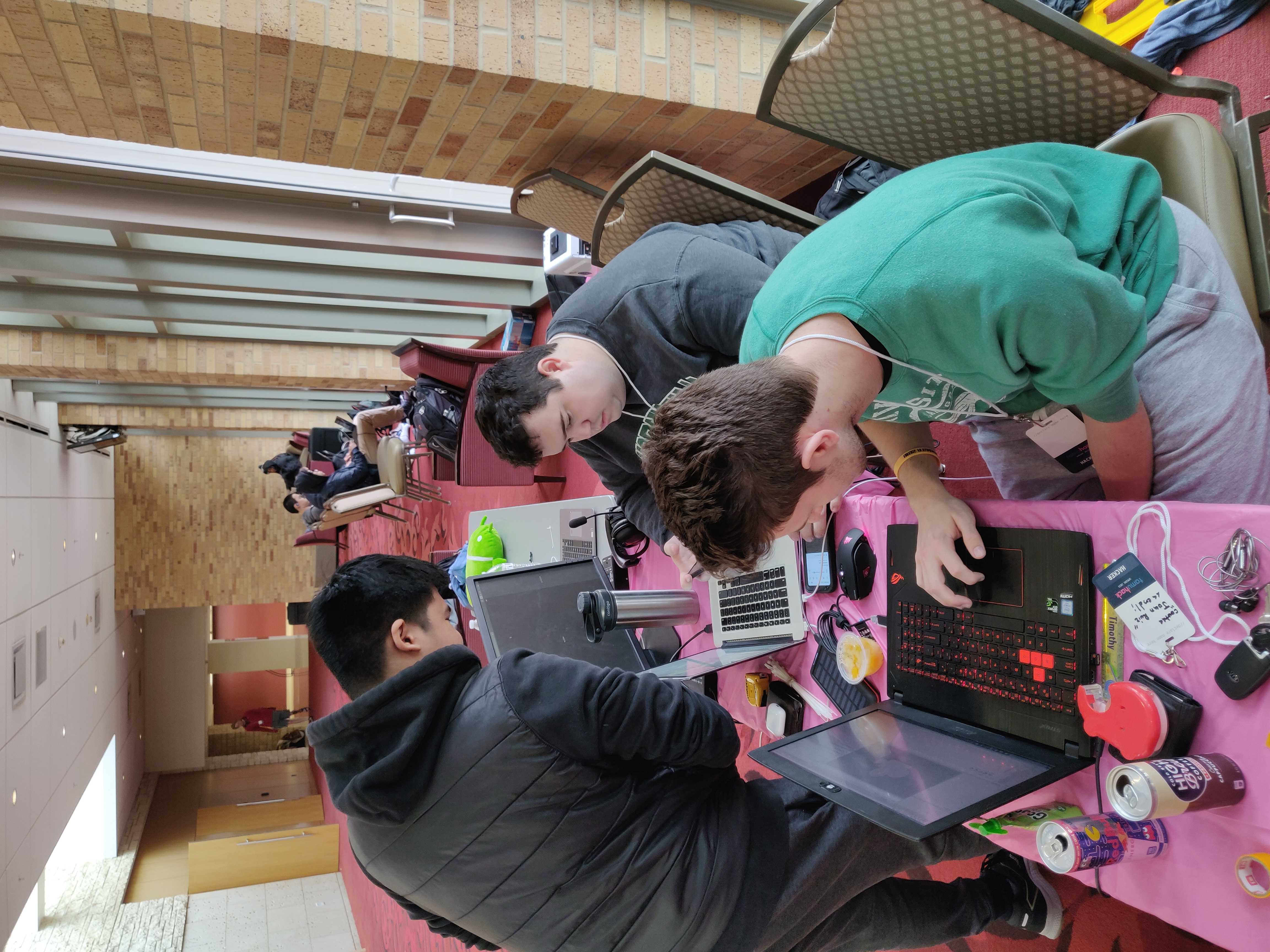
Inspiration
After talking to American and Southwest Airlines and asking them what their biggest needs are we determined that due to their large warehouses and repair facilities there is a need for a more rapid and efficient system that is capable of transporting the parts and tools that the technicians might need.
What it does
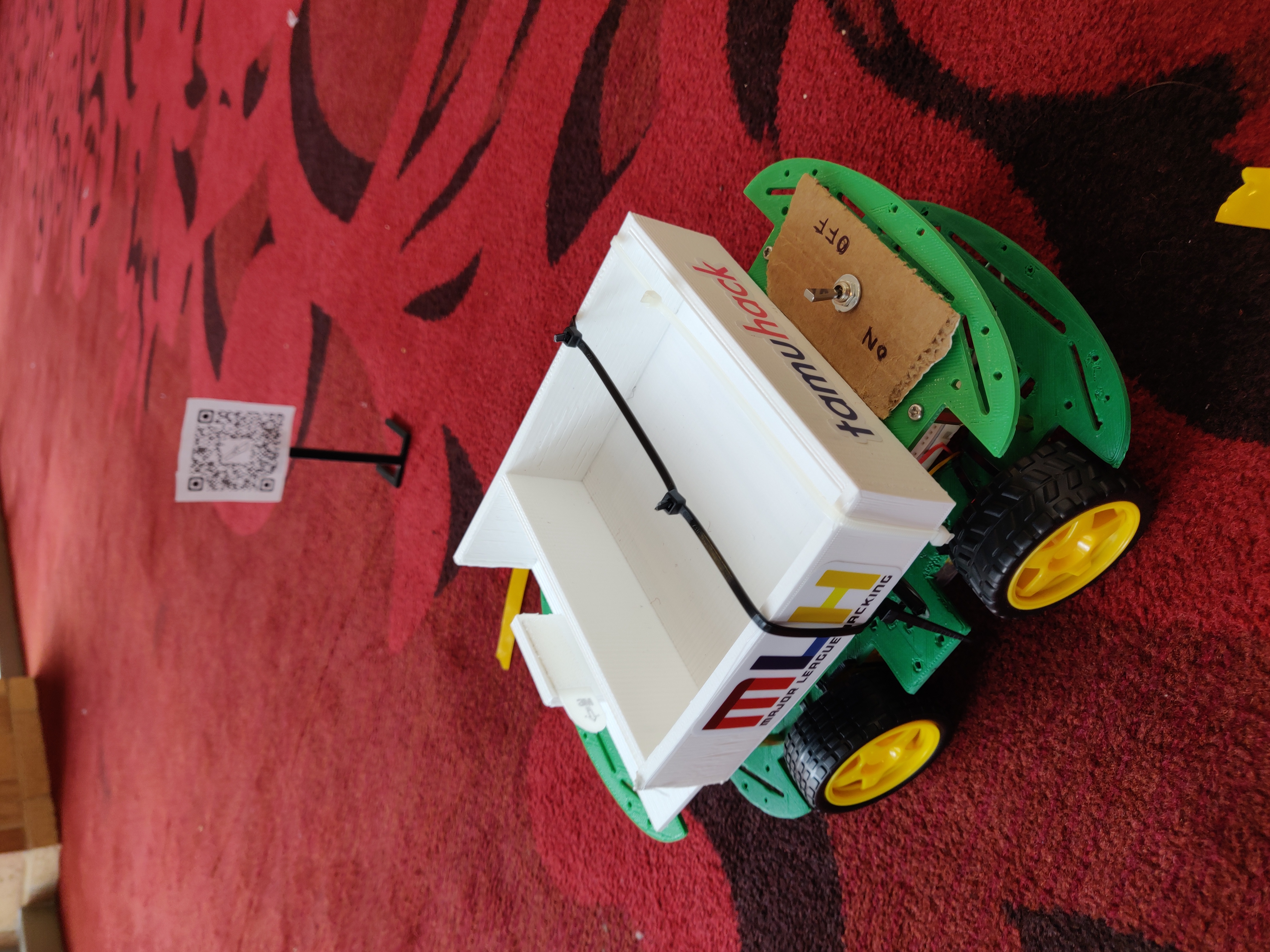
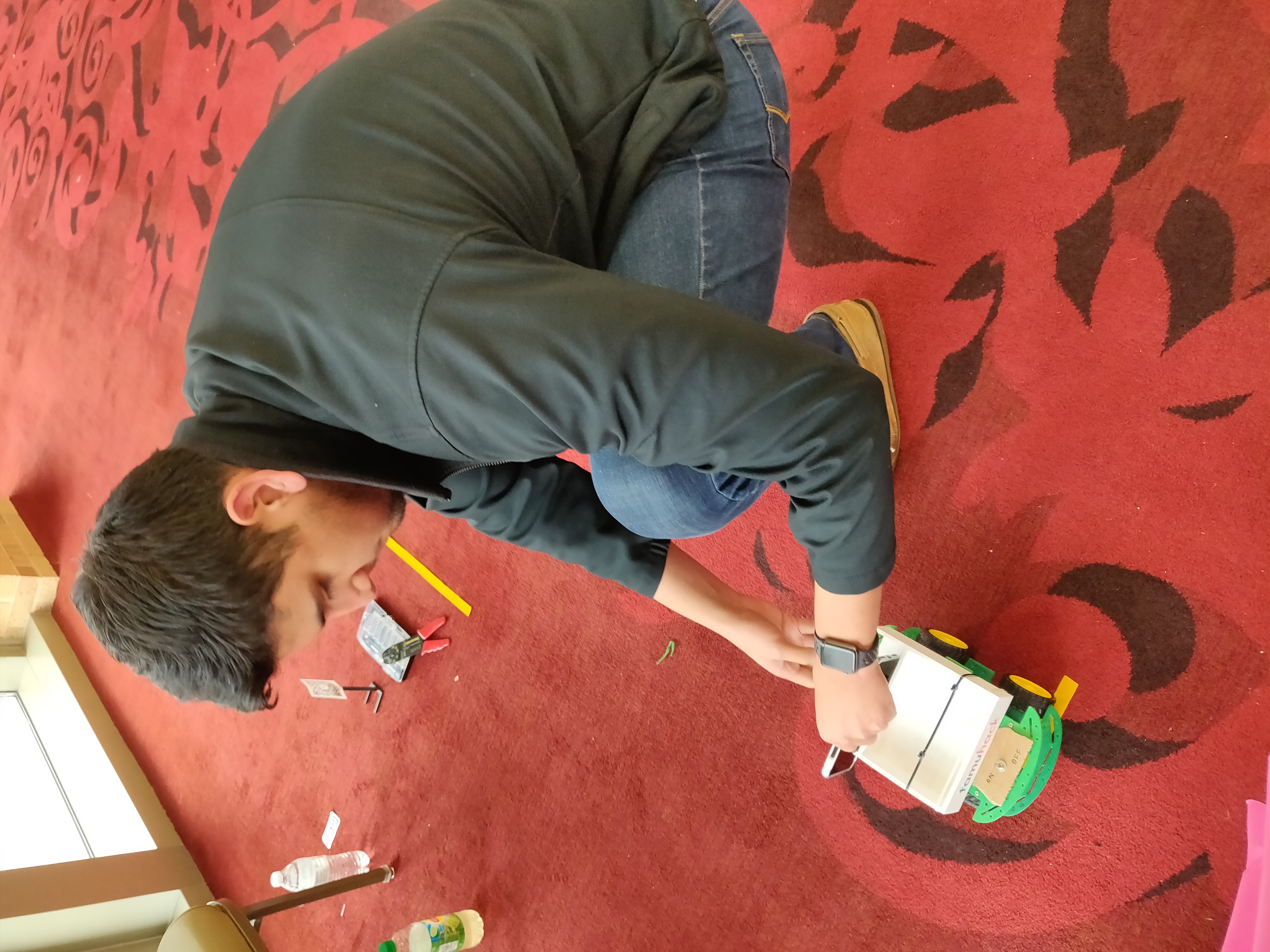
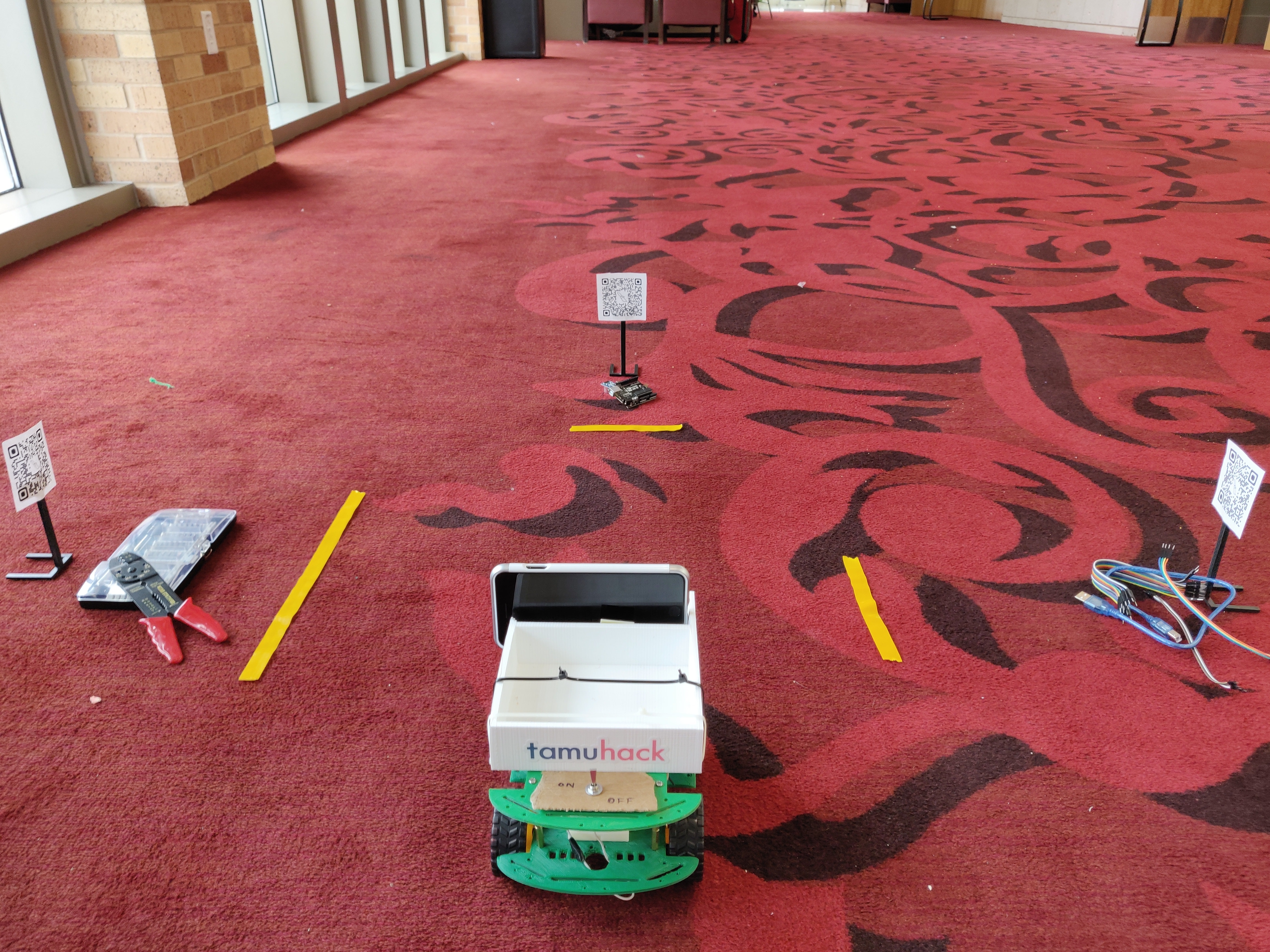
By using Augmented Reality we can improve the efficiency and reduce the cost of aircraft maintenance. The vehicle we have created is capable of scanning QR codes and determining the parts that the system must get. Once the robot has scanned the QR code provided by the technician, the robot will create a query of the warehouse's database and determine the shortest path that it must take in order to get the parts. The robot will guide itself through the warehouse with very minimal or no human interaction. Augmented Reality also aids us in the detection of obstacles. The warehouse robots offered today are often outfitted with expensive and very bulky and complex systems. Our robot in the other hand is a very simple and affordable system that can be constantly upgraded via software. The robot is also capable of using voice commands in order to aid technicians.
How we built it
- Our server and back end code is a mixture of C# developed in the Unity environment and Arduino C.
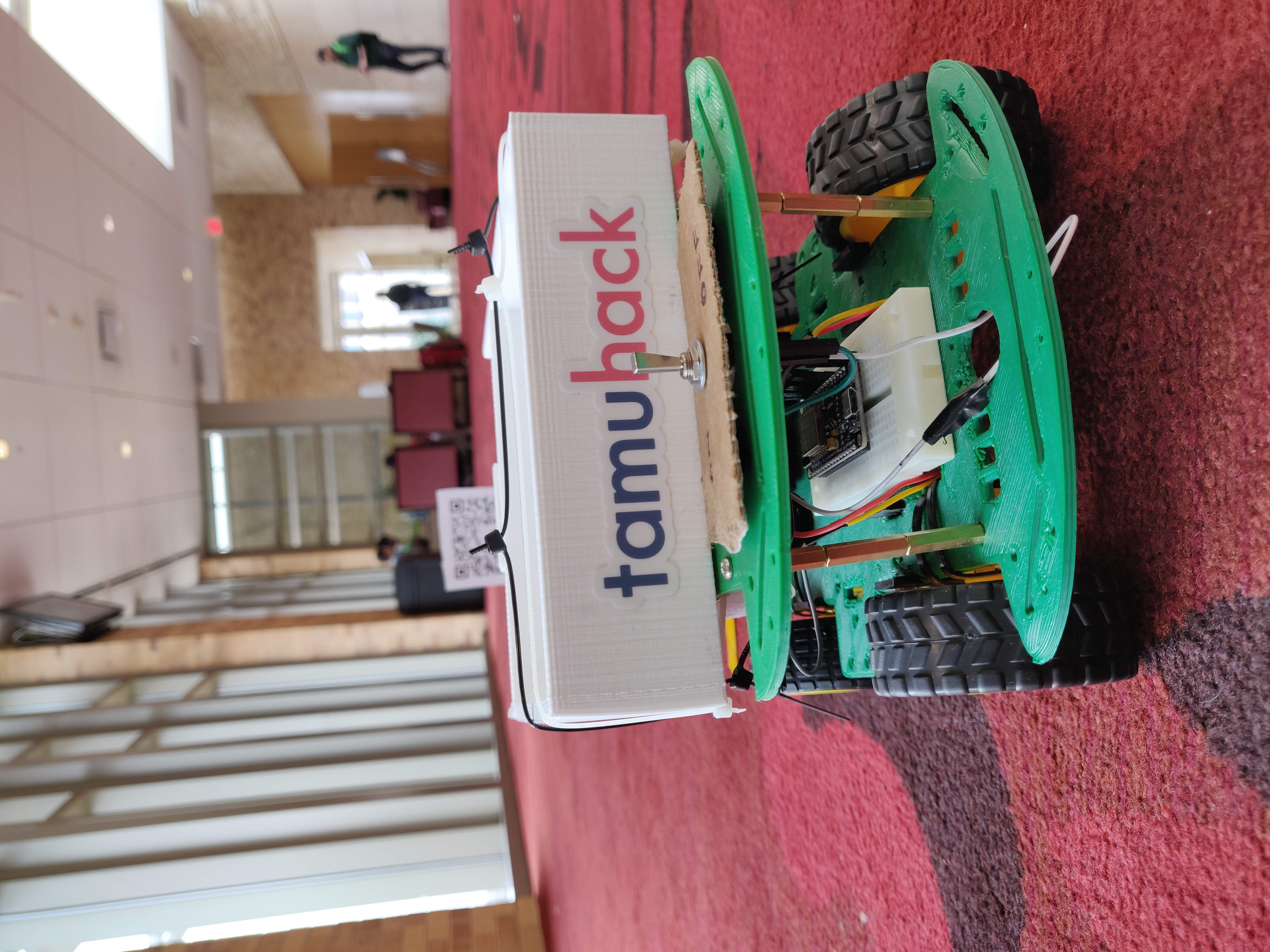
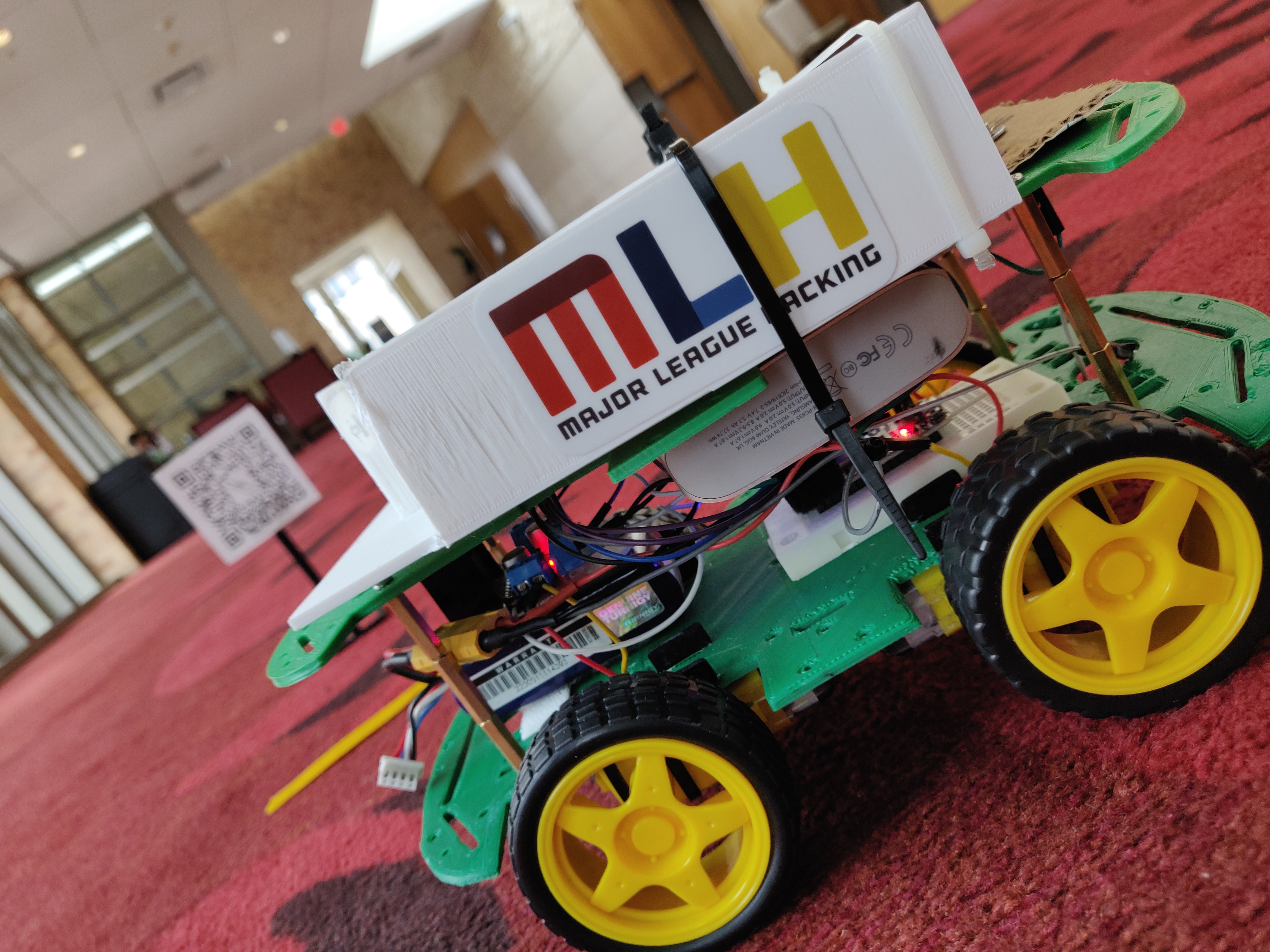
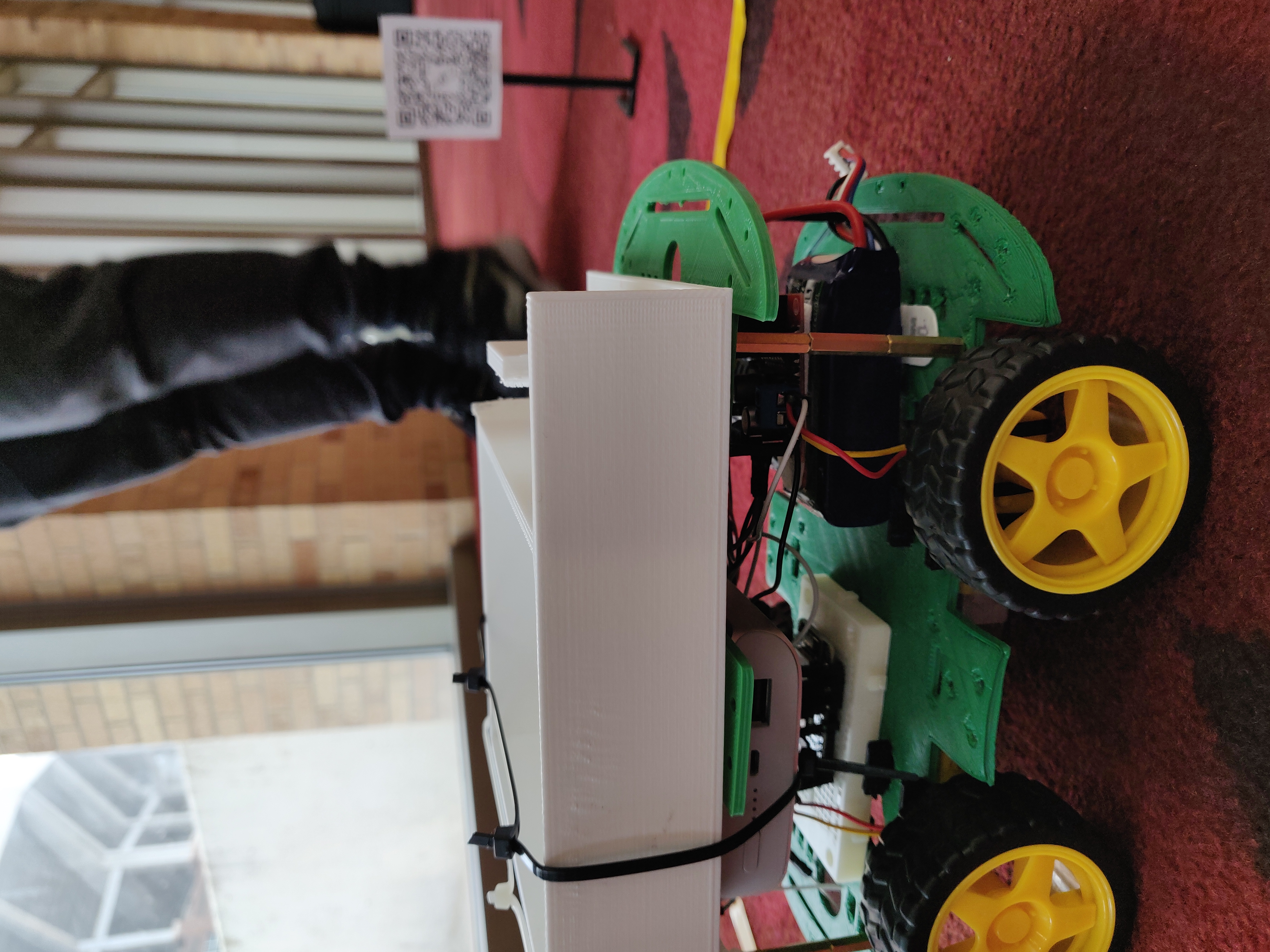
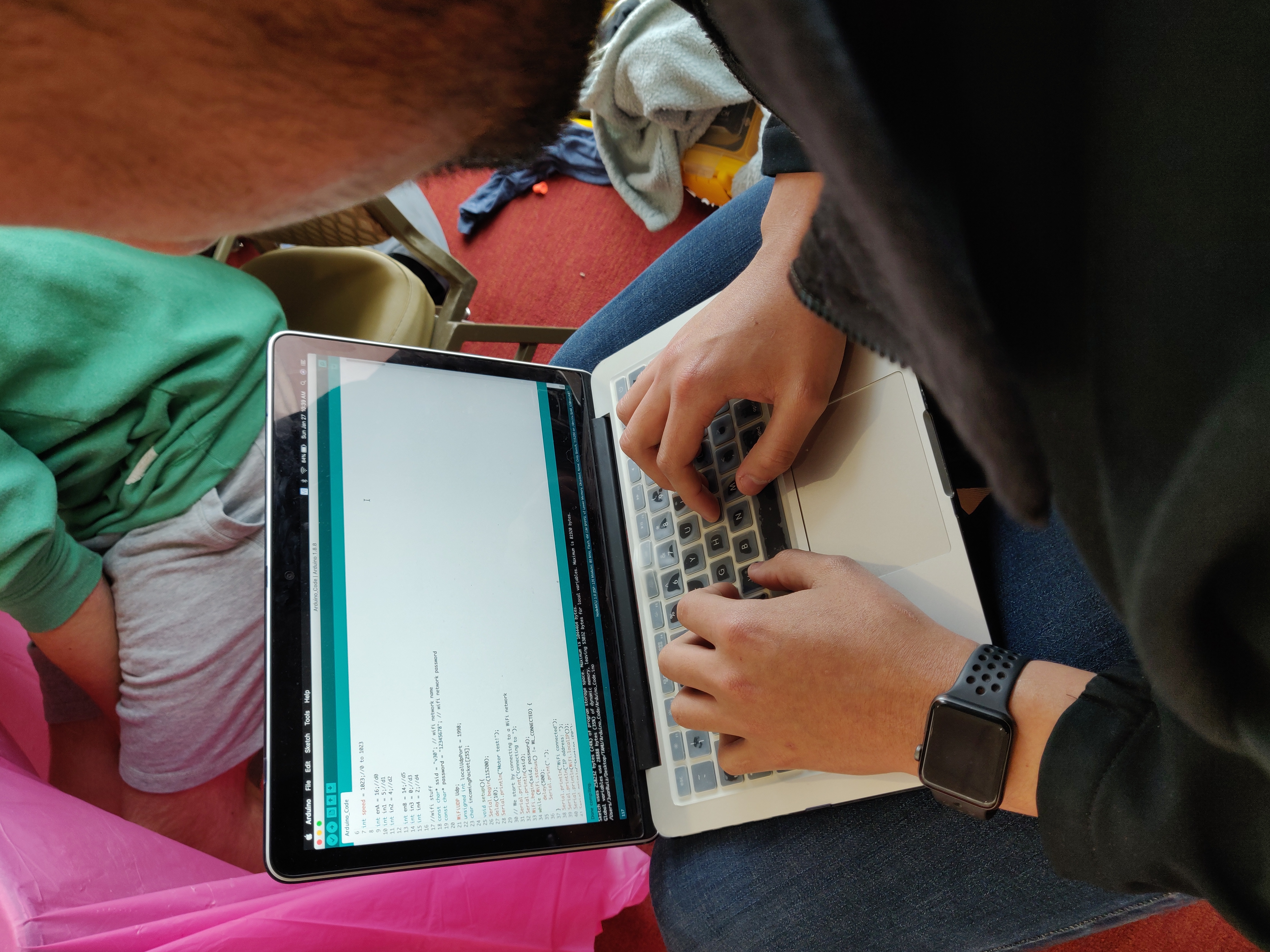
- We built the chassis using 3D printing technology and we used an ESP8266 with wifi capabilities to constantly communicate to an iPhone running the developed unity application.
- We are also using Microsft azure to process our voice commands to the robotic system and iPhone.
Challenges we ran into
Since the very start, we have struggled with the Unity platform. Unity is a very heavy software that is very confusing and hard to handle. We also have little experience programming in C#. Our biggest bugs have the reading of QR codes.
Accomplishments that we're proud of
- We have built a cross-platform robotic system capable of aiding the modern airline industry.
- We designed and built a complete robotic system from scratch capable of using the C# and Unity iPhone application that we developed in order to interact with the ESP8266.
- We created a speech detection system capable of listening to specific instructions using the Microsoft Azure platform.
What we learned
- We learned how to code in C# and how to use Unity.
- We learned how to create a speech detection engine from scratch.
- We learned how to interface multiple platforms into one.
What's next for Autonomous Augmented Reality Maintenance Vehicle
- Improving the accuracy QR code tracking.
- Improving the pathfinding capability.
- Upgrading the plastic chassis and drive system.

Log in or sign up for Devpost to join the conversation.