-
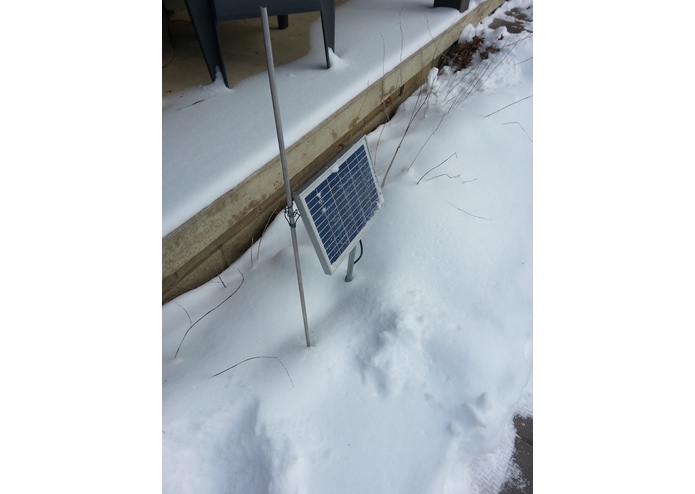
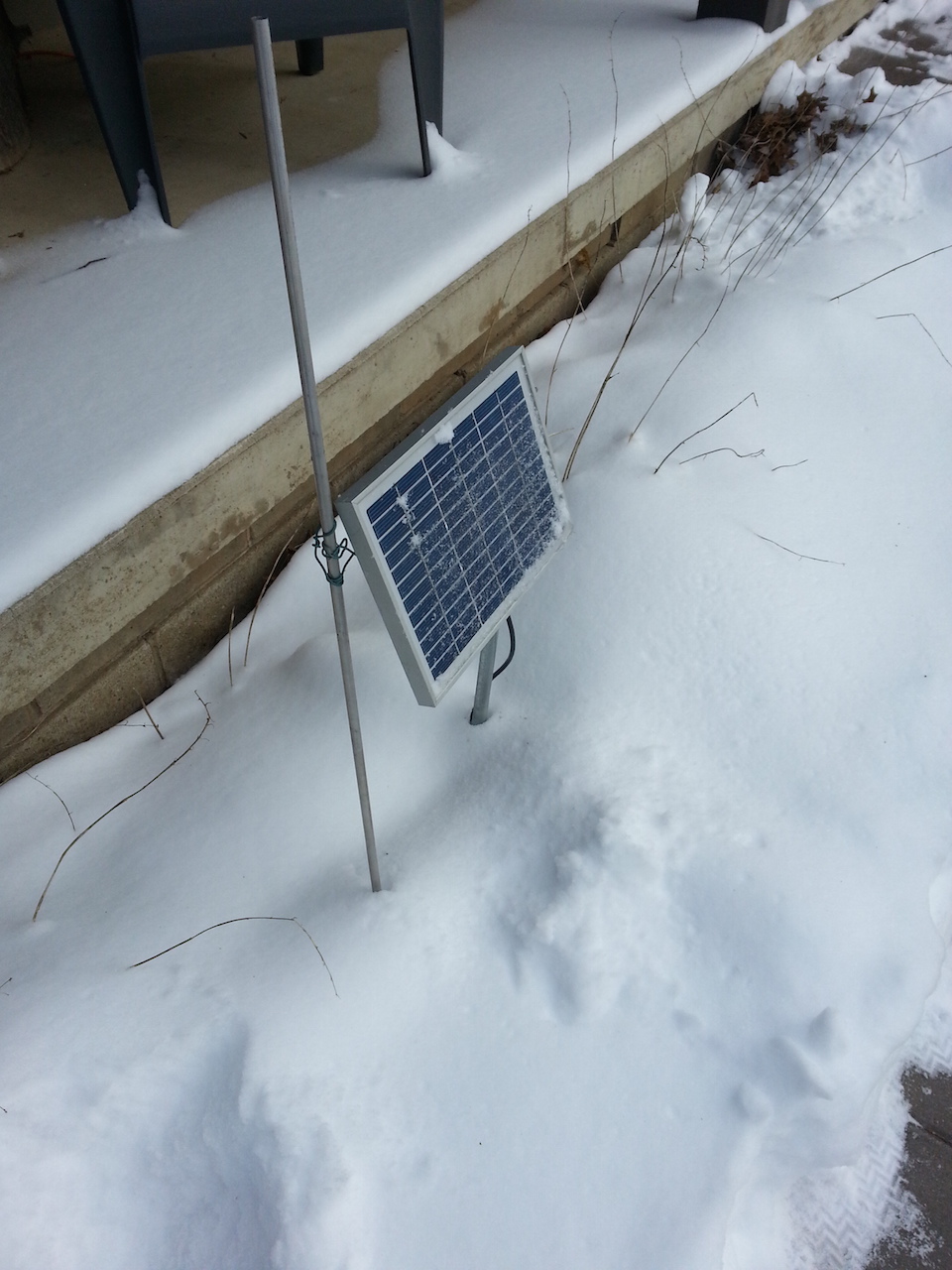
Solar Tracker in Winter
Inspiration
This project is based upon the solar track arduino project from IoTHackDay 2015. Instead of focusing on bees, we're focusing on just the solar control component.
What It Does
Using last year's deployment, we have been able to collect battery voltage level data with a solar system deployed in Minnesota, as well as track cloud cover percentage throughout that duration of operation. We have been able to show a correlation between cloud coverage and battery voltage change per day.
Using this correlation, we can create a control algorithm which tells us how the Arduino Yun should be operating, such that it will be able to conserve power based upon predicted weather patterns.
How We Will Build It
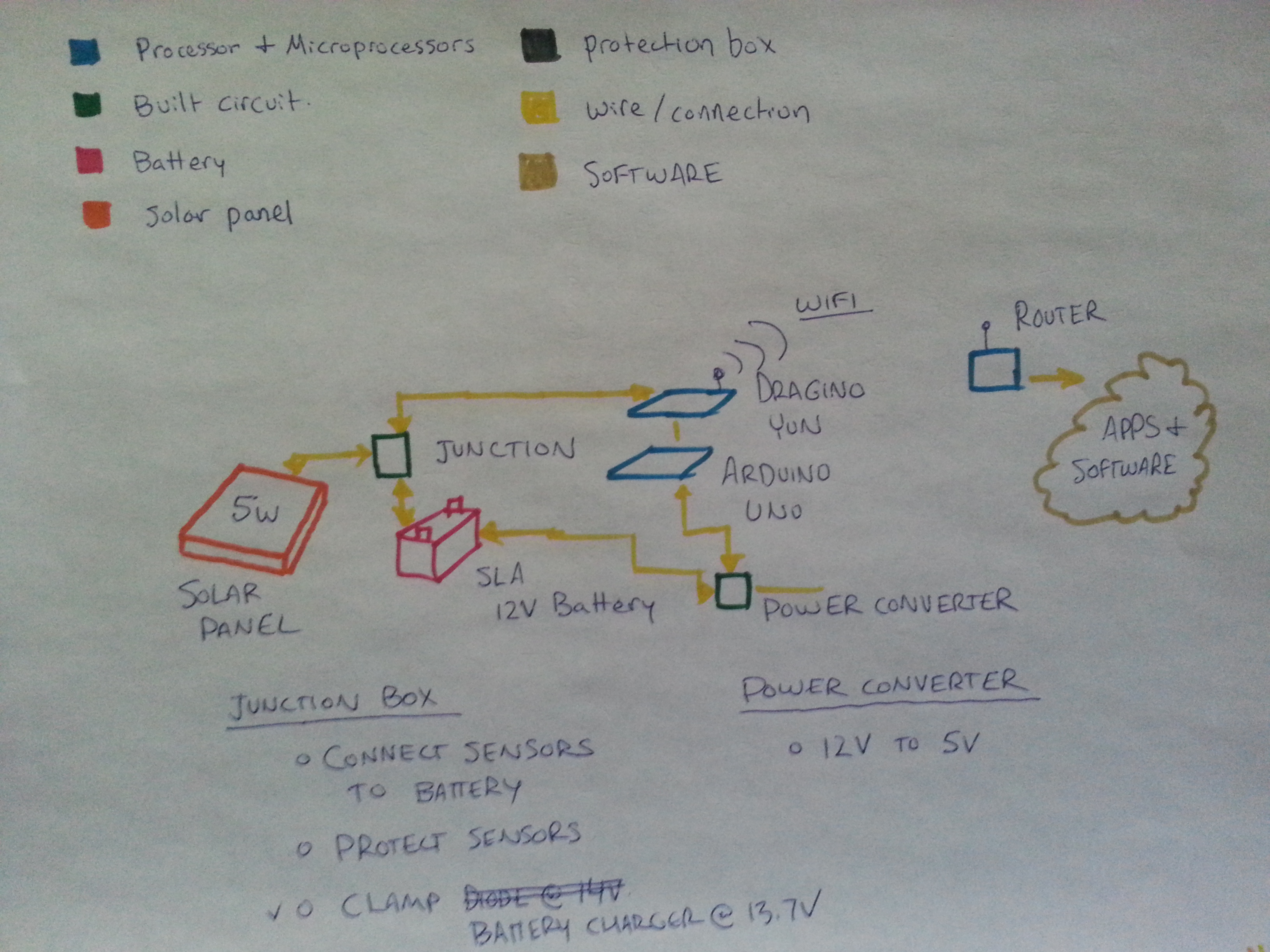
There will be a simple measurement and protection electronic circuit on the input from the battery to the Arduino. We will investigate multiple methods for controlling the Arduino Yun and treating it like a server. We will then identify some software to send signals to the arduino given certain conditions on a cloud server.
Bill of Materials
- Arduino Uno
- Arduino Dragino Yun Shield
- Voltage Divider / Inrush Prevention Circuit (resistors, diodes, fiberboard)
- Voltage Converter - 12V to 9V Arduino Uno Input Range
- Zener Diode, to Maintain 14V Maximum
- 5W Solar Panel
- 12V, 0.7AH Sealed Lead Acid Battery
- Cables
Software Tools
- Yun Server Constructor
- Matlab Thingspeak
- Elastic - Or Some Other Data Storage / Search Platform with Machine Learning
What You Will Learn
If you're joining this project, you will learn about how the Arduino functions if you don't already, and you will learn some interesting points about engineering an outdoor electronics system, as well as explore how to build an Internet-of-Things predictive system.
What could happen in the future
We could optimize the system further, build a web interface, or build any number of technologies on top of this autonomous system - video, security, or sensing.
Built With
- arduino
- dragino
- sealed-lead-acid-battery
- solar-panel
- yun
- zener-diode


Log in or sign up for Devpost to join the conversation.