Inspiration
Modern applications run on dozens of microservices, databases, and cloud resources.
When something breaks, engineers often spend hours analyzing logs, metrics, and alerts before taking action. During incidents, this manual process leads to downtime, user impact, and stress for DevOps teams.
We were inspired by a simple question:
What if an AI agent could understand incidents, explain the root cause, and recommend actions instantly—before humans even react?
That idea led to Autonomous AI Ops Agent.
What it does
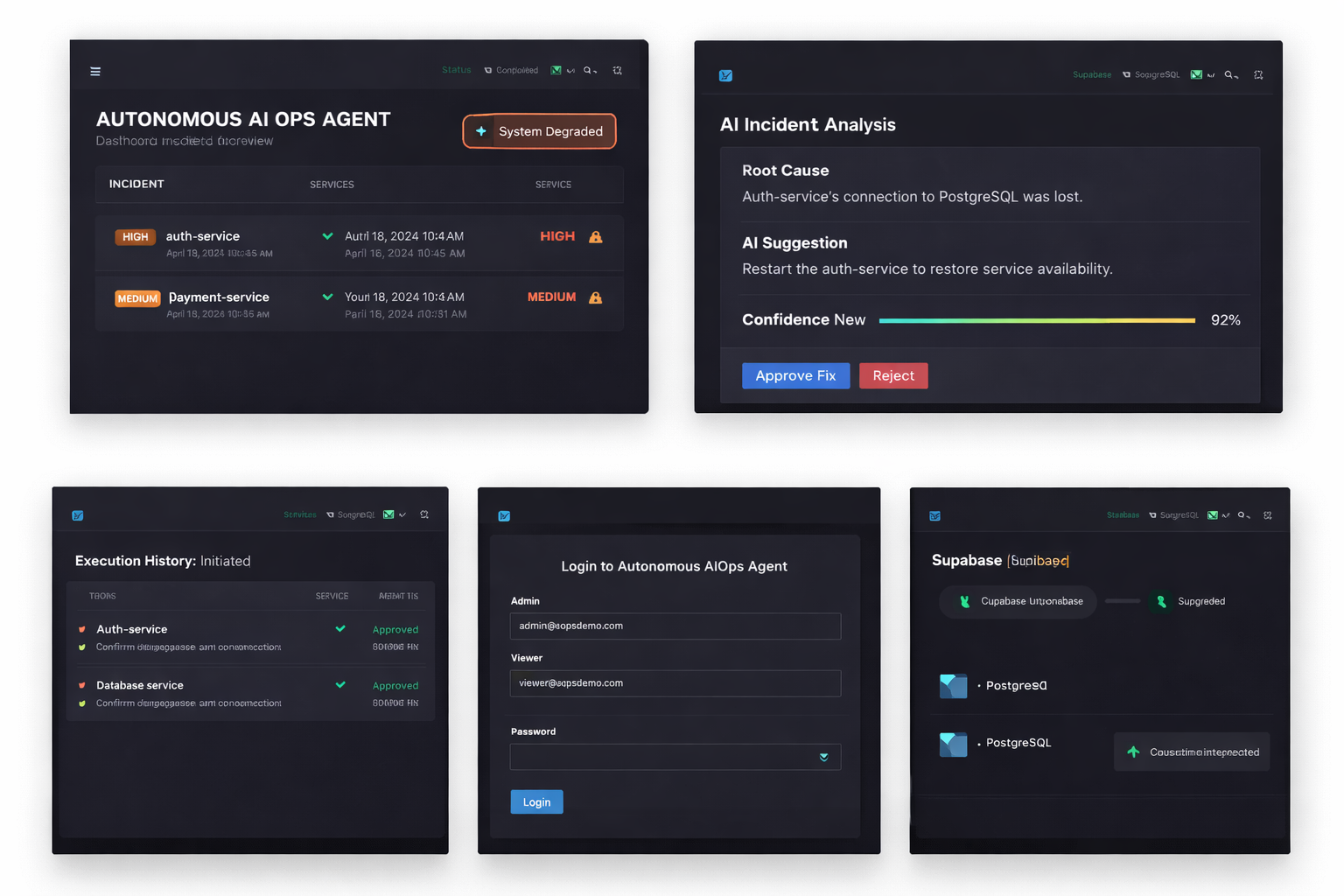
Autonomous AI Ops Agent is an AI-powered operations dashboard that helps teams detect, analyze, and respond to system incidents in real time.
The platform:
- Monitors incidents from backend services
- Uses AI reasoning to identify root causes
- Suggests clear remediation actions
- Shows confidence scores for transparency
- Allows users to approve, reject, or simulate fixes
- Tracks execution history for accountability
It acts like a virtual Site Reliability Engineer (SRE) assisting DevOps teams during outages.
How we built it
We built the project using a modern cloud-native stack:
- Frontend: React + Vite + Tailwind CSS
- Backend: Node.js (API & incident simulation)
- Database & Auth: Supabase
- AI Logic: Rule-based + AI-style reasoning for incident analysis
- UI/UX: Dark dashboard interface optimized for ops teams
The system is designed so that incidents flow into the dashboard, where the AI engine analyzes patterns such as memory leaks, database saturation, or scaling issues and produces actionable insights.
Challenges we faced
- Designing a clear and intuitive UI for complex operational data
- Making AI suggestions explainable, not just automated
- Balancing realism with hackathon time constraints
- Integrating authentication, roles (Admin / Viewer), and live system status indicators
We focused heavily on clarity, usability, and trust, which are critical in production operations tools.
What we learned
- AI in DevOps is most powerful when it augments humans, not replaces them
- Confidence scoring and transparency are crucial for trust
- Good UI/UX is just as important as strong backend logic
- Even simulated incidents can demonstrate real-world value clearly
What’s next
With more time, we plan to:
- Connect to real monitoring tools (Prometheus, Datadog, CloudWatch)
- Add real auto-remediation via Kubernetes & cloud APIs
- Improve AI models using historical incident data
- Add team collaboration and incident timelines
Why this matters
Autonomous AI Ops Agent shows how AI can reduce downtime, speed up incident response, and make system operations smarter and calmer.
This project demonstrates the future of AI-powered cloud operations.
Built With
- ai-based-incident-analysis
- cloud-native
- node.js
- postgresql
- react
- rest-apis
- supabase
- tailwind-css
- typescript
- vite


Log in or sign up for Devpost to join the conversation.