Inspiration
Dwight comes from Dumangas, Iloilo, Philippines, Riley's mom comes from Manila, Philippines, and Jason comes from Ukraine and came from a background where they didn't have ease of access to clean water or electricity at times. Dwight recalled a moment when his mom and he used to travel far to pump water. We wanted to help those still suffering from the lack of these taken-for-granted gifts we enjoy today.
What it does
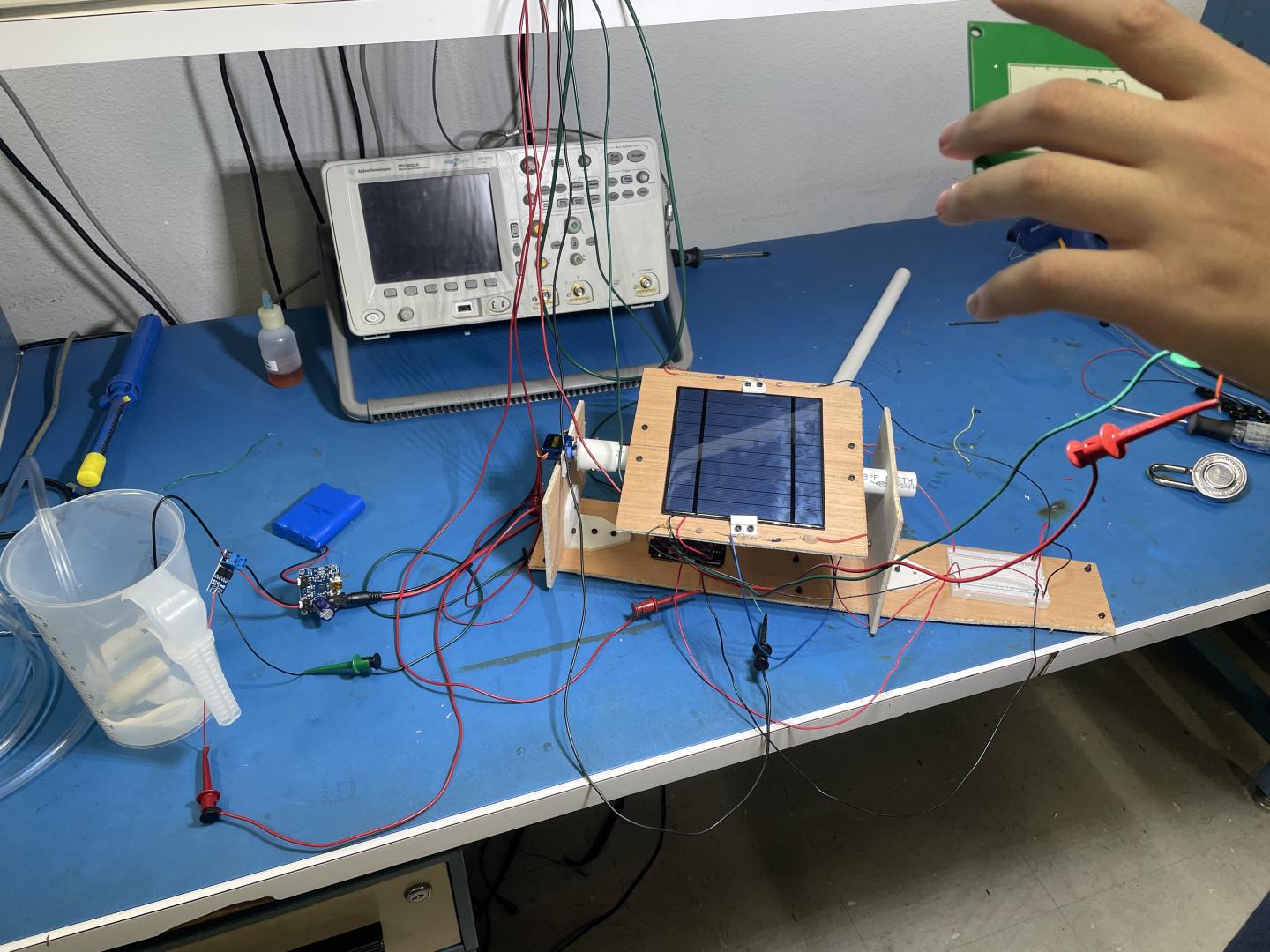
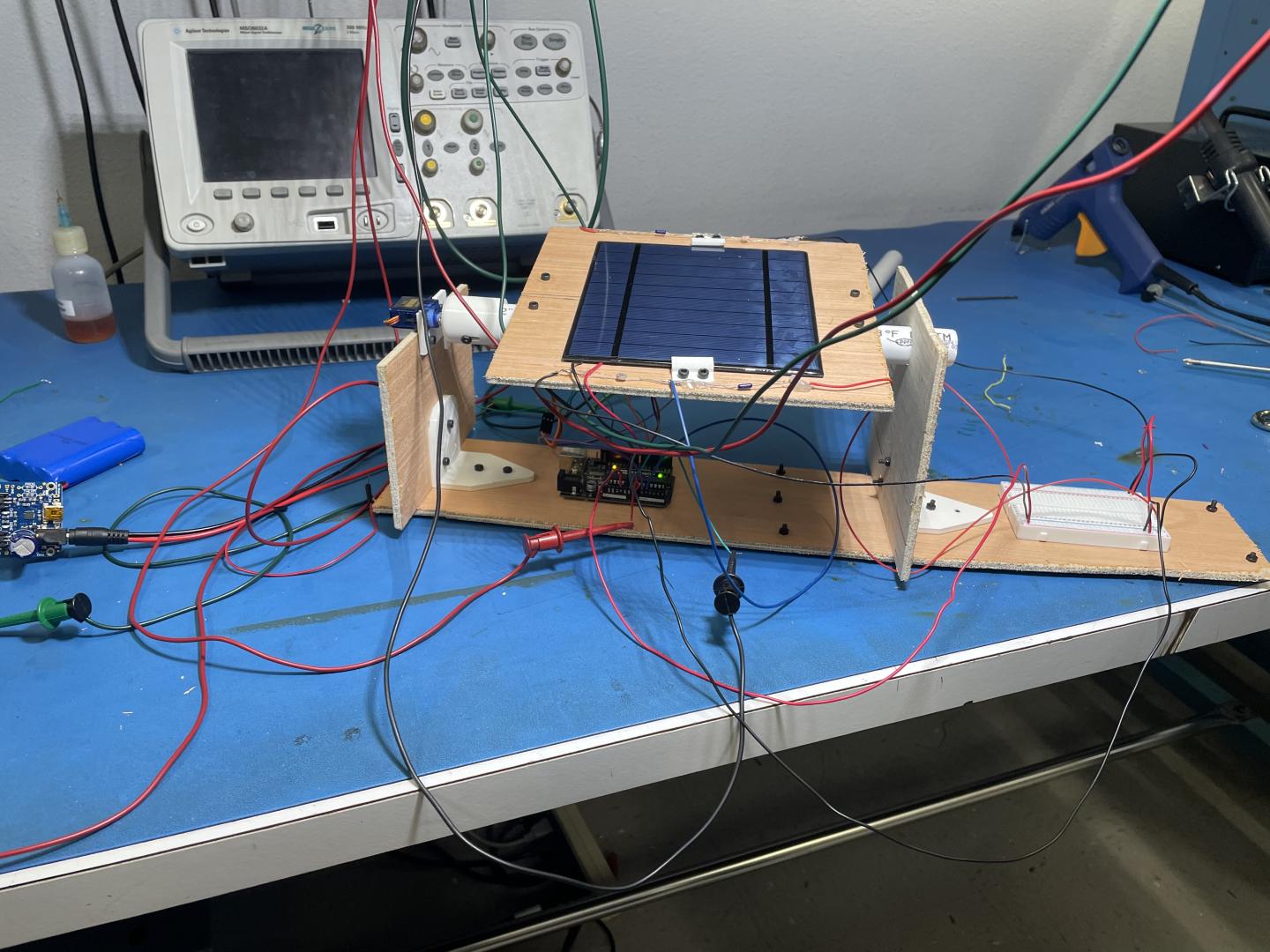
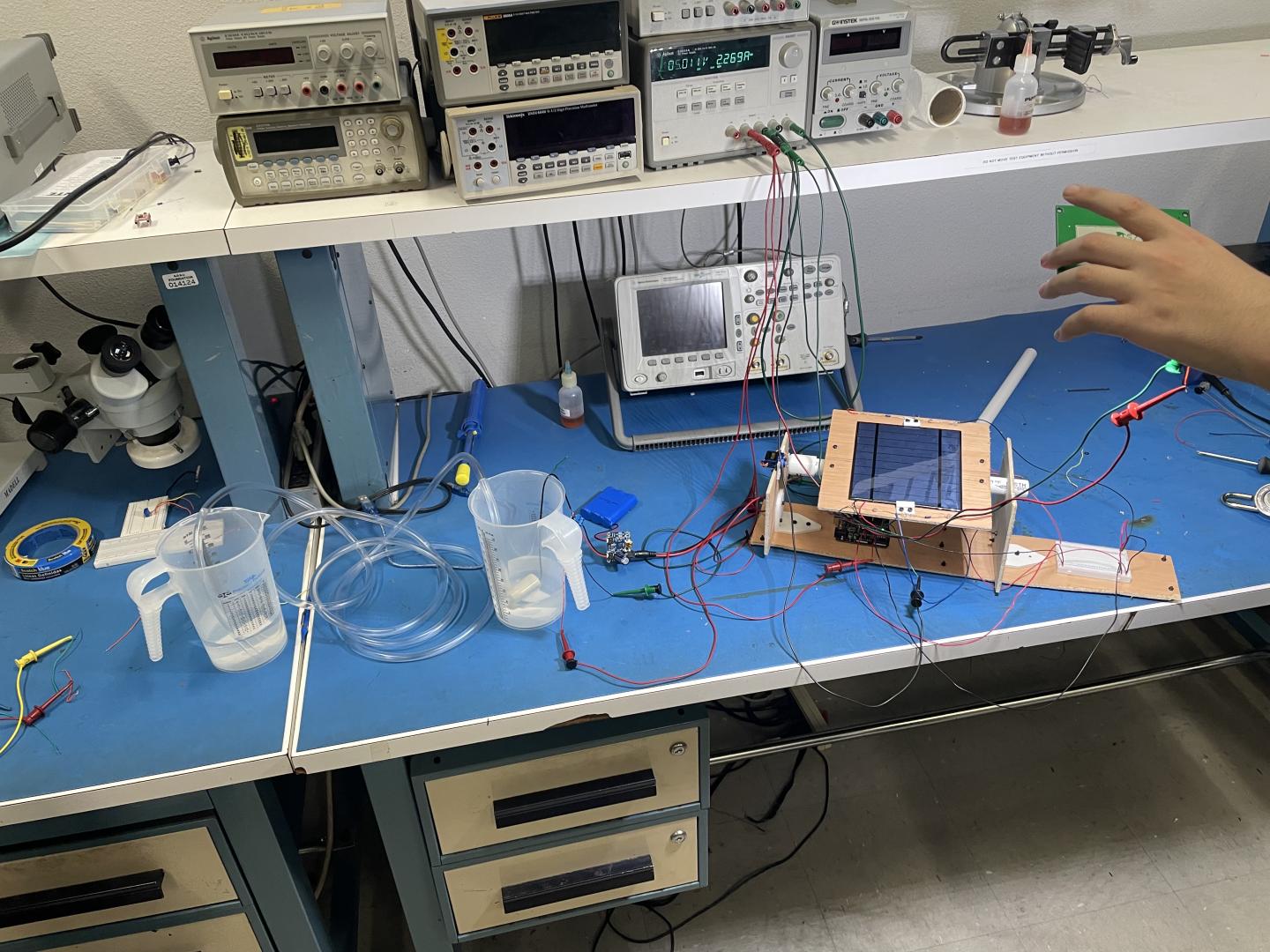
The system has an adaptive solar panel that rotates based on the position of the sun to increase efficiency. The power collected charges a battery that drives a motor and water pump. The water pump takes water from one pitcher (the well) and delivers it to an adjacent pitcher (the water tower)
How we built it
Using Arduino electronics, we attached solar panels, chargers, batteries, motors, pumps, and photoresistors to build the physical system. We wrote .ino code to analyze the delta between the two photoresistors to determine how the panel should move. We sent data on power consumption to our local folder via FTP. This helped us build a website locally using Python and Flask.
Challenges we ran into
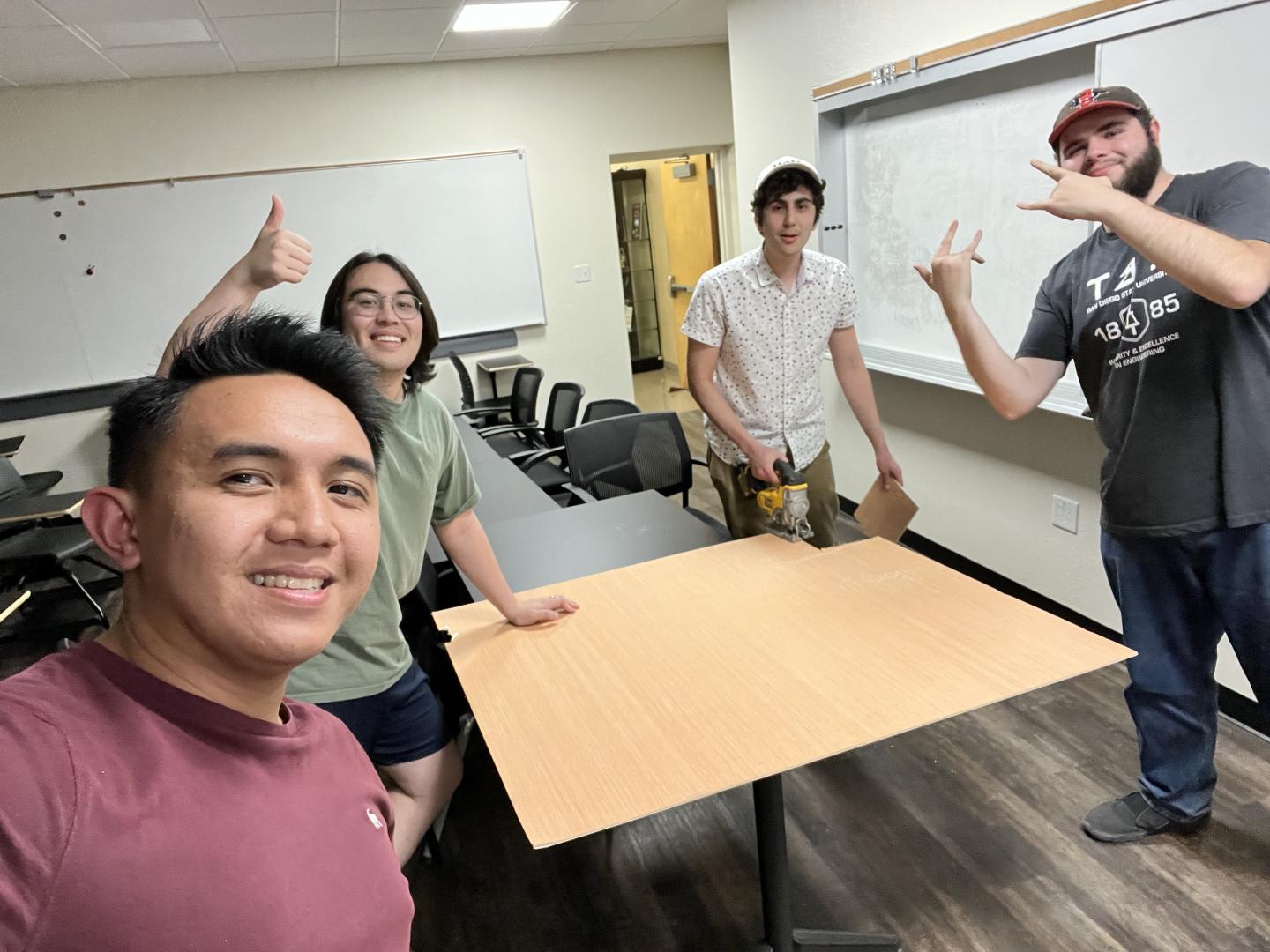
It was difficult to do a hardware project with such limited time. We had to scramble for parts and jigsaw scrap pieces of wood to build our system. We also were limited to the electronics that each of us owned and had to build circuits on breadboards.
Accomplishments that we're proud of
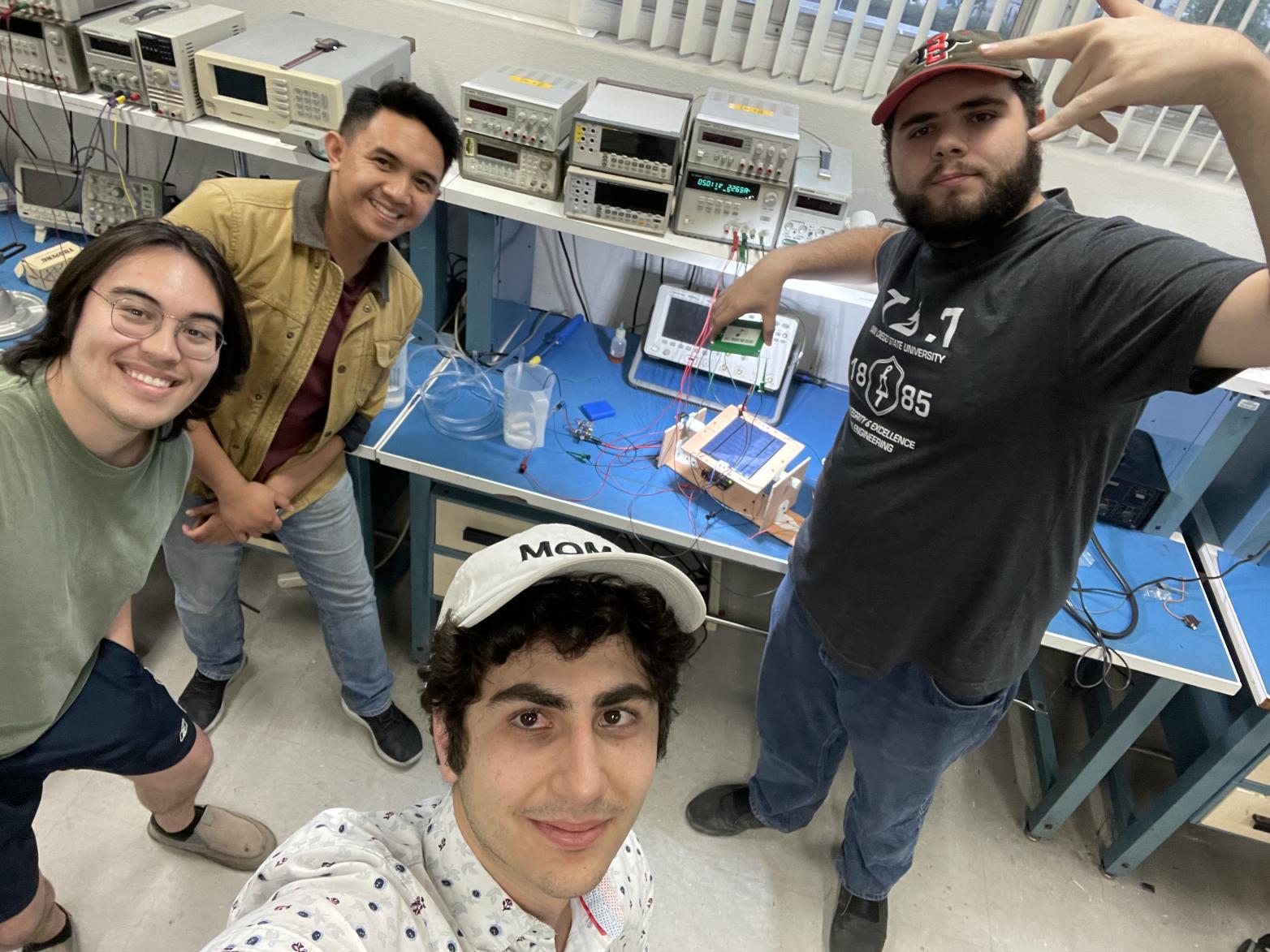
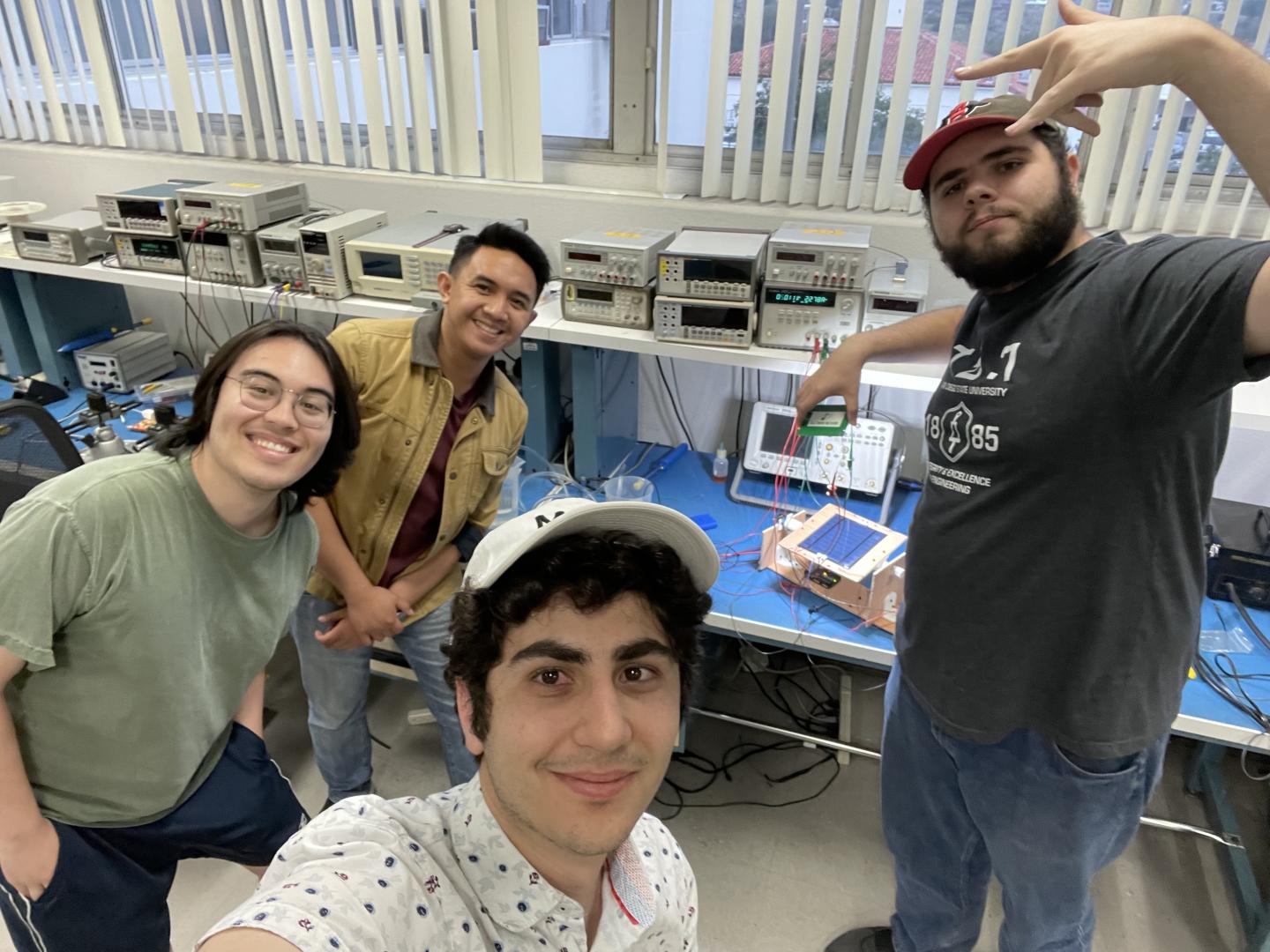
We all slowly lost willpower over time, but as close friends, we kept each other motivated and supported each other to stay awake from 10 AM to the moment we submit this post. We also took part and bounce ideas in each other's modules & subsystems.
What we learned
This was our first time working with solar panels, chargers, liquid pumps, and servo motors.
What's next for Autonomous Adaptive Solar Ecosystem
Actually, the design is intended to be expandable in the sense you can add more solar panels in parallel to increase the power gained. You can also elaborate on the water tank by adding a filtration system for drinking water, local waste processing for sewage, irrigation for crops, and basic sanitation for health & well-being.
Closing
It's obvious that solar panels immediately play into sustainability, but the application of this project is intended to help the hundreds of millions of people who suffer from the lack of electricity and water. Our approach provides a lower cost by increasing the efficiency of 1 solar panel and delivers an autonomous ecosystem that supports those amenities. In addition to this, that lack of these resources actually "leads to mal-nutrition"(Bill Gates - Talks Toilets)


Log in or sign up for Devpost to join the conversation.