-
-
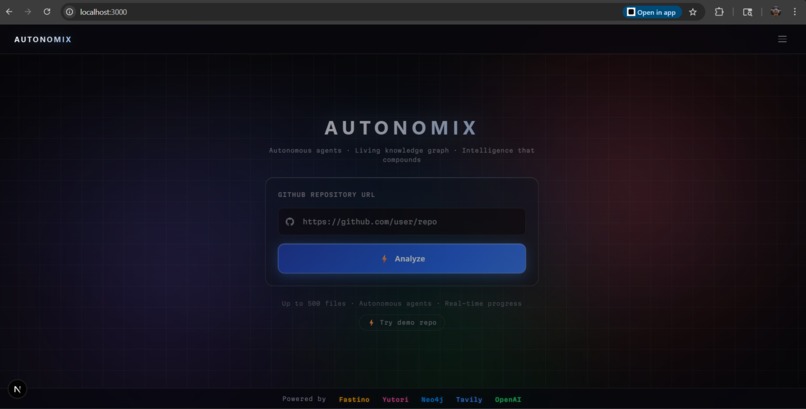
Home Page of Autonomix
Inspiration
We wanted one place to see the security, quality, and structure of a codebase instead of juggling separate tools. A big driver was using it on our own repos, catching vulnerabilities and tech debt early and understanding how our code fits together. We built Autonomix to be the “vibe check” we wished we had for every project we touch.
What it does
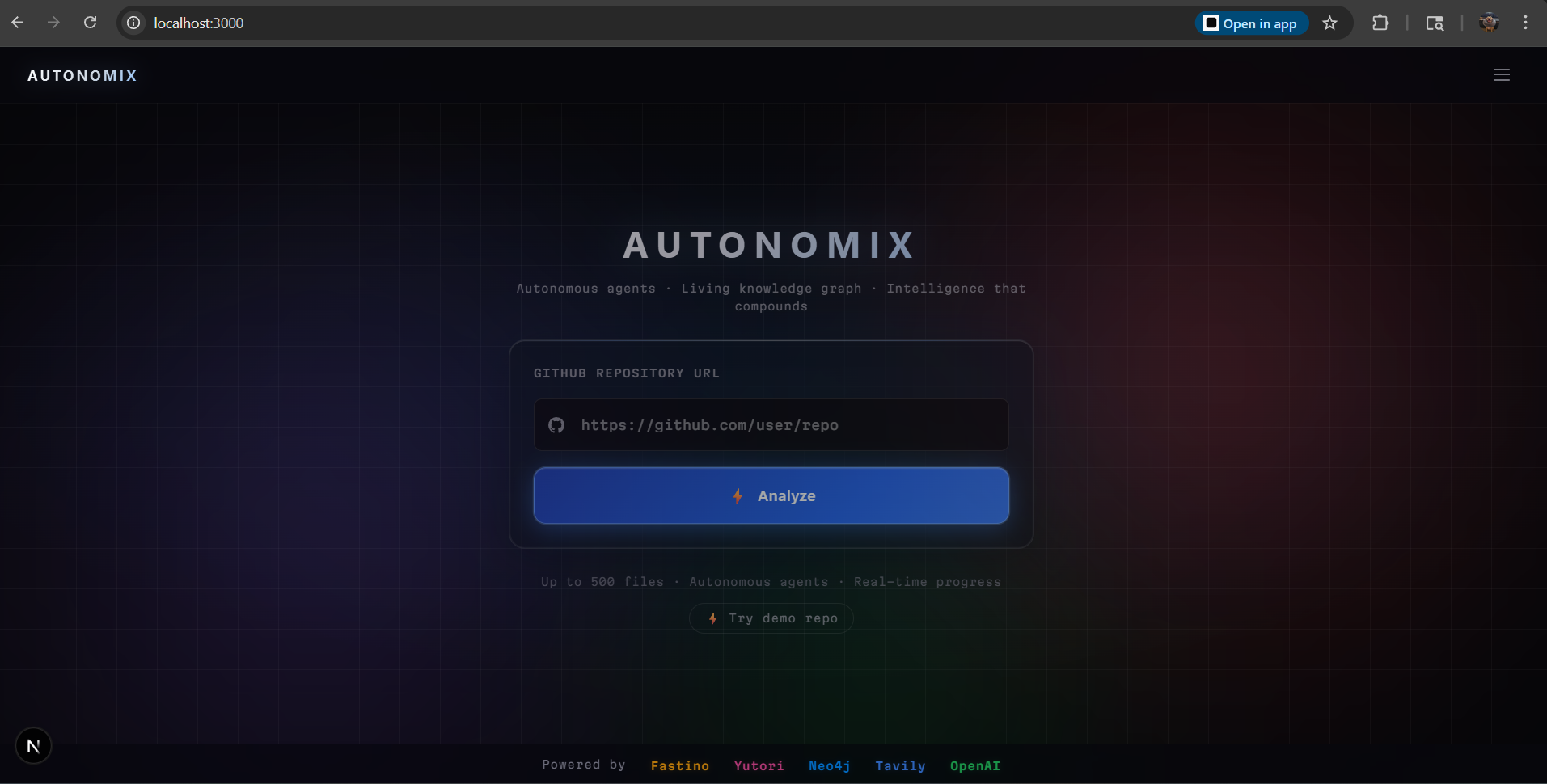
Paste any public GitHub URL. Six AI agents run in parallel: one clones and maps the repo into a live Neo4j graph, others hunt vulnerabilities, flag code smells, detect anti-patterns, and a “doctor” agent produces a prioritized fix plan with before/after examples. You get a health score (letter grade + breakdown), and the whole run streams over WebSocket so you watch it in real time—usually under a minute.
How we built it
Frontend: Next.js 16, TypeScript, Zustand. Backend: FastAPI, asyncio. Data: PostgreSQL + Neo4j (Docker). We defined a 6-step pipeline (mapper → quality → security → pattern → doctor), wired sponsor APIs (Fastino, Yutori, Tavily, OpenAI), and streamed progress and graph updates over WebSockets. The UI shows the live graph (Cytoscape.js), findings, and health score.
Challenges we ran into
Coordinating six agents and keeping the pipeline fast; designing the Neo4j schema so files, functions, and findings link cleanly; and making the real-time stream feel responsive without overloading the client. We also had to handle missing or partial API keys so Autonomix still runs when only some integrations are configured.
Accomplishments that we're proud of
Shipping a full multi-agent pipeline in a hackathon; a live knowledge graph that updates as the run progresses; single-URL in, health score + fix plan out in under a minute; and integrating Neo4j, Fastino, Yutori, Tavily, and OpenAI in one coherent flow.
What we learned
Graph modeling for codebases (files, symbols, CVEs) pays off for “blast radius” and navigation. Orchestrating agents with clear handoffs and streaming progress works well with FastAPI + WebSockets. Designing for multiple external APIs taught us how to keep the pipeline robust and the UX consistent.
What's next for Autonomix
Using it on our own projects and repos as the main workflow—regular runs to catch regressions and tech debt. From there: private repo support (with auth), scheduled runs and Slack/email digests, broader language support, and optional CI integration so every PR gets a quick vibe check.
Built With
- alembic
- asyncio
- cytoscape.js
- docker
- fastapi
- fastino-api
- github-api
- neo4j
- next.js
- openai-api
- postgresql
- sqlalchemy
- tavily-api
- typescript
- yutori-api
- zustand

Log in or sign up for Devpost to join the conversation.