-
-
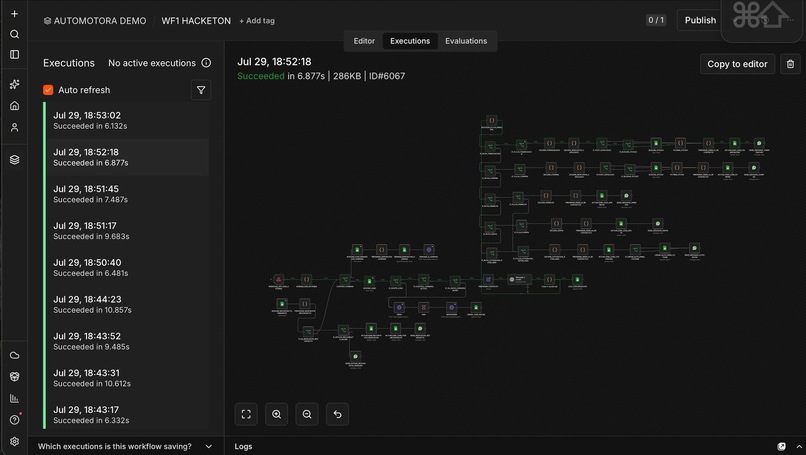
Main orchestrator (n8n)
-
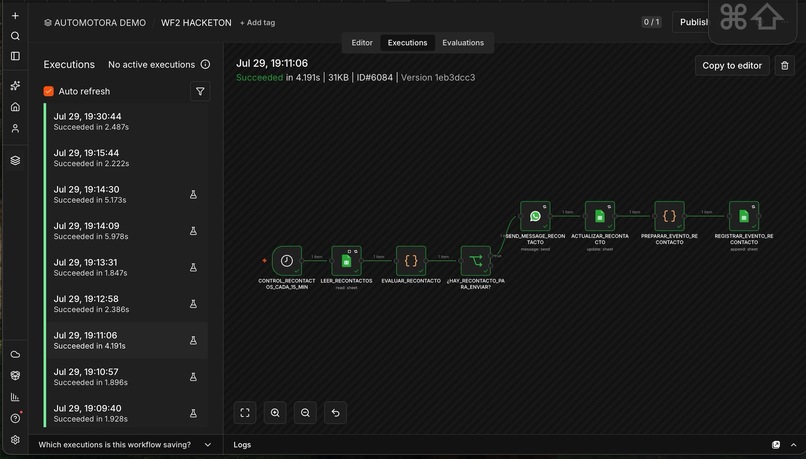
Main orchestrator (n8n)
-
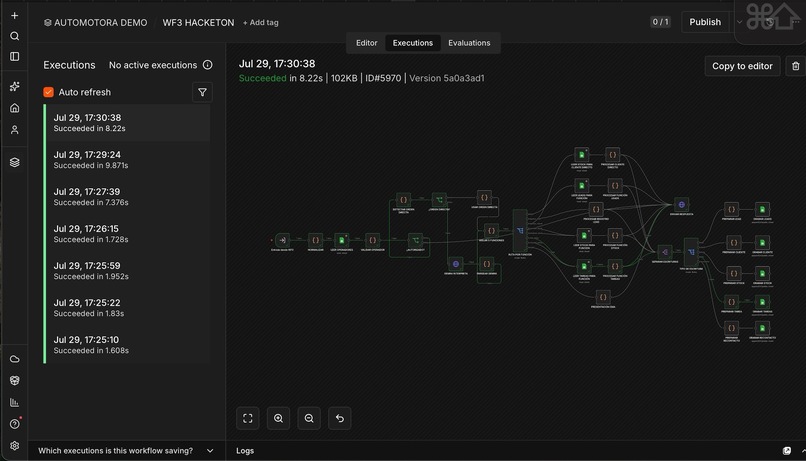
Main orchestrator (n8n)
-
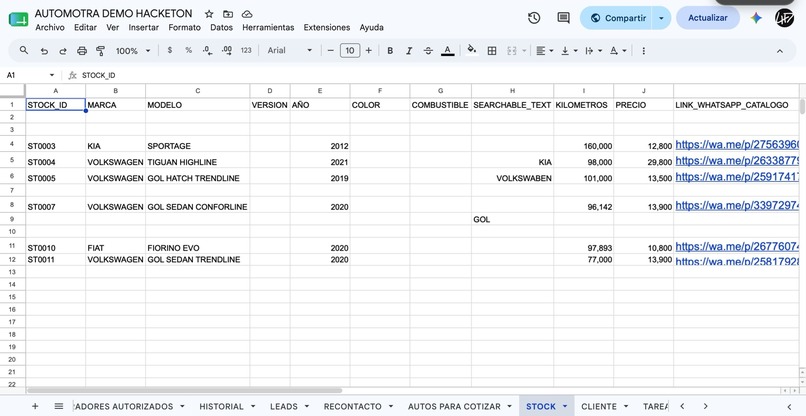
Operational database (Google Sheets)
-
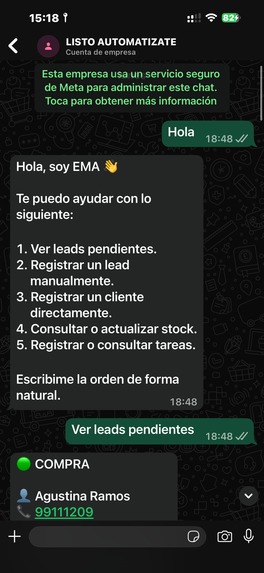
EMA Internal Assistant for business operations
-
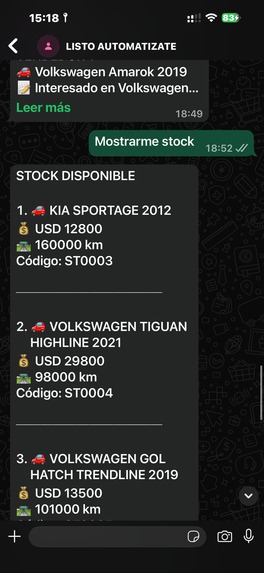
EMA Internal Assistant for business operations
-

EMA Internal Assistant for business operations
-
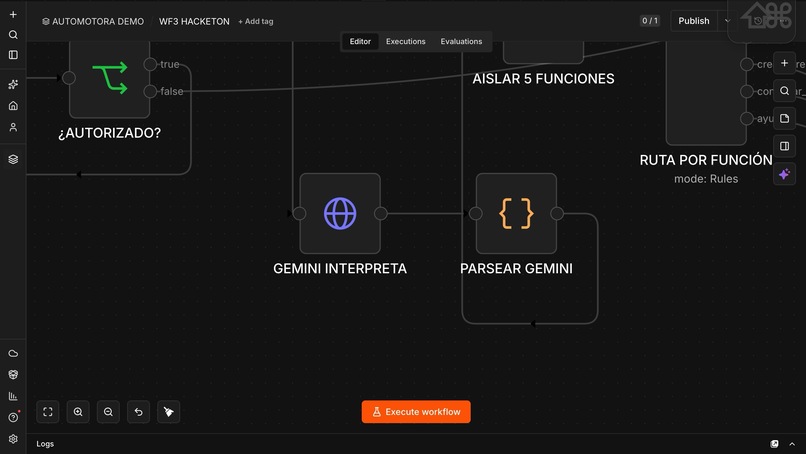
Main orchestrator (n8n + Gemini) EMA Internal Assistant for business operations
-
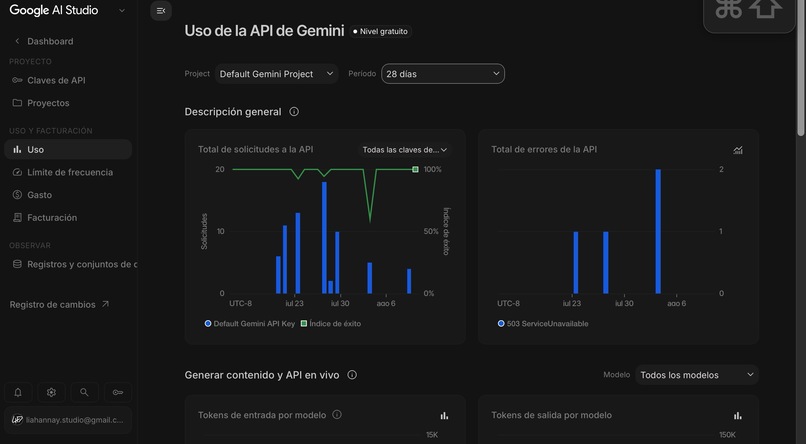
API requests
-
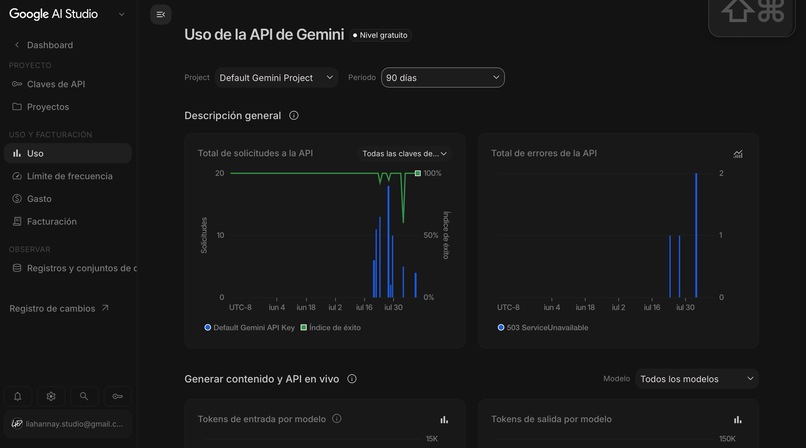
API request
-
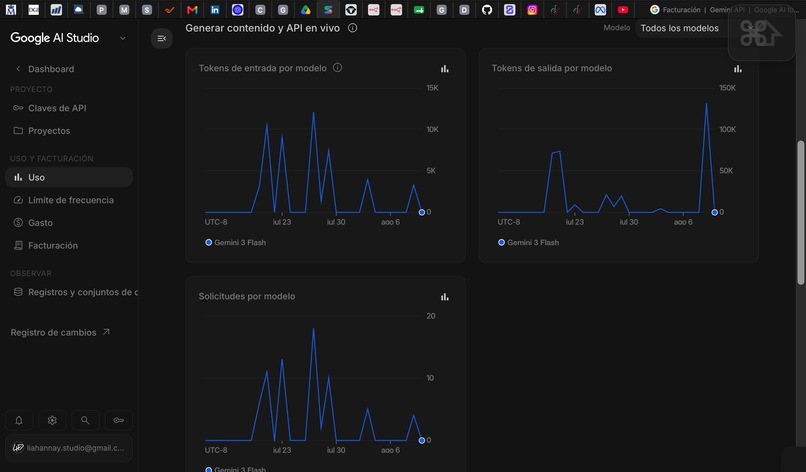
API requests
-
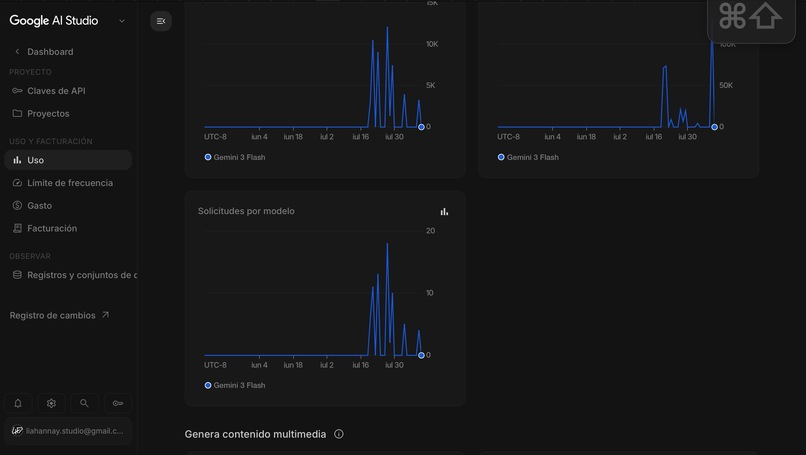
API requests
-
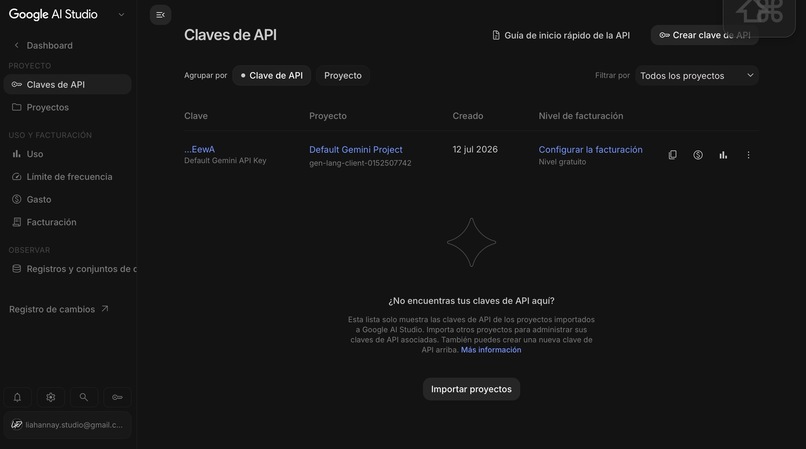
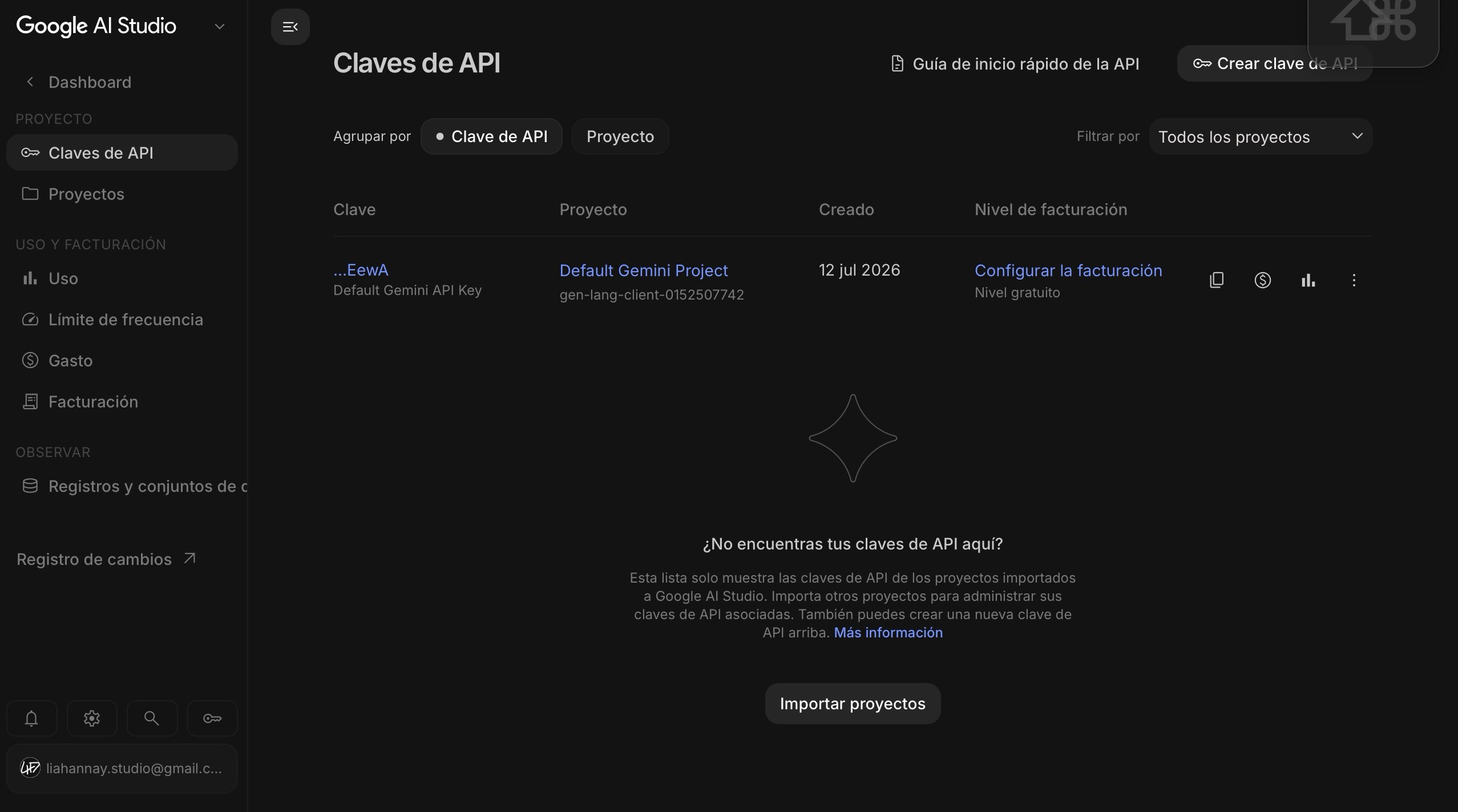
Goolge IA Studio - API Key - Gemini 3 Flash
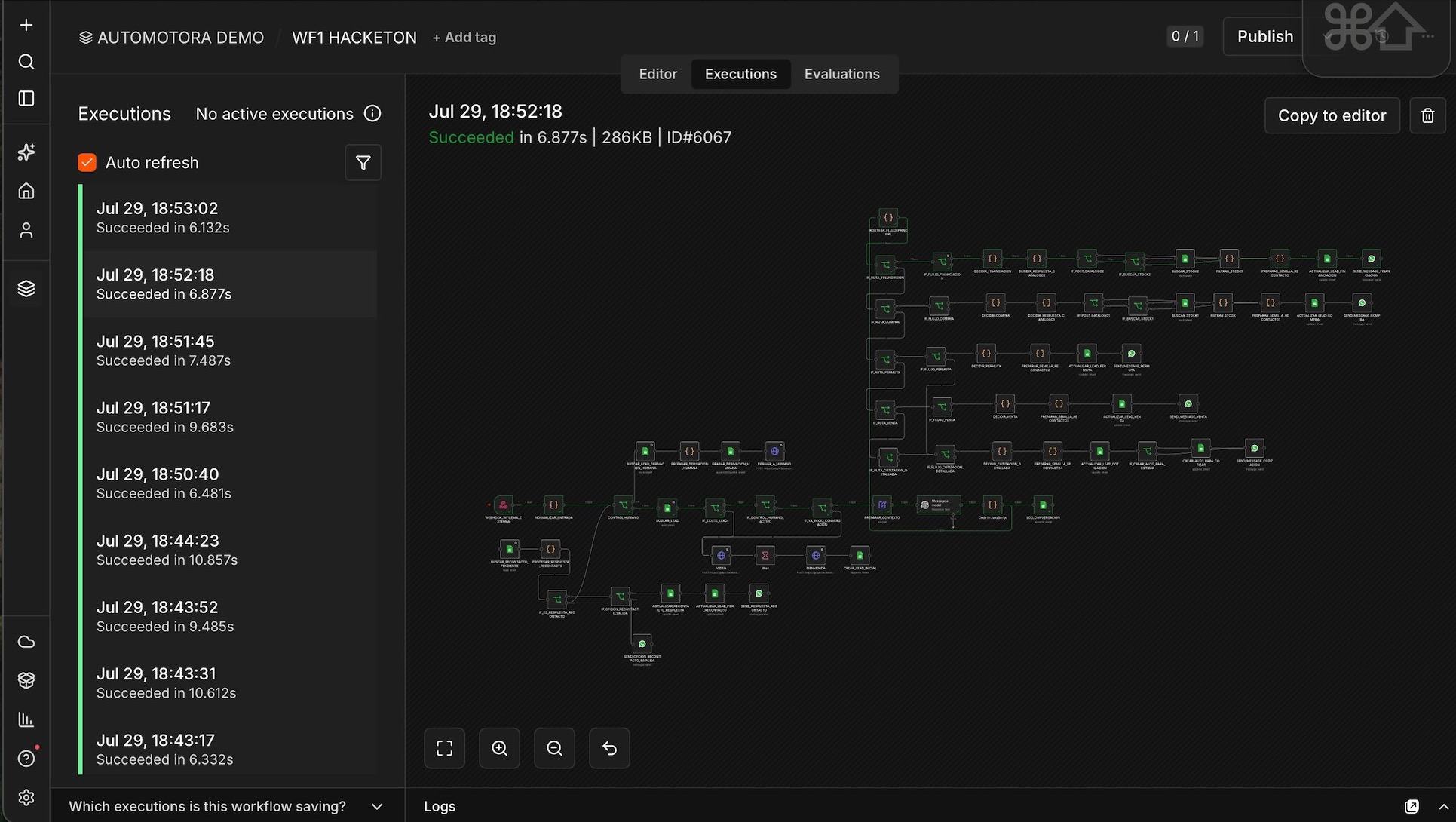
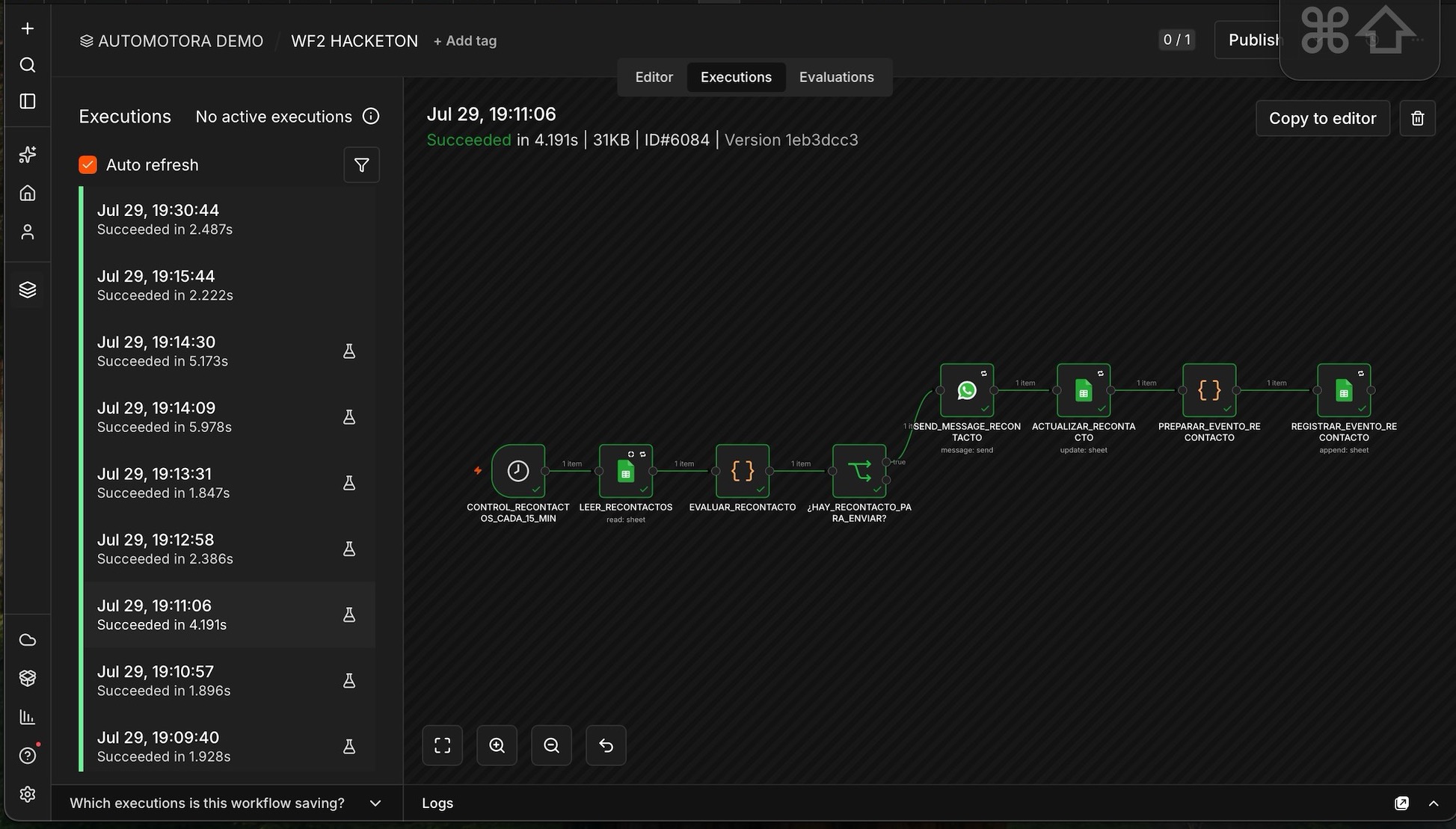
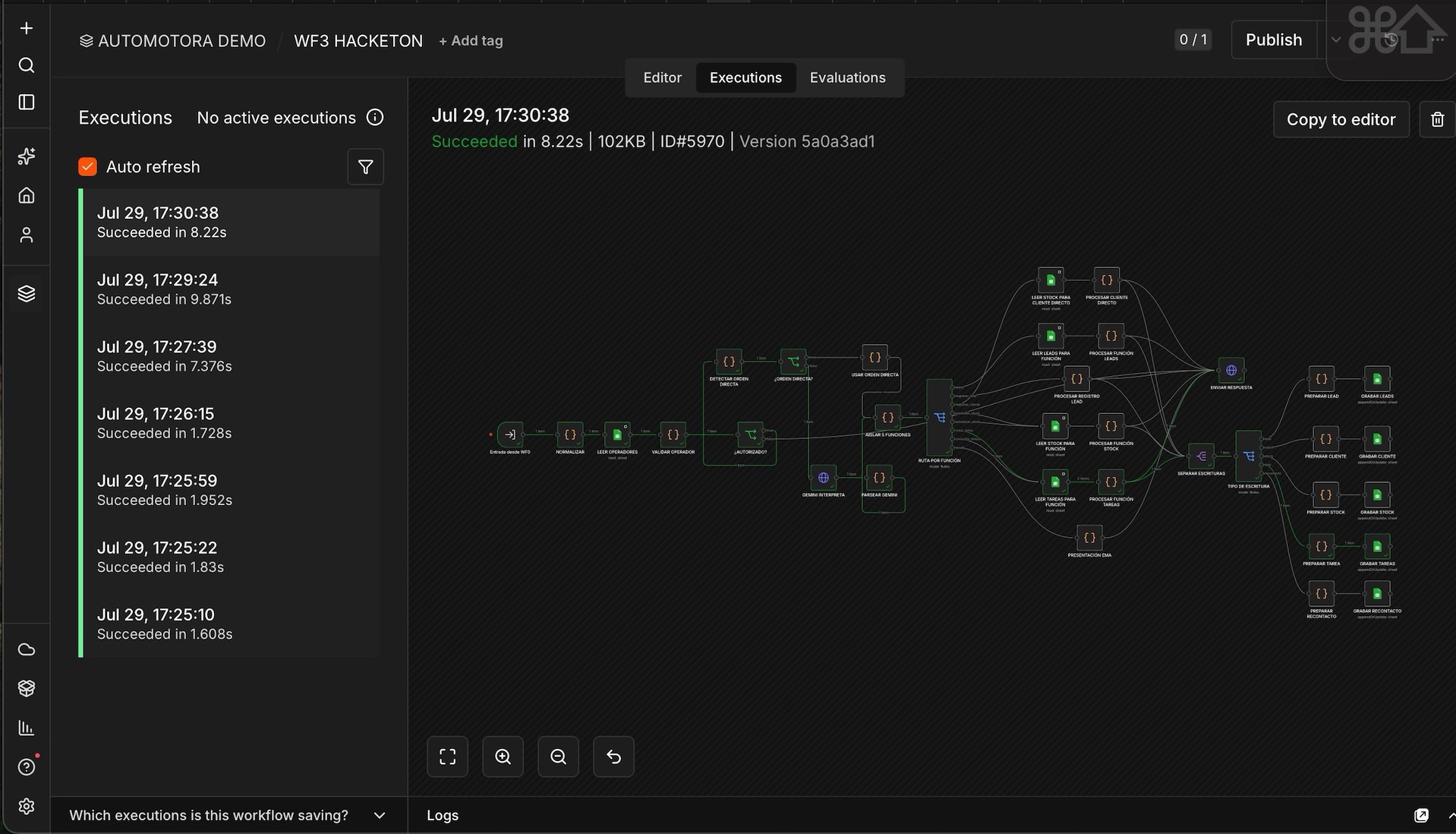
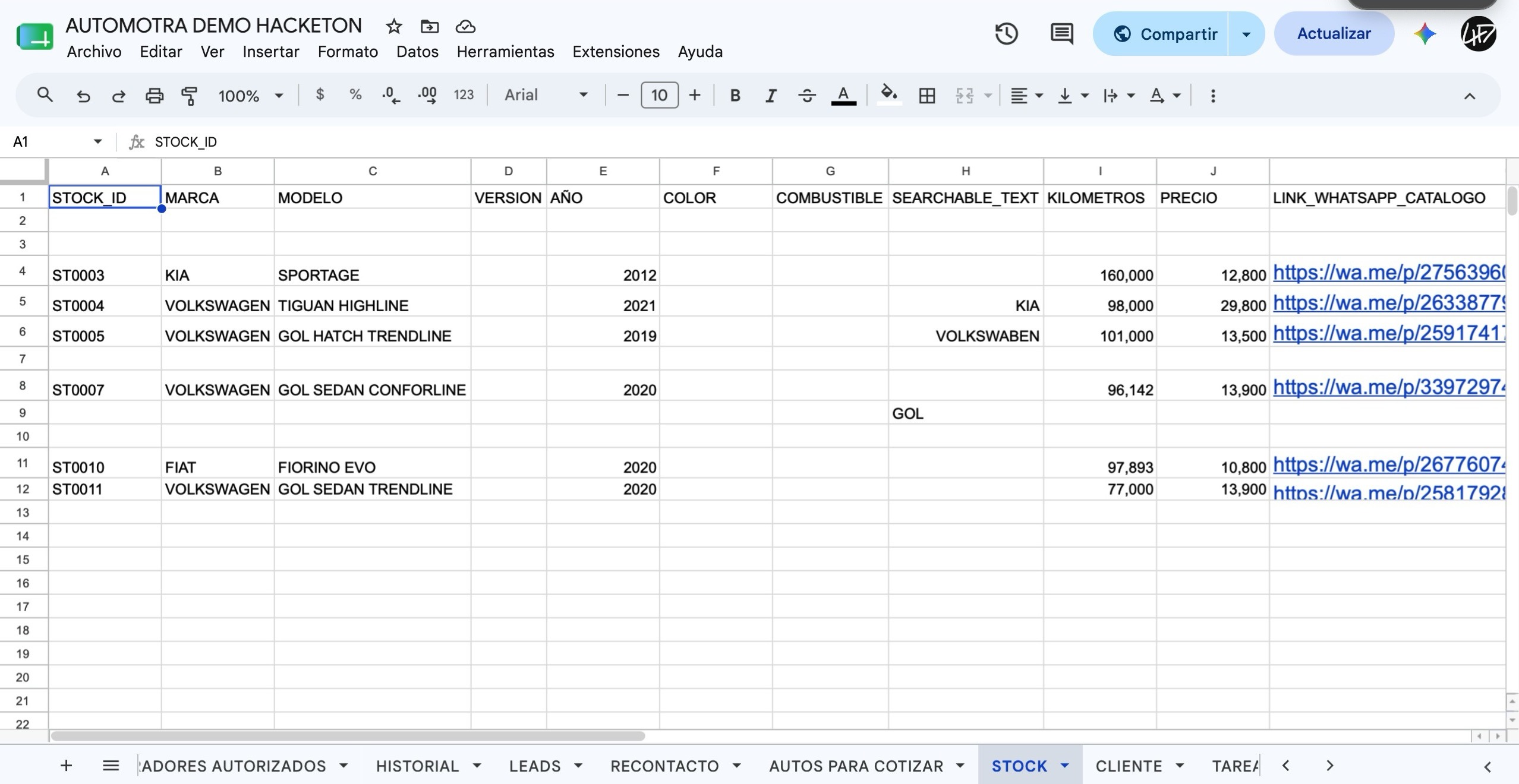
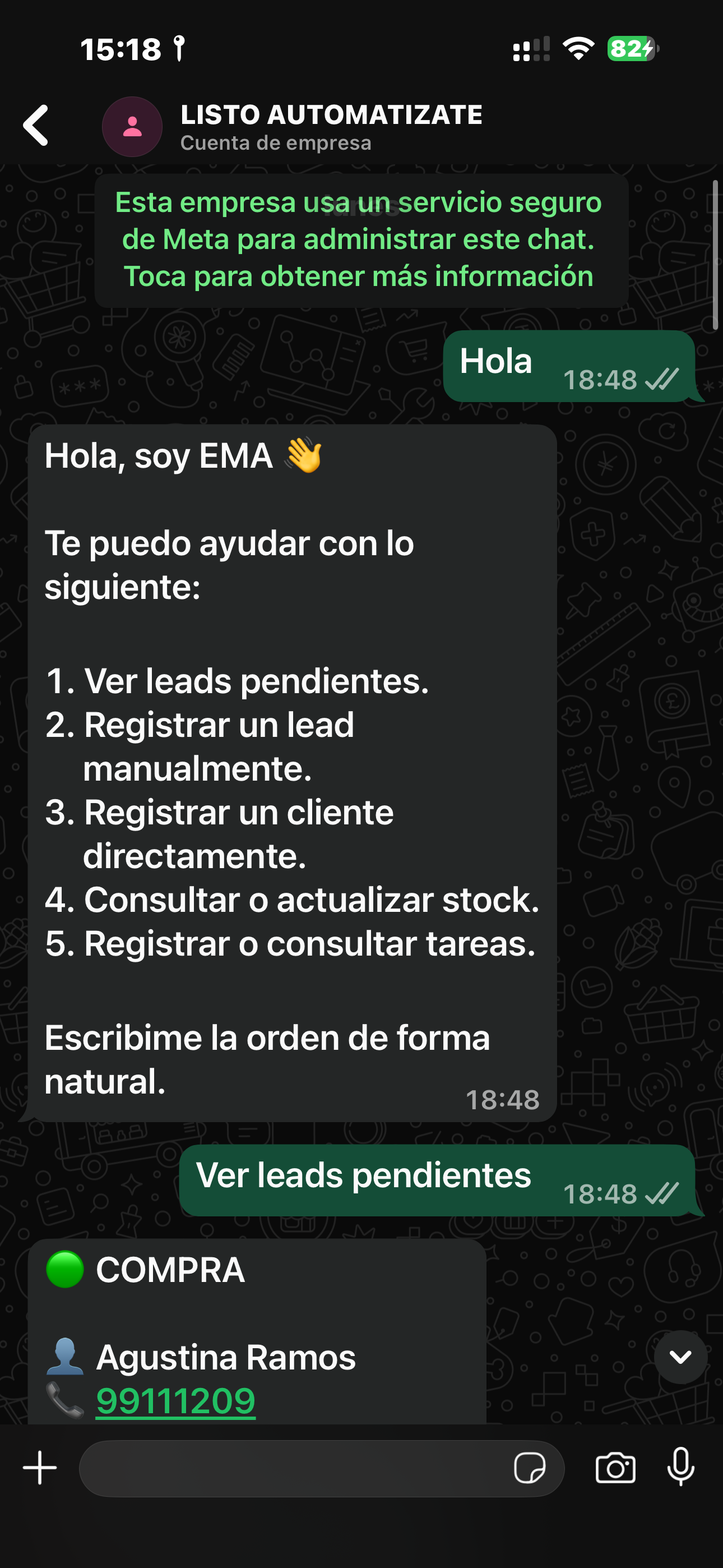
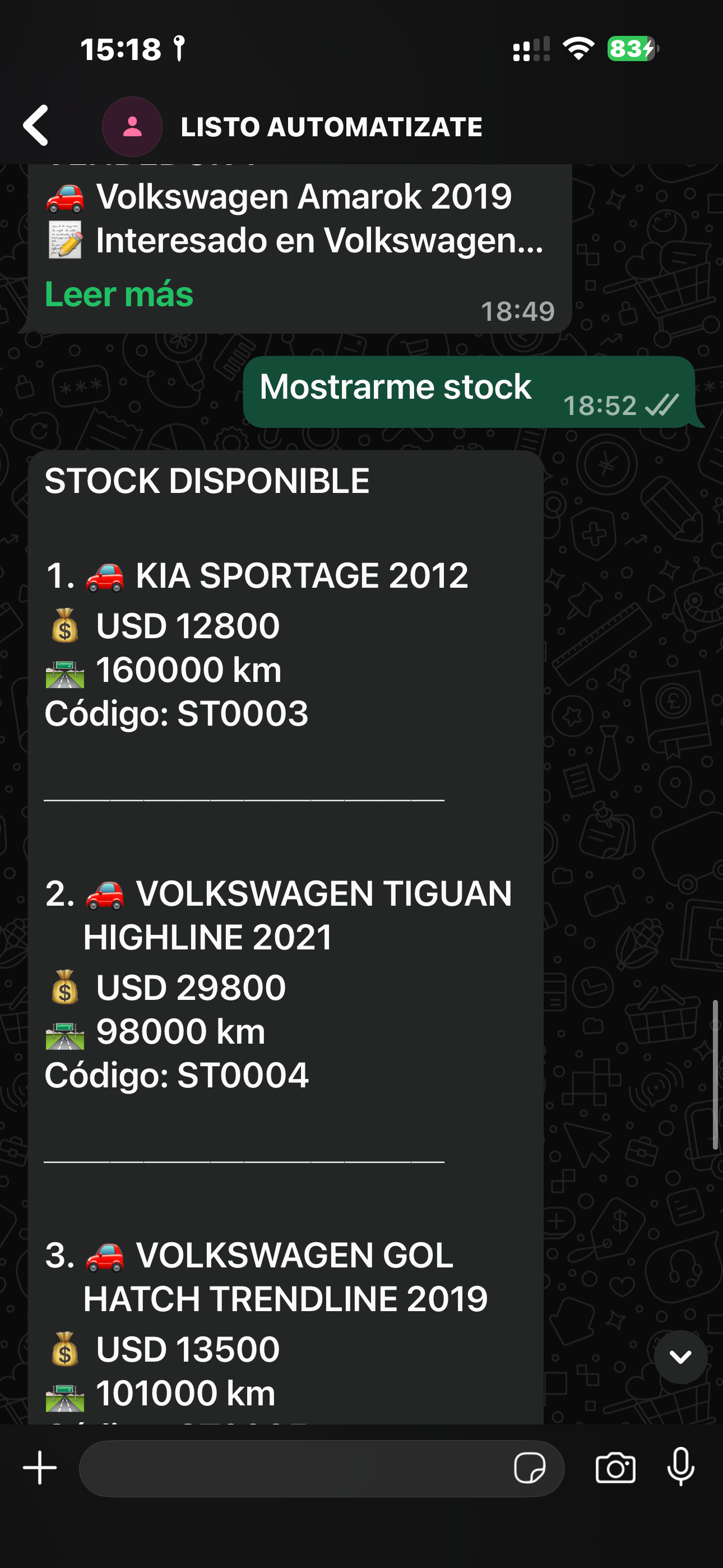
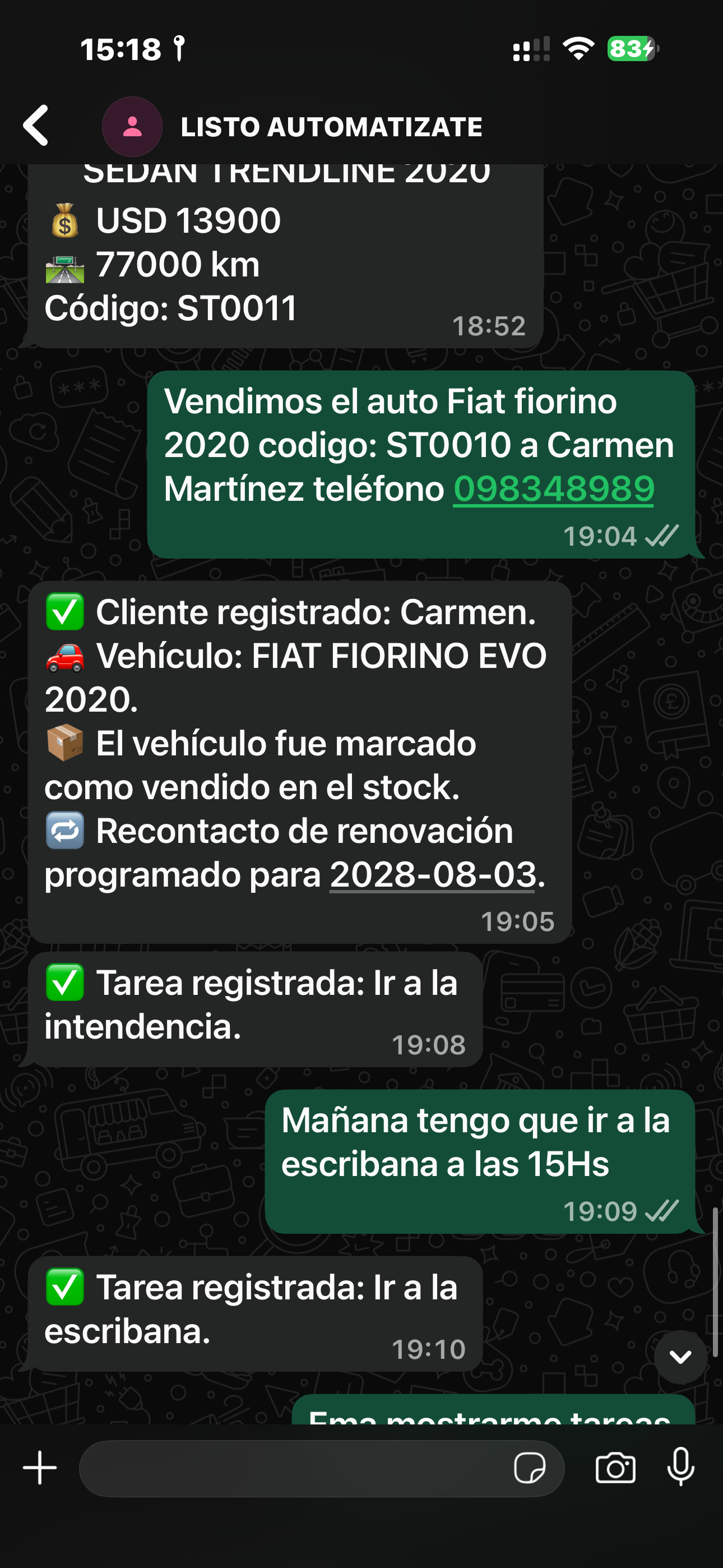
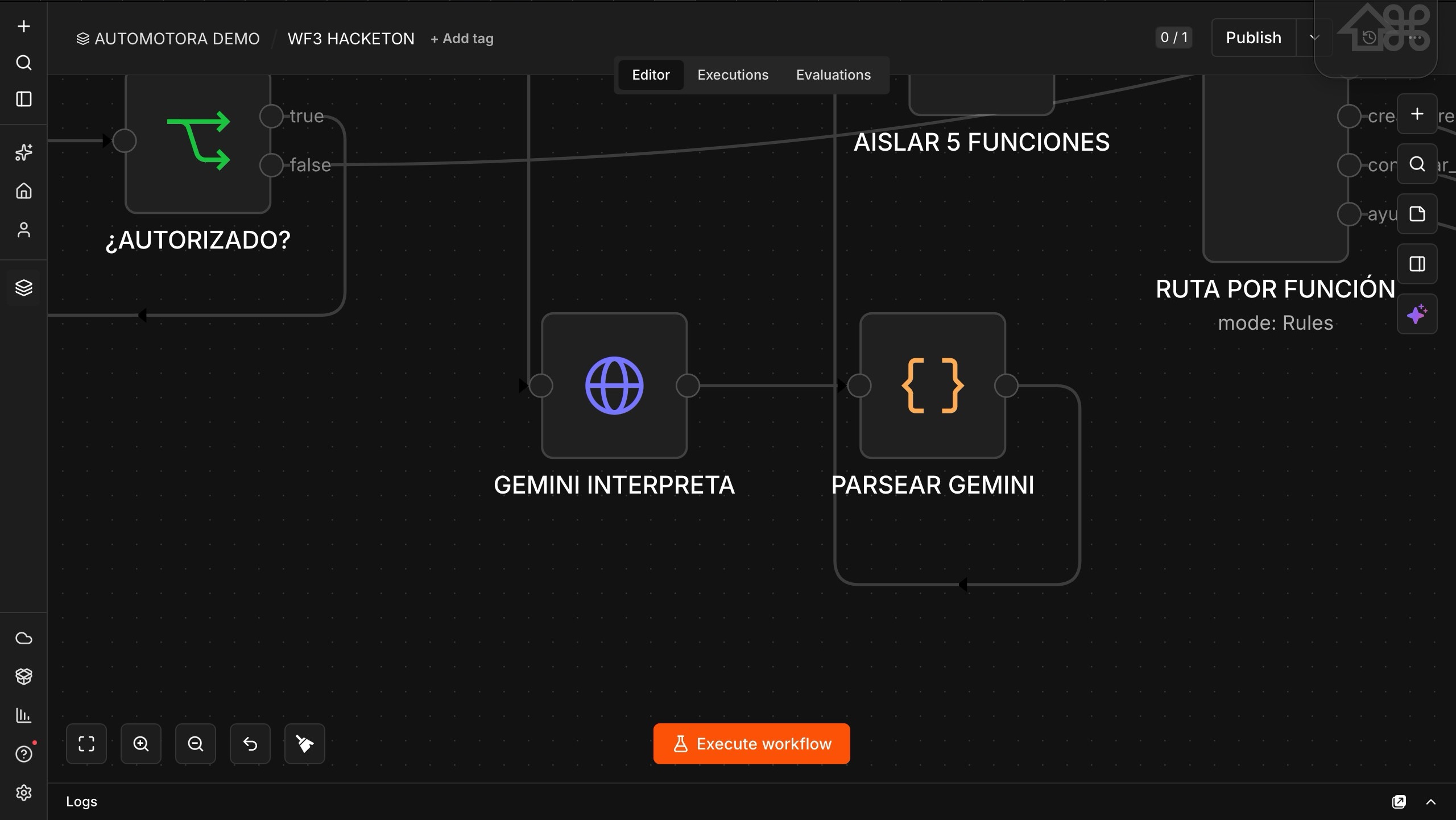
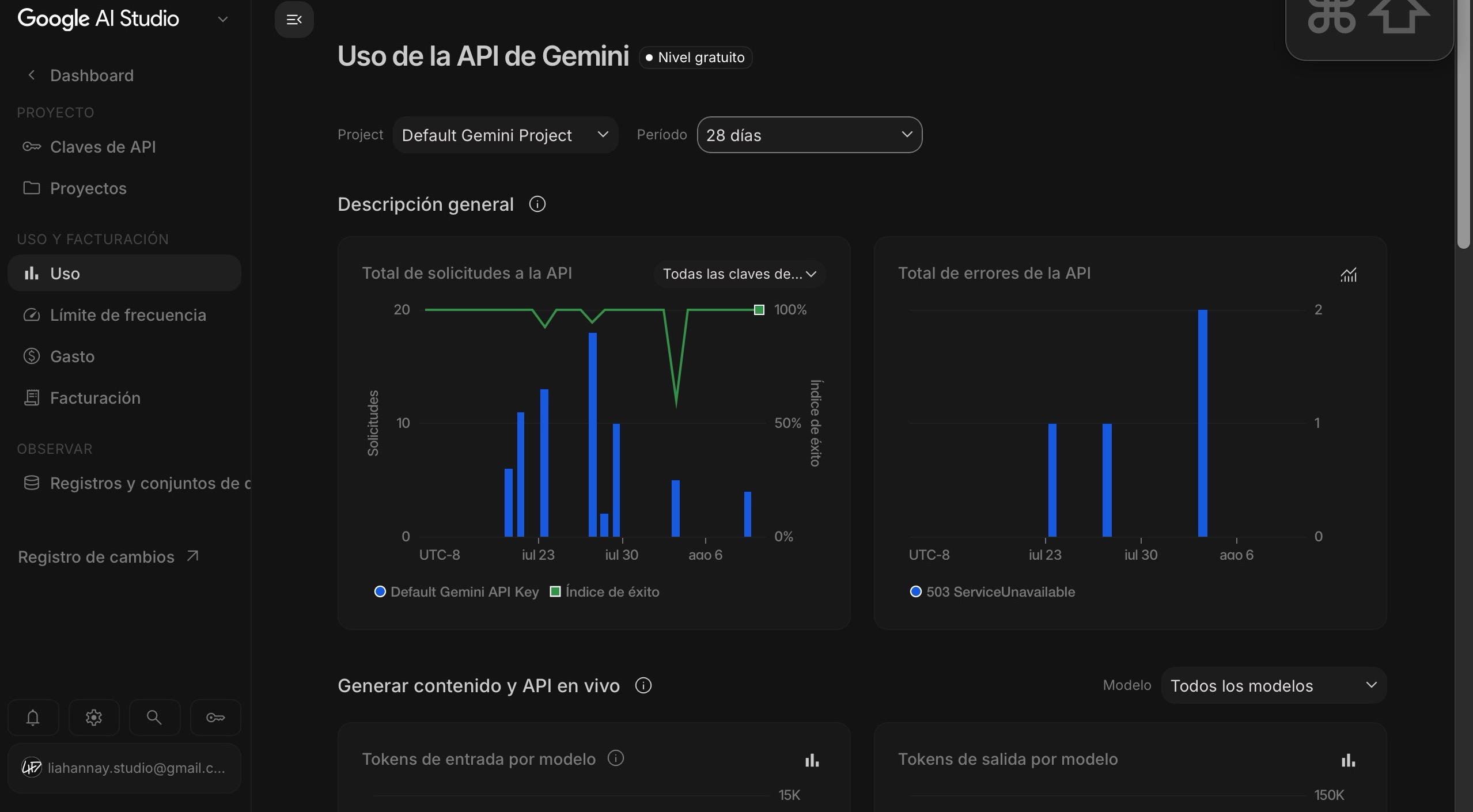
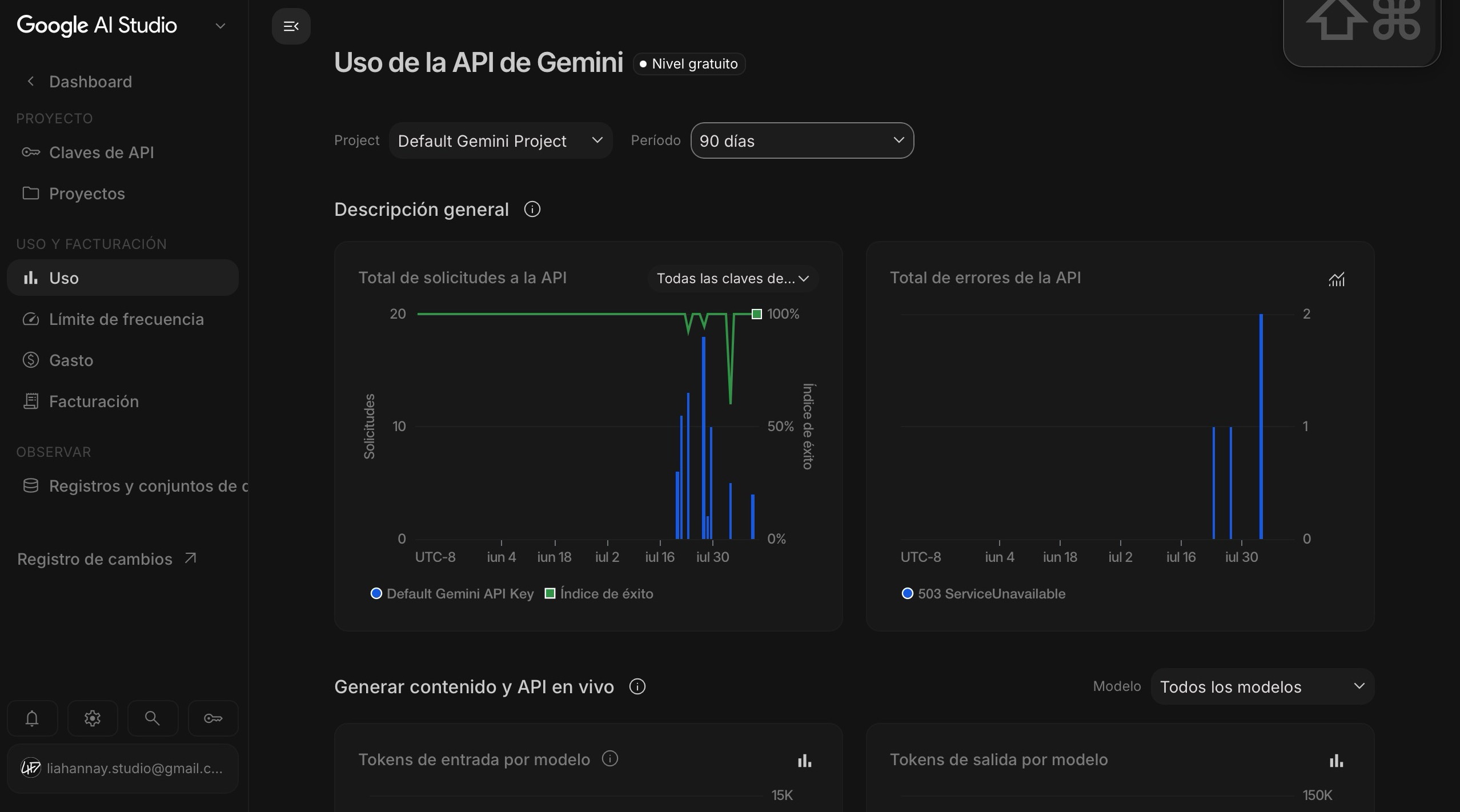
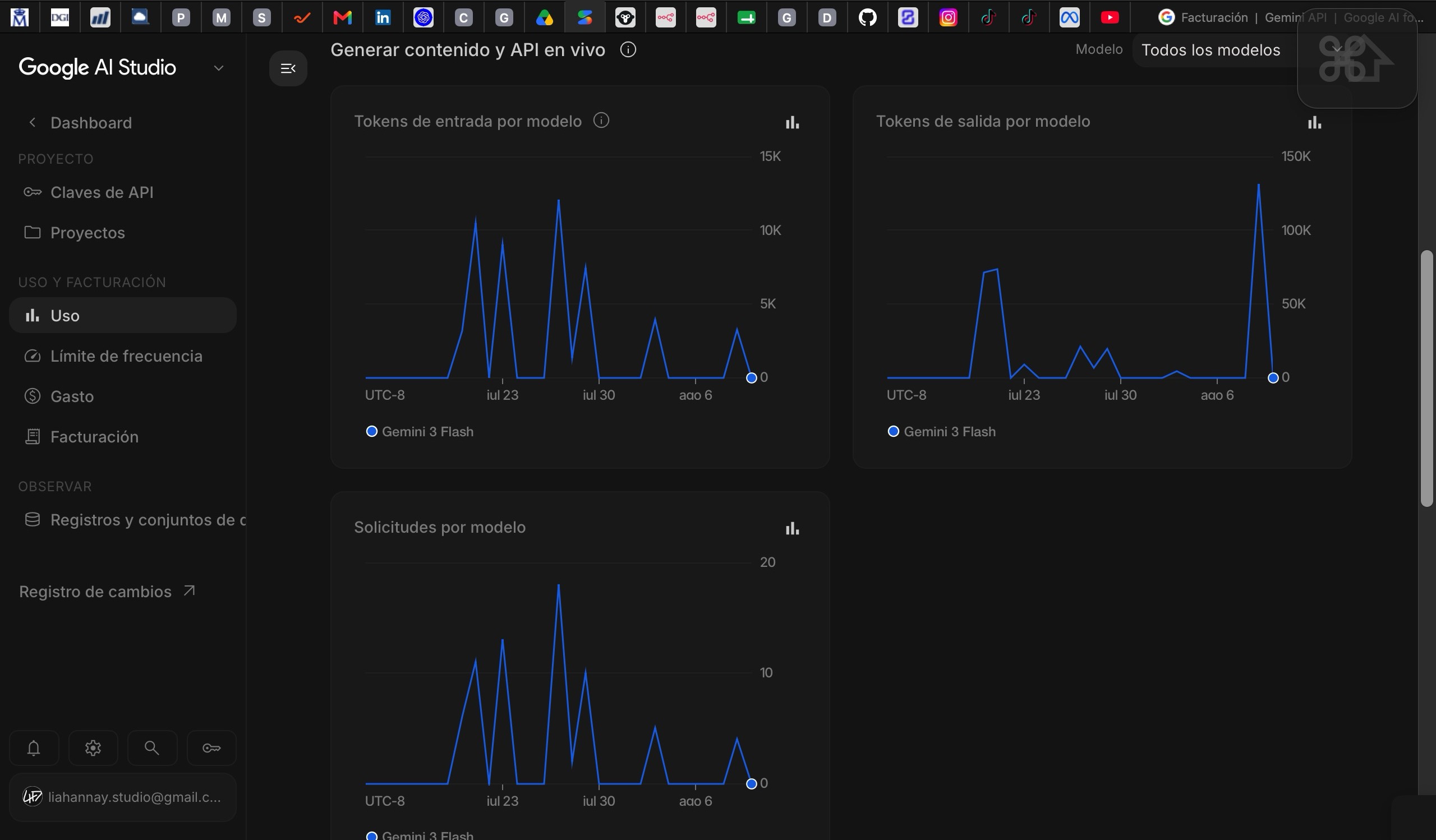
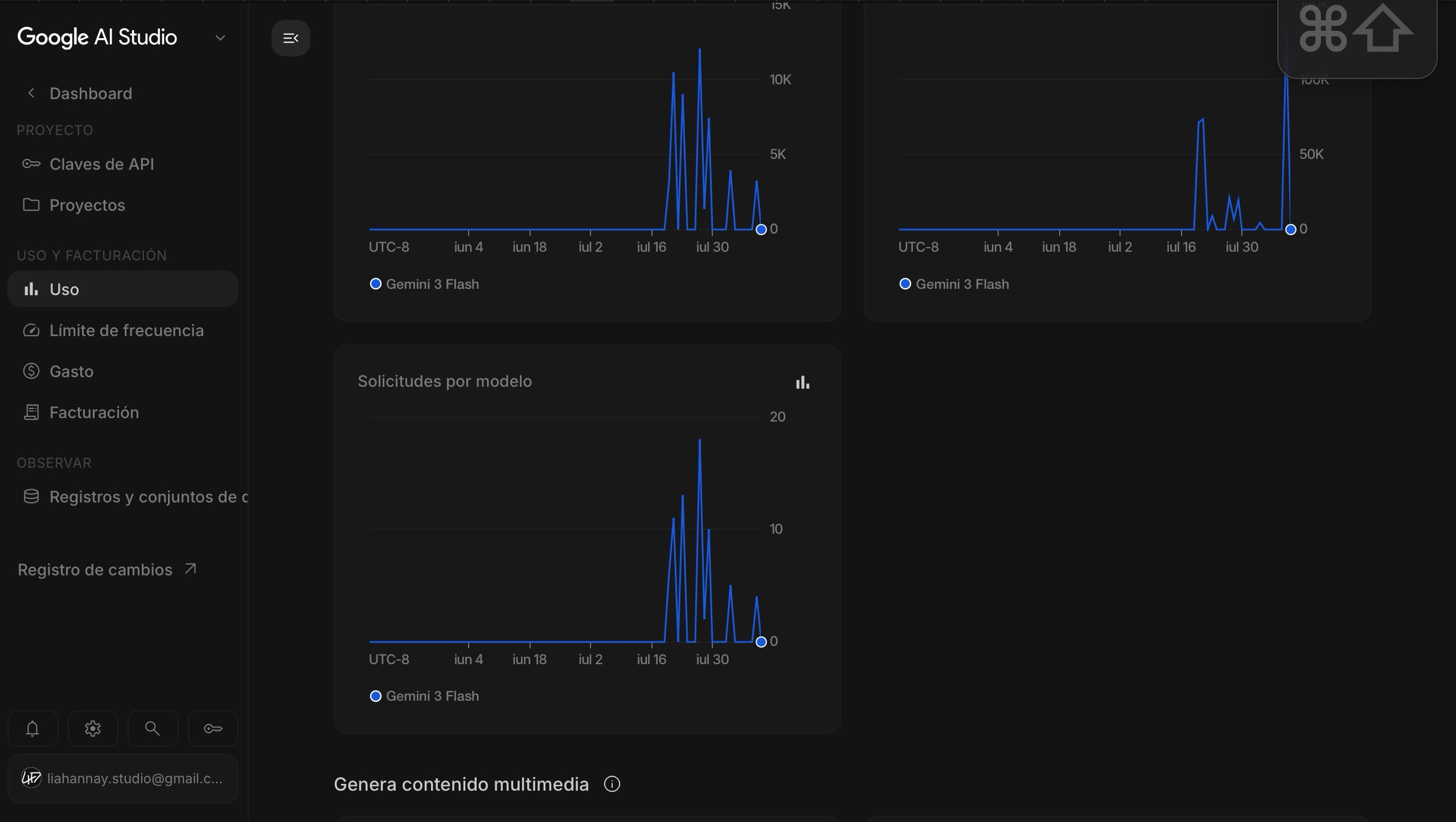
I built Automotora Demo from Uruguay while opening my own automation business for small local companies. The project comes from a very practical observation: in many small businesses, the first problem is not only technical. The first problem is trust. A small automotive dealership, carpentry shop, bakery, or transport company does not necessarily need someone to sell them “artificial intelligence” as an abstract idea. They need someone to show how technology can organize real work: customer messages, quotes, commercial follow-up, stock, internal tasks, and reminders. That is why I designed Automotora Demo as an AI operations layer on top of tools that small businesses already understand: WhatsApp, Google Sheets, and human workflows. In the automotive demo, EMA receives WhatsApp messages and helps organize the conversation. If a customer writes about buying, financing, selling, or trading in a car, the system does not try to replace the salesperson. It classifies the customer’s intent, captures useful information, and moves the conversation into a clear flow. This reduces lost information, keeps messages from becoming scattered, and allows the human team to continue with better context. The most important Gemini usage happens in the internal assistant for authorized operators. Gemini interprets natural-language commands from the operator and converts them into structured business actions over leads, stock, customers, or tasks. For example, an operator can ask Emma to show pending items, check stock, register a customer, or create a task. Gemini interprets the intent, the workflow validates permissions, and the system executes the corresponding action in Google Sheets. This is central to the project: Gemini is not used only to generate text. It turns human language into operational business actions. That allows a non-technical business operator to interact with the system without learning a complex interface. One of the strongest business insights in the demo is recontact. In an automotive business, a sale should not end when the vehicle is delivered. If the system correctly registers the customer, it can also create future follow-up value, for example by scheduling a recontact two years later, when that person may be ready to change cars again. This turns a single sale into a long-term commercial relationship and creates a circular business opportunity. The same architecture can be adapted to other small businesses. In a carpentry shop, Emma can help classify incoming requests and prepare quotes, saving administrative time. In a transport company, it can coordinate updates between the driver, the company, and the client while recording operational information. The tools are similar, but the business logic changes according to each company. That is what makes the model replicable: not selling a generic chatbot, but building concrete automations for concrete business problems. There is also a cultural layer. In markets like Uruguay, many small businesses still see AI as distant, expensive, or difficult. My work is to lower that barrier and show that with accessible tools and careful implementation, automation can improve operations without removing people from the center. For privacy reasons, I do not publicly disclose customer identity or private commercial conversations. Evidence is provided in a privacy-safe way through receipts, the P&L workbook, execution screenshots, sanitized workflows, and a public demo sheet. Privacy is not a weakness of the project; it is part of how real technology should be built for real small businesses.
Built With
- automation
- gemini
- geminiapi
- google-cloud
- googleaistudio
- googlesheet
- javascript
- json
- n8n
- smalbusisness
- whatsappbusiness


Log in or sign up for Devpost to join the conversation.