-
-
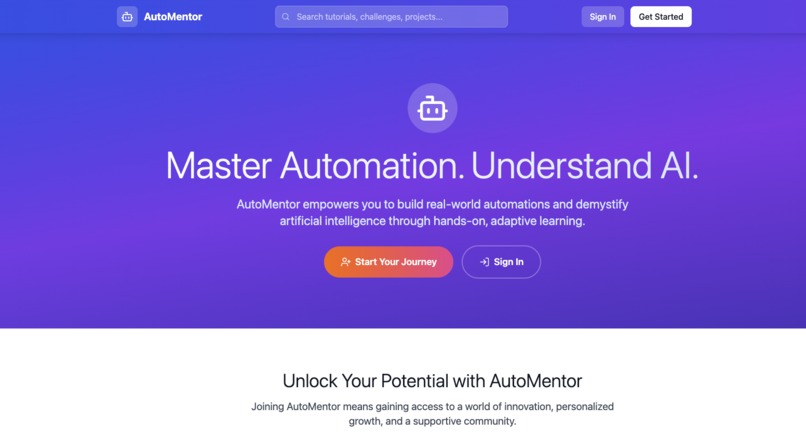
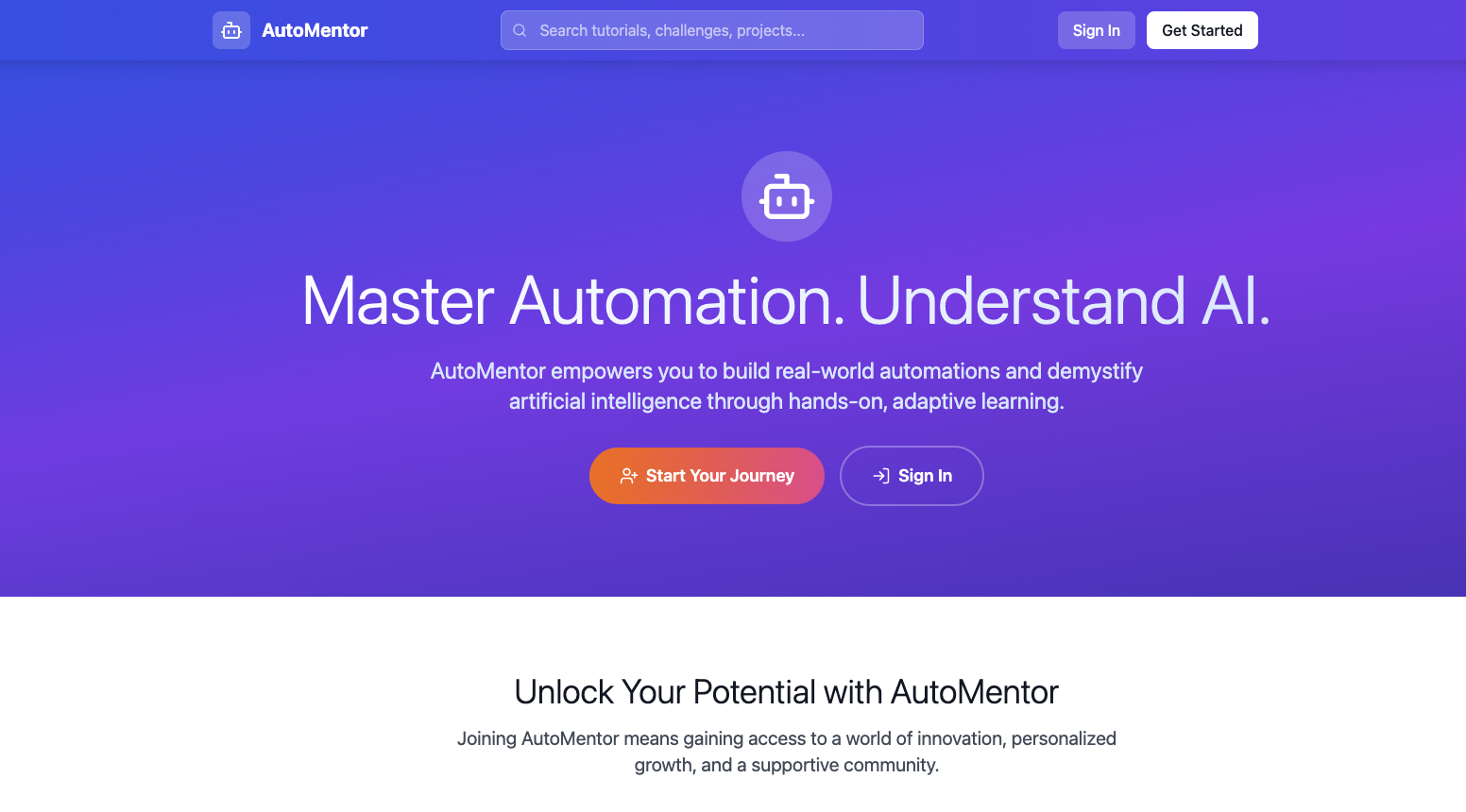
Home Page
-
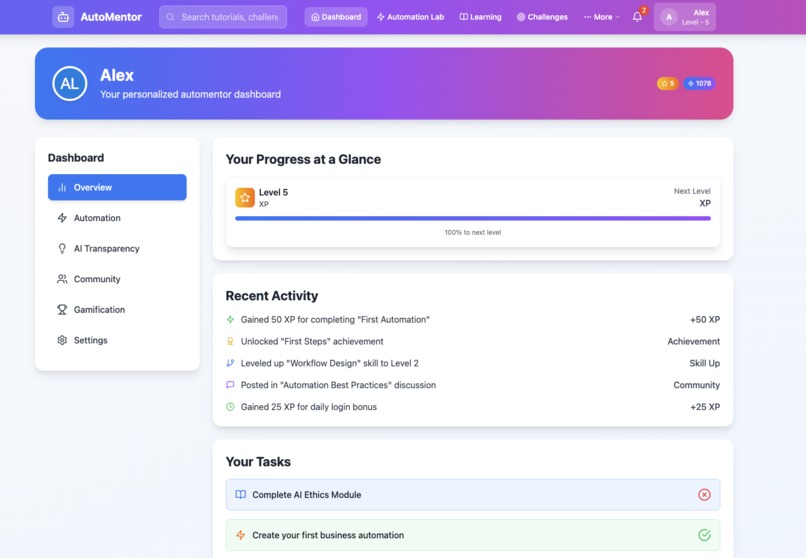
User Dashboard
-
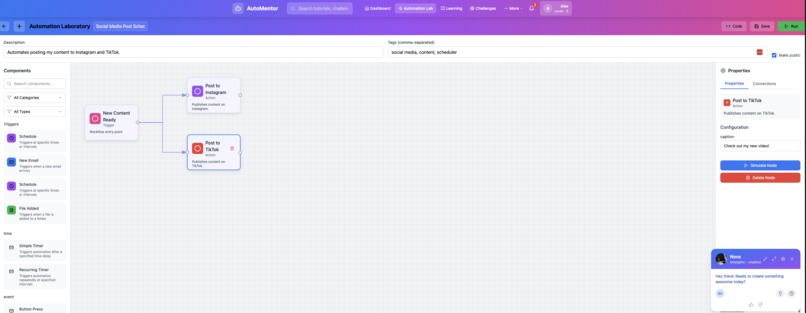
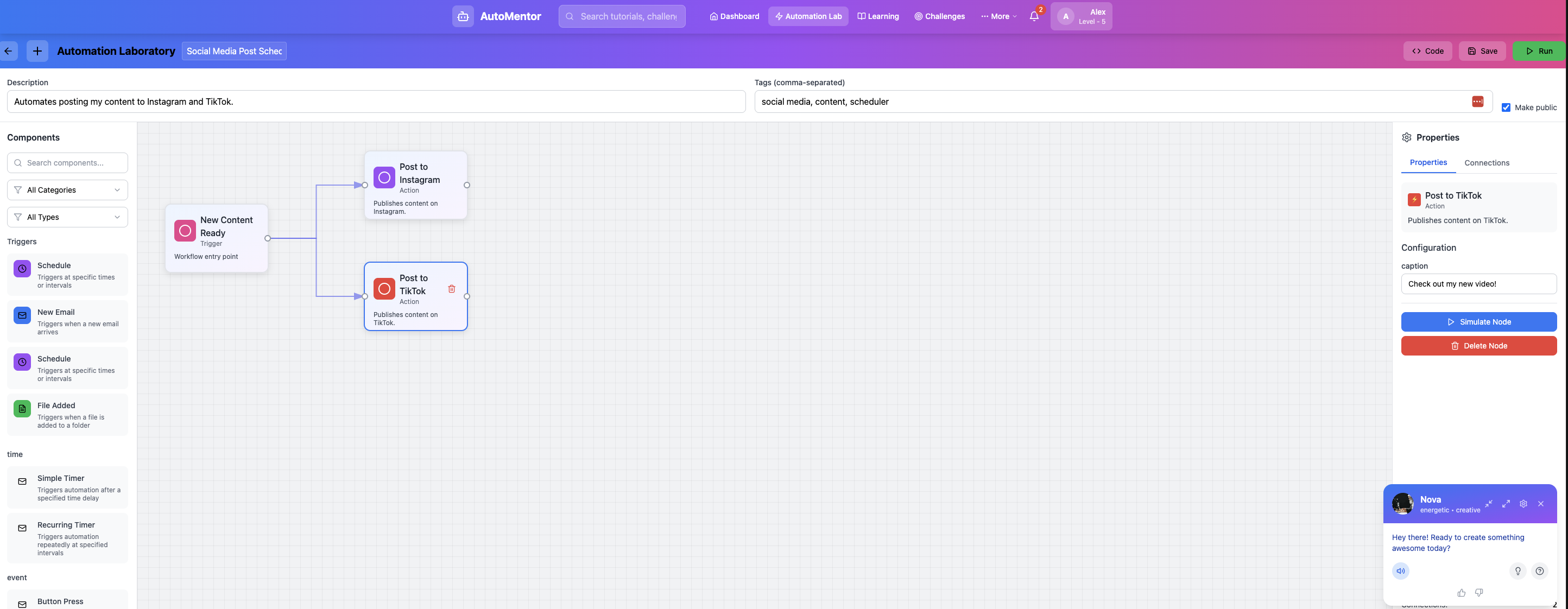
Automation Lab
-
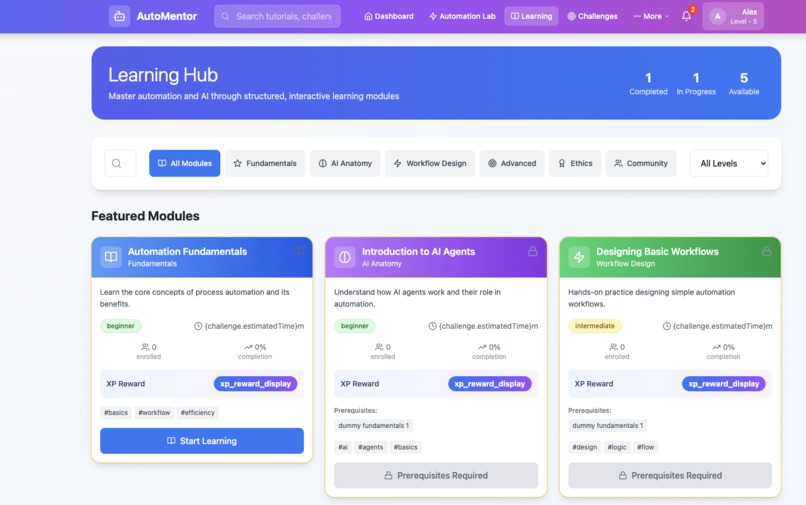
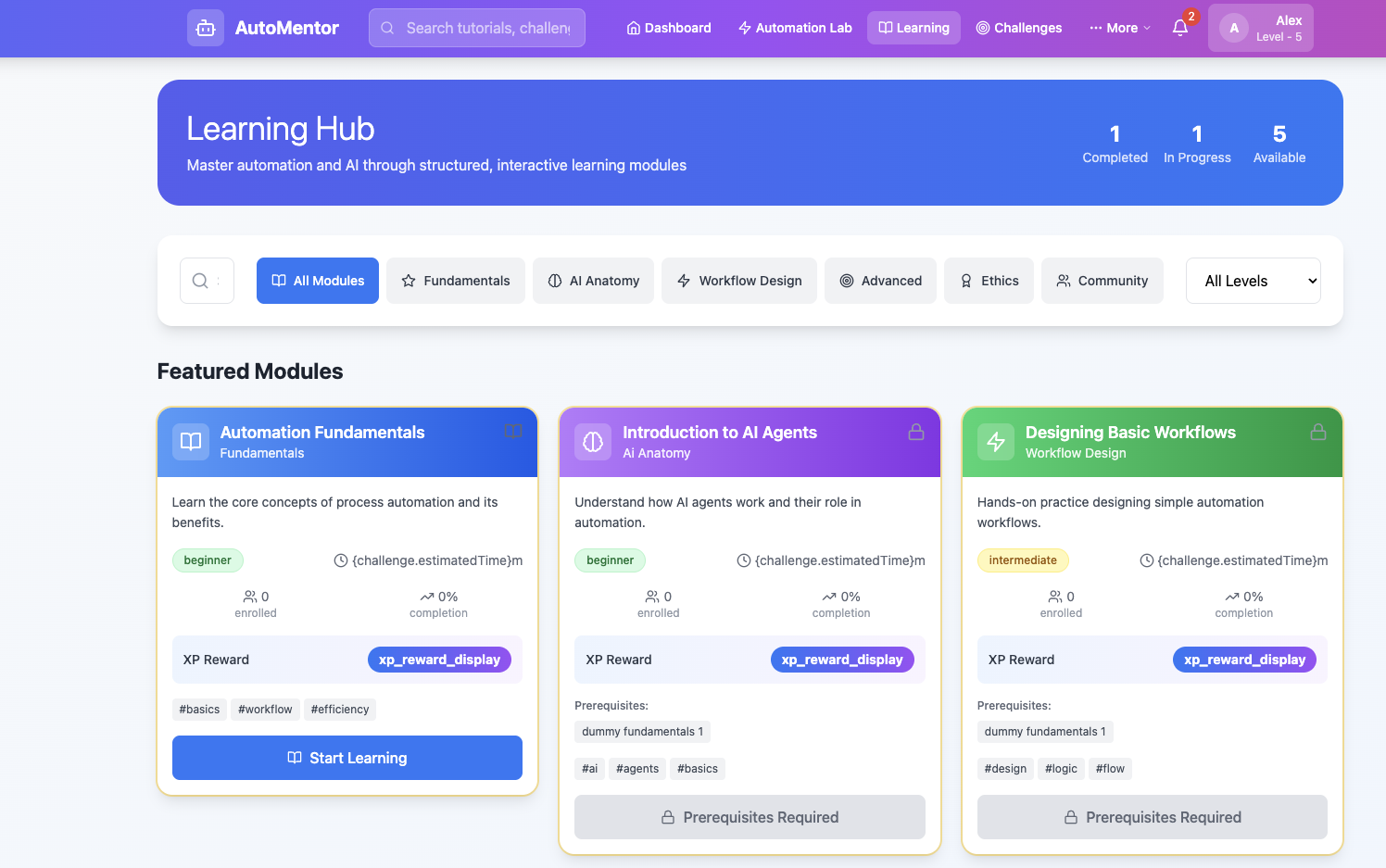
Learning Hub
-
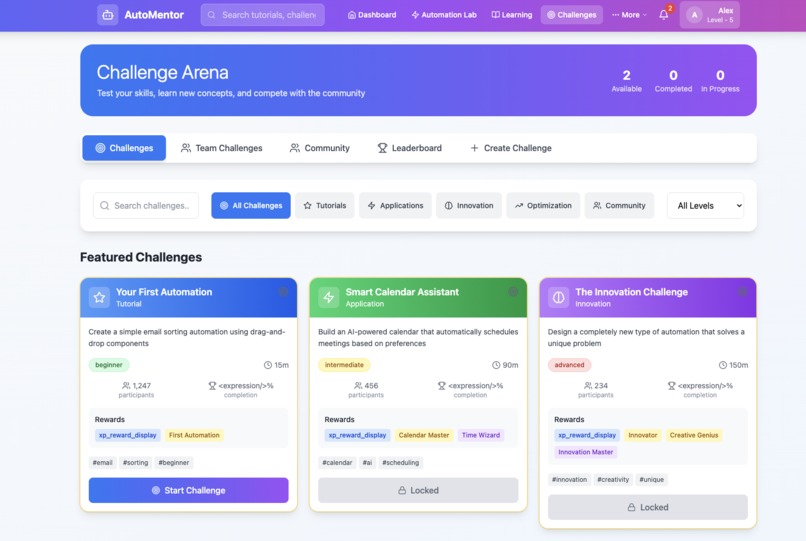
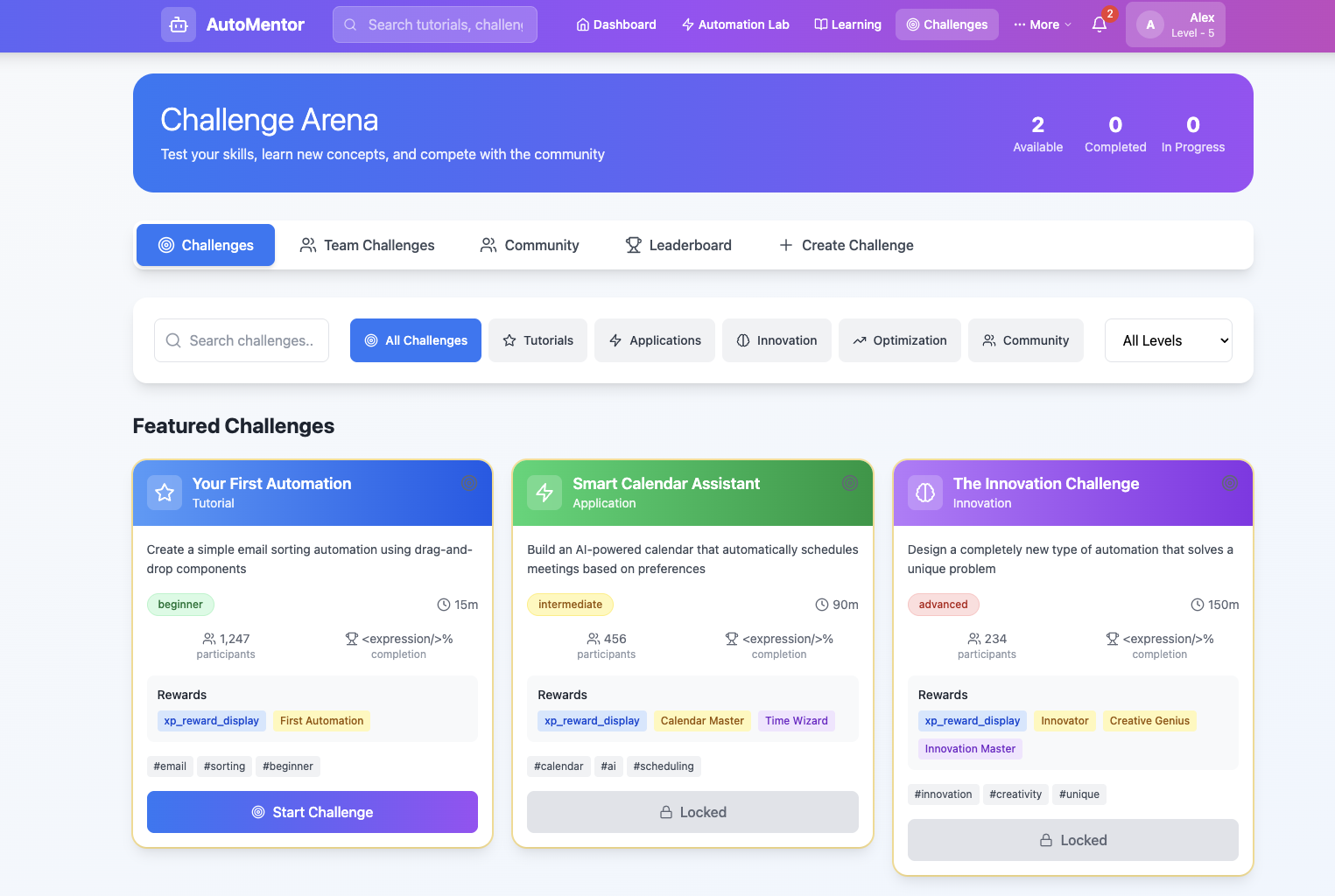
Challenge Arena
-
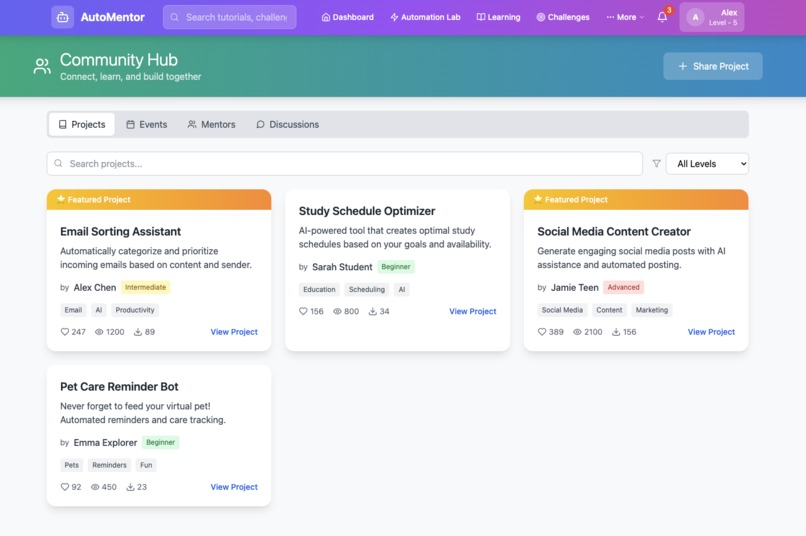
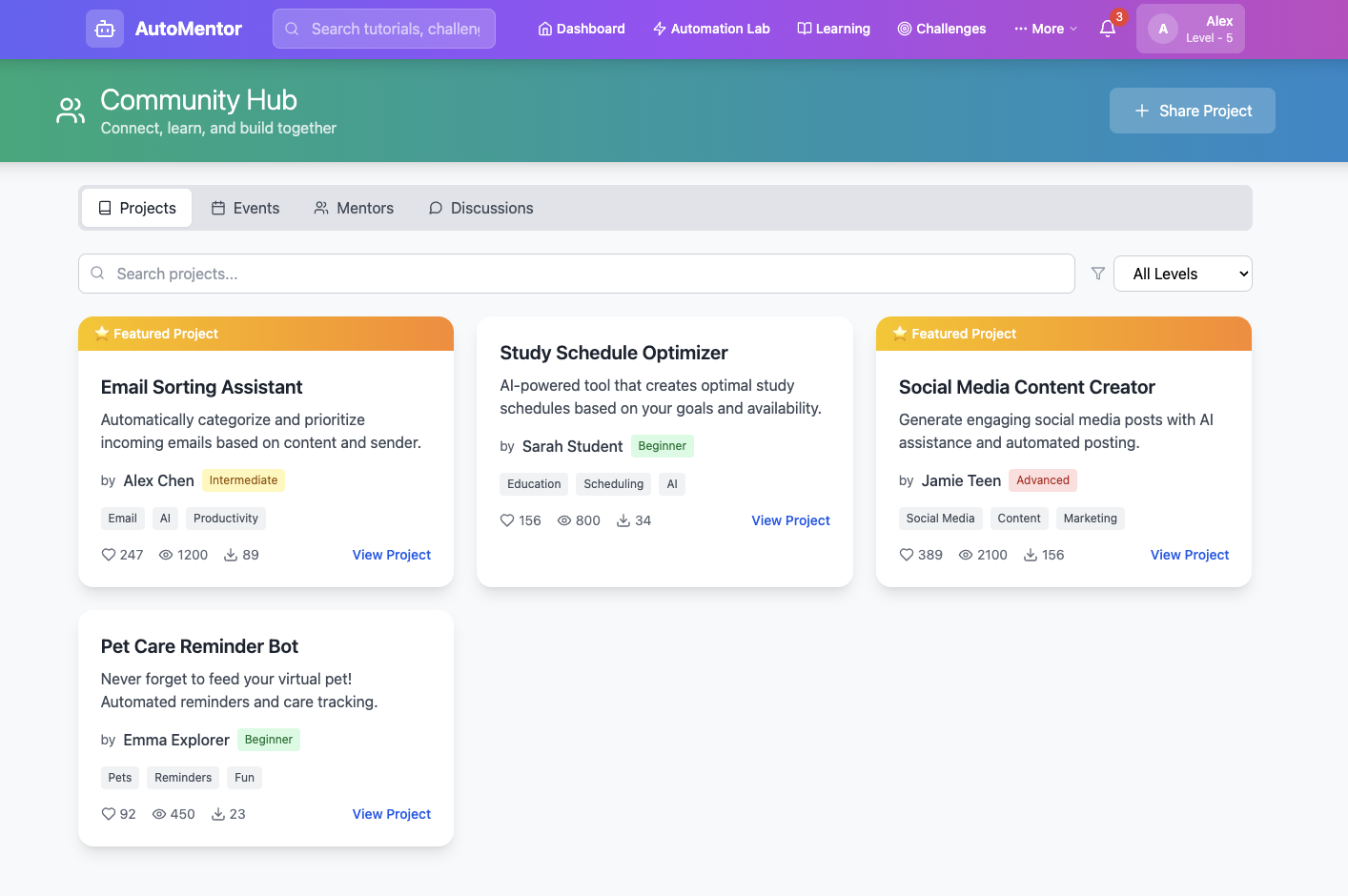
Community Hub
-
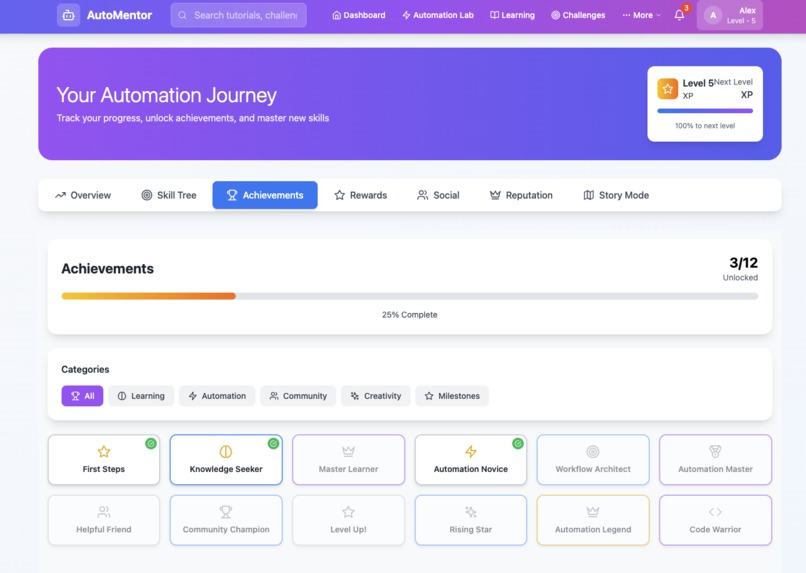
Achievements page
-
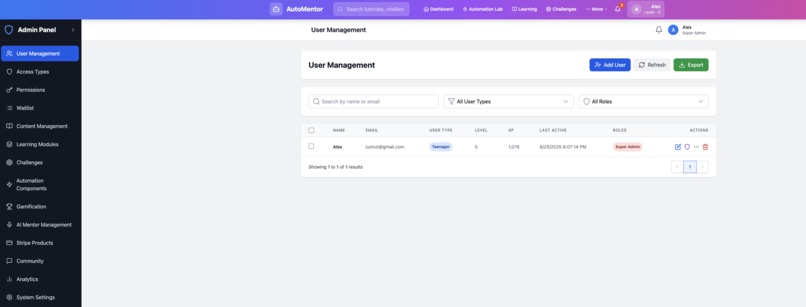
Admin Dashboard



About AutoMentor
Inspiration
AutoMentor was born from a deep-seated passion for no-code development and a desire to share its transformative power. As a senior no-code developer with over seven years of experience, I've witnessed firsthand how platforms like Bolt.new can democratize creation.
My personal journey, marked by the successful development and sale of complex platforms, highlighted a critical gap: while building was easy, effectively teaching others in a scalable manner was not. AutoMentor was conceived to bridge this divide, to empower everyone – from curious children to seasoned business leaders – to master process automation, AI agents, and the revolutionary concept of Vibe Coding. It's about making the future of development accessible to all.
What it does
AutoMentor is a gamified educational platform designed to teach process automation, AI agents, and Vibe Coding through hands-on experience. It offers a unique meta-learning approach where users learn by actually building and deploying automations in a hands-on laboratory environment.
The platform is designed to be multi-audience adaptive, with tailored interfaces and content for children, teenagers, students, developers, and business owners. It integrates advanced AI capabilities, gamification elements like mystery boxes and rewards, and aims to make complex technical concepts engaging and understandable for all.
How we built it
AutoMentor has been built exclusively within the Bolt.new ecosystem, leveraging its powerful no-code capabilities. The core technologies utilized include TypeScript for robust development, Supabase for a scalable database and backend functions, OpenAI for intelligent AI agent functionalities, and ElevenLabs for advanced audio features.
A significant aspect of the development process involved overcoming the inherent limitations of large language model environments, particularly token and project size constraints. This was achieved by strategically utilizing Bolt.new's discussion feature to manually implement certain code segments, allowing for modular development and efficient resource management. This approach enabled the creation of a complex platform while adhering to the platform's operational boundaries.
Challenges we ran into
The most significant challenge encountered during the development of AutoMentor was the persistent issue of token and project size limitations within the Bolt.new environment. Despite extensive investment in time and computational resources (tens of millions of tokens), the project repeatedly faced loading failures due to its sheer scale. This was a critical hurdle, especially when anticipated solutions, such as the integration of Claude Sonnet 4, did not immediately resolve the issue.
The lack of readily available solutions online further compounded the difficulty, pushing the project to the brink of abandonment. The development was also conducted during early mornings and weekends, requiring immense personal dedication and the invaluable support of family.
Accomplishments that we're proud of
We are immensely proud of several key accomplishments with AutoMentor. Firstly, successfully building a complex, multi-faceted educational platform entirely within the no-code Bolt.new environment, despite significant technical constraints, stands as a testament to innovative problem-solving. Overcoming the token and project size limitations through a unique approach involving manual code implementation via Bolt.new's discussion feature is a particular point of pride. Furthermore, the development of a gamified learning experience that caters to a diverse audience, from children to business leaders, and the integration of cutting-edge AI capabilities, represents a significant achievement in making advanced technical concepts accessible and engaging. The creation of a comprehensive brand guide and a social media teasing campaign also showcases a holistic approach to product development.
What we learned
Through the development of AutoMentor, we gained crucial insights into the operational nuances of AI and large language model platforms. A key learning was the critical importance of providing AI with a structured 'to-do list' to prevent clutter and maintain focus, ensuring efficient and clear execution of tasks. We also learned invaluable lessons in project management and resilience, particularly in navigating and innovating within the constraints of development environments. The experience reinforced the power of community and collaborative features (like Bolt.new's discussion feature) in overcoming technical hurdles and fostering continuous development.
What's next for AutoMentor
Looking ahead, AutoMentor is poised for continued growth and expansion. The immediate next steps involve refining the existing features and optimizing the user experience across all defined user journeys: Young Explorer, Code Professional, and Business Leader. We plan to further enhance the AutoMentor avatar, making it an even more intuitive and engaging guide. Future developments will focus on implementing additional integrations with external tools to enrich the automation laboratory, expanding the content library, and continuously evolving the gamification strategy to maintain high levels of user engagement. Our ultimate goal is to establish AutoMentor as the leading platform for accessible and effective automation and AI education, empowering a new generation of builders and innovators. We will also explore opportunities for broader community engagement and partnerships to further our mission of democratizing future-ready skills.
Built With
- bolt.new
- elevenlabs
- lingo.dev
- openai
- postcss
- react
- sentry
- supabase
- tailwind
- typescript
- vite


Log in or sign up for Devpost to join the conversation.