Inspiration
The inspiration for developing an automatic eye disease detection system stemmed from the pressing need for accessible and early diagnosis of eye conditions. Vision impairment is a global health concern, and leveraging technology for early detection can significantly impact patient outcomes. The goal was to create a system that could analyze eye images and identify signs of various eye diseases, enabling timely intervention and treatment.
Learning Journey
Genetic Eye Disorders The project began with an in-depth exploration of genetic eye disorders prevalent in pediatric cases. I collaborated with geneticists, pediatricians, and ophthalmologists to gain insights into the specific markers and patterns associated with these conditions.
Pediatric Imaging Challenges Pediatric eye imaging presented unique challenges, considering the need for non-invasive and child-friendly procedures. Learning about pediatric ophthalmology techniques and imaging technologies was crucial to developing a system that could handle the nuances of working with young patients. Machine Learning Customization Given the specialized nature of the project, customization of machine learning models was necessary. Tailoring algorithms to recognize pediatric-specific eye features and genetic markers required a deep understanding of both medical and machine learning domains.
Challenges Faced
Limited Pediatric Datasets: Acquiring a sufficient amount of pediatric-specific data, especially for rare genetic eye disorders, was a significant challenge. Collaboration with genetic research institutions and leveraging international databases was crucial.
Ethical Considerations: Working with pediatric patients necessitated stringent ethical considerations. Obtaining informed consent, ensuring data privacy, and maintaining compliance with child protection regulations were paramount.
Cross-disciplinary Communication: Bridging the gap between medical professionals, geneticists, and machine learning experts required effective communication. Translating medical requirements into machine learning tasks and vice versa demanded clear and collaborative efforts.
Conclusion
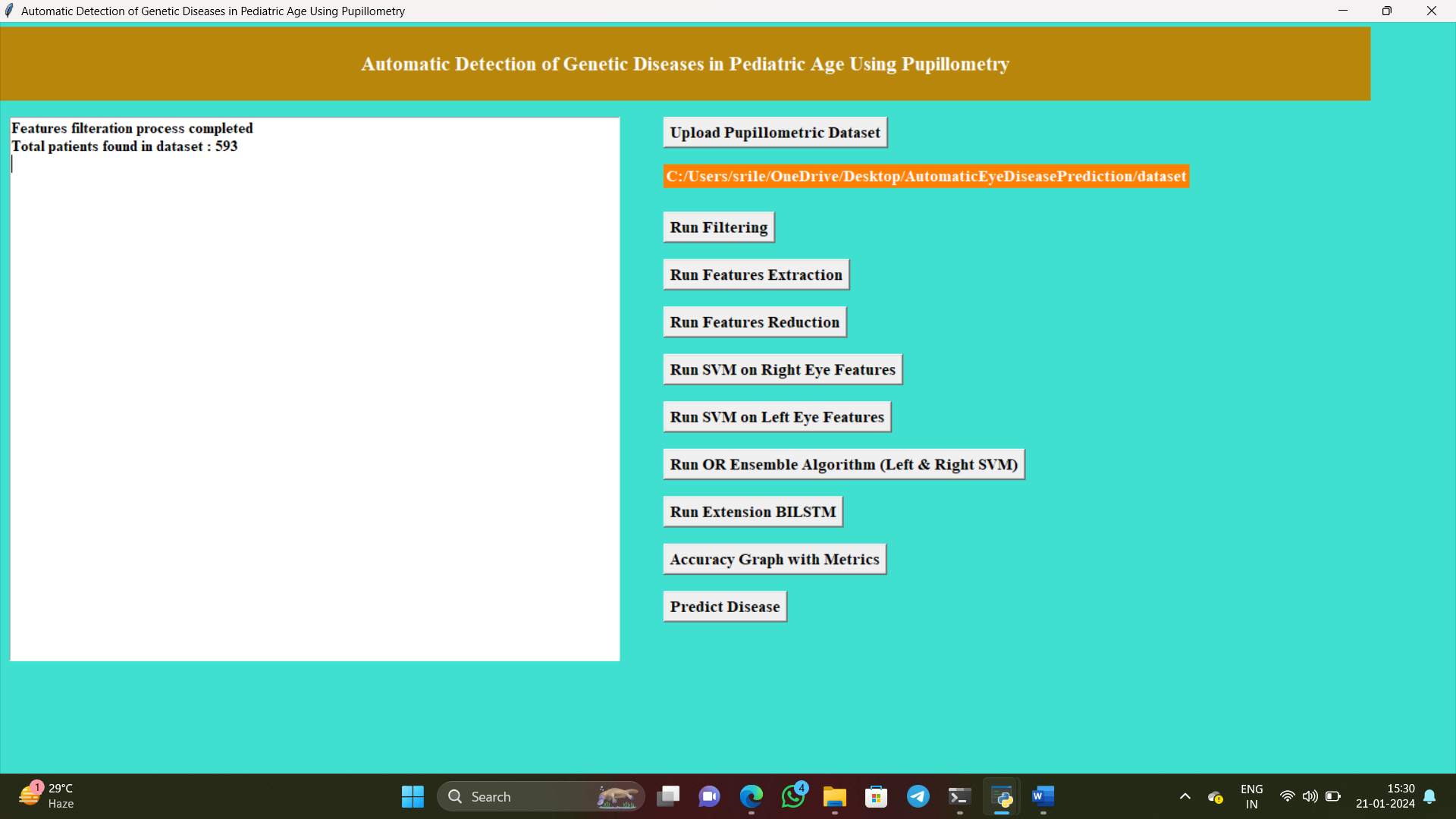
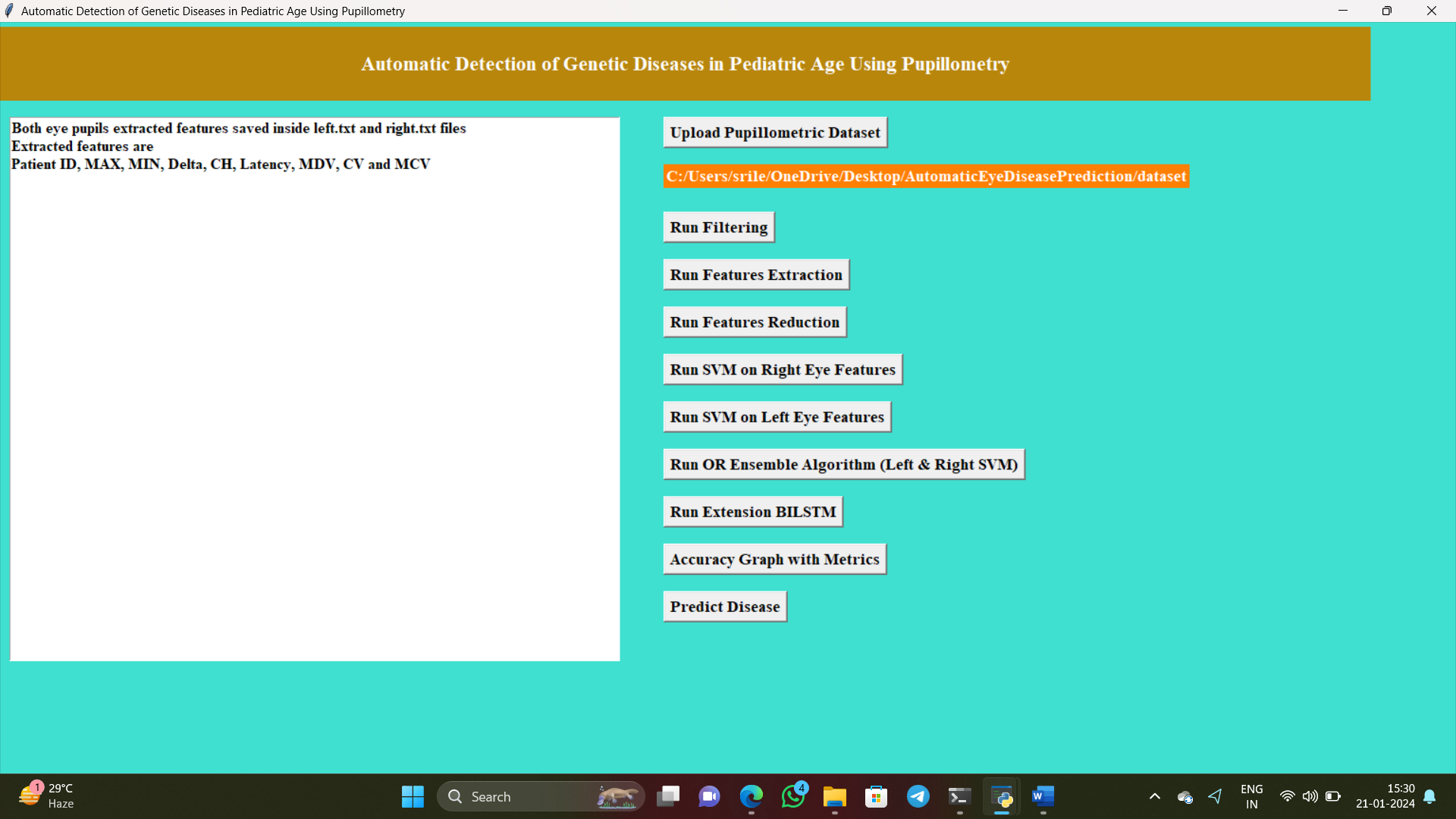
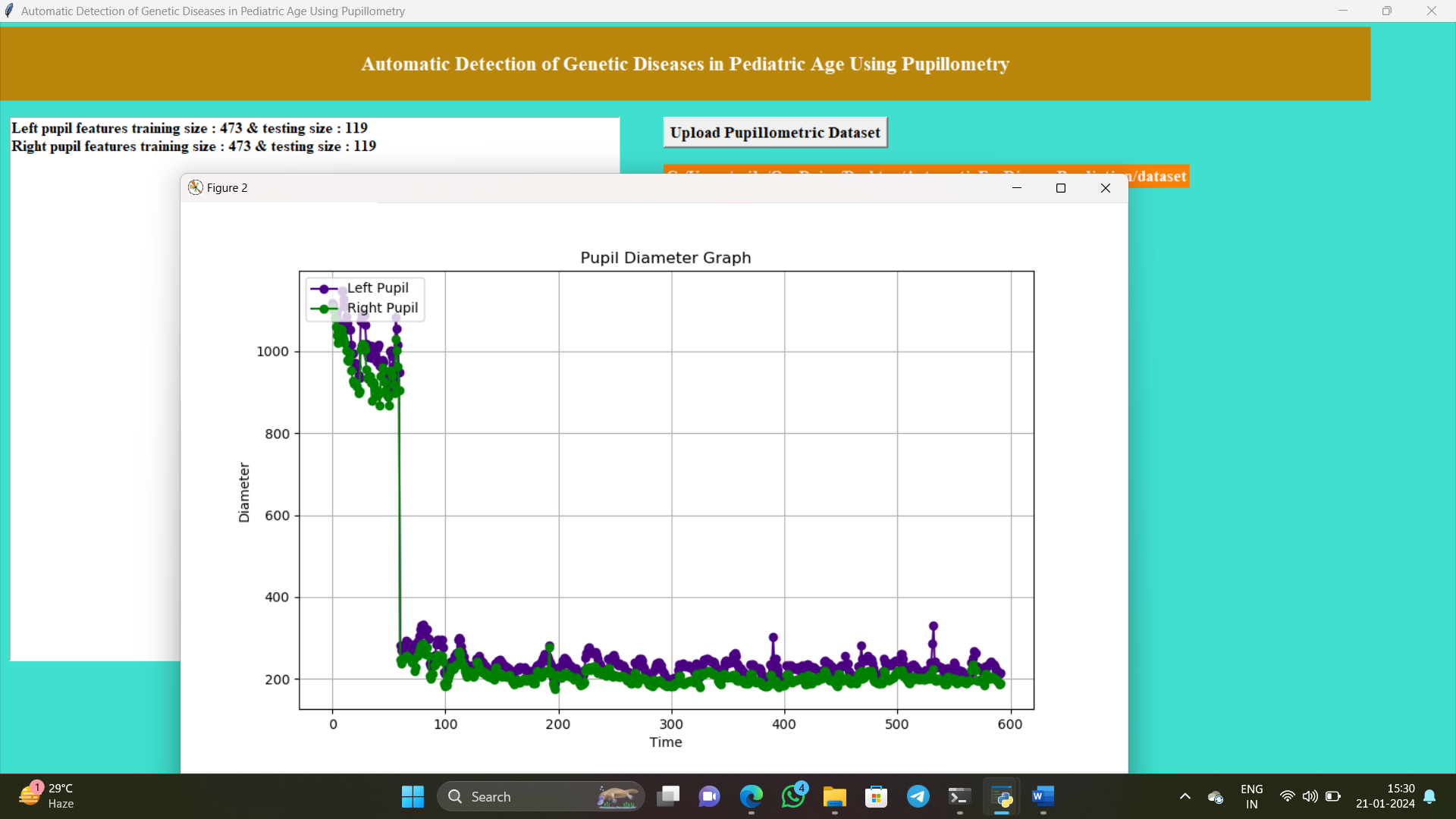
The automatic eye disease detection system tailored for pediatric genetic cases was a multidisciplinary endeavor that demanded expertise in genetics, pediatric medicine, ophthalmology, and machine learning. The project's significance all existing techniques require huge number of clinical test to diagnose eye pupil disease in children’s and it’s not good for children’s health, so author using Pupillometry device which capture pupil diameters continuously and records that data in raw format in the file.
Built With
- ai
- keras
- machine-learning
- matplotlib
- numpy
- pandas
- python
- sklearn
- svm
- tensorflow
- tkinter

Log in or sign up for Devpost to join the conversation.