Inspiration
In our institution, timetable preparation is still done manually across departments. With multiple sections under each department, the process becomes slow and complex. Frequent clashes and inefficiencies inspired us to build a smarter solution.
What it does
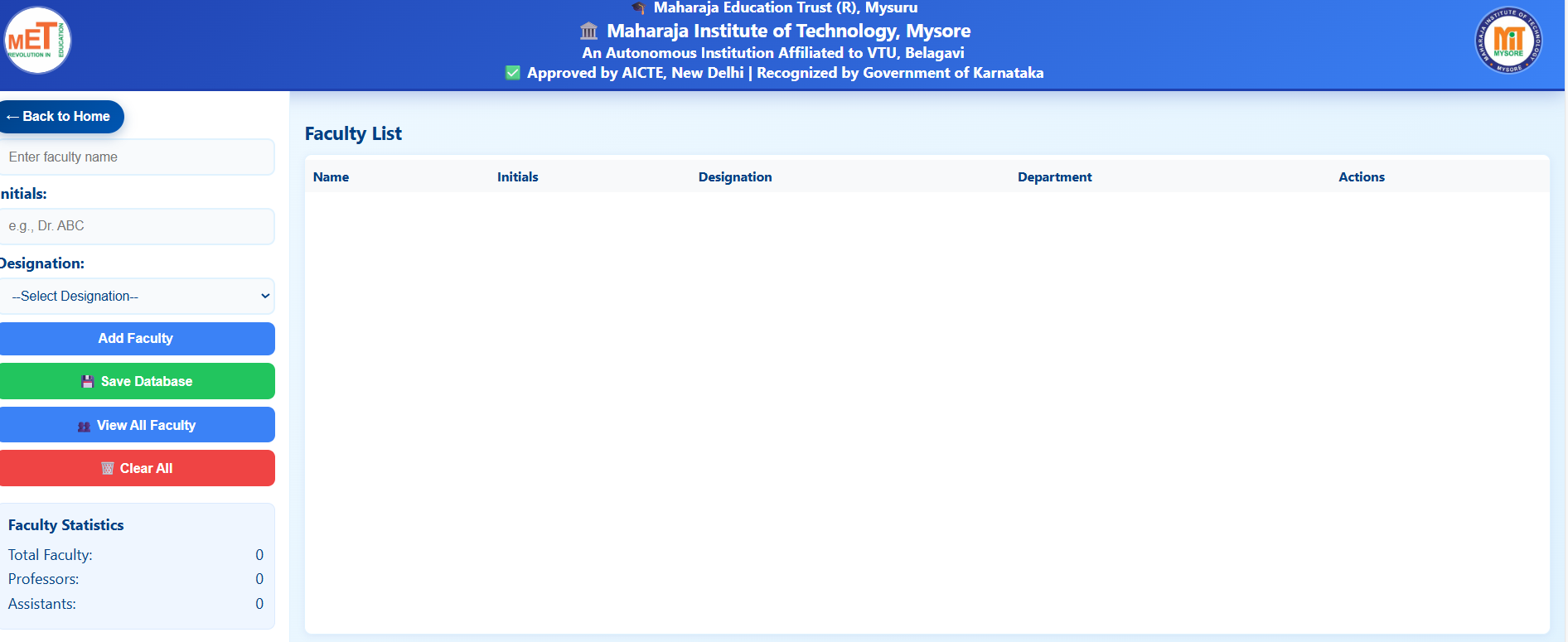
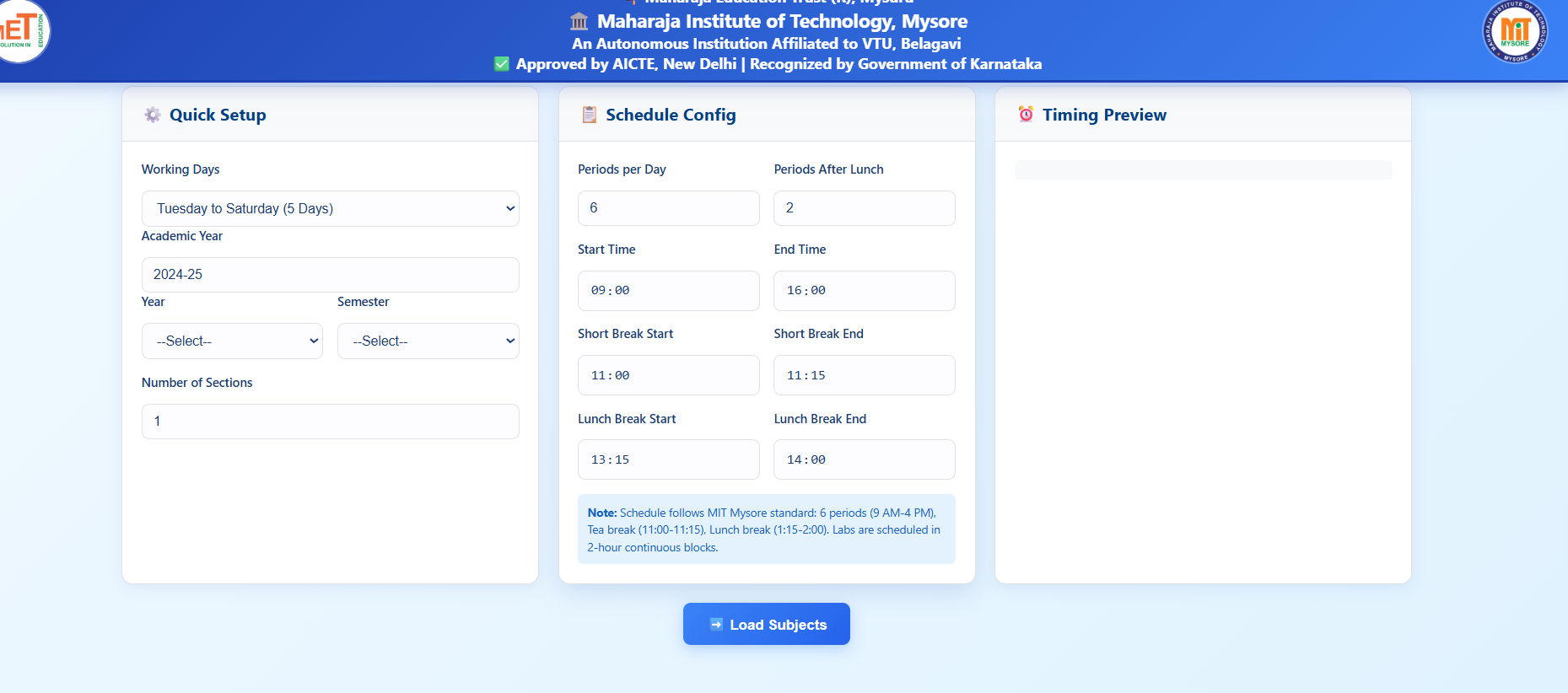
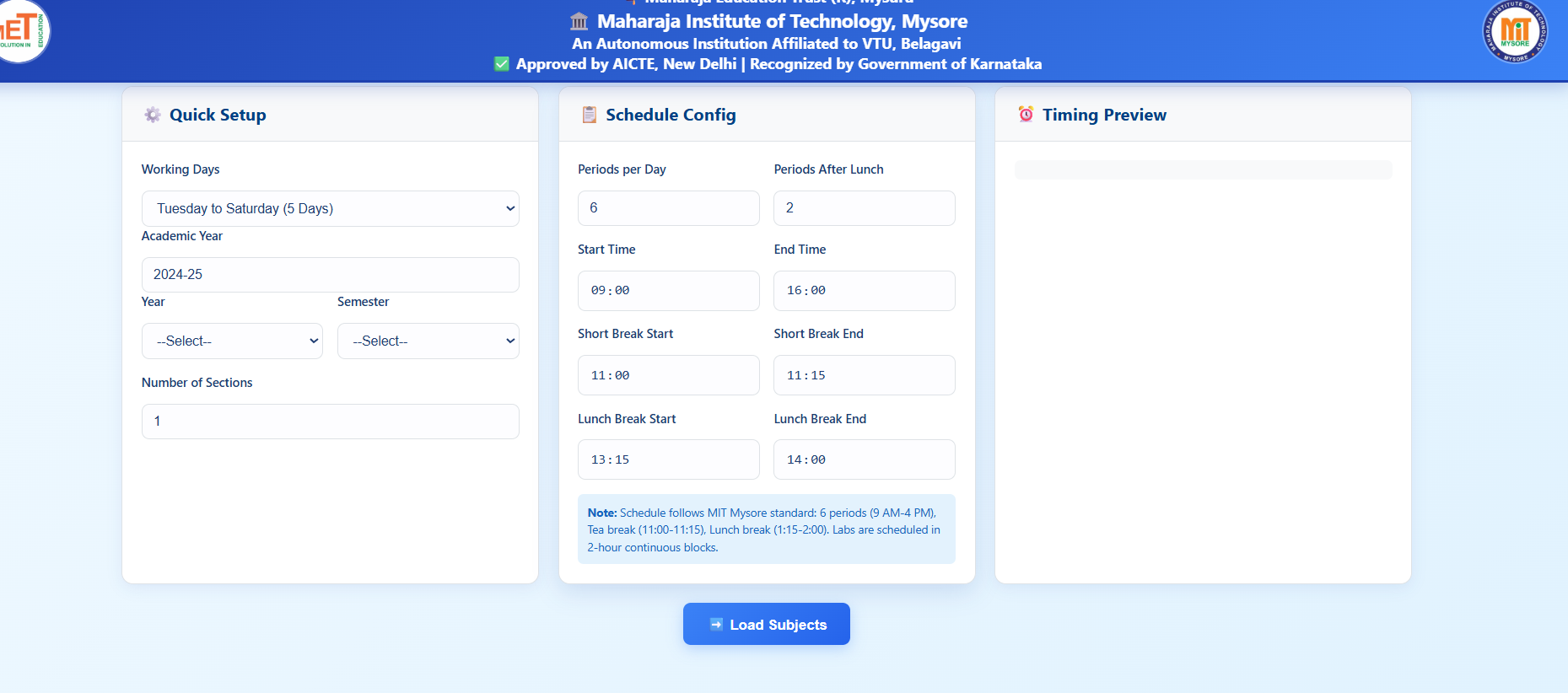
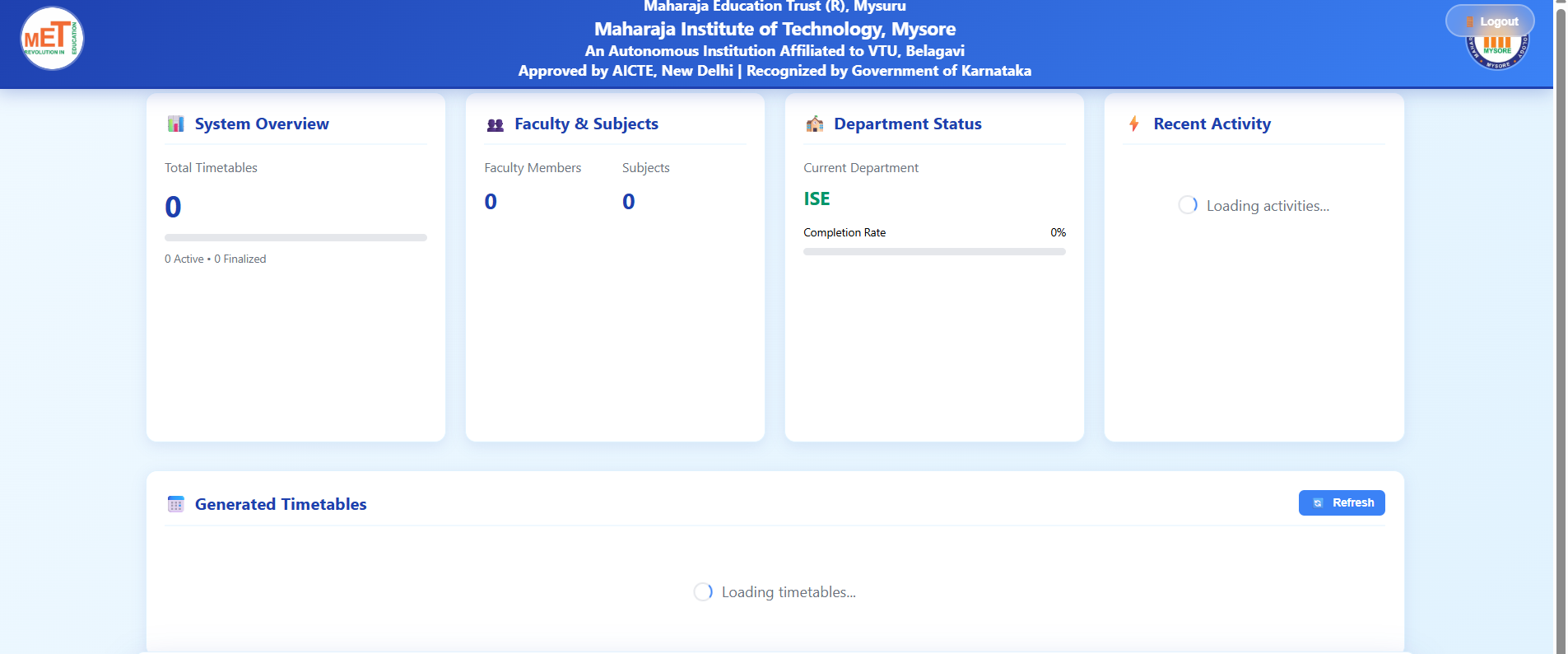
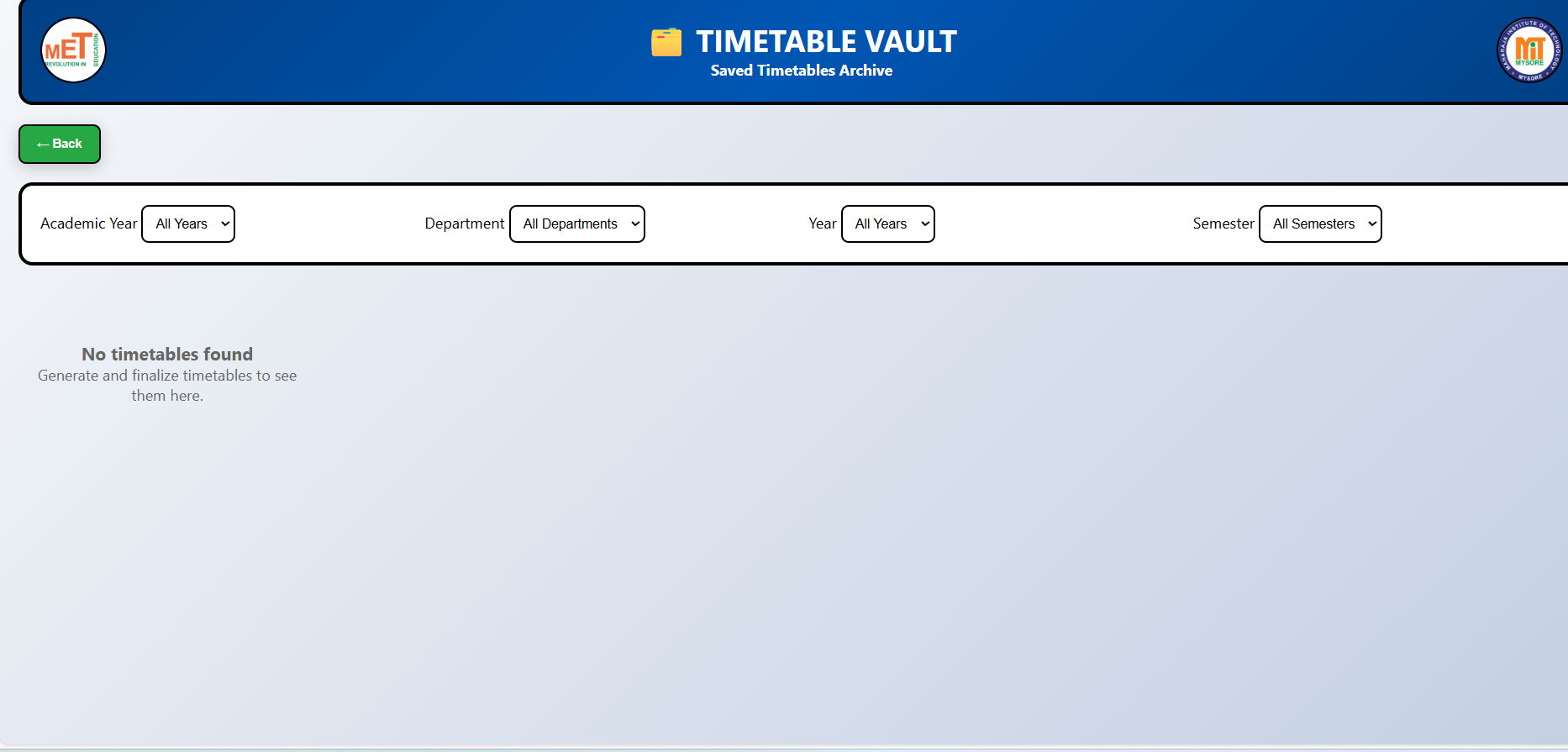
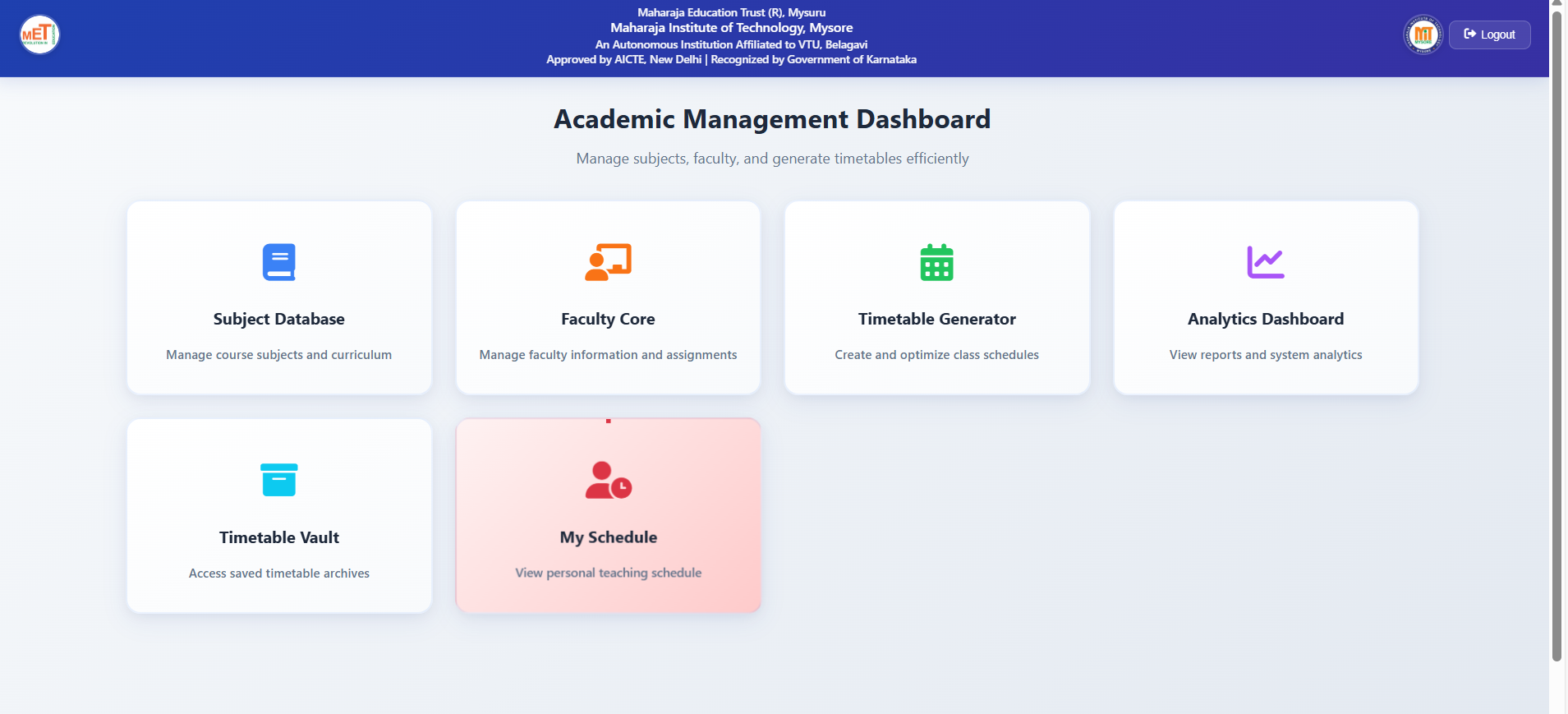
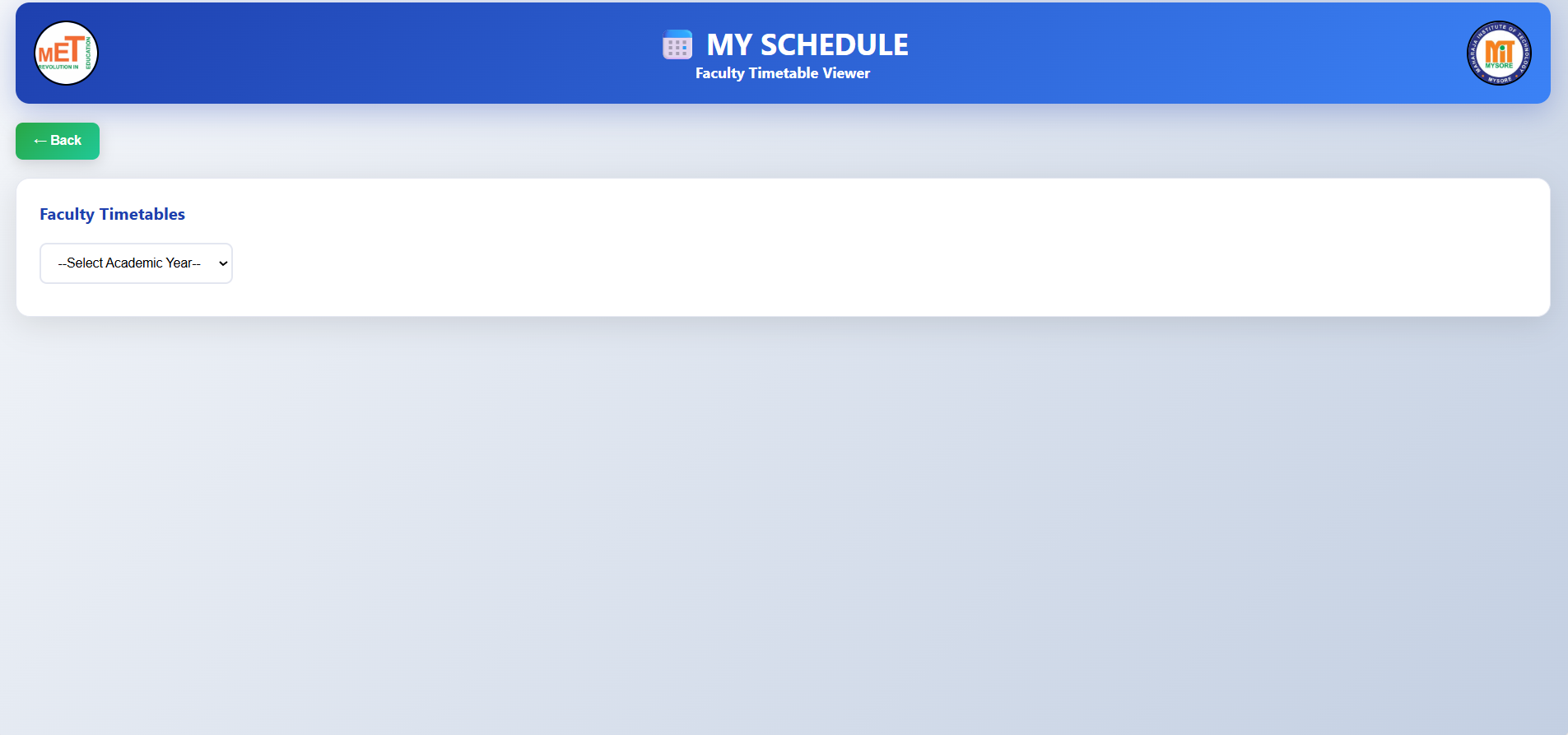
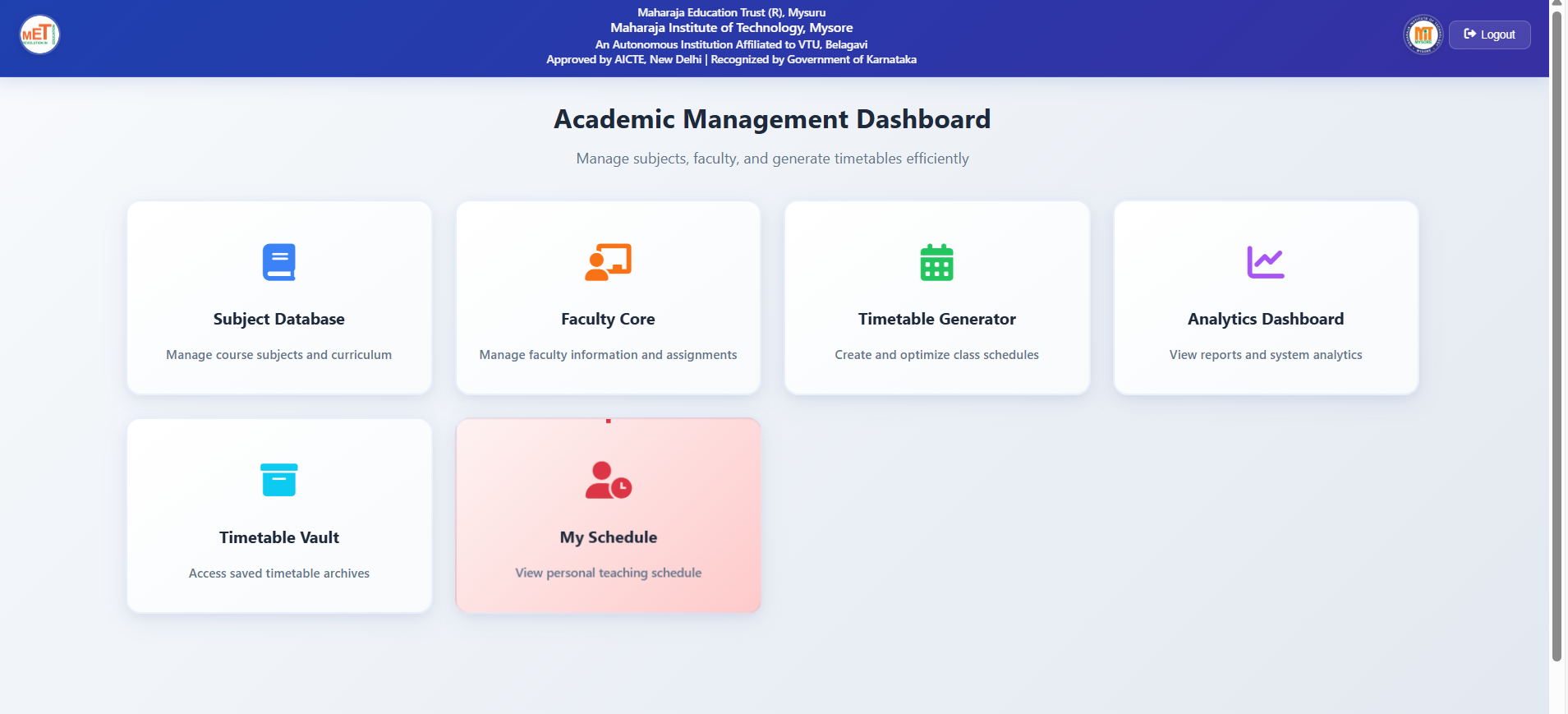
The system automatically generates an optimized academic timetable. It ensures a clash-free schedule while considering faculty and credit constraints. The result is a faculty-friendly and highly usable timetable.
How we built it
We designed the system using real-world institutional constraints. Research and analysis shaped the scheduling and optimization logic. AI-based algorithms enable accurate and efficient timetable generation.
Challenges we ran into
Implementing backtracking for multiple constraints was challenging. Identifying and resolving hidden conflicts required careful logic design. Balancing optimization with performance needed continuous refinement.
Accomplishments that we’re proud of
We successfully automated a completely manual process. The system produces a 99% accurate and conflict-free timetable. It is practical, reliable, and ready for institutional use.
What we learned
We learned to solve real-world scheduling problems using AI. Constraint-based design improved our analytical skills. Testing and iteration were key to achieving high accuracy.
What’s next for Automatic Timetable Generator Using AI
We plan to introduce dynamic timetable regeneration. Adaptive optimization will further improve scheduling accuracy. Future enhancements will support large-scale institutional deployment.


Log in or sign up for Devpost to join the conversation.