-
-
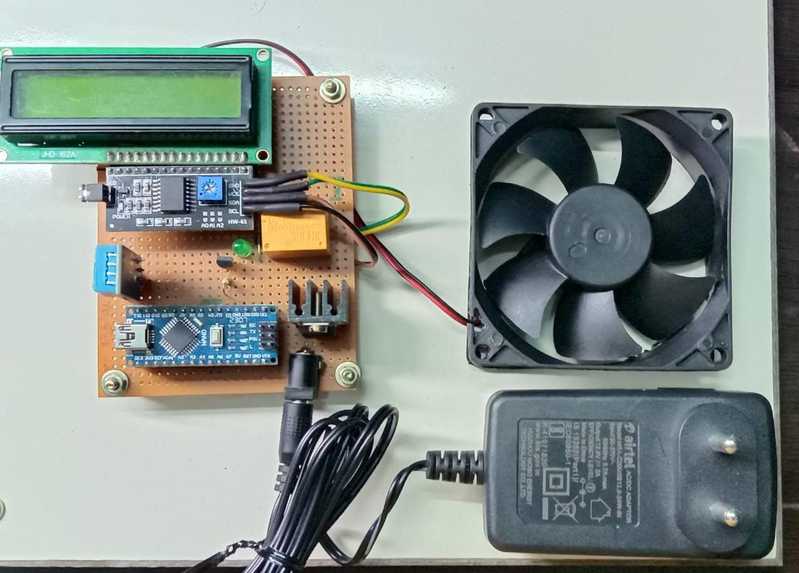
final project

Inspiration
In a bustling city where the temperature swings wildly from scorching summers to icy winters, a group of friends found themselves constantly battling with the thermostat. Fed up with the never-ending adjustments and discomfort, Nandini, Geethika, Prasanthi, and Bindhu embarked on a mission to revolutionize their living space's climate control.
What it does
Inspiration struck when the four friends realized the potential of combining their skills to tackle the problem. Nandini, with her keen eye for design, envisioned an aesthetically pleasing system that would seamlessly blend into their home. Geethika, the resident environmentalist, advocated for a solution that would minimize energy consumption and reduce their carbon footprint. Prasanthi, an electronics enthusiast, proposed using Arduino microcontrollers for automation. And Bindhu, a software developer, offered her expertise in coding to create an intelligent control algorithm.
How we built it
Their journey began with researching various sensors and components, carefully selecting the ones that would best suit their needs. Armed with a collection of sensors, Arduino microcontrollers, and a plethora of wires and resistors, they set out to turn their vision into reality.
Assembling the hardware and writing the code proved to be a challenging yet rewarding process. They encountered bugs in their programming logic and faced difficulties integrating different sensor readings. However, fueled by their determination, they persevered through late nights and countless iterations until they finally achieved success.
Challenges we ran into
Programming Bugs: Debugging the code to ensure smooth integration between the sensors and the Arduino microcontrollers was a significant challenge.
Sensor Integration: Integrating multiple sensors and calibrating them to provide accurate readings posed another hurdle.
Hardware Assembly: Assembling the hardware components in a compact and efficient manner while ensuring proper airflow and heat dissipation proved to be tricky.
Accomplishments that we're proud of
With their Arduino-powered temperature control system in place, Nandini, Geethika, Prasanthi, and Bindhu marveled at its efficiency. The system constantly monitored the room's temperature and adjusted the heating or cooling systems accordingly, ensuring a comfortable environment year-round.
Their friends were amazed by the transformation and soon began asking for their own custom temperature control systems. Word of their innovation spread, and before long, they found themselves inundated with requests from neighbors and colleagues alike.
What started as a personal quest for comfort had blossomed into a full-fledged passion project, bringing comfort and convenience to homes across the city. Nandini, Geethika, Prasanthi, and Bindhu's journey had not only transformed their living space but also inspired a community to embrace the power of automation and technology in pursuit of a better, more comfortable life.
What we learned
Throughout the project, Nandini, Geethika, Prasanthi, and Bindhu learned invaluable lessons about teamwork, problem-solving, and technical innovation. They honed their skills in hardware integration, sensor calibration, software optimization, and project management, pushing the boundaries of their knowledge with each obstacle they overcame.
What's next for AUTOMATIC TEMPERATURE CONTROL USING ARDUINO
The future for automatic temperature control using Arduino holds several exciting possibilities:
Enhanced Efficiency: Continued refinement of algorithms and hardware components can lead to even more precise and efficient temperature control systems. This could involve integrating machine learning algorithms to predict temperature changes and optimize energy usage.
Smart Home Integration: Integration with smart home platforms such as Amazon Alexa, Google Home, or Apple HomeKit could enable users to control their temperature settings using voice commands or mobile apps, adding convenience and accessibility to the system.
Environmental Monitoring: Expanding the system to include additional sensors for monitoring air quality, humidity levels, and other environmental factors can provide users with a more comprehensive view of their indoor environment and enable proactive adjustments to improve comfort and health.
Remote Monitoring and Control: Implementing remote monitoring and control capabilities through IoT (Internet of Things) connectivity would allow users to access and adjust their temperature control systems from anywhere, providing flexibility and peace of mind, especially for frequent travelers or remote homeowners.
Commercial Applications: Beyond residential use, automatic temperature control systems could find applications in commercial settings such as offices, warehouses, and manufacturing facilities, where maintaining precise temperature conditions is critical for comfort, productivity, and product quality.
Integration with Renewable Energy Sources: Integrating automatic temperature control systems with renewable energy sources such as solar panels or geothermal heating systems can further enhance energy efficiency and sustainability, reducing reliance on traditional energy sources and lowering carbon footprints.
Overall, the future of automatic temperature control using Arduino is poised for continued innovation and expansion, driven by advancements in technology, user needs, and environmental considerations.

Log in or sign up for Devpost to join the conversation.